Music’s here for us to love each day

Come join me as I take another deep dive into my vinyl collection for another dozen “lost classics” — great songs from the ’60s, ’70s and ’80s that you’ve forgotten about or have never heard before. I invite you to check out the Spotify playlist at the end so you can listen along as you read a little history behind each track. Enjoy!
***************************
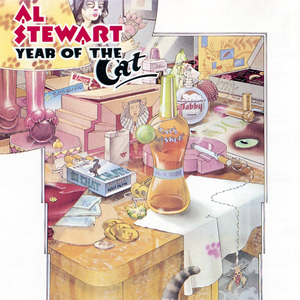
“Lord Grenville,” Al Stewart, 1976
In the late ’60s and early ’70s, Stewart developed a singular style of combining folk-rock songs with intricately woven lyrics of characters and events from history. By 1976, he hit pay dirt with “Year of the Cat,” a stunning LP of songs that put Stewart’s evocative, globe-trotting narratives in the capable hands of Alan Parsons and his panoramic production. The title tune became a Top Ten hit in the US in 1977, and the album reached #5 on the strength of mystery-laden tracks like “On the Border,” “One Stage Before,” “Flying Sorcery” and the regal-sounding “Lord Grenville,” a nautical tale of retreat and regret carried by Stewart’s vocals and the guitar work of Tim Renwick and Peter White.
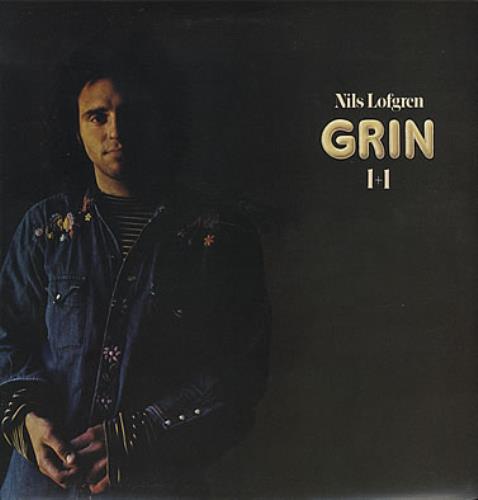
“White Lies,” Nils Lofgren and Grin, 1972
Since 1984, Lofgren has played second guitar in Bruce Springsteen’s E Street Band, but in the early ’70s when Lofgren was just 19, he became a musical collaborator with Neil Young on his first few solo LPs, especially “After the Gold Rush.” Between 1971 and 1974, Lofgren headed up a band called Grin, who released four critically acclaimed LPs of catchy hard rock, written and sung by Lofgren, but inexplicably, they barely made the charts. His solo albums in the late ’70s reached as high as #36 (“Cry Tough”). From “1+1,” Grin’s second album, “White Lies” became a regional hit in Washington D.C. and a few other pockets in the Northeast and Midwest.
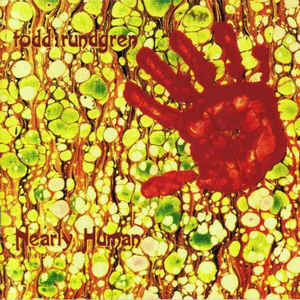
“Unloved Children,” Todd Rundgren, 1989
Rundgren has been one of the most prolific rockers of the past 50 years, releasing nearly 40 albums as a solo artist or with his band Utopia. He has had only modest commercial success, but many critics and a fiercely loyal fan base have sung his praises for decades. One of his most underrated efforts came in 1989 with “Nearly Human,” a strong set of songs dealing with loss, self-doubt, jealousy and spiritual recovery. In the solid rocker “Unloved Children,” Rundgren takes aim at abusive people who become negligent parents but keep having more kids anyway: “We can prescribe for pain, have her declared insane, even all this won’t change violent men, hard-headed women, unloved children…”

“In For the Night,” Sanford-Townsend Band, 1976
This singing-songwriting duo from Texas had co-written a few songs with Kenny Loggins that ended up on the final Loggins and Messina LP, “Native Sons.” The twosome’s recording debut, which included the Top 20 hit “Smoke From a Distant Fire,” included at least a half-dozen fine soulful tracks that rock, including “Shake It to the Right,” “Does It Have to Be You” and “Oriental Gate.” Even better than those was “In For the Night,” an irresistible tune with killer horn arrangements and a great vocal from John Townsend. The duo’s recording career petered out after two lackluster follow-ups, after which they resumed their positions as staff songwriters for Columbia Records.
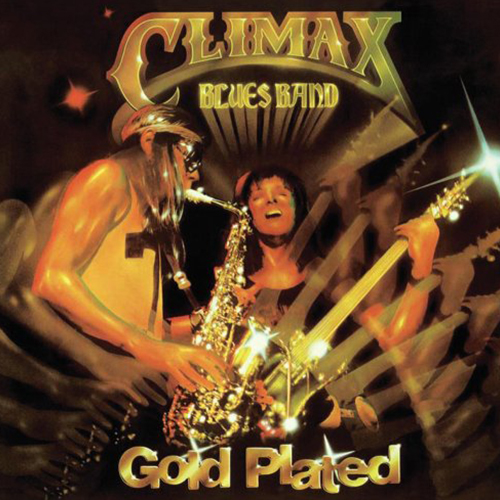
“Couldn’t Get It Right,” Climax Blues Band, 1976
For six years in the 1970s, this British blues rock band continued to release albums of original material that drew a small fan base in the UK, but they made little impression on US charts. Then in 1976, as they were completing their eighth LP, “Gold Plated,” their manager, Miles Copeland III, insisted they add a “radio-friendly song, maybe cover an Elvis Presley number.” The band blanched at that idea, and instead wrote a song “out of thin air” in the studio, based on a serendipitous rhythm and a guitar riff with the lyric, “Looking for a sign in the middle of the night.” That turned into “Couldn’t Get It Right,” which reached #3 in the US in 1977 and helped push “Gold Plated” to #27 on US album charts.

“Long Long Time,” McGuinn, Clark and Hillman, 1979
These three veterans of the folk rock movement in the ’60s, as founding members of The Byrds, reunited in the ’70s to give it another go. The trio was hoping to capitalize on the vibe heard on Crosby, Stills and Nash’s “CSN” album in 1977, which was a reasonable goal, since all three of these guys were fine songwriters with excellent blended vocals. But McGuinn’s trademark 12-string guitar was nowhere to be found, replaced by a polished pop groove more in keeping with the disco sound that still reigned in the late ’70s. The album fared reasonably well, but the single, “Don’t You Write Her Off,” stalled at #33. To my ears, “Long Long Time” was the best track.
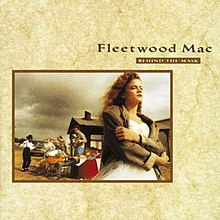
“Behind the Mask,” Fleetwood Mac, 1990
During this band’s 1975-1987 heyday, new singer-songwriters Lindsay Buckingham and Stevie Nicks got much of the attention, and deservedly so, but alongside these two powerhouse talents was Christine McVie, the keyboardist/vocalist whose songs are arguably better, and were usually the ones that became their hit singles (“Say You Love Me,” “Don’t Stop,” “You Make Loving Fun,” “Little Lies”). After Buckingham left in ’87, the next LP, “Behind the Mask,” met with mixed reviews and stalled on the charts. Again, it was McVie’s songs that proved to be the album’s best; her pop rocker “Save Me” got the airplay, but I submit that the haunting title track may be one of her finest songs ever.
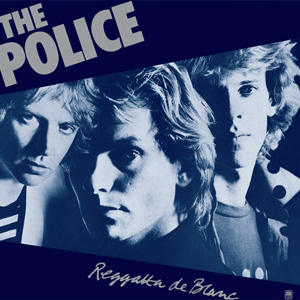
“The Bed’s Too Big Without You,” The Police, 1979
Of all the British bands who came out of the New Wave movement in the late ’70s, The Police showed the most promise. The trio, consisting of Andy Sommers on guitar, Stewart Copeland on drums and the multi-talented Sting on bass and vocals, dabbled in punk, reggae and rock, coming up with memorable hits like “Roxanne” and “Message in a Bottle.” They would evolve into a smoother style by the time of their fifth and final album, 1983’s “Synchronicity,” but fans like me always returned to the “Regatta de Blanc” and “Zenyatta Mondatta” LPs. In particular, the engaging rhythm and sublime vocals on “The Bed’s Too Big Without You” showcased The Police at their best.

“Home Town,” Joe Jackson, 1985
I found it interesting that a perfectionist like Joe Jackson would record 15 new songs not in a studio but in a New York theater in front of a live audience who agreed to remain silent until each take was completed. The resulting LP, “Big World,” is an extraordinary work that explores a cornucopia of world rhythms and provocative topics. Tracks such as “Right and Wrong,” “Soul Kiss,” “We Can’t Live Together” and “Tonight and Forever,” really shine, but I’m crazy about “Home Town,” a wonderfully tuneful piece that strikes a chord with folks who find themselves longing for the old neighborhood and memories of the place where they grew up.

“Harpo’s Blues,” Phoebe Snow, 1974
Snow’s gift was her voice, a bluesy growl with alternating nasal tones and an alluring smoothness, all packaged in an impressive four-octave range. From her 1974 debut LP, radio audiences couldn’t get enough of “Poetry Man,” which reached #5 in early 1975. I was more partial to the poignant, jazzy “Harpo’s Blues,” on which Snow imagines the things a childlike person like Harpo Marx might wish to be, and why. It then concludes with “but I’d hate to be a grown-up and have to try to bear my life in pain…” She could sing and write almost anything, from R&B and gospel to jazz and folk, and did some high-profile duets, like “Gone at Last” with Paul Simon.
“Everyday Now,” Texas, 1989
This is one of those bands that had spectacular success in their native UK but are virtual unknowns in the US, even though they called themselves Texas! Led by guitarist/songwriter Johnny McElhone and lead singer Sharleen Spiteri, the group reached #3 with their debut, “Southside,” scored two #1 albums in England and several European countries in the late 1990s and are still making waves on the charts as recently as this year. I don’t recall where I first heard Texas’s music, but “Southside” got a little airplay in the US in 1989, mostly the single, “I Don’t Want a Lover,” but as usual I was drawn to a deeper track called “Everyday Now,” with its stuttering rhythm and engaging vocals.

“Don’t Talk,” 10,000 Maniacs, 1987
I remember being mesmerized by singer Natalie Merchant’s matter-of-fact vocal style when I first heard 10,000 Maniacs’ “In My Tribe” LP in 1987. There were a lot of great songs too, which alternative radio played incessantly, but mainstream radio didn’t really embrace the band (until they recorded a live cover version of the Bruce Springsteen/Patti Smith tune “Because the Night” in 1993, which reached #11). Do yourself a favor and check out the smart tracks on “In My Tribe,” like “Hey Jack Kerouac,” “My Sister Rose,” “What’s the Matter Here?” and a rendition of the Cat Stevens classic “Peace Train.” I’m also drawn to the gauzy guitar sound on “Don’t Talk.”
*******************************


 Hack's Back Pages