She left me with nothin’ but my 8-track tapes

When I was 17, in 1972, my best friend had an 8-track tape player installed in his Ford Maverick.  Like me, he was a music lover and album buyer, but when he was driving around, he had grown mighty tired of having to listen to commercial radio in the car, especially the incessant commercials and DJ banter found on AM radio.

As the guy riding shotgun, I enjoyed this too.  Being able to choose your own music seemed like a dream come true. But it didn’t take long for me to see several significant, annoying drawbacks of the 8-track format which prevented me from ever considering investing in it.  

To this day, for reasons I’ll explain, I contend the 8-track tape was an ill-conceived and poorly executed idea.

Perhaps you shared my distaste for 8-tracks and didn’t succumb to the temptations of portability and convenience.  Or maybe you joined the millions of other Americans who embraced 8-tracks in the 1970s, only to rue the day several years later when the entire format went the way of the dodo bird (and rightly so).

Here are the six most obvious defective characteristics of the 8-track tape that, in my view, doomed the format to an early obsolescence:

No rewind or fast-forward options.   At home, when you listened to albums, you could change songs easily.  Simply pick up the needle on your turntable and move effortlessly to another specific song, or put on another album.

Once the decision was made to embrace some sort of tape player, if you chose a reel-to-reel tape deck or a cassette tape deck, you could hit “FF” or “REW” in order to back up or move ahead to the desired place on the tape. With 8-track tapes, you didn’t have that flexibility. Eight-track tapes were configured as four “programs” sharing four parallel portions of the tape bandwidth. If you were listening to a song and decided you wanted to skip to the next song, or maybe go back and listen to the same song again, you were out of luck. All you could do was jump to one of the next programs and listen to whatever song was playing on that program. To listen to the song you really wanted to hear, you had to listen to other songs first before the one you wanted came back around on the program. Man, was this irritating!

Messing with the way the artist sequenced the music.  

Because 8-track tapes are set up as four programs lasting about 10 or 11 minutes each, the order of songs often had to be changed in order to maximize efficient use of the available tape.  For example, if an album’s first three songs lasted more than 10 minutes, one song might be replaced on Program 1 by a different, shorter song from later on the album just so the music would fit the 8-track’s limited format.  This might happen on all four programs, completely altering the flow of the music as intended by the artist.  A particularly egregious example was “Abbey Road” (see tracking below).

Even worse, sometimes there was no mathematical way to make the various album tracks fit in four 10-minute sets, so one or more tracks would actually have to be interrupted midway through.  The tape would then fade out, and several seconds (even as much as a minute or more) would pass before it would automatically switch to the next program, and the song would then fade back in at the point of interruption and proceed to its conclusion. Needless to say, this was an abominable way to listen to a song, and certainly not the artist’s intent.

Physical limitations of the tape.

The movement of the head at the point where it switched between programs could sometimes pull the tape up or down, causing the tape to fold over and start playing the back side of the tape. The tape would continue to play, buy very muffled and barely audible. Continued playing would flip the entire tape over, so the tape would be wound on the reel inside with the backside showing. The program switch point is often the place where the tapes would sometimes be ingested into the player (“eaten”), most often when the tape head moved from program 4 to program 1, its furthest track change movement. At that point, the tape was ruined, and the player could no longer play that tape, or any tape.

Head alignment:  Misalignment resulted in reduced high frequencies and allowed sounds from adjacent tracks to bleed over, an effect sometimes known as “double-tracking.”  Among audio service technicians, there used to be a joke that “the 8-track is the only audio device which knocks itself out of alignment four times every time you listen to it all the way through.”

The sensing foil that allows the tape to switch programs would sometimes dry up, fall off, and the tape would separate, and disappear inside the sealed cartridge. This was especially prevalent on bootleg tapes that typically used cheaper sensing foils.  In general, the 8-track market was flooded with cheaper bootleg tapes, found at truck stops and service stations. Had the tape been reinforced on both sides at this point, the tapes would have been much more reliable.

Capstan wear and buildup was also a chronic problem with 8-tracks.  As tape residue, dirt and lubricant accumulated on the capstan, the tape speed would increase and, since the buildup was uneven, the tape speed would become correspondingly uneven.  Similarly, some units were subject to the capstan wear, causing a decrease in tape speed. Any alteration to tape speed is clearly an unwanted defect that made listening to 8-tracks unpleasant and frustrating.

**************

I had a couple of other friends at that time who invested in reel-to-reel tape decks as an additional component in their home stereo systems.  These devices, introduced in the 1950s and generally purchased only by serious audiophiles, offered high-quality sound but were relatively expensive and a little tricky to operate for most casual music fans. They became more popular by the 1970s as prices came down and more casual listeners became interested in home recording and assembling customized mixed tapes that collected choice tracks from their album collections.

I loved this concept.  It was like being your own DJ, but without the commercials and talk.  You could put together mixes for every occasion — holiday parties, pool bashes, dances, romantic encounters and more.

But reel-to-reel tapes were not portable.  You could take them to a friend’s house only if he/she also had the necessary reel-to-reel player.  Most important, you couldn’t play them in a car.  So I chose not to invest in this format either.

Enter the cassette tape.  When first introduced in the early ’60s, their sound quality was pathetic, marred by a prominent hiss and muffled sound.  Their use was adequate for use in voice dictation and playback of children’s nursery rhymes and such.  So music lovers shunned the format…until the Dolby Noise Reduction technology arrived in the early ’70s to substantially improve cassette tape sound quality.  This development, combined with newer chromium-dioxide tapes, made cassettes a significantly more attractive format. Decent sound quality, portability, and fast forward-rewind capabilities made them the clear winner as the best music delivery system for your car.

In late 1974, I made the investment in both a home cassette deck for play back and recording, and an auto cassette deck to play tapes on the road. I immediately began compiling mixed tapes (“Hack Tapes,” I called them) and they became very popular among my circle of friends, many of whom requested them at parties and asked to borrow them for road trips. I even took to making custom mixed tapes as birthday or Christmas presents for friends and family.

As more people saw the advantages of cassettes over 8-tracks beginning around 1975-76, the 8-track began its inevitable slide toward extinction.

So what was the thinking behind the 8-track, anyway?

The “Stereo 8 track” cartridge was designed by Richard Kraus while working under Bill Lear for his Lear Jet Corporation in 1963. The major change from the reel-to-reel tape players then available was to incorporate a neoprene rubber and nylon pinch roller into the cartridge itself, rather than to make the pinch roller a part of the tape player, reducing mechanical complexity.

In September 1965, Ford Motor Company introduced factory-installed and dealer-installed 8-track tape players as an option on three of its models, and RCA introduced hundreds of Stereo-8 cartridges from its labels of recording artists’ catalogs.  This push from major corporations helped spark the interest in this new product, despite its drawbacks which would become obvious later.

Hundreds of thousands of car and truck owners took the bait. Those in rural and small-town environments seemed to embrace it the most, as evidenced by the number of country songs that mentioned 8-tracks. Here’s Conway Twitty’s “Red Neckin’ Love Makin’ Night”: “Get ready to go, we’re gonna roll about sundown, I got some boogie-woogie music on the old 8-track, /I got the top laid back and we’ll cruisin’ and foolin’ around, /Here I am baby, ready to play, slide it on in and we’ll slip away…” Or Alan Jackson’s song “1976”: “Eight track tapes were still in style and Elvis was still alive, Wonder Woman sure looked fine, Bionic Man was still Prime Time…”

Some consumers bought 8-track players for their home stereos, but curiously, the manufacturers didn’t offer 8-track recorders, so buyers couldn’t assemble their own mixed tapes like they could with cassettes. I believe that oversight helped contribute to the decline of the 8-track’s popularity, and by 1982, the record labels stopped selling new music in the 8-track format.

Some folks loved the format and defended it to its dying day.  In an article in Stereo Review magazine that collected opinions from music consumers, here’s one viewpoint from a guy who felt the 8-track was superior to the cassette: “Cassettes sound like crap.  They only play at 1-7/8 IPS (inches per second), so even with all the metal tape formulations, and Dolby, etc., the sound quality is limited compared to an 8-track.  If 8-track manufacturers had invested in the metal and chrome tape the cassette had, it would have blown away the cassette, because 8-track plays at 3.75 IPS, twice the speed of a cassette, and with analog tape, it’s all about tape speed.”

Here’s another: “Those who say that not being able to rewind an 8-track is a drawback are crazy.  You could just let it keep playing.  Want to start over again? Just switch from track 2, to 3-4 and back to 1.  There you are, rewound, with just a few button clicks.”

Other observers were merciless in their assessment of 8-tracks: “The primary reason the 8-track became extinct was because it was an unreliable piece of shit.  They simply weren’t built to last and, subsequently, they earned a reputation as ticking time bombs.  Truth be told, brand new eight-tracks often sounded good, and the tapes themselves were virtually indestructible. They rarely melted in the sun or cracked.  It was the internal components that started to fall to pieces over time.  If the manufacturers hadn’t opted for cheap construction, things might have turned out differently.”

“If the heads became misaligned even slightly (a VERY common occurrence), one track would bleed through into another track.  Worst case scenario:  two songs at equal pitch would play at the same time.  Best case:  a faint background of an altogether different track.  Either way, it was a thoroughly miserable listening experience.”

So there you have it.  The 8-track format, while perhaps not all that bad a concept, was shoddily merchandised and manufactured, and nothing was done to combat the onslaught of pirate/bootleg tapes on the market, which helped kill its credibility.

Cassettes, on the other hand, lasted for decades, staying viable as a music delivery option even as vinyl records were outperformed by CDs in the ’80s and especially in the ’90s and 2000s. (Eventually, though, cassettes and CDs both gave way to mp3 files and online downloading.)

Vinyl has since made a remarkable comeback in the past 10-15 years, and CDs too, to a lesser extent. Cassettes? Still hanging on by a thread in some circles, but 8-tracks are ancient artifacts from a bygone era.

If you want to get a chuckle out of anyone who lived through the ’70s, pull out an 8-track tape and ask them to slip it into their player!

It may be bad, but it feels so good

In the dozen years I’ve been writing this weekly blog about rock music, I have only very rarely written about songs, albums or bands that I don’t like. My approach has always been to shine a light on great music past and present. Focus on the positive, I say.

Once I wrote a piece on hugely successful artists I never liked, trying hard to explain what it was about them that turned me off. Similarly, I’ve gathered a few playlists of what I referred to as “cringeworthy” songs — music that makes me lunge for the radio knobs to change the channel or cut off the volume when it comes on. I suppose these essays serve some purpose, in that they provide (subjective) guidance to readers about avoiding songs and bands that, in my view, are just bad. But I much prefer spending my time, and yours, exploring and recommending compelling, entertaining, quality songs and albums. Good over bad any day.

In this piece, I’m offering a look at 20 bad songs…but they’re not what you think. These are 20 great songs that have the word “bad” in their titles.

Funny thing, the word “bad”: For centuries, it meant the opposite of good, and most times, it still does — bad choices, bad behavior, bad weather, bad food, bad music, bad influences. Even “Breaking Bad.” These were not things you desired.

But beginning around 1970, some folks, particularly black hipsters, thought it would be clever to turn the whole thing on its ear and start calling attractive, strong people “bad.” That certainly added a level of confusion to the situation, and it’s still used that way sometimes 50 years later.

The songs below offer at least a couple examples of “bad” as “good,” but mostly, as Huey Lewis would say, “Bad is bad.”

I hope you dig the Spotify playlist at the bottom, which also includes a few additional “honorable mentions” to flesh out the list.

****************************

“Bad,” Michael Jackson, 1987

I pretty much had to begin this list with Jackson’s #1 hit, the title track from his 1987 mega-platinum LP “Bad.” Since at least 1970, calling someone bad meant, in black slang parlance, that the person was excellent, attractive, strong. Jackson said he was motivated to write the song as a way to toughen up his image, with the main boastful lyric, “You know I’m bad, I’m bad, you know it… /And the whole world has to answer right now just to tell you once again, who’s bad?” Combined with the all-black-leather gang attire he wore on the cover, it presented a certain edgy bravado lacking from the brand he established on “Off the Wall” and “Thriller.” With its relentless bass line and Jackson’s distinctive vocal, the song became the second of a record five consecutive chart-toppers from one album in 1987-1988.

“Bad Boy,” The Beatles, 1965

Larry Williams was an R&B singer-songwriter in the late ’50s, although he didn’t achieve much success on the charts as a performer. But British rockers like a young John Lennon took note of his songs, and he added a few to The Beatles’ repertoire when they were a young, hungry band playing clubs in the early ’60s. That carried over into their early recording sessions, when they filled out their LPs and EPs with covers of American artists. Three Williams songs — “Dizzy Miss Lizzie,” “Slow Down” and “Bad Boy” — ended up in their catalog. The latter, about a teenage delinquent type who misbehaved in school, appeared in the US on the 1965 Capitol album “Beatles VI.” “A bad little kid moved into my neighborhood… /He don’t want to go to school and learn to read and write, just sits around the house and plays the rock and roll music all night, /Well, he put some tacks on teacher’s chair, puts chewing gum in little girl’s hair, /Now junior, behave yourself…”

Bad to the Bone,” George Thorogood and The Destroyers, 1982

Emerging from Delaware in the mid-1970s, George Thorogood formed a blues rock band originally known as The Delaware Destroyers, playing electric blues versions of Delta blues tunes by the likes of Elmore James and Robert Johnson. As the band’s singer and lead guitarist, Thorogood was also its chief songwriter. In 1982, he said, “If we don’t write a song called ‘Bad to the Bone’, somebody else will, so it might as well be us.” He copied the structure of the 1955 Muddy Waters classic “Mannish Boy,” and asked Waters, who was near the end of his life, if he wanted to record it, but he declined, so Thorogood released it himself. While it didn’t find much chart success upon release, its music video got plenty of MTV exposure, and the tune has since become a staple of classic rock radio. “I broke a thousand hearts before I met you, I’ll break a thousand more, baby, before I am through, /I wanna be yours, pretty baby, yours and yours alone, /I’m here to tell ya, honey, that I’m bad to the bone, b-b-b-b-b-bad…”

“Bad Dreams,” Teddy Swims, 2024

Collin Dimsdale, known professionally as Teddy Swims, grew up just outside Atlanta and developed a passion for music and performing while starring in musical theater productions in high school. Now he’s headlining arenas, playing a fabulous mix of soul, neo-R&B, hip-hop and pop. He started releasing singles and EPs in 2019 at age 25, breaking through big-time in 2023 with the #1 single “Lose Control” and two Top 20 LPs, “I’ve Tried Everything But Therapy (Parts 1 and 2).” From the more recent release came “Bad Dreams,” an irresistible soul tune Swims co-wrote with three others, with lyrics that focus on how heartbreak leads to restless sleep: “Without you, there’s no way I can sleep tonight, /What I’d do for a little bit of peace and quiet, /Without you I keep slippin’ into bad dreams, /Where there’s no you and I, no sound when I cry, /I love you and I need you to set me free from all of these bad dreams…”

“Bad Girls,” Donna Summer, 1980

In the late ’70s, one of Summer’s assistants was offended when a policeman mistook her for a prostitute, which got Summer thinking about writing a song about “the world’s oldest profession” and the ladies who choose that life. In 1979, “Bad Girls” became the title of her seventh LP, which spawned three huge hits, including the title track, “Hot Stuff” and “Dim All the Lights.” Critics praised “Bad Girls” in particular: “Summer’s sultry vocal reading is perfectly suited to the rather threatening lyrical theme.” The song won nominations at the Grammys and American Music Awards, and it was in heavy rotation at discos coast to coast. “Friday night and the strip is hot, sun’s gone down and they’re out to trot, /Spirit’s high and legs look hot, do you wanna get down, /Now don’t you ask yourself who they are, /Like everybody else, they wanna be a star, /Bad girl, sad girl, you’re such a naughty bad girl…”

“Bad Company,” Bad Company, 1974

In 1973, singer Paul Rodgers was writing a song inspired by a book about morals he’d seen in his teens. “It showed a drawing of this Victorian-era punk, dressed like a tough, with a top hat and the spats and vests, but everything was raggedy,” he recalled. “The guy was leaning on a lamppost with a bottle in his hand and a pipe in his mouth, obviously a dodgy person, and at his feet sat this little kid, kind of looking up to him. Underneath, it said, ‘Beware of bad company.‘” Guitarist Mick Ralphs insisted that should be the name of their new band, but Rodgers also finished the song, which became a theme tune of sorts for Bad Company, helping to establish an image as British bad boys of rock from the very start with their 1974 debut. “Oh, I was born six-gun in my hand, /Behind the gun, I’ll make my final stand, /That’s why they call me bad company, and I can’t deny, /Bad company, ’til the day I die…”

“Bad Habits,” Ed Sheeran, 2021

This British singer-songwriter emerged from Halifax, West Yorkshire, in 2011 and has turned into one of the most astonishingly successful musicians of the past 15 years. He has released eight albums, and every one has reached #1 in his native UK, while four of them have topped the charts in the US, Canada, Australia and all over Europe. In 2021, as COVID restrictions were being eased, Sheeran shelved plans for a slow acoustic song in favor of the more uptempo “Bad Habits,” which became his tenth Top Ten hit in the US, peaking at #2. Still, the lyrics are on the melancholy side; now a husband and father, he has admitted to being a hard-partying dude who needed to rein in his drinking before it got the better of him. The song addresses addiction issues in no uncertain terms: “My bad habits lead to wide eyes, stare into space, and I know I lose control of the things that I say, /Yeah, I was lookin’ for a way out, now I can’t escape, /Nothin’ happens after two, it’s true, it’s true, /My bad habits lead to you…”

“Bad Luck,” Harold Melvin & The Blue Notes, 1975

Gene McFadden and John Whitehead were an R&B duo who co-wrote and co-produced many songs for the Gamble/Huff stable of artists at the Philadelphia International label, including their own albums and those of The O’Jays (“Back Stabbers”), Archie Bell & The Drells (“Let’s Groove”) and especially Harold Melvin & The Blue Notes. The two men wrote “If You Don’t Know Me By Now,” “The Love I Lost,” “Wake Up Everybody” and “Bad Luck,” all of which charted high in the 1972-1975 period and featured singer Teddy Prendergass and the backing musicians of the instrumental band MFSB. “Bad Luck,” which peaked at #15 on pop charts and #4 on R&B charts, was considered a pivotal song in the transition from soul to disco at that time. The lyrics commiserated with the man who can’t seem to catch a break: “You’re downhearted and confused, because baby, you’ve been startin’ to lose, /Losin’ out on everything you might try to do, /Bad luck, fella, has got a hold on you…”

“Bad Moon Rising,” Creedence Clearwater Revival, 1969

Songwriter John Fogerty was watching the 1940s film “The Devil and Daniel Webster,” in which a hurricane destroys farms but spares one man’s land after he makes a deal with the devil. Fogerty was inspired to write “Bad Moon Rising,” with lyrics “about the apocalypse that was going to be visited upon us all someday. I used weather imagery to make the point that something bad can be lurking out there.” Curiously, the music he paired with these frightening words was upbeat and cheerful. “The contrast didn’t bother me at the time, although I look back and wonder why I chose to do that,” he said years later. The song reached #2 on US pop charts, one of a dozen Top Five hits for Creedence in the 1969-1972 era. ” I hear hurricanes a-blowing, I know the end is coming soon, /I fear rivers overflowing, I hear the voice of rage and ruin, /Don’t go ’round tonight, well, it’s bound to take your life, /There’s a bad moon on the rise…”

Bad Dreams,” Pete York & Scarlet Johannsen, 2018

Who knew actress Scarlet Johansson could sing? I didn’t. Turns out she has quite a few singing credits on her resumé in addition to her many acting achievements. She had a solo LP in 2008 that made the Top 30 in several European countries while barely causing a ripple here, although she participated on two tracks of the popular 2016 soundtrack album to the animated musical “Sing.” She has also collaborated with various other artists, notably respected singer-songwriter Pete Yorn, who has had a half-dozen albums since 2000 that have charted as high as #18 in the US. They teamed up on the 2009 LP “Break Up” and again on the 2018 EP “Apart,” which included the compelling track “Bad Dreams,” which discusses the inevitability of nightmares and unpleasant dreams: “Worried about the mess that’s in my house, that’s in my heart, /Worried that I’ll go crazy every time that we’re apart, /Pessimistic as it seems, sleep will never come that easy, /We will always have bad dreams…”

“Bad Times,” Michael McDonald, 1985

McDonald’s distinctive, soulful voice was first heard on various Steely Dan tracks before he became a full-time member of The Doobie Brothers in 1976, writing and singing hits like “What a Fool Believes,” “Takin’ It to the Streets” and “Real Love.” He also did guest vocals on hit songs by Toto and Christopher Cross before beginning a solo career in 1982 with “If That’s What It Takes” (#6 on US album charts). His second solo LP, “No Lookin’ Back,” didn’t do quite as well, and one of its singles, “Bad Times,” failed to chart. Musically, it fit nicely into the usual McDonald groove, but the lyrics were a downer, describing the mid-’80s as a difficult period for a lot of people: “I met a man standing on the street today, /Through his eyes, the world looked so grim, /As if we all don’t know just what it’s like when the rain falls down and the lightning strikes, /These are bad times, these are real bad times…”

Bad Decisions,” The Strokes, 2020

In 2001, this alt-rock, post-punk band from New York City generated a lot of buzz, eventually grabbing the slot as a warmup act for The Rolling Stones in 2010. Five of their six LPs reached the Top Ten on US album charts, and critics found their work improving with each new album. In 2018, when a politician labeled the numerous California wildfires “the new abnormal,” they latched onto the phrase and made it the title of their 2020 LP, an ideal description of the pandemic period. Critics called it a masterpiece, especially the track “Bad Decisions,” which they performed on “Saturday Night Live” that year. Its lyrics wallow in the consequences of hanging out with people who spur you on to make poor choices: “Oh baby, I hang on everything you say, /But do me a favor when you come through, /When I look around, don’t wanna see you, /I don’t take advice from fools, never listenin’ to you, /Uh oh, makin’ bad decisions, makin’ bad decisions with you…”

“Born Under a Bad Sign,” Albert King, 1967

In 1947, Cousin Joe and the Sam Price Trio recorded “Bad Luck Blues,” which included the line, “If it wasn’t for bad luck, I wouldn’t have no luck at all.” Twenty years later, Booker T. Jones, bandleader at Stax Records, partnered with R&B singer William Bell to write “Born Under a Bad Sign” for blues guitarist Albert King. “I liked that line from ‘Bad Luck Blues,'” said Bell, “so I repurposed it in a song that made a nod to astrology, which was very much in vogue at the time.” King’s album of the same name had a cover depicting several bad-luck signs (black cat, Friday the 13th, skull and crossbones). The following year, Cream put the song before mainstream audiences with their convincing cover from their #1 LP “Wheels of Fire,” which mimicked King’s version but with Jack Bruce taking the vocals in a different direction. “Bad luck and trouble’s been my only friend, /I’ve been on my own ever since I was ten, /Born under a bad sign, I’ve been down since I began to crawl…”

“Bad Luck Streak in Dancing School,” Warren Zevon, 1980

On Zevon’s 1980 follow-up album to his commercially successful “Excitable Boy” LP, he told his producer he wanted to escape from traditional rock arrangements and embrace his classical music training. The result was that most of the tracks on “Bad Luck Streak in Dancing School” used string arrangements, much like the unpublished symphony Zevon worked on throughout his life. The title track, which opens with strings, was inspired by Zevon’s habit of practicing ballet as a way to keep in shape for live performances. The title itself was a quip he made following a fall from the stage one night at a 1978 show in Chicago. “Bad luck streak in dancing school, down on my knees in pain, /I’ve been acting like a fool, Pauline, I swear I’ll change, /Down on my knees in pain, /I’ve been breaking all the rules, swear to God I’ll change…”

Bad Bad News,” Leon Bridges, 2018

Raised in a religious Texas household, Bridges embraced gospel and other spiritual music but also harbored a love and respect for ’60s soul tunes. Once he earned a record deal, his debut LP “Comin’ Home” offered an amalgam of both genres, from the prayerful “River” to the energetic “Smooth Sailin'” and the Sam Cooke-inspired “Twistin’ and Groovin.'” On his second album, 2018’s “Good Thing,” critics lauded his expressive voice and “variety pack of retro soul,” earning him a #3 charting among US albums that year. One solid representative cut from that LP is “Bad Bad News,” a contagious track with lyrics that stress the importance of making lemonade out of lemons: “Ain’t got no riches, ain’t got no money that runs long, but I got a heart that’s strong and a love that’s tall, /I’m tired being in the back, I’m just tryin’ to move up front, /A li’l more of this, a li’l less of that, yeah, /They tell me I was born to lose, but I made a good good thing out of bad bad news…”

“Baby Did a Bad Bad Thing,” Chris Isaak, 1995

Isaak’s first taste of success came with “Wicked Game,” a sensual tune from his 1989 LP “Heart Shaped World,” which became a hit in 1990 thanks in large part to a sexy B&W music video featuring model Helena Christiansen and Isaak frolicking shirtless on a beach. Similarly, in 1995, when Isaak released his LP “Forever Blue,” its first track, “Baby Did a Bad, Bad Thing,” got a big boost from another erotic music video, this time featuring model Laetitia Casta gyrating in her underwear on a videotape in a motel room as Isaak wailed in frustration. Said Isaak, “That song is about someone evil and twisted and bad, and yet, you still want them. It’s a strange piece, with a really driving beat and a manic energy, and I thought it would probably work well with some visuals.” He was right about that: “You ever close your eyes, you’re making believe you’re holding the one you’re dreaming of?, /It hurts so bad when you finally know just how low, low, low, low, low she’ll go, /Baby did a bad bad thing…”

“Bad Weather,” Poco, 1971

On its first two albums, Poco showed off the songs and musicianship of founders Richie Furay and Jim Messina, including such well-worn tracks as “Pickin’ Up the Pieces” and “You Better Think Twice.” Once Messina left to work with Kenny Loggins, the group recruited guitarist Paul Cotton, who was also a talented songwriter. One of his tunes, “Bad Weather,” proved to be a highlight of Poco’s third studio LP, 1971’s “From the Inside,” featuring Cotton on lead vocals, Rusty Young’s sweet pedal steel guitar and Furay’s 12-string interlude. Most people interpreted the song’s lyrics to be about a guy and his girl breaking up, but it was actually about the breakup of Cotton’s band, Illinois Speed Press: “In every day that passes us by, I can’t help the feelin’ that you and I, /We won’t get to see another day together, /Looks like bad weather…”

If It Wasn’t For Bad,” Leon Russell and Elton John, 2010

Before he became famous, Elton John mentioned Leon Russell as an inspiration, both as a pianist and a songwriter. In 2008, John decided to reach out to Russell, whose fame had faded and left him playing small clubs around the country, to see if he was interested in collaborating. Russell jumped at the invitation, and in 2010, we were all surprised and pleased when they released “The Union,” an honest-to-goodness partnership between two legends that soared to #3 on US album charts, even without any hit singles. Most of the album’s 14 songs were written by Elton and his longtime writing partner Bernie Taupin, but Russell’s singing and playing are prominently heard throughout. Russell wrote the opener, the funky “If It Wasn’t For Bad,” which earned a Grammy nomination and offered lyrics about a woman who hurt and disappointed him: “If it wasn’t for you I’d be happy, if it wasn’t for lies you’d be true, /I know you could be just like you should, if it wasn’t for bad, you’d be good…”

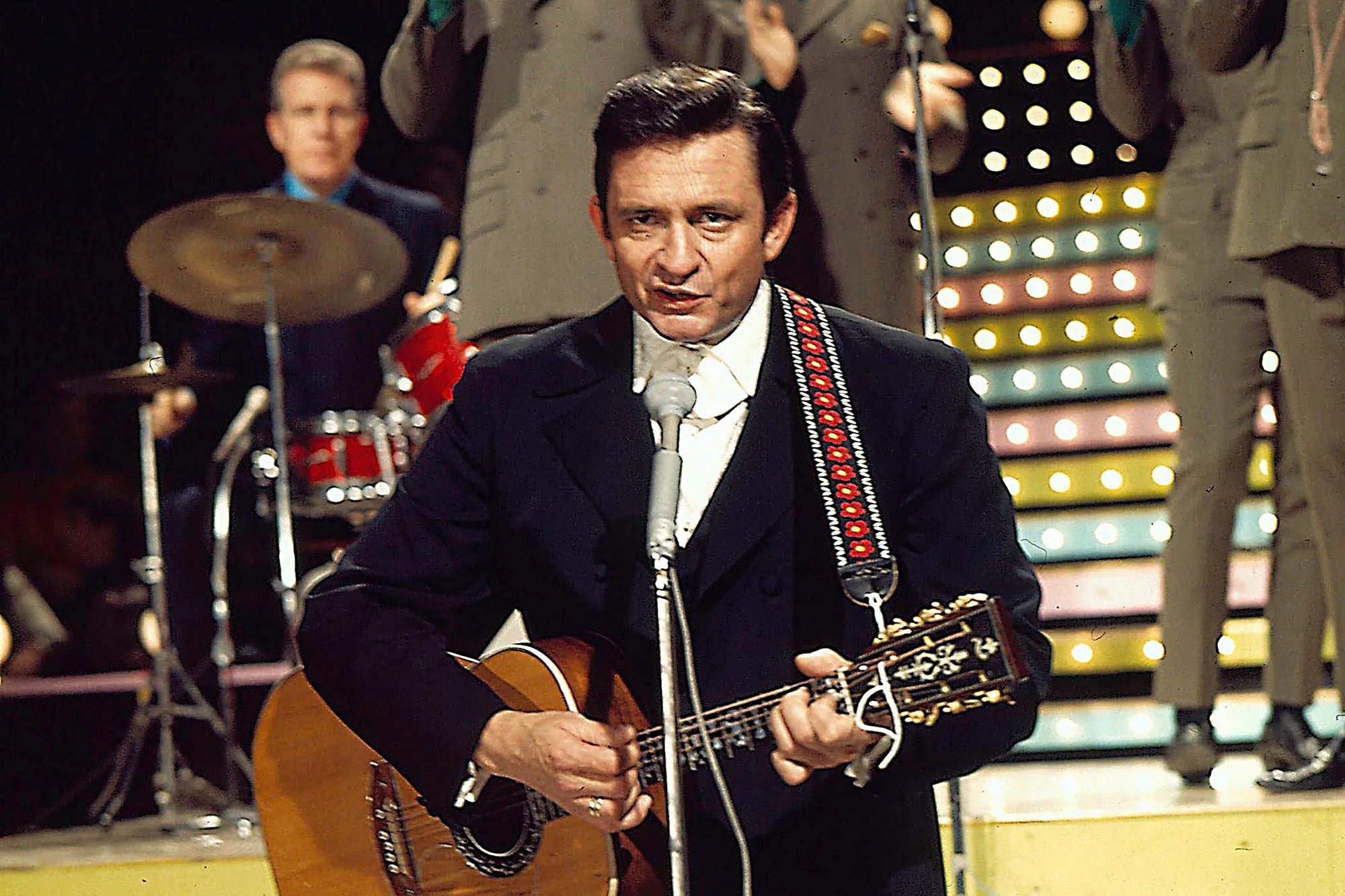
“Bad News,” Johnny Cash, 1964

In 1963, songwriter John Loudermilk took a stab at recording his own tune “Bad News,” which did respectably, reaching #23 on country charts. Many cover versions followed but none more effective than Johnny Cash’s rendition, which appeared on his 1964 LP “I Walk the Line” and peaked at #8 on country charts. The lyrics depict a drifter who has a bad reputation that precedes him into every town he travels to, and yet he laughs at and taunts the authorities who can’t seem to slow him down or make him pay the price, which seemed tailor-made for Cash’s outlaw image. It’s amusing to hear there menacing quality to Cash’s grunts and swagger as he recounts all he must do to stat one step ahead of the law: “From north to south, from east to west, the story is the same, /From one state to the other, I have to change my name, /’Cause I’m bad news, yeah, everywhere I go…”

“Bad Day,” Daniel Powter, 2005

Canadian singer-songwriter Potter wrote and recorded this catchy track in 2002 but searched for two years before he found a label willing to sign him. By 2005, he was assembling songs for his second LP and was encouraged by Warner Bros. CEO Tom Whalley to include “Bad Day” after Whalley heard it in a Coke commercial on French TV. Despite mixed reviews from the European press, the song became a Top Five hit in a dozen European countries, after which it was finally released in the US, where it also soared to #1. The lyrics offer universal appeal for the way they empathize with anyone who is having a miserable day and needs some TLC: “You sing a sad song just to turn it around, you say you don’t know, /You tell me ‘don’t lie,’ you work on a smile and you go for a ride, /You had a bad day…”

************************

Honorable mentions:

Bad Case of Loving You,” Robert Palmer, 1979; “Bad, Bad Leroy Brown,” Jim Croce, 1973; “I Did Something Bad,” Taylor Swift, 2017; “You’ve Got It Bad, Girl,” Stevie Wonder, 1972; “So Bad,” Paul McCartney, 1983; “Bad Reviews,” Sabrina Carpenter, 2024; “Bad to Me,” Billy J. Kramer & The Dakotas, 1963; “Two Out of Three Ain’t Bad,” Meat Loaf, 1977; “Hurt So Bad,” Little Anthony & The Imperials, 1965; “Bad is Bad,” Huey Lewis & The News, 1983; “Bad Night at the Whiskey,” The Byrds, 1969; “Bad Medicine,” Bon Jovi, 1988; “One Bad Apple,” The Osmonds, 1970.

**************************