It’s B-side the point
In 1962 in London, a Decca Records executive, a hapless soul who shall remain nameless, yawned as he listened to the audition of a fledgling band from Liverpool. He showed them the door as he told their manager: “Guitar groups are on the way out, Mr. Epstein. Go back to Liverpool.” A few months later, George Martin at EMI Records signed The Beatles and went on to change popular music history.
Record company executives have certainly made their share of correct decisions over the years when it comes to backing the right artists and picking the right song. But there are hundreds of examples throughout the rock ‘n roll era of some glaring missteps, when execs showed questionable judgment and made some wrong choices. Sometimes others stepped up later to make the right choice, or disc jockeys and radio listeners made the right choice for them.

There have been many instances throughout the rock music era when a record company or producer showed tin ears when selecting the songs that would appear on the next single. They would listen to a new artist’s work and say, “THIS is the song that has hit potential.” They would then release a single, which had an A-side and a B-side. The supposed hit would be promoted on the A-side, while the B-side was pretty much just thrown in as an extra, taking up space on the other side of the 45. But lo and behold, sometimes the song these wizards thought would be a hit was not as compelling as the supposed “filler” that sat on the B-side. Savvy DJs checked out the flip side and decided it was the better song, and it became the hit instead.
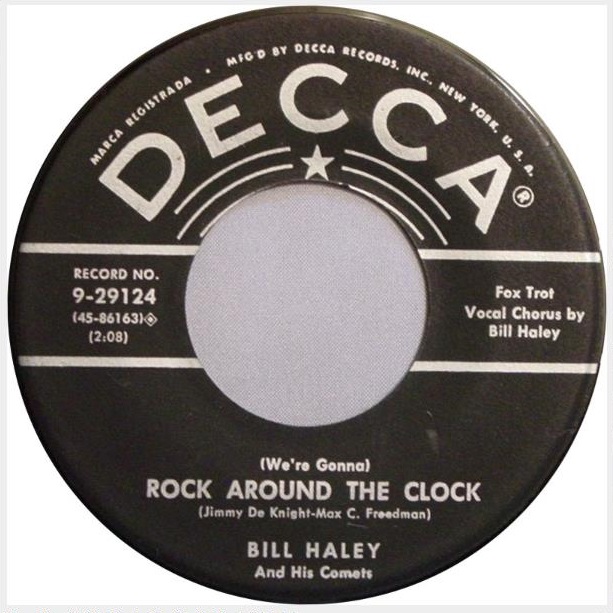
In 1954, the record company for Bill Haley and the Comets — Decca, again showing poor judgement — somehow didn’t see the appeal of the band’s effervescent “Rock Around the Clock” and shuffled it off to the B-side of an otherwise forgettable song, “13 Women.” The next year, “Rock Around the Clock” was featured in the teen flick “The Blackboard Jungle,” ended up a #1 song in 1955 and is generally regarded as the first-ever rock ‘n roll hit single.
This continued: Gene Vincent’s landmark “Be-Bop-a Lula” and The Champs’ classic “Tequila” were originally released as B-sides, playing second fiddle to clunkers like “Woman Love” and “Train to Nowhere” respectively. “Save the Last Dance for Me,” the marvelous 1960 tune by The Drifters, was a B-side upon release, as was Booker T. and the MGs’ 1962 hit “Green Onions,” an instrumental that easily overshadowed the intended single “Behave Yourself.”
Decca Records may have passed on The Beatles but they managed to sign The Rolling Stones…however, more than once, the song they assigned to the B-side outperformed the A-side.
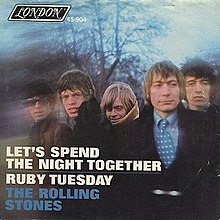
“The Last Time” was more successful than the intended 1965 single “Play With Fire,” and Decca also chose “Let’s Spend the Night Together” as the 1967 single, but its lyrics were considered too risqué for AM radio, and DJs instead played its B-side, “Ruby Tuesday,” which went to #1.
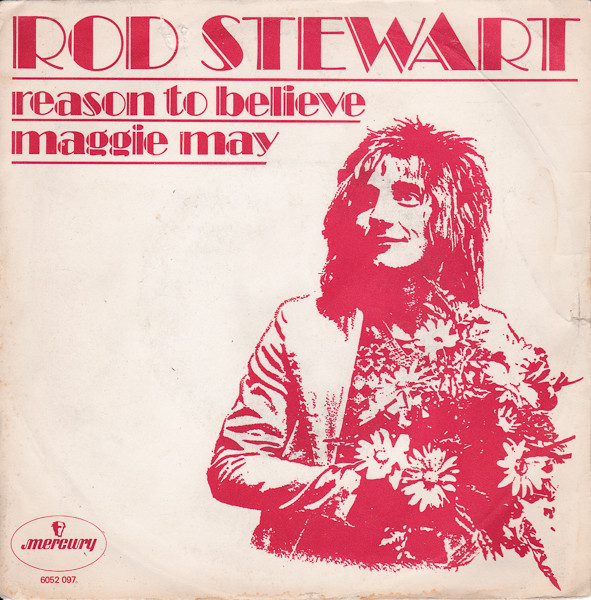
There was also Rod Stewart’s 1971 single “Reason to Believe,” a modest remake of an old Tim Hardin folk song that Rod’s people felt would do well as a single. On the flip side, they inserted an album track called “Maggie May.” DJs chose to play that one instead, and it, too, rocketed to #1.

In 1974, The Doobie Brothers released a single, “Another Park, Another Sunday,” that barely cracked the Top 40, but its B-side, “Black Water,” got substantial airplay and ended up as the group’s only #1 single. Even a fabulous tune like the 1971 Bill Withers beauty “Ain’t No Sunshine” was initially pegged as a throwaway B-side. In 1972, The Spinners put out a single called “How Could I Let You Get Away” that stiffed, but its B-side, “I”ll Be Around,” became a #3 hit that year.
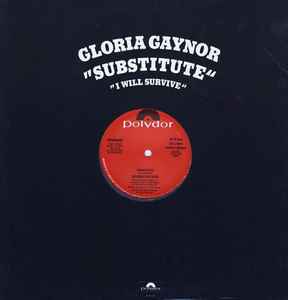
In 1979, Gloria Gaynor, a disco vocalist, released a new single called “Substitute” (no relation to The Who’s song of the same name), but DJs preferred the B-side, a little number called “I Will Survive,” and instead played that as, um, a substitute. It went on to become not only a monster #1 hit but one of the iconic songs of the disco era, and the feminist and gay rights movements as well.

Usually, B-sides were songs found on the same album as the A-side song, but now and then, artists would use the B-sides to feature rare extra tracks unavailable elsewhere. If you were an album buyer like me, you didn’t buy singles, so you wouldn’t know, for instance, that when Led Zeppelin released the single “Immigrant Song” in 1970 from “Led Zeppelin III,” the flip side, a catchy track called “Hey Hey What Can I Do,” was available only if you bought the single. Same with Fleetwod Mac’s 1977 hit “Go Your Own Way,” the leadoff single from the 25-million-selling album “Rumours.” The flip side of that single, Stevie Nicks’ gorgeous “Silver Springs,” had been cut from the “Rumours” lineup and ended up becoming a B-side rarity.

Bruce Springsteen released an unprecedented nine singles from his 1984 blockbuster “Born in the USA” album, and each one featured a B-side that was unavailable elsewhere (“Pink Cadillac” paired with “Dancing in the Dark,” and “Johnny Bye Bye” paired with “I’m On Fire,” for example). He later compiled all these B-sides on a limited edition EP, but for years, they could only be found on the 45s.
As vinyl singles gave way to cassette singles in the ’80s and ’90s and then to mp3 files, iTunes, and other online music delivery systems, the importance of A-sides versus B-sides was significantly diminished. Fans can now get their hands on pretty much whatever songs they like, so it’s no longer as relevant which tracks the record labels and artists designate as the hit or the also-ran. But for decades, it was fun for DJs, fans, and collectors to sometimes prove the “hit makers” wrong by finding B-sides that were superior to their trumped-up A-sides.
In 1969, a band known as Steam recorded a song called “It’s the Magic in You Girl,” selected by their label as a potential hit. They were then told, “Okay, now record something else, anything at all, to put on the B-side of the single. It can be instrumental, it doesn’t matter. Whatever you want.” In less than an hour, they came up with a light commercial jam with throwaway lyrics and a chorus of “na na na”s, and they were done. When the single was released, the DJs thought “It’s the Magic in You Girl” was lame and ignored it, but they loved the catchy ditty on the B-side. Within a few weeks, “Na Na Hey Hey Kiss Him Goodbye” was the #1 song in the country!
*************************
 Hack's Back Pages