Even children get older, now I’m getting older too
Let’s start this one with a little humor.
You know you’re getting old when: It takes two tries to get up off the couch; your children start looking middle-aged; you hear “snap, crackle, pop” at the breakfast table, but you’re not eating cereal; the only thing getting hard is your arteries.
They say the only two sure things in life are death and taxes. I would add one: Before we die, we get old.

Last week, I celebrated my 70th birthday. Some of my friends who watched me party pretty hard as a young man doubted I’d make it to 40, let alone 70, but, well, here I am. I like to think I’ve acquired some wisdom over the years, and I know better than to attempt some of the more taxing physical chores I used to do with gusto. I still enjoy listening to rock and roll — the classic old stuff as well as newer offerings — but maybe I don’t always crank it up quite as loud as I once did.
Rock and pop music is, by and large, a young person’s game, but quite a few “vintage” artists now in their 70s and 80s are still writing and recording new material and even performing. Just within the past nine months, I’ve seen shows by the likes of Alan Parsons (76), Little Feat’s Bill Payne (76), Graham Nash (83) and ELO’s Jeff Lynne (77), with James Taylor (77) on tap. Through the years, many artists have written songs about getting old, and I’ve collected 15 of them here for you to listen to and appreciate.
As my younger daughter once said to me, “You’re not old, Dad. You’re older.”
***************************

“Grow Old With Me,” John Lennon, 1984
Lennon went on hiatus from the music business in 1975 when his son Sean was born, and he chose to devote a few years to building and strengthening his family bonds with his wife Yoko Ono and their son. He continued writing songs and making rough, homemade demos of them, some of which were officially recorded and released in 1980 on “Double Fantasy” and, posthumously, on “Milk and Honey” in 1984. A few of the “Milk and Honey” tracks were never properly polished in a studio but released as demos anyway, the best being “Grow Old With Me,” one of the prettiest and most sentimental tunes he ever wrote. Mary Chapin-Carpenter, Ringo Starr and others have since released their own versions, but Lennon’s honest original tugs at my heartstrings: “Grow old along with me, whatever fate decrees, /We will see it through, for our love is true, /God bless our love, God bless our love…”

“Old,” Paul Simon, 2000
Ever since Simon released his understated “You’re the One” album in 2000, I’ve been a big fan of the lighthearted track “Old,” which takes an unorthodox, ultimately cheerful look at getting on in years. He reminds us that time is a strange thing, and that the Earth and God are billions of years old, but by comparison, “we’re NOT old.” It’s been a comforting song for me to listen to every year since, and I like to play it for people when they’re down in the dumps about marking another birthday. Now that Simon is into his 80s, I hope he can enjoy it and be reassured by it: “Down the decades, through the years, /Summer’s gone, my birthday’s here, /And all my friends stand up and cheer, /And say, ‘Man, you’re old, gettin’ old…”

“Done Got Old,” Junior Kimbrough, 1992
Kimbrough was one of the many unsung talents playing blues music in the American South in the ’60s and ’70s who struggled as performers and recording artists for decades before they were eventually recognized for their unique styles and blues originals. A native of the North Mississippi hill country, Kimbrough’s initial recordings failed to reach an audience until he was discovered by more established bluesmen like John Lee Hooker in the late 1980s. Kimbrough’s 1992 LP “All Night Long” became the first of four albums he released before his death in 1988 at age 67. One track from that album, “Done Got Old,” a hard-nosed, autobiographical look at aging, has been covered by Buddy Guy and others: “I can’t look like I used to, I can’t walk like I used to, I can’t love like I used to, /And now things gone changed
when I done got old, /I can’t do the things I used to do, because I’m an old man…”
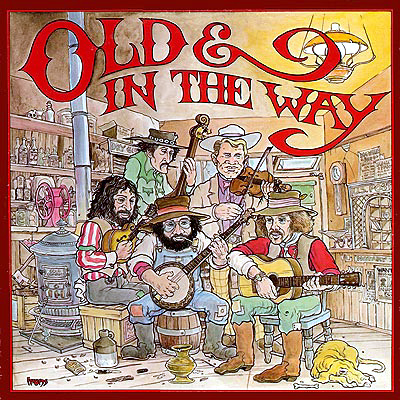
“Old and In the Way,” Old & In The Way, 1975
Before founding The Grateful Dead in 1966, Jerry Garcia had been in jug bands playing bluegrass on banjo, and he retained his fondness for that genre. In 1973, he became involved with fiddle legend Vassar Clements and a few other like-minded souls in a short-lived but spirited group known as Old & In the Way. They performed a few dozen shows and cut one album of bluegrass standards and originals before disbanding. Guitarist David Grisham wrote their flippant signature song, also called “Old and In the Way,” which helped make the album (released in 1975) one of the best-selling bluegrass albums ever: “Old and in the way, that’s what I heard them say, /They used to heed the words he said, but that was yesterday, /Old and turned to grey, and you will fade away, they’ll never care about you, for you’re old and in the way…”
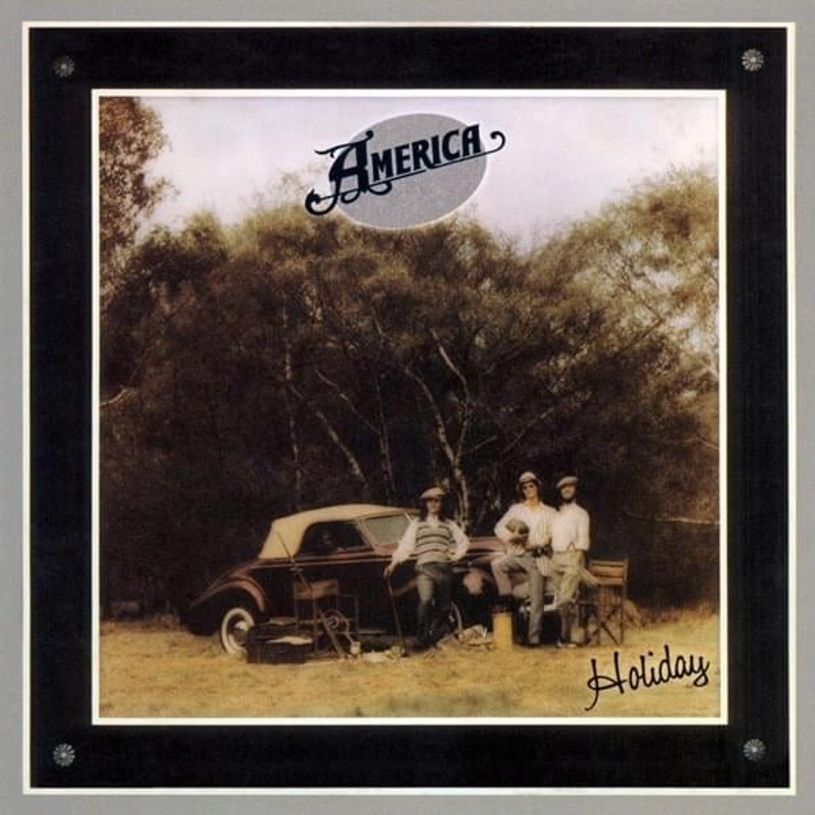
“Old Man Took,” America, 1974
Dewey Bunnell, one third of the trio of singer-songwriters who comprised the 1970s acoustic rock act America, wrote many of the group’s best-known songs (“A Horse With No Name,” “Sandman,” “Ventura Highway,” “Tin Man”). On their fourth LP, 1974’s “Holiday,” Bunnell was inspired to write a song about an elderly man he knew who had recently passed away. It’s a moving piece that uses major seventh guitar chords, like so many other America tunes, to complement the heart-rending words: “For the last time, I watched Old Man Took bait his hook, and then throw his line, pick up his wine, /He’s a friend of mine, known him all my life, and his wife, /’Neath the swayin’ pine and the clingin’ vine, /Just before he left, he said, ‘Now, young man, take good care, don’t let the bugs bite…”

“Old Man,” Randy Newman, 1972
Newman’s satirical songwriting quickly became widely praised and covered by others (Three Dog Night made a hit of his amusing “Mama Told Me Not to Come” in 1970). His gruff, uncultured voice hurt his own LPs, in my opinion, but they still sold well. His third album, 1972’s “Sail Away,” includes the suggestive “You Can Leave Your Hat On” (a future Joe Cocker hit) and the infamous “Burn On,” a scathing take on Cleveland’s Cuyahoga River catching fire in 1969. I’ve always admired “Old Man,” Newman’s gently mournful study of old age, which Art Garfunkel covered on his solo debut the following year: “You must remember me, old man, I know that you can if you try, /So just open up your eyes, old man, /look who’s come to say goodbye…”

“Hello In There,” John Prine, 1971
Prine wrote songs in a natural, plain-spoken style, sometimes with humor, sometimes with insightfulness. Even when he was only 22, he came up with unassuming yet profound lyrics to describe the highs and lows of the everyman. One of his finest works, in my view, is “Hello In There,” which American Songwriter depicts as “a stark examination of age, enduring love, and time’s merciless hand.” Prine sensitively explores the loneliness of advanced age and the feeling of “being invisible to the world.” You can find the tune on Prine’s self-titled 1971 debut LP, and cover versions by the likes of Bette Midler, Emmylou Harris, Johnny Cash, Joan Baez and 10,000 Maniacs: “So if you’re walking down the street sometime and spot some hollow ancient eyes, /Please don’t just pass ’em by and stare, as if you didn’t care, /Say, “Hello in there, hello…”
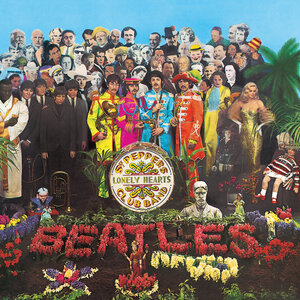
“When I’m Sixty-Four,” The Beatles, 1967
Paul McCartney was only 14 when he wrote this cabaret-style song about aging, inspired by the type of music has father often played on the piano in the family parlor. More than ten years later, McCartney suggested resurrecting it for inclusion on The Beatles’ “Sgt. Pepper’s Lonely Hearts Club Band” album, in part because Paul’s father Jim McCartney had just turned 64 that year. “It was designed to be about a young man singing to his lover about his plans for the two of them to grow old together,” said McCartney years later. “The others teased me about it, calling it ‘granny music,’ but it ended up one of the more popular tracks on the record.” “…I could be handy, mending a fuse when your lights have gone, /You can knit a sweater by the fireside, Sunday mornings go for a ride, /Doing the garden, digging the weeds, who could ask for more? /Will you still need me, will you still feed me, when I’m sixty four?…”

“Old and Wise,” Alan Parsons Project, 1982
Parsons was a young sound engineer at EMI Studios in London, and was integrally involved in the production of The Beatles’ “Abbey Road” and Pink Floyd’s “Dark Side of the Moon,” two of the most popular albums in rock history. In 1976, he initiated The Alan Parsons Project with singer-songwriter Eric Woolfson, using a broad range of studio musicians and vocalists on their successful ten-album catalog. Their commercial peak came with 1982’s “Eye in the Sky,” which reached #7 on US album charts, and the title song peaked at #3 on the US Top 40. The LP’s final track, featuring former Zombies lead singer Colin Bluestone, is “Old and Wise,” which focuses on the thoughts of someone nearing the end of life: “And someday in the mist of time, when they asked me if I knew you, /I’d smile and say you were a friend of mine, /And the sadness would be lifted from my eyes when I’m old and wise…”

“Growing Older But Not Up,” Jimmy Buffett, 1980
Although his first five LPs netted only one song that reached the Top 40, Buffett put together a solid run of albums in the late ’70s that brought him consistent success on both the US album charts and the singles pop chart (“Margaritaville,” “Cheeseburger in Paradise,” “Fins”). As times changed in the 1980s, Buffett’s star began to fade; 1981’s “Coconut Telegraph” wasn’t as successful and yielded no singles. But I’d urge you to take another listen to “Growing Older But Not Up,” a whimsical song about the mind staying young as the body ages: “Though my mind is quite flexible, these brittle bones don’t bend, /I’m growing older but not up, /My metabolic rate is pleasantly stuck, /Let those winds of time blow over my head, /I’d rather die while I’m living than live while I’m dead…”

“Getting Older Scares Me to Death,” davvn, 2025
A Nashville-based alternative pop duo that calls itself davvn (pronounced dawn) has been making “new nostalgia” since 2021, and they recently released a single called “Getting Older Scares Me to Death.” At first blush, I rolled my eyes like a know-it-all parent who might say, “You’re so young! What do you know about getting old?” But just because they’re in their 20s doesn’t mean they can’t have anxiety about aging. I think the song offers a valid viewpoint for anyone of any age who feels that maybe life is going too fast, or passing them by: “Is this as good as it gets, always just bored and depressed, I’m hanging on by a thread, choking on my own medicine, tattooed with all my regrets, so sick of playing pretend, heartbreaks got me by the neck, getting old scares me to death…”

“Old Friends,” Simon and Garfunkel, 1968
Almost from the very beginning, Paul Simon showed uncommon depth and wisdom in his songwriting, particularly lyrics. It’s pretty impressive that he was only 27 when he came up with “Old Friends” and “Bookends,” two poignant songs about aging that he merged into one track on Simon and Garfunkel’s watershed fourth LP “Bookends” in 1968. Indeed, the first side of that LP includes tunes that explore the various chapters of life, from childhood and young adulthood through disillusionment and divorce to resigned senior citizen: “Can you imagine us years from today, sharing a park bench quietly? How terribly strange to be seventy… Old friends, memory brushes the same years, silently sharing the same fears… /Long ago, it must be, I have a photograph, /Preserve your memories, they’re all that’s left you…”

“Old Man,” Neil Young, 1972
After his initial burst of fame with Buffalo Springfield and Crosby, Stills, Nash & Young in 1967-1970, Young purchased a multi-acre spread of land in Northern California which he named the Broken Arrow Ranch. Said Young, “When I bought the place, there was a couple living on it who were the caretakers, an old gentleman named Louis Avila and his wife Clara. He took me up to this ridge, and there’s this lake up there, and he says, ‘Tell me, how does a young man like you have enough money to buy a place like this?’ And I said, ‘Well, just lucky, Louis, just real lucky.’ And he said, ‘Well, that’s the darnedest thing I ever heard.’ And I wrote ‘Old Man’ for him.” It compares a young man’s life to an old man’s and shows that they essentially have the same needs: “Old man, look at my life, 24 and there’s so much more, live alone in a paradise that makes me think of two… /Old man, take a look at my life, I’m a lot like you…”

“My Back Pages,” Bob Dylan and Friends, 1993
Seeing as how this classic Bob Dylan song was the inspiration for the name of this Hack’s Back Pages blog, I love to include it in my playlists whenever it makes sense to do so. Dylan wrote it back in 1964 for his fourth LP, “Another Side of Bob Dylan,” and its pivotal line — “I was so much older then, I’m younger than that now” — was meant to be his way of explaining his shift away from personal and political idealism and what he felt was a too-serious messianic image as “the voice of a restless generation.” The Byrds covered the song in 1967 and made it their final Top 40 hit, and both Marshall Crenshaw and America also recorded versions. In 1992, at a concert in New York honoring Dylan’s 30 years in the business, an all-star group (George Harrison, Roger McGuinn, Neil Young, Eric Clapton, Tom Petty and Dylan himself) performed the song together, and a live album of the show was released the next year.
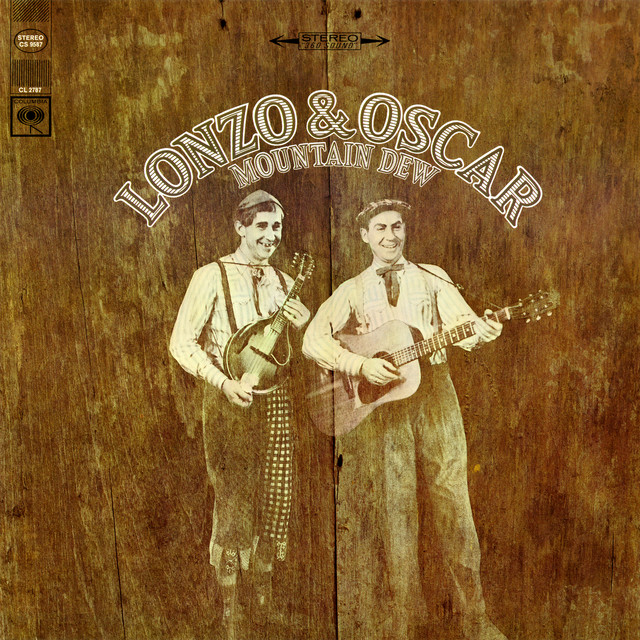
“I’m My Own Grandpa,” Lonzo and Oscar, 1948
Just for fun, I’m concluding this playlist with a novelty song written by Dwight Latham and Moe Jaffe in the 1940s about a man who, through an unlikely (but legal) combination of marriages, becomes stepfather to his own stepmother, and by dropping the “step-” modifiers, he becomes his own grandfather. The men had been reading a book of Mark Twain anecdotes which included a paragraph where Twain proved it would be possible for a man to become his own grandfather, and they expanded the notion into a country song. The duo of Lloyd “Lonzo” George and Rollin “Oscar” Sullivan recorded it in 1948, and it not only ended up selling four million copies, it inspired multiple cover versions through the years by Guy Lombardo, Jo Stafford, Homer & Jethro, Ray Stevens, Willie Nelson and Steve Goodman.
****************************
 Hack's Back Pages