I can’t stand to say goodbye
As soon as I heard that Ozzy Osbourne had died last week at age 76, I quickly concluded that I had my work cut out for me. I don’t regard myself as particularly qualified to write knowledgeably about the man credited with “inventing” heavy metal. It’s a genre that really never spoke to me. I guess I wasn’t really a part of the demographic for it.
But my son-in-law Mikey is. When he was a teen in the 2000s, he was in a heavy metal band called Swamp Thing that actually toured Europe, and they even had a reunion concert within the past year. He is pretty much a disciple of Ozzy, so I asked him to share his thoughts. He sent me an email teeming with facts and opinions, and the comment I found most interesting is: “Chronicling Ozzy isn’t mere obituary writing; it’s exploring the genesis and evolution of heavy metal, reality TV, and the notion of celebrity itself.”
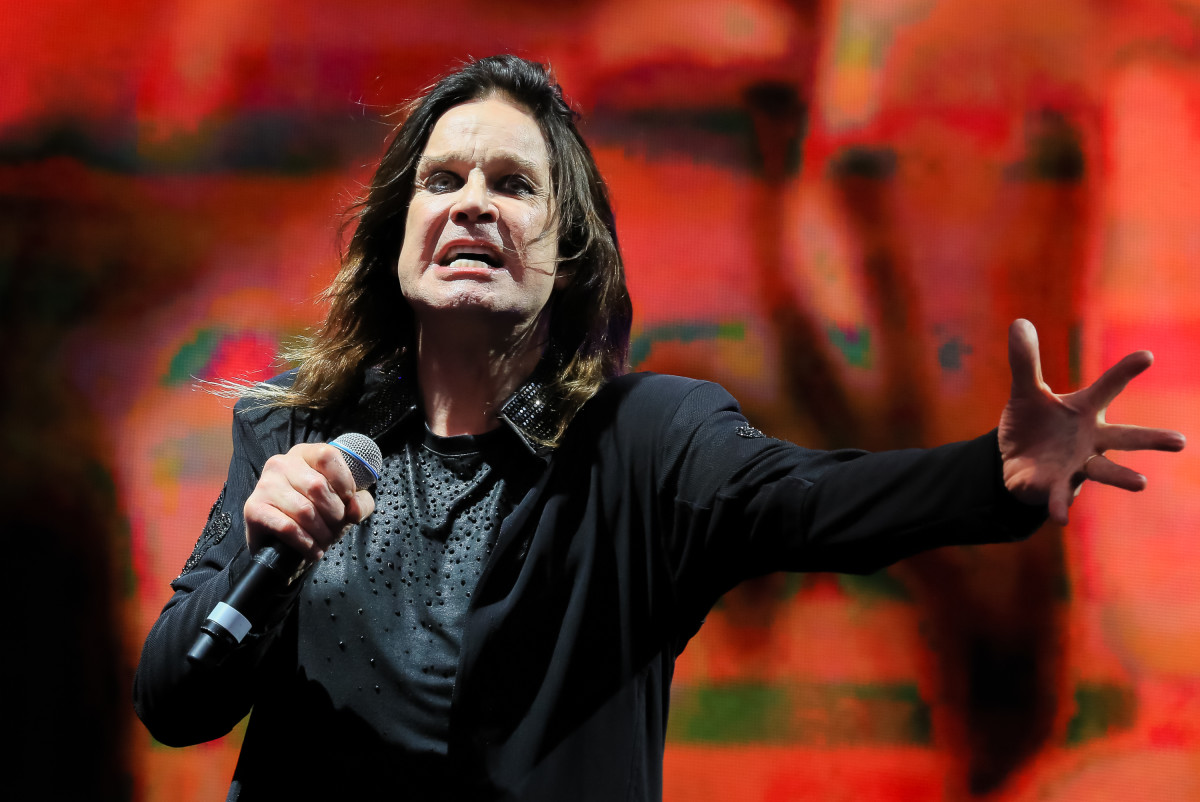
So much about the man born John Robert Osbourne is a study in contrasts.
He invented an evil persona, and yet he was capable of surprisingly funny and wise remarks. He turned Black Sabbath, once an obscure British hard rock band from Birmingham, into an international success, and yet he was a serious alcoholic and drug addict for many years. He wrote a few songs about the dangers of excessive drug use, and yet wrote many more about defiantly partying his days and nights away. He had a vocal style that conveyed both madness and melancholy, sometimes simultaneously. He firmly stood his ground on stage as The Prince of Darkness, and yet he spent a decade starring as a clueless husband/father on an MTV reality show.
Despite appearing to be a mess for much of his career, Osbourne actually seemed to have a master plan — a method to his madness — or, at the very least, a resilience to rebound from relapse to reinvent himself and surge ahead. As one writer put it last week, “The fact that he kept waking up alive every morning for the next 40-plus years is one of the weirdest things that’s ever happened in rock & roll. Nobody would have bet on this guy to survive the Eighties, much less keep getting more famous every year, but his star never stopped rising.”
Frankly, I’ve been rather gobsmacked at the outpouring of adulation and mourning that has been shown these past several days by his intensely loyal fan base, but perhaps it goes to show how much I didn’t know (or relate to) about Osbourne and his music. From the very beginning, he was a teenage antihero who spoke authentically for the misfits, rejects and outcasts — because he had been one himself.
*****************
Born into a troubled, violent home life in working-class Birmingham, Osbourne struggled in school, suffering from dyslexia and attention-deficit disorder, which made him a target of bullies. “I always felt crappy, and was intimidated by everyone,” he said in 1996. “So my whole thing was to act crazy and make people laugh so they wouldn’t jump on me.”

In 1963, “the planets shifted” when he first heard The Beatles. “I was 15. It was a divine experience.” He dropped out of school and attempted various jobs — toolmaking, construction, auto repair, working in a slaughterhouse — but ended up serving a two-month prison sentence for burglary. At that point, he was keen on forming a band, and his father, in an uncharacteristic show of support, bought him a microphone and an amp and speakers. Osbourne posted an ad in a music shop that claimed, “Experienced front man owns own PA system,” which caught the attention of guitarist Terence “Geezer” Butler, and the two of them ultimately joined forces with guitarist Tony Iommi and drummer Bill Ward from another band and called themselves Earth.
They all had shown a preference for acid rock and other hard rock sub-genres and liked the idea of presenting dark themes and sounds, so they wrote songs designed to scare audiences in the same way horror movies do. Butler told the group about a nightmare he had in which he felt a sinister presence at the foot of his bed, and he devised a three-chord structure full of dread, on top of which Osbourne spontaneously came up with the defiant lyric, “What is this that stands before me?” Iommi contributed the crushing power chords over Butler’s bass line, and the frightening vibe they created became not only their first song but the new name for their band: “Black Sabbath,” which had also been the name of a morbid 1963 Boris Karloff horror anthology film they admired.
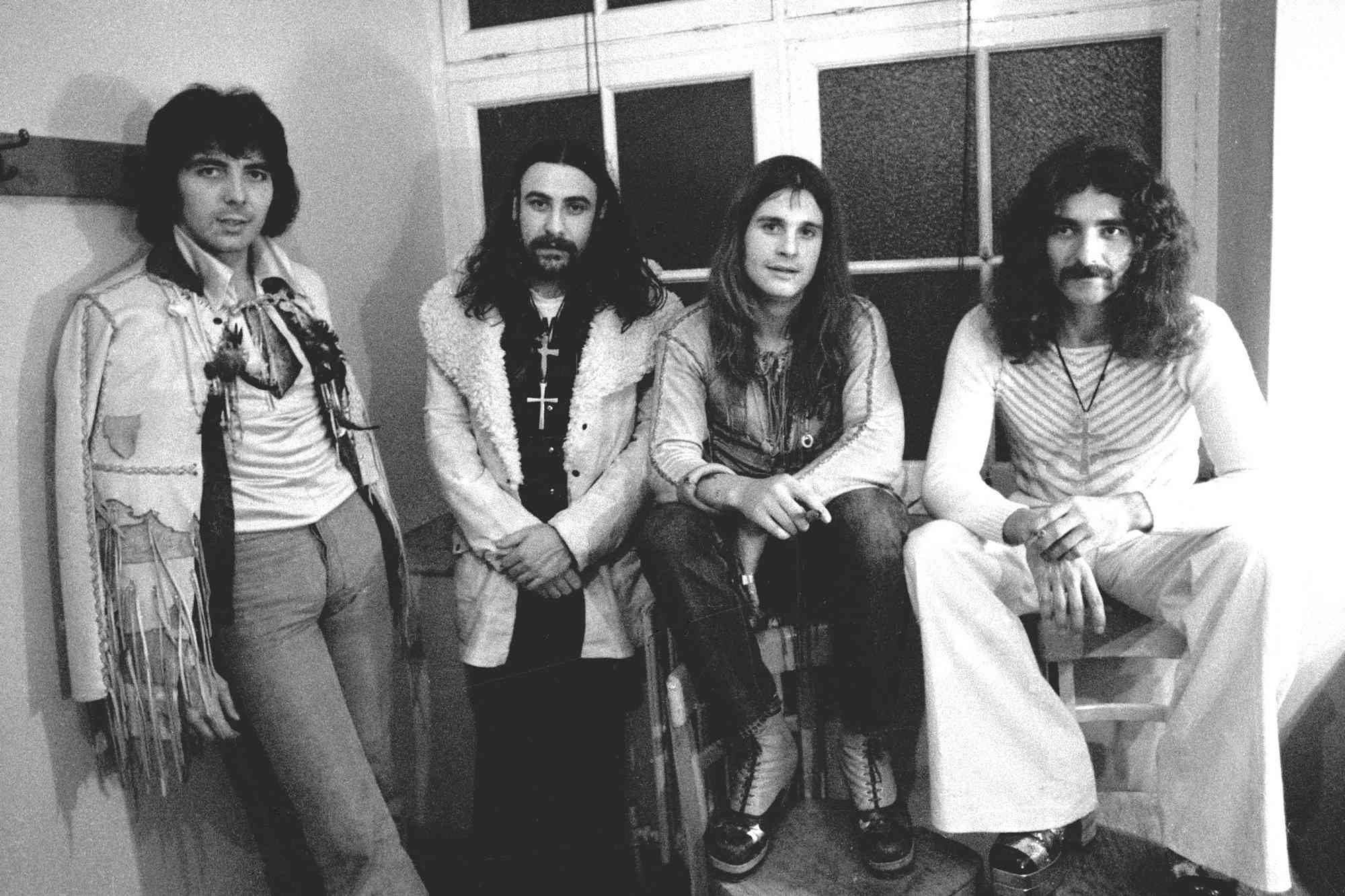
Rock historians have never agreed exactly when heavy metal was born, but a strong argument can be made it was when Osbourne and company wrote and recorded that disturbing debut LP. Said Iommi, “We knew we had something. You could feel it. The hairs stood up on your arms. It just felt so different.” The dirge-like tempo of much of their music was offset by a track they wrote as they were wrapping up sessions for their second LP, a rapid-fire rocker lasting just 2:48 that became their first hit and the new title song for the album: “Paranoid.” It reached #2 in the UK, and although it stalled at #61 in the US, it put the album in the Top Ten here and gave a wider mainstream exposure of what had been a fringe genre.
The misperception by conservative parents that Sabbath played music that celebrated Satan was, though partly true, only a fraction of their focus. Their songs protested the state of the world in the 1970s in which disaffected teenagers found themselves. “War Pigs” decried the military minds that sent young men off to die. “Hand of Doom” warned of the downward spiral of hard drug use. “Electric Funeral” bemoaned the feared plague of nuclear radiation. “Paranoid” spoke of the fear of mental illness and insanity. Even their signature song “Iron Man” was actually the sad tale of a guy who invents a time machine, learns the world will soon end, but when he returns to present day to warn people, he turns to iron and no one will listen to him, so he seeks revenge by killing. Violent, but sympathetic.
Osbourne, who once said he was “more ham than musician,” thrived on playing up the dramatic aspects of heavy metal, especially in concert, where the theatrics sometimes overshadowed the music. The whole band indulged in acid, weed and booze, often in copious amounts, but when coke entered the picture, its isolating nature threatened to tear the group apart. Indeed, Osbourne became unpredictable and therefore unreliable, leading to his being dismissed in 1979. Needless to say, this didn’t go down well with Ozzy or his fans. “Firing me for being fucked up was hypocritical bullshit,” he wrote in 2009’s “I Am Ozzy” autobiography. “We were all fucked up. I’m getting fired because I’m slightly more stoned than you are?”
Black Sabbath continued on with American heavy metal singer Ronnie James Dio replacing Osbourne, and they continued releasing popular LPs and touring throughout the ’80s and into the ’90s, but they never quite measured up to their early years nor to the solo career Osbourne forged with his own group. 1980’s “Blizzard of Ozz” and 1981’s “Diary of a Madman” were multi-platinum juggernauts that established him as a superstar, thanks in part to radio anthems like “Crazy Train” and “Flying High Again,” featuring the sizzling guitar work of ex-Quiet Riot axeman Randy Rhoads.

When Rhoads perished in a plane crash, Osbourne took it hard, abusing drugs and alcohol to the point where his wild-man antics threatened to take him down prematurely. It was during this period when, in the middle of a concert in 1982, someone threw what he thought was a rubber toy bat on stage, and he impulsively scooped it up, tossed it in his mouth and chomped down. “Immediately, something felt very wrong,” he recalled later. “I realized, oh no, it’s real.” The young man who threw it acknowledged it was a real bat but said it had been dead for several days, so the rumor that he had bit the head off a live bat is untrue. Nevertheless, Ozzy’s miscue led to a trip to the hospital and several painful rabies shots.
During the mid-’80s backlash by evangelicals against what they felt were inappropriate song lyrics, Ozzy’s song “Suicide Solution” was criticized for advocating suicide, but he quickly set the record straight. “It wasn’t written as ‘oh, that’s the solution, suicide,'” he said. “I was a heavy drinker at the time and was drinking myself to an early grave. Alcohol was a suicide solution, as in ‘mixed drink.'”
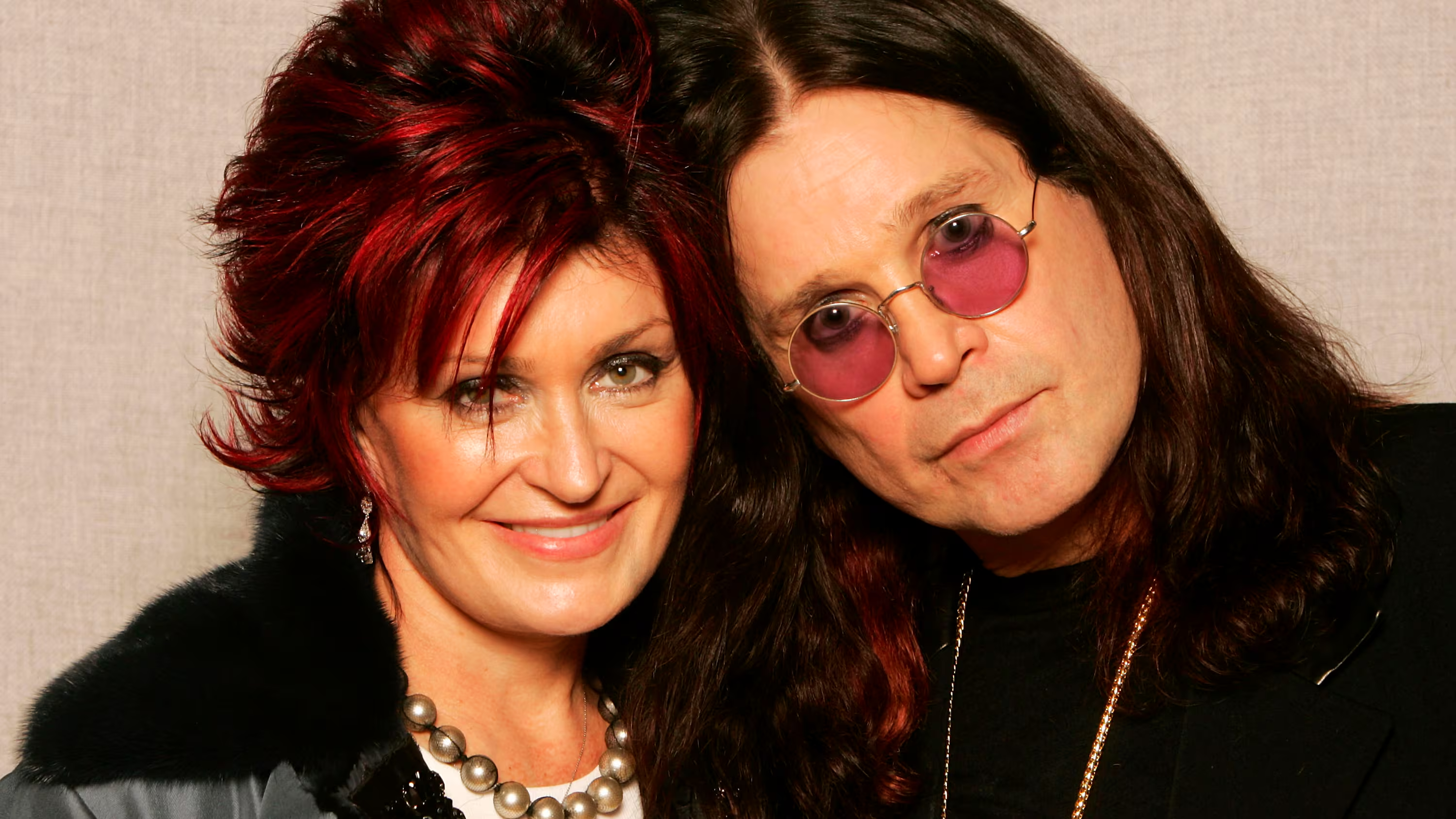
Fate intervened when he started dating Sharon Arden, whose father had been Black Sabbath’s manager. Sharon took over Osbourne’s management as a solo artist and the two married in 1982. She tolerated and survived a litany of bad behavior from Ozzy, some of it violent, and managed to persevere with him, ultimately getting him into recovery from his addictions.
In an unlikely pairing, Lita Ford, guitarist for the all-female U.S. rock band The Runaways, teamed up with Osbourne one drunken evening in 1988 to write and record “Close My Eyes Forever,” which ended up reaching #8 on US pop charts the following year.
In 1995, when Osbourne sought to be included in that year’s lineup for the Lollapalooza festival, he was turned down because organizers felt he didn’t fit the vibe they were going for at that time. Undeterred, Ozzy and Sharon masterminded Ozzfest, which became a major annual international touring event that assembled the major heavy metal bands of the day. By the end of the decade, the festival was riding a wave of popularity with the emerging “nu-metal” scene, whose bands treated Osbourne like a deity.
It should be noted that, amidst all the years of metal madness, Osbourne had a quiet side that manifested itself in atypical tracks like Sabbath’s “Changes” and power ballads like “Dreamer.” Most famously, perhaps, is 1991’s “Mama, I’m Coming Home,” a heartbreaking but hopeful song not about Ozzy’s mother but about Sharon. “I often call Sharon ‘Mama,’ because she mothers me so well,” he said in 2018. “I owe my life to her.”

That devotion showed up in the most unconventional way when MTV came up with “The Osbournes,” a reality TV show that took the cable network’s viewing audience by storm for three seasons (2002-2005). It depicted Ozzy as a clueless but well-meaning family man who deferred to Sharon as the head of the dysfunctional but lovable household that included daughter Kelly and son Jack. It reinforced his image as a befuddled, profanity-spewing derelict while also revealing a vulnerable, witty personality that made him a more sympathetic figure than he’d been in the past.
Indeed, I was a bit startled to see the number of mainstream musicians who collaborated with him on some of his late-career projects. Osbourne’s 2020 LP “Ordinary Man” featured duets with Elton John and Post Malone, while his final album, “Patient Number 9,” included contributions from guitar legends Jeff Beck and Eric Clapton.
Even more remarkable was the fact that Osbourne had become good friends with his former neighbor, the squeaky-clean ’50s pop icon Pat Boone, who recorded a big-band version of “Crazy Train” that, although thoroughly cringey, was actually used (ironically) as the theme song for “The Osbournes” show. “When he and Sharon and the kids lived next door to me for a couple of years, we weren’t celebrities comparing careers,” Boone said recently. “We were just friends and neighbors getting along. Others may celebrate his incredible rocking style and hard rock music, but I’ll always remember his warm friendliness. God bless you, Ozzy.”
In 2006, Osbourne was inducted into the Rock and Roll Hall of Fame as a member of Black Sabbath (and and again as a solo artist in 2024). At that first induction ceremony, Metallica drummer Lars Ulrich made a point of emphatically declaring the group’s monumental influence on so many bands who followed: “On any given day, the heavy-metal genre might as well be subtitled “Music derivative of Black Sabbath.”

In my recent research about Osbourne and his career, I got a few chuckles reading an article that collected several of his more humorous asides, which are not only funny but philosophically astute. For example: “The thing about life that makes me crazy is that, by the time you learn it all, it’s too late to use it. It should be the other way around. We should be born with all this common sense and knowledge and then get stupider as we get older.”
His self-deprecating humor was refreshing in its honesty. “For a while there,” he said once, “I was a complete mess. I was about as useful as an ashtray on a motorcycle.” It also extended to the way he titled his solo tours. He contemplated stepping down when he embarked on his “No More Tours” tour in 1992, then turned around in 1995 with his “Retirement Sucks” tour. Twenty years later, one last tour was entitled the “No More Tours II” tour.
Osbourne suffered from Parkinson’s and also sustained lasting damage from a fall in 2019 that hospitalized him for many months. He hated that these things prevented him from performing, which is where he always felt most comfortable. Through a concerted effort and help from Sharon and his Black Sabbath mates, he staged a marathon gig in his hometown only three weeks ago that netted nearly $200 million, which was donated to charity for research into Parkinson’s. Said Butler last week: “Goodbye, old friend. We had some great fun. Four kids from Aston — who’d have thought? So glad we got to do it one last time, back in Aston.” Added Iommi, “There won’t ever be another like you.”

As one article summed it up: “That act alone says everything about the kind of legend he was: giving back, even as he took his last bow. There’s everyone else in rock ’n’ roll… and then there’s Ozzy. It felt perfectly fitting that his last gig, just weeks before his passing, saw him seated on a throne, his body fading, but his spirit as fierce as ever.”
(A 100-minute concert film, “Back to the Beginning: Ozzy’s Final Bow,” scheduled for release in early 2026, will feature highlights of the day, including segments by Alice in Chains, Guns N’ Roses and Metallica, among others, and Osbourne’s final solo performance and final set with Black Sabbath.)
Ozzy himself said this as he contemplated retirement: “Retire from what? It’s not a job. How can you retire from a rock band? I don’t know anything else. I’ll retire when they put the fucking nail in the lid.”
And this: “I’m not the devil people make me out to be. I’ve always been the guy who wants to make people laugh, headbang, and forget their problems — at least for a while.”
R.I.P., Ozzy. The heavy metal universe, and many who were not a part of it, acknowledge your considerable influence and contributions.
**********************
For this Spotify playlist, I’ve selected 18 Black Sabbath songs and 27 tracks from Ozzy’s solo career.
 Hack's Back Pages