I love coffee, I love tea

Dolly Parton got it right regarding what I do the moment my feet hit the floor each morning when she sang, “Well, I tumble out of bed and stumble to the kitchen, pour myself a cup of ambition…”

The drink that got its start in Eastern Africa before migrating to the equatorial countries of the Americas is a crucial elixir many of us sip each day to get our personal engines running. For more than a century now, half of all coffee produced worldwide each year is consumed in the US. From the 10-cent cup of coffee of the 1950s to the $5+ concoctions at Starbucks today, we are happy to pay the price for that morning jolt.

In England, tea is the preferred beverage, due in part to its history of importation from India (a British colony for many decades) and its affordability. Tea is an integral part of the culture, a fact not lost on the songwriters of Great Britain.

Musicians from both countries have been writing and recording songs about coffee and tea since The Jazz Age. I have assembled 15 of the best ones, with another ten honorable mentions, and all are included on my Spotify playlist at the end. The styles and tempos are all over the map, so they might not be “your cup of tea” if you are like me and “take your coffee with a dash of silence.” But it’s a fun set I hope you enjoy at some point in your day.

****************************

“Black Coffee,” k.d. lang, 1988

In 1948, lyricist Paul Francis Webster (who went on win Oscars for “Love is a Many Splendored Thing” and “The Shadow of Your Smile”) collaborated with jazz composer/arranger Joe “Sonny” Burke to write this bluesy torch song that finds salvation in a steaming cup of coffee when you’re up all night waiting to hear from your loved one. “Black Coffee” was recorded by some big names of that era, notably Sarah Vaughan, Peggy Lee and Ella Fitzgerald, and many more artists in the years since. I’m partial to k.d. lang’s 1988 recording from her “Shadowland” LP. “I’m feeling mighty lonesome, I haven’t slept a wink, /I walk the floor and watch the door, and in between I drink black coffee, /Love’s a hand-me-down brew…”

“Second Cup of Coffee,” Gordon Lightfoot, 1972

Lightfoot is a national hero in his native Canada, still performing occasionally at age 83. In the U.S., he first hit the charts with “If You Could Read My Mind” in 1970, followed a few years later with the #1 song and album “Sundown.” In between, a couple of fine LPs curiously didn’t attract much attention, one being “Don Quixote” with its stunning love song “Beautiful.” Also on that album was “Second Cup of Coffee,” in which he hopes the caffeine he’s drinking to soothe his broken heart will stave off any impulse for harder stuff later on: “I’m on my second cup of coffee, and I still can’t face the day, /I’m thinking of the lady who got lost along the way, /And if I don’t stop this trembling hand from reaching for the phone, /I’ll be reachin’ for the bottle, Lord, before this day is done…”

“Afternoons and Coffeespoons,” Crash Test Dummies, 1993

The Dummies, led by the instantly identifiable bass/baritone vocals of Brad Roberts, was one of the biggest Canadian bands of the 1990s, and had some substantial success in the U.S. with the #3 single “Mmmm Mmmm Mmmm Mmmm.” Another fan favorite from the same album was “Afternoons and Coffeespoons,” inspired by T.S. Eliot’s landmark 1915 poem, “The Love Song of J. Alfred Prufrock.” Roberts calls it “a song about being afraid of getting old, which is a reflection of my very neurotic character”: “Woah, afternoons will be measured out, measured out, measured with coffeespoons and T.S. Eliot…”

“Black Coffee in Bed,” Squeeze, 1982

British band Squeeze were one of the best to emerge from the New Wave era, with several hit singles and albums in England. U.S. audiences were more selective but did embrace some of their work, notably the 1981 hit “Tempted,” which reached #8, and the sublime 1982 follow-up “Black Coffee in Bed,” which peaked at #26, and includes backing vocals by Elvis Costello and Paul Young. Another look at lost love, but this time seen as more of a relief: “Oh, from lips without passion to the lips with a kiss, there’s nothing of your love that I’ll ever miss, /The stain on my notebook remains all that’s left, of the memory of late nights and coffee in bed…”

“One More Cup of Coffee,” Bob Dylan, 1976

Dylan wrote some of the best kiss-off songs of all time — “Don’t Think Twice, It’s All Right” and “Positively 4th Street” come immediately to mind — but he has many other lesser-known breakup songs throughout his voluminous catalog. Buried on his #1 LP “Desire” in 1976 (highlighted by the hit “Hurricane”) is “One More Cup of Coffee,” on which he croaks out a duet with Emmylou Harris: “I don’t sense affection, no gratitude or love, /Your loyalty is not to me but to the stars above, /One more cup of coffee for the road, one more cup of coffee ‘fore I go…”

“Coffee and TV,” Blur, 1999

British rock band Blur found only modest chart success in the U.S., but in their native UK, they were, along with Oasis, the chief purveyors of “Britpop,” scoring five consecutive #1 albums and a dozen Top Ten singles in the late 1990s. From their LP “13” in 1999, there’s a song with lyrics by guitarist Graham Coxon in which he describes his battles with alcoholism, using television and many pots of coffee to stave off his cravings and darker impulses: “So give me coffee and TV, easily, /I’ve seen so much, I’m goin’ blind, and I’m brain-dead virtually, /Sociability is hard enough for me, take me away from this big bad world…”

“You’re the Cream in My Coffee,” Nat King Cole Trio, 1950

The team of Ray Henderson (music) and Buddy DeSylva (lyrics) wrote this infectious little tune back in 1928 for their Broadway musical, “Hold Everything!” Early recordings included those by Annette Hanshaw and Ruth Etting, and later The Ray Conniff Singers and the Les Brown Orchestra put it on vinyl as well, but the best version, to my ears, was by the incomparable Nat King Cole and his King Cole Trio. The lyrics praise the woman he loves as crucial to his well being: “You’re the cream in my coffee, you’re the salt in my stew, /you’ll always be my necessity, I’d be lost without you…”

Black Coffee,” Ike and Tina Turner, 1972

In 1972 Ike & Tina Turner, still a functioning duo riding high on their scorching cover of “Proud Mary” from the previous year, released the funk rock classic “Feel Good,” comprised almost entirely of Tina Turner originals, including a stomper called “Black Coffee.” In her song, SHE is the Black Coffee — “My skin is brown, but my mind is black” — and she spits it out with sass and fire, with Ike’s raging guitar behind her. Brit rockers Humble Pie put out a fine cover version on their “Eat It” double album the following year. “Black coffee is my name, black coffee is not a thing, /Black coffee, freshly ground and fully packed, /Hot black coffee, is where it’s at…”

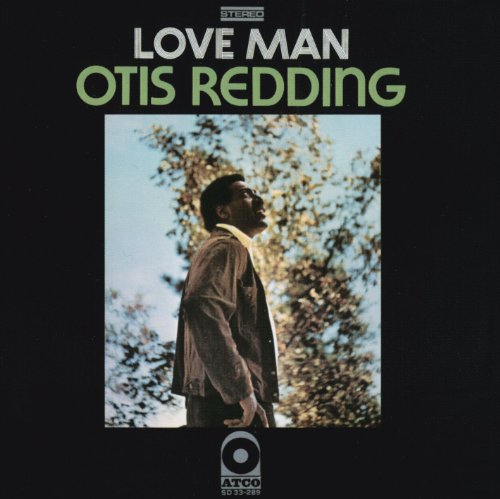
Cigarettes and Coffee,” Otis Redding, 1966

Steve Cropper, guitarist with Stax Records’ house band Booker T and the MGs, considers this “a hidden gem” in the Redding portfolio. Written by singer Jerry Butler in 1961, “Cigarettes and Coffee” went nowhere at first, but when Redding used Cropper and the rest of the MGs in Stax Records’ Memphis studio to record his version in 1966, it became a featured track on his LP “The Soul Album” that year. The narrator is simply thrilled to be with his love at 3 am: “I would love to have another drink of coffee now, and please, darling, help me smoke this one more cigarette now, /I don’t want no cream and sugar, ’cause I’ve got you, now darling…”

“Starfish and Coffee,” Prince, 1987

As a wildly eccentric, boldly artistic guy, Prince could certainly relate to a story about another wildly eccentric, boldly artistic person. Prince’s occasional collaborator Susanne Melvoin told him about a real girl she knew from 6th grade named Cynthia Rose who did quirky things like draw hearts on walls and happily shout out what she had for breakfast. Naturally, Prince turned it into a funky pop song, found on his “Sign ‘o the Times” album in 1987: “If you asked her what she had for breakfast, this is what she’d say, /’Starfish and coffee, maple syrup and jam, /Butterscotch clouds, a tangerine, and a side order of ham…”

“Coffee Song,” Osisiba, 1976

Flying under the radio of most American listeners was the music of Osisiba, a lively, inventive band of West African and Caribbean musicians who came together in England in 1970 and made more than a dozen albums of what became known as “world music,” blending rock, Latin, jazz, soul, reggae, calypso and pop. On their 1976 LP “Ojah Awake,” you’ll find their take on a 1946 novelty tune called “The Coffee Song.” First recorded by Frank Sinatra and later by The Andrews Sisters, Sam Cooke and Stan Ridgway, the tune adopts a humorous stance on Brazil’s abundant surplus of coffee: “Way down among Brazilians, coffee beans grow by the billions, /So they’ve got to find those extra cups to fill, they’ve got an awful lot of coffee in Brazil…”

“Espresso (All Jacked Up),” Todd Rundgren, 1995

From the beginning, Rundgren has been a non-conformist, often choosing experimental directions and methods of recording and releasing new music. In the ’90s, he pioneered the concept of interactive CDs, giving listeners the freedom to play producer with his tracks. From his 1995 release, “The Individualist,” he came up with this ode to coffee drinks and how they keep him going when out on tour: “Gimme one more hot espresso, have another cappuccino, /Fire me up a caffè latte, make it one with lots of chocolate in the middle of it, /Hot espresso, I’m all jacked up!…”

A couple of mugs from our kitchen collection

***********************

“English Tea,” Paul McCartney, 2005

McCartney has proudly defended his love for “that whole fruity way of talking that the English do, very endearing, I love it.” For this slight little song from his “Chaos and Creation in the Back Yard” album in 2006, he was amused to observe how people in England used to talk about merely “a cuppa tea,” always the same, but now there are different types, and you must be more specific and ask for English tea, with formal mannerisms like in a drawing room stage play: “Would you care to sit with me for a cup of English tea, very twee, very me, /What a pleasure it would be, chatting so delightfully, any Sunday morning…”

“Tea in the Sahara,” The Police, 1983

From their spectacular fifth and final album, “Synchronicity,” The Police recorded a marvelous, moody treatment of this song Sting wrote, based on a poetic novel by Paul Bowles called “The Sheltering Sky.” In the book, three women wait for a prince who vowed to return to have tea in the desert with them, but he never comes back. In his song, Sting has the women waiting year after year, withering in the heat “with their cups full of sand”: “My sisters and I have one wish before we die, /And it may sound strange, as if our minds are deranged, /Please don’t ask us why, beneath the sheltering sky, /We have this strange obsession, you have the means in your possession, /We want our tea in the Sahara with you…”

“Have a Cuppa Tea,” The Kinks, 1971

There are few British rock bands more decidedly English than The Kinks, thanks to songwriter Ray Davies and his penchant for lyrics that describe English people, places and practices. Think “Waterloo Sunset” or “Victoria.” On their commercially unsuccessful but critically praised “Muswell Hillbillies” album in 1971, one of the best tracks is “Have a Cuppa Tea,” with lyrics that humorously celebrate the British custom of drinking tea and the civility that comes with it, delivered in a tongue-in-cheek fashion:  “Tea in the morning, tea in the evening, tea at supper time, /You get tea when it’s raining, tea when it’s snowing, tea when the weather’s fine, /You get tea as a mid-day stimulant, you get tea with your afternoon tea, /For any old ailment or disease, for Christ sake, have a cuppa tea…”

***************************

Honorable mention:

Cup of Coffee,” Johnny Cash, 1966; “Coffee Blues,” Mississippi John Hurt, 1963; “One Cup of Coffee,” Bob Marley, 1976; “Coffee Club,” Spandau Ballet, 1982; “Tea for One,” Led Zeppelin, 1976; “Another Pot o’ Tea,” Anne Murray, 1974; “Afternoon Tea,” The Kinks, 1967; “Everything Stops for Tea,” Long John Baldry, 1972; “Tea for the Tillerman,” Cat Stevens, 1970.

****************************

Do you know? Did you ever?

Time to sharpen your pencils and test your memory banks about classic rock music!

Some of you who struggle to recall the words to even your most favorite songs may be relieved to hear this is NOT a lyrics quiz. It’s a rock trivia quiz, where I ask you 10 multiple-choice questions about bands, solo artists, singles, albums and other information from the classic rock of a half-century ago. Even if you weren’t around back then, or weren’t all that into the details of the music you listened to, the music has lived on, and I find it entertaining to see what we know about those days.

Study the choices for each question, mark your best guess on a piece of paper, then scroll down to find out the right answer and learn more about the subject under consideration.

Good luck!

****************************

1 Which of these four rock groups does NOT have a Canadian member?

The Band

Buffalo Springfield

The Mamas and the Papas

The Doobie Brothers

2 Which of these four Beatles hits was not written by Lennon, McCartney, Harrison, or Starr?

Who was the first of these female artists to have a #1 single in the U.S.?

“I Feel Fine”

“Twist and Shout”

“Love Me Do”

“Yellow Submarine”

3 These four artists all had big hit singles in the 1970s. Three of them also scored a second Top 40 hit, but one artist failed to make a return appearance and therefore became a “One-Hit Wonder.” Which one?

Norman Greenbaum

Redbone

Five Man Electrical Band

Maria Muldaur

4 Which of these is Meat Loaf’s real name?

Vincent Furnier

Marvin Aday

Reginald Dwight

Melvin Houser

5 Which of these early Elton John singles failed to reach the Top 40 upon initial release?

“Daniel”

“Tiny Dancer”

“Honky Cat”

“Levon”

6 Which hit single was written by the composer when he was only 12 years old?

“My Generation” by Pete Townshend of The Who

“Lucky Man” by Greg Lake of Emerson, Lake and Palmer

“Proud Mary” by John Fogerty of Creedence Clearwater Revival

“You Really Got Me” by Ray Davies of The Kinks

7 Of these four hugely popular double albums, which is the only one to reach #1 on the U.S. charts?

“Tommy,” The Who (1969)

“Tusk,” Fleetwood Mac (1979)

“Exile on Main Street,” The Rolling Stones (1972)

“Eat a Peach,” The Allman Brothers Band (1972)

8 Only one of these lead singers was an original member of the band that made them famous. Which one?

Steve Perry of Journey

Justin Hayward of The Moody Blues

Jon Anderson of Yes

Grace Slick of Jefferson Airplane

9 Which artist did NOT die of a gunshot wound?

Marvin Gaye

Terry Kath

Sam Cooke

Keith Moon

10 Which band’s album cover includes a reference to a different rock band?

“Axis Bold as Love,” Jimi Hendrix Experience

“Physical Graffiti,” Led Zeppelin

“Sgt. Pepper’s Lonely Hearts Club Band,” The Beatles

“Stand Up,” Jethro Tull

*

*

*

*

*

*

*

*

*

*

*

1 The Doobie Brothers

The Doobies were a bar band formed in San Jose, California. Their two guitarists (Tom Johnston and Patrick Simmons) and bassist Tiran Porter were from the West Coast, and their two drummers (John Hartman and Michael Hossack) were from Virginia and New Jersey. Even the later members to join the group (Jeff Baxter, Keith Knudsen, Michael McDonald, John McFee) were all from the U.S.

The Mamas and Papas came to symbolize the California sound, and while Michele Phillips came from Long Beach, Cass Elliot was actually from Maryland and John Phillips from South Carolina. Denny Doherty, however, was born in Halifax, Nova Scotia, and sang in bands there until moving to Hollywood at age 23.

Buffalo Springfield had three Canadians on their roster: Neil Young from Toronto, Bruce Palmer from Liverpool, Nova Scotia, and Dewey Martin from Chesterville, Ontario. (Stephen Stills and Richie Furay were from Texas and Ohio, respectively.)

The Band was 80% Canadian: Robbie Robertson, Richard Manuel, Garth Hudson and Rick Danko all hailed from various cities in Ontario, while drummer Levon Helm was the lone American, born in Arkansas.

2 “Twist and Shout”

This iconic rocker was co-written in 1961 by Phil Medley and Bert Berns, who also wrote other hits like “Hang On Sloopy,” “Piece of My Heart” and “A Million to One.” It was first recorded that year by a vocal group called The Top Notes as “a Latin-tinged raveup,” as one critic put it, but it failed to chart. The Isley Brothers’ recording in 1962 offered a better R&B groove and added the ascending vocal parts that made it so memorable, helping it reach #17 on the U.S. pop charts (and #2 on the R&B charts). The Beatles used almost the same arrangement as The Isley Brothers’ version when they recorded “Twist and Shout” in 1963 for their debut LP, “Please Please Me.” It was not released as a single in the UK, but in the US, the single reached #2 in early 1964, held from the top spot by another Beatles song, “Can’t Buy Me Love.”

“I Feel Fine” was written mostly by Lennon with help from McCartney.

“Love Me Do” was one of the earliest Lennon-McCartney songs, and the first ever to chart in the UK.

“Yellow Submarine” was another Lennon-McCartney collaboration, written as a children’s song for Ringo Starr to sing on the “Revolver” album.

3 Norman Greenbaum

Upon hearing country artist Porter Wagoner sing a gospel song on TV, Greenbaum thought to himself, “I can do that,” and within 15 minutes, he’d written the lyrics and basic chords to “Spirit in the Sky.” Greenbaum had been in an unsuccessful psychedelic jug band in the late ’60s but somehow won a solo contract, and when he recorded songs in a San Francisco studio, he employed friends who were in other bands. When the record became an unexpected international #1 hit, Greenbaum had no band available to go on tour, and subsequent attempts at follow-up singles fell short. So he reverted to his previous calling as a pig farmer.

Redbone was a California-based band comprised of musicians of Native-American and Mexican heritage. I always loved their #5 hit from 1974, “Come and Get Your Love,” but I hadn’t realized they were the group that already had a minor hit with “The Witch Queen of New Orleans,” which peaked at #21 in early 1972.

Five Man Electrical Band was a Canadian pop rock group that scored eight hit singles in the Top 20 on the Canadian charts between 1965 and 1975. In the US, they had their breakthrough with “Signs,” which not only reached #3 here in the summer of 1971, it was also #1 in Australia for nearly two months. Later in 1971, the group did modestly well here with the spirited rocker “Absolutely Right,” which peaked at #28.

Maria Muldaur had a big hit with the sexually suggestive “Midnight at the Oasis,” which reached #6 in the spring of 1974. I wasn’t aware until recently that she had a second hit less than a year later when “I’m a Woman,” a gritty blues tune that sounds like something Bonnie Raitt might record, reached #12.

4 Marvin Aday

A Texas woman named Wilma Oday gave birth in 1947 to “nine pounds of ground chuck,” as Wilma’s husband Orvis described the infant’s reddish appearance. For most of his childhood, Marvin went by “M.L.” which stood for “Meat Loaf,” and the name stuck as he became a bruising football player, then an actor and singer of international fame, thanks to his delivery of the dramatic rock songs of Jim Steinman on the multi-platinum “Bat Out of Hell” in 1977 and its much-delayed follow-up, “Bat Out of Hell II” in 1993. Oday died in January 2022.

Vincent Furnier is the real name of shock rocker Alice Cooper.

Reginald Dwight is the real name of Elton John.

Melvin Houser, well, that’s just a name I made up. Apologies to any real Melvin Housers out there.

5 “Tiny Dancer”

Originally released as the leadoff track on Elton’s fourth studio LP, “Madman Across the Water,” this gorgeous song ran over six minutes, which hurt its chances as a Top 40 single. In fact, it stalled in the U.S. at #41 and wasn’t even released as a single in the UK, although it reached #19 in Canada and #13 in Australia. Over the years, the song slowly became one of John’s most popular songs on American rock radio stations, and got a big boost of popularity after having been prominently featured in the 2000 film “Almost Famous.”

Daniel,” released in 1973 as the second single from “Don’t Shoot Me, I’m Only the Piano Player,” reached #2 that spring.

Honky Cat,” the second single released from his 1972 LP “Honky Chateau,” peaked at #8.

Levon,” the first single from “Madman Across the Water,” did modestly well, topping out at #24.

6 “Lucky Man” by Greg Lake of Emerson, Lake and Palmer

Lake’s mother, a pianist, influenced his early musical leanings, and bought him a modest guitar when he turned 12. Once he’d mastered his first four chords (Am, Em, G and D), he wrote his first song, which he called “Lucky Man,” which he described as “sort of a medieval folk song” when played on acoustic guitar. The lyrics describe a privileged man who went off to battle and died, but for Lake, it referred to himself. “My mother bought me the guitar when she couldn’t really afford it, and I felt that I was a lucky boy, a lucky man indeed,” he recalled. It became ELP’s breakthrough hit in 1970.

My Generation” sounds like it could have been written by a defiant 12-year-old Pete Townshend, but he was actually 19 or 20.

Proud Mary” was written by John Fogerty shortly after he was discharged from the Army Reserve in 1968 when he was 23.

You Really Got Me” was the fourth or fifth song Ray Davies ever wrote, in the spring of 1964 at age 20.

7 “Exile on Main Street,” The Rolling Stones

Although the Stones were more of a singles band during their first eight years, every one of their albums released in the 1960s reached the Top Five on U.S. album charts. Beginning with “Sticky Fingers” in 1971, they put together a string of nine consecutive #1 LPs, some of which, in my opinion, didn’t deserve it, and 1972’s “Exile on Main Street” is one of them. It’s a double album with a lot of filler, the production is muddy and the performances substandard, but The Stones were on a roll throughout the ’70s as far as the U.S. record buyers were concerned.

Tommy” was certainly consistently strong enough to be a #1 album for The Who, but it peaked at #4.

Tusk” was a strange collection of songs, and a step down from the appeal of “Rumours,” but it still managed to reach #4 for Fleetwood Mac.

Eat a Peach,” which is half studio and half live, was the first released following the death of Duane Allman. It, too, topped out at #4.

8 Jon Anderson of Yes

Anderson and his school chum Chris Squire were the founding members of Yes in 1968. They recruited guitarist Peter Banks, drummer Bill Bruford and keyboardist Tony Kaye, and were off and running in the progressive rock sweepstakes fashionable in the UK at the time. Yes had a virtual revolving door of members come in and out over the years, but Anderson’s ethereal vocals are perhaps the defining element of the group’s sound.

Steve Perry didn’t join Journey as their lead vocalist until 1978, five years and three albums after they were founded by keyboardist Gregg Rolie and guitarist Neal Schon, formerly with Santana.

Justin Hayward joined The Moody Blues in 1967 when they recorded the landmark “Days of Future Passed,” but the band had been around since 1964.

Grace Slick brought Jefferson Airplane their biggest success with two 1967 singles, “Somebody to Love” and “White Rabbit,” but she was preceded as lead vocalist by Signe Anderson in 1965-1966.

9 Keith Moon

Moon was notorious for excessive and destructive behavior, which made him a phenomenal drummer but eventually a danger to himself. He drank and drugged too much, and when he tried to quit, he was prescribed a powerful sedative, on which he overdosed and died in 1978.

Marvin Gaye was shot to death by his father in 1984.

Terry Kath died from an accidental self-inflicted gunshot in 1978.

Sam Cooke was shot and killed in an altercation with a motel manager in 1964.

10 “Sgt. Pepper’s Lonely Hearts Club Band” by The Beatles

This 1967 album cover has been scrutinized and interpreted more than probably any other rock album in history. In addition to the 50-odd likenesses pictured behind the Fab Four, several props appear in front of and next to them, one of which is a doll propped up on a chair. The doll, a gift to Mick Jagger from the winner of a contest on Memphis radio station WMPS-AM in 1964, was brought to the photo session by photographer Robert Fraser, a friend of Jagger. If you look closely, the sweater the doll is wearing says, “THE WMPS GOOD GUYS WELCOME THE ROLLING STONES.”

Zeppelin’s “Physical Graffiti” featured a tenement building with various faces peeking out, including those of Hollywood icons and the Zeppelin band members themselves, but no one from different rock bands. Jimi’s “Axis: Bold as Love” and Tull’s “Stand Up” included all sorts of nooks and crannies within the designs for them to hide words or images of other bands, and you can search all you want, but you won’t find any.

**************************