Would you repeat that?
In the five-plus years of publishing this blog, I’ve come up with many dozens of themed playlists of songs that cover a broad range of topics or similarities. Some of these have been rather frivolous and inconsequential, but nonetheless mildly interesting.

This week I’m offering one of those. I’ve pored over my research materials and have come up with 16 songs in which the title consists of a word repeated once…or twice. Does it mean anything? Nope — just a fun list of great songs from the ’60s, ’70s and ’80s which share a linguistic quirk.
******************
“Louie Louie,” The Kingsmen, 1963

“It is the best of songs, it is the worst of songs,” summed up rock historian Dave Marsh in writing about this iconic R&B tune. Written and first recorded in 1957 by Richard Berry and The Pharaohs, “Louie Louie” is best known in its garage-band treatment by The Kingsmen in 1963. Incredibly, the FBI investigated whether the lyrics, sung unintelligibly, were obscene, but they were merely about a Jamaican sailor returning home to his girl.
“Sookie, Sookie,” Steppenwolf, 1968

The Urban Dictionary refers to “Sookie” as a derivation of the name Sue or Susan, and also a term of admiration for a sexually attractive woman. Not surprising then, I suppose, for the term to show up in a Sixties rock song lyric. It was written by Don Covay and Stax Records house guitarist Steve Cropper and recorded by Steppenwolf, who used it as the leadoff track on the group’s 1968 debut LP.
“Corrina, Corrina,” Bob Dylan, 1963

The history of this tune is a bit muddy, but it appears to have been written and first recorded by country blues artists Bo Carter in 1928. Since then, it has been covered and reconfigured by dozens of artists in numerous styles, including folk, jazz, blues, rock and even Cajun swing. Bob Dylan recorded his version for his second LP, “The Freewheelin’ Bob Dylan” in 1963. Joni Mitchell also covered it in 1988 as “A Bird That Whistles (Corrina Corrina).”
“Darkness, Darkness,” Jesse Colin Young, 1969

First written and recorded by Young when he was still with his Sixties band The Youngbloods, “Darkness, Darkness” emerged as an example of what was known as psychedelic folk. Young re-recorded it in both studio and live versions, but none of these ever made much of an impact commercially. It wasn’t until Robert Plant recorded his rendition on his 2002 album “Dreamland” that the song reached #27 on the US singles chart.
“Marie Marie,” The Blasters, 1981

The Stray Cats may have found the most success from the rockabilly revival of the early ’80s, but it was L.A.’s The Blasters with guitarist brothers Dave and Phil Alvin who offered the best albums and original material. Dave Alvin wrote most of the band’s songs, including “Marie Marie,” which kicks off the group’s second LP (“The Blasters”) in fine fashion. He went solo in 1986, but The Blasters with Phil Alvin continue playing roots rock today.
“Rebel Rebel,” David Bowie, 1974

One of Bowie’s most celebrated anthems from his mid-’70s period is this hard-rocking single from his 1974 LP “Diamond Dogs.” Described as his last glitter/glam rock track, it features Bowie on guitar playing a repetitive Stones-like riff, singing lyrics about a rebellious, nihilistic teen (a “hot tramp,” gender undetermined). It was a Top Five hit in the UK and Europe but stalled at #64 in the US.
“Baby, Baby,” Lazarus, 1973

Dominated by singer-songwriter Bill Hughes and his gorgeous songs, Lazarus was a little-known, mostly acoustic trio from Texas in the early ’70s discovered by Peter Yarrow of Peter, Paul & Mary. They released just two albums, but they’re both solid efforts well worth hearing. Their second LP, “A Fool’s Paradise,” includes tracks with more instrumentation that rock out a little more, such as “Baby, Baby.”
“Jelly Jelly,” Allman Brothers Band, 1973
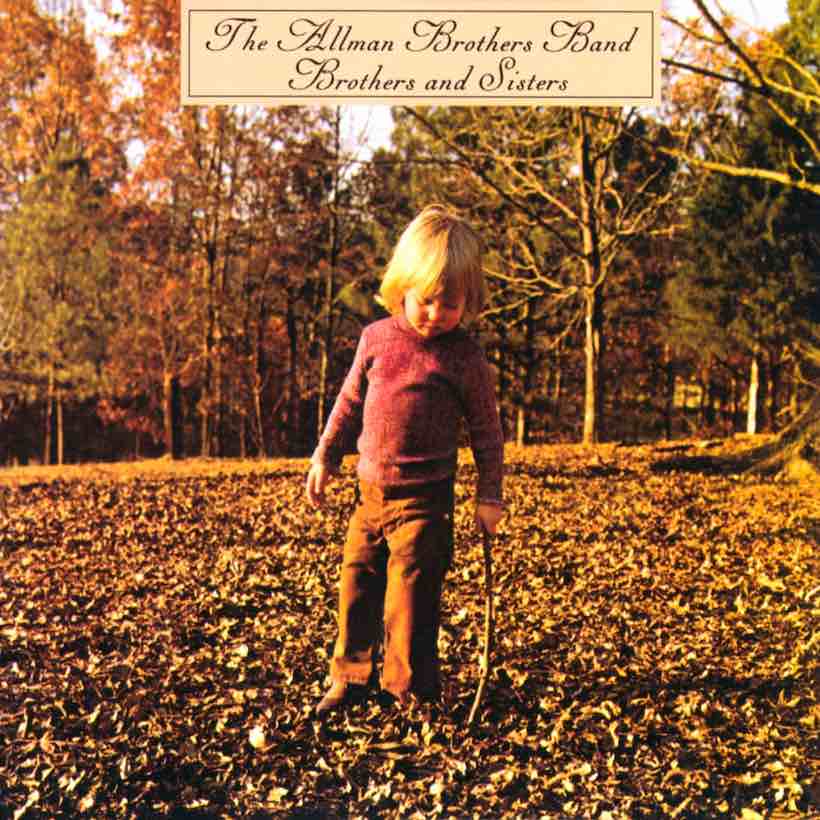
Every Allman Brothers album cooks along on a diet of ferocious uptempo blues with at least one sexy slow blues track to mix things up. There’s “Dreams,” and “Stormy Monday” and “Need Your Love So Bad,” and on their hugely successful 1973 LP “Brothers and Sisters,” that song is “Jelly Jelly,” eight minutes of guitar and piano solos with Gregg Allman’s marvelous voice singing forlornly about sex and mistreatment.
“Neighbor, Neighbor,” ZZ Top, 1971
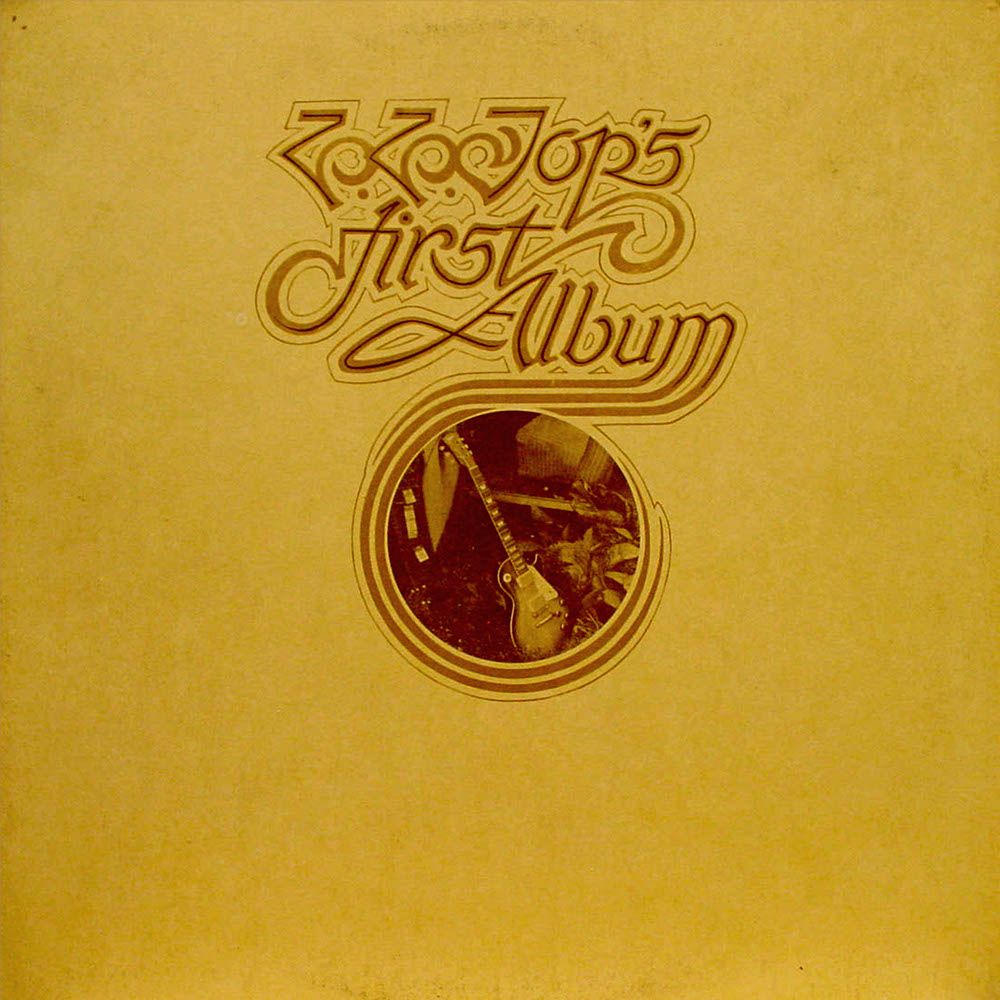
Spearheaded by Billy Gibbons’ guitar and lead vocals, this Texas-based trio offered an excellent stew of blues, boogie and Southern rock right from their beginning in 1970. On “ZZ Top’s First Album” (1971), Gibbons’ blues tune “Neighbor, Neighbor” bemoans the nosy intrusions and badmouthing of the people next door. The group went on to have many high-charting albums and singles throughout the ’70s, ’80s and ’90s.
“Tighter, Tighter,” Alive N Kickin’, 1970

In 1969, the Brooklyn sextet known as Alive N Kickin’ befriended Tommy James, who had ridden to glory in 1966 with his huge hit “Hanky Panky.” James had offered to give Alive N Kickin’ a new song called “Crystal Blue Persuasion,” but he liked it so much he kept it for himself and instead wrote and produced “Tighter, Tighter” for them. The track peaked at #7 in the summer of 1970 and was the only success for this “one-hit wonder.”
“Teacher Teacher,” Nick Lowe/Rockpile, 1980 #51
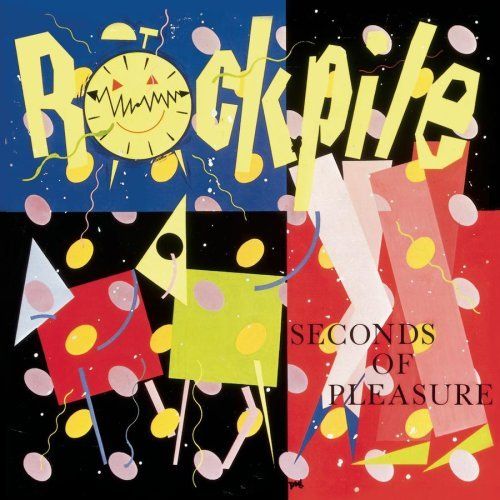
The British pop/rock band Rockpile featured Dave Edmunds and Nick Lowe, both talented singer/songwriter/guitarists with their own solo record deals, and some of what would have been Rockpile tracks were released as solo hits instead (“Girls Talk” by Edmunds and “Cruel to Be Kind” by Lowe). “Teacher Teacher,” an Edmunds tune, was a minor hit (#51) from Rockpile’s 1980 LP, “Seconds of Pleasure.”
“Monday, Monday,” The Mamas and The Papas, 1966
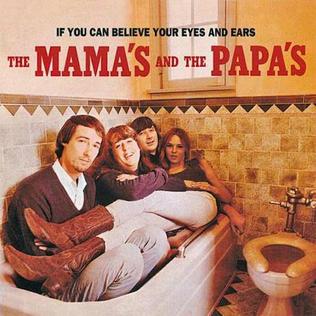
Papa John Phillips, who helped lead the way in adapting folk music to the rock scene, wrote and arranged most of the Mamas & Papas catalog. He claimed he came up with “Monday, Monday” in about 20 minutes one gray and rainy Monday morning, with lyrics that reinforce the near-universal feeling of dread we feel as another work week begins. It was the quartet’s only #1 single, although “California Dreamin'” was their true signature song.
“My, My, Hey, Hey,” Neil Young, 1979

Here’s a title with two words repeated. In 1979, Young was wondering about his own relevance in a music scene then dominated by punk and New Wave sounds. His album “Rust Never Sleeps” emphatically shows his transition from acoustic music to something more ragged and harsh, and the contrast in styles is most evident in the opening and closing tracks, “My My, Hey Hey (Out of the Blue)” and “Hey Hey, My My (Into the Black).”
******************
To round out this playlist, I’ve include three songs that have titles with one word used three times:
“Run Run Run,” Jo Jo Gunne, 1972
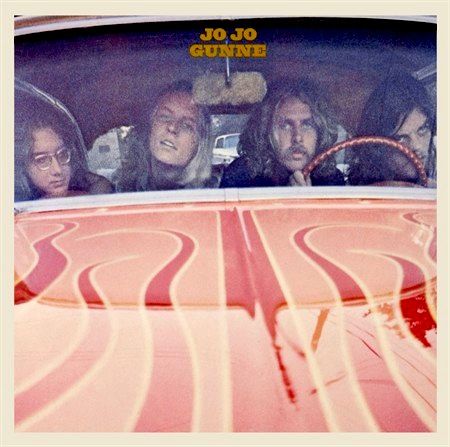
Singer Jay Ferguson and bassist Mark Andes had been key members of Spirit (“I Got a Line on You,” “Mr. Skin,” “Nature’s Way”) before they left to form Jo Jo Gunne in 1972. Their first album had a modest hit (#27) that year with Ferguson’s “Run Run Run,” but their two subsequent albums went nowhere. Ferguson had an even bigger hit once he went solo, reaching #9 on the charts in 1977 with “Thunder Island.”
“Hi, Hi, Hi,” Paul McCartney and Wings, 1972

In the first few years following the breakup of The Beatles, it was hard to predict what McCartney would do next. He flip-flopped from disposable little ditties to serious rock, from nursery rhymes to controversial topics. The latter showed up in the form of the politically charged “Give Ireland Back to the Irish” and the sex-and-drugs romp “Hi Hi Hi” (which should have been titled “High High High”).
“Gone, Gone, Gone,” Bad Company, 1979

From their explosive debut in 1974 until their breakup in 1983, Bad Company was one of England’s most successful bands on US charts. The distinctive vocals of Paul Rodgers and sturdy guitar work from Mick Ralphs served them well on 12-15 singles and album tracks that became FM radio staples. From 1979’s “Desolation Angels” comes bassist Boz Burrell’s great rocker “Gone, Gone Gone,” about a girlfriend’s departure.
*********************
Honorable mention:
“Jenny, Jenny,” Little Richard, 1957; “Release, Release,” Yes, 1978; “Mony Mony,” Tommy James and The Shondells, 1968; “Talk Talk,” Talk Talk, 1982; “Mary, Mary,” The Monkees, 1966; “Sugar Sugar,” The Archies, 1969; “Cherry Cherry,” Neil Diamond, 1966; “Star Star,” The Rolling Stones, 1973.
“Turn! Turn! Turn!,” The Byrds, 1965; “Say Say Say,” Paul McCartney & Michael Jackson, 1983; “Stop Stop Stop,” The Hollies, 1965; “Cold Cold Cold,” Little Feat, 1974; “Yummy Yummy Yummy,” The Ohio Express, 1968; “Baby, Baby, Baby,” Aretha Franklin, 1967; “Fun, Fun, Fun,” The Beach Boys, 1964.
*****************

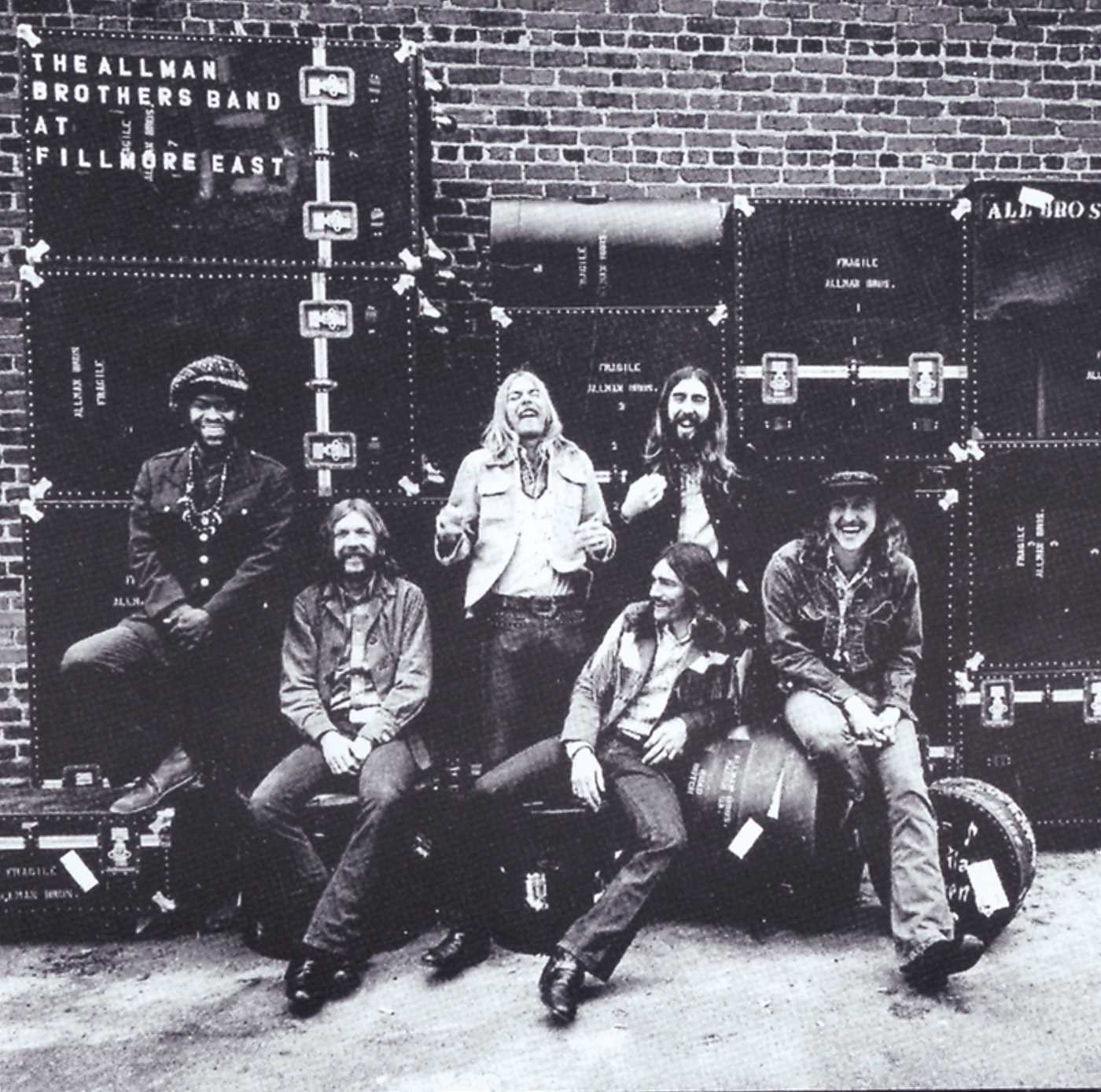 I would argue that this is rock’s finest live album. The Allman Brothers’ first two studio albums had great original songs but the limp production gave the tracks a hollow sound. This was a band that sounded far better in concert than in the studio, so they recorded a few nights at the Fillmore East in March 1971 and released this ferocious double album. Original tracks like “In Memory of Elizabeth Reed” and “Whipping Post” were transformed into magnificent extended versions with Duane Allman and Dickey Betts both showing off their best licks. Just as impressive were their renditions of such blues classics as “Stormy Monday,” “You Don’t Love Me” and “Statesboro Blues.” A very “alive” sound with minimal crowd intrusion.
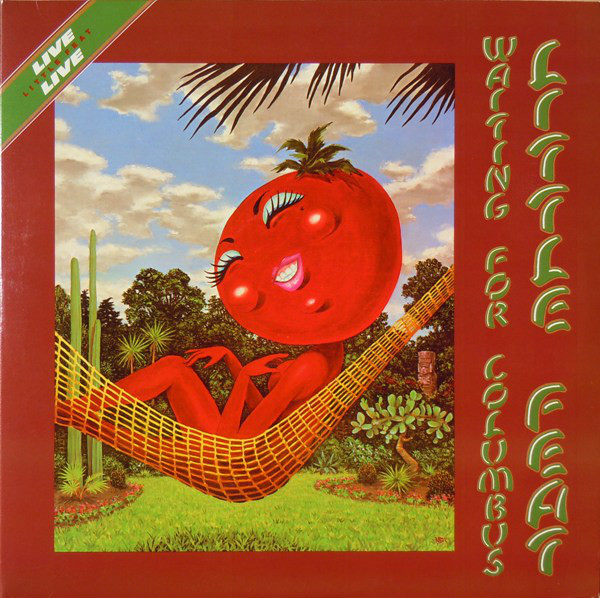 This talented band never really got past cult status, but that cult was sizable and fiercely loyal. Most of their six studio LPs sold respectably, and they filled small halls when they toured, but widespread acceptance seemed out of reach. Their record label sought to change that with this gorgeously produced double live album, promoted the hell out of it and had it serve a dual purpose as a greatest hits collection. It’s a solid effort that is widely praised as one of rock’s best live LPs, although it was revealed years later that Lowell George wasn’t happy with some of his guitar parts and later overdubbed them in the studio. Another way that live albums are sometimes not as “live” as they seem.
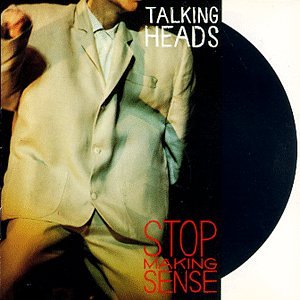 Another sonically superior concert LP is this soundtrack from the Talking Heads’ “Stop Making Sense” concert film, directed by the great Jonathan Demme. Critics raved: “A perfectly measured snapshot of a widely loved and respected band playing at the height of their powers,” said Neil Jeffries of Empire. “No other music movie soundtrack sounds this good.” Leader/songwriter/singer David Byrne retained control of the recorded musical product, and it shows. Such a fine selection of songs from their catalog: “Psycho Killer,” “Girlfriend is Better,” “Take Me to the River,” “Burning Down the House,” “Once in a Lifetime”… It’s one of very few live albums to be included among Rolling Stone‘s Top 500 Albums of All Time.
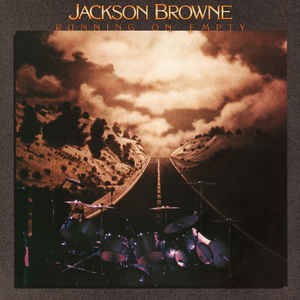 Unique among live albums is this entertaining release by one of L.A.’s best singer/songwriter of the Seventies. He conceived a collection of new songs about being on the road, and recorded all of them live. Half were recorded on stage in various U.S. venues, while others were recorded as little more than demos in various locations: on a tour bus (“Nothing But Time”), in a hotel room (“Cocaine” and “Shaky Town”) and a backstage rehearsal room (“Rosie”). One of the best tracks is “The Road,” whose first half was taped in a hotel room and grafted to a second half from a stage show. It was a novel idea that worked remarkably well; the album peaked at #3, spawned two hit singles and stayed on the charts for more than a year.
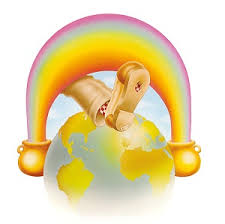 Early on, The Dead quickly realized they sounded much more like themselves in concert than in the studio, so they released an unprecedented seven double live LPs in their long career. One of those was actually a triple album, “Europe ’72,” a fantastic sampling of music they performed during their tour of England and continental Europe in the spring of 1972. European audiences tend to be more restrained and polite in their crowd response, which makes for a better listening experience here. Check out their 13-minute “Truckin'” and the medley of “China Cat Sunflower/I Know You Rider” to see what I mean. I personally think the band never sounded better, on stage or in the studio, than they do on this LP.
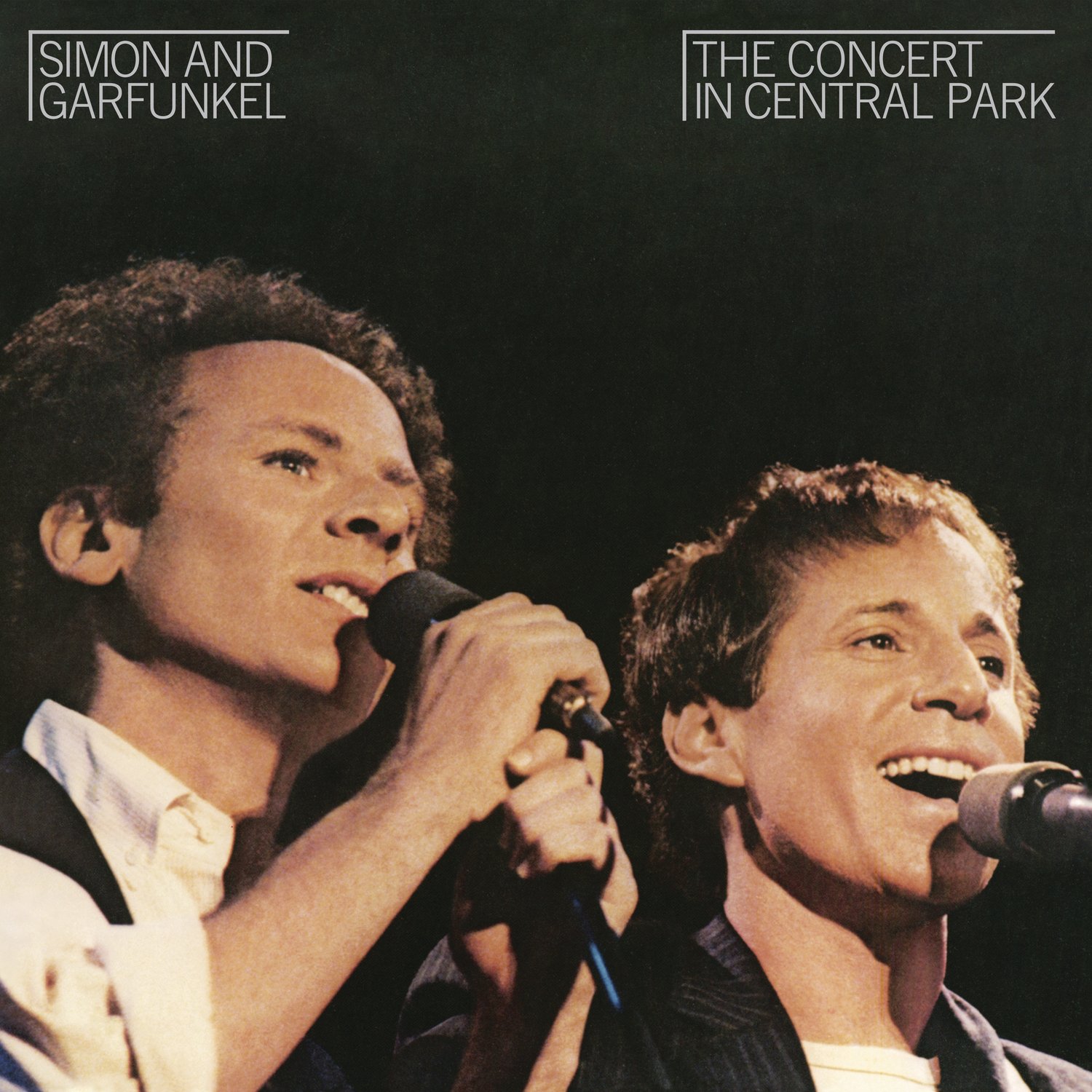 As a huge fan of this iconic duo during their 1965-1970 heyday, I was thrilled when they announced they would reunite for a free benefit concert in Central Park in September 1981. It ended up attracting half a million fans and became a defining moment in the rock and roll pantheon when a film of it was shown on HBO the following year. The concurrently released double album (#3 on the charts) featured smartly produced performances of the duo’s unparalleled vocal blend, with five songs from Simon’s solo works and one new Garfunkel tune (“A Heart in New York”), but the rest was a fabulous look back at the songs that tantalized a generation, from “The Boxer,” and “Homeward Bound” to “America” and “Mrs. Robinson.”
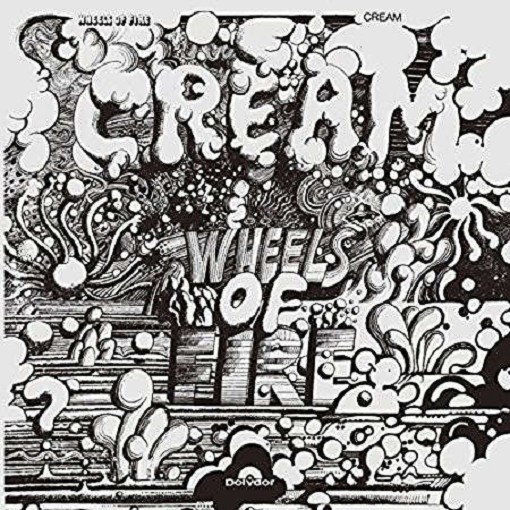 While Cream came up with some pretty great studio tracks on the four LPs they made in their two years together, it is the recordings of their live performances that really define what Cream was all about. Eric Clapton, Jack Bruce and Ginger Baker were each virtuosos on their respective instruments, and when they embarked on extended jams of some of their songs, look out. If Cream had put all their best live tracks on one album, it would’ve been a slam dunk, but instead they’re spread out among several LPs. Still, I’m going to include the live Disc 2 of “Wheels of Fire” on my list because of the phenomenal production which captured the improvisational brilliance of “Spoonful” and “Crossroads.”
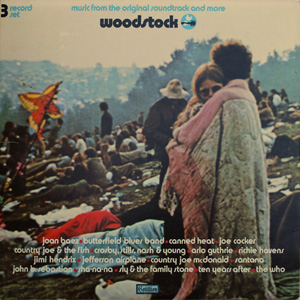 This one’s a big, glorious mess of a live album — six vinyl sides of performances, both sharp and ragged, by an all-star cast of bands from the summer of ’69 — Joe Cocker, The Who, Ten Years After, Sly and The Family Stone, Santana, Country Joe and The Fish, Crosby, Stills and Nash, and Jimi Hendrix. There’s plenty of crowd noise, dialog, stage announcements, occasional feedback, flat notes and whatnot, but that’s part of what made the triple live LP and the film into award-winning documentaries of a watershed event in rock history, warts and all. The sound quality of the album is, frankly, hit or miss; some bands sound muffled or distant, while Santana, a new band to many in attendance, comes across better than most.
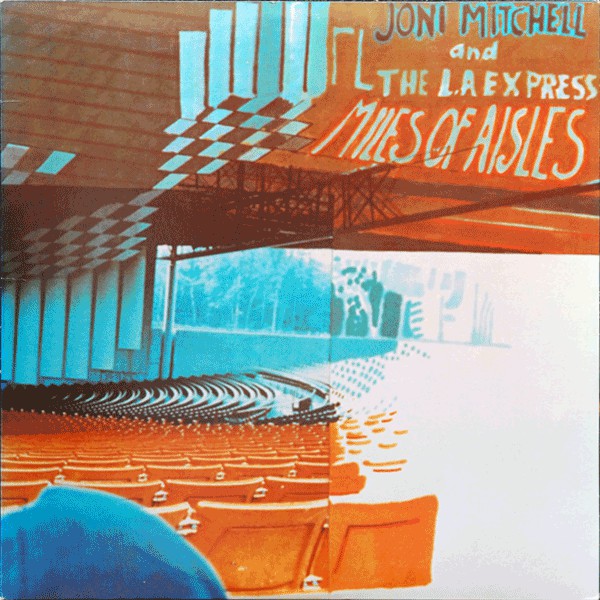 This sensational record captured one of rock’s most wondrous artists at her commercial peak just as she was ending one period and embarking on another. Joni had been a folk singer whose own songwriting matured by leaps and bounds throughout her first five albums, and with “Court and Spark,” she began to use a full band (the jazz-infused L.A. Express) in the studio and on tour. These live performances offered a cross section of old Joni, basically just her voice with guitar or piano, and new Joni, with the band, showing hints of the full-blown jazz material she’d be doing within a couple of years. Almost all tracks were recorded at Universal Amphitheatre, and the sound is pretty damn good.
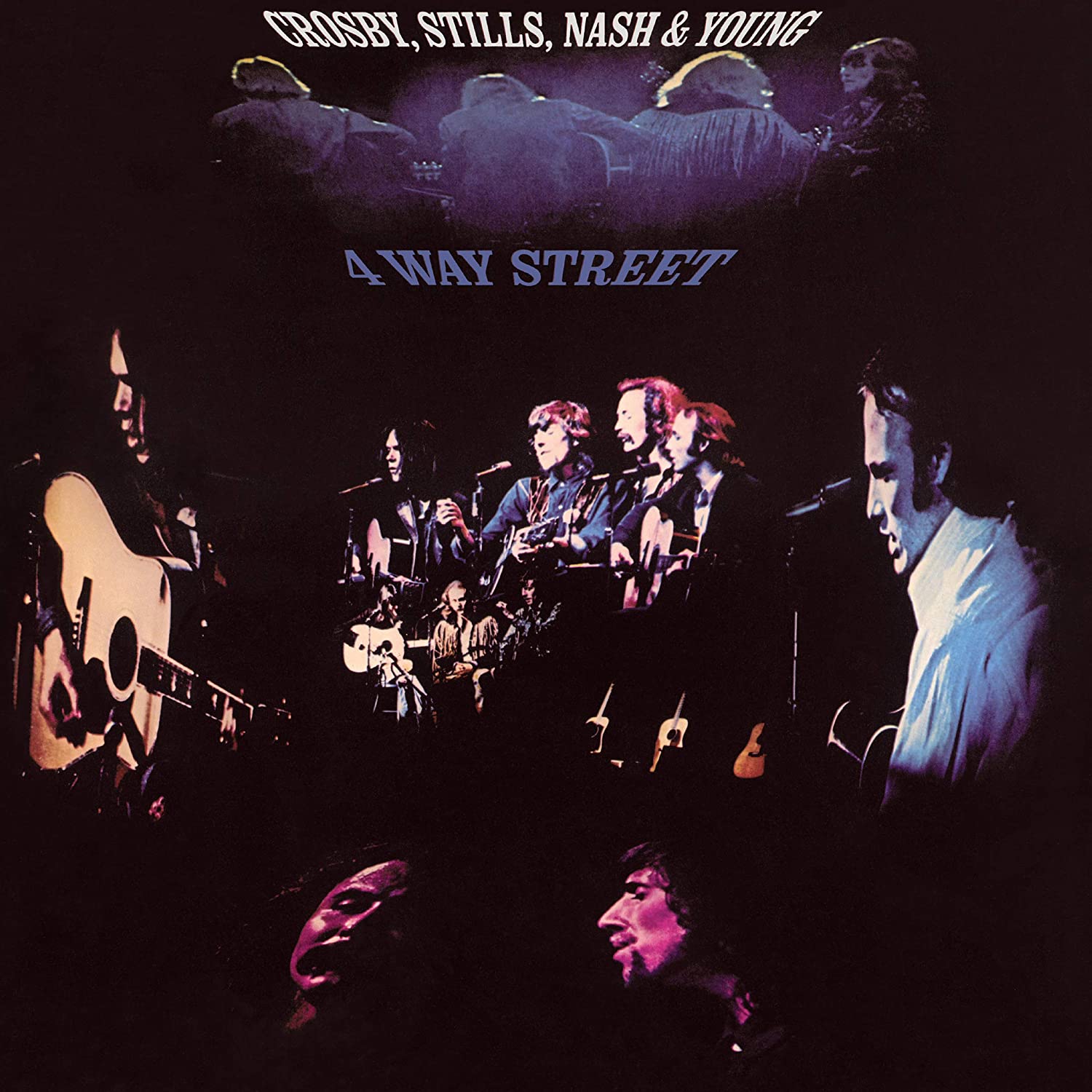 These hippie gods were so talented, and yet so maddeningly egotistical, that they were doomed to break up less than a year after they got together. There simply wasn’t enough space on an album for all the great songs these four musicians were cranking out in this incredibly fertile period, but they put one tour together, and recorded most dates. A year after the breakup, they selected 16 performances and assembled “Four-Way Street,” where the crowd noise is a bit loud for my taste, and the vocals aren’t as pristine as we had come to expect from their studio tracks. But the album made it to #1 and makes my list because there are wonderful acoustic tunes new to the audience at the time (Crosby’s “The Lee Shore,” “Nash’s “Right Between the Eyes” and Young’s “Don’t Let It Bring You Down”).
 If there’s a live album you can blame for the glut of double live LPs that cluttered the record stores in the late ’70s, it would be this one. Frampton had intended “Frampton Comes Alive!” to be a single LP, but A&M Records actually encouraged him to make it a double, and it ended up soaring to #1 in the US, where it sat for 10 weeks in 1976 and became the biggest-selling live album ever. There’s way too much intrusive crowd noise here (it’s particularly annoying during the talk-box guitar solo on “Do You Feel Like We Do”), but the production is crisp and pure throughout, and Frampton and his band are in fine form on “Something’s Happening,” “Lines on My Face” and the hit single “Baby I Love Your Way.”
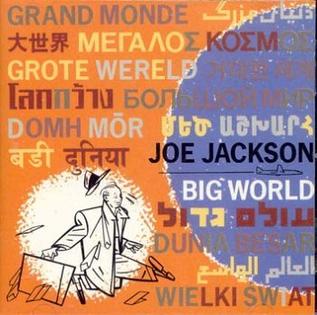 This final selection offers another unique take on how a live album could be recorded. In this case, Jackson wrote 15 great new songs, thoroughly rehearsed them with his touring band, and then booked a concert hall — Roundabout Theatre in New York City — for three nights. But here’s the kicker: He requested that the audience refrain from any response until each song’s recording had been completed. The intent was to capture the intensity and spontaneity of a live performance, but without the distraction of noise from the crowd. “There was plenty of applause,” said Jackson, “but they were asked to hold it until they were sure a song was finished. They understood this, and it all went surprisingly smoothly.”
