Here I am, signed, sealed, delivered
Periodically, I use this space to pay homage to artists who I believe are worthy of focused attention — artists with an extraordinary, influential, consistently excellent body of work and a compelling story to tell. In this essay, I examine the man who evolved from a Motown prodigy to one of the most respected musical geniuses of all time: Stevie Wonder.
************
On May 13, 1950, a boy was born prematurely in Saginaw, Michigan, and put on oxygen treatment in an incubator. Evidently, an excess of oxygen aggravated a rare visual condition known as “retinopathy of prematurity,” which caused total, irreparable blindness.
 The lack of sight seemed to turn to an advantage, as the boy realized his heightened sense of hearing allowed him to acutely absorb music of all kinds. He sang in the church youth choir at age four. In rapid succession, he learned piano, drums and harmonica, all by age nine.
No one could have possibly predicted the dizzying heights this prodigy would attain by his mid-20s. Stevland Hardaway Judkins — later Stevland Morris when his mother remarried — became, by 1962, “Little Stevie Wonder,” a true phenomenon who evolved into Stevie Wonder, one of the two or three most important musical artist of our time, in the 1970s especially.
No less a musical giant than Paul Simon had this to say at Wonder’s 1989 Rock and Roll Hall of Fame introduction: “Can anyone imagine what the last 25 years of American popular music would have been without Stevie Wonder? He is the composer of his generation.” At that same event, the normally cryptic Bob Dylan couldn’t have been clearer in his praise for the man: “He’s a great mimic, doesn’t take himself too seriously, and is a true roadhouse musician at heart, but somehow with classical overtones, and he does it all with drama and style. If anyone can be called a musical genius, Stevie Wonder can be.”
 Even Marvin Gaye, who came closest to rivaling Wonder as Motown Records’ best vocalist, said, “I always hated it when he came out on stage before I did, because he had twice the energy of all of us combined. He drained the fans dry.”
Hard to believe now, but Wonder’s career began in fits and starts. While performing for some of his friends at the tender age of 11, he was discovered by Ronnie White of the Miracles, who helped arrange an audition with kingpin Berry Gordy at Motown. Gordy chose to sign the young man, not so much for his voice but for his spectacular harmonica playing. “He sang pretty well, but his harmonica…man, I’d never heard anything like it,” Gordy said.
Even then, he could handle a chromatic harmonica in a way like none other, coaxing sounds that were alternately inspiring and heartbreaking. Gordy put him to work on instrumental versions of jazz and blues standards, a full album of random Ray Charles tracks, and other more questionable material, only occasionally with vocals, keeping a tight rein on him, as was customary with new artists in the early ’60s, particularly at Motown. Some of it was good stuff…but no one much noticed.
An appearance at the Regal Theatre in Chicago in the summer of 1962, recorded and released as a live album in 1963 called “The 12-Year-Old Genius,” changed things in a big hurry. Suddenly the album was a chart-topper, thanks to the track “Fingertips,” an eight- minute tour-de-force edited down to a single (“Fingertips, Part 2”), which also rocketed to #1 that summer.
Wonder had modest success with a few more singles over the next year, but none even close to the level of “Fingertips, Pt. 2.” His voice was going through the awkward changes every boy experiences in puberty, so he put his recording career on hold, studying classical piano for a spell. When he re-emerged the following year, he returned to the Top Five with the infectious, typically Motown-sounding dance tune “Uptight (Everything’s Alright),” which was all the rage at #3 during Christmastime 1965. Now he was without question an integral part of the famed stable of successful Motown artists (Supremes, Temptations, Four Tops, Marvin Gaye, and more).
By 1967-1968, Wonder was writing and producing tracks as well, putting his mark on such important classics as “I Was Made to Love Her” (check out that harmonica!) and the  modern standard, “For Once in My Life,” both widely imitated but never bettered. He continued to remain a vocal presence on the charts through 1969 and 1970 with either light ballads or proud soul such as “My Cherie Amour,” “Yester-Me, Yester-You, Yesterday” and the effervescent “Signed, Sealed, Delivered I’m Yours.”
(Fascinating aside: “I Was Made to Love Her” and “Signed, Sealed, Delivered” were both co-written by his mother, Lula Mae Hardaway, who came up with the idea and the lyrics, which her son then put to music. Talk about a mother and child reunion…!)
(Fascinating aside #2: Stevie wrote the music to one of Smokey Robinson’s biggest hits, “Tears of a Clown,” back in 1966, which didn’t become a hit single until 1970. And as it turns out, The Spinners’ huge hit, “It’s a Shame,” was also a Stevie Wonder composition. Should I also mention that “Tell Me Something Good,” the mid-’70s hit by Rufus with Chaka Khan, was also written by Stevie? OK, I will.)
(Fascinating aside #3: There have been some remarkable cover versions of Stevie Wonder tunes through the years which shouldn’t go unmentioned: Peter Frampton, Art Garfunkel and others have had success with the 1972 track “I Believe (When I Fall in Love With You It Will Be Forever)”; Stevie Ray Vaughan had a big hit with his rendition of “Superstition” in 1986; even the Jackson 5 had a minor hit with their cover of “I Was Made to Love Her” in 1973.)
By 1971, Wonder was turning 21, and he not only had access to the trust funds held in reserve for him since his debut, he was no longer under the thumb of Gordy’s often dictatorial control. Stevie demanded, and won, total control over his creative output, and established his own publishing company and a negotiated royalty rate that rewrote the book for artists in the decades to come.
His first efforts within his new freedom were, admittedly, a bit tentative and erratic. “Where I’m Coming From” (1971) and “Music Of My Mind” (1972) were well intentioned but rather self-indulgent song cycles, as Wonder made clumsy attempts to address social issues in his lyrics as he broadened his horizons musically. But he was showing a remarkable melodic sensibility, with sophisticated arrangements and exceptional performances, occasionally nailing it with tracks like “Superwoman,” one of his most joyous and wistful songs all wrapped up in one impressive track.
Ah, but as it turned out, he was just getting started.
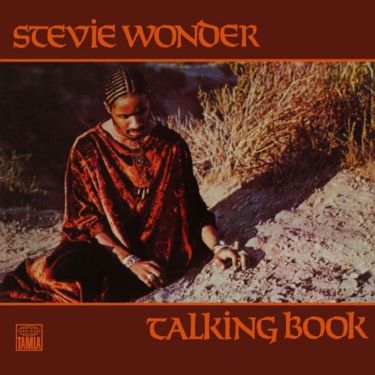 I don’t know who was responsible, but the decision for Wonder to tour as warm-up act for The Rolling Stones 1972 US tour was a stroke of genius, for it opened him up to a previously ambivalent white audience in a huge way. At precisely that moment, Wonder released the LP “Talking Book,” a peerless collection of incredible R&B tunes that zoomed to #1 at the same time its first single, the irresistible “Superstition,” did the same thing. Gushed the Chicago Tribune, “A man whose only colors are in the spectrum of sounds has opened new eyes for all of us.” Rolling Stone called it “the work of a now quite matured genius.”
While his lyrics still sometimes felt amateurish, he nevertheless struck resounding chords about governmental overreach (“Big Brother”) and paranoia and conspiracy (“Superstition”). Wonder’s clavinet, the electric clavichord instrument made by Hohner that Wonder had been fiddling with since the late 1960s, was his favorite musical vehicle to bring forth the marvelous chord progressions and melodies dancing around in his ever-creative head.
For me, Wonder’s crowning achievement is the nearly perfect 1973 album “Innervisions,” on which he wrote, produced, sang and played virtually every instrument. “Too High,”  “Living For The City,” “Golden Lady,” “Higher Ground,” “All in Love is Fair,” “Don’t You Worry ‘Bout a Thing” — are you kidding me?? This is a greatest hits record all by itself. The Grammys, which has so often gotten it wrong regarding what the year’s best music was, for once hit a home run by awarding “Innervisions” the Album of the Year honor.
He was now writing widely accessible songs that straddled the pop/R&B spectrum, songs that sounded like some wondrous combination of George Gershwin and Smokey Robinson. Let’s not forget its closer, “He’s Misstra-Know-It-All,” a scathing indictment of Richard Nixon which, 45 years later, presages the same problems with indignant narcissism we face from the current White House occupant: “Makes a deal with a smile, knowing all the time his lie’s a mile… Must be seen, there’s no doubt, he’s the coolest one with the biggest mouth… If he shakes on a bet, he’s the kind of dude who won’t pay his debt, he’s Misstra Know-It-All…”
The next release, 1974’s “Fulfillingness’ First Finale,” was perhaps the most intellectually reaching and spiritually immersed work of his career. He had been in a close-call auto accident in the fall of ’73, putting him in a coma for several days, from which he emerged with a heightened purpose and a focused spirituality that showed up in the songs on that album: “You Haven’t Done Nothin’,” another anti-Nixon diatribe and another #1; the funky and somewhat raunchy “Boogie On Reggae Woman,” which also went Top Five; and great album tracks like “Heaven Is 10 Zillion Light Years Away,” a thought-provoking piece of inspirational, melodic humility.
Oh, by the way, it earned another Album of the Year Grammy.
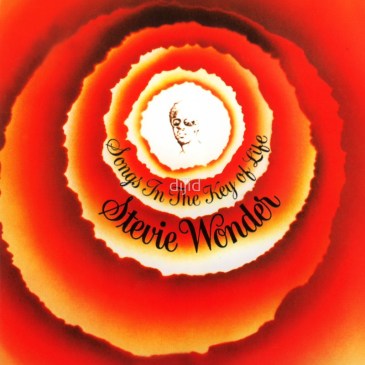 To many, Stevie Wonder’s apex was his ineffable double LP from 1976, “Songs in the Key of Life,” by all counts a monumental work, one of the most seismic releases in the history of American popular culture. It has inspired books, documentaries, cover albums, samples, even entire bands and their catalogs. It has been called “the most ambitious work ever made by a pop star at the height of his or her powers… a ‘concept album’ whose concept is nothing less than life itself.” The songs are all over the map, lyrically and musically, and yet they flow and coalesce beautifully, and the singles pulled from it stand out magnificently on their own.
Besides the hits “I Wish” and “Sir Duke,” there’s the hymn-like “Love’s in Need of Love Today,” the jazz-fusion of “Contusion,” the gorgeous “Summer Soft,” the minor classic “Isn’t She Lovely,” the stunning ballad “Isn’t It Magic” and the rollicking album closers “As” and “Another Star.” Go ahead, I dare you to play the whole album. You will be completely exhausted, and thoroughly satisfied. It became his third Album of the Year Grammy winner in four years.
And at this point, he was still only 26 years old.
Wonder perhaps coasted on the high of this achievement for nearly three years before releasing the curiously uncommercial “Journey Through the Secret Life of Plants,” ostensibly a collection of soundtrack material for a documentary film about botany (??) that has still never been released. Was it an experimental departure? Most assuredly. Did it work? Well… there were some pretty songs on there, especially the #4 hit “Send One Your Love” and the more conventional “Black Orchid,” but most of the LP was way out of his comfort zone, I’d say. And yet, it reached #10, probably on the strength of his reputation more than what was found within.
 He no doubt saw the need to bounce back with something that came much closer to meeting his fans’ expectations, and 1980’s “Hotter Than July” certainly did that. He had been touring with Jamaica reggae sensation Bob Marley, and his tribute, “Master Blaster (Jammin’),” reached #5, which put the LP at #3, thanks as well to the galloping “I Ain’t Gonna Stand For It” and the contagious “Rocket Love.” The LP also contained “Happy Birthday,” a key part of Wonder’s blatant appeal to America to turn Martin Luther King’s birthday into a national holiday. And it worked.
It was too long a time before we heard from Stevie again, and maybe it’s not fair to have expected him to keep up that frenetic pace for long. He did come up with the marvelous “That Girl” as a new single from his first major career retrospective “The Original Musiquarium” in 1982, but the next Stevie sighting was the incredibly lame “I Just Called to Say I Love You,” from the “The Woman in Red” soundtrack. It went through the roof commercially, but true fans and critics loathed it. Some say he never truly recovered artistically.
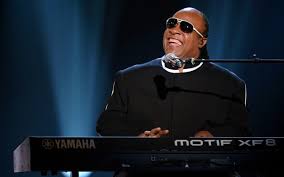 In 1985, Wonder finally completed “In Square Circle,” the album he’d been working on for nearly five years, and thanks to the hit “Part Time Lover,” his last solo hit, the album sold plenty of copies. But even he knew his days as the chart-topping wizard were now behind him. He seemed to accept his new role as an elder statesman of sorts, willing to collaborate on major charity projects like “We Are the World” and with newer figures like Babyface and Coolio as the ’80s became the ’90s, and beyond.
Stevie Wonder is still out there, touring to adoring masses, maybe even tonight. He hasn’t released anything new in a long time, but I certainly don’t care, and neither should you. Just consider the weight and impact of his recorded output, and you’ll soon realize: What he has already accomplished is truly an inhuman achievement. A wonder, you might say.
 dominant form of recorded music, although there was still a vibrant Top 40 Billboard chart that offered everything from romantic soul and glam rock to straight pop and syrupy ballads. More people were buying albums by then instead, and the list of albums released that year is truly mind-boggling.
 Gilbert O’Sullivan; “Hold Your Head Up” by Argent; “Where Is The Love” by Roberta Flack and Donny Hathaway; “Goodbye to Love” by The Carpenters; “I’m Still in Love With You” by Al Green; “The Guitar Man” by Bread; “Saturday in the Park,” Chicago; “Black and White” by Thee Dog Night.
 Main Ingredient; “Garden Party” by Rick Nelson; “Listen to the Music” by The Doobie Brothers; “Tight Rope” by Leon Russell; “Summer Breeze” by Seals and Crofts; “Burning Love” by Elvis Presley; “Living in the Past” by Jethro Tull; “Nights in White Satin” by The Moody Blues; “I Can See Clearly Now” by Johnny Nash; “Elected” by Alice Cooper; “Ventura Highway” by America; “Papa Was a Rolling Stone” by The Temptations; “Operator” by Jim Croce; “My Ding-a-Ling” by Chuck Berry.
 ones” by Billy Paul; “You’re So Vain” by Carly Simon; “It Never Rains in Southern California” by Albert Hammond; “Your Mama Don’t Dance” by Loggins and Messina; “Do It Again” by Steely Dan; “I Am Woman” by Helen Reddy; “Dancing in the Moonlight” by King Harvest; “Crocodile Rock” by Elton John; “Superstition” by Stevie Wonder; “Don’t Let Me Be Lonely Tonight” by James Taylor; “Rockin’ Pneumonia and the Boogie Woogie Flu” by Johnny Rivers.
 I’m Falling in Love” by The Spinners; “Danny’s Song” by Anne Murray; “Tie a Yellow Ribbon” by Tony Orlando and Dawn; “Right Place Wrong Time” by Dr. John; “Sing” by The Carpenters; “Witchy Woman” by The Eagles; “Duelin’ Banjos” by Eric Weisberg; “Ain’t No Woman (Like the One I Got)” by The Four Tops.
 and Wings; “Kodachrome” by Paul Simon; “Love Train” by The O’Jays; “Smoke on the Water” by Deep Purple; “Stuck in the Middle With You” by Stealer’s Wheel; “Walk on the Wild Side” by Lou Reed; “Give Me Love” by George Harrison; “Long Train Runnin’” by The Doobie Brothers; “Reelin’ in the Years” by Steely Dan.
 simultaneously climbing the Top 40 listings, and there were many examples of that: Leon Russell’s “Carney,” Paul Simon’s “There Goes Rhymin’ Simon,” Rod Stewart’s “Never a Dull Moment,” Steely Dan’s “Can’t Buy a Thrill,” Marvin Gaye’s “Trouble Man,” Cat Stevens’ “Catch Bull at Four,” War’s “The World is a Ghetto,” Bill Withers’ “Still Bill,” The Doobie Brothers’ “Toulouse Street” AND “The Captain and Me,” Lou Reed’s “Transformer,” Carly Simon’s “No Secrets,” Jethro Tull’s “Living in the Past,” The Temptations’ “All Directions,” Elton John’s “Don’t Shoot Me, I’m Only the Piano Player” AND “Goodbye
  Yellow Brick Road,” Curtis Mayfield’s “Superfly,” Jim Croce’s “Life and Times,” The Allman Brothers’ “Brothers and Sisters,” Paul McCartney & Wings’ “Red Rose Speedway,” Alice Cooper’s “Billion Dollar Babies,” America’s “Homecoming,” Stevie Wonder’s “Talking Book” AND “Innervisions,” Neil Diamond’s “Moods,” Chicago’s “Chicago V,” Joe Walsh’s “The Smoker You Drink, the Player You Get,” The Moody Blues’ “Seventh Sojourn,” Dr. John’s “In the Right Place,” Pink Floyd’s “Dark Side of the Moon,” Steve Miller’s “The Joker,” Edgar Winter Group’s “They Only Come Out at Night,” Grand Funk Railroad’s “Phoenix,” Pure Prairie League’s “Bustin’ Out.”
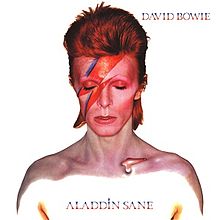 And yet, some of the classic LPs of the year sold well without benefit of a hit single: David Bowie’s “Aladdin Sane,” Yes’s “Close to the Edge,” Todd Rundgren’s “A Wizard/A True Star,” J Geils Band’s “Bloodshot,” Emerson Lake & Palmer’s “Trilogy,” Humble Pie’s “Eat It,” Van Morrison’s “St. Dominic’s Preview,” Joe Walsh’s “Barnstorm,” Little Feat’s “Dixie Chicken,” Jethro Tull’s “A Passion Play,” Diana Ross’s “Lady Sings the Blues,” Led Zeppelin’s
  “Houses of the Holy,” Johnny Winter’s “Still Alive and Well,” The Who’s “Quadrophenia,” The Small Faces’ “Ooh La La,” Mahavishnu Orchestra’s “Birds of Fire,” Traffic’s “Shoot Out at the Fantasy Factory,” Joni Mitchell’s “For the Roses,” Santana’s “Caravanserai,” Mike Oldfield’s “Tubular Bells,” The Grateful Dead’s “Europe ’72,” The Eagles’ “Desperado.”
 The year 1973 was a significant year for another big reason, according to Michael Walker, author of the revealing 2013 book, “What You Want is in the Limo.” In his introduction, he maintains that 1973 was the year that the Sixties finally died and modern rock stardom was born, when bands like Led Zeppelin, The Who and Alice Cooper put together monumental, physically punishing concert tours that set new standards — for attendance, for the quality and quantity of recreational drugs, for the amount of equipment and lighting on stage, for backstage and hotel hijinx, for the sheer volume of sound coming from the speakers.
 fans too young for Woodstock inherited the tropes of the ’60s, minus the boring poli-sci socio-overlay. Thus do peace, love, and understanding devolve into sex, drugs, and rock and roll. The sex was younger, the drugs harder, and the rock and roll louder, longer and infinitely more belligerent.”
 the tens of millions, though by then the rituals, commodified by corporate patronage, will seem increasingly scripted.”
