I must be strong, and carry on
Ever since I was about 14, I’ve felt a strong bond with Eric Clapton, and that kinship has only increased over the years since.
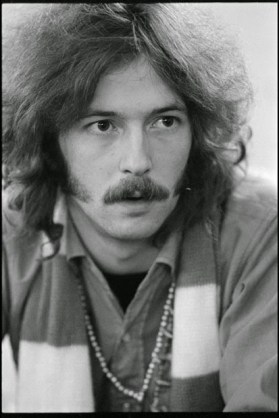 When I heard him play those amazing electric guitar passages on the great songs by Cream, I knew I wanted to learn guitar. I persuaded my parents to buy me a hollow body electric, and I took lessons in the hope that I could someday play like him. Alas, it didn’t take me long to realize that I didn’t have the dexterity to be a lead guitarist, so I revised my dreams and started strumming a 12-string acoustic instead, and that suited me fine.
But I kept listening in awe as Clapton continued churning out incredible recordings as part of Blind Faith, then Derek and the Dominos, and then throughout a solo career that has spanned nearly 50 years and included 25 studio albums, a dozen live LPs and numerous collaborations.
He and I also share a heartfelt appreciation for blues music. Clearly, his passions have run far deeper, pushing him on to become one of the premier blues guitarists of his time, while I am merely a devoted follower. As Clapton himself put it, “It’s difficult to explain the effect that the first blues record I heard had on me, except to say that I recognized it immediately. It was as if I were being reintroduced to something that I already knew, maybe from another earlier life. For me, there is something primitively soothing about the blues.”
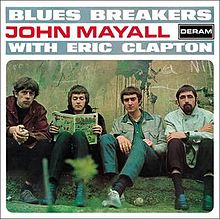 It was Clapton’s early recordings that got me hooked on the blues. His performance on Freddy King’s “Hideaway” on “John Mayall’s Bluesbreakers With Eric Clapton” (1966) still floors me to this day. And that’s only one of probably a hundred tracks on which he shows unparalleled chops on smokin’ fast blues and smoldering slow blues alike.
Mayall, regarded as The Godfather of the British Blues revival, described Clapton this way: “When it came to blues, there was nobody like him. He knew the history of it, the background of it, had the emotional feel for it, and the technique to express it. And my band gave him the freedom to let loose. And it’s truly incredible what he has accomplished since those days.”
In 2007, Clapton released his autobiography, entitled simply “Clapton,” and I bought it right away. I was profoundly moved by it because he laid bare so much of his personal life, which has been riddled with traumatic, life-changing events and inner demons with which he has struggled mightily.
In particular, his addiction to heroin in the early ’70s and then alcohol for many years after that came close numerous times to making him another rock music casualty. Instead, in the late ’80s he successfully recovered and, in the process, became a positive role model for countless others. In 1998, he established the Crossroads Centre in Antigua, which quickly evolved into an internationally renowned addiction rehabilitation facility. To increase awareness of the potential for recovery, and to directly aid those who needed treatment, Clapton initiated the Crossroads Guitar Festival, a series of benefit concerts featuring some of the finest musicians in the business. Festivals in 1999, 2004, 2007, 2010 and 2013 were all recorded for CD and DVD packages, all as fundraising efforts for the Antigua center.
As a recovering alcoholic myself, I have learned a great deal from Clapton’s example, and I now look up to him for his inner strength and humility, in addition to his musicianship.
This month, Showtime premiered an extraordinary documentary called “Eric Clapton: Life in 12 Bars,” which builds on the revelations of his autobiography, offering 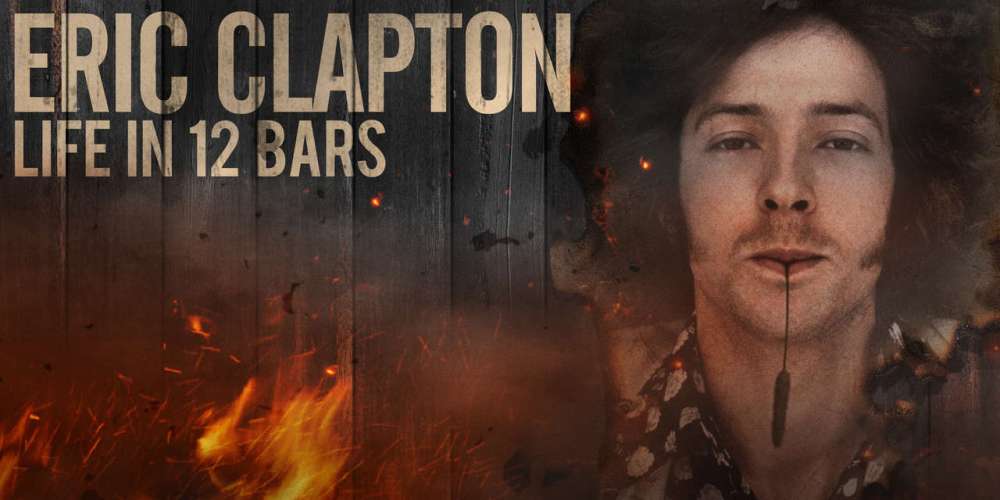 previously unreleased archival footage and new interviews of key people in his life, much of it narrated by Clapton himself. Even for casual fans, this is fascinating and moving, and I strongly recommend you check it out.
He speaks very candidly about the unspeakable tragedy he endured in 1990, when his 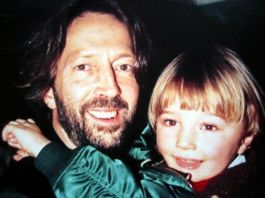 four-year-old son Conor accidentally fell 50 stories to his death from his Manhattan apartment building. Incredibly, Clapton found a way to turn this anguish into the Grammy award-winning song, “Tears in Heaven,” with its tender melody and heartbreaking lyrics: “Would you know my name if I saw you in heaven? Would it be the same if I saw you in heaven? I must be strong, and carry on…”
He also shares his thoughts on the difficult developments that occurred in his early childhood. He was raised in a loving, stable household with doting parents, but at age six, he learned that the couple he thought were his parents were in fact his grandparents. Clapton’s real mother had been only 15 when she gave birth to Eric, and at 17, she moved away to Canada, leaving the boy to be raised by her parents. If that wasn’t 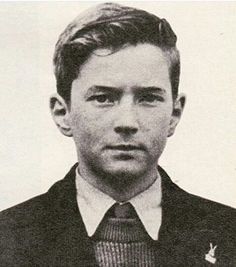 disturbing enough for Eric to discover, he then had to endure, at age nine, the return of his mother to England for a lengthy visit, during which she cruelly withheld her affection and dismissed his pleas. “Can I call you Mummy now?” he asked, to which she replied, “I think it’s best, after all they’ve done for you, that you go on calling your grandparents Mum and Dad.”
The enormity of that rejection quickly turned to hatred, anger and resentment that Clapton carried with him for decades afterward. It negatively affected his schoolwork, his self-esteem, his general attitude, and his ability to maintain any lasting relationships with women. It also no doubt contributed to his near-fatal immersion in drugs and alcohol.
On a positive note, this terrific angst was what drove him to seriously explore his infatuation with blues music, isolating himself in his room for months on end, listening to, and trying to copy, the works of blues masters like B.B. King, Big Bill Broonzy, Jimmy Reed, Buddy Guy, Muddy Waters, and John Lee Hooker. Clearly, we are all beneficiaries of the single-minded zeal with which he pursued his craft.
The documentary also spends time addressing the well-known story of how Clapton fell 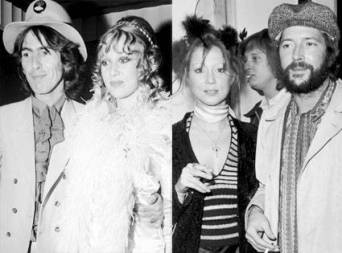 madly in love with Pattie Boyd, who happened to be the wife of his friend George Harrison. This unrequited love for an unavailable woman agonized and tortured him, spurring him to write what became his signature song, “Layla,” with its poignant lyrics of frustration and longing: “I tried to give you consolation when your old man had let you down, like a fool, I fell in love with you, turned my whole world upside down, Layla, you’ve got me on my knees, Layla, I’m begging, darling please, Layla, darling won’t you ease my worried mind…”
A few years after he emerged as a brilliant virtuoso of the electric guitar, Clapton was persuaded by producers, managers and peers to cultivate his singing voice, and to start writing songs as well. “I was reluctant because I didn’t fancy myself much of a singer,” he said. “There were much better vocalists in the groups I was in, guys like Jack Bruce and Steve Winwood. On one of the first songs I wrote, ‘Presence of the Lord’ from the ‘Blind Faith’ album, Steve felt I should sing it, but I just wasn’t ready, so I insisted he do it instead. But slowly I started giving it a go, and I found I enjoyed it, especially when I was singing songs I had written myself.”
On classics like “Let It Rain,” “Blues Power,” “Let It Grow,” “Bell Bottom Blues” and “Layla,” all songs he wrote or co-wrote, his plaintive vocals add such emotional depth to the recordings that it’s nearly impossible to imagine them sung by anyone else.
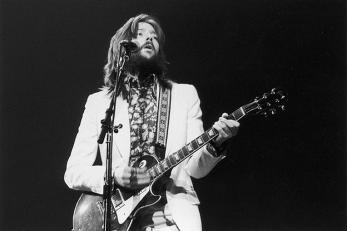 There’s no denying that the music Clapton made in the ’70s and early ’80s, both in the studio and in concert, was often sloppy and uninspired, due to his raging alcohol abuse at that time. He freely admits this in the Showtime documentary: “I used to do crazy things that people would bail me out of, and I’m just grateful that I survived. But the music got very lost. I didn’t know where I was going, and I didn’t really care. I was more into just having a good time, and I think it showed… I would say I also deliberately sold out a couple of times by agreeing to record songs that the record label thought would do well, even though I didn’t like them very much.”
In the years since he got clean in the late ’80s, Clapton’s love for the blues never wavered. 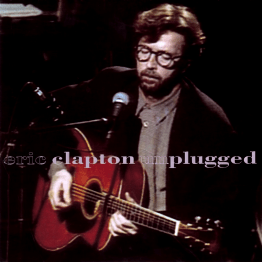 His multi-platinum, Grammy-winning “Unplugged” album in 1992 is dominated by acoustic versions of blues tunes like “Before You Accuse Me,” “Old Love,” “Hey Hey” and “Rollin’ and Tumblin’.” In 1994, he released “From the Cradle,” an album of nothing but electric covers of hard-core blues numbers. In the 2000s, Clapton offered “Me and Mr. Johnson,” a collection of covers of Delta blues giant Robert Johnson’s repertoire, and “Riding With the King,” a Grammy-winning traditional blues collaboration with the late great B.B. King. Indeed, every album he has released in the last 20 years has included at least a handful of blues tunes.
But as he has aged, Clapton has often chosen a mellower path, writing and singing lovely 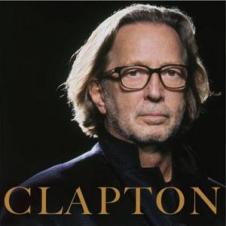 acoustic guitar-based songs like “Change the World” (from the 1996 film soundtrack for “Phenomenon”), “My Father’s Eyes” (from 1998’s “Pilgrim”), R&B-flavored tunes like “One Track Mind” (from 2005’s “Back Home”) and gospel tracks such as “Diamonds From the Rain” (from 2010’s “Clapton”). Even as far back as his popular “461 Ocean Boulevard” LP in 1974 (which included his only #1 single, a cover of Bob Marley’s reggae hit “I Shot the Sheriff”), Clapton began dialing back the incendiary guitar solos in favor of a more nuanced technique. Although this sometimes alienated his longtime fans, it gained him a new audience that embraced the lighter touch and the forays into non-blues genres.
Most recently, he has even taken to covering creaky old standards from the 1930s and 1940s like “I’ll Be Seeing You,” “Autumn Leaves,” “Our Love is Here to Stay,” “Little Man, You’ve Had a Busy Day” and “Goodnight Irene.” As you might expect, you’ll find both charming successes and embarrassing failures among these selections.
 The older I get, I too find myself preferring calmer, more melodious music, so I enjoy his more recent recordings perhaps more than most Clapton fans. I’ve been playing his solo records continually over the past couple of weeks, and I’ve discovered some great tracks I guess I overlooked the first time around which are worthy of your attention: “Spiral” from “I Still Do” (2016); “Angel” from “Old Sock” (2013); “Everything Will Be Alright” from “Clapton” (2010); “Danger” from “The Road to Escondido,” his 2006 collaboration with J. J. Cale; and the title track to “Back Home” (2005).
 But I must confess I still return again and again to Clapton’s brilliant ’60s catalog. There’s simply nothing like the mind-blowing, improvisational live performances of “Crossroads” and “Spoonful” or the studio recordings of “White Room” and “Born Under a Bad Sign” from Cream’s #1 “Wheels of Fire” LP. I’m also a sucker for the amazing 2005 Cream reunion package “Live at Royal Albert Hall,” where the famed trio offer impressive remakes of their anthems, and 2009’s “Live at Madison Square Garden,” which captures Clapton and Winwood’s reworking of classic rock material on their successful 2009 tour.
In short, I never tire of Clapton. He has achieved so much on so many records for so many years, and he has soldiered on in the face of so much personal adversity. His songs, his vocals, and especially his scintillating guitar work have always kept me coming back for more, and he rarely disappoints. He is an inspiration and a true blues rock legend. But you probably already knew that.
*************
Here’s a Spotify playlist of the Clapton songs I’ve mentioned above, along with others I think you’ll enjoy. There are some rare gems like “She Rides,” which is the same song as “Let It Rain” but with a different set of lyrics, and a hard-to-find live version of The Dominos’ “Why Does Love Got to Be So Sad.”
Rock on!
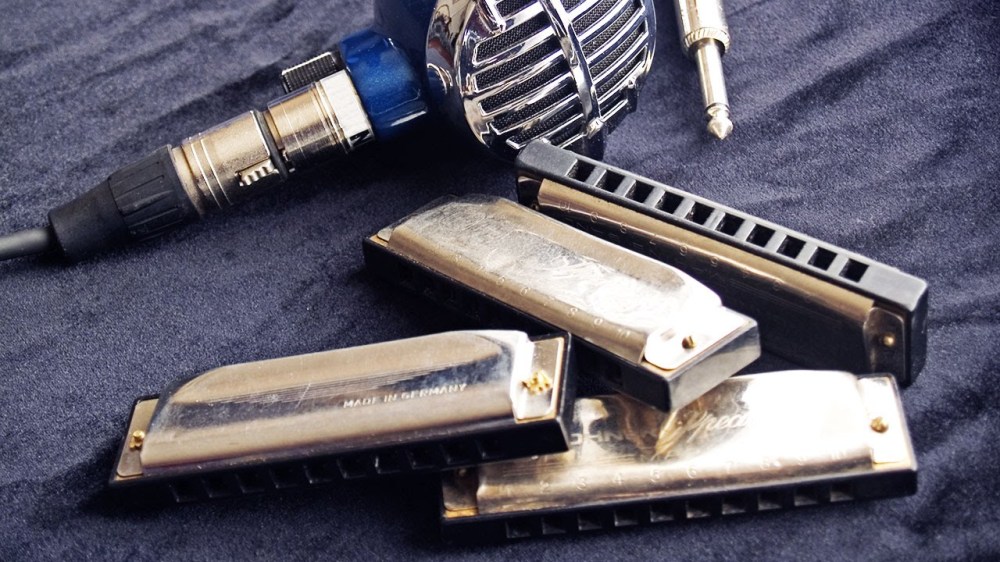 migrated to America in the 1850s and, because of its relative simplicity and affordability, was quickly adopted and widely used in American folk music. Almost anyone could play a harmonica, almost anytime or anywhere. Indeed, even Abraham Lincoln was known to keep one in his pocket. He once said, “Sometimes I think I’m happiest when I’m sitting on my porch playing my harmonica.”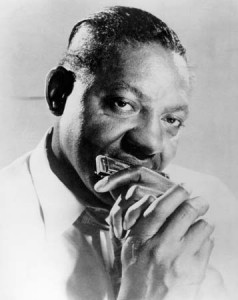
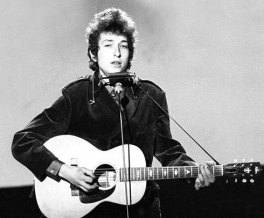 thanks to Bob Dylan, who was inspired by the harmonica playing of the Memphis Jug Band, Woody Guthrie and John P. Hammond. Beginning in 1962, Dylan used a harmonica mounted on a neck rack, which allowed him to play it and an acoustic guitar simultaneously. Many of his early anthems — “Blowin’ in the Wind,” “Don’t Think Twice, It’s All Right,” “The Times They Are A-Changin'” — showcased prominent (albeit rudimentary) harmonica passages. Dylan continued to use harmonica selectively in the ’60s (“I Want You”), the ’70s (“Tangled Up in Blue”) and the ’80s (“Every Grain of Sand”) as well.
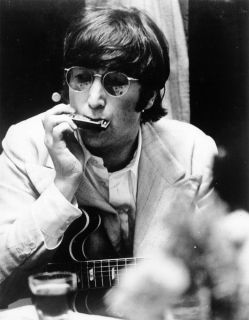 Over in England, a Liverpudlian named John Lennon took notice of the harmonica, particular the way Dylan used it. Prior to The Beatles’ arrival on American shores, the band’s debut single on the British charts was “Love Me Do,” which put Lennon’s harmonica front and center. And the band’s next hit single, the #1 “Please Please Me,” also featured the harmonica in key moments of the arrangement. In the 1964 smash film “A Hard Day’s Night,” Lennon’s mouth harp completely dominates the recording of “I Should Have Known Better.” Later, on his solo albums, Lennon occasionally added a harmonica lick here and there (“Oh Yoko” on the “Imagine” LP).
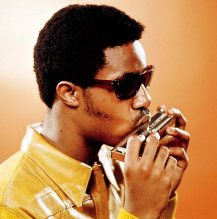 In Detroit, a blind child prodigy named Stevland Morris had wowed the key people at Motown Records, who dubbed the 12-year-old “Little Stevie Wonder” because of his multiple talents. Said Wonder many years later, “I never imagined I’d ever meet (Motown chief) Berry Gordy. When I did, he told me, ‘You know, your singing’s okay, but I like your harmonica playing better.’” Sure enough, his first appearance on the charts in 1963, an amazing live performance called “Fingertips,” was a tour-de-force that stressed his harmonica abilities over his vocals.
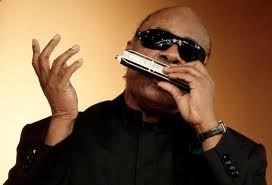 In fact, it was only the tip of the iceberg, as Stevie Wonder emerged as one of the finest harmonica players of his age, from his ’60s hits like “I Was Made to Love Her” and “For Once in My Life” to ’70s staples like “Isn’t She Lovely,” “Too High,” “That Girl” and “Boogie On Reggae Woman.” Just as important were his many guest harmonica solos on the recordings of others, like James Taylor’s “Don’t Be Sad ‘Cause Your Sun is Down” (1976), Elton John’s “I Guess That’s Why They Call It the Blues” (1982), The Eurythmics’ “There Must Be an Angel” (1985) and Dionne Warwick’s “That’s What Friends Are For” (1991).