Periodically, I have used this space to pay homage to artists I believe are worthy of focused attention — artists with an extraordinary body of work and a compelling story to tell. In this essay, I salute a woman who is one of the most gifted artists of our time — Joni Mitchell.
************

If the true definition of an artist is someone with an exceptional muse, a maverick attitude, a fierce dedication to exploring, an astonishing command of language, and a rare talent for bold avenues of expression, then a photo of Joni Mitchell should be in the dictionary next to the word “artist.”
Over a span of more than 40 years and nearly 20 albums of original material (plus live albums and collections), the simple Canadian prairie girl born Roberta Joan Anderson has consistently set and raised the quality standard to unparalleled heights in the fields of musical excellence and lyrical magnificence. From simple beginnings as a folk singer in Toronto clubs through a broad palette of styles and influences to her unquestioned position today as one of the two or three finest composers of the past half-century, Mitchell has gifted us with a remarkable collection of more than 200 songs that you could say define us, our relationships, and our times.
Not bad for a self-described “prairie tomboy” who hated school, suffered multiple illnesses, defied authority at every turn, thumbed her nose at conventional ways, taught herself guitar and piano, and persevered in a cutthroat business to emerge as a singer-songwriter unlike anyone before or since.
Now, I recognize that, as with any artist, Joni Mitchell’s oeuvre is not everyone’s cup of tea. Some people think her high soprano in evidence on her first four albums is “like fingernails on a blackboard,” as one friend put it. Some fans who enjoyed her peak years in the ’70s turned against her in the ’80s and ’90s when she steered away from confessional lyrics and toward socio-political subjects laced with bitterness. One critic 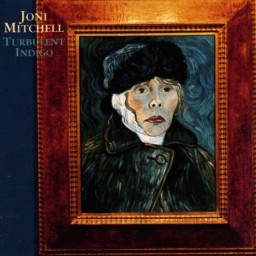 had this to say about her Grammy-winning album “Turbulent Indigo” in 1994: “The new politically responsible Joni Mitchell is verbose, morose and exceedingly bad company…” And yet the same critic acknowledged, “At half-power, Joni still leaves most of her successors in the dust.”
The music Mitchell has created is phenomenally diverse: Folk, pop, jazz, classical, R&B, and unique blends of all of these. She wrote succinct, folk-based songs like “The Circle Game” and “Urge for Going” when she was barely 23. She composed wondrous pop gold like “Free Man in Paris” and “Help Me” at 30. She spun heads with jazz-inflected pieces like “Blue Motel Room” and “Dreamland” at 34. She dabbled in techno-tinged tunes like “Number One” and “Dog Eat Dog” at 45. She reimagined her early work with classical/orchestral arrangements of songs like “Trouble Child” and “Judgment of the Moon and Stars” at 60.
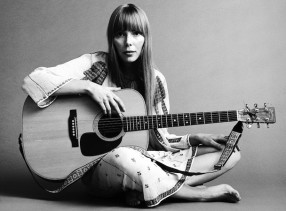 She started out meekly and tentatively, but branched out pretty quickly. Her first albums in 1968 and 1969 were almost exclusively Joni alone on voice and guitar, with the occasional dulcimer for good measure. By the time of the 1974-1975 commercially successful period of “Court and Spark” and the live “Miles of Aisles” (which both reached #2 on the charts), she was recording and touring with Tom Scott and the L.A. Express, to rave reviews. (Personal trivia point: My wife and I now own the Santa Monica condo where Scott once lived!)
By the late ’70s, she was coming up with more free-form, loosely structured pieces, and collaborating with instrumental jazz greats like Wayne Shorter, Jaco Pastorius, Larry Carlton and Charlie Mingus. In the ’80s, she returned to more mainstream forms and took it a step further with guest appearances from singers like Peter Gabriel, Willie Nelson, Michael McDonald, Don Henley and Billy Idol. The arrangements she devised became evermore stunning, up through and including her last release, “Shine” (2007). She has always been willing to experiment…as long as she retained control. With only one or two exceptions, she has been the sole producer of all her albums, a rarity in her line of work.
Mitchell’s musical prowess has wide-ranging influence. Prince has said her provocative 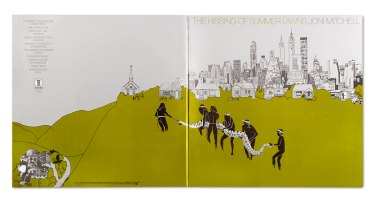 1975 album “The Hissing of Summer Lawns” is one of his top ten favorites of all time. Jazz legend Herbie Hancock surprised many when he won an Album of the Year Grammy for his 2003 release, “River: The Joni Letters,” which radically rearranged ten of Mitchell’s songs with guests including Norah Jones, Tina Turner, Leonard Cohen, even Joni herself. And dozens of female songwriters — from Alanis Morissette to Annie Lennox, from Jewel to Emily Hackett — shower praises on Mitchell’s one-of-a-kind phrasings, her inventive guitar tunings, her stunning arrangements.
And her lyrics. Oh my, her lyrics…
Like me, her biggest fans all keep coming back to Mitchell’s talent with vocabulary, the fabulous combinations of phrases, the way she uses unusual language to identify thoughts, emotions, situations that happen in all our lives. Words may fail me as I try to describe the impact that her lyrics have had on me, but thankfully, words have rarely failed Joni.
Some say she is a champion of the female perspective, but I find her to be gender-neutral. For so many moments in my life, there is a lyric somewhere in her catalog that precisely describes my feelings with incredible caring, wisdom and intelligence. I really don’t know how she does it. It’s truly uncanny. Male or female has little to do with it.
 Mitchell recognized that “in my time, I have been very misunderstood.” On albums like “Blue” and “For the Roses,” her lyrics were so nakedly confessional that listeners sometimes felt like voyeurs. She has had her share of rather public relationships, so fans and the press took to speculating who was she singing about in, for example, “See You Sometime” or “My Old Man.” Several songs on those two LPs focused on her stormy relationship with James Taylor, another heart-on-the-sleeve artist with whom she shared the anxiety of stardom and the wonder of song creation. Mitchell has said she often felt the need to isolate and find new inspiration, before and after that uncomfortable bout in the spotlight. “I’ve always liked to take a lot of time off to travel some place where I can have my anonymity,” she once said. “To suddenly be the center of attention threatened the writer in me. The performer threatened the writer.”
In her earliest work, she had a positive, even whimsical way about her, even as her lyrics often delved into the push-and-pull of emotional relationships. Mostly, though, her work reeks of poignancy, resignation, sadness and philosophical world-weariness, even anger and bitterness in her later years. One of her songs is called “Don’t Interrupt the Sorrow,” which pretty much nails it.
Regardless of her mood, the words are invariably as accurate as any award-winning author or journalist in capturing what needs to be said. Name an emotion, and she has found a way to pinpoint it with lyrics.
Happy innocence? Seek out “Chelsea Morning” from 1969: “The sun p oured in like butterscotch and stuck to all my senses, oh, won’t you stay, we’ll put on the day, and we’ll talk in present tenses.”
Loneliness during the holidays? Try 1971’s “River”: “They’re putting up reindeer and singing songs of joy and peace, oh, I wish I had a river I could skate away on…”
Gratitude for lovers who are honest? Look at 1972’s “Woman of Heart and Mind”: “You know the times you impress me most are the times when you don’t try, when you don’t even try…”
Feeling vulnerable in social situations? Examine 1974’s “People’s Parties”: “I’m just living on nerves and feelings with a weak and a lazy mind, and coming to people’s parties, fumbling deaf, dumb and blind…”
Conflicting views about the ups and downs of marriage? Check out 1976’s “Song for Sharon”: “He showed me first you get the kisses and then you get the tears, but the ceremony of the bells and lace still veils this reckless fool here…”
Unbridled passion? How about 1982’s “Underneath the Streetlight”: “Yes, I do, I love you! I swear on the blinkin’ planes above, I do! I swear on the truck at the stoplight with his airbrakes moaning…”
The philosopher in her spoke wisely about aging in the 1991 song “Nothing Can Be Done”: “Oh, I am not old, I’m told, but I  am not young, oh and nothing can be done.” She said at the time, “You wake up one day and realize that your youth is behind you. We’ve all got to get through this lament for what was. When I play the song for my middle-aged friends, they either won’t look at it, or they look at it and weep.”
Despair over the world today? There’s nothing quite like 2007’s “If I Had a Heart,” perhaps her most expressive song of the past 20 years: “Holy Earth, how can we heal you? We cover you like a blight, strange birds of appetite…if I had a heart, I’d cry…”
One of my favorites is “For Free” from 1970, where she describes being an ascending star who encounters a street musician, recalling how she was in the same place only a couple of years earlier: “Now me, I play for fortunes, and those velvet curtain calls…and I play if you have the money or if you’re a friend to me, but the one-man band by the quick lunch stand, he was playing real good, for free…”
Like Bob Dylan, Paul Simon and other highly literate songwriters, Mitchell is loathe to discuss the meaning behind her songs. As she put it in 1997: “People keep looking between the lines of songs to see what is hidden there. I’m not an evasive writer. You don’t have to dig under the words for the meaning. It’s all there. It’s very plain-speak.”
She is, however, eager to discuss how the writing process has worked for her: “I believe to this day that if you are writing that which you know firsthand, it’ll have greater vitality than if you’re writing from other people’s writings or secondhand information… Many of my songs are indeed autobiographical, but they are not all self-portraits.”
Interestingly, her primary passion is painting, not music. It was the art she first pursued as a girl, and sh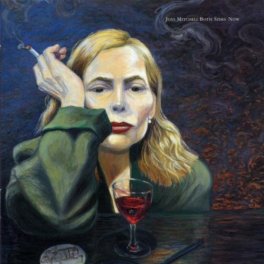 e has returned to it continually throughout her life. Indeed, every one of her distinctive album covers features artwork painted and/or designed by her.
Joni Mitchell has only briefly been a pop music artist. Mostly, she is what is known as a “serious artist.” She cares deeply about the work, the art, not how successful it is or how well received it might be. She has shunned the fame, most notably in the mid-’70s when she turned her back on “the starmaker machinery behind the popular song” and pursued her own path, despite its cost in dollars, critical praise, fan loyalty. She has remained true to her artistic integrity, and for that, I am among those who put her on the highest pedestal.
Perhaps you are aware that, at age 71, Mitchell’s deteriorating health seems to have caught up with her. She suffered an aneurysm earlier this year and has been slowly recuperating. She is not expected to sing or record again, and that’s a tragedy for all of us. But let us rejoice in the exemplary repertoire of superb recordings she will leave as her legacy. I advise you to dive deep into it now. Why wait? “Don’t it always seem to go that you don’t know what you’ve got ’til it’s gone…”
***********
If you’re interested in more about Joni Mitchell, I highly recommend two books: “The Joni Mitchell Companion: Four Decades of Commentary,” edited by Stacy Luftig; and “Joni Mitchell in Her Own Words,” edited by Malka Marom, 2013.
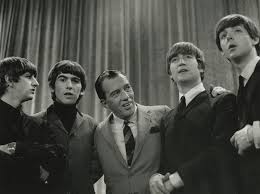 For decades, and perhaps still somewhat true today, rock music and television have had what Keith Richards describes as “a very weird, unnatural marriage.” From its inception, rock and roll was rebellious, brazen and controversial. Television, on the other hand, was bland, familiar and non-threatening. They had very little in common.
