There walks a lady we all know
I remember when I was young thinking how cool it would be to have a song named after me. I quickly noticed, however, that while there are many dozens, hundreds, of songs named after women, there are only a handful featuring men’s names: Elton John’s “Daniel” comes to mind, or that macabre tune from 1971 about the boys who ate their friend in order to survive being trapped in a mine (“Timothy, Timothy, where on earth did you go?”).
Men (and a few women) have been writing songs about the women in their lives for at least a century or two. These tunes have come in the form of romantic ballads, bitter  break-up songs, heartfelt tributes and bittersweet odes.
More often than not, songwriters don’t mention their women by name, perhaps to preserve anonymity, or because their managers urged them to keep it more generic so the song might have more universal appeal. Sometimes a writer wanted to be specific to pay homage, or to hold in contempt, or simply because there sound of the name fit nicely in the song’s meter.
There are several dozen pretty great examples of classic rock songs with a woman’s name as the title. No modifiers, no extra words. Just the name.
In searching for these songs, I came across many others that use women’s names with descriptors (“Judy in Disguise,” “Long Tall Sally”), verbs (“Come on Eileen,” “The Wind Cries Mary”) and other qualifiers (“Sara Smile,” “Helen Wheels”). All perfectly good songs, but I limited my list to one-word titles.
Here are 20 for your consideration.
Enjoy!
******************
“Sara,” Fleetwood Mac, 1979
 It took a while, but in 2014, Stevie Nicks indeed confirmed what had been rumored for quite some time — that this 1979 song from Mac’s “Tusk” LP is about an aborted child she and lover Don Henley chose not to have. “Had we gotten married and had that baby, and if it had been a girl, her name would have been Sara,” Nicks said. “It’s a very special name to me. One of my very best lifelong friends is named Sara.” The recording reached #7 as a single in early 1980, and Nicks still performs the song, both with the band and as a solo act.
“Roxanne,” The Police, 1978
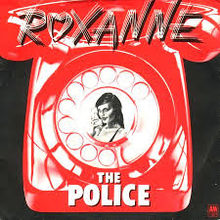 In 1977, when The Police were performing in dive clubs around Europe, Sting was inspired by the prostitutes who worked outside the seedy hotel in Paris where the band was staying. He wrote this sympathetic tune, urging the girl to give up the hard life she had chosen. He decided to call her Roxanne after seeing a movie poster in the hotel lobby featuring the old film “Cyrano de Bergerac,” whose female lead is named Roxanne. The song peaked at only #32 in the US in 1978, but it remains one of The Police’s signature songs.
“Gloria,” Them, 1964
 Van Morrison said that he wrote “Gloria” in the summer of 1963 as he was turning 18. The song is as simple as it gets, only three chords, and he would ad-lib lyrics as he performed, sometimes stretching the song to 15 or 20 minutes. Gloria was a real person, a girl he was infatuated with, and his desire to seduce her made it harder for conservative ’60s radio programmers to include the song in Top 40 formats. Indeed, when an obscure group called The Shadows of Knight had a Top 10 hit with their cover of “Gloria” in 1966, it eliminated the reference to “coming up to my room.”
“Victoria,” The Kinks, 1969
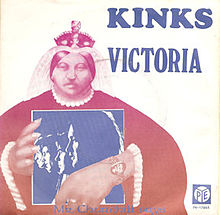 In the leadoff song on The Kinks’ criminally underrated 1969 LP “Arthur,” Ray Davies’ satirical lyrics juxtapose the grim realities of life in Britain during the 19th century (“Sex was bad, and obscene, and the rich were so mean”) with the empathetic hopes of the British Empire in the Victorian age (“From the West to the East, from the rich to the poor, Victoria loved them all”). Through it all, Queen Victoria was beloved even by the downtrodden working class (“Though I am poor, I am free, when I grow, I shall fight, for this land I shall die”).
“Beth,” Kiss, 1976
 How peculiar that one of the loudest and most bombastic of all Seventies heavy metal bands would have their biggest commercial success (#7 on the charts) with a ballad, sung by the drummer with limited instrumental accompaniment. “Beth” was actually born in 1971 as “Beck” (short for Becky) in reference to the girlfriend of a former band member who would nag him to leave rehearsal and come home. Drummer Peter Criss later changed it to “Beth” at the suggestion of Kiss’s producer, and even though the rest of the group didn’t want to record it, it helped boost sales for their “Destroyer” LP that year.
“Jolene,” Dolly Parton, 1973
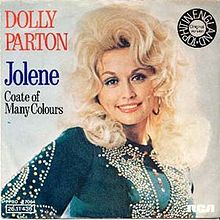 Parton’s solo career was just gathering momentum when she penned this evocative song about a simple gal who pleads with a stunningly beautiful woman named Jolene to leave her man alone: “Pretty girl, please don’t take my man just because you can.” So many country music fans could relate to that woman’s desperate feeling that the song soared to #1 on the country charts (although only #60 on there pop charts). It became one of Parton’s most loved tunes, and many cover versions have been recorded since, as well as a 2017 tune (“Diane”) that was a heartfelt apology from the beautiful woman.
“Amie,” Pure Prairie League, 1972
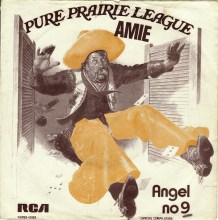 Craig Fuller was the chief singer-songwriter in the original lineup of the country rock group Pure Prairie League, and he wrote song great down-home songs on those classic but largely overlooked first two albums in 1971 and 1972. One song, “Amie,” didn’t do much at first but eventually earned listeners through FM and college radio stations, and by 1975, it was a #27 hit nationwide. The narrator and Amie have one of those on-again, off-again relationships, and it’s never clear whether they end up together. As Fuller said later, “The protagonist of the song is just laying it out and then it’s up to her.”
“Suzanne,” Leonard Cohen, 1967
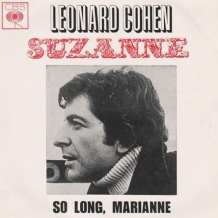 Cohen said “Suzanne” was inspired by his platonic relationship with a woman named Suzanne Verdal, who had been the girlfriend of his contemporary, famed sculptor Armand Vaillancourt. The lyrics poignantly describe the rituals they enjoyed in Montreal, where they lived near each other. Contrary to some interpretations, Cohen insisted he and Suzanne were only friends, not lovers. “I admit I imagined having sex with her, but there was neither the opportunity nor the inclination to actually go through with it,” he admitted.
“Martha,” Tom Waits, 1973
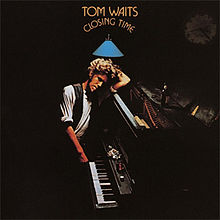 From the 1970s to the current day, Waits has been known for his distinctive deep, gravelly singing voice and song lyrics that focus on the underside of U.S. society. Many of the characters who populate his music are unpleasant ne’er-do-wells and unsympathetic outliers, but a few reek of pathos, such as Tom Frost, the elderly guy who places a phone call to “Martha,” an old flame with whom he is meekly hoping to rekindle something. It becomes clear that that’s not going to happen, but we listeners feel supportive of Tom’s wistful trip down memory lane to speak with her once again.
“Maybellene,” Chuck Berry, 1955
 Berry wrote and recorded this prototype rock and roll song as an adaptation of the Western swing fiddle tune “Ida Red,” recorded in 1938 by Bob Wills and his Texas Playboys. Leonard Chess, owner of the legendary Chess Records label, loved Berry’s sprightly lyrics about a hot rod race and a broken romance, but told him he felt the woman’s name needed to be something less rural than Ida Red. He spied a bottle of Maybelline mascara in the studio and said, “Well, hell, let’s name her Maybellene,” altering the spelling to avoid a potential suit by the cosmetic company.
“Cecilia,” Simon & Garfunkel, 1970
 This #4 hit single, among Simon and Garfunkel’s last, began life as a cacophony of rhythms pounded out on coffee tables and kitchen counters in Simon’s apartment. He later wrote the lyrics as a lament about anguish and jubilation regarding an untrustworthy lover. “Cecilia,” Simon has noted, refers to St. Cecilia, patron saint of music in the Catholic tradition, and he conceded that the song also refers to the frustrations and joy he has experienced in the songwriting process, as musical inspiration comes and goes quickly.
“Josie,” Emily Hackett, 2018
 Almost everyone can recall the difficulties one encounters during the early teenage years, when friendships and early encounters with the opposite sex seem fraught with uncertainty and insecurity. My daughter Emily’s song “Josie,” based loosely on the challenges her cousin was facing at the time, offers tender words of encouragement on how best to navigate the rocky waters of young love and be true to yourself. “It’s about slowing down, enjoying your youth, and knowing that, in time, the person meant to be in your life will find their way to you.”
“Julia,” The Beatles, 1968
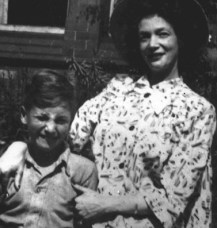 During the sessions for The Beatles “White Album,” John Lennon was burning with a desire to write a song about his mother, Julia Baird. “I lost her twice,” he said, “once as a five-year-old when I was moved in with my auntie, and then again when she physically died when I was 17.” He borrowed phrasings from Kahlil Gibran’s “Sand and Foam” in which the original verse reads, “Half of what I say is meaningless, but I say it so that the other half may reach you.” Lennon performed the song alone on acoustic guitar with no other Beatles present.
“Angie,” The Rolling Stones, 1973
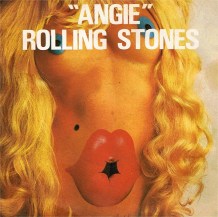 When the Stones reached #1 on the charts yet again with the ballad “Angie” in the fall of 1973, speculation was rampant about the identity of the woman in question. Some said Jagger and Richards were writing about David Bowie’s first wife Angela, with whom they had been spending time during that period. Others assumed it was a tribute to Fichards’ newborn daughter, Dandelion Angela. In his 2010 autobiography, Richards said that he had chosen the name at random when writing the song, before he knew that his baby would be named Angela or even knew that his baby would be a girl.
“Rosanna,” Toto, 1982
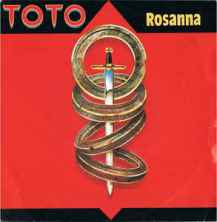 This Grammy-winning single from 1982 was written by David Paich, who has said that the song is a composite based on numerous girls he had known. During recording sessions, Toto band members initially played along with the common assumption that the song was based on Rosanna Arquette, who was dating keyboard player Steve Porcaro at the time. Arquette herself played along with the joke, commenting in an interview that year, “That song was about my showing up at 4 a.m. at the studio to bring them juice and beer.”
“Peggy Sue,” Buddy Holly, 1957
 “Peggy Sue,” perhaps Buddy Holly’s best known song, was originally entitled “Cindy Lou,” named after Holly’s niece, the daughter of his sister, Pat Holley Kaiter. The title was later changed to “Peggy Sue” in reference to Peggy Sue Gerron (1940–2018), girlfriend and future wife of Jerry Allison, drummer for Holly’s band The Crickets, after the couple had temporarily broken up, and Allison asked Holly if maybe he could rename the song in an attempt to woo her back. “And it worked,” Allison recalled, although Holly’s premature death not long after the song’s release overshadowed that romantic angle.
“Emily,” Elton John, 1992
 John’s longtime lyricist partner Bernie Taupin penned one of the most poignant character studies in his voluminous catalog on this deep track from the 1992 LP “The One.” Taupin recalled writing “Emily” after an afternoon walk through the streets and cemeteries of Paris, France, where he couldn’t help but notice a lone elderly woman paying respects at various gravesites as she walked haltingly among the headstones. “Elton wrote such a glorious melody to accompany this one,” Taupin said. “It’s one of my favorites”: “The old girl hobbles, nylons sagging, talks to her sisters in the ground…”
“Jane,” Jefferson Starship, 1979
 Grace Slick had temporarily left the band in 1978 when the Jefferson Starship brought in Mickey Thomas as the new lead vocalist on the album “Freedom at Point Zero.” Bass player David Freiberg wrote most of the music and lyrics for what would become the album’s single, “Jane.” He said, “She’s no one in particular, just the kind of girl who is insincere and manipulative in the way she behaves in a relationship. I think we all have known women, and men, like that”: “You’re playing a game called ‘hard to get’ by its real name, you’re playing a game you can never win, girl…”
“Aubrey,” Bread, 1972
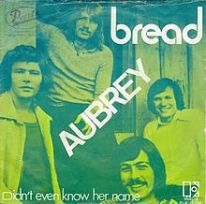 David Gates wrote almost all of soft-rock group Bread’s many hit singles, which were mostly sentimental, romantic ballads that resonated with Top 40 listeners in the early 1970s. There are two interpretations as to what the sad truth is behind “Aubrey,” the 1973 Bread hit from their “Guitar Man” LP. One said Gates wrote it about a woman he pined for from afar but never had the self-confidence to approach. The more likely story is that it’s about a baby girl Gates and his wife were anticipating who died in a tragic miscarriage. Either way, it’s certainly a tearjerker.
“Peg,” Steely Dan, 1977
 Songwriters Donald Fagen and Walter Becker have been notoriously tight-lipped about the meading behind their often cryptic lyrics, but Fagen once allowed in an interview that “Peg,” a #11 hit song in 1978 from the platinum LP “Aja,” referred to Peg Entwistle, a star of Broadway theater in the 1920s and 1930s. Fagen and Becker found her suitable fodder for a place in the Steely Dan cast of offbeat characters because, in 1932, she jumped to her death off the famous Hollywood sign (when it was “Hollywoodland,” an advertisement for a new housing development) before her first film was ever released.
*******************
Honorable mention:
“Michelle,” The Beatles, 1965; “Clarice,” America, 1971; “Wendy,” The Beach Boys, 1964; “Valleri,” The Monkees, 1968; “Amanda,” Boston, 1983; “Carol,” Al Stewart, 1975; “Jessie,” Joshua Kadison, 1992; “Carrie Anne,” The Hollies, 1967; “Rachel,” Seals and Crofts, 1974; “Diana,” Paul Anka, 1958; “Nanci,” Toad the Wet Sprocket, 1994; “Barbara Ann,” The Beach Boys, 1966.

