I can remember all the good times, put ’em in a book of memories
This is the fifth in a series of posts that will feature detailed analysis and commentary of some of my all-time favorite albums.
**************
In June 1968, the British power trio Cream was touring the States one last time as one of the more popular groups on the rock concert circuit. Winning the coveted spot as warm-up act for their gig in Detroit was a little-known band out of Cleveland called The James Gang.
The band had undergone several personnel changes since forming in 1966, although founding members Jimmy Fox (drums) and Tom Kriss (bass) still remained. A talented blues guitarist named Glenn Schwartz had played an important role for a year or so, but 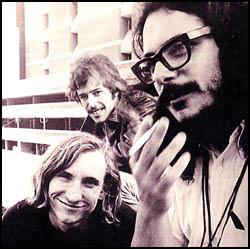 he split for California. In his place, they invited an innovative guitarist from another Cleveland band called The Measles to join. His name? Joe Walsh.
On the drive to Detroit, keyboardist Phil Giallombardo (who was still in high school) and guitarist Ronnie Silverman informed the others they were tired of life in a struggling rock band and wouldn’t be performing that night. Desperate for the money and the opportunity to play before Cream’s audience, Walsh, Fox and Kriss chose to perform as a trio. If Cream can do it, they thought, maybe we can too.
The pressure was mostly on the 21-year-old Walsh to not only find a way to play lead and rhythm guitar simultaneously but handle lead vocals as well. To his surprise and delight, he found he enjoyed the challenge and the chance to expand his technique. The crowd ate it up, and so, by the way, did Cream’s guitarist, Eric Clapton. “He’s one of the best guitarists to surface in some time,” he said in 1970. “I don’t listen to many records, but I listen to his.”
The James Gang’s manager had connections with Bill Szymczyk, staff producer at ABC 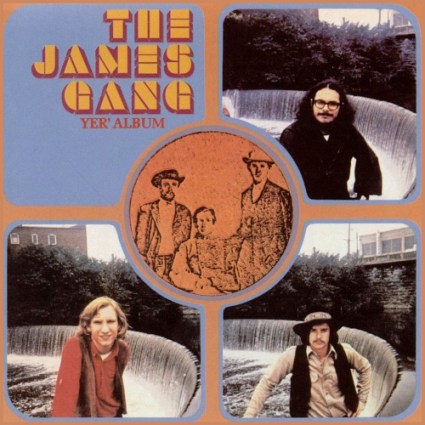 Records, and helped the band secure a recording contract. In the spring of 1969, Walsh, Fox and Kriss convened to record their astonishing debut, “Yer’ Album,” which consisted of several Walsh originals as well as superb covers of Buffalo Springfield’s “Bluebird,” The Yardbirds’ “Lost Woman,” and Jerry Ragavoy’s “Stop.”
I was 14 then, and found myself visiting neighborhood record stores on a weekly basis. One store, Fantasy Records in Cleveland Heights, often played records you didn’t hear elsewhere, and one was “Yer’ Album.” The employees there loved to promote bands with an Ohio connection, and The James Gang certainly had that. Following a silly, cacophonous opening bit that lasted less than a minute, the group slid into Walsh’s “Take a Look Around,” and I was mesmerized by the melody, the singing and the guitar playing. I stuck around the store long enough to hear the rest of Side One, after which I was a huge Joe Walsh fan for many years to come.
On his own, Walsh had devised a way to hot-wire his guitar pickups to produce what became his trademark “attack” sound, which worked to brilliant effect on slow tunes like “Fred” and fast-tempo numbers like “Funk #48” and “I Don’t Have the Time.” Perhaps the best track on the LP is the acoustic-guitar-driven piece “Collage,” which includes this 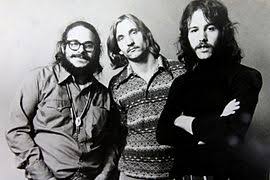 descriptive lyric that always makes me think of late fall/early winter in Cleveland: “Autumn calls for a change of year, bringing winter near us green to brown, and the sky’s a sign, wintertime is a razor blade that the devil made, it’s the price we pay for the summertime…”
The album didn’t perform very well on the charts, stalling at #83, and the two singles released fared even worse. But the band still gained momentum throughout the Midwest, thanks to reviews like this one from William Ruhlman in AllMusic: “Even though it’s more an album of performances than compositions, ‘Yer’ Album’ contains much to suggest that The James Gang, particularly its guitarist, has a very bright future.”
As it turned out, Clapton wasn’t the only guitar great to heap praise on Walsh in those formative years. “He has a tremendous feel for the instrument,” said Led Zeppelin’s Jimmy Page in the mid-’70s. “I’ve loved his playing since the early James Gang days.”
The Who’s Pete Townshend took that adulation one step further. Following The James 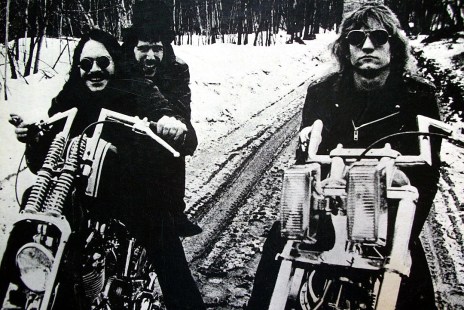 Gang’s performance warming up for The Who, Townshend was impressed enough to invite them on their 1970 European tour. Walsh responded by gifting Townshend his 1959 Gretsch guitar, which he subsequently used during sessions for “Who’s Next” and “Quadrophenia.” “Pete’s a very melodic player and so am I,” Walsh said at the time. “When he told me he appreciated my playing, I was flattered beyond belief. I honestly didn’t think I was that good yet.”
Around that period, “James Gang Rides Again” was released, and that brought Walsh and his cohorts their first chart success, thanks to the single “Funk #49,” which still gets airplay today on classic rock setlists. This album, which made it to #20, is almost as good as the debut, with Walsh writing or cowriting all nine tracks. It was then followed in 1971 by “Thirds,” which reached #27, and “In Concert,” which peaked at #24.
But Walsh was feeling limited by the constraints of a three-man lineup. Eager to spread his wings, Walsh said farewell to The James Gang in 1972. He was invited to England to join Humble Pie in place of the departing Peter Frampton, but instead Walsh chose to move to Colorado, where he regrouped with producer Szymczyk and formed the group Barnstorm. Curiously, the group turned out to be a trio too, with drummer Joe Vitale and bassist Kenny Passarelli in support, but the difference was in the multi-layered recording techniques used as Walsh performed on synthesizer, acoustic guitar, slide guitar, fuzzbox, talk box and keyboards, creating swirly, organ-like tones.
The album was a commercial disappointment, but it set the stage for what I believe to be Walsh’s other career high point, the 1973 solo album “The Smoker You Drink, the Player You Get.” Retaining Vitale and Passarelli, and adding Rocke Grace on keyboards, 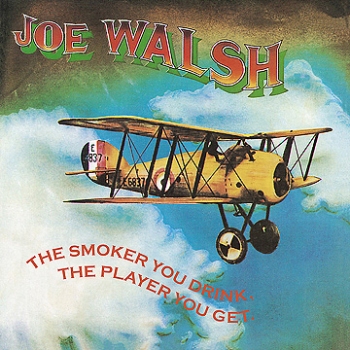 Walsh hit the jackpot, with his signature hit single “Rocky Mountain Way” reaching #23 and the LP soaring all the way to #6. The innovative (and ultimately gimmicky) talk box utilized on “Rocky Mountain Way” preceded Frampton’s famous use of it on his mega-platinum “Comes Alive” album by three years.
More important was the quality of songs, again all written or co-written by Walsh. He had now musically matured to the point where he was dabbling successfully in multiple genres — blues, jazz, folk, pop, even Caribbean music. “Book Ends” offers a stunning contrast to Walsh’s rock songs with its delicate melody and gentle lyrics about fond memories of days gone by. “Wolf” deftly combines acoustic and electric guitars with Walsh’s spacey vocals to create a track that would’ve fit nicely on Pink Floyd’s “Dark Side of the Moon.” The use of flute and a jazzy instrumental arrangement turns “Midnight Moodies” into a real tour de force. “Meadows” rivals “Rocky Mountain Way” as the best pure rock song on the LP, and “Happy Ways” features Passarelli on vocals, giving it a jaunty calypso beat.
 I was a freshman in college by the time “Smoker You Drink” came out, and it was indeed a fine companion for those hazy dorm room evenings, as I vaguely recall. We played the hell out of the album throughout that school year, and I took great delight in exposing others on my floor to how amazing a younger Walsh sounded five years earlier on the James Gang stuff.
By this time, Walsh had moved to Los Angeles and became friends with Dan Fogelberg, Don Henley, Glenn Frey, Jackson Browne and others in the California rock scene. Indeed, he quickly involved them in his next solo LP, “So What,” and was responsible for Fogelberg’s first commercial success when he served as producer and lead guitarist on his breakthrough “Souvenirs” LP that same year.
So it wasn’t really that much of a leap when he surprised a lot of people by joining The Eagles in 1975. Walsh’s fans thought he would be softening up his music too much, and Eagles fans grumbled that Walsh would turn them into a hard rock band, but instead, they found a way to combine the best of both worlds. The dueling guitars of 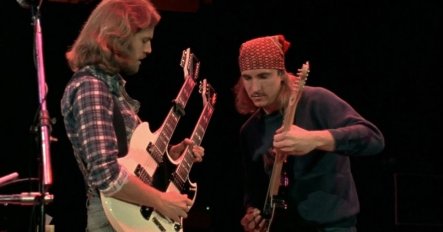 Walsh and Don Felder on “Hotel California” rank among the finest solos in all of rock. Walsh’s song “Life in the Fast Lane” became a milestone Eagles track, and I think his lovely tune “Pretty Maids All in a Row” showed he can write melodies to rival Henley’s and Frey’s.
Another half dozen solo LPs followed, especially 1978’s “But Seriously Folks…” and his most successful single, “Life’s Been Good.” But a slide into drug and alcohol addiction hurt him significantly, with sloppy live performances and lackluster songwriting, and sales slowed to a trickle. In 2004, Walsh finally faced his demons and began his recovery, and The Eagles invited him back into the fold for their numerous reunion tours. His latest solo album, 2012’s “Analog Man” (I’m an analog man in a digital world”), shows he still has the chops 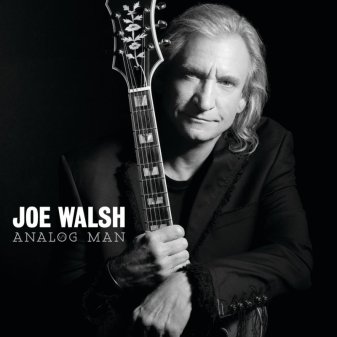 and the self-deprecating sense of humor that made him such an enormously entertaining guy in the first place.
For those of you whose knowledge of Joe Walsh’s recorded work is limited to the radio hits and Eagles moments, I strongly encourage you to listen to the Spotify playlist below, which includes 1969’s “Yer’ Album” and 1973’s “The Smoker You Drink” in their entirety, with three bonus favorites thrown in (“Here We Go” and “Turn to Stone” from “Barnstorm,” and the live version of “Pretty Maids” from 1994’s “Hell Freezes Over”). I’m sure you won’t be disappointed.
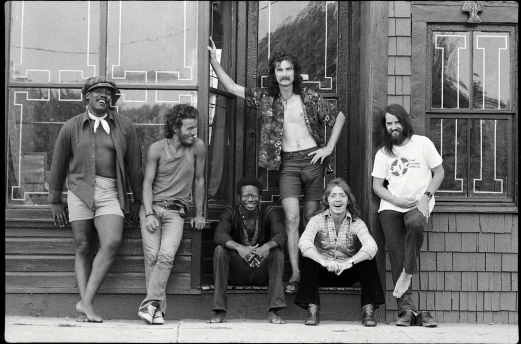
 “The Wild, the Innocent” was really special, full of poetic images of romance and longing, great melodies and nearly operatic arrangements.
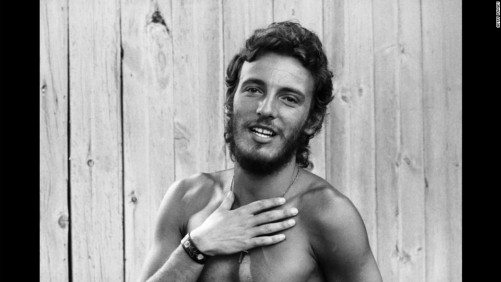 the final cut from the album but was eventually released in 2000 on his “Tracks” box set, and is included in the Spotify playlist below.)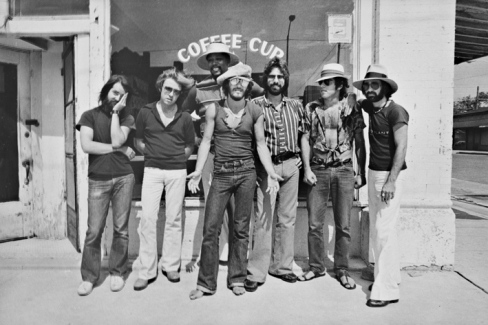
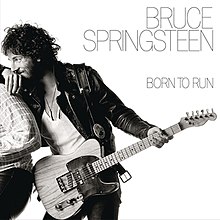 Let’s let the songwriter tell the story: “‘Thunder Road’ introduces the album’s central characters and its main proposition: Do you want to take a chance? It lays out the stakes you’re playing for and sets a high bar for the action to come. Then comes ‘Tenth Avenue Freeze Out,’ the story of a rock ‘n’ soul band and our full-on block party. Pedal to the metal, we steam into ‘Night,’ followed by the stately piano, organ and broken friendships of ‘Backstreets.’ Side two opens with the wide-screen rumble of ‘Born to Run,’ sequenced dead in the middle of the record, anchoring all that comes before and after. Then the Bo Diddley beat of ‘She’s the One’ before we cut to the trumpet of Michael Brecker as dusk falls and we head through the tunnel for ‘Meeting Across the River.’ From there, it’s the night, the city and the spiritual battleground of ‘Jungleland’ as the band works through musical movement after musical movement, culminating in Clarence Clemons’s greatest recorded moment, that solo. The knife-in-the-back wail of my vocal outro, the last sound you hear, finishes it all in bloody operatic glory.”
 open it to reveal the front and back cover together in one iconic photograph. It established Clemons as “The Big Man,” Springsteen’s second in command, on record and in concert, and cemented the twosome’s friendship and partnership in a very public way.
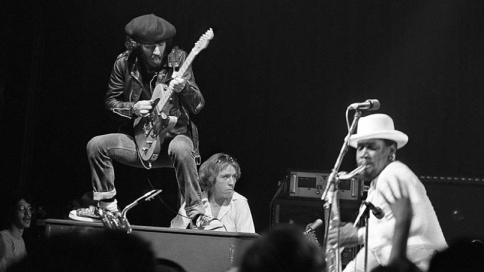 simultaneously on the covers of Time and Newsweek magazines. I felt as if I’d been admitted to a special club, like I’d bought stock in Springsteen just before it went through the roof.
 Springsteen, one of the most prolific songwriters rock has ever seen, has put together an extraordinary body of work, including many dozens of songs recorded throughout his career that didn’t see release until decades after they were recorded. There are songs on every single album that are worthy of your attention. But for me, he was never better than when he was young and hungry, embracing a do-or-die attitude, trying to go “on a last chance power drive.”
 Hack's Back Pages