Really don’t mind if you sit this one out
This is the third in a series of posts that will feature detailed analyses of some of my all-time favorite albums.
****************
My first encounter with the music of Jethro Tull was when I heard their debut LP, presciently titled “This Was,” in a Cleveland record store in 1969. It offered a quirky mix of straight blues, rock, jazz, drum solos and, most of all, an ever-present flute played by a wild-looking dude named Ian Anderson. A more refined, melodic sound followed with 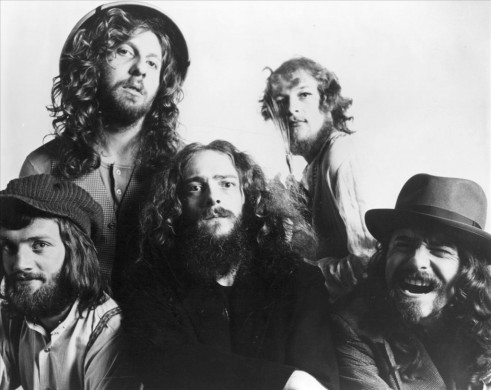 their excellent second effort, “Stand Up,” and then their hardest rocking LP yet, “Benefit.” These three early Tull albums charted well in their native UK (indeed, “Stand Up” reached #1 there), but in the US, the band remained mostly a warm-up act for bigger bands.
That all changed dramatically in 1971 with the release of the superb “Aqualung,” an eclectic collection of hard rock classics with intermittent acoustic folk numbers to keep everyone guessing. Anderson wrote all of it, music and lyrics, peppering nearly every track with amazing flute passages, and anchoring everything with an unusual, commanding vocal presence.
This album rarely left my turntable for the first six months I owned it. From the haunting “My God” to the gentle “Wond’ring Aloud,” Tull’s music thrilled and soothed me, and totally fascinated me.
 Nearly 50 years later, the title track remains one of the linchpins of classic rock radio, carried by what rock writer Dave Weigel called “the greatest six-note opening riff in the pantheon of rock music.” The song — which, like the album overall, alternates between aggressive rock and delicate folk parts — tells the tale of a homeless man trying to stay warm as another England winter approaches. The album cover art (front and back) emphatically drives home the compelling image of this street person, alternately threatening and pitiable.
Because three tracks — “My God,” “Hymn 43” and “Wind Up” — feature lyrics that focus on Anderson’s contempt for organized religion, the “Aqualung” LP has widely been regarded as a concept album, which Anderson has always denied. “A concept album, in my view,  would have to be a complete song cycle in which all the songs relate to a central theme. More than half of these songs have nothing to do with religion or God.” Nevertheless, critics regarded it as “one of the most cerebral albums ever to reach millions of rock music listeners.”
While it’s true that Anderson has always been the dominant center of Tull’s music, the contributions from the other band members mustn’t go unheralded. In particular, lead guitarist Martin Barre weighs in with one of rock’s greatest solos in the middle break of “Aqualung,” and keyboardist John Evan provides classical and jazz influences throughout, particularly on “Locomotive Breath” and “Wind Up.”
As Tull fever finally caught on in America, the band became headliners, touring relentlessly in the US and elsewhere. FM stations regularly played “Aqualung” album  tracks, and revisited the earlier LPs as well. (Top 40 stations all but ignored Tull, except for the few pop tracks in their catalog like 1972’s “Living in the Past” and 1974’s “Bungle in the Jungle”).
It was at this point in the band’s development that Anderson, both amused and annoyed about “Aqualung”‘s concept-album tag, decided to undertake a massive project. “They want a concept album, do they? Well, let’s give them the mother of all concept albums!”
That album would be “Thick as a Brick,” a groundbreaking, 45-minute piece of music spread over both sides of the LP. The centerpiece of the new work was a lengthy poem Anderson wrote that explored all sorts of topics from father-son conflicts to ineffective government.
It’s interesting to note that Anderson and his bandmates had been big fans of the bizarre humor of the influential British comedy troupe Monty Python, and that fondness for parody informed the album and its concert performances in a substantial way.
“Monty Python lampooned the British way of life,” says Anderson. “Yet they did it in such a way that made us all laugh while celebrating it. To me, that’s what we as a band did on  ‘Thick as a Brick.’ We were spoofing the idea of the concept album, but in a fun way that didn’t totally mock it.”
The album cover unfolded to become a 12-page newspaper, full of strange articles and farcical features typical of local British papers of the day. On page one, there was mention of how an “epic poem,” ostensibly written by a precocious 12-year-old boy named Gerald Bostock, had caused a stir in the community. Of course, this was merely a fictitious character created in fun by Anderson himself.
The real challenge of the project was for Anderson and the band — guitarist Barre, keyboardist Evan, bassist Jeffrey Hammond-Hammond, drummer Barriemore Barlow and string/brass arranger David Palmer — to create this musical behemoth. “I suppose I have to admit that I really imposed the whole idea on the other guys,” Anderson recalled. “But, for whatever reason, they went along with it, and actually warmed to the task once we got into it.”
“It’s only in recent times that I’ve appreciated how complex the music is,” admits Anderson. “I was only 24 at the time we began to put this together. Yet there are so many weird time changes and musical innovations on the album. I would venture to say that what we were striving for was more sophisticated than the usual riff rockers you’d find on the scene, and certainly more involved than anything we’d done before.”
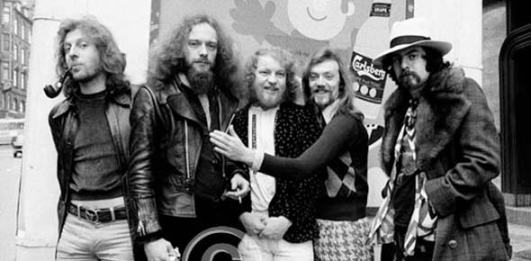 Anderson’s method of composing would be to write a three- or four-minute section, then bring it to the band to arrange and rehearse the next day. Then he’d write the next section, and the band would arrange and rehearse that, then play everything cumulatively. The piece went through more than a dozen passages, segueing one into the other, sometimes referring back to previous sections or lyrical phrasings. After about six weeks of intense work, the recording sessions for the opus were completed, and the album was unleashed on unsuspecting audiences on the radio and in concert.
In light of my infatuation with “Aqualung,” I ran to the store and bought “Brick” on the day of release. My initial reaction? Puzzled. Overwhelmed. Intrigued, but disappointed. It simply seemed to be a bit too much to chew on.
But it’s always been my experience that the best albums, the albums that last, the albums that continue to satisfy many years later, are the ones that take a little while to grow on you. “Thick as a Brick” is perhaps the best example of this.
The opening passage, which was sometimes played as a separate “song” on the radio, was immediately likable, and wouldn’t have been out of place on “Aqualung.” Subsequent  sections took longer to assimilate, and maybe one or two seemed too jarring and out of place. But over the course of 1972 and into 1973, I became so obsessed with the album that it evolved into what I consider today as my very favorite of all.
If you listen to the Spotify playlist at the end of this essay, you’ll find that “Thick as a Brick” is now available as eight separate tracks of five or six minutes each (“The Poet and the Painter,” “Tales of Your Life,” “See There a Son is Born,” and so on), which might make it more easy to digest, especially upon first listening. Still, the tracks flow seamlessly from one to the next so it can be heard in the way it was originally intended.
Shockingly, this difficult-to-absorb LP reached #1 on Billboard’s Top Albums chart. “I must admit to being a little surprised that we got to the top of the charts over there,” says Anderson. “But everything had been building for us. ‘Aqualung’ sold steadily, so either ‘Thick as a Brick’ was going to take off, or we’d just sink. However, I’m not sure our American fans fully understood the humor behind our live performance on the subsequent tour.”
Indeed, the band opened each show with “Brick,” and the live version — complete with ringing telephone interruptions, a scuba diver traipsing across the stage, and other Python-esque touches — clocked in at over an hour. Upon completion of the lengthy piece, Anderson would say, “And now, for our second number…”
Some critics regard “Thick as a Brick” to be the ultimate progressive rock album, and Anderson replies, “Well, a job done, I’d say. We set out to make the mother of all concept records, and if that’s the way people see the album after all these years, then we achieved the ambition.”
I mustn’t fail to mention that Tull followed up “Brick” with another daunting 45-minute piece of music, “A Passion Play,” in 1973. Incredibly, it too reached #1 in the US, but critics turned on the group, finding the album pretentious and unpleasant. I strongly disagree; its subject matter — the afterlife — is darker than “Brick,” and there are some  glaringly abrupt transitions between sections. But like “Brick,” “A Passion Play” is well worth your time if you give it a chance. The musicianship is phenomenal.
While I acknowledge that Jethro Tull’s oeuvre is not everyone’s cup of tea, I firmly stand in the band’s camp. Anderson, of course, is best known as “the pied piper of rock” for his spectacular flute playing, but I would argue that Anderson’s songwriting is even more impressive, and ranks among the very best in rock. Although Tull is considered to be in the “prog rock” genre that includes Pink Floyd, Genesis, Yes and Emerson Lake & Palmer, I submit that Tull’s music has always been much more than that. It includes Elizabethan madrigals, hard rock, Celtic ballads, basic blues, classical motifs and even psychedelic moments and straight pop. Two dozen studio LPs, several live albums and a few box sets over 40-plus years, and I find damn near all of it to be worthy of your attention.
But start with “Aqualung” and “Thick as a Brick.”
 accordion, harmonica, ukulele, mandolin, bass and drums. Perhaps even more notable is his songwriting prowess — he has written well over 200 songs in his 50+ years as a recording artist with his band, The Who, and as a solo attraction.
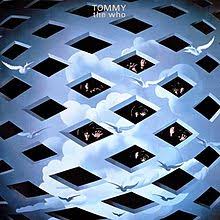 That all changed in 1969 when Townshend wrote, and The Who recorded, what is recognized as the first “rock opera,” the exemplary double album “Tommy.” The plot of the story is almost beside the point, but it involves a boy who watches as his mother and her lover murder his father, then shudders as his mother tries to convince him he didn’t see nor hear the dastardly deed. He became deaf, dumb and blind…but it turns out he was awesome at pinball.
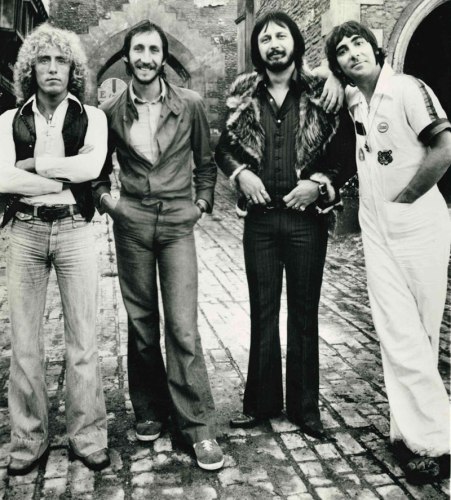
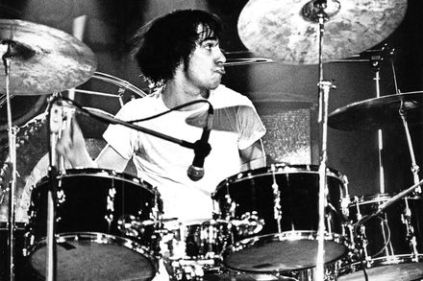 Entwistle and drummer Keith Moon.
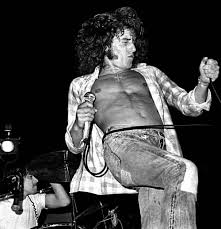 But his compatriot Kit Lambert, manager/producer for much of the band’s career thus far, was in dire straits, falling into heroin addiction and no longer able to be Townshend’s Man Friday. The “Lifehouse” project stalled, even falling off the tracks, and the composer was disconsolate about it. Indeed, he suffered a nervous breakdown over it, and felt like throwing in the towel.
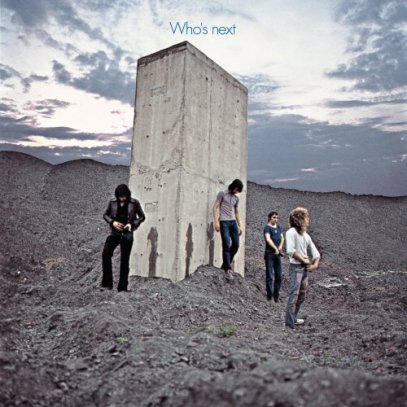 regarded as The Who’s finest LP. Townshend was the first rock musician to fully incorporate the Moog synthesizer into the arrangements of most of the album, especially its thunderous opener, “Baba O’Riley” (known by many as “Teenage Wasteland”), and the anthemic closer, “Won’t Get Fooled Again.” Johns’ astonishing production captured Daltrey’s very best singing, Moon’s most mind-blowing drum work, and Entwistle’s most inventive bass playing. And Townshend? He completely nails it.
 considered the best live rock album ever released. I liked it fine, but would never rate it ahead of, say, The Allman Brothers Band’s “Live at Fillmore East.”
 Hack's Back Pages