When I was 17, it was a very good year
Last weekend, I returned to my home town of Cleveland and participated in my 45th high school reunion. It was so great to see old (in both senses of the word!) classmates and wander the grounds and the halls of my alma mater, which brought back fond memories of my formative years.
I was particularly pleased to hear a lot of great music playing in the background — songs from 1972 and 1973, when we were in our senior year. My friend Chris, a former DJ and music lover like me, played a pivotal role in compiling the tunes we would be hearing, then activating the “shuffle” mode and letting the music wash over us.
It was an incredibly fertile year. At that time, the 45-rpm single was no longer the  dominant form of recorded music, although there was still a vibrant Top 40 Billboard chart that offered everything from romantic soul and glam rock to straight pop and syrupy ballads. More people were buying albums by then instead, and the list of albums released that year is truly mind-boggling.
Let’s look at the hit singles first.
As the 1972-1973 school year started in September 1972, the singles charts were still dominated by some of the songs from the summer months: “Brandy (You’re a Fine Girl)” by Looking Glass; “Long Cool Woman (in a Black Dress)” by The Hollies; “Lean on Me” by Bill Withers; “Alone Again (Naturally)” by  Gilbert O’Sullivan; “Hold Your Head Up” by Argent; “Where Is The Love” by Roberta Flack and Donny Hathaway; “Goodbye to Love” by The Carpenters; “I’m Still in Love With You” by Al Green; “The Guitar Man” by Bread; “Saturday in the Park,” Chicago; “Black and White” by Thee Dog Night.
A new batch of singles began their rise in October and November: “Backstabbers” by The O’Jays; “Go All the Way” by The Raspberries; “Everybody Plays the Fool” by The  Main Ingredient; “Garden Party” by Rick Nelson; “Listen to the Music” by The Doobie Brothers; “Tight Rope” by Leon Russell; “Summer Breeze” by Seals and Crofts; “Burning Love” by Elvis Presley; “Living in the Past” by Jethro Tull; “Nights in White Satin” by The Moody Blues; “I Can See Clearly Now” by Johnny Nash; “Elected” by Alice Cooper; “Ventura Highway” by America; “Papa Was a Rolling Stone” by The Temptations; “Operator” by Jim Croce; “My Ding-a-Ling” by Chuck Berry.
As the holidays rolled in, these were the songs Top 40 radio was playing: “Me and Mrs. J ones” by Billy Paul; “You’re So Vain” by Carly Simon; “It Never Rains in Southern California” by Albert Hammond; “Your Mama Don’t Dance” by Loggins and Messina; “Do It Again” by Steely Dan; “I Am Woman” by Helen Reddy; “Dancing in the Moonlight” by King Harvest; “Crocodile Rock” by Elton John; “Superstition” by Stevie Wonder; “Don’t Let Me Be Lonely Tonight” by James Taylor; “Rockin’ Pneumonia and the Boogie Woogie Flu” by Johnny Rivers.
During the first three months of 1973, the airwaves were filled with tunes like: “Rocky Mountain High” by John Denver; “Oh Babe What Would You Say” by Hurricane Smith; “The Cover of the Rolling Stone” by Dr. Hook; “Don’t Expect Me to Be Your Friend” by Lobo; “Killing Me Softly With His Song” by Roberta Flack; “Could It Be  I’m Falling in Love” by The Spinners; “Danny’s Song” by Anne Murray; “Tie a Yellow Ribbon” by Tony Orlando and Dawn; “Right Place Wrong Time” by Dr. John; “Sing” by The Carpenters; “Witchy Woman” by The Eagles; “Duelin’ Banjos” by Eric Weisberg; “Ain’t No Woman (Like the One I Got)” by The Four Tops.
My senior year concluded with the radio playing hits like these in April, May and June: “Cisco Kid” by War; “Space Oddity” by David Bowie; “Drift Away” by Dobie Gray; “Frankenstein” by Edgar Winter Group; “Peaceful” by Helen Reddy; “Hocus Pocus” by Focus; “Will It Go Round in Circles” by Billy Preston; “My Love” by Paul McCartney  and Wings; “Kodachrome” by Paul Simon; “Love Train” by The O’Jays; “Smoke on the Water” by Deep Purple; “Stuck in the Middle With You” by Stealer’s Wheel; “Walk on the Wild Side” by Lou Reed; “Give Me Love” by George Harrison; “Long Train Runnin’” by The Doobie Brothers; “Reelin’ in the Years” by Steely Dan.
Talk about a mixed bag! Like every year, there was garbage in there (I think my readers can identify which tunes I’m talking about) along with the stellar tracks that still hold up very well many decades later.
Meanwhile, over on the album charts, my senior year offered an almost unbelievable cornucopia of excellent stuff. Some artists even found a way to release two solid LPs in one calendar year. You never see THAT happen anymore…
Typically, albums do better on the charts when they include a hit single or two  simultaneously climbing the Top 40 listings, and there were many examples of that: Leon Russell’s “Carney,” Paul Simon’s “There Goes Rhymin’ Simon,” Rod Stewart’s “Never a Dull Moment,” Steely Dan’s “Can’t Buy a Thrill,” Marvin Gaye’s “Trouble Man,” Cat Stevens’ “Catch Bull at Four,” War’s “The World is a Ghetto,” Bill Withers’ “Still Bill,” The Doobie Brothers’ “Toulouse Street” AND “The Captain and Me,” Lou Reed’s “Transformer,” Carly Simon’s “No Secrets,” Jethro Tull’s “Living in the Past,” The Temptations’ “All Directions,” Elton John’s “Don’t Shoot Me, I’m Only the Piano Player” AND “Goodbye
  Yellow Brick Road,” Curtis Mayfield’s “Superfly,” Jim Croce’s “Life and Times,” The Allman Brothers’ “Brothers and Sisters,” Paul McCartney & Wings’ “Red Rose Speedway,” Alice Cooper’s “Billion Dollar Babies,” America’s “Homecoming,” Stevie Wonder’s “Talking Book” AND “Innervisions,” Neil Diamond’s “Moods,” Chicago’s “Chicago V,” Joe Walsh’s “The Smoker You Drink, the Player You Get,” The Moody Blues’ “Seventh Sojourn,” Dr. John’s “In the Right Place,” Pink Floyd’s “Dark Side of the Moon,” Steve Miller’s “The Joker,” Edgar Winter Group’s “They Only Come Out at Night,” Grand Funk Railroad’s “Phoenix,” Pure Prairie League’s “Bustin’ Out.”
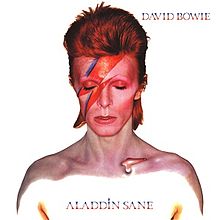 And yet, some of the classic LPs of the year sold well without benefit of a hit single: David Bowie’s “Aladdin Sane,” Yes’s “Close to the Edge,” Todd Rundgren’s “A Wizard/A True Star,” J Geils Band’s “Bloodshot,” Emerson Lake & Palmer’s “Trilogy,” Humble Pie’s “Eat It,” Van Morrison’s “St. Dominic’s Preview,” Joe Walsh’s “Barnstorm,” Little Feat’s “Dixie Chicken,” Jethro Tull’s “A Passion Play,” Diana Ross’s “Lady Sings the Blues,” Led Zeppelin’s
  “Houses of the Holy,” Johnny Winter’s “Still Alive and Well,” The Who’s “Quadrophenia,” The Small Faces’ “Ooh La La,” Mahavishnu Orchestra’s “Birds of Fire,” Traffic’s “Shoot Out at the Fantasy Factory,” Joni Mitchell’s “For the Roses,” Santana’s “Caravanserai,” Mike Oldfield’s “Tubular Bells,” The Grateful Dead’s “Europe ’72,” The Eagles’ “Desperado.”
Also, in the same year came debut albums by artists who would soon be major stars: Aerosmith, The Marshall Tucker Band, Bette Midler, Bachman-Turner Overdrive, Peter Frampton, Bob Marley, Lynyrd Skynyrd, KISS, Jackson Browne, 10cc.
And then there were the albums that flew under the radar that I was lucky enough to stumble upon at the right time. Technically released in 1971 but discovered by me in the fall of ’72, Batdorf and Rodney’s “Off the Shelf” was on my turntable for untold hours in the winter and spring of 1973. It’s interesting, almost creepy, to note that the lyrics to the leadoff song, “Oh My Surprise,” addresses the issue of reminiscing about the good old days: “I thought I could never go back to those years I loved so well, oh my surprise, oh my surprise…”
************
 The year 1973 was a significant year for another big reason, according to Michael Walker, author of the revealing 2013 book, “What You Want is in the Limo.” In his introduction, he maintains that 1973 was the year that the Sixties finally died and modern rock stardom was born, when bands like Led Zeppelin, The Who and Alice Cooper put together monumental, physically punishing concert tours that set new standards — for attendance, for the quality and quantity of recreational drugs, for the amount of equipment and lighting on stage, for backstage and hotel hijinx, for the sheer volume of sound coming from the speakers.
“The bands and music of the ’60s created an outsized hunger for rock culture but lacked the infrastructure to deliver it,” Walker writes. “In 1973, supply finally catches up with demand. As the ’60s bled into the ’70s, the naive counterculturalism that bound rock bands in generational solidarity to their audience began to fray. A new generation of  fans too young for Woodstock inherited the tropes of the ’60s, minus the boring poli-sci socio-overlay. Thus do peace, love, and understanding devolve into sex, drugs, and rock and roll. The sex was younger, the drugs harder, and the rock and roll louder, longer and infinitely more belligerent.”
Walker makes a valid case that, post-1973, the rock music got bigger but more indulgent, more of a business and less of a pleasure, more destructive and less creative. “The template created in 1973 will, three years later, metastasize into mega-albums by Peter Frampton and Fleetwood Mac and, in the ’80s and ’90s, tours upsized from civic arenas to Jumbotronned stadia and records shipped in  the tens of millions, though by then the rituals, commodified by corporate patronage, will seem increasingly scripted.”
Of course, there were many exceptions to these statements, but there’s no question that rock stars became more distant from their fans by the mid-Seventies. In 1970-1972, you could still go see a show by a big name group and not have to take out a loan to buy a ticket. Walker sums it up this way: “1973 distills a decade’s worth of decadence into twelve awesome months and resets the clock for the rest of the Seventies and all that they imply. It’s a year that, by any measure, ought to be its own decade.”
For a guy who graduated from high school that year, I must say I wholeheartedly agree. The singles and albums outlined above demonstrate that fact.
*************
I’ve compiled two playlists on Spotify for this post. The first includes some of the more commercial hit singles from ’72-’73, and the second offers a sampling of some of my favorite deeper tracks from the albums of that period.
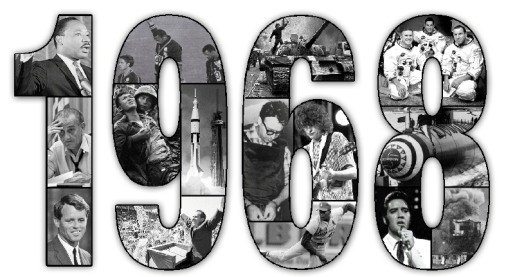 In pop culture, the same upheaval was underway. Pop art, op art, nudity on Broadway, “Rowan & Martin’s Laugh-In” on TV, and films like “Rosemary’s Baby” and “2001: A Space Odyssey” were rocking our world.
 “Wheels of Fire,” Cream
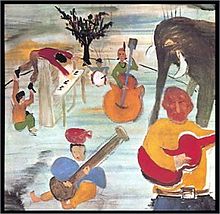 “Music From Big Pink,” The Band
 “In Search of the Lost Chord,” The Moody Blues
 “Aretha Now,” Aretha Franklin
 “Bookends,” Simon & Garfunkel
 “Super Session,” Al Kooper, Mike Bloomfield, Stephen Stills
 “Beggar’s Banquet,” The Rolling Stones
 refused by the US record label and replaced by a formal wedding invitation design. More important was the music, particularly the rocking “Sympathy for the Devil,” “Street Fighting Man” and “Salt of the Earth,” all offset by acoustic gems like “No Expectations,” “Parachute Woman” and “Factory Girl.” Mick Jagger and Keith Richards really stepped up here, with co-founder Brian Jones sliding further into the shadows, and the rhythm section of Charlie Watts and Bill Wyman had developed at that point into one of the very best in rock.
 “Cheap Thrills,” Big Brother & The Holding Company
 “Truth,” Jeff Beck
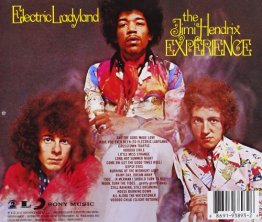 “Electric Ladyland,” Jimi Hendrix Experience
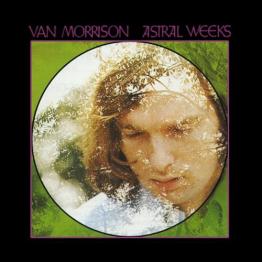 “Astral Weeks,” Van Morrison
 “The Beatles (The White Album),” The Beatles
 cover. This expansive collection had something for everybody. Harrison offered his best track yet, “While My Guitar Gently Weeps,” featuring an uncredited guitar solo by pal Eric Clapton. McCartney kicked ass with rockers like “Back in the U.S.S.R.,” “Birthday,” and “Helter Skelter,” and also offered some fine acoustic stuff like “Blackbird,” “I Will,” “Mother Nature’s Son” and “Martha My Dear.” Even Ringo wrote a song, the country ditty “Don’t Pass Me By.” Lennon, meanwhile, stepped up with nearly a dozen of his best songs — “Happiness is a Warm Gun,” “I’m So Tired,” “Dear Prudence,” “Sexy Sadie” and a slow-burn version of “Revolution.” He insisted the album include his nightmarish sound collage, entitled “Revolution 9,” as well as his saccharine lullaby, “Good Night,” sung by Ringo. Because the recordings were so good, no one was aware the group was continually at odds and headed for a breakup. For now, this was an outstanding Christmas present.
 “James Taylor,” James Taylor; “Living the Blues,” Canned Heat; “Eli and the Thirteenth Confession,” Laura Nyro; “Traffic,” Traffic; “Song to a Seagull,” Joni Mitchell; “One,” Three Dog Night; “Diana Ross and The Supremes Join The Temptations“; “In a Gadda Da
  Vida,” Iron Butterfly; “Tell Mama,” Etta James; “Last Time Around,” Buffalo Springfield; “Creedence Clearwater Revival,” Creedence Clearwater Revival; “This Was,” Jethro Tull; “Sweetheart of the Rodeo,” The Byrds; “Odessey and Oracle,” The Zombies; “Ogdens’ Nut Gone Flake,” The Small Faces.
