A poet and a one-man band
I’d say there are less than a dozen true geniuses of song craftsmanship in popular music, and among that rarified club, Paul Simon is my personal hero. Essentially, he’s the reason I wanted to learn how to play acoustic guitar — so I could sing his songs around campfires and in back yards with friends and family.
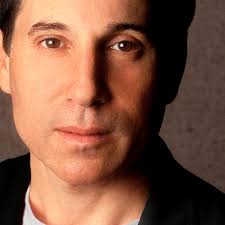
From the delicate melodies and wistful lyrics of his early days with Art Garfunkel through his use of an ever-broadening palette of musical styles and rhythms and vocabulary-rich lyrics as a solo artist, Simon has astonished and impressed critics and the public alike for nearly six decades. This week, he turned 80, and although he has retired from touring, and might not record another album of new music, he can rest comfortably in the knowledge that he is broadly acknowledged as one of the two or three best songwriters in our lifetimes.
He has not been a prolific composer. While contemporaries like Bob Dylan and Van Morrison have each released upwards of 40 albums of new material since their debuts in the mid-‘60s, Simon has fewer than 20 (five with Garfunkel and 15 on his own). He has tended to labor a long time between records, struggling with his perfectionism and occasional writer’s block issues. Consequently, his work has, in my view, been more consistently excellent than his peers who, while capable of monumentally strong songs and albums, have numerous duds in their catalogs. I would venture to say Simon’s portfolio contains only two LPs that could be considered below average.

Born and raised in Queens in the late ‘40s and ‘50s, Simon claims to be essentially a rock ‘n roll kid, cutting his teeth on ‘50s rhythm and blues, doo-wop and Buddy Holly. With his middle school pal Garfunkel, he worked on tight harmonies in The Everly Brothers mold and even won a modest recording contract while still in high school, and the duo, calling themselves Tom and Jerry, had a minor hit (#49) called “Hey Schoolgirl” in 1957. That was essentially a “one-hit wonder,” however, and the two eventually parted ways to pursue their own paths in college and elsewhere.
By the time he was 22, Simon was starting to emulate Dylan’s penchant for writing meaningful lyrics that expressed much more emotion and weight than the standard pop songs of the day. He and Garfunkel regrouped in 1964, now under the auspices of Columbia Records, and released their debut album, “Wednesday Morning, 3 AM,” a mix of traditional folk songs and promising Simon originals. The duo’s perfectly blended voices were their key attribute, and critics noted the depth and sophistication in songs like Simon’s “The Sound of Silence”… but the album stiffed. Garfunkel returned to academia and taught high school algebra, and Simon headed for England to hone his craft and try his hand at performing on street corners and in small cafés.
Once “folk rock” became a thing in 1965, when lyrically relevant material was recorded by bands playing electric guitars to rock arrangements, a producer at Columbia took the quiet recording of “The Sound of Silence,” grafted on some electric guitar, bass and drums, and voila! Simon and Garfunkel went to #1.

The duo promptly regrouped to record and release their second album, “Sounds of Silence,” which included the hit single and an impressive array of originals Simon had been writing, including the follow-up hit “I Am a Rock” and introspective works like “April Come She Will,” “Kathy’s Song,” “Leaves That Are Green” and “A Most Peculiar Man.” A third Top Five hit, “Homeward Bound,” anchored the duo’s elegant third album, “Parsley, Sage, Rosemary & Thyme,” a sumptuous buffet of delicate melodies and harmonies, with lyrics that alternated between melancholy and soothing: “The Dangling Conversation,” “For Emily, Whenever I Might Find Her,” “Cloudy,” “Flowers Never Bend With the Rainfall” and their fine interpretation of the olde English folk song, “Scarborough Fair.” In 1967, three sprightly S&G singles, all written by Simon, kept them high on the charts — “Hazy Shade of Winter,” “Fakin’ It” and “At the Zoo.” Clearly, this was a composer worth taking seriously.

And yet, he had only barely scratched the surface of his songwriting abilities. In 1968 and 1969, masterpieces like “America,” “Old Friends,” “Mrs. Robinson” and “The Boxer” demonstrated an entirely new level of musical maturity and lyrical storytelling. The song cycle on the first side of the “Bookends” album (including “America” and “Old Friends”) is an incredible achievement, with songs that depict the human condition from childhood to old age, and “The Boxer” includes a verse (deleted on the original recording, but restored in concert ever since) that is unusually prophetic for a man still in his 20s: “Now the years are rolling by me, they are rockin’ evenly, I am older than I once was and younger than I’ll be, that’s not unusual, no it isn’t strange, after changes upon changes, we are more or less the same…”
He and Garfunkel truly became household names when Simon’s music was used as an integral element of the seminal coming-of-age film “The Graduate.” But it was the game-changing, Grammy-winning 1970 masterpiece “Bridge Over Troubled Water,” acclaimed worldwide as a picture-perfect example of gospel songwriting, that elevated Simon to membership among the elite composers of his time. The album offered a broader variety of musical styles, from quasi-bossa nova (“So Long, Frank Lloyd Wright”) and shimmering acoustic (“The Only Living Boy in New York”) to driving folk rock (“Baby Driver”) and sweet balladry (“Song For the Asking”). It sold upwards of 25 million copies.

I was among the many diehard S&G fans who protested loudly when the duo chose to part company following the “Bridge” concert tour in 1970. Just as The Beatles dissolved amid the tension of being together 24/7, Simon and Garfunkel had also grown apart, eager to pursue separate passions. Simon the songwriter felt constrained by what he viewed as S&G’s limited format. “I was fascinated with the idea of exploring other musical genres,” he said. “I was eager to write music that wouldn’t have worked in the S&G context.” Savvy listeners saw this coming in the duo’s final singles — the use of Peruvian instruments and rhythms on “El Condor Pasa” and the bold, raw percussion that dominated “Cecilia.”
Simon’s first two solo albums — 1972’s “Paul Simon” and 1973’s “There Goes Rhymin’ Simon” — offered a veritable cornucopia of rhythms and textures far removed from the typical S&G songs: the reggae influences in “Mother and Child Reunion,” the Hispanic street beat of “Me and Julio Down By the Schoolyard,” the doo-wop/gospel hybrid of “Loves Me Like a Rock,” the blues of “One Man’s Ceiling is Another Man’s Floor,” the jazz of “Tenderness.” And the lyrics continued to provide uncommon insight. Consider how beautifully he captured the angst and malaise of the mid-’70s in “American Tune”: “Well, we come on a ship they call the Mayflower, we come on a ship that sailed the moon, /We come in the age’s most uncertain hour and sing an American tune, /Oh but it’s all right, it’s all right, we can’t be forever blessed, /Still, tomorrow’s gonna be another working day, and I’m trying to get some rest…”

Simon’s Grammy awards continued with 1975’s Album of the Year, “Still Crazy After All These Years,” which chronicled the dissolution of his first marriage with extraordinary melodies and lyrics that were simultaneously heartbreaking and whimsical: “I Do It For Your Love,” “Gone at Last,” “My Little Town,” “Have a Good Time.” On the deep track “You’re Kind,” he offered this summation: “So goodbye, goodbye, I’m gonna leave you now and here’s the reason why, I like to sleep with the window open, and you keep the window closed, so goodbye, goodbye, goodbye…”
This is a crucial point about Simon’s work — the balance between poignancy and playfulness. Some observers pigeonholed him (at least at first) as a man obsessed with loneliness and depression, but his catalog also includes dozens of songs full of lighthearted, effervescent words and rhythms: “Feelin’ Groovy,” “Baby Driver,” “Duncan,” “Kodachrome,” “50 Ways to Leave Your Lover,” “Punky’s Dilemma,” “Late in the Evening,” “You Can Call Me Al,” “Proof,” “So Beautiful or So What.” Far from a buzzkill, Simon has composed many tunes that overflow with joy and delight: “I got no deeds to do, no promises to keep, I’m dappled and drowsy and ready for sleep, /Let the morningtime drop all its petals on me, /Life, I love you, all is groovy…”

He fell out of favor for a period in the early ’80s with two projects (the 1980 film and soundtrack “One-Trick Pony” and the somewhat uninspired “Hearts and Bones” in 1984) that didn’t quite grab the public’s attention as his earlier works had. Still, there are marvelous tunes to be found on those albums by those who take the time, even now, 40 years later: “God Bless the Absentee,” “Jonah,” “One-Trick Pony,” “Train in the Distance,” “Hearts and Bones.” I’m especially fond of “The Late Great Johnny Ace,” Simon’s ode to a ’50s R&B singer that deftly works in a verse mourning the loss of another “Johnny Ace”: “On a cold December evening, I was walking through the Christmastide, when a stranger came up and asked me if I’d heard John Lennon had died, /And the two of us went to this bar and we stayed to close the place, and every song we played was for the late great Johnny Ace, yeah yeah yeah…”
In between those two LPs came a satisfying reunion with Garfunkel before 500,000 people in Central Park, which spawned an HBO special and a successful live album. The duo even went on a brief US tour in 1983 and made noises about a new S&G studio album, but as it turned out, the two weren’t getting along well, and Simon chose to return to his solo pursuits, which angered Garfunkel, the record company and many fans.
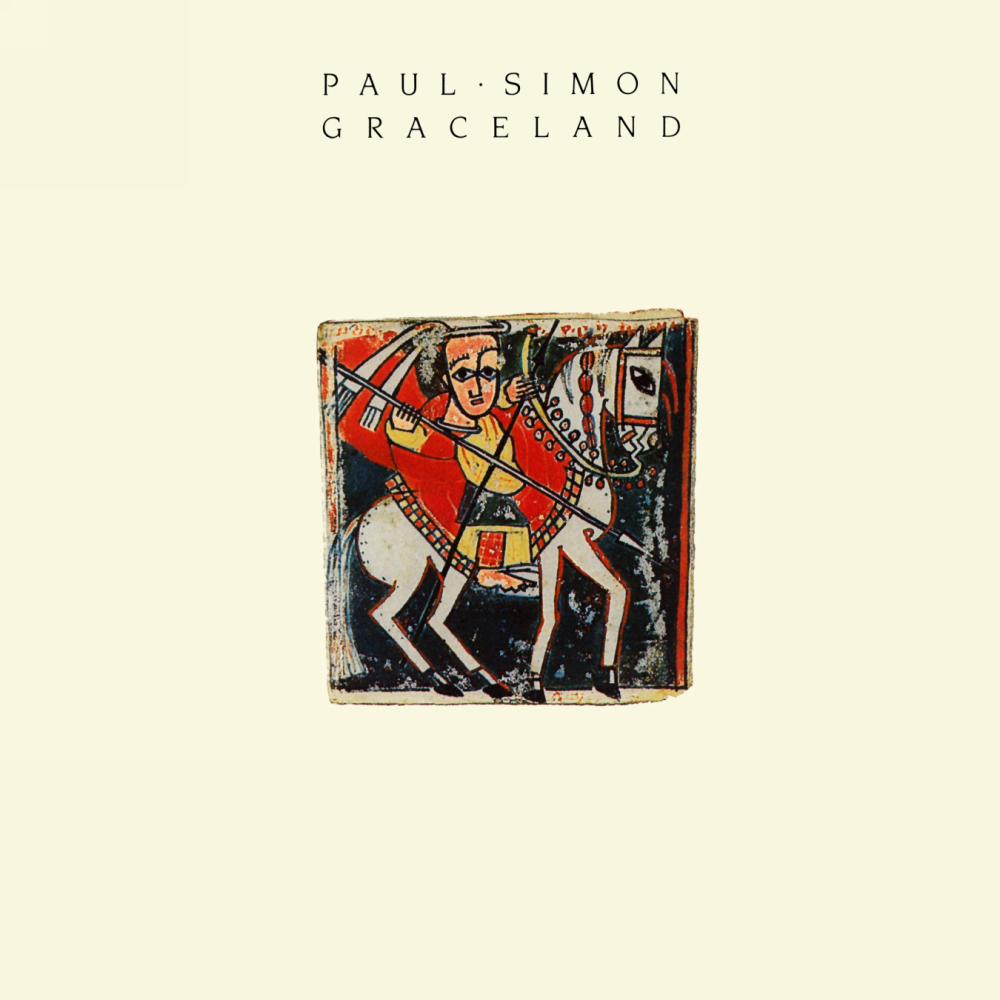
Simon’s restlessness sent him searching for new inspiration, and he found it in the compelling rhythms coming out of South Africa. He found himself embroiled in controversy at the time by dancing around the boycott of the country’s repressive apartheid government, but he firmly resolved to expose the world to the insistent beats of the African artists he was working with. The result, 1986’s phenomenal “Graceland,” won widespread praise, chart success, and still more Grammys. “Diamonds on the Soles of Her Shoes,” “The Boy in the Bubble,” “Under African Skies” and the indelible title track, among others, firmly reestablished Simon as one of the crown jewels among American songwriting musicians.
For “The Rhythm of the Saints” (1990), Simon used West African and Brazilian instruments and rhythms to build on “Graceland’s” momentum, producing a thoughtful, nuanced record that, while less commercially successful, maintained Simon’s stature with irresistible tracks like “Born at the Right Time,” “Proof,” “The Obvious Child,” “She Moves On” and “The Coast.”
From there, he made the rather curious move to immerse himself for nearly five years in the dark story of a Puerto Rican teenager known as The Capeman who was convicted of two 1959 murders, and he wrote an entire song cycle (interesting but repetitive) and spearheaded an ambitious Broadway play about it all. Sadly for him, it debuted to disastrous reviews in 1997 and closed within weeks, leaving him bruised and unsure of himself.

Stung by this experience, he retreated from view for a while, but re-emerged in 2000 with “You’re the One,” a triumphant return to form with classic Simon songs (“Darling Lorraine,” “Old,” “That’s Where I Belong”) that offered a vibrant mix of pathos, intricate melodies, understated elegance and wry observations: “Love, we crave it so badly, makes you want to laugh out loud when you receive it, and gobble it like candy…” The industry and the buying (downloading) public had moved on to other things, for the most part, but the LP still managed to break into the Top 20.
In light of the stormy split with Garfunkel he initiated in the ’80s, I was surprised but pleased when Simon gave in to those who clamored for a comprehensive Simon and Garfunkel reunion tour in 2003, captured on a beautifully produced double CD with DVD in 2004. It was a dream come true for S&G fans like me, especially because they unearthed favorite deep tracks like “The Only Living Boy in New York” and added spirited instrumental codas to classics like “Homeward Bound” and “America.” They even invited their early idols, The Everly Brothers, to join them for a few numbers each night.
S&G may have put on fine shows that were rapturously received, but it was apparently just that — a show. Behind the scenes, it was another story, with many tensions rising between them. They’d clearly outgrown each other, and whatever friendship had existed seemed to have dissolved by tour’s end. They don’t have much nice to say to or about each other anymore…

Since then, Simon has given us four new solo releases. In 2006, he partnered with atmospheric producer Brian Eno, of all people, and the result was “Surprise,” a challenging record that marries Simon’s observational oeuvre with Eno’s ambient musical structures. I found it jarring in places; “How Can You Live in the Northeast?” has typically wry Simonesque lyrics, but the music sounds like…well, someone else. I preferred the album closer, “Father and Daughter,” a love song to Simon’s daughter, Lulu, which had actually been written in 2002 for the animated film “The Wild Thornberrys Movie.”
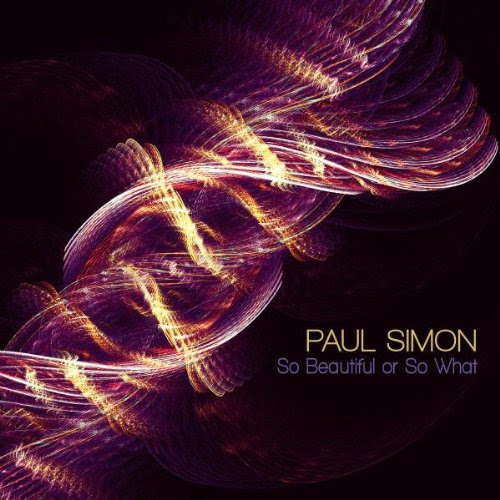
I regard his 2012 release, “So Beautiful or So What,” as his most consistent work of the past 20 years. He showcased the mesmerizing title track on a “Saturday Night Live” appearance that year (his 14th, by the way), and also gifted us such fine tunes as “Dazzling Blue,” “Rewrite” and the tongue-in-cheek “The Afterlife,” on which Simon mused about what we might all expect when we die: “I thought it was odd there was no sign of God just to usher me in, then a voice up above sugar-coated with love, said ‘Let us begin: You got to fill out a form first, and then you wait in the line…‘”
The hit-or-miss nature of his “Stranger to Stranger” LP in 2016 was a bit frustrating at first, but these songs grow on you. As has been the case throughout his solo career, Simon has shown a tenacious desire to discover and create new sounds, typically beginning with unusual rhythms, achieved by trying different percussive instruments. He brought in remarkably creative collaborators like Italian electronic artist Clap! Clap!, who participated on cool tracks like “The Werewolf” and “Wristband,” a hilarious look at how even the star of the show can’t get past security without a damn wristband.
His most recent release, 2018’s “In the Blue Light,” is actually a radical reworking of some of Simon’s lesser known songs, using very laid-back arrangements. They’re interesting in their own way, particularly “Can’t Run But” and “One Man’s Ceiling is Another Man’s Floor,” but they certainly don’t improve on the originals. When I saw him at the Hollywood Bowl that year, I was hoping for a liberal dose of these more obscure tracks, but he chose to stick with the tried-and-true that most people came to hear.
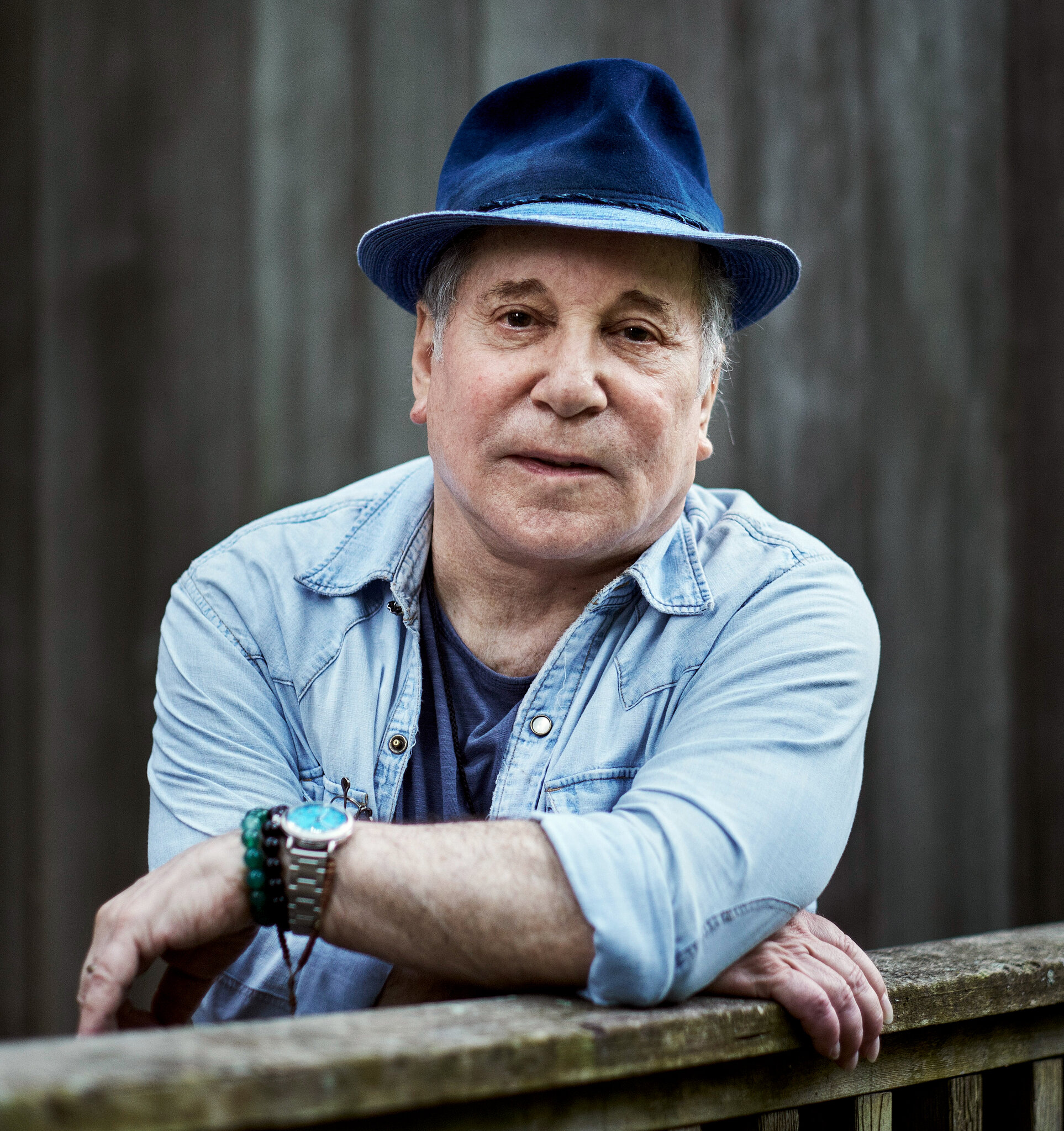
So now, at 80, Simon appears to have cashed in his chips. After serving as one of society’s keenest observers for six decades, he will evidently be watching from the sidelines from now on. As a staunch devotee of Simon’s music, I greedily wish he would continue, but he has most definitely earned the right to retire. His albums are there in my collection (some vinyl, some CD, some both!), and I will still strum his songs in my back yard to anyone who cares to listen. For those who know only his radio hits, I urge you to delve deeper into the Spotify playlist I assembled and familiarize yourself with the many dozens of recorded gems written by this superbly gifted man.
*************************




 Hack's Back Pages