I said, Lord, take me downtown

Back in 1970, the two most popular brands of rolling papers were Zig-Zag and Top. When a gritty little blues band out of Texas named ZZ Top released their debut album, stoners assumed the name was a winking reference to those two brands.

Billy Gibbons, the group’s superb guitarist and de facto leader, chuckles when he hears this and replies, “No, I’m afraid not. We had a bunch of posters of great blues players in our apartment back then, people like B.B. King and Arzell Hill, who went by Z.Z. Hill, and we thought we’d combine them into ZZ King, but that was too similar to B.B. King’s name, so we figured, ‘The king is at the top,” so we went with ZZ Top. That’s the true story.”

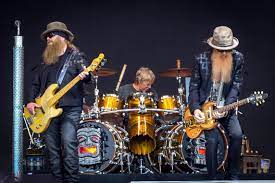
Hmmm. Well, okay. I can live with that, although I think the first version makes for a more enticing tale. In either case, ZZ Top is certainly a better name than Gibbons’ first band, The Moving Sidewalks. Ultimately, what matters in this group’s story is the music and the remarkable long-term chemistry between the three guys who comprised ZZ Top for all these years. They’ve set a record (51 years) for the rock band with the most years without a change in the band’s lineup.

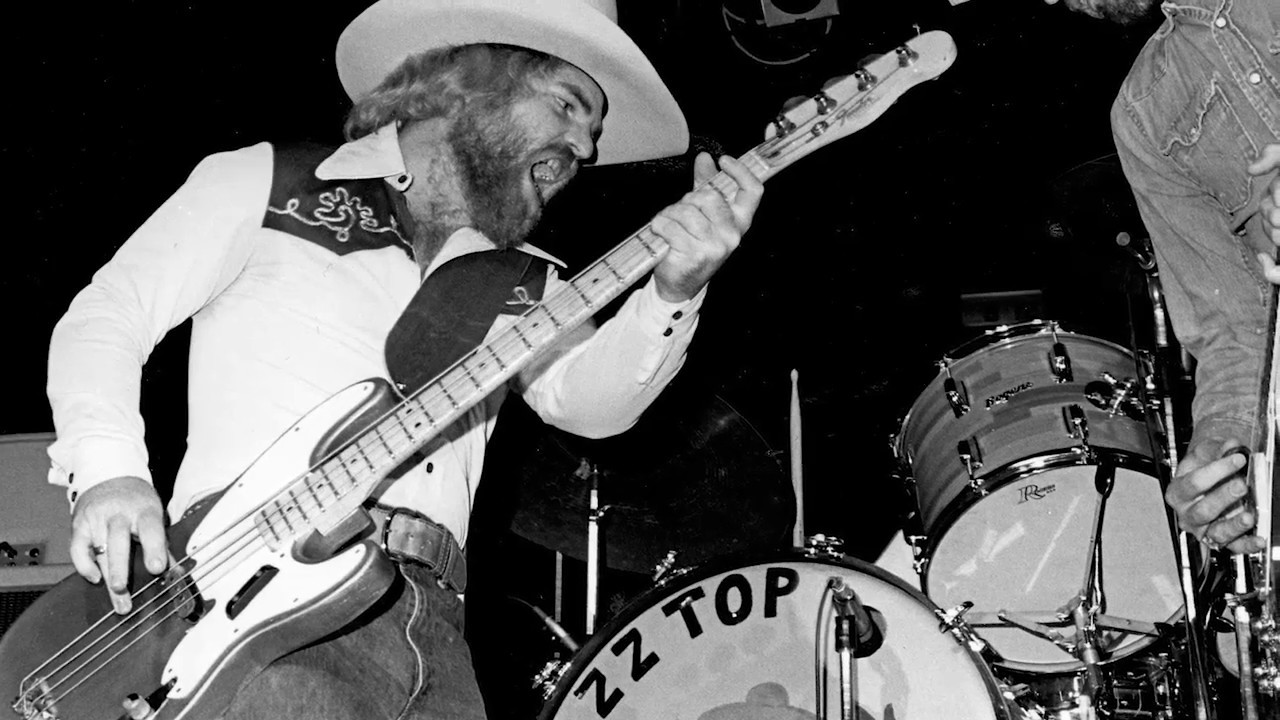
Dusty Hill, circa 1975

Sadly, though, that has come to an end with the death last week of Dusty Hill, the extraordinary bass player behind ZZ Top’s unique sound. He had suffered from bursitis, a hip replacement and even an accidental gunshot wound in the past, but still, his passing at age 72 was unexpected.

Fans will be pleased to hear that ZZ Top plans to continue touring with Elwood Francis, the band’s long-time guitar tech, on bass. According to Gibbons, “Dusty emphatically grabbed my arm a little while back and said, ‘Give Elwood the bottom end, and take it to the Top.’ That’s exactly what we’re going to do.”

*****************************

Note: There’s a Spotify playlist at the end of this post that I’ve compiled of ZZ Top’s most noteworthy tunes, if you care to listen along while reading!

*****************************

Time for a disclaimer: I’ve never bought a ZZ Top album, and frankly, after listening intently to much of their catalog over the past week, I’m not sure why. Their music — hard-driving, blues-based, boogie rock — is right up my alley. Of course, I knew their radio hits, but I just wasn’t sufficiently motivated to take the time to get to know their albums more fully. My mistake. As of this writing, I have become more of a fan, and I have developed a respect for their work and their achievements in the music business.

*****************************

Hill and eventual ZZ Top drummer Frank Beard were both from Dallas, becoming bandmates in a local group called American Blues, which also included Hill’s guitarist brother Rocky. In 1968, Dusty Hill and Beard wanted to broaden their horizons to do more than just straight blues, so they relocated to Houston, where the scene offered more musical options.

Dusty Hill, Billy Gibbons, Frank Beard in 1975

Houston-born Gibbons had built some notoriety there as a hot lead guitarist, singer and songwriter with his band, The Moving Sidewalks, and they even got the chance to be the warmup act for his idol, The Jimi Hendrix Experience, once in Houston. “We had the audacity to play ‘Foxy Lady’ and ‘Purple Haze’ in our set, and when we looked offstage, he was standing there, watching and grinning. Afterwards he said, ‘I dig you guys. You’ve got guts.'”

The drummer for The Moving Sidewalks wasn’t working out, so Beard made his move and became the new drummer. The band released a single and was poised to sign a deal with London Records, the American affiliate of British-based Decca Records, but their bass player wouldn’t sign. He was ousted and replaced by Hill at Beard’s recommendation, and the deal with London was inked just as they changed their name to ZZ Top.

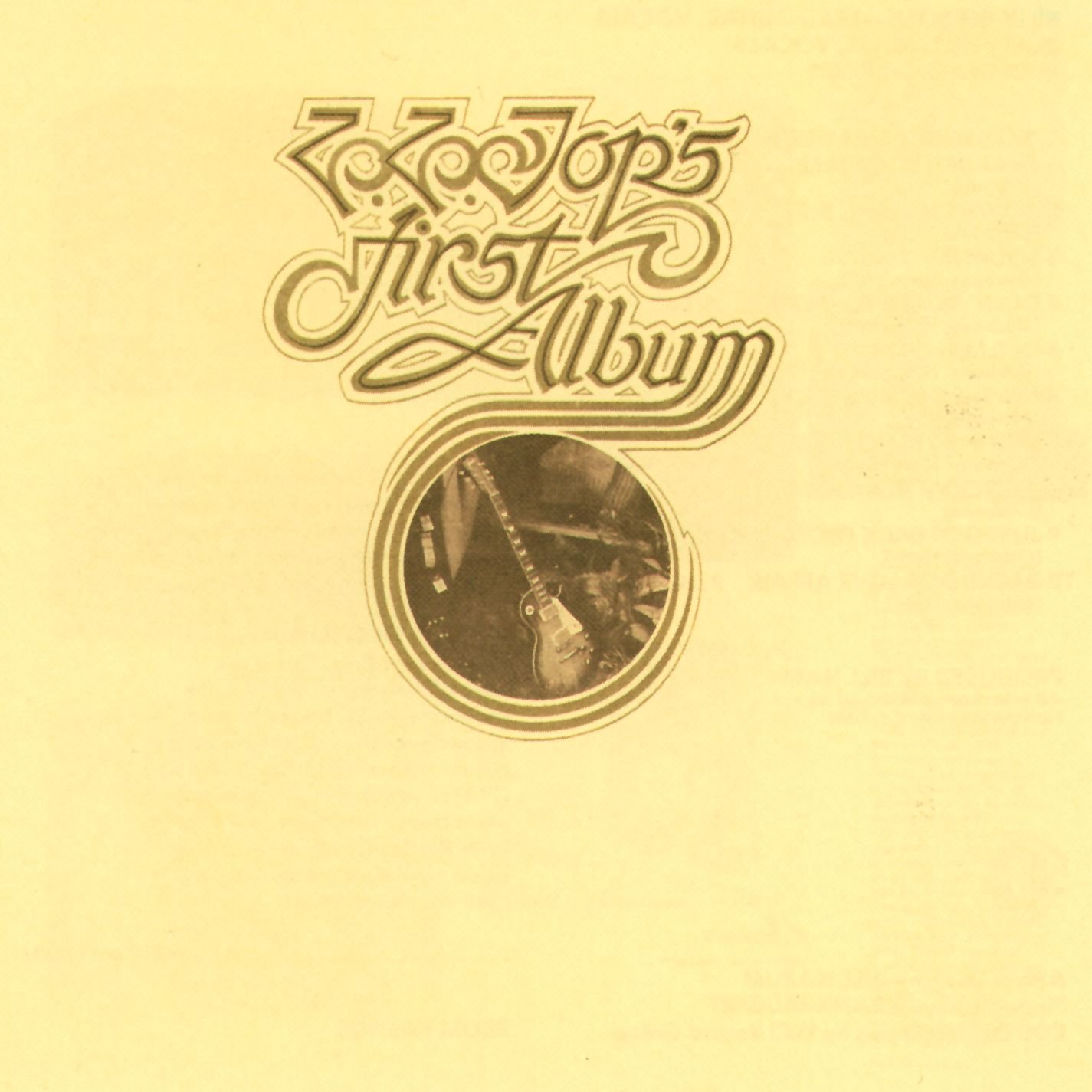
Their debut album in 1971 was appropriately titled “ZZ Top’s First Album” because “we wanted everyone to know there would be more,” noted Gibbons. Based on its chart performance, it should’ve also been their last — it went absolutely nowhere, missing the Top 200 album chart and yielding no singles. But when I listened to it last week, I was impressed by the way they took their blues influences and merged them with rock elements to create their own approach. As Dan Auerbach of The Black Keys said last week, “They were a blues band with their own sound, and that’s hard to do.” The tracks weren’t polished, nor was Gibbons’ gruff voice, but there’s solid blues rock there, especially “Brown Sugar” (no relation to the Rolling Stones tune), “Neighbor, Neighbor” and “Backdoor Love Affair.”

Their 1972 follow-up LP, “Rio Grande Mud,” at least reached #104 and spawned the single “Francine,” though it stalled at #69. Gibbons continued to hone his blues-rock songwriting, adding dashes of suggestive humor, innuendo and some taboo subjects here and there into the lyrics just for grins.

By 1973, he came up with a tune that still gets classic rock radio airplay nearly 50 years later: “La Grange,” which uses an infectious riff you may have heard in other blues tunes (“Refried Boogie” by Canned Heat, for example). It’s a tale about a notorious brothel called the Chicken Shack, which became “The Best Little Whorehouse in Texas” on stage and screen in the ’80s. The album it came from, “Tres Hombres,” recorded in Memphis, peaked at #8, putting ZZ Top on the map in a big way.

My friend Tracie, an Albuquerque native who went to college in Dallas, remembers first seeing and hearing ZZ Top at a free concert on the quad her first week on campus. “ZZ Top will always have a special place in my heart! At that concert, the Texas folk knew who they were, but this ‘little girl from the small mining town in the west’ never heard of them! I knew instantly that if this band was typical of Texas rock, I was gonna love college!” My friend Carl, a native Texan, recalled, “They were a wild-times, rowdy, fun, crank-it-up party band. We memorized every note, every word of tracks like ‘Beer Drinkers & Hell Raisers’ until the grooves on the vinyl were gone!”

Hot on its heels in 1975 came “Fandango!,’ a half-live, half-studio release that went Top Ten and included “Tush,” featuring another indelible riff that reached #20 on the singles charts. By this point, the three-piece band was touring virtually non-stop, at first warming up for acts like The Allman Brothers or Lynyrd Skynyrd but usually as the headliner. Whereas their earlier shows didn’t offer much visually, ZZ Top mounted a mammoth, 300-date tour from mid-1976 to mid-1977 they called the Worldwide Texas Tour, where they used elaborate staging and costumes designed to showcase their Texas roots.

That tour made them one of the nation’s top draws during that period, but it also took its toll. Frank Beard had developed a serious alcohol and drug problem that required rehabilitation, so instead of finding a replacement, the band chose to go on hiatus for a couple of years. For us, there was no other drummer but Frank,” said Hill. “We were tired and needed a break, and we were willing to wait for him to get better.”

Their return to active recording and touring in 1979 was marked by several changes. Gibbons had been paying attention to technological developments and the New Wave music trends, both of which showed up on their albums “Deguello” and “El Loco,” and singles like “Cheap Sunglasses” and the double-entendre classic “Pearl Necklace.” The group made their first appearances in England and the European continent, and time spent in the studio with the British band Orchestral Manoeuvres in the Dark introduced them to how drum machines and synthesizers could became prominent tools in the ZZ Top arsenal. Some of their original fans were none too pleased by this development, but for every old fan they lost, they gained three new ones.

Coincidentally, both Gibbons and Hill, independently and without each other’s knowledge, had grown chest-length beards which, when combined with sunglasses worn more or less permanently, gave them a cartoonish appearance that became part of ZZ Top’s new self-deprecating sense of humor.

The timing of all this was perfect, as Music Television, soon known far and wide as MTV, made its debut and changed the face of pop music. Bands became overnight sensations based just as much (or more) on what their video looked like than what their music sounded like. ZZ Top enlisted videographer Tim Newman, who was keen on shooting “mini-movies” instead of standard concert video. Because Gibbons, Hill and Beard felt they didn’t exactly have matinee movie star looks, they agreed it would be fun to appear only as background observers, watching the gorgeous women and high-octane cars on music videos like “Gimme All Your Lovin’,” “Sharp Dressed Man” and “Legs.” Said Gibbons, “We knew we weren’t prima donna rock stars, so why not be the guys watching from the background, rooting for the underdog and the misfit?”

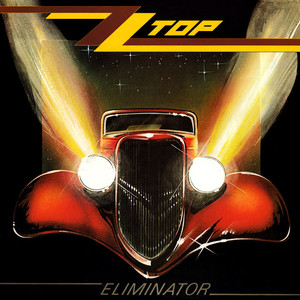
How ironic that a trio of unfashionable Texas rockers would end up as superstars in the very fashion-conscious MTV era. “We found it all kind of silly, but it was a fun time,” said Beard. And profitable as hell, too — sales of their 1983 LP “Eliminator” topped 15 million and put them in the Top Ten in the US, UK, Australia and several other European countries. The ZZ Top gravy train continued throughout the ’80s, with 1985’s “Afterburner” and 1990’s “Recycler” also achieving huge chart rankings and sales numbers, thanks in large part to MTV exposure for “Rough Boy,” “Doubleback” and “My Head’s in Mississippi.”

1994’s “Antenna” and its hit single “Pincushion” turned out to be ZZ Top’s last fling with superstardom. After that, the band still made a few LPs and toured periodically, but MTV stopped running music videos and their following dwindled. Through it all, the band was like a sturdy three-legged stool — all three legs were of equal importance to the band’s continued lifespan.

Hill, who started playing bass at age 12 because his older brother insisted on it, said he learned a lot about the instrument and what it could do by listening to virtuosos like Cream’s Jack Bruce and jazz greats like Stanley Clarke and Charles Mingus. “I used to try to come up with all these complex bass lines, kind of showing off, I guess,” he said in a 2014 interview. “But it didn’t take me long to figure out I needed to play to the song. Sometimes you shouldn’t even notice the bass, and I hate that in a way, but I also love that in a way. To not be noticed is a compliment. It means you’ve filled in everything just right for the song, and you’re not standing out where you don’t need to be.”

Gibbons, Hill, Beard (without a beard)

That kind of unassuming, humble approach to their fame has served the group well. “We’re the same three guys playing the same three chords,” said Gibbons in the highly watchable 2019 documentary film, “ZZ Top: That Little Ol’ Band From Texas.” If you have even a passing interest in this group, I recommend you check it out. It’s on Amazon now.

**************************

Only the beginning, only just a start

Periodically, I use this space to pay homage to artists I believe are worthy of focused attention — artists with an extraordinary, influential, consistently excellent body of work and/or a compelling story to tell. In this essay, I take a slightly different tack with an in-depth look at a band with whom I’ve had a love/hate relationship. They’ve enjoyed considerable commercial success with different lineups, playing several very different musical styles from Big Band rock to sentimental ballads to synthesized pop, selling many millions of albums and singles, and are still active into their seventh decade, but I can’t say I count myself among their longtime faithful fan base. That band is Chicago.

***************************

In the long-ago summer of 1969, I was 14 and seriously ramping up my modest record collection. I had abandoned the practice of buying 45-rpm singles and embraced the idea of owning albums instead. I bought LPs by The Beatles and Simon and Garfunkel, and I became drawn to the music of more boundary-expanding artists like Cream, Led Zeppelin, Jimi Hendrix, Steppenwolf and Blind Faith.

My friend Steve was similarly tuned into new bands that weren’t Top 40, and he’d periodically show up at my house with albums he thought I might like. One such record was a double album called “The Chicago Transit Authority.” Its most noticeable characteristic was that it had very prominent horns — trumpets, trombones, saxes — on pretty much every track. This was a substantial departure from the guitars-bass-drums-organ lineup of most bands at that time. No rock band I knew used horns beyond the occasional sax solo.

I was totally taken by this music. Growing up in a household with a father who often played Big Band, swing and Sinatra records, I loved the sound of a vigorous horn section, but as a kid of the ’60s, I also loved rock and roll. Now, on this “CTA” album, I had a merger of these two things — a rock band with horns. How cool was that?

The opening track, the aptly named “Introduction,” had lyrics that came right out and explained Chicago‘s mission:

“We’ve all spent years preparing before this group was born, /With Heaven’s help, it blended, and we do thank the Lord, /So this is what we do, sit back and let us groove, and let us work on you…”

Boy, they worked on me, all right. The great melodies, the infectious rock beats, ferocious electric guitar solos, strong lead vocals and harmonies, and the dominant, thrilling horn parts combined to create something really dynamic. I simply couldn’t get enough of this stuff: “Does Anybody Really Know What Time It Is?,” “Questions 67 and 68,” “Someday,” “South California Purples,” “Listen,” “I’m a Man” and especially the exhilarating “Beginnings,” still one of my all-time favorite songs.

Only eight months later, the band made the unheard-of move of releasing another double album as their second release, this time titled simply “Chicago.” Again, the seven-piece group bowled me over with instantly likable songs (“Movin’ On,” “The Road,” “In the Country,” “Wake Up Sunshine, “Fancy Colours”), smart arrangements and solid musicianship across the board. The chief difference was that this time, the group found themselves riding high on Top 40 charts in 1970 with three big singles: the exuberant “Make Me Smile,” the guitar-driven rock classic “25 or 6 to 4” and everyone’s favorite prom slow-dance tune, “Colour My World.” Now I found myself sharing the magic of Chicago with every pop-loving teen in town, and I found that vaguely unsettling.

At this point the band was touring non-stop, performing nearly 300 gigs a year to capitalize on their chart success. I saw them do a show in a gymnasium at John Carroll University in Cleveland at this juncture and was totally impressed by their energy and tight ensemble playing.

L-R: Robert Lamm, Peter Cetera, Danny Seraphine, James Pankow,
Lee Loughnane, Walter Parazaider, Terry Kath

So it was very disappointing to me when they felt the need to release a third double album, “Chicago III,” in early 1971. Clearly, they had been overworked and stretched thin, because there weren’t more than two or three memorable tracks to be found. Three sides were taken up by grandiose “suites” filled with listless instrumentals, banal lyrics about eating Spam for breakfast (?) and meandering solos with little melody anywhere. If not for the vibrant “Free” and “Lowdown,” it would’ve been pretty much a total washout. Even the record label chose to go back to the debut LP and re-release “Beginnings” and “Questions 67 and 68” as singles since there was nothing suitable on “Chicago III”…

To make matters far worse, Chicago’s next move was a live album, which was in vogue at the time, but they turned a week-long stint at Carnegie Hall into a bloated four-album set completely lacking in the excitement I’d heard in concert only 10 months earlier. I think I listened to it only once, maybe twice, before getting rid of it. One of my worst album purchases ever.

The next summer, the band wisely focused on just nine quality tracks to comprise “Chicago V,” a single album that offered a return to solid melodies, integrated horn charts and great vocals. On the singles charts, “Saturday in the Park” was just about as much fun as “Beginnings” or “Make Me Smile.” Still, the adventurousness and immediacy which had so enthralled me when they entered the scene in 1969-1970 seemed to be missing (for me, at least), even though “Chicago V” became the first of five consecutive LPs to reach #1 on the album charts.

I need to mention one nagging truth about Chicago that bothered me from the outset. They (mostly keyboardist Robert Lamm, evidently) had a penchant for making political statements in some of their songs that, while well-intentioned, usually came across as simplistic and lame. A typical example is “Dialogue (Parts I and II),” which was curiously popular as a single in 1972. With lyrics written as a conversation between an activist and a clueless college student, the track was designed to coax people to take to the streets and speak out against war, injustice, etc. Its awkwardness made me cringe, and still does.

From that point on, I basically lost interest. I can’t deny the continuous stream of hit singles were engaging, even infectious — “Feelin’ Stronger Every Day,” “Just You ‘n Me,” “Call On Me,” “Old Days,” even the Peter Cetera heartbreaker ballad “If You Leave Me Now.” But I couldn’t get motivated to buy the albums. I guess the sheen had worn off for me, and I’d moved on to other bands, other genres.

Terry Kath

Chicago had always been one of those bands that remained an essentially faceless entity. Its members could go out in public and be unrecognized, and they liked it that way. Still, I was among many music industry observers who assumed the band would hang it up in 1978 following the unfortunate death of guitarist Terry Kath, Chicago’s inspirational leader and best instrumentalist. The idea that Chicago was “a rock and roll band with horns” pretty much died with Kath, as his fiery guitar work was the key ingredient in their rock band credentials. Indeed, no less a guitar god than Jimi Hendrix had been quoted in 1970 as saying, “Terry Kath plays better than me.”

But no. The band hired the first of several replacements for Kath, and soldiered on. Chicago, whose Roman numeral-titled albums were a source of some ridicule from those who labeled their music “corporate rock,” endured a comparatively fallow period during which their so-so chart performance matched their tired formula on the records. By 1982, Columbia Records, their label from the beginning, let them go.

This didn’t stop them from shopping around for another label and producer. Full Moon Records took the bait, and with notorious Canadian pop producer David Foster at the helm, Chicago re-emerged with an altogether different sound, still carried by bass player Peter Cetera’s strong tenor voice but now doing material written by outside songwriters, with almost no horns in sight. Veteran musician Bill Champlin joined the ranks, playing a substantial role in the soft-rock sounds favored by Foster and Cetera. The resulting album, “Chicago 16,” found a new, younger audience who responded favorably to the ’80s version of the group. Cetera’s smooth “Hard For Me To Say I’m Sorry” put them back at the top of the singles chart.

No longer filling stadiums or arenas, Chicago was now playing smaller halls as they built their new audience. I was reviewing concerts for a Cleveland newspaper at the time, and saw them at the Front Row, an intimate theater-in-the-round venue, and was pleasantly surprised by the quality of the show. The new songs didn’t do much for me, but it sure was great to hear the old stuff, both the hits and deeper album tracks.

Peter Cetera

Lamm, who had been such an important singer and composer for the band, became almost invisible as Cetera assumed the role of Chicao’s pretty-boy front man singing songs co-written for him by Foster and others. These tunes charted well (“Hard Habit to Break,” “You’re the Inspiration,” “Along Comes a Woman”), but their success went to Cetera’s head, who left the band in 1986 for a solo career and chose not to maintain ties with the group. He was famously absent when the group was inducted into the Rock and Roll Hall of Fame in 2016.

A guy named Jason Scheff, a bassist with a tenor voice eerily similar to Cetera’s, joined in 1986, and he and Champlin became Chicago’s primary singers for the next five years, and through the ’90s and 2000s as well. Scheff got off to a rocky start when Foster made the misguided decision to feature a radical reworking of “25 or 6 to 4” as the first single from “Chicago 18,” which thankfully stalled at #48. Still, it was newcomer Scheff’s vocals that carried “Will You Still Love Me?” and “If She Would Have Been Faithful…”, both Top 20 hits.

Over the past 30 years, Chicago has remained a commercially viable band, touring periodically and releasing numerous greatest hits packages, a Christmas collection and even a winning tribute to Big Band music (a couple tracks are included in my Spotify playlist). But “Chicago XXX” in 2006 has been their only studio album of new original material since 1991.

Recently, I was urged to sit down and watch “Now More Than Ever: The History of Chicago,” an award-winning documentary on the band, its successes and struggles, and I gotta tell you, it was an entertaining and eye-opening two hours well spent. It incisively tells the band’s story from initial rumblings up to the mid-2010s, and I urge anyone with even a passing interest in Chicago’s music to check it out. It’s currently available on Amazon.

I learned, for instance, that the three guys who have been Chicago’s consistent horn section for the entire life of the group — sax man Walter Parazaider, trombonist James Pankow and trumpeter Lee Loughnane — were all classically trained musicians who were headed for careers in the symphony until they were bitten by the rock and roll bug. That threesome, and Lamm and Kath, each logged thousands of hours practicing and gigging with fledgling bands in the Chicago area, honing their musical chops until they met up in 1967. Their mission, said drummer Danny Seraphine, was to blend the musical trends and traditions of their city — blues, jazz, rock, Big Band — into a brand new style and a new band that they initially called The Big Thing.

The excesses that plagued so many ’70s groups — The Eagles, Fleetwood Mac, Led Zeppelin — took their toll on Chicago as well, according to the documentary. Original manager/producer Jim Guercio had played fast and loose with the band’s finances, pouring them into a new studio in Colorado and failing to pay royalties. Cocaine use among the band was rampant and destructive, negatively affecting interpersonal relationships. New members didn’t join the lineup seamlessly.

Chicago has always had its detractors. A review of the documentary in The Chicago Reader by a fellow named Bill Wyman (not the former Stones bassist) described it this way: “It’s an altogether fitting testament to Chicago’s hippie self-absorption and dopey excesses, all far out of proportion with both the amount of listenable music Chicago produced and its musical importance.” Ouch.

The venerable horn section: Pankow, Parazaider and Loughnane

But I’ll always have a soft spot for Chicago, if only for those first two groundbreaking albums that dared to fully integrate horns into a professional rock band. Thanks, guys, for bringing that dream to fruition all those years ago.

**************************

The Spotify playlist below is, as you’d expect, heavy on the first two albums, but there’s also a hefty dose of material from their later work. Nearly every studio album is represented with at least one track in order to provide you with a representative cross section of Chicago’s entire career arc.