There is still a light that shines on me
When Apple Records released The Beatles’ “Let It Be” album in May 1970, the world was still reeling from Paul McCartney’s public announcement the previous month that the band had broken up. (John Lennon had told the group privately six months earlier that he “wanted a divorce,” and George Harrison had already begun sessions for his solo debut, but the public had only just learned that the end had come.)
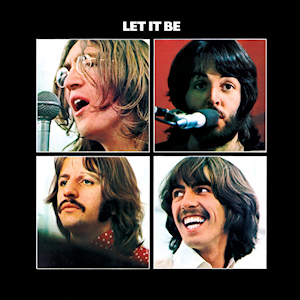
As a loyal fan, I bought the LP right away, but not with the excitement and eager anticipation I’d had with “The White Album” in late 1968 or “Abbey Road” in autumn 1969. “Let It Be,” apparently, would be The Beatles’ last album, which forever tainted it in the minds of many.
It was a strange record. Two of the songs (“Get Back” and “Let It Be”) had already been released as singles; four others seemed to have been recorded in some sort of live setting; two tracks (“Dig It” and “Maggie Mae”) were pretty much inconsequential filler; one tune (“One After 909”) was a Lennon-McCartney chestnut resurrected from their teen years; and sprinkled throughout were weird tidbits of verbal outbursts (mostly from Lennon). The album’s ragged nature seemed a letdown after the astonishing, polished work on “Abbey Road.”
There was mention of a “Let It Be” film that documented the making of the album, but it saw only limited release and was soon pulled from distribution, evidently because it was roundly panned and The Beatles themselves didn’t much care for it either. So I never saw it until years later. In fact, I went with my friend Barney one day in 1978 to a small Cleveland theater that was showing “Let It Be” in a double feature with “Magical Mystery Tour,” another neglected Beatle film project. (We never saw either film that day because theater personnel threw us out after I mischievously fired up a joint as the movie was just beginning!)
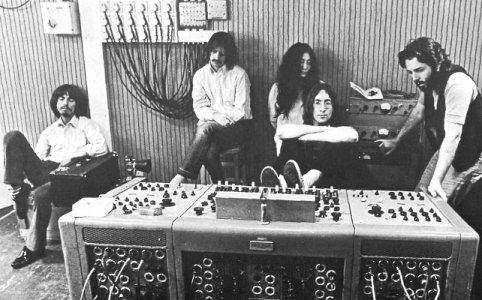
When I finally saw “Let It Be” a couple days later, I agreed with the critics who found it to be a dreary, uncomfortable, ultimately depressing look at my favorite band on the verge of dissolution. They all looked so glum and serious, with no sense of fun or even shared creativity. They sat in silence or bickered, and there was a clear sense that things were collapsing, and no one seemed to care. Sure there were a few entertaining moments, mostly the rooftop concert sequences, but I concluded they were right to bury the film in the archives.
What I never knew until about a year ago is that the film’s director, Michael Lindsay-Hogg, had shot nearly 60 hours of film, and sound crews had captured 150 hours of music and conversational recordings. Peter Jackson, the award-winning filmmaker behind “Lord of the Rings” and a huge Beatles fan himself, had always wished for the opportunity to review those source materials to see what was there, and four years ago, Apple Records gave him the green light to delve into them.
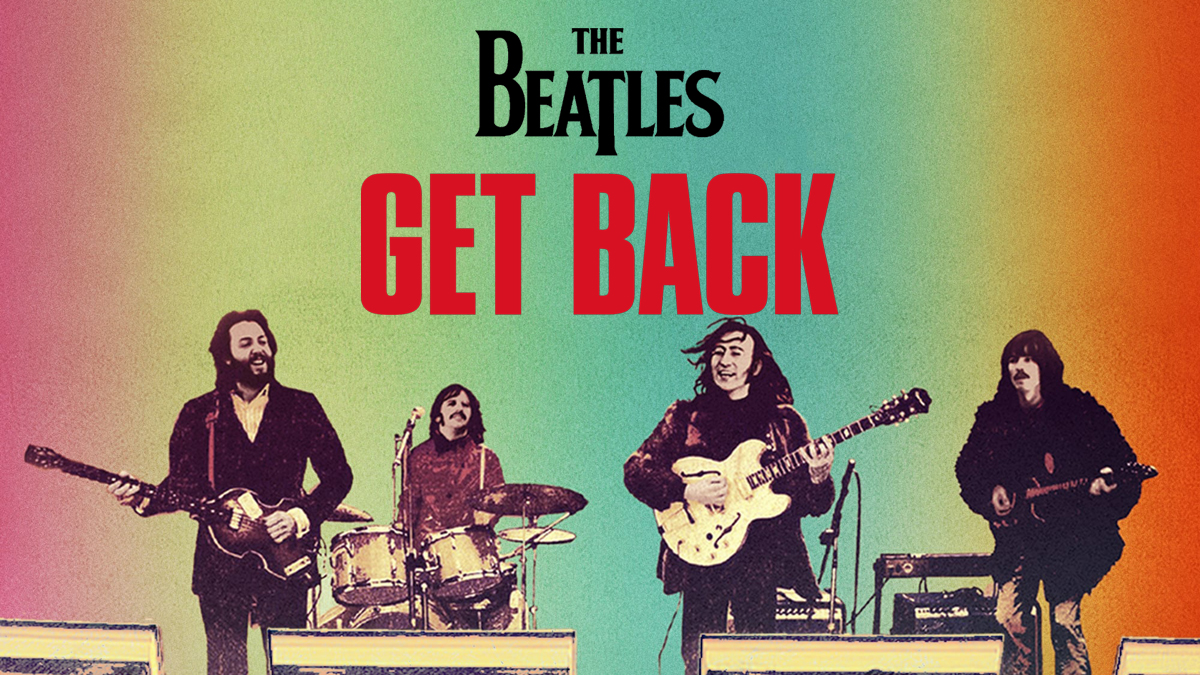
Beatles fans worldwide should thank their lucky stars that a talent like Jackson was selected for the task. In “Get Back,” his triumphant, seven-hour documentary released on Thanksgiving on Disney+, his efforts paid off handsomely, with grainy film images digitally restored and enhanced, and the sometimes unintelligible audio cleaned up to such a degree that what we see and hear is a thrilling revelation. True, it may be a bit long and sometimes tedious for the casual fan, but for rabid Beatles fans and professional musicians, it’s Shangri-La.
Most notably, we learn that the prevailing myth advanced by the “Let It Be” movie — that the sessions were nothing but ugliness and toxicity — is simply untrue. Granted, things started off shakily when they first convened in the cavernous Twickenham film studio, a cold environment hardly conducive to conviviality or productivity. The guys seemed understandably self-conscious about the cameras and microphones recording their every move, and they often showed up late, or not at all. However, once they moved the proceedings to the new studio set-up in the basement of the Apple Records office, the mood improved significantly, thanks in large part to the arrival of their old friend Billy Preston, who had only stopped by to say hello while in London but ended up staying for a week and contributing enormously to the vibe and the musical recordings.
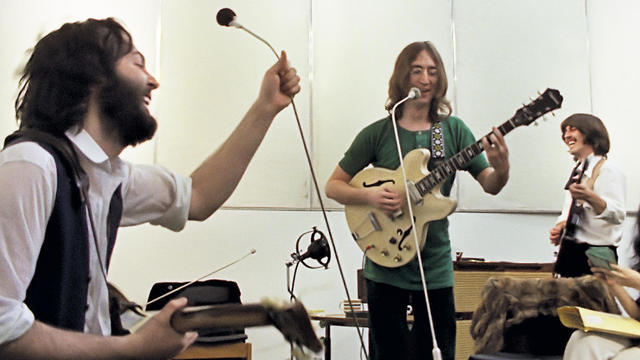
It was mesmerizing to me to be a fly on the wall, witnessing the resilience and raw talent of John, Paul, George and Ringo, these four men I had idolized my whole life, as they coped with the absurd circumstances: They had reluctantly agreed to be filmed writing, rehearsing and recording an album’s worth of new songs in preparation for a live performance three weeks ahead, location still undecided. Talk about pressure.
We get to see several of The Beatles’ classic tunes transformed from rudimentary sketches to finished product, particularly “Get Back” and “Don’t Let Me Down.” It’s the arduous process of songwriting and track recording, and while it may go on all the time for rock bands everywhere, it rarely happens with cameras rolling, and here it’s the bloody Beatles, for crying out loud!
As one young songwriter put it in a Washington Post article the other day: “You never get to see someone in that moment of making something up, especially a song like ‘Get Back’ that you know so well. That was totally incredible… Watching Paul do it that way, where he’s just plugging and plugging and plugging until he gets it, that’s how it actually happens.”
Said another musician: “This whole endeavor — writing songs — is filled with failure. Most people think, ‘Oh, the Beatles, everything they did turned to gold.’ Wrong. You’re always trying and discarding things and searching for the right thing. There’s a lot of sitting around, a lot of screwing around, a lot of playing nonsense music. Then there’s also a lot of slogging away, trying to get what you’re actually working on to be great. The reality is it often has to sound bad before it sounds good. These eight hours reaffirm that.”

“Get Back” offered many other discoveries, most of them pleasant, even exhilarating. I guess I shouldn’t be surprised that McCartney, Harrison and Lennon seemed to have new songs just pouring out of them at this stage. (Even Ringo Starr debuted the beginning of his song “Octopus’s Garden” during these sessions.) In addition to the amazing McCartney songs that would end up on the “Let It Be” album, including “Two of Us” and “The Long and Winding Road,” we also hear him toying with early drafts of tunes that would end up on “Abbey Road” (“She Came in Through the Bathroom Window,” “Oh Darling,” “Maxwell’s Silver Hammer,” “Carry That Weight”) or his first solo albums (“Teddy Boy,” “The Back Seat of My Car”).
Lennon’s output included “Dig a Pony” (then known as “All I Want is You”) and “Across the Universe”; early previews of “Mean Mr. Mustard,” “Polythene Pam,” “I Want You (She’s So Heavy),” destined for “Abbey Road”; and “Gimme Some Truth” and a tune known as “Child of Nature,” which would later be recast as “Jealous Guy” on his “Imagine” album.
Harrison, meanwhile, brought “All Things Must Pass,” which The Beatles seriously considered but ultimately set aside, and it ended up the title track of his solo LP nearly two years later. In addition to his songs “I Me Mine” and “For You Blue,” which made the cut for the “Let It Be” album, Harrison also presented the rollicking “Old Brown Shoe” and perhaps his finest ever composition, “Something,” which Lennon later called “the best song on ‘Abbey Road.'”
How fabulous it is that we’re given the opportunity to watch and listen to all these eventual masterpieces played in their earliest forms. It makes me appreciate the finished recordings all the more.

The best part of the original film was, without question, The Beatles performing live on the rooftop. The same holds true in Jackson’s documentary, where we get to watch, for the first time, the entire 43-minute performance uncut, during which they play “Get Back,” “Don’t Let Me Down,” “One After 909,” “Dig a Pony” and “I’ve Got a Feeling,” some more than once. Running parallel to this excellent footage is the hilarious storyline of the ineffectual London bobbies trying to shut it all down and being stymied by clever Apple staff who hold them at bay as long as they can.
I mustn’t forget to mention how much I really enjoyed the moments in the studio when, as a way of cutting through the lethargy, the band broke into vintage rock oldies like “Blue Suede Shoes,” “Shake, Rattle and Roll” and “Kansas City,” reminding us that, down deep, The Beatles were just a great little rock ‘n’ roll band who became larger-than-life icons — icons that we’re still interested in watching and learning more about, 50-plus years later.
A few other observations:

Paul still comes across as the true workaholic of the group, continually pushing the others to get to work in order to meet deadlines. He acknowledges that he could be overly controlling, but without the late Brian Epstein around to be “the Daddy figure,” someone had to step up. It seems likely the project would’ve fallen apart without his “C’mon, boys” approach, and he deserves credit for that.
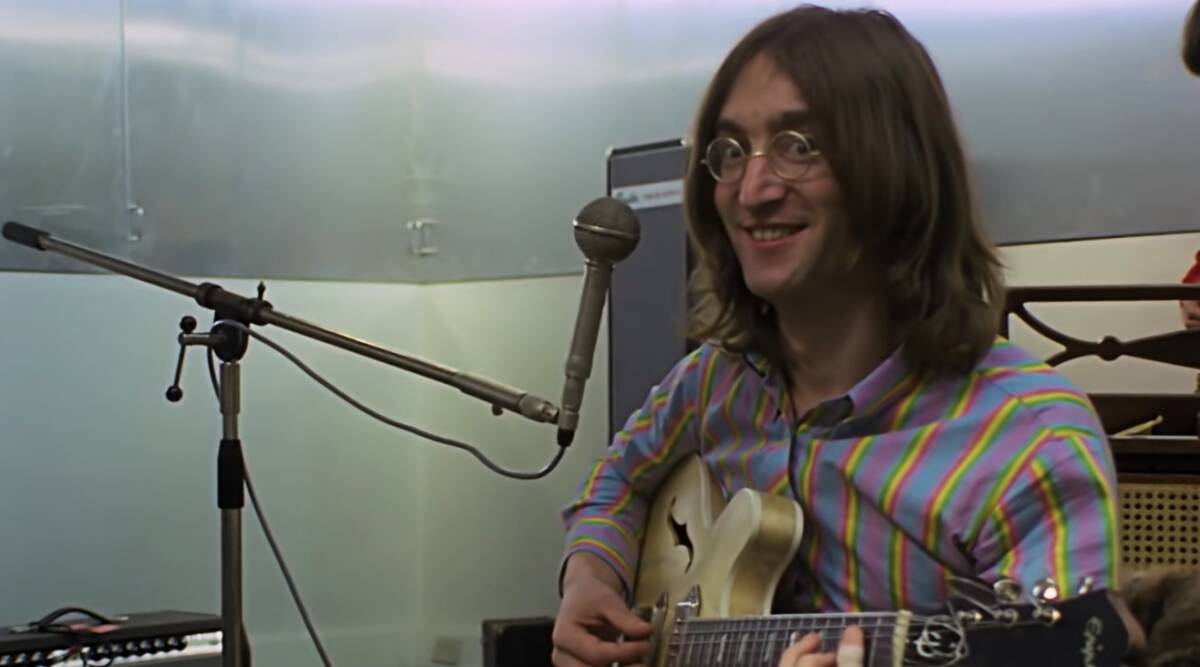
John was a listless, unenthusiastic, even disruptive presence at first, clearly showing the effects of his recent dabbling with heroin in the off hours. In the later sections of the documentary, he seems far more engaged, performing the material with renewed purpose, and even joking around with the others.
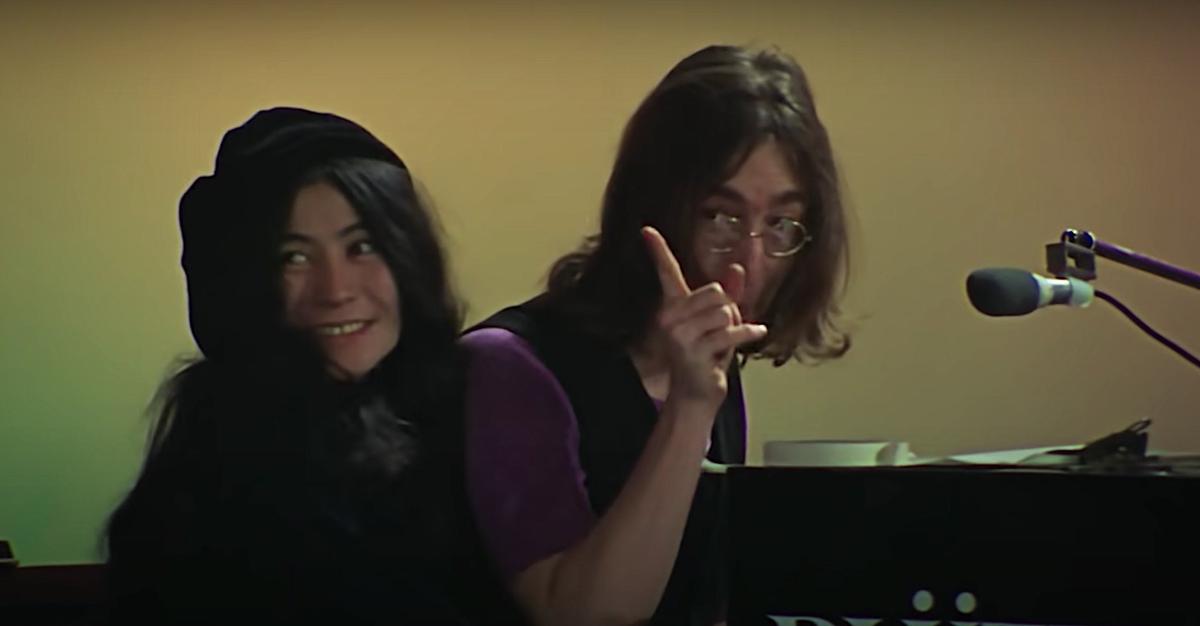
Yoko Ono, whose influence on John has been widely accused of breaking up the band, rarely left his side, but in her defense, she barely said a word in the sessions, at least in the film sequences we see. (Well, there’s one bit where the band is jamming chaotically, and she pitches in with her signature caterwauling, but that’s an isolated instance.) Paul, George and Ringo may have been less than welcoming to her, overall, but Paul is on record here at one point saying basically, hey guys, they’re in love, give them a break. “If we force him to pick between Yoko and us, he’ll pick Yoko,” he warned. And he was probably right.

George, let’s face it, was tired of being disrespected by Paul and John, and was tired of being a Beatle in general at this point, which led to his five-day departure that caused no small amount of concern among the others. But they coaxed him back, and he showed a more professional, congenial attitude and some fine musical chops on the ensuing recordings, both in the studio and on the rooftop.
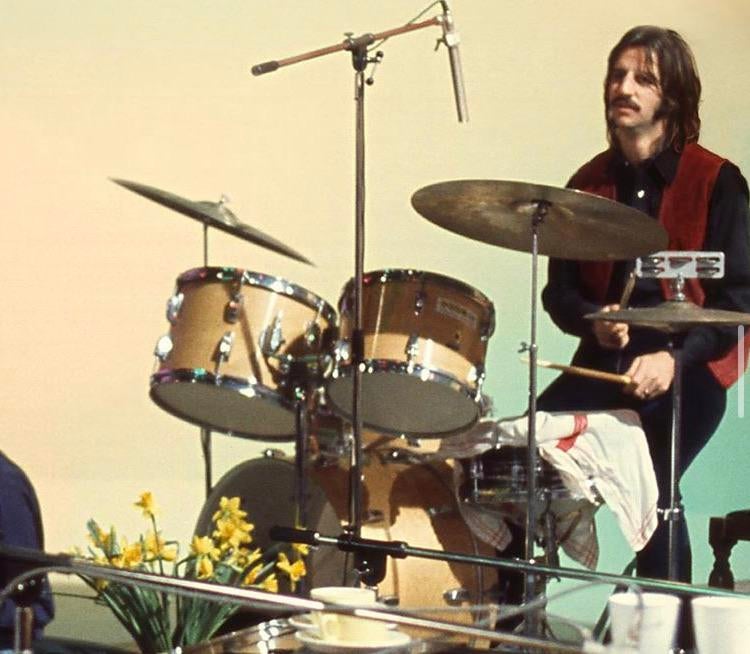
Ringo? Well, frankly, he looked bored, tired and unhappy through most of the documentary. I imagine he was thinking, “This used to be so much fun. What the hell happened?” But he still offered occasional moments of levity as well, and was always ready to play when the time came. He had a well-deserved reputation for being a drummer who played to the song, contributing exactly what the arrangement called for. The chugging train beat he came up with for “Get Back” is a perfect case in point, as is the understated work on “The Long and Winding Road.”
The other important characters who show up in the documentary show their true nature, good or bad:

Billy Preston, as mentioned earlier, was a godsend, bringing a calming amiability precisely when it was needed, especially in the studio.
Producer George Martin, so pivotal to The Beatles’ recorded legacy since their beginning in 1962, is reduced almost to a bit player here, but he handles it with aplomb as the cool professional we’ve known him to be.
Engineer/producer Glyn Johns, who would build his own legacy working with The Rolling Stones, The Who, The Kinks, The Eagles and many others, seemed to be grateful just to be asked to participate, sitting amongst the band during playbacks and even during tense conversations. It was Johns, evidently, who solved the problem of where the band should perform the new songs to conclude the film by suggesting the rooftop of the Apple building.
Mal Evans — personal assistant, roadie, friend, all-around good guy — was all of those things for the band before, during and after these sessions. What a hoot to see him procure and then bang on an anvil for a run-through of “Maxwell’s Silver Hammer.”
My impression of Director Michael Lindsay-Hogg is that he was a rather annoying presence throughout. He chastised the band when they needed nurturing instead, and he kept pushing to stage the performance in Egypt or Libya when it was clear they weren’t interested. Perhaps he was just trying to do his job in a very trying situation, but I’m guessing The Beatles wondered if they’d made the right decision in bringing him in to direct the project.
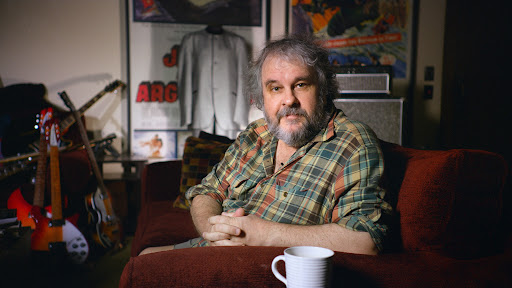
Lastly, a heartfelt thanks to Peter Jackson for the time and tender-loving care he put into this extravagant undertaking. Beatles fans around the globe are eternally grateful.
***********************
Here’s a Spotify playlist of the songs that comprise The Beatles’ “Let It Be” 1970 album, and a few of the early drafts heard in Jackson’s documentary.




 Hack's Back Pages