Funny, but it’s still rock and roll to me
It shouldn’t surprise anyone that there are so many songs in the classic rock archives that include the phrase “rock and roll” in the title. I came up with more than 20 off the top of my head, and another 20 or so with just a little digging. These tunes aren’t always solid examples of rock and roll music (B.J. Thomas’s “Rock and Roll Lullaby”?), but the lyrics always seem to refer to the genre in some way, shape or form.
There are songs here that simply demand to be on this list, while others are far less known but crying to be heard, and worthy of your attention. I thought about separating them into two lists, but there’s something appealing about the eclecticism of a random order to a playlist. As always, the Spotify playlist at the end features my Top 20, followed by the “honorable mentions” that didn’t quite make the cut.
Rock and roll on!
*************************
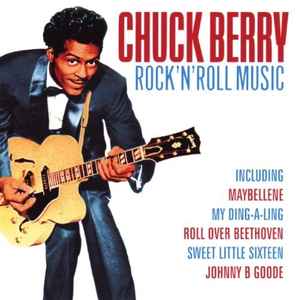
“Rock and Roll Music,” Chuck Berry, 1957
The way I figure it, without songs like this one, rock and roll might’ve stayed under the mainstream radar as its detractors hoped it would. But Berry and other pioneers of the genre were determined to celebrate the merger of country, blues, swing and gospel in the mid-1950s and make it an unstoppable force in popular music. In particular, Berry’s seminal song “Maybellene” was the first R&B/rock song to make the pop charts in 1955, and two years later, this iconic track extols the joys of the musical form and how it offers a contagious, irresistible urge to dance: “Just let me hear some of that rock and roll music, any old way you choose it, /It’s got a backbeat, you can’t lose it, any old time you use it, It’s gotta be rock and roll music, if you wanna dance with me…”

“Rock and Roll,” Led Zeppelin, 1971
“It’s been a long time since I rock-and-rolled, /It’s been a long time since I did the Stroll, /Ooh, let me get it back, let me get it back, let me get it back, baby, where I come from…” It had in fact been not long at all (only 15 years or so) between the birth of rock and roll and the release of this rave-up on Led Zep’s fourth LP. One of the best rock and roll revivalist tunes ever, “Rock and Roll” grew from an impromptu jam session kicked off by John Bonham’s drum introduction from Little Richard’s “Keep A-Knockin’,” after which Jimmy Page added a Chuck Berry-type guitar riff. Session pianist Ian Stewart contributed the pounding piano, and Plant later wrote lyrics that paid tribute to the genre to which they all felt they owed a debt of gratitude.
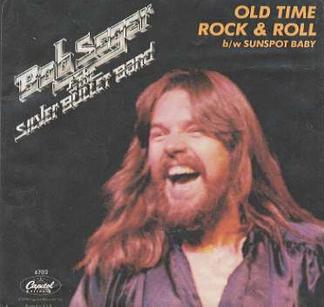
“Old Time Rock & Roll,” Bob Seger and The Silver Bullet Band, 1978
R&B songwriter George Jackson had been writing and producing for the Muscle Shoals Sound Studio when he wrote “Old Time Rock and Roll” as an affectionate throwback to the original rock and roll sound. In 1978, Seger was in the process of recording “Stranger in Town,” the follow-up to his breakthrough “Night Moves” LP, when he heard the Muscle Shoals demo of the song. Recalls Seger, “I loved it, especially the chorus, but I wrote some new lyrics for the verses about not wanting to go to a disco, which struck a chord with the rock crowd. I never asked for a co-writer credit, probably the dumbest thing I ever did.” It reached #19 in UP pop charts and was used prominently in an iconic scene from the Tom Cruise film “Risky Business” in 1983: “I like that old time rock and roll, that kind of music just soothes the soul, I reminisce about the days of old with that old time rock and roll…”
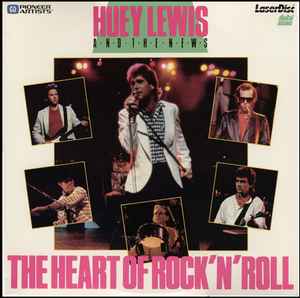
“The Heart of Rock and Roll,” Huey Lewis and The News, 1984
In 1983, Lewis had just performed before a rabid crowd in Cleveland, and as the band drove out of town afterwards, he commented, “You know what? The heart of rock and roll is in Cleveland!” He and his band started formulating the track a week later, but as they began recording it, the record label encouraged him to change the lyrics to include multiple US cities to broaden the song’s appeal beyond Cleveland. He ended up focusing on New York and Los Angeles, also mentioning Boston, San Francisco, Austin, Seattle and Detroit, among others, but he retained his original thought near the end with these words: “Now the old boy may be barely breathing, but the heart of rock and roll, the heart of rock and roll is still beating…in Cleveland…”

“So You Want To Be a Rock ‘N’ Roll Star,” The Byrds, 1967
Roger McGuinn and Chris Hillman, founding members of The Byrds, came up with this good-natured swipe at the success of manufactured rock bands like The Monkees. “We were thumbing through a teen magazine and looking at all the unfamiliar faces and we couldn’t help thinking, ‘Wow, what’s happening? All of a sudden everyone and his brother are singing rock ‘n’ roll.’ So we wrote “So You Want to Be a Rock ‘n’ Roll Star” to the audience of potential rock stars, those who were going to be, or who wanted to be, and those who actually did go on to realize their goals.” Musically, the tune features a driving 12-string guitar by McGuinn, a relentless bass from Hillman, and guest trumpet by Hugh Masekela. They also added the sound of hysterical teenage pop fans screaming to drive the point home. It peaked at #29 on the pop charts in early 1967.

“I Can Play That Rock & Roll,” Joe Walsh, 1983
After his stint leading The James Gang, Walsh began his solo career in 1972 and had a few peaks and valleys throughout the ’70s and ’80s (“Rocky Mountain Way,” “Life’s Been Good,” “A Life of Illusion”) while also being recruited to join The Eagles. By 1983, The Eagles had disbanded, and Walsh put out “You Bought It, You Name It,” an eclectic collection of mostly original songs, some with his trademark amusing lyrics. The album kicks off with “I Can Play That Rock & Roll,” a quintessential Walsh rocker that has him ruminating on other popular musical styles but not particularly worried whether he still fits in: “Well, that disco thing can sure get funky, all them pretty songs seem too slow, /I like to sit and pick with them good old boys, maybe New Wave’s in, I just don’t know, /When the critics try to analyze the current trend, I just sit back and watch ’em come and go, /’Cause I can play that rock and roll…“

“Rock ‘n’ Roll is King,” Electric Light Orchestra, 1983
Jeff Lynne fashioned Electric Light Orchestra to be a rock band using orchestral instruments, and the group became a huge concert favorite, selling many albums and singles in the process. By 1983, ELO’s career arc was winding down, but their LP “Secret Messages” had one last Top 20 hit, which began life as “Motor Factory” with a different set of lyrics about factory work. Lynne had enjoyed returning to his rock and roll roots on their previous album with the Top Ten single “Hold On Tight,” so he chose to try it again by reworking “Motor Factory” into the revival tune “Rock ‘n’ Roll is King,” which managed to reach #19: “She loves that rock ‘n’ roll, and she plays it all night long, /Aw, that’s all she ever tells me when I call her on the telephone, /She says, ‘Feel that jumpin’ beat, and get up on your feet,’ /She says, ‘Whamalamabamalama, rock ‘n’ roll is king’…”
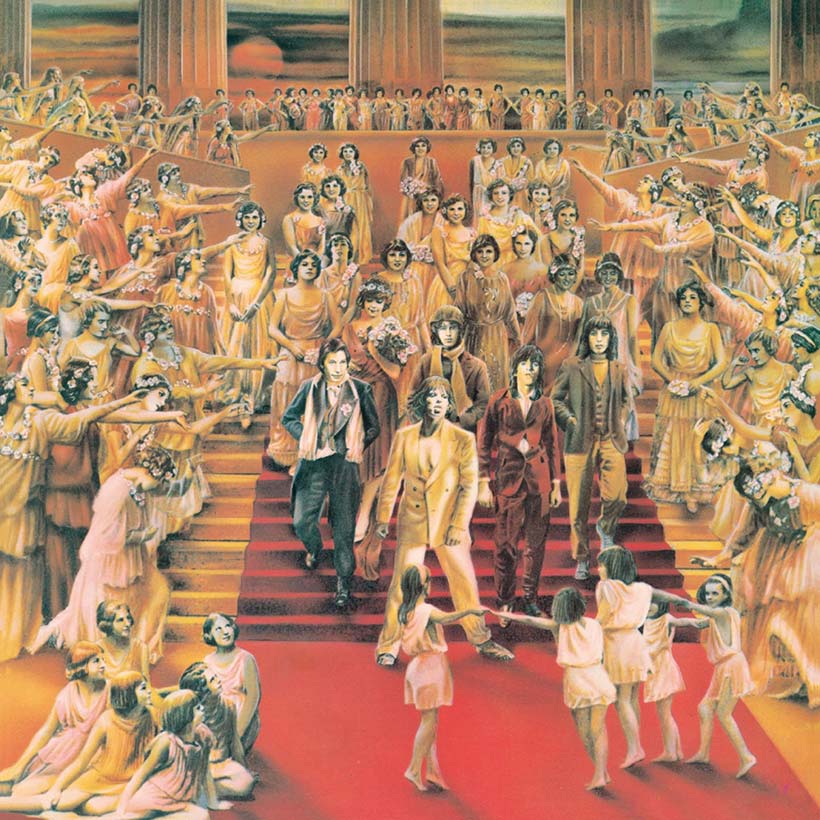
“It’s Only Rock ‘n’ Roll (But I Like It),” The Rolling Stones, 1974
This classic Stones tune was instrumental in precipitating the personnel switch that occurred when guitarist Mick Taylor left and Ronnie Wood took his place in 1974-75. The track was recorded at Wood’s home studio in London, and both Mick Jagger and Keith Richards were adamant that the song had to be the group’s next single (and the title for the album as well). “The idea of the song had to do with our public persona at the time,” said Jagger. “I was getting a bit tired of people having a go, all that, ‘oh, it’s not as good as their last one’ business. I think the song is great. The title alone is a classic.” They were chagrined that the song managed only #16 in the US, but frankly, I’ve never considered it among their top-shelf stuff.
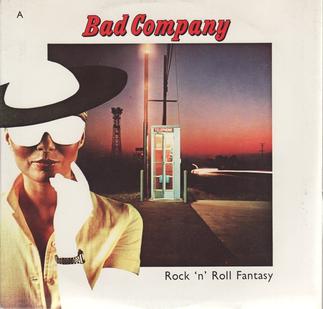
“Rock ‘n’ Roll Fantasy,” Bad Company, 1979
Paul Rodgers, formerly lead singer for Free in the early ’70s, joined forces with guitarist Mick Ralphs of Mott the Hoople in 1974 to form Bad Company, who became a significant mainstream rock success for the next decade with four Top Five albums and several hit singles (“Can’t Get Enough,” “Feel Like Making Love,” “Shooting Star,” “Burnin’ Sky”). From the group’s fifth LP, 1979’s “Desolation Angels,” Rodgers wrote this song about the joys of performing rock music to an appreciative audience. Rodgers is often ranked among the better rock vocalists of his era, and he was certainly in fine voice for this track, which reached #13 in the US: “Put out the spotlights, one and all, and let the feeling get down to your soul, /The music’s so loud, you can hear the sound reaching for the sky, churning up the ground, /It’s all part of my rock ‘n’ roll fantasy…”
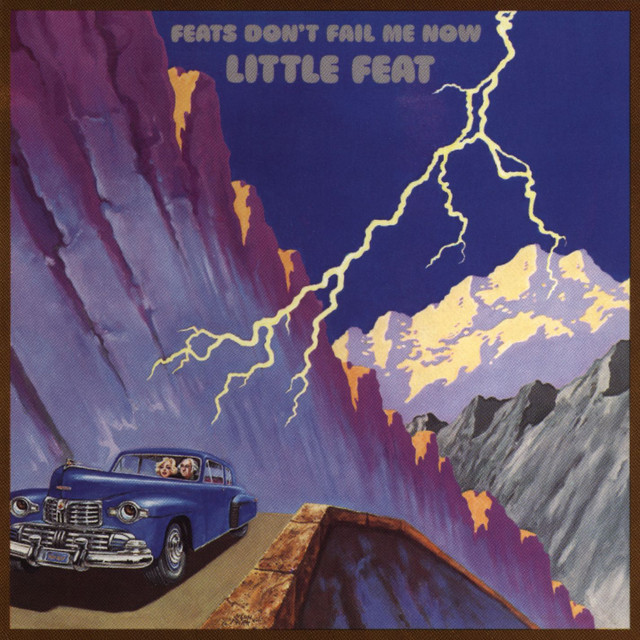
“Rock and Roll Doctor,” Little Feat, 1974
The late great Lowell George, who formed Little Feat in 1970, wrote or co-wrote most of the band’s songs before and after the lineup was expanded in 1973 to include guitarist Paul Barrere, percussionist Sam Clayton and bassist Kenny Gradney. One of the group’s classic LPs, 1974’s “Feats Don’t Fail Me Now,” is kicked off with George’s sly tune “Rock and Roll Doctor,” which uses the familiar metaphor of how rock and roll is the right medicine for whatever ails you, as long as you see the right person: “Patients come…from miles around…to meet the doctor of soul, he’s got his very own thing, /Two degrees in be-bop, a PHD in swing, /He’s the master of rhythm, he’s a rock and roll king, /If you wanna feel real nice, just ask the rock and roll doctor’s advice…”
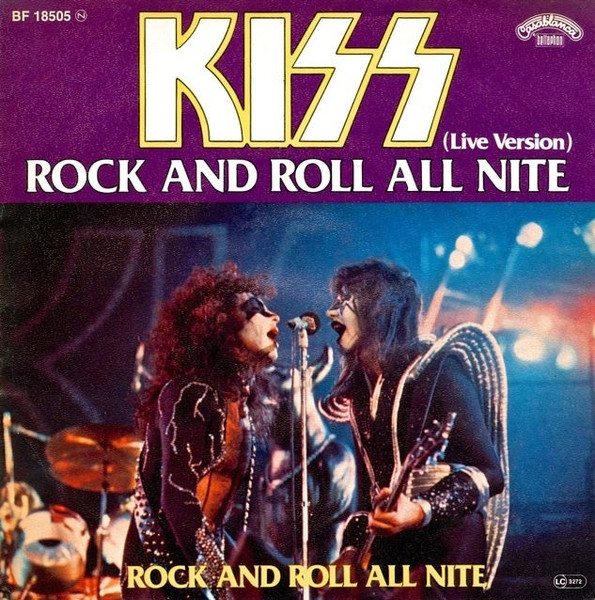
“Rock and Roll All Nite,” Kiss, 1975
I’ve never been all that wild about it, but it’s ranked in the Top 20 hard rock songs of all time, so how could I leave it off this list? In 1975, Kiss’s record label insisted they needed to write an anthem that would generate more airplay and sales, so Gene Simmons and Paul Stanley borrowed parts of a song they’d written called “Drive Me Wild” and used some chord progressions from a Slade track called “Mama Weer All Crazee Now” and made it the closing tune for their third LP, “Dressed to Kill.” It didn’t do much when released as a single, but when a live version was re-released later in 1975, it eventually peaked at #12 on the pop charts and became the group’s signature song, serving as their closing number in concert at every show thereafter: “You say you wanna go for a spin, the party’s just begun, we’ll let you in, /You drive us wild, we’ll drive you crazy, you keep on shouting, /’I wanna rock and roll all night and party every day…”
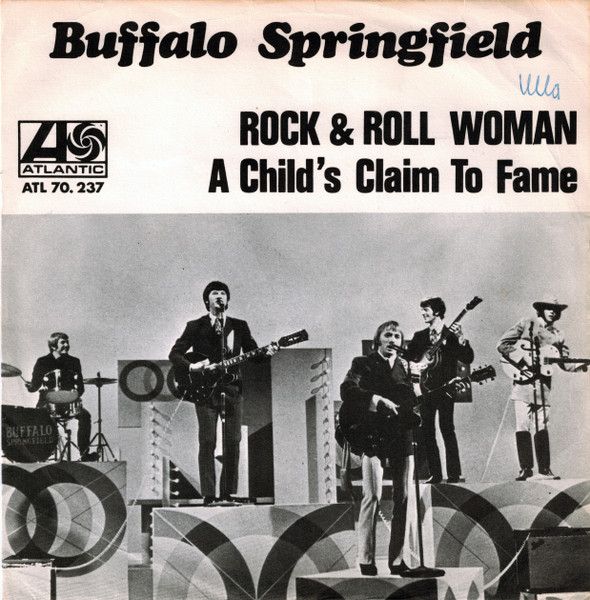
“Rock & Roll Woman,” Buffalo Springfield, 1967
Stephen Stills has written plenty of great rock songs in his career, from “For What It’s Worth” and “Carry On” to “Love the One You’re With” and “Southern Cross,” but one of my early favorites is this delightful track (written about no one in particular, he insists) from Buffalo Springfield’s excellent “Buffalo Springfield Again” album. Between Stills, Neil Young and Richie Furay, that band was packed with inventive songwriters, and if only their egos hadn’t gotten in the way, they might’ve stuck together for more than just two years. At least they left us tracks like “Rock & Roll Woman,” brimming over with great guitars and voices: “There’s a woman that you ought to know, and she’s coming, singing soft and low, /Singing rock and roll, she’s a joy to know…”
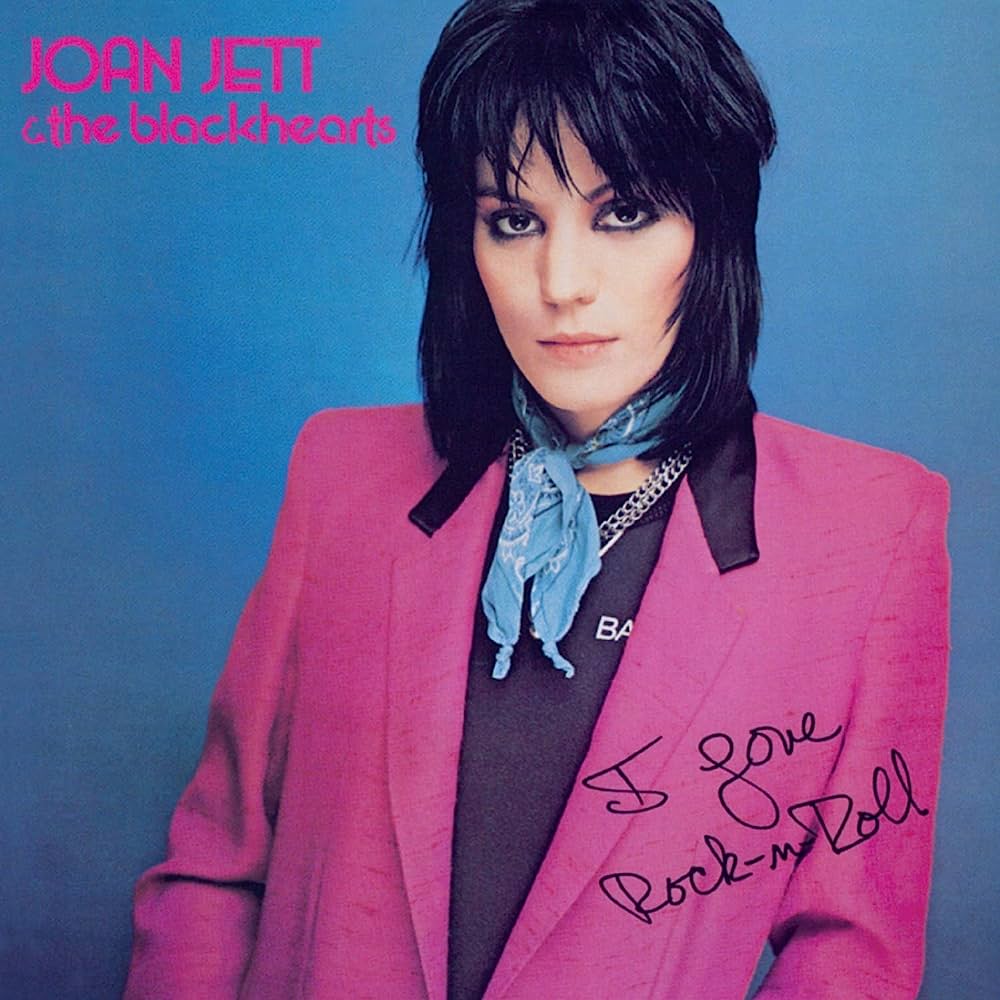
“I Love Rock ‘N Roll,” Joan Jett and The Blackhearts, 1982
This hugely popular anthem of the ’80s was written and first recorded in 1975 by Alan Merrill and Jake Hooker from the UK rock band The Arrows, whose version was heard by Joan Jett when she was touring England with her first band, The Runaways. Jett eventually left that group and formed her own band, The Blackhearts, who recorded their sneering, riffy rendition of the song in 1981, and it ended up holding the #1 spot on the charts for seven weeks in 1982. The lyrics are dated (“Put another dime in the jukebox, baby”), but they describe a universal teen feeling of sexual longing and how rock music feeds it: “I saw him dancin’ there by the record machine, I knew he must’ve been about 17, /The beat was goin’ strong, playin’ my favorite song, /And I could tell it wouldn’t be long ’til he was with me, yeah, me, singin’ ‘I love rock ‘n roll’…”

“Rock and Roll Heaven,” The Righteous Brothers, 1974
Songwriters Alan O’Day and Johnny Stevenson wrote this tribute to dead rock stars in 1973, focusing on Jimi Hendrix, Janis Joplin, Otis Redding and Jim Morrison. The band Climax, who’d had a big hit with “Precious and Few” the previous year, recorded “Rock and Roll Heaven” first, but it failed to chart. The Righteous Brothers, who had broken up after a successful run in 1963-1969, chose to record the song as their comeback single, and it reached #3 in the summer of 1974 with an extra verse that included references to Jim Croce and Bobby Darin, who had both died just a few months earlier. Twenty years later, an updated version (“Rock and Roll Heaven ’92”) was released that mentioned Elvis Presley, John Lennon, Roy Orbison, Marvin Gaye, Cass Elliott and others. Seems like we could keep writing additional verses every year now.

“Rock and Roll, Hoochie Koo,” Rick Derringer, 1973
Derringer had been a member of bluesman Johnny Winter’s band in 1970 when he wrote this tune for Winter’s fourth album. Said Derringer, “The title refers to ‘Rock and Roll’ to satisfy the rock ‘n’ roll that I was supposed to be bringing into the picture, and ‘Hoochie Koo’ to satisfy the ‘king of blues’ sensibility that Johnny was supposed to maintain. So I think it did that.” Derringer then re-recorded it for his debut solo LP, “All-American Boy,” in 1973, and it reached #23 on the US pop charts: “I hope you all know what I’m talkin’ about, /The way they wiggle that thing really knocks me out, /I’m gettin’ high all the time, hope you all are too, /C’mon a little closer, gonna do it to you, /Rock and roll, hoochie koo, /Lawdy mama, light my fuse…”
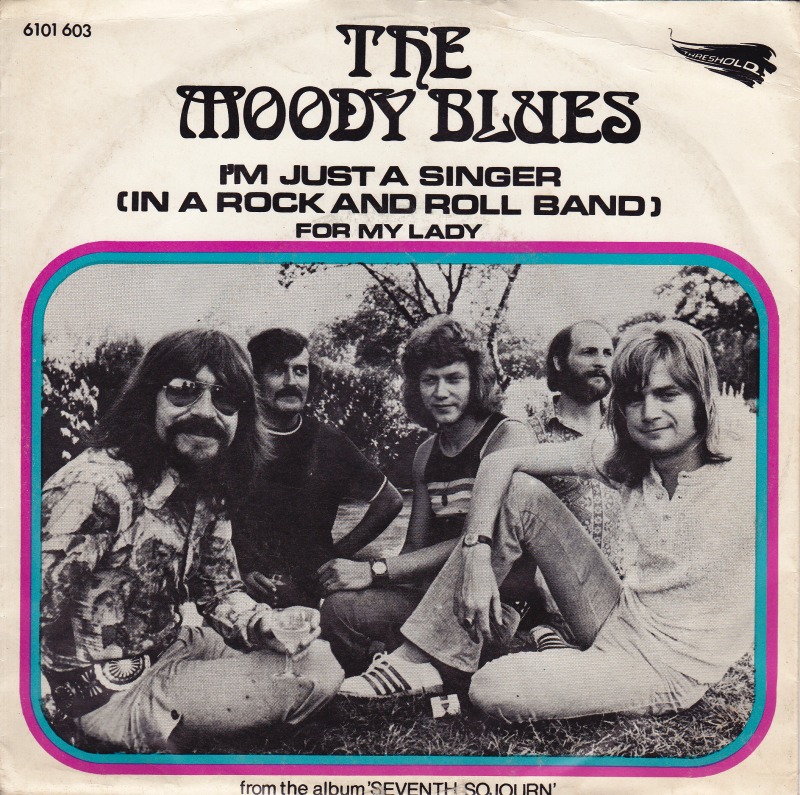
“I’m Just a Singer (In a Rock and Roll Band),” The Moody Blues, 1972
Leave it to The Moodies, one of more serious-minded bands of its day, to put the importance of rock and roll in some sort of sensible perspective. On the last song of their seventh LP, the #1 album “Seventh Sojourn,” bassist John Lodge wrote some typically cosmic lyrics about the precarious state of society and the planet, suggesting that wise people, not rock-and-rollers, need to address these issues. “So if you want this world of yours to turn about you, and you can see exactly what to do, /Please tell me, I’m just a singer in a rock and roll band…” The track reached #12 on the US pop chart in early 1973, their last appearance here for nearly ten years.

“A Rock ‘n’ Roll Fantasy,” The Kinks, 1978
It was a period of upheaval for The Kinks in 1977-78 during the making of their “Misfits” album, as bassist Andy Pyle and pianist John Gosling left and drummer Mick Avory was on the fence. Brothers Ray and Dave Davies considered disbanding the group, but as Dave put it, “We got together like we had so many times before, playing Chuck Berry records and having a laugh, and two songs came out of it, including ‘A Rock ‘n’ Roll Fantasy,’ which put us back on track.” Said Ray, “That song was a very personal song for me, inspired by the death of Elvis Presley. I created a character who, whenever he feels unhappy, goes off to live in a rock and roll fantasy.” The song ended up reaching #30 on US pop charts in 1978, their biggest hit in nearly a decade.

“Cities on Flame With Rock and Roll,” Blue Oyster Cult, 1972
This fiery track from Blue Oyster Cult’s debut LP, written by guitarist Donald “Buck Dharma” Roeser and drummer/vocalist Albert Bouchard, draws a parallel between nuclear war and the powerful force of rock and roll (“Three thousand guitars, they seem to cry,, my ears will melt and then my eyes, /My heart is black, and my lips are cold, cities on flame with rock and roll…”). Roeser said the guitar riff is based on the riff used in “The Wizard,” one of his favorite Black Sabbath tracks. As a single, it failed to chart, and the album also struggled to reach the charts at first, but “Cities on Flame” evolved into a concert favorite. Bassist Joe Bouchard recalls, “I couldn’t believe we were in the studio at Columbia making a rock record. I know we were all tremendously excited to be working on that album, and it sounds like it.”
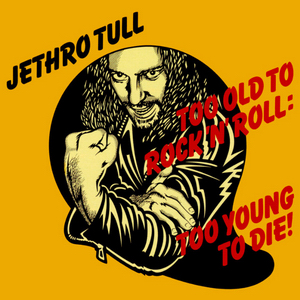
“Too Old to Rock ‘N’ Roll, Too Young to Die,” Jethro Tull, 1976
Frontman/songwriter Ian Anderson said this song, and the album it comes from, were inspired by a turbulent flight which he feared was not going to arrive safely, and it made him think, “Well, I may be too old to rock and roll, but I’m certainly too young to die.” He then wrote lyrics concerning an aging rocker who refused to change with the times, and made it the centerpiece of a rock musical (never produced).
“The point was that genres of music may go out of style like fashions and fads, but everything eventually comes back around again (like vintage rock and roll),” said Anderson. The song didn’t do well on the charts, but Tull played it regularly in concert for decades: “The old rocker wore his hair too long,
wore his trouser cuffs too tight… /But he’s the last of the blue blood greaser boys, all of his mates are doing time… /Now they’re too old to rock ‘n’ roll and they’re too young to die…”

“Rock and Roll is Here to Stay,” Danny and The Juniors, 1958
This vocal group from Philadelphia are most widely recognized for their 1957 #1 hit “At the Hop” (later covered at Woodstock by Sha Na Na). As a groundswell of conservative radio people began attacking rock and roll as “immoral” and “undesirable,” group leader Danny Rapp penned this tune in defense of the new musical trend. Danny and The Juniors recorded “Rock and Roll is Here to Stay” and watched it reach #19 on US pop charts as the follow-up to “At the Hop.” The song enjoyed a second life in 1978 when it was performed in the pivotal film version of “Grease” by a band calling themselves Johnny Casino and The Gamblers.
********************************
Honorable mentions:
“Rock ‘n’ Roll High School,” The Ramones, 1980; “I’ve Got a Rock ‘n’ Roll Heart,” Eric Clapton, 1983; “Sex & Drugs & Rock & Roll,” Ian Dury, 1977; “It’s Still Rock and Roll to Me,” Billy Joel, 1980; “I Dig Rock and Roll Music,” Peter Paul and Mary, 1967; “Rock and Roll Girls,” John Fogerty, 1985; “Rock & Roll,” Velvet Underground, 1970; “Rock & Roll Band,” Boston, 1976; “Rock ‘N’ Roll Suicide,” David Bowie, 1972; “Flying Saucers Rock & Roll,” Robert Gordon, 1977; “Rock ‘N’ Roll Stew,” Traffic, 1971; “God Gave Rock and Roll to You,” Argent, 1973; “Strictly R&R,” Atlanta Rhythm Section, 1979; “Rock ‘N’ Roll Is Music Now,” James Taylor, 1974; “Rock and Roll Lullaby,” B.J. Thomas, 1972; “Rock ‘N Roll Soul,” Grand Funk, 1972; “Rock and Roll Madonna,” Elton John, 1970; “You Can’t Kill Rock and Roll,” Ozzy Osbourne, 1981.
*********************************




 Hack's Back Pages