Music’s here for us to love each day

Come join me as I take another deep dive into my vinyl collection for another dozen “lost classics” — great songs from the ’60s, ’70s and ’80s that you’ve forgotten about or have never heard before. I invite you to check out the Spotify playlist at the end so you can listen along as you read a little history behind each track. Enjoy!

***************************

“Lord Grenville,” Al Stewart, 1976

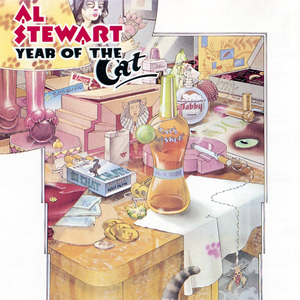
In the late ’60s and early ’70s, Stewart developed a singular style of combining folk-rock songs with intricately woven lyrics of characters and events from history. By 1976, he hit pay dirt with “Year of the Cat,” a stunning LP of songs that put Stewart’s evocative, globe-trotting narratives in the capable hands of Alan Parsons and his panoramic production. The title tune became a Top Ten hit in the US in 1977, and the album reached #5 on the strength of mystery-laden tracks like “On the Border,” “One Stage Before,” “Flying Sorcery” and the regal-sounding “Lord Grenville,” a nautical tale of retreat and regret carried by Stewart’s vocals and the guitar work of Tim Renwick and Peter White.

“White Lies,” Nils Lofgren and Grin, 1972

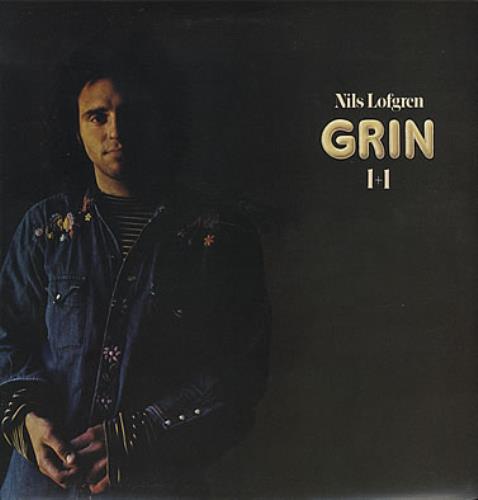
Since 1984, Lofgren has played second guitar in Bruce Springsteen’s E Street Band, but in the early ’70s when Lofgren was just 19, he became a musical collaborator with Neil Young on his first few solo LPs, especially “After the Gold Rush.” Between 1971 and 1974, Lofgren headed up a band called Grin, who released four critically acclaimed LPs of catchy hard rock, written and sung by Lofgren, but inexplicably, they barely made the charts. His solo albums in the late ’70s reached as high as #36 (“Cry Tough”). From “1+1,” Grin’s second album, “White Lies” became a regional hit in Washington D.C. and a few other pockets in the Northeast and Midwest.

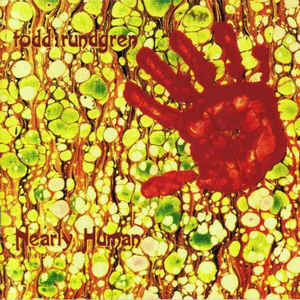
“Unloved Children,” Todd Rundgren, 1989

Rundgren has been one of the most prolific rockers of the past 50 years, releasing nearly 40 albums as a solo artist or with his band Utopia. He has had only modest commercial success, but many critics and a fiercely loyal fan base have sung his praises for decades. One of his most underrated efforts came in 1989 with “Nearly Human,” a strong set of songs dealing with loss, self-doubt, jealousy and spiritual recovery. In the solid rocker “Unloved Children,” Rundgren takes aim at abusive people who become negligent parents but keep having more kids anyway: “We can prescribe for pain, have her declared insane, even all this won’t change violent men, hard-headed women, unloved children…”

“In For the Night,” Sanford-Townsend Band, 1976

This singing-songwriting duo from Texas had co-written a few songs with Kenny Loggins that ended up on the final Loggins and Messina LP, “Native Sons.” The twosome’s recording debut, which included the Top 20 hit “Smoke From a Distant Fire,” included at least a half-dozen fine soulful tracks that rock, including “Shake It to the Right,” “Does It Have to Be You” and “Oriental Gate.” Even better than those was “In For the Night,” an irresistible tune with killer horn arrangements and a great vocal from John Townsend. The duo’s recording career petered out after two lackluster follow-ups, after which they resumed their positions as staff songwriters for Columbia Records.

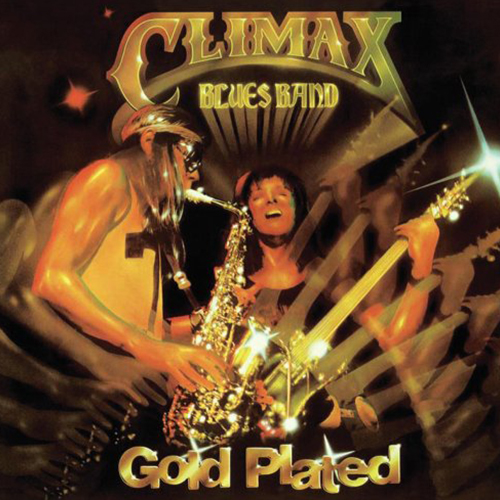
“Couldn’t Get It Right,” Climax Blues Band, 1976

For six years in the 1970s, this British blues rock band continued to release albums of original material that drew a small fan base in the UK, but they made little impression on US charts. Then in 1976, as they were completing their eighth LP, “Gold Plated,” their manager, Miles Copeland III, insisted they add a “radio-friendly song, maybe cover an Elvis Presley number.” The band blanched at that idea, and instead wrote a song “out of thin air” in the studio, based on a serendipitous rhythm and a guitar riff with the lyric, “Looking for a sign in the middle of the night.” That turned into “Couldn’t Get It Right,” which reached #3 in the US in 1977 and helped push “Gold Plated” to #27 on US album charts.

“Long Long Time,” McGuinn, Clark and Hillman, 1979

These three veterans of the folk rock movement in the ’60s, as founding members of The Byrds, reunited in the ’70s to give it another go. The trio was hoping to capitalize on the vibe heard on Crosby, Stills and Nash’s “CSN” album in 1977, which was a reasonable goal, since all three of these guys were fine songwriters with excellent blended vocals. But McGuinn’s trademark 12-string guitar was nowhere to be found, replaced by a polished pop groove more in keeping with the disco sound that still reigned in the late ’70s. The album fared reasonably well, but the single, “Don’t You Write Her Off,” stalled at #33. To my ears, “Long Long Time” was the best track.

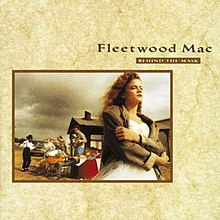
“Behind the Mask,” Fleetwood Mac, 1990

During this band’s 1975-1987 heyday, new singer-songwriters Lindsay Buckingham and Stevie Nicks got much of the attention, and deservedly so, but alongside these two powerhouse talents was Christine McVie, the keyboardist/vocalist whose songs are arguably better, and were usually the ones that became their hit singles (“Say You Love Me,” “Don’t Stop,” “You Make Loving Fun,” “Little Lies”). After Buckingham left in ’87, the next LP, “Behind the Mask,” met with mixed reviews and stalled on the charts. Again, it was McVie’s songs that proved to be the album’s best; her pop rocker “Save Me” got the airplay, but I submit that the haunting title track may be one of her finest songs ever.

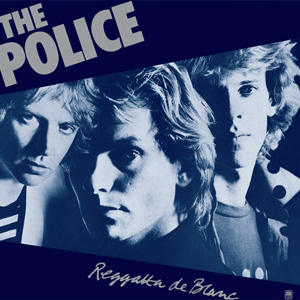
“The Bed’s Too Big Without You,” The Police, 1979

Of all the British bands who came out of the New Wave movement in the late ’70s, The Police showed the most promise. The trio, consisting of Andy Sommers on guitar, Stewart Copeland on drums and the multi-talented Sting on bass and vocals, dabbled in punk, reggae and rock, coming up with memorable hits like “Roxanne” and “Message in a Bottle.” They would evolve into a smoother style by the time of their fifth and final album, 1983’s “Synchronicity,” but fans like me always returned to the “Regatta de Blanc” and “Zenyatta Mondatta” LPs. In particular, the engaging rhythm and sublime vocals on “The Bed’s Too Big Without You” showcased The Police at their best.

“Home Town,” Joe Jackson, 1985

I found it interesting that a perfectionist like Joe Jackson would record 15 new songs not in a studio but in a New York theater in front of a live audience who agreed to remain silent until each take was completed. The resulting LP, “Big World,” is an extraordinary work that explores a cornucopia of world rhythms and provocative topics. Tracks such as “Right and Wrong,” “Soul Kiss,” “We Can’t Live Together” and “Tonight and Forever,” really shine, but I’m crazy about “Home Town,” a wonderfully tuneful piece that strikes a chord with folks who find themselves longing for the old neighborhood and memories of the place where they grew up.

“Harpo’s Blues,” Phoebe Snow, 1974

Snow’s gift was her voice, a bluesy growl with alternating nasal tones and an alluring smoothness, all packaged in an impressive four-octave range. From her 1974 debut LP, radio audiences couldn’t get enough of “Poetry Man,” which reached #5 in early 1975. I was more partial to the poignant, jazzy “Harpo’s Blues,” on which Snow imagines the things a childlike person like Harpo Marx might wish to be, and why. It then concludes with “but I’d hate to be a grown-up and have to try to bear my life in pain…” She could sing and write almost anything, from R&B and gospel to jazz and folk, and did some high-profile duets, like “Gone at Last” with Paul Simon.

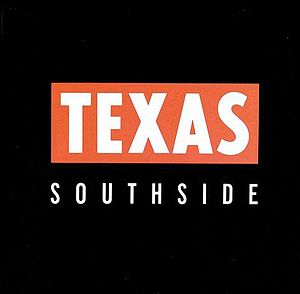
“Everyday Now,” Texas, 1989

This is one of those bands that had spectacular success in their native UK but are virtual unknowns in the US, even though they called themselves Texas! Led by guitarist/songwriter Johnny McElhone and lead singer Sharleen Spiteri, the group reached #3 with their debut, “Southside,” scored two #1 albums in England and several European countries in the late 1990s and are still making waves on the charts as recently as this year. I don’t recall where I first heard Texas’s music, but “Southside” got a little airplay in the US in 1989, mostly the single, “I Don’t Want a Lover,” but as usual I was drawn to a deeper track called “Everyday Now,” with its stuttering rhythm and engaging vocals.

“Don’t Talk,” 10,000 Maniacs, 1987

I remember being mesmerized by singer Natalie Merchant’s matter-of-fact vocal style when I first heard 10,000 Maniacs’ “In My Tribe” LP in 1987. There were a lot of great songs too, which alternative radio played incessantly, but mainstream radio didn’t really embrace the band (until they recorded a live cover version of the Bruce Springsteen/Patti Smith tune “Because the Night” in 1993, which reached #11). Do yourself a favor and check out the smart tracks on “In My Tribe,” like “Hey Jack Kerouac,” “My Sister Rose,” “What’s the Matter Here?” and a rendition of the Cat Stevens classic “Peace Train.” I’m also drawn to the gauzy guitar sound on “Don’t Talk.”

*******************************
They say there’s always magic in the air

I’ve always been fascinated by magic tricks, magicians and magic shows. It’s a tradition that’s been around for centuries. Unlike some folks, I’m not interested in finding out how a magic trick works. I might say, “How’d he do that?”, but I don’t really want to know. For me, that spoils the fun of it. It shatters the illusion that makes it so entertaining in the first place.

When we say “there’s magic in the air” or “it was a magical day,” we’re buying into the idea that something truly special is present, something unknown, or unknowable, something mystical, supernatural, otherworldly. It’s exciting to contemplate!

It’s a great topic for songwriters too. I found a couple dozen songs with magic in the title in the classic rock realm, and I’ve selected 15 to examine more closely. My Spotify playlist at the end includes these 15 selections plus another eight as “honorable mentions.”

******************************

“Do You Believe in Magic,” The Lovin’ Spoonful, 1965

Singer-songwriter John Sebastian and his band made a dramatic debut in mid-1965 with this effervescent tune about the seemingly magical power of music to bring happiness to those who make it as well as to those who listen to it. It reached #9 on US charts and became something of an anthem for the burgeoning rock ‘n’ roll community: “It’s magic if the music is groovy, it makes you feel happy like an old-time movie, /I’ll tell you about the magic, it’ll free your soul, but it’s like trying to tell a stranger ’bout rock and roll, /If you believe in magic, don’t bother to choose, if it’s jug band music or rhythm and blues, /Just go and listen, and it’ll start with a smile that won’t wipe off your face no matter how hard you try…”

“Magic,” The Cars, 1984

The Cars’ chief songwriter Ric Ocasek wrote this fun tune about how relationships can sometimes survive and thrive if they have just a touch of something undefinable, something…well, magical: “Uh oh, it’s magic when I’m with you, uh oh, it’s magic, just a little bit of magic pulls me through, /Uh oh, it’s magic, just a little magic inside of you…” The song, the second of five Top 40 singles from the group’s “Heartbeat City” LP, reached #12 in 1984. The band released a popular music video for “Magic” as well, featuring a cast of comically eccentric characters gathered around a swimming pool marveling at Ocasek, who seemed to be walking on the surface of the water. When some tried to walk on water, they fell in, but Ocasek remains standing and dry because…it’s magic!

“Magic Man,” Heart, 1976

When Ann and Nancy Wilson co-wrote this early hit for their band Heart, Ann explained it was autobiographical in nature. At the time, she was mesmerized by her new boyfriend and his alluring ways, referring to him as a “magic man” with strong charms: “I could not run away, it seemed we’d seen each other in a dream, /It seemed like he knew me, he looked right through me…” She said her mother was concerned, but Ann replied, “Try try try to understand, he’s a magic man, mama, aww yeah, he got the magic hands…” “Magic Man” was Heart’s first Top Ten hit, peaking at #9 in 1976. The album version was more than two minutes longer than the edited single, thanks to lengthy guitar and synthesizer solos.

“Every Little Thing She Does is Magic,” The Police, 1981

Sting wrote this tune back in 1976 before The Police had formed, and made a demo of it by himself. Several years later, as the band was recording their fourth LP, “Ghosts in the Machine,” Sting resurrected this song “even though it seemed a bit soft for the band at first, but still, it sounded like a No. 1 song to me.” The trio tried recording it anew with a different arrangement more like typical Police material, but in the end, they used Sting’s demo and grafted new drums and guitar parts on top, as well as a new piano track by Jean Roussel. The song, which reached #3 in the US in 1981, explores the feelings of a shy man hesitant to approach the woman he admires: “Every time that I come near her, I just lose my nerve as I’ve done from the start, /Every little thing she does is magic, everything she do just turns me on…”

“Magic Dance,” David Bowie, 1986

For “Labyrinth,” the 1986 musical fantasy film by Jim Henson (in which Bowie starred as Jareth, king of the goblins), Bowie wrote and recorded five songs, the best of which was “Magic Dance,” sometimes called “Dance Magic.” It’s a crazy-fun uptempo tune that was used in a scene where Jareth and his goblins try to entertain a crying baby. Critics have called it “one of Bowie’s most playful and underrated songs” that “has the ability to reinvigorate a dying party nearly 40 years later.” The lyrics overtly refer to magic spells but retain a lighthearted touch: “What kind of magic spell to use?, /Slime and snails or puppy dogs’ tails, thunder or lightning, something frightening, /Then baby said, dance magic dance, put that baby spell on me, jump magic jump…”

“Magic Carpet Ride,” Steppenwolf, 1968

This may come as a surprise to many who have regarded this classic rock song as a stoner anthem, but Steppenwolf singer-lyricist John Kay claims that’s not the case. He said he was merely writing about his brand new high-quality stereo system (“Close your eyes, girl, look inside, girl, let the sound take you away…”) and how the music could magically transport him and his new wife as if they were on Aladdin’s magic carpet: “Last night I held Aladdin’s lamp,
and so I wished that I could stay… Well, you don’t know what we can find, why don’t you come with me, little girl, on a magic carpet ride…”
Thanks to an undeniably catchy riff and strong vocals, “Magic Carpet Ride” reached #3 and proved to be a worthy follow-up to Steppenwolf’s iconic debut, “Born To Be Wild.”

“Spanish Castle Magic,” Jimi Hendrix Experience, 1967

Hendrix grew up in Seattle, and one of the things he enjoyed doing during his high school years in the late ’50s was driving out to a roadhouse an hour south of the city, where he could sneak in under age to watch great live music. The place he recalled fondly was called The Spanish Castle, and he ended up writing about it (somewhat cryptically) in “Spanish Castle Magic,” a track that appeared on his second album with The Experience, “Axis: Bold As Love,” released in late 1967. “It’s very far away, it takes about half a day to get there, if we travel by my dragonfly, /No it’s not in Spain, but all the same, you know, it’s a groovy name, /Hang on my darling, yeah, hang on if you want to go, /It puts everything else on the shelf, with just a little bit of Spanish castle magic, yeah baby…”

“This Magic Moment,” Jay and The Americans, 1968

Lyricist Doc Pomus and pianist Mort Shulman were songwriting collaborators on two dozen Top 40 hits in the late ’50s and early ’60s, including The Drifters’ #1 smash “Save the Last Dance for Me,” Dion & The Belmonts’ “A Teenager in Love,” and “Surrender,” “Little Sister” and “Viva Las Vegas” for Elvis Presley. Another hit for The Drifters was “This Magic Moment,” which charted even higher when recorded in 1968 by Jay and The Americans, reaching #6. The song’s lyric does a fine job of describing the special feeling when you experience a first kiss with someone: “Sweeter than wine, softer than the summer night, /Everything I want I have, whenever I hold you tight, /This magic moment while your lips are close to mine will last forever, forever ’til the end of time…”

“Magic Bus,” The Who, 1968

Pete Townshend wrote this madcap rocker in 1965 but cut only a demo of it. The Who would perform it live occasionally, but they didn’t record it until 1968 when they released it as a single, reaching #25 in the US. Townshend wrote it as a lark about a fellow who traveled by bus every day to visit his girlfriend, which sparked the idea that he ought to buy the bus so he could drive himself. Negotiations ensued until the bus driver gave in. So there wasn’t much that was magical about the bus, but it’s still a fun little track from one of Britain’s best-ever bands: “I don’t care how much I pay, /Too much, Magic Bus, I wanna drive my bus to my baby each day, /Too much, Magic Bus, /I want it, I want it, I want it, I want it, /You can’t have it!…Every day you’ll see the dust, as I drive my baby in my Magic Bus…”

“Black Magic Woman/Gypsy Queen,” Santana, 1970

Peter Green, blues guitarist/singer/songwriter who founded Fleetwood Mac back in 1968, wrote “Black Magic Woman” as a blues tune fashioned after the Otis Rush song “All Your Love.” It became modestly popular in the UK and was often featured in live performances even after Green left the group. In 1970, Carlos Santana and his band recorded a cover of the song as a blues/rock/jazz thing with congas, timbales and other Latin-based percussion, plus organ and piano, giving a voodoo feel to it. That version reached #4 in the US, propelling Santana’s second LP, “Abraxas,” to #1 in early 1971. The lyrics already gave Green’s song a black magic vibe: “Got your spell on me, baby, yes you got your spell on me, baby, turning my heart into stone, /I need you so bad, magic woman, I can’t leave you alone…”

“Magic,” Bruce Springsteen, 2007

Critics hailed The Boss’s LP “Magic” as high-energy rock in the tradition of Springsteen’s early albums with The E Street Band, and yet lyrically, there was a liberal dose of societal concern and melancholy, from “Your Own Worst Enemy” and “Radio Nowhere” to “Long Walk Home” and “Last to Die.” The title track offers examples of how magic tricks (illusion) are, like political maneuvering, just shiny diversions from the uncomfortable truth (reality): “Trust none of what you hear, and less of what you see, /This is what will be… /I got a shiny saw blade, all I need’s a volunteer, /I’ll cut you in half while you’re smilin’ ear to ear, /And the freedom that you sought’s drifting like a ghost amongst the trees, /This is what will be…”

“Little Miss Magic,” Jimmy Buffett, 1981

As the Seventies turned into the Eighties, party animal Buffett mellowed a bit and, with his second wife, had two daughters. For their first, named Savannah, he wrote the gentle, whimsical ballad “Little Miss Magic,” which appears as the final track on his 1981 LP “Coconut Telegraph.” He observes how his young daughter stares at things and might someday go on to do wondrous things. As any parent can tell you, babies are indeed magical, and Buffett wholeheartedly agrees: “Sometimes I catch her dreaming and wonder where that little mind meanders, /Is she down along the shore or strolling cross the broad Savannahs? /I see a little more of me every day, I catch a little more moustache turning grey, /Your mother is the only other woman for me, Little Miss Magic, what you gonna be?…”

“Puff, the Magic Dragon,” Peter, Paul & Mary, 1962

Based on a 1958 poem by Peter Yarrow’s college roommate, “Puff” was written by Yarrow in 1962 and became a #2 song on US charts in 1963. When overreachers claimed the song was about smoking weed, Yarrow said, “Oh, come on, people. It’s a children’s story about a boy and his friend the dragon. It’s about the loss of innocence when we grow up and move on from childhood concerns.” He added that Puff was a magic dragon to the boy because “to a young boy, everything is magical, especially dragons.” “Puff the magic dragon lived by the sea, and frolicked in the autumn mist in a land called Honah-Lee, /Together they would travel on a boat with billowed sail, Jackie kept a lookout perched on Puff’s gigantic tail…”

“I Was Made to Love Magic,” Nick Drake, 1969

Extremely talented but severely introverted, Drake released three albums in his short life and recorded additional tracks that were released posthumously, including this one called “I Was Made to Love Magic,” or more familiarly, just “Magic.” It had been intended for his debut LP in 1969 but was left off and later re-recorded twice with different orchestral string sections, finally seeing release on a 1987 compilation. His crippling depression that ultimately contributed to his death at only 26 was evident in the lyrics to several of his sad songs including “Magic”: “I was born to love no one, no one to love me, /Only the wind in the long green grass, the frost in a broken tree, /I was made to love magic, all its wonder to know, /But you all lost that magic many many years ago…”

“That Old Black Magic,” Sammy Davis Jr., 1955

“The Wizard of Oz” songwriter Harold Arlen teamed up with the great Johnny Mercer to write “That Old Black Magic” in 1942 for a flimsy musical wartime morale booster called “Star Spangled Rhythm.” The movie was nothing much, but the musical score and the Arlen/Mercer song were nominated for Oscars that year. It went on to become a standard, sung by numerous stars over the years like Judy Garland, Frank Sinatra, Louis Prima, Ella Fitzgerald, Bobby Rydell and, more recently, Rod Stewart. To my ears, the best arrangement was by Sammy Davis Jr., who had a #16 hit in 1955. Here’s a sample of the lyrics: “That old black magic has me in its spell, that old black magic that you weave so well, /Icy fingers up and down my spine, that same old witchcraft when your eyes meet mine…”

***************************

Honorable mentions:

Magical Mystery Tour,” The Beatles, 1967; “Magic Time,” Van Morrison, 2007; “Strange Magic,” Electric Light Orchestra, 1975; “You Can Do Magic,” America, 1981; “If It’s Magic,” Stevie Wonder, 1976; “Magic Woman Touch,” The Hollies, 1973; “Magic,” Pilot, 1975; “Me Wise Magic,” Van Halen, 1996; “Games of Magic,” Bread, 1972.

****************************