Sun’s coming up, watching it slowly set
There’s something about watching a sunrise or sunset that brings inner peace and serenity. For the past ten years, I have been fortunate to live on Santa Monica Bay, a gorgeous swath of Pacific coastline which essentially runs in an east-west direction instead of the north-south path that most of the California coast follows. This affords us the rare opportunity, at certain times of the year, to watch both the sunrise and the sunset over the ocean.
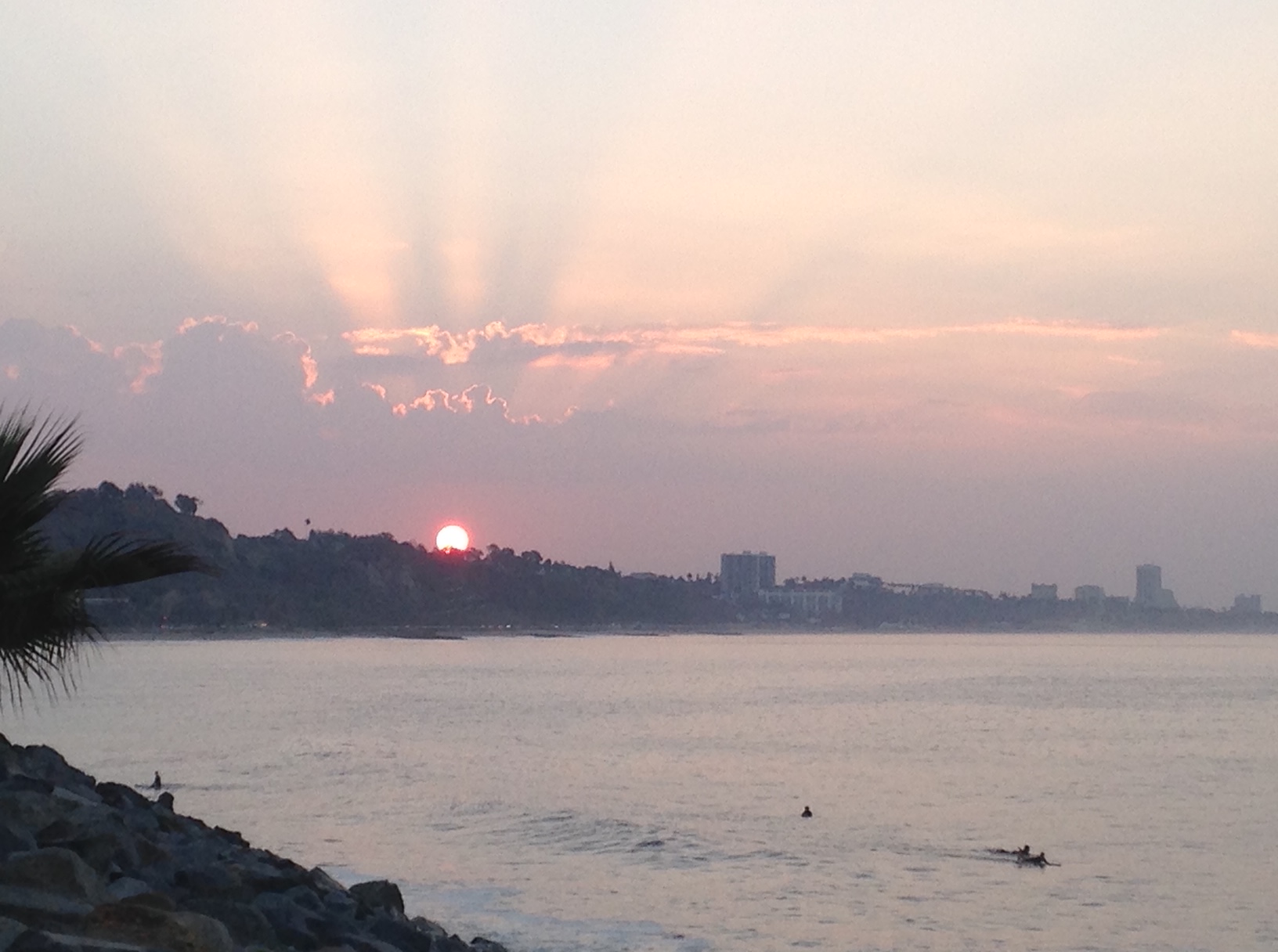
As an amateur photographer, I’ve taken hundreds of photos of sunsets (and a few sunrises) I’ve witnessed while living here, two of which I share with you.
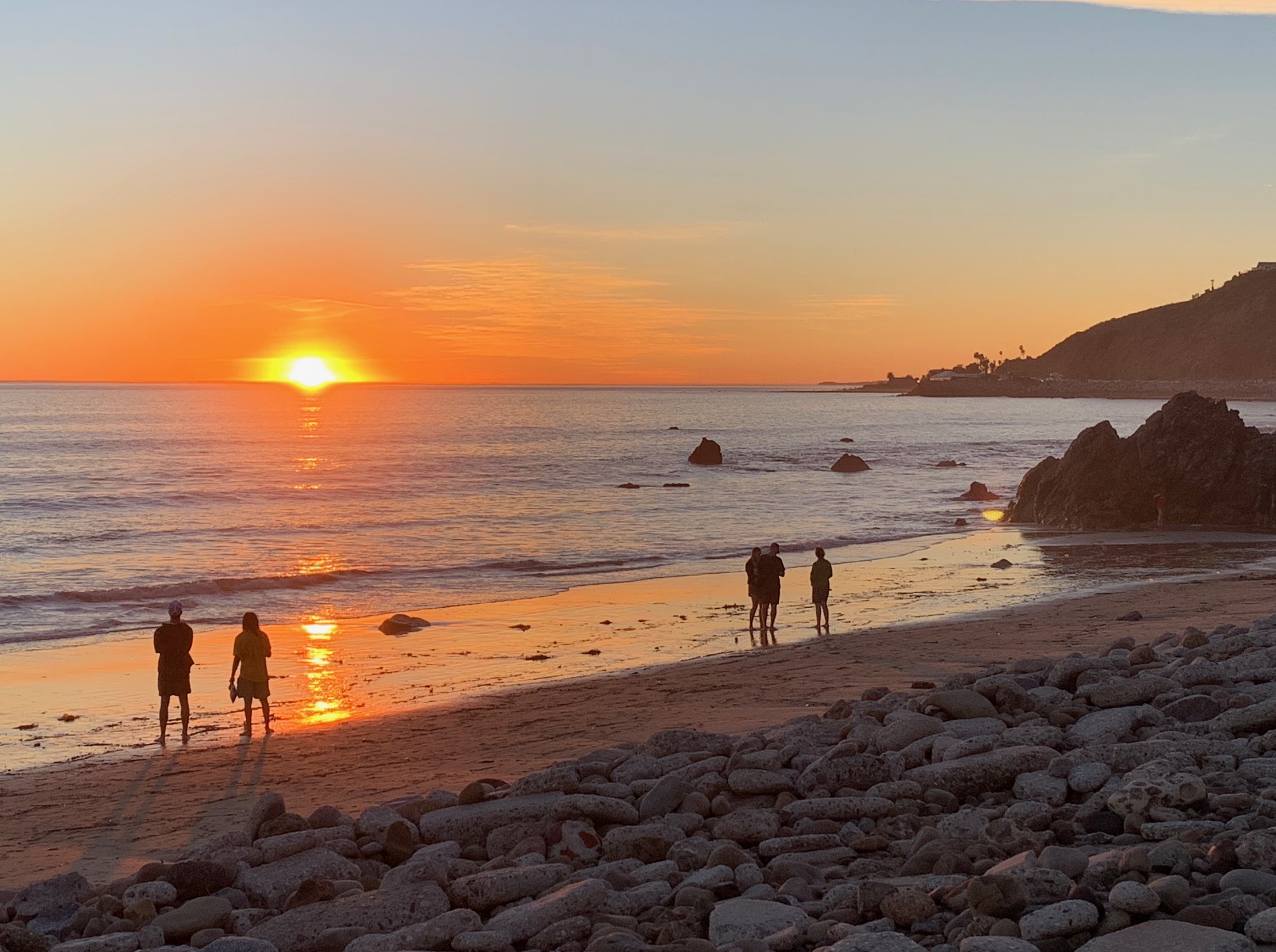
Both events can be spiritual experiences, offering inspiration and a comforting sense of life’s cyclical nature. Sunrises and sunsets have certainly energized songwriters through the years, which sent me on a search for songs about sunrises and sunsets. I came up with a diverse set of tunes, mostly from the ’60s, ’70s and ’80s but also a few from more recent years. I hope you find them appealing.
************************

“Sunrise,” Eric Carmen, 1975
Carmen attended a suburban Cleveland high school not too far from where I grew up, and led the marvelous power pop band The Raspberries through the 1970-1974 period. From his 1975 solo debut, the single “All By Myself” may have gotten most of the attention (along with the follow-up, “Never Gonna Fall in Love Again”), but the album’s opening track, “Sunrise,” is by far the better song. It’s big and glorious and dramatic, with lyrics that offer hope for a new beginning: “Sunrise, come wrap me in the warmth of your crimson sky, /I spent a long time believing in a dream that had passed me by, /But the moon and stars have gone, and I can see the light of dawn, /Like a golden smile, brightening up the morning sky…”

“Tequila Sunrise,” The Eagles, 1973
In late 1972, when Glenn Frey and Don Henley decided they wanted to try writing their own songs, this was the first one they attempted. Frey came up with the opening guitar strum and basic melody while Henley tweaked it and added the lyrics. Frey was reluctant to use the title, which was a popular drink at the time, but Henley pointed out it could also refer to a guy drinking tequila all night and staying up to watch the sun come up. In the bridge, when Frey sings, “Take another shot of courage,” he was referring to tequila, which helped him work up the nerve to approach a pretty girl. Oh, and in case you were wondering — it’s made of tequila and orange juice over ice with a drop or two of grenadine and a maraschino cherry.

“Watch the Sunrise,” Big Star, 1972
This band should have been one of the biggest sensations of the ’70s and beyond. Lead singer Alex Chilton was the guy from The Box Tops who, at only 17, sang like a man twice his age on the definitive version of “The Letter.” With his new collaborator Chris Bell, he formed Big Star in 1972, writing original music in the same vein as The Beatles, The Stones and The Byrds. Despite rave reviews and a loyal cult audience, poor promotion and distribution plagued their short career. On their debut LP “#1 Record,” you’ll find an acoustic pieced called “Watching the Sunrise” that’ll have you scratching your head wondering why you haven’t heard of them: “Open your eyes, fears be gone, it won’t be long, /There’s a light in the sky, it’s okay to look outside, /The day it will abide, and watch the sunrise…”
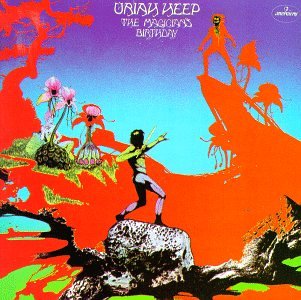
“Sunrise,” Uriah Heep, 1972
Uriah Heep is regarded as one of the pioneers of hard rock and heavy metal, and maybe purveyors of prog rock as well. Between 1972 and 1974, they put four consecutive albums in the US Top 30 album charts. On “The Magician’s Birthday,” the band showcased their hard rock side with singles like “Sweet Lorraine” and “Spider Woman.” Opening the album was “Sunrise,” which featured keyboardist/guitarist Ken Hensley using hard/soft musical passages while focusing lyrically on how the soothing power of the sunrise can ease the pain of a romantic breakup: “Sunrise, and the new day’s breakin’ through, /The morning of another day without you, /And as the hours roll by, no one’s there to see me cry except the sunrise, /The sunrise and you… /Sunrise, bless my eyes, catch my soul, make me whole again…”
“At the Sunrise,” Chicago, 1971
Chicago burst on the scene with the innovative, creative “Chicago Transit Authority” album in 1969, followed by a second album that included “Make Me Smile,” “Color My World” and “25 or 6 to 4.” By their third album, they struggled to come up with much in the way of memorable music, but one worthy track is Robert Lamm’s melodic “At the Sunrise,” featuring Lamm and bassist Peter Cetera sharing lead vocals, and that solid, sublime horn section adding their magic. These lyrics center on a couple who must separate for a spell, but he’s coming back to enjoy another sunrise: “How could I be happy without her by my side? /Without her smiling face at the sunrise?…/I know she understands me, she knows I’m feelin’ bad, /Until I’m back beside her at the sunrise…”

“Sunrise,” Simply Red, 2003
To me, Simply Red’s Mick Hucknall has one of the best voices of the past thirty-plus years. He belts out R&B, rock, dance pop, ballads, you name it, all with skill and grace. In the UK, all 12 Simply Red albums from 1985-2019 charted in the Top Five, with multiple hit singles as well, but in the US their success was mostly limited to two hit singles, “Holding Back the Years” and a cover of “If You Don’t Know Me By Now.” What a shame — so much great music on their LPs. Consider “Sunrise,” a huge international hit in 2003 from their “Home” album, but virtually ignored here. It samples liberally (and with permission) from the arrangement of Hall and Oates’ “I Can’t Go For That,” and that’s fine with me.
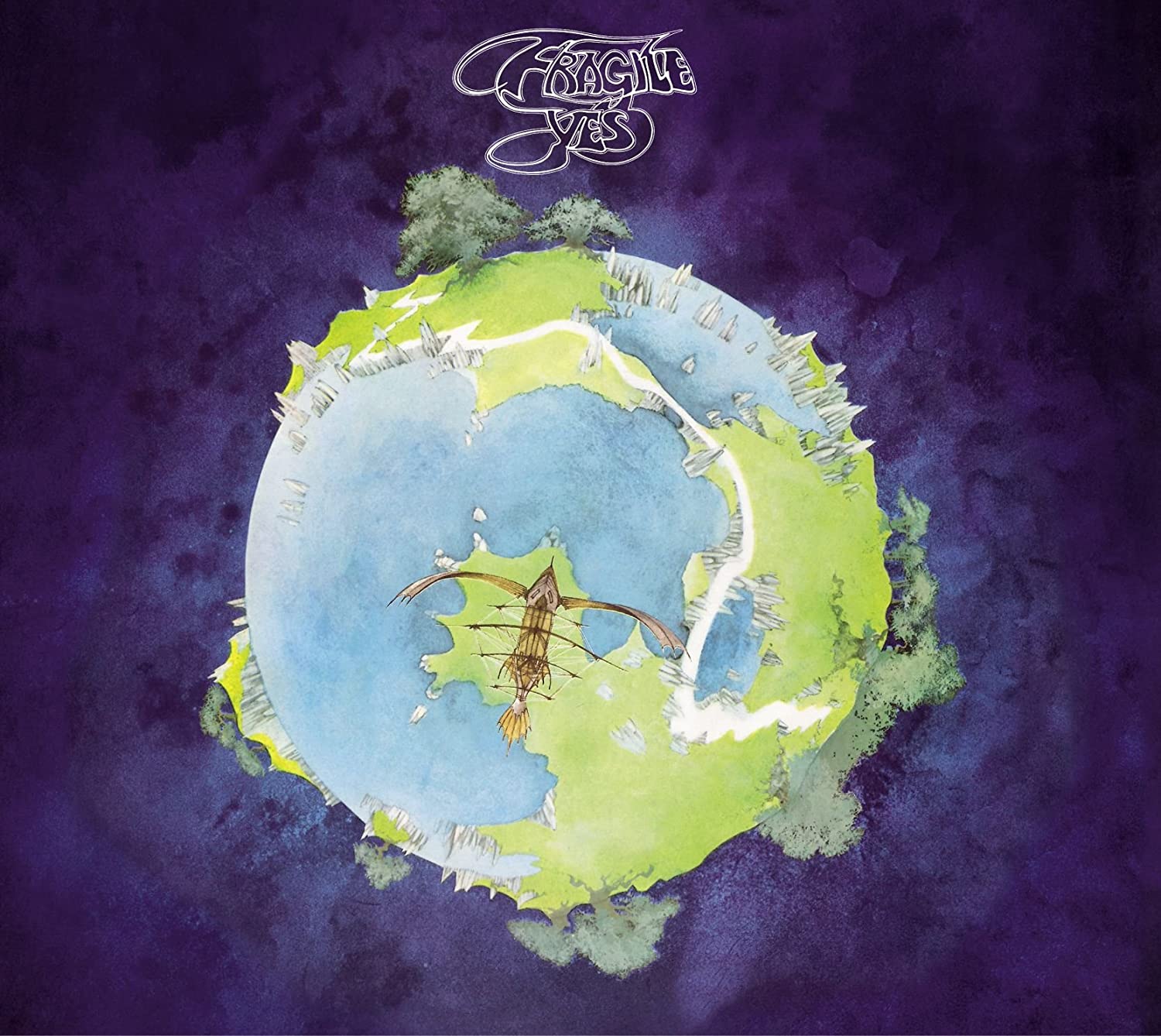
“Heart of the Sunrise,” Yes, 1971
Most of the lyrics in Yes’s catalog are cosmic and vague at best, and nearly indecipherable at worst, but so much of the progressive rock music they made is so engrossing that it doesn’t much matter. The words sound good even if their meaning is lost on me in many cases. In “Heart of the Sunrise” from Yes’s biggest-selling album, “Fragile,” Jon Anderson doesn’t seem to be talking about sunrises in the traditional sense but, well, I guess everyone is free to make their own interpretation: “Love comes to you, and you follow, /Lose one, on to the heart of the sunrise, /SHARP! /DISTANCE! /How can the wind with its arms all around me, /Lost on a wave, and then after, /Dream on, on to the heart of the sunrise, /SHARP! /DISTANCE! /How can the wind with so many around me, lost in the city…”

“(Reach Up for the) Sunrise,” Duran Duran, 2004
With more than 100 million albums sold internationally, Duran Duran ranks among the most commercially successful bands ever, although I wouldn’t consider myself a fan. As agents of the New Romantic scene that emerged in the UK in the early ’80s, they benefited greatly from the MTV era, with splashy videos getting heavy airplay. Their popularity continued well into the ’90s, and then again in the 2000s. “Astronaut,” their 2004 release which reached #5 in England and #17 here, included “(Reach Up for the) Sunrise,” a surefire Duran Duran hit in many countries that never caught on in the US, for some reason. Its oft-repeated chorus shouts with great hope and promise: “Reach up for the sunrise, put your hands into the big sky, /You can touch the sunrise, feel the new day enter your life…”
**************************

“Waterloo Sunset,” The Kinks, 1967
One of the major crimes in the history of rock music is that “Waterloo Sunset” wasn’t the major success in the U.S. that it was in the U.K., Europe and Australia. Ray Davies, whose songs made The Kinks tick, wrote it in 1967 as “Liverpool Sunset,” as he was enamored with the Merseybeat sound that produced The Beatles and others. It recalls The Fab Four’s “Penny Lane” in some ways, perhaps too closely, so he changed its imagery to London, specifically the Thames River and Waterloo Station. Its delightfully complex musical arrangement belied its simple lyrics about a couple looking for peace amidst chaos: “Millions of people swarming like flies ’round Waterloo underground, but Terry and Julie cross over the river, where they feel safe and sound, /And they don’t need no friends, as long as they gaze on Waterloo sunset, they are in paradise…”

“English Sunset,” The Moody Blues, 1999
I’ll bet you didn’t know The Moodies were still releasing great new music as recently as 1999. They were arguably the true trailblazers of progressive rock, beginning with 1968’s “In Search of the Lost Chord,” and although they leaned more toward commercial pop later on, they did it with style and grace. This is due in large part to the fine songwriting and singing of guitarist Justin Hayward, who wrote most of the group’s hit singles (“Question,” “Story in Your Eyes,” “The Voice,” “Your Wildest Dreams”). From their 1999 album “Strange Times,” it seems as if “English Sunset” should’ve made that list, but it went nowhere on the charts here nor, strangely enough, in England. “I want to ride the range across those skies of black, I want to see for myself, and see me coming back, /And when I’ve gone the distance, I’ll be making tracks for an English sunset…”

“Sunset Drivers,” Lee Ritenour, 1984
Ritenour is an accomplished jazz guitarist who came out of L.A. in the late ’70s as a disciple of the great Wes Montgomery. Beginning in the ’80s, he began integrating elements of pop into his music, which brought him into the light jazz camp of George Benson. With Eric Tagg on vocals, Ritenour reached #15 on the pop charts in 1981 with the single “Is It You?” from his album “Rit.” His 1984 album “Banded Together” was a curious mix of drum machines and synthesizers but also the esoteric jazz fusion he was known for. Somewhere in the middle was “Sunset Drivers,” again with Tagg on vocals, describing the quasi-reckless drivers who populate Sunset Boulevard in west L.A.: “Comes a West Coast sundown, shadows on this million-dollar playground, /Sunset drivers, time to hit the street… /You gotta take it across the wire, they’re right behind you like a house on fire…”
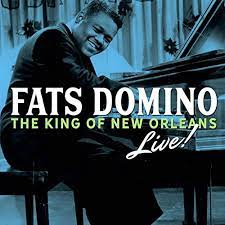
“Red Sails in the Sunset,” Fats Domino, 1964
The famed Irish lyricist Jimmy Kennedy teamed up with Wilhelm Grosz back in 1935 to write the love song “Red Sails in the Sunset,” inspired by his view of a boat with red sails that often went for sunset cruises off the Northern coast of Ireland where he lived. It became a popular standard beginning in the late 1930s, recorded by such luminaries as Bing Crosby, Guy Lombardo and Louis Armstrong. In the ’50s came Nat King Cole and Paul Anka, and The Platters’ version in 1960 reached #36 on the pop charts. The late great Fats Domino added it to his repertoire, reaching #35 on the charts in 1963: “Red sails in the sunset, way out on the sea, oh, carry my loved one home safely to me, /She sailed in the morning, all day I’ve been blue, /Red sails in the sunset, I’m trusting you…”

“Sunset Grill,” Don Henley, 1984
When The Eagles first broke up in 1981, songwriters Henley and Frey each mounted solo careers with multiple chart successes. From his “Building the Perfect Beast” LP, Henley scored a Top Five hit in 1984 with “The Boys of Summer,” which offered indelible imagery about the L.A. beaches as summer wound down. Another big single for Henley that captured the edgy mood of the Hollywood scene was “Sunset Grill,” reaching #22 in 1985. It was based on a real burger joint on Sunset Boulevard that attracted all types. It lasted another decade until 1997, when it was torn down and replaced with a new Sunset Grill that’s still there: “Let’s go down to the Sunset Grill, watch the working girls go by, /Watch the ‘basket people’ walk around and mumble, and gaze out at the auburn sky…”

“Wasted Sunsets,” Deep Purple, 1984
Deep Purple was among the British bands who spearheaded the hard rock later perfected by Led Zeppelin. Emerging in 1968 with their “Shades of Deep Purple” and the #5 hit “Hush,” they became darlings of the U.S. rock press throughout the early and mid-’70s. Albums like “Machine Head” and the live “Made in Japan” helped the band sell out many of their performances here during that period. After a few years off, the core group reunited in 1984 with “Perfect Strangers,” which included guitar hero Ritchie Blackmore as well as vocalist Ian Gillan. The track “Wasted Sunsets” featured lyrics that, following a romantic breakup, bemoaned sunsets experienced alone: “One too many wasted sunsets, one too many for the road, /And after dark, the door is always open, hoping someone else will show…”

“California Sunset,” Neil Young, 1985
From his early days with Buffalo Springfield all the way up to current days, Young has marched to his own drummer, offering radically different styles on successive albums: hard rock, country, pop, proto-grunge, rockabilly, electronica, folk rock… In the mid-’80s, following the unlistenable dissonance of “Trans,” he did a 180-degree turn and offered “Old Ways,” perhaps his deepest dive into country music. One track, “California Sunset,” used fiddles to help paint a down-home tribute to the West Coast, a far cry from the bitter cold of his Canadian prairie homeland: “Land of beauty, space and light, /Land of promise, land of might, /You’re my home now, and it’s true, /California, here’s to you… California sunset going down in the West, /All the colors in the sky kiss another day goodbye…”
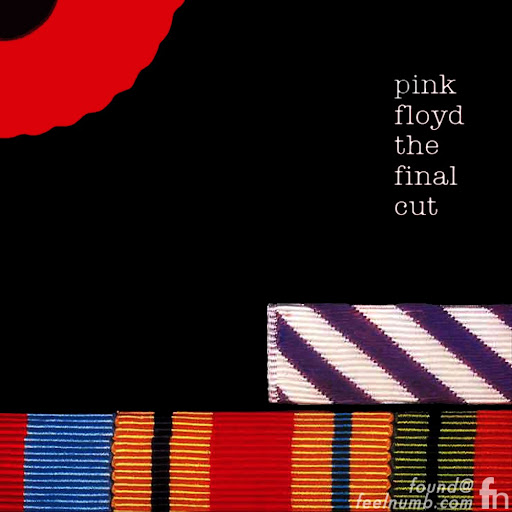
“Two Suns in the Sunset,” Pink Floyd, 1983
After a spectacular run of #1 albums and sold-out arenas in the 1970s, the members of Pink Floyd were at each other’s throats by the time they began recording what became “The Final Cut” in 1983. Leader Roger Waters had assumed dictatorial control of the group, alienating guitarist/singer David Gilmour and the others. Most of “The Final Cut” were leftovers from “The Wall” sessions, and it shows. An exception is “Two Suns in the Sunset,” Waters’ stark vision of nuclear apocalypse, in which the second sun is the glowing fireball of an atomic bomb: “In my rear-view mirror, the sun is going down, sinking behind bridges in the road, /I think of all the good things that we have left undone, /The sun is in the east even though the day is done, /Two suns in the sunset, could be the human race is run…”
***************************
I found two songs that cover both sunrise and sunset:
“Sunrise, Sunburn, Sunset,” Ryan Hurd, 2020
Ryan Hurd is an acclaimed Nashville songwriter who has not only written #1 hits for Blake Shelton, Lady A and Luke Bryan but has established himself as a fine performing artist in his own right. In 2018, he married superstar Maren Morris, and the couple had a big hit together this year with “Chasing After You.” Bryan went to #4 in 2018 with “Sunrise, Sunburn, Sunset,” a happy love song whose title now adorns t-shirts and lake-house kitchen walls. Co-written by Hurd, Zach Crowell and Chas McGill, the song was recorded by Hurd last year for his “EOM” EP, and I think his rockified version beats Bryan’s by, um, a country mile: “Moonlight, all night, crashing into me, nothing will ever be easy as you and me, /Tangled up and nowhere to be, just sunrise, sunburn, sunset, repeat…”

“Sunrise, Sunset,” Zero Mostel and Maria Karnilova, 1964
“Fiddler on the Roof” was the longest running Broadway play of all time until it was topped by “Grease” in the ’70s. Based on the Joseph Stein book, the production featured music by Jerry Bock with lyrics by Sheldon Harnick, and many of the songs are among the most popular show tunes ever: “Matchmaker, Matchmaker,” “To Life,” “If I Were a Rich Man” and especially “Sunrise, Sunset,” with lyrics that make use of the daily rising and setting sun to lament the inexorable passing of time. On the soundtrack album, actors Zero Mostel and Maria Karnilova mourn the fact that their children have grown up: “When did she get to be a beauty? When did he grow to be so tall? Wasn’t it yesterday when they were small? /Sunrise, sunset, Sunrise, sunset, /Swiftly flow the days…”
****************************






 Hack's Back Pages