Bands that shoulda woulda coulda

I was recently listening to a CD mix I put together several years ago, comprised of songs by artists that never quite hit the big time but, in my opinion, deserved to be bigger than they were.  And it got me thinking:  Why do some truly talented singers/musicians/songwriters never achieve the success they struggled so hard for? What prevented them from earning the attention, critical praise and/or chart success that other artists did?

From rock and roll’s beginnings to the present day, there are hundreds of examples of artists who never achieved the fame and fortune many people think they should have. (There are also scores of examples of groups who inexplicably garnered attention and Top Five albums/singles that were wholly unwarranted, but that’s another essay for another day.)

Like many discussions of rock music, this is a very subjective area.  If I were to say, for example, that Humble Pie wasn’t as big as they should have been, there are those who might say, “Humble Pie?!  They sucked!”  One man’s trash is another man’s treasure, and so forth. But we all have our favorite under-the-radar artists who we believe should have made it big.  “I LOVE this band, why doesn’t everybody else??”

Bands missed the limelight for good and bad reasons.  Some were victims of poor timing; their music was perhaps ahead of (or behind) its time.  Others had bad management or promotion; some were plagued by internecine warfare that broke them apart too soon; some didn’t seem to care about fame and fortune, either because they shunned the spotlight or were more interested in art than dollars; and a few came up with one or two great songs or albums but couldn’t sustain that level of quality.

Any music lover can name specific artists whose concerts or albums hold a special place in their hearts but are unknown to the general public.  The list is almost endless.  To help me identify some of these “shoulda been big” groups, I conducted a very informal survey of a dozen friends and associates who grew up listening to a lot of rock music in the ’60s, ’70s and ’80s.   They each offered at least a half-dozen examples of bands they felt were underrated by the critics, the buying public, or both.

Here is the composite list:

Spirit, Moby Grape, Audience, Laura Nyro, Southside Johnny and the Asbury Jukes, The Flying Burrito Brothers, Camel, Batdorf and Rodney, Michael Stanley Band, It’s a Beautiful Day, Humble Pie, Kenny Rankin, Be-Bop Deluxe, Savoy Brown, Free, Blodwyn Pig, Sensational Alex Harvey Band, Gentle Giant, The Rainmakers, Pousette-Dart Band, Dixie Dregs, Atomic Rooster, Brian Auger, Lighthouse, Delaney and Bonnie, Blue Cheer, Quicksilver Messenger Service, Aztec Two-Step

It’s far from a complete list — I’ve focused on the ’60s and ’70s here, with a few ’80s groups for good measure — but it serves to point out the number of artists who never (or barely) made the charts, or failed to be as successful as they probably deserved.

Laura Nyro

A few artists had stage fright and weren’t really interested in performing.  The gifted Laura Nyro is perhaps the best example of this; she performed at the iconic Monterey Pop Festival in 1967, but she felt uncomfortable on stage, and it showed, even to the mind-altered crowd that assembled there.  She made a few neglected records but mostly withdrew into a more isolated life as a songwriter and gained plenty of critical praise for her excellent songs made famous by others (“Stoned Soul Picnic,” “Eli’s Comin’,” “And When I Die,” “Wedding Bell Blues,” “Stoney End”).  She died in 1997, and has been too often criminally overlooked when the names of major female artists are mentioned.

Some bands never achieved success because they were handled by people who were either clueless or had hidden agendas.  It’s a Beautiful Day was a great San Francisco-based group who could’ve been as big as the Jefferson Airplane or the Grateful Dead but were shuffled off to Seattle to play in their manager’s brother’s clubs there instead of the hot Bay Area clubs where they had a following. Quicksilver Messenger Service was another Bay Area group that, in a parallel universe, might’ve been huge.

Flying Burrito Brothers

Some groups, frankly, were train wrecks in the making:  Their members couldn’t seem to get along, so there was a revolving door of musicians coming and going, and this lack of stability meant they could never get any kind of momentum going.  Savoy Brown, an excellent British blues rock band from the 1966-1975 period, comes to mind.  They reached the US charts in 1972 with their “Hellbound Train” LP, but are mostly forgotten (although three members went on to form Foghat, who had modest success in the mid-’70s).  Same goes for The Flying Burrito Brothers, one of Southern California’s best and most influential early country rock ensembles, whose short-term alumni include such luminaries as Bernie Leadon (of The Eagles) and Gram Parsons and Chris Hillman (of The Byrds).

Delaney and Bonnie

There were artists with great energy and enthusiasm (and notable guests onboard) who somehow didn’t score that big hit.  Delaney and Bonnie, a Southern rock/soul outfit who worked with icons like Eric Clapton and George Harrison in 1969-1970, are largely unknown to most rock fans.  LA-based Spirit offered a wonderful mix of rock, jazz, pop and blues during its five-year tenure (1967-1972), and even Top-40 appearances on the singles chart (“I Got a Line on You”) and album charts, but they were never exactly household names.

Michael Stanley

Sometimes bands were victims of circumstance:  They were signed to labels who chose to devote their promotional dollars toward other artists instead.  For example, in the fall of 1973, MCA Records released three albums:  “Goodbye Yellow Brick Road” by Elton John, “Quadrophenia” by The Who, and “Friends and Legends” by Michael Stanley.  The first two probably would’ve gone Top Five without spending a dime of promotion, but that’s where the money went anyway.  In my opinion, they should’ve spent their marketing dollars on their rising star, Cleveland’s Michael Stanley, who had great songs like “Let’s Get the Show on the Road” and the likes of Joe Walsh and others helping him in the studio.  Why not promote the up-and-coming guy instead of the already established artists?  Sigh…  And it gets worse:  Between 1975-1990, The Michael Stanley Band went through multiple labels, each mishandling the promotion of this great Midwest band, who flirted with stardom in 1980 with the Top 40 hit “He Can’t Love You,” but never grabbed the brass ring.
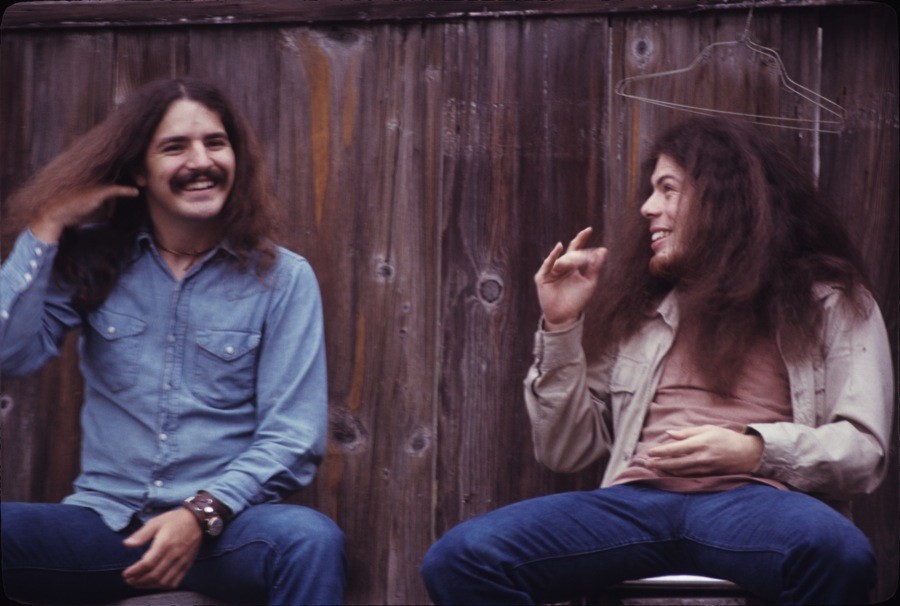
Batdorf and Rodney

Or let’s take the singer-songwriter genre — acts like Batdorf and Rodney, Aztec Two-Step or Kenny Rankin.  Most people I know have never heard of them.  But if you enjoy singer-songwriter music from the early ’70s (Crosby Stills & Nash, James Taylor, Joni Mitchell, America, Seals and Crofts, Loggins and Messina, et al), you need to check out the songs on Batdorf & Rodney’s phenomenal 1971 debut “Off the Shelf.”  Just try the opening track “Oh My Surprise.”  Oh my, indeed.  Then try “Can You See Him,” one of my top 25 favorite songs of all time.  Why weren’t these hits?  Why weren’t Batdorf and Rodney more famous?  We’ll probably never know.

Other acts missed out on stardom because they didn’t really seek it.  Progressive rock bands were less interested in commercial appeal than musical exploration, so it’s not really surprising that most of them — with the exception of Yes, Pink Floyd, Genesis and Emerson, Lake and Palmer and a few others — never achieved widespread fame.  Still, groups like Gentle Giant and Camel could have, or should have, been more popular than they were.
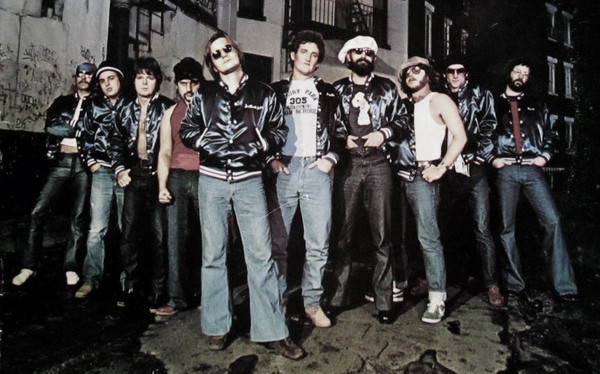
Southside Johnny and The Asbury Jukes

If R&B-laced rock tunes in the Bruce Springsteen/Van Morrison vein is more to your liking, you have to agonize over the failure of New Jersey’s greatest-ever bar band, Southside Johnny and The Asbury Jukes, to hit the big time.  Johnny Lyons was a buddy of Springsteen in the Jersey Shore bars; they jammed together, shared band members, and Springsteen contributed a dozen or more songs to Southside’s repertoire (“The Fever,” “Talk to Me,” “You Mean So Much to Me”) as they struggled in the late ’70s and early ’80s under Springsteen’s ever-growing shadow.  They released seven albums on four different labels between 1976 and 1986, but they never cracked the Top 40 charts (album nor singles).  Sometimes I think his connection to The Boss did him more harm than good, as critics sometimes called him “a poor man’s Springsteen” and the like.  But if you ever saw this band in concert, you would beg to differ.  They get my vote for most overlooked band ever.

Canadian bands tended to get short shrift in the US market as well.  The Guess Who, Gordon Lightfoot and transplants like Joni Mitchell and Neil Young achieved plenty of commercial success here, but there were others worthy of our dollars:   Lighthouse, for example, had modest hits but perhaps deserved more attention.

You might think most of these artists are bitter that they didn’t make it big, but many look at their careers philosophically.  Perhaps they didn’t become millionaires, but they got to make a living creating music — albums, TV show themes, movie soundtracks — that appealed to a core audience, and that was plenty satisfying.  Maybe the many trappings of fame — the paparazzi, the business negotiations, the nasty critiques in the press, the constant pressures — wouldn’t have been worth it anyway.

I recommend you take a closer look at any or all of the artists mentioned above and discover some of the amazing music they made that never quite reached the mainstream marketplace.  It may not be in your wheelhouse, but then again, it might very well light your fire.

**********************

This Spotify playlist includes two songs from each artist mentioned above, which is admittedly an inadequate sample on which to judge their relative worthiness. If you find songs that are intriguing, I suggest you delve deeper into the artists’ catalogs.

Goodbye stranger, it’s been nice

Ever wonder how rock bands come up with their names? For example, what, exactly, is a Supertramp?

Around 1900, the legendary Irish playwright George Bernard Shaw took an interest in an unknown writer named W.H. Davies, who had spent several years traveling the rails in the United States as a vagrant and beggar while developing a talent as a poet. In 1908, Davies wrote about his peculiar life in the critically praised book “The Autobiography of a Super-Tramp.”

More than sixty years later, a fledgling British band known as Daddy was founded by two songwriting musicians — Rick Davies (no relation to the author) and Roger Hodgson. Soon enough, they wanted a new name to avoid confusion with another group called Daddy Longlegs, and their guitarist Richard Palmer, a fan of the Davies’ book, suggested Supertramp. It took a few more years before the group found success, but Supertramp went on to become one of the more popular progressive rock/pop groups in the UK, the US, Canada and much of Europe during the late ’70s and early ’80s.

This week, Rick Davies, who co-founded the group, played keyboards, sang and wrote more than half of their celebrated 10-album catalog, died of cancer at age 81.

I confess I wasn’t much of a fan of Supertramp at first, based on the early singles “Dreamer” and “Give a Little Bit,” written and sung by Roger Hodgson, whose high-pitched voice grated on my nerves in much the same way that Rush’s Geddy Lee did. (Well, not THAT bad, but it can be pretty annoying at times.). So I didn’t buy Supertramp’s albums, and therefore wasn’t exposed to the more bluesy, progressive rock songs that Davies wrote and sang, which were every bit as fundamental to the group’s oeuvre as Hodgson’s more melodic pop.

That changed big-time in 1979 when, along with millions of other music fans, I heard the song “Goodbye Stranger,” featuring Davies’ gritty voice and an explosive rock arrangement. “Wow,” I thought to myself, “this is Supertramp? This is way meatier and more interesting than the other stuff I’ve heard from them.”

The tune emerged as one of four hit singles from their multiplatinum #1 LP “Breakfast in America,” which brought the band worldwide fame. While Hodgson’s songs and vocals dominated the airwaves (“The Logical Song,””Take the Long Way Home” and the title tune), Davies’ keyboards and sax man John Helliwell’s powerful riffs gave the overall sound serious heft, and the album’s stellar production won a Grammy that year.

************************

When Davies and Hodgson first joined forces in England in 1969 as founders of the band that would become Supertramp, they were an unlikely pair. Davies came from working class roots and preferred blues and jazz; Hodgson was a private school kid who leaned more heavily toward pop and music hall genres. Their earliest recorded songs were joint efforts, but starting with their third album, Davies and Hodgson wrote independently and always sang lead vocals on the songs they wrote.

Supertramp began recording around the same time as other British progressive rock groups like Genesis and Yes, but those groups found their audiences more quickly and had significant commercial success in 1971 and 1972. Supertramp didn’t catch on until their lineup changed in 1973-74, adding Helliwell, bassist Dougie Thomson and drummer Bob Siebenberg, and they came up with the quality material that comprised their breakthrough album “Crime of the Century,” which included Davies’ compelling “Bloody Well Right,” a bitter critique of the British economic caste system, and other sophisticated works by Davies like “Rudy” and “Asylum,” and Hodgson’s “School.”

It’s not a stretch to make a few comparisons between the songwriting of Davies and Hodgson and the John Lennon-Paul McCartney partnership. In The Beatles, Lennon and McCartney started out writing songs together, but their different sensibilities and influences led them to write separately, and their final three or four albums contained songs written almost exclusively by one or the other. The same thing happened in Supertramp. Also, Lennon’s love for the rock ‘n’ roll of Elvis Presley contrasted with McCartney’s preference for the pop of Buddy Holly, much like Davies’ rough-edged tunes were at variance with Hodgson’s sweeter melodies.

Hodgson ruminated on that difference in a 1979 interview: “We realized that a few of the songs on ‘Breakfast in America’ really lent themselves to two people talking to each other, and at each other. I could be putting down his way of thinking and he could be challenging my way of seeing things. Our ways of life are so different, but I love him. That contrast is what makes the world go ’round, and it’s what makes Supertramp go ’round as well. His beliefs are a challenge to mine and my beliefs are a challenge to his.”

Supertramp (from left): Rick Davies, Dougie Thomson, John Helliwell, Roger Hodgson, Bob Siebenberg

Sadly, though, that divergence in styles and inspirations proved to be, eventually, Supertramp’s undoing. Where the two songwriters had initially respected each other’s work in an “opposites attract” sort of way, Hodgson felt he was growing apart from not only Davies but the rest of the band, both musically and spiritually. As the group contemplated their follow-up to “Breakfast in America” in 1982, Hodgson made it clear he wanted a pop album, while Davies had his sights set on returning to the prog rock of past albums, even putting forth a complex 16-minute piece that would be the album’s cornerstone. They both bristled at having to compromise their own vision, and the resulting LP, “…Famous Last Words…,” felt jarringly contradictory to many critics and to the band members themselves.

Said Davies at that time, “It’s been said that there’s a certain amount of friction that’s inevitable when you’re involved in a creative process. It’s like two people are painting a picture on the same canvas. Somebody wants to put red there and somebody wants to put blue. You have problems, and the picture doesn’t get finished. In the past, we’ve always been able to work around it, but as we’ve progressed, it has become more difficult.” Said drummer Siebenberg, “It became a diluted version of what it started out to be. It was really neither here nor there.”

Davies (left) and Hodgson during the band’s glory years

Still, Supertramp charted a triumphant world tour in 1983, and I saw them perform in September of that year in what turned out to be one of Hodgson’s final dozen shows as part of the group’s lineup. I found it to be a superb, professional gig, full of both songwriters’ better songs, including their two hits from “Famous Last Words” — Hodgson’s “It’s Raining Again” and Davies’ “My Kind of Lady.”

Hodgson then made good on his vow to go solo, and within a year, he charted respectably with his debut LP, “In the Eye of the Storm,” reaching #46 in the US, and the singles “Had a Dream (Sleeping With the Enemy)” and “In Jeopardy,” which peaked at #11 and #30, respectively, on US rock charts. A follow-up LP in 1987, stalled at #163. His third and (so far) final studio album, 2000’s “Open the Door,” didn’t chart at all in the US. Hodgson has devoted most of his energies in the ’90s and beyond to performing, sometimes with a band, sometimes on his own, including several high profile events in Europe and Canada.

Davies, meanwhile, forged ahead with Supertramp, firmly in control as they followed his progressive rock vision on the 1985 LP “Brother Where You Bound,” which peaked at #21 on US album charts. The remaining foursome of Davies, Helliwell, Thomson and Siebenberg augmented their instrumentation with a handful of additional musicians (including Pink Floyd’s guitarist David Gilmour) on the ambitious 16-minute title track and the brilliant “Cannonball” single, and they toured relentlessly in Canada, the US and Europe.

In 1987, they tried a new approach for their next project, “Free as a Bird,” setting aside their progressive rock and employing synthesizers and dance-beat rhythms instead. Said Davies years later, “I thought we could be more modern and build it up with computers and drum machines and have people come in one by one, but that makes you lose the band spirit a little bit. Each time we went in, we would try to give it something different, and it ended up a lot more machine-based than anything we’d done before. That was good and bad, but I think it had some interesting songs on it.” (I agree; tracks like “Thing For You,” “An Awful Thing to Waste” and the title song are all worthy entries in the Supertramp repertoire, but in general, it’s a failed experiment that stalled at #101 on US album charts.)

They toured behind “Free as a Bird” for six months in 1987-88 before collectively agreeing to call it quits. But in 1997, they rallied with additional musicians on the album “Some Things Never Change,” which failed to chart in the US, and again in 2002 with “Slow Motion,” which suffered the same fate. Davies conceded in 2007, “These were last-ditch attempts to make things happen again, but the life had gone out of the band by that point.”

An effort was made in 2010 to honor fans’ requests for a true Supertramp reunion with both Davies and Hodgson on stage together, but that fell through. “I know there are some fans out there who would like that to happen, and there was a time when I had hoped for that, too,” said Davies. “But in order to play a great show, you need harmony, both musically and personally. Unfortunately, that doesn’t exist between us anymore, and I would rather not destroy memories of more harmonious times between all of us.”

A final Supertramp tour of Europe was announced in 2015, but Davies’ first bout with cancer interfered, and although he fought it off for a while, it returned and eventually claimed him.

“It was an honor to share the stage with Supertramp back in the ‘prog-rock’ days of the ’70s,” said David Pack, guitarist/singer/songwriter of Ambrosia, the LA-based band with a similar prog rock/pop dual personality. “Rick along with Roger wrote and sang so many classic songs that were the soundtrack of our lives way back when. What a legacy. Bloody well done, Rick!”

R.I.P., Rick Davies. It’s an egregious omission that you and Supertramp are not yet in the Rock and Roll Hall of Fame.

**************************

The Spotify playlist below features the Supertramp songs written and sung by Rick Davies, in honor of his recent passing. For the sake of completeness, at the end I’ve added eight songs written and sung by Hodgson.