I’ve got nothing to say, but it’s okay

What makes a hit song?  A catchy melody, of course, but also, typically, an indelible chorus with a repeated catchphrase and memorable lyrics you can sing along with.

Well, not always lyrics, as it turns out.  Back in the ’50s and ’60s especially, and well into the ’70s, you can find almost 50 entries on the Billboard singles charts of instrumental songs that made the Top Ten.  Nearly 20 of those reached the #1 position, sometimes for multiple weeks. And another 50-60 at least made the Top 40, bringing the total number of instrumental hits to well over 100.

How did that happen?  Doesn’t a hit single need lyrics to become the kind of “earworm” song that stays in your head all day long after hearing it?  Not necessarily; a compelling instrumental passage can be as addicting as a vocal hook.  Take Edgar Winter Group’s “Frankenstein,” for example.  That monstrous main riff is arguably every bit as mesmerizing as a repeated lyric like “I’d like to hear some funky Dixieland…”

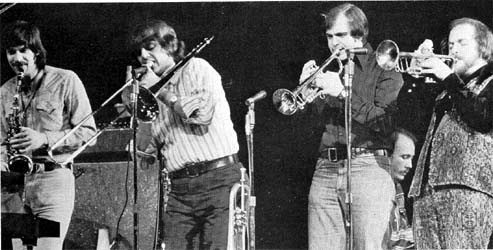
These instrumental hits came in a number of sub-categories.  Theme songs from movies and TV shows make their way into the Top 40 from time to time; surf music and disco sometimes offer irresistible instrumental riffs that don’t need words; and jazz artists who play sax or trumpet have been known to have a Top Ten hit or two without lyrics to carry the songs.

I’ve selected a baker’s dozen of Top Ten instrumental songs that should be familiar to most of you — if not by the title, then by the first 15 seconds of the song itself.  A Spotify list at the end will allow you to sample the songs as you read.  Enjoy!

****************************

“Grazing in the Grass,” Hugh Masekela, 1968

This #1 hit from the summer of ’68 was written as an instrumental by an African composer named Philemon Hou, and made famous by South African jazz trumpeter Hugh Masekela, who was among the surprises at the 1967 Monterey Pop Festival.  His version, which was #1 for two weeks, has a reggae flavor and features a prominent cowbell (!) throughout.  A year later, a group called The Friends of Distinction recorded another version with lyrics (“Grazing in the grass is a gas, baby can you dig it…”) written by member Harry Elston, with a faster, funkier arrangement, and it reached #3 in the summer of ’69.  Both versions are on the Spotify list.  You decide which is better.

“TSOP (The Sound of Philadelphia),” MFSB, 1974

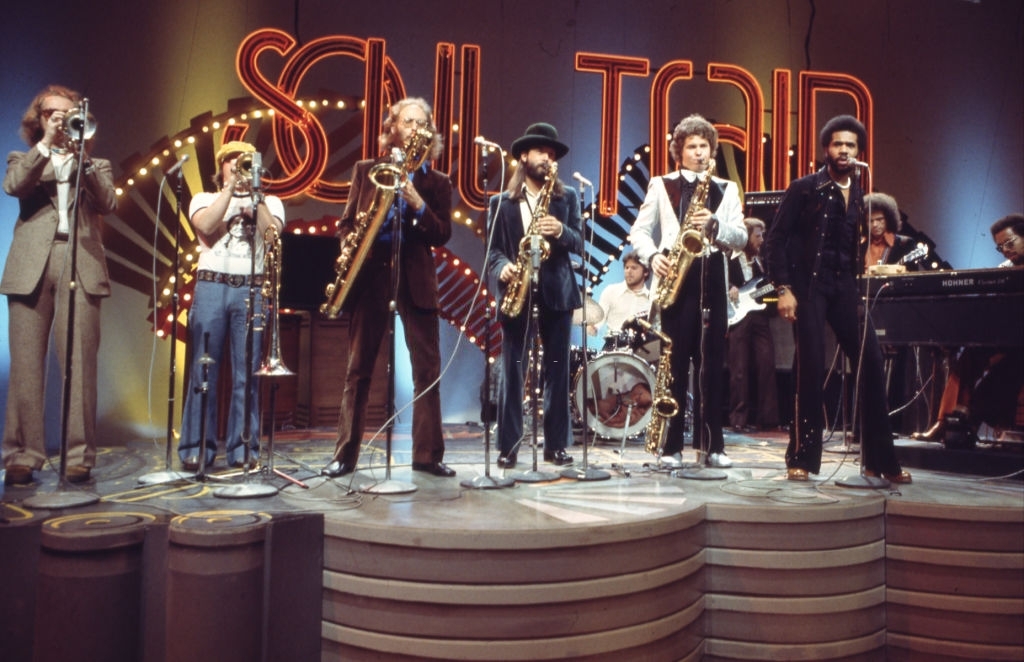
As disco was just getting started, Kenny Gamble and Leon Huff of Philadelphia International Records wrote an instrumental piece to be used as the theme song for “Soul Train,” the Chicago-based TV show featuring R&B/soul/disco music that was about to go national.  Their label’s house band MFSB (Mother, Father Sister, Brother) laid down the groove, the recording was bathed in strings and horns, and then, tacked on the end, the vocal group called The Three Degrees added one line of lyric (“Let’s get it on, it’s time to get down”), repeated 6-7 times.  It was officially the first TV theme song (and, unofficially, the first disco song) to reach #1 on the US singles chart.

“Green Onions,” Booker T. and the M.G.’s, 1962

Here’s another track originally issued as a B-side (this one to a forgotten song called “Behave Yourself”) that went on to become one of the most popular instrumental tracks in rock/soul history.  Written by Booker T. Jones, the track prominently features Jones’s Hammond organ on a minor-chord 12-bar blues structure, interrupted periodically by Steve Cropper’s fine guitar work.  It reached #3 in the US and #7 in the UK.  Evidently named after the cat of one of the M.G.’s, whose way of walking inspired the main riff, the track has been used in several major films over the years, including “American Graffiti,” “The Flamingo Kid,” “Happy Gilmore,” “The Sandlot” and “Get Shorty.”

“Hocus Pocus,” Focus, 1973

Hailing from The Netherlands, this progressive rock band majored in instrumental pieces with plenty of Jethro Tull-like flute by Thijs van Leer and histrionic guitar solos from Jan Akkerman.  Very few tracks on their early ’70s albums had any vocals; could be they didn’t know any English, but I’m not sure about that.  In any event, in the spring of 1973, “Hocus Pocus,” a hard rock track from their 1971 album “Focus 2:  Moving Waves,” reached #9 on the US singles chart.  It was technically an instrumental if you don’t count the incessant yodeling and high-octave vocalizing heard throughout the song.

“The Horse,” Cliff Nobles & Co., 1968

Anybody recognize this title? Didn’t think so…but I’ll bet you recognize the main riff, because it reached #2 in June 1968 and sold a couple million copies.  This track was released as the B-side of a song called “Love is All Right,” which is the same song with vocals and lyrics.  Radio stations preferred the instrumental version (called “The Horse” for no discernible reason), and the hit was attributed to singer Cliff Nobles, even though his vocals were removed.  Listen to both versions on the Spotify list below.

“Joy,” Apollo 100, 1972

It takes guts to lift a 250-year-old classic hymn by Johann Sebastian Bach (“Jesu, Joy of Man’s Desiring”) and turn it into an instrumental piece of pop confection, but a British band called Apollo 100 did exactly that, and sure enough, it went to #6 on the US charts (but made no appearance on UK charts).  Played to a straight 4/4 beat, dominated by organ, harpischord and lead guitar, “Joy” probably exposed huge sections of the US radio audience in 1972 to the music of Bach, even if it certainly was not how he intended…

“Scorpio,” Dennis Coffey, 1971

Coffey was a guitar prodigy out of Michigan who quickly became known for innovative techniques, which caught the ear of Berry Gordy and Norman Whitfield at Motown Records. Coffey became a regular in the Funk Brothers, the Motown house band, and was responsible for most of the guitar work on the latter day Temptations hits (“Cloud Nine,” “Ball of Confusion,” “Psychedelic Shack”), Edwin Starr’s “War” and Freda Payne’s “Band of Gold.” In 1971, he recorded his own guitar-laden instrumental track, “Scorpio,” which became a US hit at #6.

“Classical Gas,” Mason Williams, 1968

Williams was both a musician and a comedy writer, and was head writer for the CBS variety show “The Smothers Brothers Comedy Hour” in the late ’60s.  He was given several opportunities to showcase his instrumental acoustic guitar number “Classical Gas” on the program, which gave it valuable exposure and helped it reach #2 on the charts in the fall of 1968.  The song, originally titled “Classical Gasoline,” won multiple Grammys.  Mason went on to write comedy for “Saturday Night Live” as well.

“Frankenstein,” The Edgar Winter Group, 1973

Once again, we have a happy accident:  This instrumental track was added as an afterthought to the group’s LP “They Only Come Out at Night” (and B-side of the since-forgotten single “Hangin’ Around”).  It was a series of spliced-tape sections pieced together in the studio, which drummer Chuck Ruff described as “it’s like a Frankenstein monster taking shape,” and the track’s name was born.  It went to #1 in the spring of ’73.  Edgar Winter, with guitarists Ronnie Montrose and Rick Derringer aboard, had a short but successful run as a live act, and Winter was the first performer to ever strap a keyboard around his neck, which allowed him to walk around the stage playing synthesizer parts as the song’s lead instrument.

“Soulful Strut,” Young-Holt Unlimited, 1969

Never heard of the song or the band, right?  Well, you’ll surely know the song when you hear it — it reached #3 in December 1968-January 1969 and was on the charts for three months.  With a strong horn riff and jazz piano solo, it did indeed have a soulful strut to it.  In fact, R&B singer Barbara Acklin recorded it as a single, with lyrics, called “Am I the Same Girl,” and “Soulful Strut” is actually the backing track to that recording embellished slightly.  Acklin’s version stalled at #79; in 1992, Swing Out Sister reached #45 with a strong cover rendition.  But the instrumental was by far the most successful version.

“A Taste of Honey,” Herb Alpert & Tijuana Brass, 1964; “Rise,” Herb Alpert, 1979

Alpert is a giant in the LA recording industry.  He played trumpet in the military and the USC marching band; he formed The Tijuana Brass to play songs inspired by Mexican marachi music; had five #1 albums and 28 LPs overall, sold 70 million records and won nine Grammys; wrote numerous pop hits, including Sam Cooke’s “Wonderful World” and Dionne Warwick’s “Do You Know the Way to San Jose”; founded A&M Records; and is the only musician in chart history to have a #1 vocal hit (“This Guy’s in Love With You,” 1969) and a #1 instrumental hit (“Rise,” 1979).  With the Tijuana Brass, he made many memorable instrumental tracks (“Tijuana Taxi,” “Spanish Flea,” “Mae”) and had two top ten hits, 1962’s “The Lonely Bull” and 1964’s “A Taste of Honey.”

“Rock and Roll Part 2,” Gary Glitter, 1972

Born in Oxfordshire as Paul Gadd, the man whose stage name was Gary Glitter was a very popular glam rock star in England in the 1972-1975 period, scoring a dozen Top Ten singles and rivaling Marc Bolan and David Bowie in that genre.  In the US, however, he was merely a one-hit wonder…but what a hit it was.  The lyric-less “Rock and Roll Part 2” reached #7 on the charts here in 1972, but more important, it became (and still is) the noisy, obnoxious chant heard everywhere in arenas and stadiums when the home team is doing well.  By the way, there is a “Part 1,” with lyrics and everything — in fact it was the original A-side, and “Part 2” was the B-side…  Both are on the Spotify list if you’re interested.  Sad to say, Gadd was convicted in 2015 of multiple lurid sex offenses and is currently serving prison time.

“Theme From ‘A Summer Place’,” Percy Faith and His Orchestra, 1960

Academy Award winner Max Steiner, an Austrian-born composer who is regarded as “the father of film music,” wrote the music for this theme song for the mildy risque 1959 romantic drama “A Summer Place,” starring Sandra Dee and Troy Donahue.  The movie was a modest success, but the theme song, in its instrumental version as recorded by the Percy Faith and His Orchestra, was the #1 song in the country for an unprecedented nine weeks in 1960, a record that wouldn’t be broken for 17 years.  The Percy Faith recording was also the first instrumental and first movie theme song to win a Record of the Year Grammy.  Steiner wrote dozens of popular film scores, most notably for “Gone With the Wind” and “Casablanca.”  The song does have some lame lyrics, written by Mack Descant, and there are a few vocal versions by the likes of The Lettermen and Andy Williams.

“Dueling Banjos,” Eric Weissberg and Steve Mandell, 1972

In 1954, bluegrass artist Arthur Smith wrote and recorded this banjo instrumental piece he called “Feudin’ Banjos,” collaborating with fellow banjo player Don Reno. The piece was first featured on an episode of “The Andy Griffith Show” in 1963 when a traveling musical family performed it on Sheriff Taylor’s front porch as a surprise for Aunt Bee. Most people know it from its use in an early scene in the 1972 film “Deliverance,” and Weissberg and Mandell’s recording of “Dueling Banjos” made it all the way to #2 on US pop charts in January 1973.

***************************

Other instrumental songs that were #1 hits:

Tequila,” The Champs, 1958; “Ah Via Musicom,” Eric Johnson, 1990; “Love is Blue,” Paul Mauriat and His Orchestra, 1968; “Pick Up the Pieces,” Average White Band, 1974; “Miami Vice Theme,” Jan Hammer, 1985; “Theme From S.W.A.T.,” Rhythm Heritage, 1976; “Love’s Theme,” Love Unlimited Orchestra, 1974; “Chariots of Fire – Titles,” Vangelis, 1982; “A Fifth of Beethoven,” Walter Murphy, 1976; “The Hustle,” Van McCoy, 1975; “The Stripper,” David Rose and His Orchestra, 1962; “Telstar,” The Tornadoes, 1962; “Gonna Fly Now,” Bill Conti, 1977; “Love Theme From Romeo and Juliet,” Henry Mancini and His Orchestra, 1969; “Star Wars Theme/Cantina Band,” Meco, 1977;

Other Top Ten instrumentals:

Wipeout,” The Surfaris, #3, 1963; “Feels So Good,” Chuck Mangione, #4, 1978; “The Good, the Bad, and the Ugly,” Hugh Montenegro, #2, 1968; “Tubular Bells,” Mike Oldfield, #7, 1974; “Last Night,” The Mar-Keys, #3, 1961; “Popcorn,” Hot Butter, #9, 1972; “Outa-Space,” Billy Preston, #2, 1972; “Hawaii Five-O,” The Ventures, #4, 1969; “Also Sprach Zarathustra,” Deodato, #2, 1973; “Jungle Fever,” The Chakachas, #8, 1972; “Tonight,” Ferrante and Teicher, #8, 1961; “No Matter What Shape,” The T-Bones, 1965; “The Entertainer,” Marvin Hamlisch, #3, 1974; “Pipeline,” The Chantays, #4, 1963; “Nadia’s Theme,” Barry DeVorzon, #8, 1976; “Songbird,” Kenny G, #4, 1987; “Born Free,” Roger Williams, 1966; “Walk Don’t Run,” The Ventures, #2, 1960; “Deulin’ Banjos,” Weissberg & Mandel, #2, 1973; “Axel F,” Harold Faltermeyer, # 3, 1985.

Beyond the Top 40 charts, the rock music landscape has hundreds and hundreds of instrumental tracks, especially in the progressive rock and jazz fusion genres.  For example, just about everything guitar great Jeff Beck ever recorded is an instrumental.  The Allman Brothers were famous for long instrumental pieces, on both studio and live albums (“In Memory of Elizabeth Reed,” “Jessica“).  The Alan Parsons Project had at least one instrumental track per LP throughout their 10-album run.  Santana (the band and guitarist Carlos) loved to stretch out on instrumental numbers like “Soul Sacrifice,” “Europa,” “Tales of Kilimanjaro” and “Samba Pa Ti.”  Yes and Genesis each offered the occasional instrumental track (“Clap” and “Los Endos” respectively).

A few hot tips:  A personal favorite instrumental deep track is “Fire on High,” the opening song on Electric Light Orchestra’s 1975 album “Face the Music.”  There’s some ferocious acoustic guitar work within an intricate ELO quasi-classical arrangement that’ll blow your socks off.  Another favorite is Jethro Tull’s instrumental flute piece “Bouree,” a jazzy take on an old Bach lute composition (“Boureé in E Minor”) that features Ian Anderson doing some of his best work.

And lastly, don’t miss the aptly titled instrumental track “Song With No Words” from David Crosby’s 1971 album, “If I Could Only Remember My Name”…

**************************

Going deep, deep in the psychedelic vault

When rock and roll was barely ten years old, some of the more adventurous musicians in England and the U.S. were eager to explore newer sounds and newer techniques that were decidedly not in the popular mainstream. These bands were all about expanding the horizons of what rock music could be, and while much of it was admittedly not very good, some of it was compelling, even catchy, and certainly influential.

There’s no denying that psychedelic drugs played a big part in motivating many bands to test the waters with musical forms that were completely unfamiliar to even the most forward-thinking listeners. Blues-based British groups like The Yardbirds, Fleetwood Mac and Cream enhanced their repertoire with innovative musical experiments, while American bands like Moby Grape, Love and Spirit took folk and rock roots and branched off into uncharted territories.

The “psychedelic rock” era didn’t last too long, roughly 1966 through 1972, but it produced some lasting music that, while not everyone’s cup of tea by a long shot, still captured the “anything goes” freedom that permeated the recording studios, especially in London, San Francisco and Los Angeles. In concert, most psychedelic music was expanded into jams with multiple solos, accompanied by mind-blowing light shows, but many of the studio recordings were held to more conventional lengths.

Instead of trotting out the same handful of spacey songs that are familiar because they made the Top 40 — “I Had Too Much to Dream Last Night” by The Electric Prunes, “Pictures of Matchstick Men” by The Status Quo, “Magic Carpet Ride” by Steppenwolf — I’ve selected a dozen very deep tracks from the late ’60s that are probably too obscure to qualify as “lost classics.” But I’m guessing there’s a segment of this blog’s audience that will get off on hearing them.

Rock on!

**************************

“Fresh Garbage,” Spirit, 1968

Influenced by jazz, rock and folk, L.A-based Spirit emerged in late 1967 under the tutelage of famed producer Lou Adler, who encouraged their psychedelic leanings even as he found ways to make their music more accessible to the masses (at least in California). Their albums fared reasonably well, but their singles fell flat, largely because Spirit’s audience always preferred albums. Still, songs like “I Got a Line on You,” “Mr. Skin” and “Nature’s Way” found their way onto radio eventually. From their eponymous debut LP came the inaccurately titled “Fresh Garbage,” a marvelous, jazz-inflected tune that set the stage for Spirit’s reputation as a premier underground band.

“Happenings Ten Years Time Ago,” The Yardbirds, 1966

The Yardbirds, a trailblazing blues group and proving ground for several of England’s most iconic electric guitarists, bridged the gap between blues and pop enough to land in the Top 20 of the US pop charts five times in 1965-1966: ”For Your Love,” “Heart Full of Soul,” “I’m a Man,” “Shapes of Things” and “Over Under Sideways Down.” In late 1966, their experimental (yet influential) track “Happenings Ten Years Time Ago” failed to chart here, perhaps because of its unorthodox psychedelic arrangement, lyrics about reincarnation and deja vu, and innovative guitar work by Jeff Beck and Jimmy Page, who overlapped as Yardbirds for three months. 

“8:05,” Moby Grape, 1967

According to pop culture writer Jeff Tamarkin, “Moby Grape’s saga is one of squandered potential, absurdly misguided decisions, bad luck, blunders and excruciating heartbreak, all set to the tune of some of the greatest rock and roll ever to emerge from San Francisco.” Their first two albums somehow reached the Top 20 in the US in 1967 and 1968, but you’d be hard pressed to find a copy these days. The group’s three-guitarist lineup featured three singer-songwriters who merged rock, blues, folk and country in a tempting psychedelic stew. One of the better tracks is the brief, folky “8:05” by guitarist Jerry Miller.

“Stop Messin’ Round,” Fleetwood Mac, 1968

In its original incarnation (1967-1970), the band was known as Peter Green’s Fleetwood Mac, emphasizing the leadership roll of virtuoso blues guitarist Green, who also handled harmonica and most vocals. On their second LP (titled “Mr. Wonderful” in England but reconfigured as “English Rose” in the US), they added saxophones to several tracks, as well as piano provided by future member Christine Perfect McVie. A highlight is the original Green blues track “Stop Messin’ Round,” which opens the album. These early blues-oriented Fleetwood Mac LPs were all Top Ten successes in England but wallowed in the lower rungs of the US charts.

“Baby’s Calling Me Home,” Steve Miller Band, 1968

Before he settled into a lucrative gig as a mainstream pop/rock star of the late ’70s and early ’80s, Miller was the leader of one of San Francisco’s most promising psychedelic blues bands, cranking out five albums in less than three years, including lost classic tracks like “Space Cowboy” and “Living in the U.S.A.” One of the Steve Miller Band’s founding members was guitarist/singer Boz Scaggs, who split in 1969 for a solo career specializing in R&B and “blue-eyed soul.” On the group’s 1968 debut LP “Children of the Future,” Scaggs wrote and sang lead vocals on the bluesy “Baby’s Calling Me Home,” probably the best track on the record.

“Tin Soldier,” Small Faces, 1967

Emerging as one of the premiere psychedelic bands of London’s mod subculture in the mid-’60s, The Small Faces enjoyed eight hit singles on UK charts but only one in the US, “Itchycoo Park,” which peaked at #16 in 1967. The follow-up, “Tin Soldier,” stalled at #73 in the US but prompted the release of “There Are But Four Small Faces,” their first US album which reconfigured the UK version by dropping some tracks and adding the two singles, both written by guitarist Steve Marriott. When Marriott left in 1969 to form Humble Pie, the others (including Ronnie Lane and Kenney Jones) continued as The Faces with Ron Wood on guitar and Rod Stewart on vocals.

“A House is Not a Motel,” Love, 1967

Arthur Lee, the frontman of the L.A. band Love, wrote unusual songs that deftly amalgamated garage rock, folk rock and psychedelia. He and guitarist Bryan MacLean steered the group from L.A. clubs to a national record contract, even scoring one minor hit, “7 and 7 Is,” which peaked at #33 in 1966. But Love was without question an album band, and their 1967 LP “Forever Changes” is considered a defining work of underground California rock, even as it investigated darker themes and questioned the sunny optimism of the so-called “Summer of Love” that year. In particular, “A House is Not a Motel” uses a folky foundation and then soars off into psychedelic realms.

“Hear Me Calling,” Ten Years After, 1969

British blues-rock band Ten Years After formed in 1966, named because they were born “ten years after” the explosive success of Elvis Presley, guitarist Alvin Lee’s idol. The group had four Top Ten LPs in the UK in 1969 and 1970, and generated a decent following in the US as well, thanks to a game-changing performance of Lee’s “I’m Going Home” at Woodstock, which was featured in the film and soundtrack album. From their third LP “Stonedhenge” comes the driving blues-boogie “Hear Me Calling,” written and sung by Lee, who wrote most of the band’s catalog, including their one US Top 40 entry, “I’d Love to Change the World” in 1971.

“Help Me,” Canned Heat, 1967

Bob “The Bear” Hite was a blues aficionado living in the Topanga Canyon area of L.A. when he formed Canned Heat as a makeshift jug band playing folk blues music, immortalized in the “Woodstock” soundtrack with its single “Going Up the Country.” Their self-titled debut LP consisted mostly of covers of tunes by the people Hite considered the best of the Delta bluesmen — Robert Johnson, Elmore James, Muddy Waters, Willie Dixon. Although Hite was Canned Heat’s gruff lead singer, the track “Help Me” by Sonny Boy Williamson II features guitarist Alan Wilson on vocals. The group was lauded as “one of America’s best boogie bands who also delve into psychedelic funk.”

“N.S.U.,” Cream, 1967

Eric Clapton had already made his mark with The Yardbirds and John Mayall’s Bluesbreakers when he joined forces with bassist/vocalist Jack Bruce and drummer Ginger Baker to form the blues power trio Cream, known for unparalleled live improvisational forays and creative original songs featuring the virtuoso trio in the studio. BBC writer Sid Smith said Cream’s music “is when blues, pop and rock magically starts to coalesce to create something brand new.” Their debut LP “Fresh Cream,” released in late 1966 in England, included the hit “I Feel Free” and the cryptically titled “N.S.U.,” which Bruce later revealed meant “non-specific urethritis,” a joking reference to Clapton’s bout with VD at the time. 

“Waiting,” Santana, 1969

Carlos Santana had emigrated from Mexico to California in his early 20s, bringing his Latin music influences to the psychedelic milieu of the San Francisco counterculture. His first project, The Santana Blues Band, fell by the wayside when some members didn’t take their gigs seriously, but once Fillmore West impresario Bill Graham got involved, along with keyboardist/vocalist Gregg Rolie, the new lineup called themselves simply Santana and finagled their way onto the bill at Woodstock, almost stealing the show with a breakout performance. “Waiting,” a percussion-driven instrumental track, opens their debut LP, released two months after the festival.  

“Glow Girl,” The Who, 1968

Pete Townshend was a prolific songwriter, especially in the group’s early Mod days when The Who released multiple hit singles and B-sides and left numerous outtakes from their album sessions in the studio vault. By the mid-’70s, they decided they had enough worthwhile archival tracks to compile “Odds & Sods,” a collection of a dozen great unreleased Who tunes like “Pure and Easy,” “Postcard,” “Little Billy” and the anthem-like “Long Live Rock.” Another fine track, “Glow Girl,” was written and recorded during the 1968 sessions for “Tommy.” The lyric “It’s a girl, Mrs. Walker, it’s a girl” makes it a sort of companion piece to the brief introductory song “It’s a Boy” from the 1969 rock opera.

******************************