How well do you know these female artists’ lyrics?
In the early years of rock and roll, female singers, musicians and songwriters were the exception. Men dominated the picture, just like in most professions at the time.
By the Seventies, it was a new dawn, and women made big inroads into the charts as singers and songwriters, and as musicians as well. By the Eighties, they weren’t just acoustic, they were electric, fronting full rock bands. That progress has continued into the ’90s and beyond.

In honor of talented women everywhere, this edition of “Hack’s Back Pages Lyrics Quiz” centers around lyrics from songs written and/or performed by female artists of the ’60s, ’70s and ’80s. Many of the 20 songs selected make reference to the ongoing battle for women’s rights.
Can you identify the song and/or the artist? Jot down your answers, and then scroll down to see the answers and find out if your memory bank still serves you. Feel free to let me know how well you did in the comment section, or via email (bhhack55@gmail.com).
There’s a Spotify playlist of the 20 songs at the end. Enjoy!
***********************
1 “When my soul was in the lost and found, /You came along to claim it…”
2 “Lovers forever, face to face, /My city, your mountains, stay with me, stay…”
3 “We love our lovin’, but not like we love our freedom…”
4 “I’ve packed my bags, I’ve cleaned the floor, /Watch me walkin’, walkin’ out the door…”
5 “Something inside has died and I can’t hide, and I just can’t fake it, oh no no…”
6 “Well you’re the real tough cookie with the long history of breaking little hearts like the one in me…”
7 “But every night, all the men would come around, /And lay their money down…”
8 “My pretty countryside had been paved down the middle by a government that had no pride…”
9 “Prove that you love me and buy the next round, /Oh Lord, won’t you buy me a night on the town?…”
10 “But I rehearsed those words just late last night /When I was thinking about how right tonight might be…”
11 “Coast to coast, L.A. to Chicago, western male, /Across the north, and south to Key Largo, love for sale…”
12 “And don’t tell me what to do, /Don’t tell me what to say, /And please, when I go out with you, don’t put me on display…”
13 “I never did believe in miracles, /But I’ve a feeling it’s time to try…”
14 “Go on now, go, walk out the door, /Just turn around now ’cause you’re not welcome anymore…”
15 “When the truth is found to be lies, /And all the joy within you dies…”
16 “They just use your mind and they never give you credit, /It’s enough to drive you crazy if you let it…”
17 “A friend who taught me right from wrong, and weak from strong, /That’s a lot to learn…”
18 “Go on, get out, get out of my life, and let me sleep at night…”
19 “And you won’t need no camel, no no, when I take you for a ride..”
20 “You keep playing where you shouldn’t be playing, /And you keep thinking that you’ll never get burned, hah!…”
*
*
*
*
*
*
*
*
*
*
*
*
*
*
*
Answers:

1 “When my soul was in the lost and found, /You came along to claim it…”
“(You Make Me Feel Like) A Natural Woman,” Aretha Franklin, 1967
Songwriter extraordinaire Carole King wrote this women’s anthem, eventually recording her own version, but it was the late great Aretha, the Queen of Soul, who made the song a hit, reaching #8, her fourth of five Top Ten hits in 1967. She had been stuck doing torch songs and show tunes on Columbia, but once she switched to Atlantic, the R&B hits came fast and furiously. Franklin died at 76 in 2018.

2 “Lovers forever, face to face, /My city, your mountains, stay with me, stay…”
“Leather and Lace,” Stevie Nicks, 1981
After six years with Fleetwood Mac, helping to transform the former British blues band into a pop music sensation, Nicks took the solo plunge in 1981 with her “Bella Donna” album. It sold many millions, thanks to “Edge of Seventeen,” “Stop Draggin’ My Heart Around” and this charming duet with Don Henley that reached #6 on the charts. The twosome had an affair, but they weren’t “lovers forever, face to face.” She has vacillated for years between her solo career and stints with Fleetwood Mac.

3 “We love our lovin’, but not like we love our freedom…”
“Help Me,” Joni Mitchell, 1974
Generally regarded as the finest female songwriter of her generation, and one of the finest songwriters, period, Mitchell has always been more interested in her artistry than fame and fortune. Consequently, many of her albums and singles charted modestly or poorly despite their high quality. This breezy single from the brilliant “Court and Spark” LP was her only U.S. Top Ten hit, although “Free Man in Paris,” “You Turn Me On, I’m a Radio” and the live version of “Big Yellow Taxi” all made the Top 40.
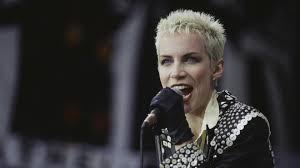
4 “I’ve packed my bags, I’ve cleaned the floor, /Watch me walkin’, walkin’ out the door…”
“Would I Lie to You?”, Eurythmics (Annie Lennox), 1985
Lennox and partner Dave Stewart formed the Eurythmics as a techno-pop duo but eventually evolved in a more rock/R&B direction. This hard-driving rock tune was a Top Five single for them in the U.S., one of three in 1985 from the album “Be Yourself Tonight.” Lennox sings about catching her man cheating and leaving him for good, which ties in nicely with her duet with Aretha Franklin, “Sisters Are Doin’ It For Themselves.”

5 “Something inside has died and I can’t hide, and I just can’t fake it, oh no no…”
“It’s Too Late,” Carole King, 1971
After a brilliant career in the Sixties as a songwriting duo with her husband Gerry Goffin in New York, King divorced and moved to L.A. in 1970, where she teamed up with Toni Stern to write most of her iconic “Tapestry” album. “I Feel the Earth Move” and “So Far Away” were also hits, and her own version of “You’ve Got a Friend” got airplay, but this song about an amicable breakup topped the charts for five weeks in June-July 1971.
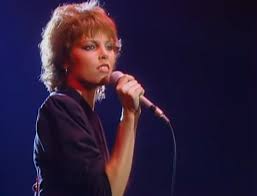
6 “Well you’re the real tough cookie with the long history of breaking little hearts like the one in me…”
“Hit Me With Your Best Shot,” Pat Benatar, 1981
Benatar wasn’t the first woman to front her own rock band, but she was one of the best early successes. She came out of Brooklyn to take the country by storm in 1980 with her second LP, “Crimes of Passion,” which included the Top Ten hit “Hit Me With Your Best Shot.” According to the songwriter, Eddie Schwartz, the song title is meant to be metaphorical rather than literal.
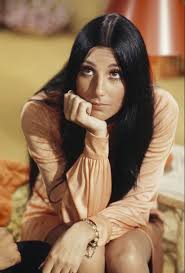
7 “But every night, all the men would come around, /And lay their money down…”
“Gypsys, Tramps and Thieves,” Cher, 1971
A Sixties icon as part of Sonny and Cher, she weathered a fallow period before working with producer Snuffy Garrett to record her first solo #1 single “Gypsys, Tramps and Thieves,” with lyrics that covered adult topics like racism, teenage pregnancy and prostitution. Cher has gone on to become the only artist, male or female, to chart a #1 single in six consecutive decades. She’s being inducted into the Rock and Roll Hall of Fame this week.

8 “My pretty countryside had been paved down the middle by a government that had no pride…”
“My City Was Gone,” The Pretenders (Chrissie Hynde), 1984
A product of Akron, Ohio, Hynde moved to London in the mid-’70s and embraced both punk and New Wave genres. She formed The Pretenders there and began a career as one of the most badass female rockers of all time, writing hard rock and melodic tunes alike. On their third LP, “Learning to Crawl,” The Pretenders featured “My City Was Gone,” an autobiographical song she wrote upon her return visit to Akron after many years away.
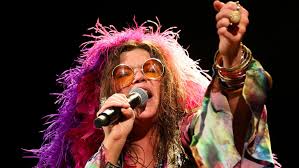
9 “Prove that you love me and buy the next round, /Oh Lord, won’t you buy me a night on the town?…”
“Mercedes Benz,” Janis Joplin, 1971
Janis came to the forefront at the Monterey Pop Festival in 1967 when she was singing with Big Brother and the Holding Company. By 1970, she was touring with The Full-Tilt Boogie Band, and recording her third album, “Pearl,” which included Kris Kristofferson’s “Me and Bobby McGee,” her only #1 hit. From that LP you’ll find the a cappella throwaway, “Mercedes Benz,” a spoof on consumerism, which would be the last track she ever recorded.
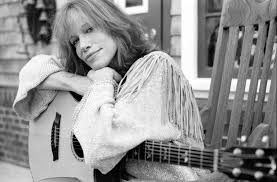
10 “But I rehearsed those words just late last night /When I was thinking about how right tonight might be…”
“Anticipation,” Carly Simon, 1971
For the longest time, I couldn’t hear this song without thinking of the Heinz ketchup TV commercials that used it. It was Carly’s second big hit, with lyrics she wrote about the excitement she felt as she waited for her date to arrive (who happened to be Cat Stevens that night!). The song reached #13 and was the second of ten Top 20 hits she charted throughout the 1970s, most of which she wrote or co-wrote.

11 “Coast to coast, L.A. to Chicago, western male, /Across the north, and south to Key Largo, love for sale…”
“Smooth Operator,” Sade, 1984
Born in Nigeria and raised in England, Sade seemed to come out of nowhere in 1984-85 with her single, “Smooth Operator,” from the album “Diamond Life.” She wrote the lyrics about a fashionable ladies’ man who is actually a devious, jet-setting criminal. Every studio album she has ever released reached the Top Ten in the U.S. and also did well throughout Europe, the UK, Canada and Australia.

12 “And don’t tell me what to do, /Don’t tell me what to say, /And please, when I go out with you, don’t put me on display…”
“You Don’t Own Me,” Lesley Gore, 1964
This early feminist anthem spent three weeks lodged at #2 on the U.S. charts in early 1964, kept from the top spot by The Beatles’ U.S. debut single, “I Want to Hold Your Hand.” Gore had been only 16 when “It’s My Party” had been a chart-topper, and by the time she was 19, she chose to give her career a rest and attend college, a bold move in the finicky world of pop music. Gore died in 2015 at age 68.

13 “I never did believe in miracles, /But I’ve a feeling it’s time to try…”
“You Make Loving Fun,” Fleetwood Mac (Christine McVie), 1977
When Fleetwood Mac was making the multi-platinum “Rumours” LP, Stevie Nicks and Lindsey Buckingham were breaking up, as were Mick Fleetwood and his wife Jenny. John and Christine McVie had just recently divorced, and Christine was already writing songs like “You Make Loving Fun” about her new boyfriend, the band’s lighting director. McVie’s songs have often been the band’s biggest singles, including “You Make Loving Fun” at #9. McVie died at age 79 in 2022.

14 “Go on now, go, walk out the door, /Just turn around now ’cause you’re not welcome anymore…”
“I Will Survive,” Gloria Gaynor, 1979
Although it was written by two men, “I Will Survive” came to represent the women’s movement during its battles for equality in the late ’70s and ’80s. It was actually released as the B-side of Gaynor’s single, but disc jockeys discovered it and played it relentlessly, turning it into a #1 song. Unfortunately, Gaynor’s success was short-lived, as the disco era was ending, but you can still hear the song in karaoke bars every night.

15 “When the truth is found to be lies, /And all the joy within you dies…”
“Somebody to Love,” Jefferson Airplane (Grace Slick), 1967
The San Francisco Sound, as it came to be known, included, most famously, Jefferson Airplane and Grateful Dead. The Airplane had multiple vocalists but founder Marty Balin and especially Grace Slick were at the forefront. On songs like the #5 hit single “Somebody to Love,” written by Slick’s brother-in-law Darby, her powerful voice rings out above a solid rock tune about our universal need for love.

16 “They just use your mind and they never give you credit, /It’s enough to drive you crazy if you let it…”
“9 to 5,” Dolly Parton, 1980
Parton had worked long and hard making a career for herself as a country singer, including one successful foray into the pop charts, “Here You Come Again” in 1977. In 1980, she was tapped to co-star in the working women comedy film “9 to 5,” and she wrote and sang the title song as well, which became a huge #1 hit on pop charts. Parton has established herself as a trailblazer for education and women’s rights in the years since.
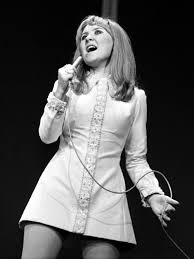
17 “A friend who taught me right from wrong, and weak from strong, /That’s a lot to learn…”
“To Sir With Love,” Lulu, 1967
Marie McDonald McLaughlin Lawrie, better known as Lulu, enjoyed a successful career as a singer and an actress in her native Great Britain, but in the U.S., her fame is mostly limited to her work on the Sidney Poitier film “To Sir With Love.” In addition to playing a part as a high school student, she sang the title tune, which rocketed to #1 and was the best-selling song of the year in the U.S. in 1967.

18 “Go on, get out, get out of my life, and let me sleep at night…”
“You Keep Me Hangin’ On,” The Supremes (Diana Ross), 1966
This Motown track by the Holland-Dozier-Holland songwriting/producing team is one of the best of The Supremes’ catalog, and rivals “Respect” as a song about women needing to rid themselves of the problematic men in their lives. As always, Diana Ross sang lead vocals, and within a year, she would have lead billing as well, which translated into a huge solo career a few years after that.

19 “And you won’t need no camel, no no, when I take you for a ride..”
“Midnight at the Oasis,” Maria Muldaur, 1974
In the Greenwich Village folk scene in the early ’60s, Maria D’Amato was a regular, and sang with a jug band that included her eventual husband Geoff Muldaur. By 1972, she was on her own and recorded her first solo LP, which included “Midnight at the Oasis,” the track many fans have told her was responsible for their pregnancies because of the slyly suggestive lyrics about a love affair in the desert.

20 “You keep playing where you shouldn’t be playing, /And you keep thinking that you’ll never get burned, hah!…”
“These Boots Are Made For Walking,” Nancy Sinatra, 1966
Frank’s daughter surely had connections to score a record deal, but her biggest hit came from her friendship with country/pop singer Lee Hazlewood. He wanted to record his song himself, but Nancy convinced him it would be less harsh coming from a woman. “Boots” became her signature song, and took on a new life as a song about women fighting back against male oppression.
*************************




 Hack's Back Pages