If only you would listen

In his first big hit, “The Sound of Silence,” Paul Simon, one of our wisest and most articulate lyricists, famously wrote, “People talking without speaking, people hearing without listening…”

There’s an important distinction between hearing something and really listening. Hearing may be accidental or involuntary and require no effort. Listening requires intentional focus that often takes sustained concentration.

It’s a sad truth about the human race. As a rule, we’re not good listeners. We’re distracted by other things, other thoughts. Sometimes our egos get in the way, so we’re thinking more about what we’re going to say next instead of focusing on what is being said to us.

As my mother once taught me, “Listening is very important.  You miss a lot if you don’t listen.  Show interest in what others have to say. Listen to your children, and your friends, and your heart. Listen, even if you’re tired, and you’re angry, and you’d like not to, because you will hear things you may never hear any other time.”

When it comes to music, I’ve found that you’ll get much more out of it if you give it your full attention and really listen, especially to the words, perhaps with headphones or earbuds.

The lesson about being a good listener hasn’t been lost on the lyricists of popular song through the years. I have scoured the vaults and selected 15 classic tunes about listening from the ’50s, ’60s, ’70s and ’80s, and I have written a little about each one. As always, there is a Spotify playlist at the end that allows you to, well, listen to the songs as you read along.

Thanks for reading and listening!

*******************************

“Listen to the Music,” The Doobie Brothers, 1972

Tom Johnston was a talented, inventive guitarist who wrote and sang most of The Doobie Brothers’ early singles, and recalls how their first big hit came to be. “The chord structure of it made me think of something positive. It occurred to me that if the leaders of the world got together, sat down and just listened to music and forgot about all this other bullshit, the world would be a much better place. It was very utopian, but it made for a fun song that’s still popular 50 years later.” It appeared on their “Toulouse Street” album and reached #11 on the U.S. Top 40 in 1972.

“Listen,” Chicago, 1969

As the “rock band with horns” that first called themselves Chicago Transit Authority were still playing Chicago area clubs, they were just grateful for the chance to perform. Keyboardist/vocalist Robert Lamm wrote a riveting rocker about how they were convinced people would like their music if they just took the time to hear it: “If it’s good, you can tell us all, /Or you can smile, that’s all right, my friend, /It could be so nice, you know, if only you would listen…” It’s the shortest, punchiest track on Chicago’s debut LP.

“Listen For the Laugh,” Bruce Cockburn, 1994

Cockburn has been a huge star in Canada for decades, but his only chart appearance in the US was 1979’s “Wondering Where the Lions Are,” which reached #21 and earned him a slot on “Saturday Night Live” that year. “Listen for the Laugh,” which came 15 years later, was one of the more philosophical songs he started writing at that point in his career: “It’s not the laughter of a child with toys, it’s not the laughter of the president’s boys, /It’s not the laughter of the media king, this laughter doesn’t sell you anything, /It’s the wind in the wings of a diving dove, you better listen for the laugh of love, /Whatever else you might be thinking of, you better listen for the laugh of love…”

“Listen To Me,” Buddy Holly, 1958

After a debut album as a member of The Crickets, Buddy Holly emerged as the star, with the next record issued under his name, with The Crickets as supporting musicians. On that album, chock full of radio hits like “Peggy Sue,” “Everyday” and “Rave On,” one of the deep tracks was “Listen to Me,” which could have arguably been a single in its own right. Holly co-wrote it with his producer, Norman Petty, who owned a studio in small-town New Mexico where most of Holly’s songs were cut: “Listen to me, hear what I say, our hearts can be nearer each day, /Hold me darling, listen closely to me…”

“Listen to Your Heart,” Roxette, 1988

Per Gessle, the guitarist from the Swedish duo Roxette (with Marie Fredriksson on vocals and keyboards), described “Listen to Your Heart” as “the big bad ballad.” He went on, “This is us trying to recreate that overblown American FM-rock sound to the point where it almost becomes absurd. We really wanted to see how far we could take it.” The lyrics were inspired by a close friend who was “in emotional turmoil, stuck between an old relationship and a new love. A year later, I called him up in the middle of the night and told him, ‘Hey, you’re number one in the States.'” “Listen to your heart when he’s calling for you, /Listen to your heart, there’s nothing else you can do, /I don’t know where you’re going and I don’t know why, /But listen to your heart before you tell him goodbye…”

“Lisa, Listen to Me,” Blood, Sweat & Tears, 1971

David Clayton-Thomas, lead singer of Blood, Sweat and Tears in their commercial heyday, co-wrote this song for the group’s “BS&T; 4” LP in 1971. The lyrics hint at something traumatic that happened to “Lisa” in the past, but she is now in a safer place and can speak freely. The fact that Clayton-Thomas had experienced some parental abuse gives the song more compassion and credibility. The narrator implores her to listen, to share her thoughts and know that he will be a caring listener: “He said, ‘Lisa, listen to me, don’t you know where you belong? /Darling, Lisa, you can tell me, you’ve been silent for too long’…”

“Stop and Listen,” Chuck Berry, 1961

Berry had been one of the true pioneers and stars of early rock and roll, but by the time his album “New Juke Box Hits” was recorded and released in 1961, he was in the midst of legal difficulties, which led to a prison term in 1962. The adverse publicity from these legal problems affected record sales, which is a shame, because people missed out on several deep tracks. The slow blues tune “Stop and Listen,” which has a wonderful groove to it, I only recently discovered, in which Berry warns against jumping into a relationship: “Stop and listen, before you make a start, /Stop and listen, before you make a start, /Because if you fall in love, it may break your heart…”
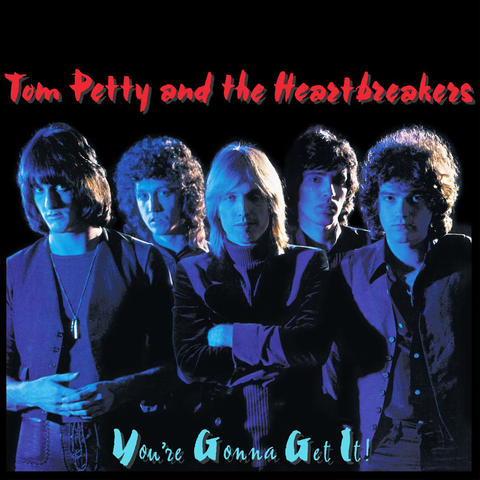
“Listen to Her Heart,” Tom Petty & The Heartbreakers, 1978

Although it peaked at a disappointing #59 upon release in 1978, “Listen to Her Heart” is now considered one of Tom Petty’s best songs. He wrote it at a time when another man had been hitting on his then-wife, and he felt the need to tell him, “Buddy, you don’t even know her.” He played it often in concert during his long career: “You think you’re gonna take her away with your money and your cocaine, /Keep thinkin’ that her mind is gonna change, but I know everything is okay, /She’s gonna listen to her heart, it’s gonna tell her what to do, /Well, she might need a lot of lovin’, but she don’t need you…”

“Listen to What the Man Said,” Paul McCartney and Wings, 1975

Author Vincent Benitez, who wrote at length about McCartney’s solo years, said, “‘The Man’ in this tune is not explicitly identified, but many interpret it to be God. McCartney is advising us to stick with the basics of life, which to him means love.” Wings recorded the track in New Orleans for their “Venus and Mars Are Alright Tonight” album, with Tom Scott providing a masterful solo on sax. “Listen to What the Man Said” is “another fine example of buoyant, optimistic McCartney pop,” said Benitez. “Love is fine, for all we know, /For all we know, our love will grow, /That’s what the man said, /So won’t you listen to what the man said?…”

“Listen,” Al Green, 1972/1989

Throughout the 1970s, Al Green recorded for Hi Records, a small Memphis record label that specialized in gospel-influenced Southern soul. During Green’s commercial peak when he had three Top Ten albums (1972-1973), many extra songs were recorded but set aside for various reasons. Several of those were unearthed in 1989 and compiled on “South Lauderdale Avenue,” a collection of previously unreleased tracks by Green and others on that label. The best is “Listen,” which could have easily been a hit for him.

“Listen Like Thieves,” INXS, 1985

In this catchy track, INXS frontman Michael Hutchence asks us not to believe everything we read and hear. Band member Andrew Farriss said, “I love that phrase, ‘listen like thieves.’ Thieves have to listen closely lest they be discovered committing a crime. I think Michael’s lyric was saying that discerning the truth takes vigilance. The media haven’t been great watchdogs when it comes to news and politics. To get the real story, we need to listen like thieves.”

“Listen To Me,” The Hollies, 1968

This song was the final Hollies track in which Graham Nash participated before leaving to join forces with David Crosby and Stephen Stills. Nash had wanted to move beyond the usual sunny Hollies fare but the rest of the band disagreed. Written by songwriter Tony Hazzard, “Listen to Me” reached #11 in their native UK but went nowhere in the US. Its lyrics ask that we listen as “I’ll sing a song to change your mind” and help us be more optimistic: “Listen to me and very soon I think you’ll find /Somebody wants to help you, somebody seems to care, /And very soon you’ve forgotten that you didn’t care about love…”
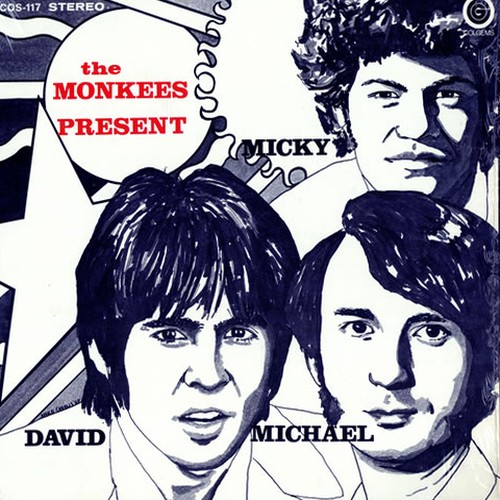
“Listen to the Band,” The Monkees, 1969

Written by Michael Nesmith and recorded in Nashville, “Listen to the Band” was released as the B-side of a single with “Someday Man,” a Paul Williams song sung by usual Monkees lead singer Davy Jones. DJs preferred the country music vibe of Nesmith’s tune, but The Monkees were on their last legs at that point (Peter Tork had left), and the song never made it past #63 on the U.S. charts. The song suggests focusing on the band performing instead of getting caught up in a lost lover: “Weren’t they good? They made me happy, I think I can make it alone, /Oh mercy, woman plays a song and no one listens, I need help, I’m falling again, /Play the drum a little bit louder, tell them they can live without her if they only listen to the band…”

“Listen To Me Baby,” Smokey Joe Baugh, 1955

This early rocker is credited to Baugh, but it’s basically the Big Joe Turner classic “Shake, Rattle and Roll” with new words and a slightly altered melody. Baugh was on Sam Phillips’ Sun Records label, and Phillips figured Baugh’s distinctive, raspy voice would appeal to black audiences even though he (like label mate Elvis Presley) was white. Baugh made dozens of recordings for Sun but they were never issued, mostly because Baugh and Phillips never got along.

“Listen,” Tears for Fears, 1985

Ian Stanley, who served as a member of Tears for Fears for the group’s first three albums, was given chief songwriting credit for “Listen,” the mostly instrumental closing track on the multiplatinum “Songs From the Big Chair” album. It has a spooky, otherworldly vibe dominated by guitar and keyboards, and a brief lyric that implores us to simply “listen…soothe my feeling…now I feel it…” Stanley left the group during production of “The Seeds of Love” in 1989 but went on to produce numerous other artists in the 1990s and beyond, including The Pretenders, The Human League and Tori Amos.

*****************************

Get ready, ’cause here I come

Henry Ford gets credit for inventing the mass-produced automobile, but in a way, he is also partly responsible for Detroit’s second-most important product:  Motown.

A young man named Berry Gordy emerged from the Army in 1953 at age 24 and began working at a Ford assembly plant, while putting in time at a jazz record store on the side. The monotony of the job gave him the freedom for his mind to wander and think about his passion:  Music.  Rhythm and blues, mostly.  And he thought about how the way a car was made — empty shell moving along the assembly line, brakes fastened on, motor hooked up, upholstery installed, finishing touches added  — could be a template for how a song might be made.

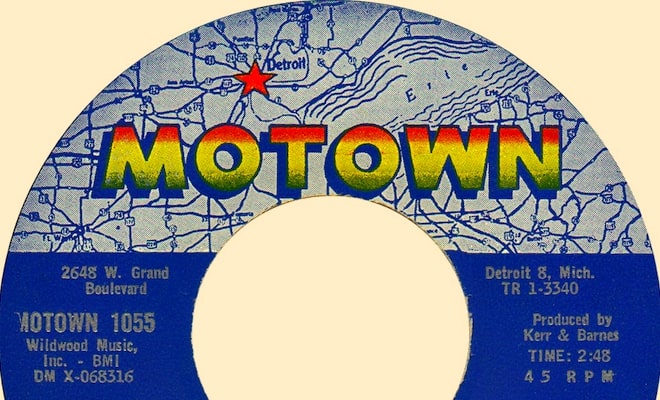
Five years later, he founded a record label and publishing company, named after the city he lived in and loved:  The Motor City.  Motor Town.  MoTown.  Additional subsidiary labels and corporations sprang up — Tamla, Gordy, Jobete — but that was just window dressing. The public will always know and define the wondrous, infectious, sexy, soulful music that came from there as Motown.

I should say right here that, as a 9-year-old in 1964, I wouldn’t have been as aware of Motown music without the considerable influence of my then-12-year-old sister Carrie, who was a fanatic for the contagious, danceable, singable music of Motown artists.  I am forever grateful that she exposed me to the irresistible melodies, harmonies, bass lines and lyrics of the iconic stable of musicians that, collectively, will forever be known as The Motown Sound.

And what a stable it was:  Smokey Robinson and The Miracles.  Marvin Gaye.  The Temptations.  Martha Reeves and the Vandellas.  Little Stevie Wonder.  The Four Tops. Mary Wells.  The Marvalettes.  Gladys Knight and the Pips.  And, of course, Diana Ross and The Supremes, Motown’s greatest success, who rivaled The Beatles on the US singles charts with five consecutive #1 hits in 1964.

Gordy never played an instrument and wasn’t a singer, but he had an uncanny ear for what could be a hit, and he could even compose a great song now and then.  In 1960, he co-wrote “Money (That’s What I Want),” which became Motown Records’ first hit, sung by Barrett Strong and later covered by The Beatles, among others.

It was the beginning of a spectacularly successful, even revolutionary company — and a sound and approach that shook the popular music scene to its core just as it was evolving from a safe, white-bread confection into the multi-headed juggernaut that redefined pop culture forever.  An exaggeration?  I don’t think so.  Every wedding reception band you’ve ever danced to still plays Motown.  Satellite radio stations still play Motown incessantly.   Retail stores play it through their sound systems.  It’s intrinsic.  And in my view, that’s a good thing, because it’s just so damn great.

Gordy’s mission was simple.  As the Fifties became the Sixties, he was tired of watching as black artists wrote, recorded and released great music, only to have it ignored or sidelined on mainstream pop radio in favor of inferior cover versions by white artists who bleached the soul and emotion out of it.  Witness Pat Boone’s lame take of “Tutti Frutti” compared to Little Richard’s incendiary original.  “It drove me crazy,” said Berry.

He strove to create an environment where black artists could write, produce, sing and record great songs that black AND white American audiences could enjoy.  Gordy made it very clear:  He wanted tracks that were catchy, memorable, easy to digest, and sounded great on a transistor radio or through tinny car radio speakers. Early on, he bought property in Detroit that became the “Hitsville U.S.A.” studio, eventually buying several adjacent properties as the business grew.

Berry Gordy in front of the Hitsville U.S.A. property in 1964

He put together the assembly line he had envisioned:  He hired songwriters and producers like Brian and Eddie Holland and Lamont Dozier, and William “Smokey” Robinson, and Norman Whitfield and Barrett Strong, to come up with the great material and give it the compelling sound that would make the songs burst through the radio.  He brought in a band of largely unheralded studio wizards known loosely as The Funk Brothers —  Earl Van Dyke (keyboards), James Jamerson (bass), Benny Benjamin and Richard Allen (drums), Robert White and Joe Messina (guitar), Jack Ashford (percussion), among others — to provide the all-important accompaniment.  And most prominently, he cultivated the vocalists who would be the very visible “face” of Motown.

“The Funk Brothers” accompanying Stevie Wonder

A crucial part of that plan was the presentation.  When the Supremes, the Tempts and others appeared on “The Ed Sullivan Show” and other mainstream venues, they were polished.  They were impeccably dressed.  They were choreographed to the hilt.  This was no accident.  Gordy knew that if they were to be accepted by white audiences back then, they would have to be charming and delightful, not even remotely edgy or threatening.  He even brought in some charm school people to give the artists etiquette lessons.  This all translated into major chart success and packed houses at their ever-broadening live appearance opportunities.

The Supremes with Ed Sullivan (L-R): Florence Ballard, Mary Wilson, Diana Ross

This acquiescence to a “safe” approach had its detractors, particularly among blacks.  Stax Records, operating out of Memphis with acts like Otis Redding, Aretha Franklin and Wilson Pickett, offered what many felt was a much more authentic “soul music” experience — grittier guitar parts, horns instead of strings, vocals far more passionate.  The lyrics of the Stax songs were more suggestive, more sexual, more genuine, and the records of these artists sold better in black communities, and, in hindsight, they’re arguably the more vibrant recordings (“Respect” and “Chain of Fools,” Aretha Franklin; “Shake” and “Try a Little Tenderness,” Otis Redding; “In the Midnight Hour” and “Funky Broadway,” Wilson Pickett; “Soul Man” and “Hold On, I’m Comin’,” Sam and Dave).

But Motown ruled the roost, in the broader public eye, from the early ’60s into the 1970s. Beginning with Barrett Strong’s “Money” in 1960, Motown started slowly but strongly, with moderate chart hits like “Shop Around” (The Miracles), “Please Mister Postman” by The Marvalettes (the first #1 Motown hit), “Do You Love Me” (The Contours), “You Beat Me to the Punch” (Mary Wells), “Stubborn Kind of Fellow” (Marvin Gaye), “Fingertips” (Stevie Wonder) and “Heat Wave” (Martha Reeves).

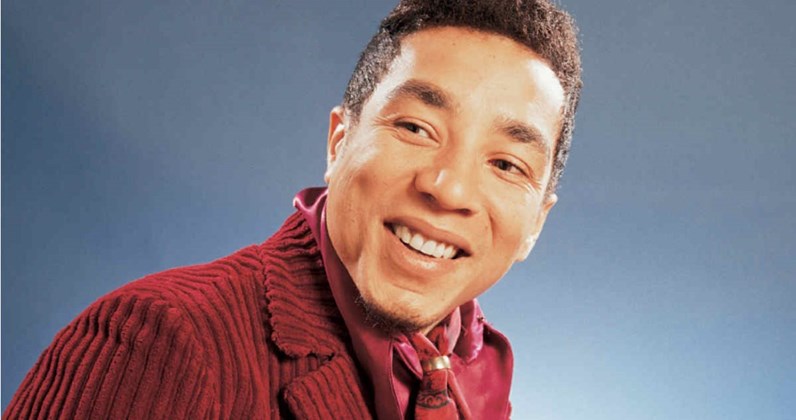
Smokey Robinson

Robinson recalled how Motown’s approach allowed acts to tour all over the country and internationally, even into segregated cities and venues that were reluctant to host Black artists. “We were not only making music, we were making history. Acts were going all over the world. I recognized the bridges that we crossed, the racial problems and the barriers that we broke down with music. I recognized it, because I lived it. I would come to the South in the early days of Motown and the audiences would be segregated. Then they started to get the Motown music and we would go back, and now the audiences were integrated, and the kids were dancing together and holding hands. ”

In response to the British Invasion, The Beach Boys and other mainstream pop artists of that period, Gordy cranked up his assembly-line hit machine with The Supremes and the Temptations and others, and for five years or so, it seemed that no one could touch Motown.  From 1964 through 1969, Motown artists had an incredible 65 Top Ten singles.  In 1966 alone, 75% of the songs they released reached the Top 40. In the first week of 1969, five of the top seven hits on the Top 40 were by Motown artists.

The Four Tops

I mean, come on.  It’s a ridiculous embarrassment of riches:  “Ain’t Too Proud to Beg.” “Baby I Need Your Loving.”  “Get Ready.”  “For Once In My Life.”  “You Can’t Hurry Love.” “Ain’t No Mountain High Enough.”  “My Guy.”  “The Tracks of My Tears.”  “Baby Love.” “Nowhere to Run.”  “I Can’t Help Myself.”  “Uptight.”  “My World Is Empty Without You.” “Ain’t That Peculiar.”  “My Girl.”  “More Love.”  “Dancing in the Streets.”  “You Keep Me Hangin’ On.” “Reach Out, I’ll Be There.”  “I Was Made to Love Her.”

Sure, the Motown labels had struggling artists who never reached the chart success of their peers.  Have you heard of The Velvelettes?  Shorty Long?  Marv Johnson?  Choker Campbell?  Debbie Dean?  Didn’t think so.  But mostly, Motown had a superlative track record.  A few had just one or two hits — The Contours (“Do You Love Me”), Junior Walker and the All-Stars (“Shotgun,” “What Does It Take”), Edwin Starr (Agent Double-O-Soul,” “War”) — but they were HUGE hits.

Gordy and his team were remarkably good at listening to a song in production and identifying it as a hit single.  As legend has it, every Friday there would be a staff meeting, at which everyone was asked to listen to the latest songs in the works and ask themselves: “If you have a dollar and you’re really hungry, would you buy a hot dog, or would you buy this record?”  In most cases, if they wanted the record, it ended up as a million seller.

But his Midas touch was not without its missteps.  My favorite anecdote involves his inexplicable refusal to fully appreciate “I Heard It Through the Grapevine.”  Written by Whitfield and Strong in 1966, the song was first recorded by Smokey Robinson and The Miracles, but Gordy was unenthused, and sent it back for re-tooling. Then Marvin Gaye took a stab at it, but that too was rejected.  Finally Gladys Knight and the Pips tried a faster, upbeat arrangement, and Gordy approved, and it went on to reach #2 on the charts in late 1967. But it was in the summer of 1968 when Gaye re-recorded it, and although Gordy was hesitant to release it as a single in the wake of Knight’s successful version, he finally relented, and it not only went to #1 but became the definitive version. Creedence and other bands went on to do credible cover versions based on Gaye’s rendition.

L-R: Lamont Dozier, Brian Holland, Eddie Holland

Ultimately, like all empires, Motown began to crumble.  Holland-Dozier-Holland, the trio that wrote and produced dozens of major hits for the Supremes and others but didn’t own their songs, felt slighted by their pitiable royalty payments and defected in 1967.   By 1968, the country had become a different place, between the Vietnam War and the civil rights movement, and the Motown artists insisted that their songs should comment on what was going on, despite Gordy’s preference for sunny songs about love and heartache.  He resisted, but Marvin Gaye and Stevie Wonder, in particular, won the right to compose and produce their own material, and the result was a radical shift from boy-girl love songs to diatribes about the state of society, reflected in songs like The Supremes’ “Love Child” (1968), The Temptations’ “Ball of Confusion” (1970), Gaye’s “What’s Going On” (1971) and Wonder’s “Living For The City” (1973).

Gordy was not blameless for Motown’s fall from grace.  He had his own share of personal dalliances, most notably a relationship with Diana Ross that produced a child and ended up bringing about her departure from The Supremes in 1970 for a successful solo career (and she ultimately left Gordy and Motown a decade later).

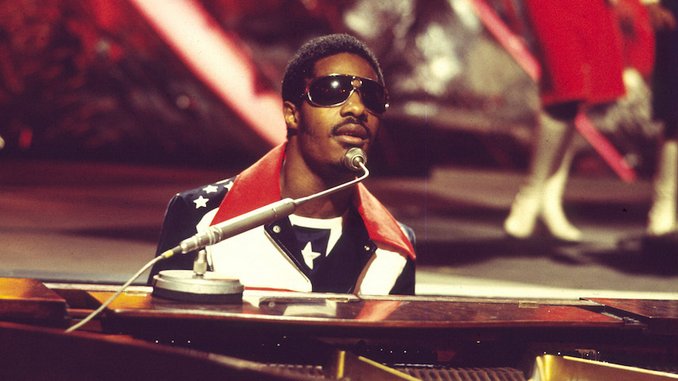
Stevie Wonder in 1971

Still, Motown remained a powerful force in the ’70s and ’80s.  Wonder’s extraordinary string of self-produced records (“Talking Book,” “Innervisions,” “Fulfillingness’ First Finale,” “Songs in the Key of Life”), three of which won Album of the Year Grammys, and the emergence of The Jackson 5, who showed up in 1969 and dominated the charts in the early ’70s, kept Motown profitable and in good stead.  (Of course, Michael Jackson the solo artist was a Motown thoroughbred, and he eventually became the biggest star in the universe in the ’80s, but he’d left for Columbia Records by then.)  And new sensations like The Commodores and Thelma Houston helped the label navigate the evolution from soul to funk and disco.  Even into the ’90s and beyond, artists like Boys II Men, The Dazz Band, and Tony! Toni! Tone! kept the Motown boat afloat, but Gordy had sold his interests at that point.

The Jackson 5 in 1971

Gordy was rightfully inducted early into the Rock and Roll Hall of Fame in the Non-Performers category in 1988, and his 1994 autobiography, “To Be Loved: The Music, Magic and Memories of Motown” is definitely worth reading, if a bit too self-aggrandizing. In 2013, “Motown The Musical” made a big splash on Broadway and in various touring versions nationwide.

If you want to learn more about the Motown story from an entertaining perspective, I strongly recommend the 2002 documentary film “Standing in the Shadows of Motown,” which tells the tale from the viewpoint of The Funk Brothers, whose musical stylings played a crucial role in the Motown Sound’s widespread popularity.

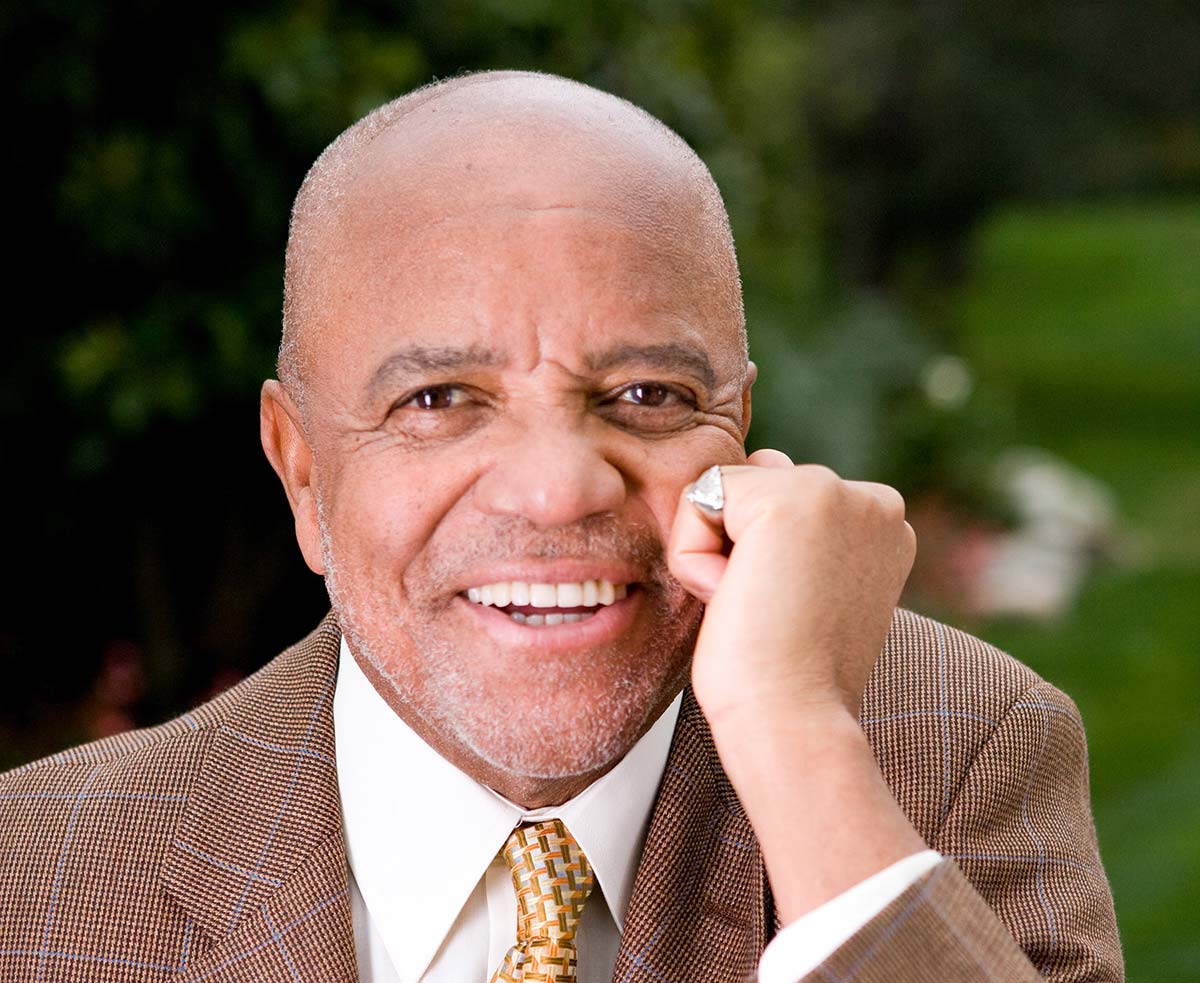
Berry Gordy in 1988

Gordy deserves a world of praise for the results of his “Hitsville USA” efforts back in that long-ago era.  It was truly a magical time, the mid-’60s…  Magical music that still resonates passionately today.  As the 1967 song lyric goes, “Reflections of the way life used to be…”

****************************

This Spotify playlist of Motown songs runs long (80 selections!) because it offers a cross section of most of the label’s best artists and includes huge hits and lesser-known gems as well. Press “play” and enjoy!