5 o’clock in the morning, I’m already up and gone

In 1882, the first parade that celebrated the contributions of laborers to the country’s development was staged in New York City. Within the decade, more than 30 states were holding their own events honoring workers, and by 1894, Congress passed a bill recognizing the first Monday of September as Labor Day and making it an official federal holiday.

These days, we all enjoy the three-day Labor Day weekend, even though it marks the unofficial end of summer and a return to school. We tend to forget the holiday’s original meaning…but not here at Hack’s Back Pages. For this post, I have collected 20 songs from the classic rock era that celebrate the working men and women that keep our nation humming along. Perhaps you can use the Spotify playlist found at the end of the post as a soundtrack to your weekend activities.

*************************

“Five O’Clock World,” Vogues, 1965

Songwriter Allen Reynolds, who became a successful songwriters’ publisher in Nashville, wrote the workday anthem “Five O’Clock World” in 1965, and it became a Top Five hit for The Vogues, a Pittsburgh-based vocal group that had just scored another Top Five hit with “You’re the One.” Reynolds remembers watching commuters coming and going one weekday morning and thought it would make a great pop song: “Up every morning just to keep a job, I gotta fight my way through the hustling mob, /Sounds of the city poundin’ in my brain while another day goes down the drain…” Artists as varied as country singer Hal Ketchum and synth pop band Ballistic Kisses have covered the song over the years, and The Vogues’ version was used as the theme song for comedian Drew Carey’s workplace sitcom “The Drew Carey Show” in the 1990s.

“Workin’ For a Livin’,” Huey Lewis & The News, 1982

Lewis spent much of the ’70s in San Francisco bars and London pubs as lead singer and harmonica player in various bands. By 1980, he won a record contract as Huey Lewis and The News, and in 1982, the group broke through with “Do You Believe in Love,” a #7 hit on the pop chart. The follow-up single, the energetic “Workin’ For a Livin’,” stalled at #41 but became a fan favorite in concert. Said Lewis, “I wrote it while I was working as a truck driver, and I thought about these other jobs I’d had, like bartender and bus boy.” Lewis re-recorded the song 25 years later in a duet with Garth Brooks, which reached #20 on the country chart: “Hundred dollar car note, two hundred rent, I get a check on Friday, but it’s already spent, /Workin’ for a livin’, livin’ and workin’, I’m taking what they givin’ ’cause I’m working for a livin’…”

“Manic Monday,” The Bangles, 1986

In the 1960s, The Mamas and The Papas had a #1 hit with their song “Monday, Monday,” the day of the week most people dislike because it signals a return to work after two days off. In 1984, Prince wrote “Manic Monday” about a woman who dreads getting up for work on a Monday morning. He intended to give it to his protégés Apollonia 6, but he didn’t like how it turned out and shelved it. Two years later, he was impressed when he heard The Bangles’ song “Hero Takes a Fall” and decided to offer “Manic Monday” to them. They made it the first of seven hit singles between 1986 and 1989 and, ironically, the record reached #1 the same week Prince’s own single “Kiss” peaked at #2: “It takes me so long just to figure out what I’m gonna wear, /Blame it on the train, but the boss is already there, /It’s just another manic Monday, I wish it was Sunday, /’Cause that’s my fun day, my ‘I don’t have to run’ day…”

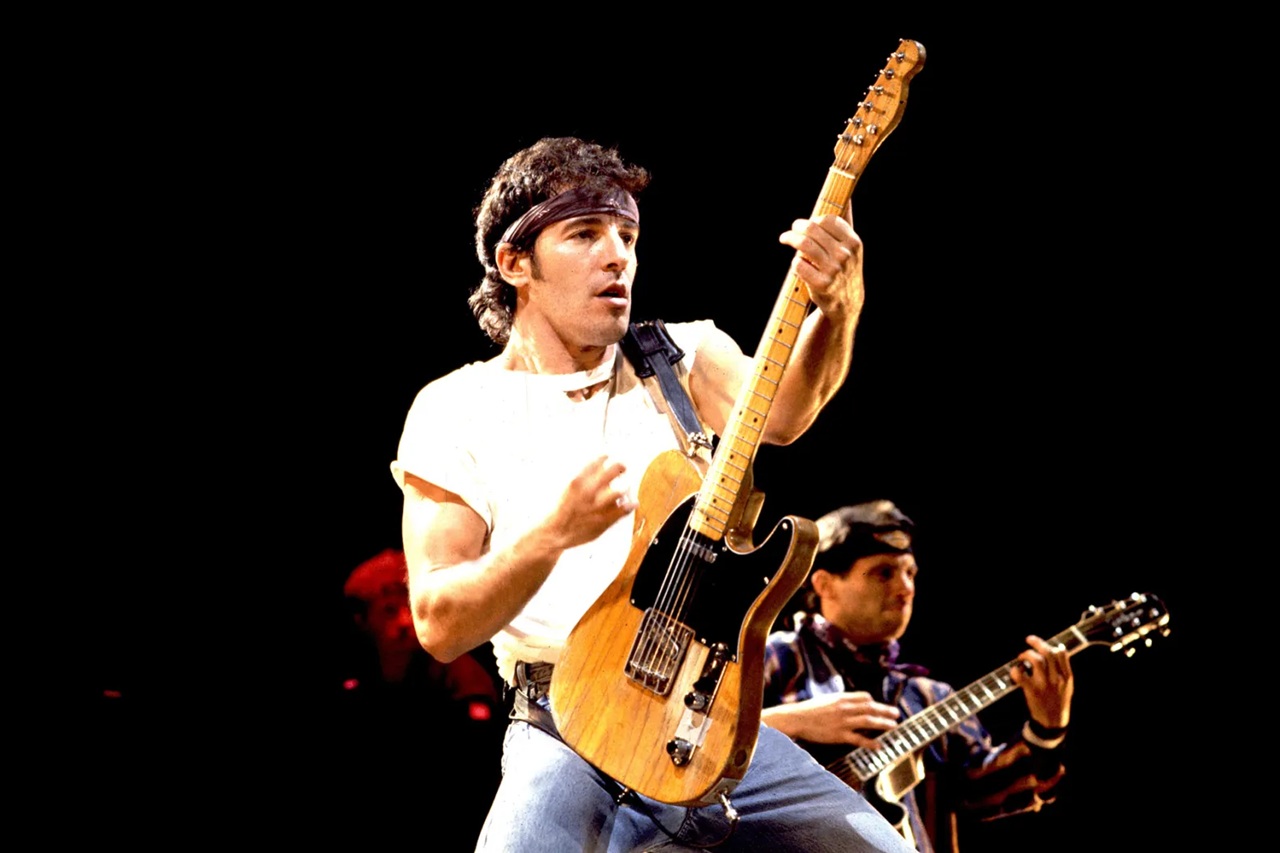
“Factory,” Bruce Springsteen, 1978

Springsteen’s first three albums created characters and settings full of romance and hope, but his fourth LP, “Darkness on the Edge of Town,” is decidedly more downbeat. Critics praised a maturity and evolution in his music and lyrics, noting how punk rock and country music had begun to influence his songs. Boston reviewer Trevor Levin said Springsteen “has perfected a genre of rock meant to embrace working class American life while depicting it as essentially joyless and cursed.” A strong example of this is the deep track “Factory,” a concise study of the dead-end life that awaits factory workers each day: “Early in the morning, factory whistle blows, /Man rises from bed and puts on his clothes, /Man takes his lunch, walks out in the morning light, /It’s the working, the working, just the working life…”

“Blue Collar,” Bachman-Turner Overdrive, 1973

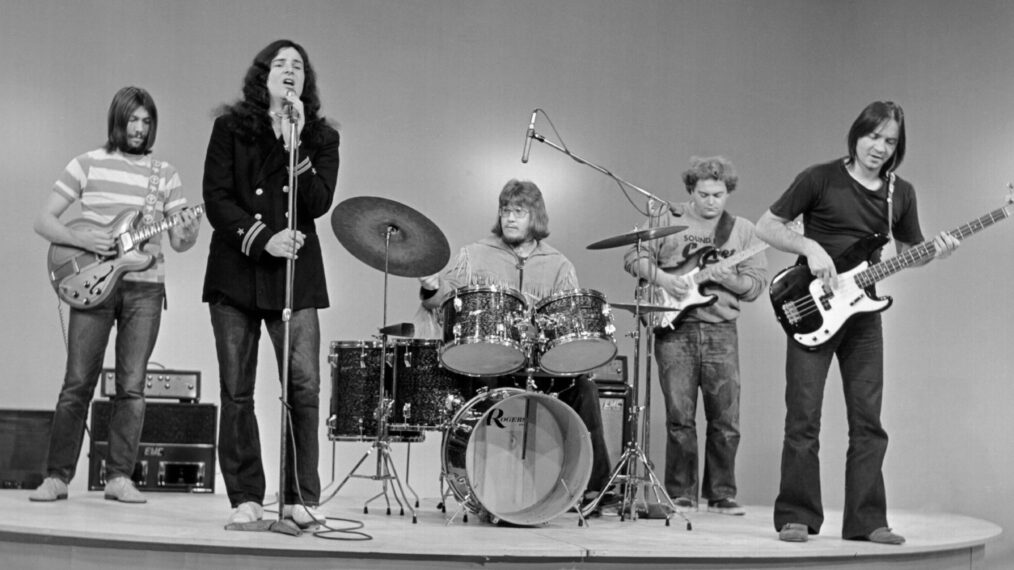
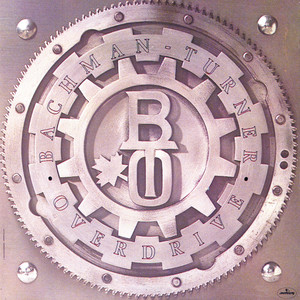
When Randy Bachman left The Guess Who in 1970, he first formed the band Brave Belt and concentrated on country rock material, which never found much of an audience. When C.F. “Fred” Turner joined the lineup on bass and vocals, he also brought a handful of original songs that veered more toward jazz-infused rock. They changed their name to Bachman-Turner Overdrive, signed with a new label and found success with their debut LP in 1973, despite no hit singles. One song, Turner’s delicious “Blue Collar,” stalled at #68 but became a favorite in their concert setlist for years to come as a contrast to the straight-ahead rock of most of their catalog. The song’s narrator sings about the trials and tribulations of working the night shift: “Sleep your sleep, I’m awake and alive, I keep late hours, you’re a nine to five, /So I would like you to know I need the quiet hours to create in this world of mine, /Blue collar…”

“9 to 5,” Dolly Parton, 1980

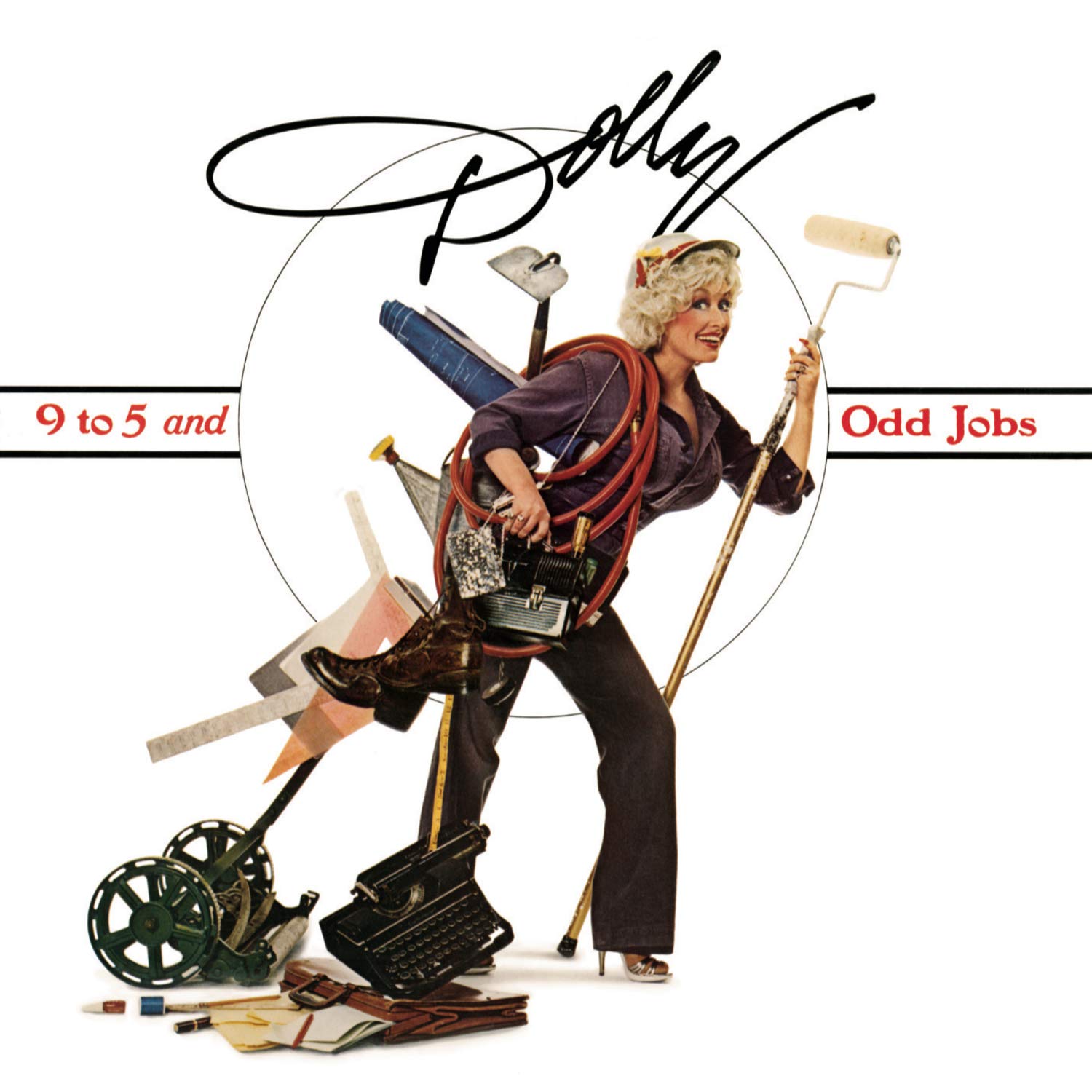
When Jane Fonda came up with the idea of a film about women office workers, she envisioned it as a drama, “but it was coming across too preachy, too much like lecturing the audience. So we decided to make it a comedy instead.” They hired Director Colin Higgins and said, “What you have to do is write a screenplay which shows you can run an office without a boss, but you can’t run an office without the secretaries.” The resulting film — starring Fonda, Lily Tomlin and breakout star Dolly Parton — was a huge hit, and Parton wrote and sang the infectious theme song, which reached #1 on both the pop and country charts, winning two Grammys. The lyrics paint a bleak picture of how secretaries are treated: “Workin’ 9 to 5, what a way to make a livin’, /Barely gettin’ by, it’s all takin’ and no givin’, /They just use your mind, and you never get the credit, /It’s enough to drive you crazy if you let it…”

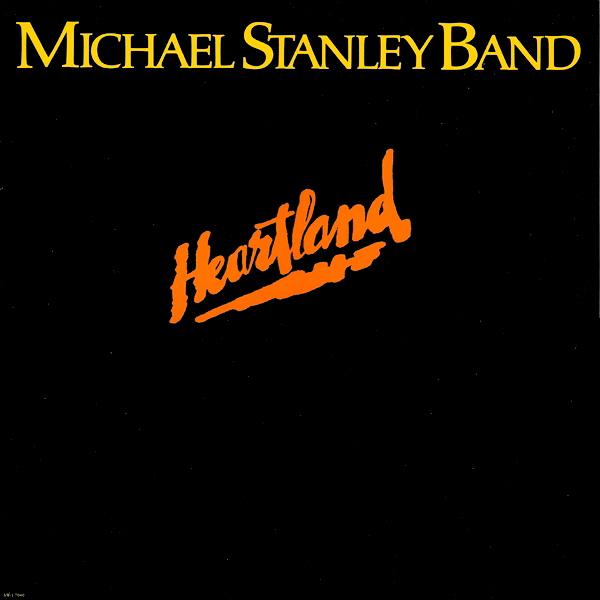
“Working Again,” Michael Stanley Band, 1980

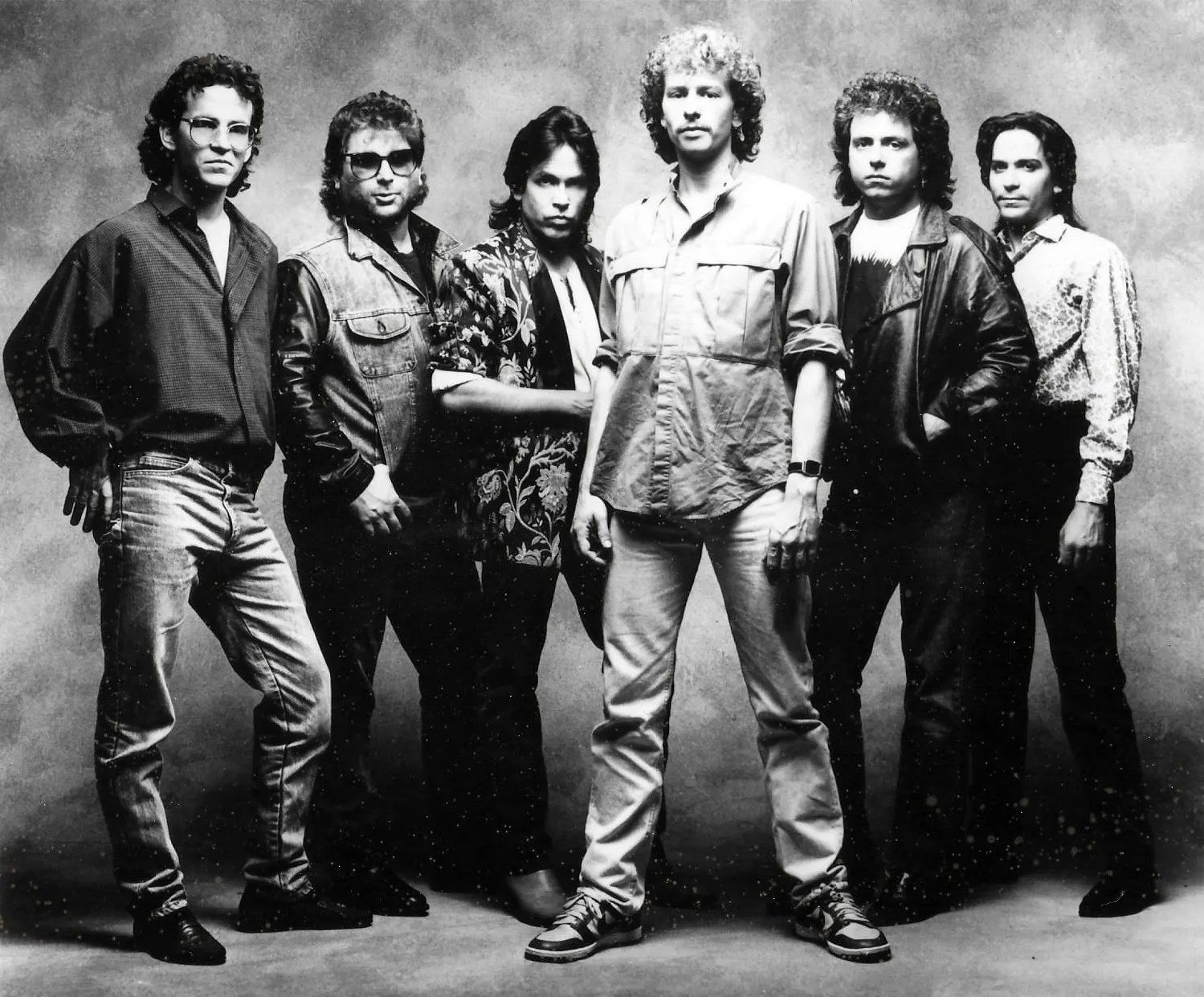
Cleveland’s hometown musical hero led one of the best underrated bands in the country during the 1975-1985 period, cranking out dozens of great Midwest rock and roll songs, smartly arranged and produced, but the fame they deserved largely eluded them. MSB, as their fans called them, recorded passionate songs of romance and loss, of dreams and despair, mirroring the lives of the working class kids who made up the bulk of their listening audience. On their 1980 LP, “Heartland,” Stanley wrote “Working Again,” a pounding rock track about the daily grind at work made tolerable by escapist evenings: “I’m gonna make it to the line, and put my time inn, like my old man. before me, died in dreamland with the union by his side, /But not tonight, tonight I’m gonna try a little harder, but come the light, I’m gonna be working, working again…”

“Money For Nothing,” Dire Straits, 1985

Mark Knopfler, the group’s über-talented guitarist/songwriter/vocalist, said he got the idea for this iconic #1 hit while visiting a TV/appliance store. “The lead character in ‘Money for Nothing’ is a guy who works in the hardware department installing all the TVs on the showroom floor. He was watching music videos on the TV screens and commenting disparagingly about the musicians and how ‘That ain’t workin’.’ I borrowed a bit of paper and started to write the song down in the store because I wanted to use a lot of the language that the real guy actually used because it was more real.” One line of the lyric proved controversial: “See the little faggot with the earring and the make-up? /Yeah buddy, that’s his own hair, /That little faggot got his own jet airplane, /That little faggot, he’s a millionaire…” The blue-collar worker showed himself to be jealous of how the rock star earns his money: “You play the guitar on the MTV, /That ain’t working, that’s the way you do it, /Money for nothing, and your chicks for free…”

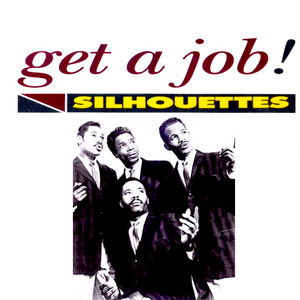
“Get a Job,” The Silhouettes, 1958

Richard Lewis, Bill Horton, Earl Beal and Raymond Edwards comprised The Silhouettes, one of Philadelphia’s better R&B vocal groups. They scored their biggest hit right out of the gate, “Get a Job,” a doo-wop classic that hit #1 on the pop and R&B charts in 1958 and was covered by many artists and used in such films as “American Graffiti,” “Trading Places” and “Good Morning, Vietnam.” It was Lewis who wrote the lyrics about a man whose wife berates him for his unemployment even though he is desperately struggling to find a job: “Well every morning about this time, (Sha-na-na-na, sha-na-na-na-na), She gets me out of bed, a-crying, ‘get a job!’ (Sha-na-na-na, sha-na-na-na-na), /After breakfast every day, she throws the want ads right my way, and never fails to say, ‘get a job!’…” It turned out to be their only Top 40 chart appearance, and one supposes they all had to get a job at that point.

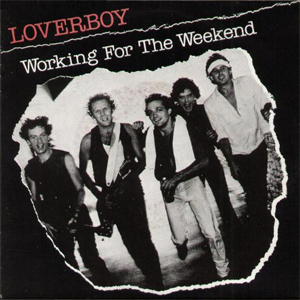
“Working For the Weekend,” Loverboy, 1981

The Canadian band Loverboy struck big in the US between 1980 and 1985, with four Top 20 albums and nine Top Ten singles on the Mainstream Rock singles charts. One of their biggest was “Working for the Weekend,” which came from guitarist Paul Dean’s experience one weekday afternoon when he was out walking and found the area mostly deserted. “So I’m out on the beach,” he said, “and wondering, ‘Where is everybody? Well, I guess they’re at work. They’re all waiting for the weekend.'” Singer Mike Reno suggested they change the title to “Working for the Weekend.” At the time the song was written, Loverboy was still playing bars and small clubs to little response, but when they played this tune to open one set, “The dance floor was absolutely packed. It pumped them up.” “Everybody’s working for the weekend, /Everybody wants a new romance, /Everybody’s going off the deep end, /Everybody needs a second chance…”

“Work to Do,” Average White Band, 1974

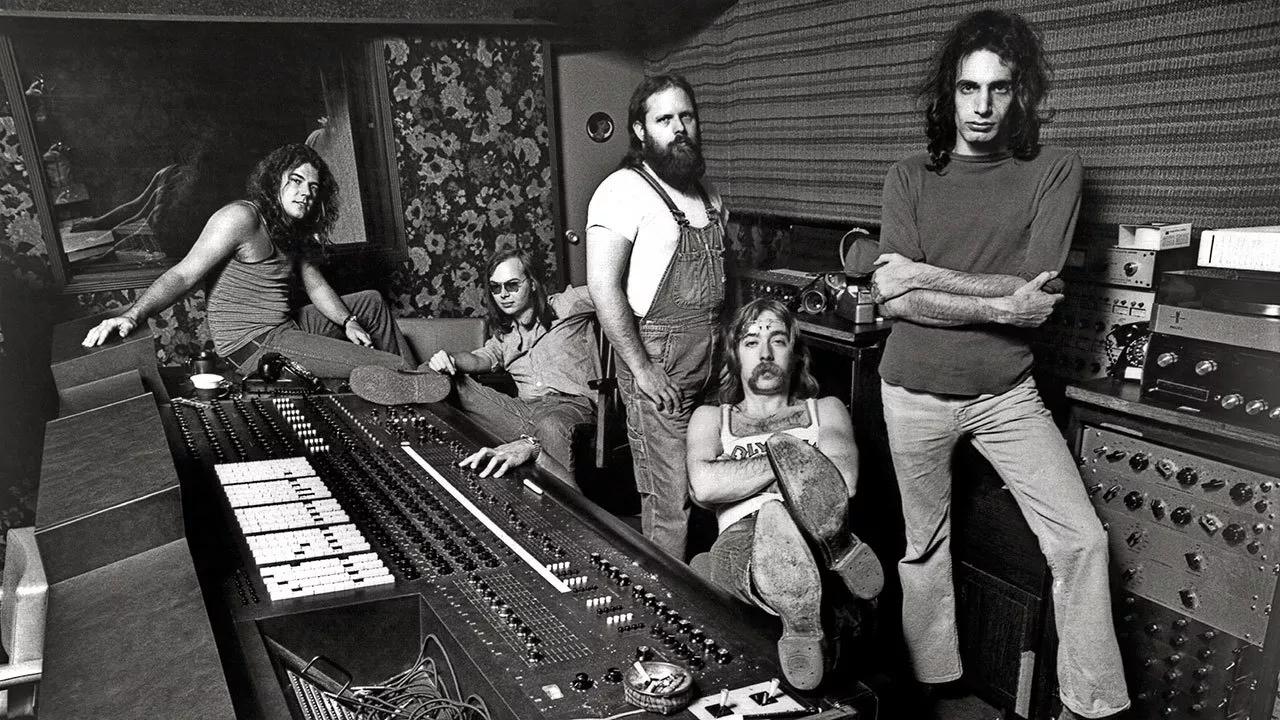
This Scottish R&B band were struggling along in the early ’70s when Eric Clapton’s manager took a shine to their lively neo-soul, flew them to L.A. and put them in the capable hands of producer Arif Mardin. Their self-titled second album vaulted to #1 in the US (#6 in the UK) on the strength of the mostly-instrumental track “Pick Up the Pieces,” which also reached #1. I preferred the B-side of that single, the insistent “Work To Do,” which drove home the idea that, as much as I’d like to spend more time with you, there’s work to be done first: “I’ve been trying to make it, woman, can’t you see? /Takes a lot of money to make it, let’s talk truthfully, /Keep your love light burning, and a little food hot in a plate, /You might as well get used to me coming home a little late, /’Cause I got work to do, I got work, baby…”

“Working Man Blues,” Merle Haggard, 1969

Country music legend Merle Haggard, who helped develop the country sub-genre known as the “Bakersfield Sound,” had a traumatic childhood scarred by his father’s death, a path of petty crime and violence, and multiple incarcerations. By 1960, he straightened himself out, adopting a strong work ethic as he pursued a career in music, writing and recording many dozens of songs and amassing an astounding 38 #1 hits on the country charts between 1965 and 2015. One of his most widely praised tunes is “Working Man Blues” from his 1969 LP “A Portrait of Merle Haggard,” featuring fine guitar work from the wondrous James Burton: “Hey hey, the working man, the working man like me, /I ain’t never been on welfare, that’s one place I won’t be, /’Cause I’ll be working long as my two hands are fit to use, /I drink a little beer in a tavern, sing a little bit of these working man blues…”

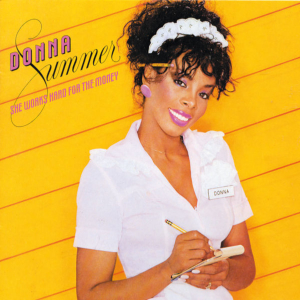
“She Works Hard For the Money,” Donna Summer, 1983

After years as a stage performer ion Germany and Austria, Summer returned to the US and became the undisputed “Queen of Disco” with a dozen Top Ten hits, many with longer dance-club versions. In 1983, she was at a private party at a West Hollywood restaurant when she visited the ladies’ room and encountered an attendant who was sound asleep, exhausted from her day-long work shift. “I looked at her,” Summer recalled, “and my heart just filled up with compassion for this lady, and I thought, ‘God, she works hard for the money, cooped up in this stinky little room all night.’ Then a light went off in my head, and I said, ‘She works hard for the money! That’s a song!'” It went to #1: “It’s a sacrifice working day to day for little money, just tips for pay, /But it’s worth it all to hear them say that they care, /She works hard for the money, so you better treat her right…”

“Bus Rider,” The Guess Who, 1970

Following the release of their big #1 hit “American Woman,” The Guess Who parted ways with founding member Randy Bachman, leaving keyboardist-vocalist Burton Cummings in charge. His first move was to hire two guitarists, Kurt Winter and Greg Liskiw, who took turns beefing up the arrangements with sizzling solos and fills. Cummings continued writing irresistibly catchy tunes that became great radio fare (“Share the Land,” “Albert Flasher,” “Rain Dance”), but Winter also had a knack for songwriting, as evidenced by the hit “Hand Me Down World” and its B-side, “Bus Rider,” an ode to the working stiff. With Cummings on piano and vocals, “Bus Rider” became one of my favorite Guess Who tunes: “Leave the house at six o’clock to be on time, /Leave the wife and kids at home to make a dime, /Grab your lunch pail, check for mail in your slot, /You won’t get your check if you don’t punch the clock, /Bus rider…”

“I’ve Been Working,” Van Morrison, 1970

The free, relaxed sound that Morrison conjured for his iconic “Moondance” LP in 1970 was markedly different from the quieter, more vulnerable vibe of his “Astral Weeks” album before it. Morrison originally intended that the next project be recorded a cappella with a small chorus, but he ended up using the same backing musicians from the “Moondance” album and tour, and additional voices, and the record company saw fit to call the album “His Band and The Street Choir.” One track, “I’ve Been Working,” had been tried twice before in earlier album sessions, and the third time captured a wonderfully hypnotic groove based around the opening lyric “I’ve been working so hard” and “I’ve been grinding so long,” devolving into “woman, woman, woman, woman” and “all right, all right, all right, all right.”

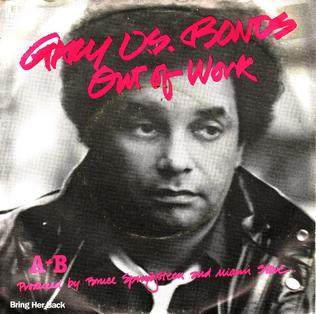
“Out of Work,” Gary U.S. Bonds, 1983

Gary Anderson, who later adopted the stage name Gary U.S. Bonds, scored four Top Ten hits in the early ’60s, most notably the rave-up “Quarter to Three,” a feisty little blues rocker that topped the charts in 1961. Bonds proved to be an early influence on Bruce Springsteen, who was happy to use his clout to help revive Bonds’ career in the early 1980s, writing ten songs that appeared on two Bonds LPs in 1982 and 1983. Most notable were the hit singles “This Little Girl” and “Out of Work,” both of which benefitted from the participation of The E Street Band in the studio. In “Out of Work” (basically a rewrite of Springsteen’s “Heavy Heart”), Bonds sings lyrics that struck home with many during the Reagan recession: “8 A.M., I’m up and my feet beating on the sidewalk, /Down at the unemployment agency, all I get’s talk, /I check the want ads but there just ain’t nobody hiring, /What’s a man supposed to do when he’s down and out of work, I need a job, I’m out of work…”

“The Working Man,” Creedence Clearwater Revival, 1968

John Fogerty was still honing his songwriting chops when his band Creedence Clearwater Revival recorded their debut LP in 1968. While he went on to write a dozen Top Ten hits over the next four years, at that point, the group’s best efforts came on the Dale Hawkins classic “Susie-Q” and the Screamin’ Jay Hawkins slow blues, “I Put a Spell on You.” Wedged between those two tracks was a Fogerty original called “The Working Man,” which served as a prototype for later Creedence songs like “Penthouse Pauper” and “Tombstone Shadow.” The song’s lyrics laid out Fogerty’s no-nonsense work ethic: “Well, I was born on a Sunday, on Thursday, I had me a job, /I was born on a Sunday, by Thursday, I was workin’ out on the job, I ain’t never had no day off since I learned right from wrong…”

“I’ve Been Working Too Hard,” Southside Johnny and The Asbury Jukes, 1991

One of the great unheralded bands from the ’70s/’80s was this group of R&B devotees from the Jersey shore fronted by singer John Lyons. Their first three LPs in 1976-1978 received immeasurable support from Lyons’ longtime pal Steve Van Zandt, who wrote and/or produced most of the best songs in the Asbury Jukes catalog. So it was only natural that, after suffering a rough patch in the late ’80s, Lyons called upon Van Zandt to fuel his comeback LP, “Better Days.” One of the highlights from that disc is “I’ve Been Working Too Hard,” a glorious, horns-driven rocker: “Now, money and me don’t talk too much, we never got along too well, /But when I got some in my pocket, I seem to have a lot more friends, /I pay the landlord and the taxman, and it’s time to go to work again, /Can I get a witness? /Let me hear you say, I’ve been workin’ too hard…”

“Take this Job and Shove It,” Johnny Paycheck, 1982

Donald Lytle was a harmony singer for country music legends like Ray Price and George Jones before he changed his name to Johnny Paycheck (contrary to popular myth, it was not meant as a parody of Johnny Cash). In the late ’70s, Paycheck became part of the outlaw country scene alongside Waylon Jennings, Willie Nelson and Hank Williams Jr., and enjoyed his own #1 song on the country charts, the iconic “Take This Job and Shove It.” Written by fellow outlaw David Allan Coe, the song’s title became a ubiquitous phrase in popular culture, not only among unhappy employees but among those who could no longer tolerate their car, their spouse, their whatever: “One of these days I’m gonna blow my top, and that sucker, he’s gonna pay, /Lord, I can’t wait to see their faces when I get the nerve to say, /Take this job and shove it, I ain’t working here no more…”

“Takin’ Care of Business,” Bachman-Turner Overdrive, 1973

In addition to the previously mentioned “Blue Collar,” BTO also recorded what may be the quintessential song about the working life. While still in The Guess Who, Randy Bachman had written a tune he called “White Collar Worker,” but when he found himself at odds with the rest of the band, he departed, forming another group called Brave Belt, which morphed into Bachman-Turner Overdrive by 1973. He revived “White Collar Worker” for their setlist, but one day, he heard a Vancouver radio deejay say, “We’re takin’ care of business here at CFUN Radio,” and decided to insert the phrase in the chorus where “white collar worker” had been. The crowd ate it up, stomping and shouting along to what became the song’s new title when they recorded it weeks later. It’s one of BTO’s signature songs, and an anthem of the working world: “You get up every morning from your ‘larm clock’s warning, take the 8:15 into the city, /There’s a whistle up above, and people pushin’, people shovin’, and the girls who try to look pretty, /And if your train’s on time, you can get to work by nine, and start your slaving job to get your pay…”

****************************

Honorable mention:

Welcome to the Working Week,” Elvis Costello, 1977; “Working Girl,” Cher, 1987; “Working in the Coal Mine,” Lee Dorsey 1966; “Morning Train (Nine to Five),” Sheena Easton, 1980; “Bang the Drum All Day,” Todd Rundgren, 1982; “Working John, Working Joe,” Jethro Tull, 1980; “Working Man,” Rush, 1974; “Chain Gang,” Sam Cooke, 1960.

****************************

What the mama saw, it was against the law

Paul Simon sang the above line in the 1972 hit “Me and Julio Down By the School Yard,” but he chuckled and left it up to us to ruminate on what the mama actually saw. Something naughty, evidently…

Many of us would agree that mothers do seem to have eyes in the backs of their heads, catching us doing stuff we shouldn’t. I remember a children’s TV host in Cleveland in the ’60s who used to sign off with, “You can fool some of the people all of the time, and all of the people some of the time, but you can’t fool Mom!”

It was just over a century ago when President Woodrow Wilson declared the second Sunday of May to be Mother’s Day, a national holiday set aside to honor mothers, motherhood, maternal bonds and the influence of mothers in society. Mom, after all, is “the person who has done more for you than anyone in the world,” said Anna Jarvis, the Suffragette-era activist who spearheaded the move for an official Mother’s Day.

Popular music has not missed out on the opportunity to celebrate mothers — or, at least, to include “mother or mama” in the song title. In genres from hard rock to country, from Top 40 pop to soul, mothers have served as great subject matter for songs of all kinds.

Even that iconoclast, the late Frank Zappa, and his first band, The Mothers of Invention, offered a song called “Motherly Love” on their 1966 debut: “Motherly love is just the thing for you, you know your Mothers gonna love you ’til you don’t know what to do…”  So what if it was about the band, not the woman?  

The Mothers of Invention

Rock music being rebellious, some songs I found don’t really celebrate mothers as much as find fault with them. Queen has a track entitled “Tie Your Mother Down” that, while not espousing bondage, is about a teen couple wanting to keep Mom constrained long enough for them to fool around uninterrupted. On “Synchronicity,” The Police included a blunt track called “Mother” that goes, “The telephone is ringing, /Is that my mother on the phone? /The telephone is screaming, /Won’t she leave me alone?…” There’s a place for such songs, I suppose, but not here, not now.

There are plenty of more recent tunes about mothers, like the poignant “Mother” by Kacey Musgraves (2018) or the racy “Stacy’s Mom” by Fountains of Wayne (2003). But this blog has traditionally explored songs from the ’50s, ’60s, ’70s and ’80s, and that’s where my focus will be on this post. I have selected 15 tunes about mothers that adopt a generally appreciative attitude toward her, some with humor, some with honor and love. I think the Spotify playlist found at the end (and a second playlist of “honorable mentions”) will be well received when you invite your moms, your mothers-in-law, your mothers-to-be or your grandmas over for dinner on Sunday.

Happy Mother’s Day!

**************************
“Your Mother Should Know,” The Beatles, 1967

This track was one of the half-dozen Paul McCartney sing-song numbers recorded by The Beatles in their final three years that John Lennon derisively referred to as “Granny music” (songs that your grandparents would like).  Paul said he wrote it on a harmonium in his London home when Liverpool relatives were visiting, inspired by the kinds of songs they used to sing in the parlor at Christmastime. It looked good in a scene in the band’s experimental film “Magical Mystery Tour” with the foursome descending a grand staircase in white tuxedos.  Musically, it’s rather slight, but it has a nice sentiment that Dear Old Mom should love: “Let’s all get up and dance to a song that was hit before your mother was born, /Though she was born a long long time ago, Your mother should know…”

“That’s All Right Mama,” Elvis Presley, 1954

In one of his earliest recording sessions, Elvis and his combo were messing around with a speeded-up version of this old Arthur Crudup blues tune.  Producer Sam Phillips was immediately struck by it and concluded it was the “blues meets country” sound he’d been looking for, and it ended up as Presley’s first single and, many claim, one of the first rock and roll songs ever. With only minimal distribution or promotion, it didn’t chart nationally but reached #4 on local Memphis charts. Fifty years later in 2004, its re-release reached #4 in the UK. In Crudup’s lyrics, the narrator sings: “Mama she done told me, /Papa done told me too, /’Son, that gal you’re foolin’ with, /She ain’t no good for you,’ /But that’s all right, that’s all right, /That’s all right now, mama, anyway you do…”

“Your Mama Don’t Dance,” Loggins and Messina, 1972

Jim Messina recalled his home environment this way: “My stepfather was into country. He was an Ernest Tubbs/Hank Snow kind of guy. But my Mom loved Elvis, and Ricky Nelson, and R&B stuff. She was shy, though, and didn’t really dance much. So the song’s title, first line and chorus were based on that experience I had growing up in that household.” He fleshed it out with references to curfews and drive-in movies, and “Your Mama Don’t Dance” ended up reaching #4 on US pop charts in late 1972 as Loggins and Messina’s biggest chart hit: “The old folks say that you gotta end your date by ten, If you’re out on a date and you bring it home late, it’s a sin, /There just ain’t no excuse and you know you’re gonna lose, /You never win, I’ll say it again, /And it’s all because your mama don’t dance and your daddy don’t rock and roll…”

“Mama Told Me Not to Come,” Three Dog Night, 1970

Randy Newman, one of the more celebrated songwriters and film composers of his generation, came up with this tune as part of his 1970 debut release, “12 Songs.”  He didn’t achieve much commercial success as a recording artist, but his songs often did well in the hands of others.  Three Dog Night had one of the biggest radio hits of 1970 with their version of Newman’s “Mama Told Me (Not to Come),” which features one of his typically sardonic lyrics about a guy who is uncomfortable attending drug parties and realizes he should’ve listened to his mother’s advice: “I seen so many things I ain’t never seen before, /Don’t know what it is, I don’t wanna see no more, /Mama told me not to come, /Mama told me not to come, /She said, ‘That ain’t the way to have fun, son’…”

“Mama Said,” The Shirelles, 1961

The Shirelles, a New Jersey-based trio who became one of the early “girl group” successes, had several classic singles during the 1960-1963 period: “Will You Still Love Me Tomorrow,” “Dedicated to the One I Love,” “Soldier Boy,” “Baby It’s You,” “Foolish Little Girl.” One of their best was “Mama Said,” written by Willie Denson and Luther Dixon, which peaked at #4 as their third consecutive Top Five hit. Its lyrics reinforced the wisdom of a mother’s warning about how young love can knock you off your feet: “I went walking the other day, /Everything was going fine, /I met a little boy named Billy Joe, /And then I almost lost my mind, /Mama said there’ll be days like this, there’ll be days like this, my mama said…” The song inspired John Lennon’s “Nobody Told Me” (1980) and Van Morrison’s “Days Like This” (1995).

“Momma,” Bob Seger, 1975

The pride of Detroit’s heartland rock scene, Seger wrote honest, unvarnished rock songs about working-class life in the Midwest. Before breaking out nationwide with the 1976 LP “Night Moves,” Seger plugged away for nearly a decade with various bands and as a solo act until finding the right chemistry with The Silver Bullet Band. Their “Beautiful Loser” album in 1975 gave the first hint of Seger’s composing abilities, and one track, “Momma,” revealed that he didn’t necessarily get along that well with his strict mother. Still, he conceded that although she could be tough, she was always truthful with him: “Oh, how she could control me, /And when I was bad, she’d scold me, /Sometimes she wouldn’t hold me, and I’d cry, /But momma, she never told me a lie…”

“Mother and Child Reunion,” Paul Simon, 1972

In 1971, eager to begin his solo career, Simon was in a Chinese restaurant in New York City one night when he was amused to see a chicken-and-egg dish on the menu creatively called Mother and Child Reunion.  “What a great song title,” he thought, and began writing a song that addressed the sometimes fickle nature of the mother-child relationship. Enamored by the strains of Jamaican reggae, he incorporated the intriguing rhythms into the song’s structure, and by early 1972, he had his first solo Top Ten hit. The lyrics describe the “strange and mournful day” when the mother (the chicken) and the child (the egg) are reunited on a dinner plate: “Though it seems strange to say, /I never been laid so low, /In such a mysterious way, /And the course of a lifetime runs over and over again…”

“Mama’s Pearl,” Jackson 5, 1971

The Jackson 5’s fifth single was originally entitled “Guess Who’s Makin’ Whoopee (With Your Girlfriend),” but the folks at Motown intervened, thinking it would be inappropriate for such overt thoughts to be coming out of 12-year-old Michael’s mouth. Producer Deke Richards rewrote a few lyrics and changed the title to “Mama’s Pearl,” and it ended up reaching #2 in early 1971. The track still retaining the lyrical idea that the boy wished his sheltered girlfriend would loosen up and move beyond the making-out stage: “We kiss for thrills, then you draw the line, /Oh baby, /’Cause your mama told you that love ain’t right, /But don’t you know good loving is the spice of life, /Mama’s pearl, let down those curls, /Won’t you give my love a whirl, /Find what you been missing, ooh ooh now, baby…”

“Mamas, Don’t Let Your Babies Grow Up to Be Cowboys,” Willie Nelson & Waylon Jennings, 1978

In 1978, Nelson and Jennings, both seasoned veterans of country music, were each riding high with a string of #1 albums in 1975-1977. They were good friends and had performed together on occasion, so they chose to collaborate on “Waylon & Willie,” which not only sat at #1 on country album charts for three months, it reached #12 on pop charts as well. A big reason for that was the success of the single, “Mamas, Don’t Let Your Babies Grow Up to Be Cowboys,” with lyrics that urged mothers everywhere to raise their children to be “doctors and lawyers and such” instead of cowboys, because “they’ll never stay home and they’re always alone, even with someone they love…”  The track appeared in a scene from the 1979 Jane Fonda-Robert Redford film “The Electric Horseman.”

“Mama Kin,” Aerosmith, 1973

Emerging from the smoky rock clubs of Boston in 1973, Aerosmith launched their career with their self-titled debut album, which flopped, stalling at #166 on US album charts. Some critics dismissed them as “a K Mart version of The Rolling Stones.” By 1976, after the triumph of their next three LPs, the debut album re-entered the charts and peaked at #21, thanks to the tardy success of “Dream On.” The first single, “Mama Kin,” never even charted but became a popular live song at Aerosmith concerts over the years. Its composer, vocalist Steven Tyler, says the lyrics are essentially about “the importance of staying in touch with your family, your roots, your ‘Mama Kin.’ Keeping in touch with mama kin means keeping in touch with the old spirits that got you there in the first place.”

“Never Tell Your Mother She’s Out of Tune,” Jack Bruce, 1969

One of the sadly neglected LPs of 1969 was “Songs For a Tailor,” the solo debut of bassist/vocalist Jack Bruce, following the breakup of Cream eight months earlier. It includes originals like “The Clearout,” which Cream had recorded but didn’t release, and “Theme From an Imaginary Western,” made famous by Mountain at Woodstock. I love the rollicking opening track, “Never Tell Your Mother She’s Out of Tune,” with a title inspired by guitarist Chris Spedding, whose mother was a professional singer. At one of her shows, Spedding pointed out that one of the violin players was out of tune, which angered her — not the fact that the violin needed tuning but that her son had said so publicly. Bruce thought it made a great song title, although the lyrics by Pete Brown go in another direction and make no mention of the incident.

“For a Thousand Mothers,” Jethro Tull, 1969

Tull’s highly praised and popular second album, 1969’s “Stand Up,” offers an eclectic smorgasbord of rock, blues, folk and jazz influences, with Ian Anderson providing the lyrics from fictional scenarios, occasionally mixed with biographical anecdotes or experiences from his personal life. Songs like “Back to the Family” and “For a Thousand Mothers” described Anderson’s relationship with his parents at the time, alternately loving and tempestuous. The latter tune took his mother and father to task for their lack of emotional support of his musical dreams: “Did you hear mother? Saying I’m wrong, but I know I’m right, /Did you hear father? Calling my name into the night, saying I’ll never be what I am now, /Telling me I’ll never find what I’ve already found, /It was they who were wrong, and for them here’s a song…”

“Mama Lion,” Crosby and Nash, 1975

In 1969-70, Graham Nash had had an intense relationship with Joni Mitchell, and they both later wrote songs about it (Joni’s “Willy” and “My Old Man,” Graham’s “Our House” and “Simple Man”). In 1972, Joni wrote “See You Sometime,” which includes the line, “I run in the woods, /I spring from the boulders like a mama lion.” As he was writing songs for “Wind on the Water,” Nash’s 1975 LP with periodic collaborator David Crosby, he came up with “Mama Lion,” which takes a sobering look at the romantic relationship’s aftermath, based on Mitchell’s earlier tune: “Mama lion, mama lion, I’m starting to sink, /Beneath the sunshine and the icicles, and the things that you think, /There’s a hole in my destiny, and I’m out on the brink, /Mama lion, mama lion…”

“Mother’s Little Helper,” The Rolling Stones, 1966

As the recreational use of mind-altering drugs like marijuana and LSD began increasing in the mid-’60s, Mick Jagger and Keith Richards couldn’t help but notice the hypocrisy of parents who criticized the practice while secretly taking amphetamines and tranquilizers to boost their energy or calm them down. They co-wrote “Mother’s Little Helper,” a phrase some moms used as code to describe their own hushed-up vice: “And though she’s not really ill, there’s a little yellow pill, she goes running for the shelter of a mother’s little helper, and it helps her on her way, gets her through her busy day…” The song peaked at #8 in 1966 as The Rolling Stones’ 12th single. Richards and Brian Jones played altered 12-string guitars to mimic the sound of a sitar, one of several Indian instruments then in vogue.

“Tell Mama,” Etta James, 1968

Written and recorded by Clarence Carter as “Tell Daddy” in 1967, this tune was retitled “Tell Mama” for Etta James to sing when Muscle Shoals Studios producer Rick Hall took charge of the recording session. James objected at first, reluctant to be cast as an Earth Mother, “the gal you come to for comfort,” but it turned out to be her biggest hit on the US pop charts, reaching #23 (and #10 on R&B charts). Over a spirited, horn-driven arrangement, James sings about a young man who’s betrayed by his girl, after which his mother reaches out to give him some TLC: “She would embarrass you anywhere, /She’d let everybody know she didn’t care… /Tell Mama all about it, /Tell Mama what you need, /Tell Mama what you want, /And I’ll make everything all right…”

*************************

Here are a few more that make my “honorable mention” list:  

“Mama Gets High,” Blood Sweat & Tears, 1971;  “Mother,” Pink Floyd, 1979; “Crazy Mama,” J.J. Cale, 1972; “That Was Your Mother,” Paul Simon, 1986; “Sweet Mama,” The Allman Brothers, 1975; “Mother,” John Lennon, 1970; “Motorcycle Mama,” Neil Young and Nicolette Larson, 1978;  “Mother Goose,” Jethro Tull, 1971;  “New Mama,” Stephen Stills, 1975; “Mother Nature’s Son,” The Beatles, 1968;  “Mama,” Genesis, 1983;  “Look What They’ve Done to My Song, Ma,” The New Seekers, 1970; “Mother,” Chicago, 1971;  “Mothers Talk,” Tears For Fears, 1985;  “Tough Mama,” Bob Dylan, 1974; “Mamma Mia,” ABBA, 1975.

***************************