What the mama saw, it was against the law

Paul Simon sang the above line in the 1972 hit “Me and Julio Down By the School Yard,” but he chuckled and left it up to us to ruminate on what the mama actually saw. Something naughty, evidently…

Many of us would agree that mothers do seem to have eyes in the backs of their heads, catching us doing stuff we shouldn’t. I remember a children’s TV host in Cleveland in the ’60s who used to sign off with, “You can fool some of the people all of the time, and all of the people some of the time, but you can’t fool Mom!”

It was just over a century ago when President Woodrow Wilson declared the second Sunday of May to be Mother’s Day, a national holiday set aside to honor mothers, motherhood, maternal bonds and the influence of mothers in society. Mom, after all, is “the person who has done more for you than anyone in the world,” said Anna Jarvis, the Suffragette-era activist who spearheaded the move for an official Mother’s Day.

Popular music has not missed out on the opportunity to celebrate mothers — or, at least, to include “mother or mama” in the song title. In genres from hard rock to country, from Top 40 pop to soul, mothers have served as great subject matter for songs of all kinds.

Even that iconoclast, the late Frank Zappa, and his first band, The Mothers of Invention, offered a song called “Motherly Love” on their 1966 debut: “Motherly love is just the thing for you, you know your Mothers gonna love you ’til you don’t know what to do…”  So what if it was about the band, not the woman?  
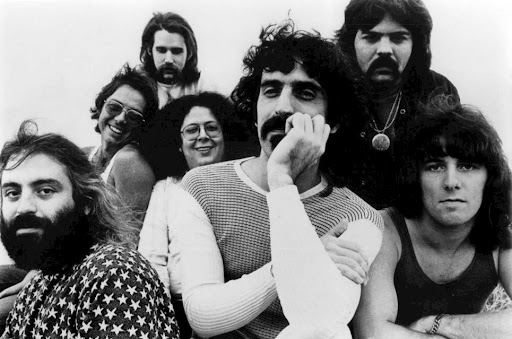
The Mothers of Invention

Rock music being rebellious, some songs I found don’t really celebrate mothers as much as find fault with them. Queen has a track entitled “Tie Your Mother Down” that, while not espousing bondage, is about a teen couple wanting to keep Mom constrained long enough for them to fool around uninterrupted. On “Synchronicity,” The Police included a blunt track called “Mother” that goes, “The telephone is ringing, /Is that my mother on the phone? /The telephone is screaming, /Won’t she leave me alone?…” There’s a place for such songs, I suppose, but not here, not now.

There are plenty of more recent tunes about mothers, like the poignant “Mother” by Kacey Musgraves (2018) or the racy “Stacy’s Mom” by Fountains of Wayne (2003). But this blog has traditionally explored songs from the ’50s, ’60s, ’70s and ’80s, and that’s where my focus will be on this post. I have selected 15 tunes about mothers that adopt a generally appreciative attitude toward her, some with humor, some with honor and love. I think the Spotify playlist found at the end (and a second playlist of “honorable mentions”) will be well received when you invite your moms, your mothers-in-law, your mothers-to-be or your grandmas over for dinner on Sunday.

Happy Mother’s Day!

**************************
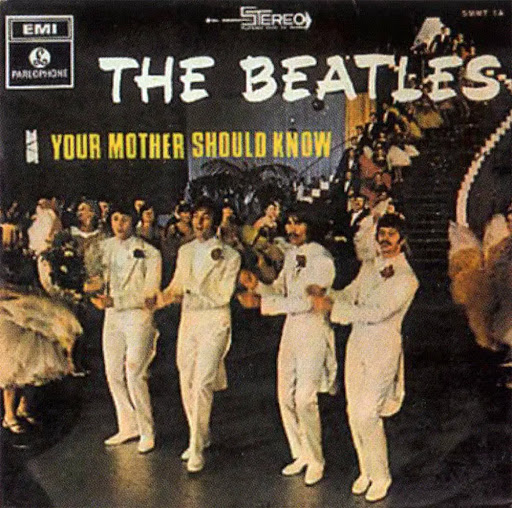
“Your Mother Should Know,” The Beatles, 1967

This track was one of the half-dozen Paul McCartney sing-song numbers recorded by The Beatles in their final three years that John Lennon derisively referred to as “Granny music” (songs that your grandparents would like).  Paul said he wrote it on a harmonium in his London home when Liverpool relatives were visiting, inspired by the kinds of songs they used to sing in the parlor at Christmastime. It looked good in a scene in the band’s experimental film “Magical Mystery Tour” with the foursome descending a grand staircase in white tuxedos.  Musically, it’s rather slight, but it has a nice sentiment that Dear Old Mom should love: “Let’s all get up and dance to a song that was hit before your mother was born, /Though she was born a long long time ago, Your mother should know…”
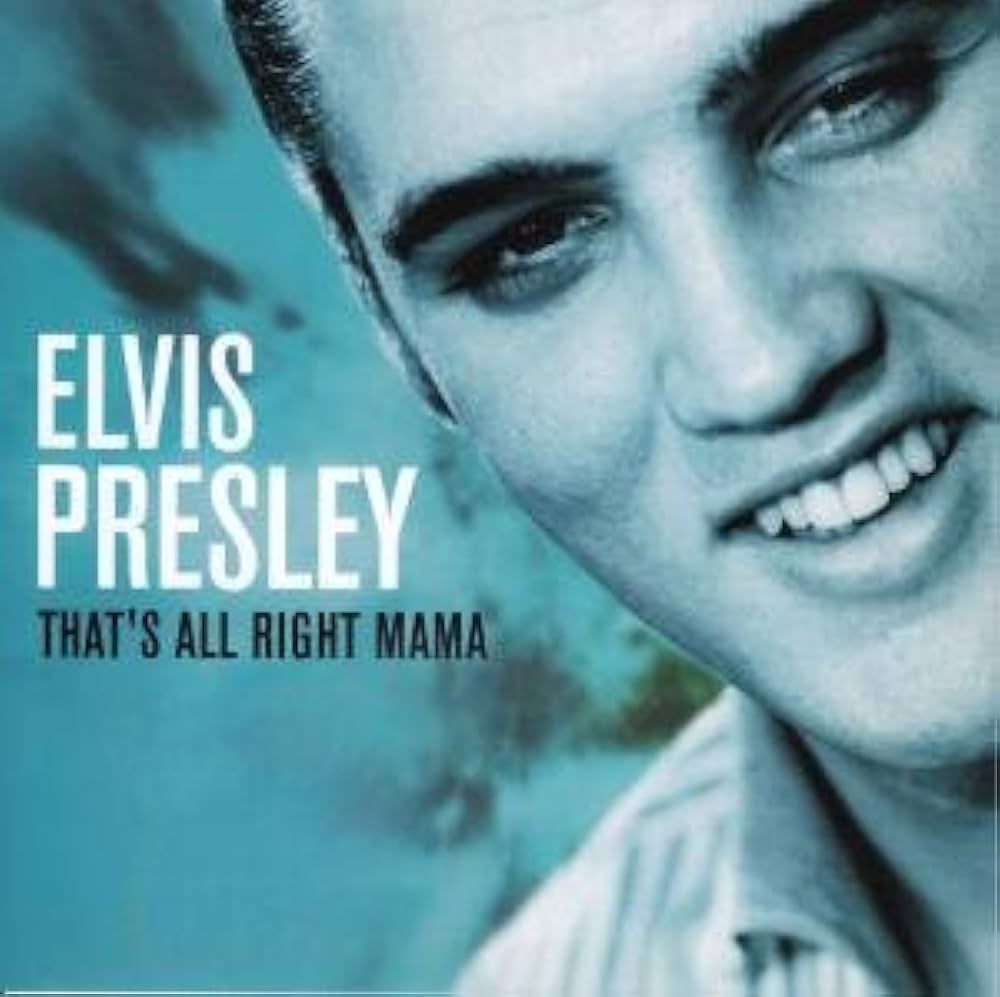
“That’s All Right Mama,” Elvis Presley, 1954

In one of his earliest recording sessions, Elvis and his combo were messing around with a speeded-up version of this old Arthur Crudup blues tune.  Producer Sam Phillips was immediately struck by it and concluded it was the “blues meets country” sound he’d been looking for, and it ended up as Presley’s first single and, many claim, one of the first rock and roll songs ever. With only minimal distribution or promotion, it didn’t chart nationally but reached #4 on local Memphis charts. Fifty years later in 2004, its re-release reached #4 in the UK. In Crudup’s lyrics, the narrator sings: “Mama she done told me, /Papa done told me too, /’Son, that gal you’re foolin’ with, /She ain’t no good for you,’ /But that’s all right, that’s all right, /That’s all right now, mama, anyway you do…”

“Your Mama Don’t Dance,” Loggins and Messina, 1972

Jim Messina recalled his home environment this way: “My stepfather was into country. He was an Ernest Tubbs/Hank Snow kind of guy. But my Mom loved Elvis, and Ricky Nelson, and R&B stuff. She was shy, though, and didn’t really dance much. So the song’s title, first line and chorus were based on that experience I had growing up in that household.” He fleshed it out with references to curfews and drive-in movies, and “Your Mama Don’t Dance” ended up reaching #4 on US pop charts in late 1972 as Loggins and Messina’s biggest chart hit: “The old folks say that you gotta end your date by ten, If you’re out on a date and you bring it home late, it’s a sin, /There just ain’t no excuse and you know you’re gonna lose, /You never win, I’ll say it again, /And it’s all because your mama don’t dance and your daddy don’t rock and roll…”
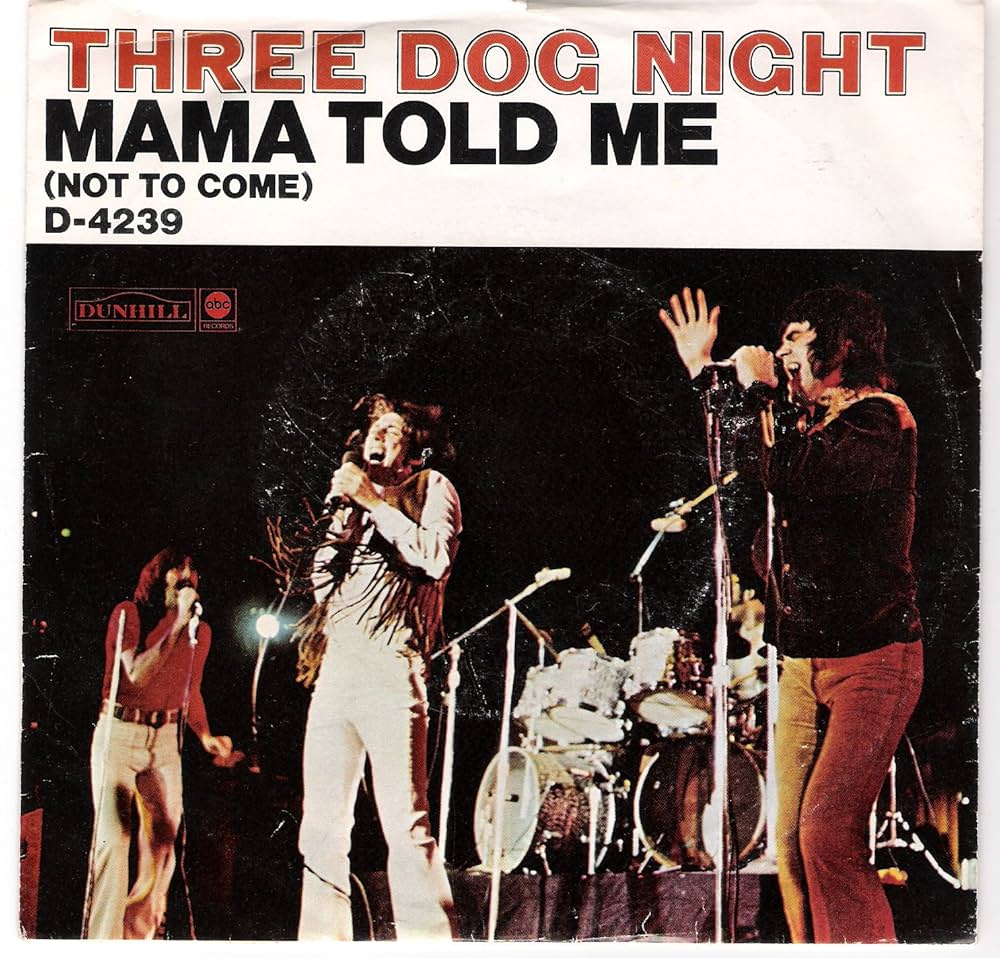
“Mama Told Me Not to Come,” Three Dog Night, 1970

Randy Newman, one of the more celebrated songwriters and film composers of his generation, came up with this tune as part of his 1970 debut release, “12 Songs.”  He didn’t achieve much commercial success as a recording artist, but his songs often did well in the hands of others.  Three Dog Night had one of the biggest radio hits of 1970 with their version of Newman’s “Mama Told Me (Not to Come),” which features one of his typically sardonic lyrics about a guy who is uncomfortable attending drug parties and realizes he should’ve listened to his mother’s advice: “I seen so many things I ain’t never seen before, /Don’t know what it is, I don’t wanna see no more, /Mama told me not to come, /Mama told me not to come, /She said, ‘That ain’t the way to have fun, son’…”

“Mama Said,” The Shirelles, 1961

The Shirelles, a New Jersey-based trio who became one of the early “girl group” successes, had several classic singles during the 1960-1963 period: “Will You Still Love Me Tomorrow,” “Dedicated to the One I Love,” “Soldier Boy,” “Baby It’s You,” “Foolish Little Girl.” One of their best was “Mama Said,” written by Willie Denson and Luther Dixon, which peaked at #4 as their third consecutive Top Five hit. Its lyrics reinforced the wisdom of a mother’s warning about how young love can knock you off your feet: “I went walking the other day, /Everything was going fine, /I met a little boy named Billy Joe, /And then I almost lost my mind, /Mama said there’ll be days like this, there’ll be days like this, my mama said…” The song inspired John Lennon’s “Nobody Told Me” (1980) and Van Morrison’s “Days Like This” (1995).

“Momma,” Bob Seger, 1975

The pride of Detroit’s heartland rock scene, Seger wrote honest, unvarnished rock songs about working-class life in the Midwest. Before breaking out nationwide with the 1976 LP “Night Moves,” Seger plugged away for nearly a decade with various bands and as a solo act until finding the right chemistry with The Silver Bullet Band. Their “Beautiful Loser” album in 1975 gave the first hint of Seger’s composing abilities, and one track, “Momma,” revealed that he didn’t necessarily get along that well with his strict mother. Still, he conceded that although she could be tough, she was always truthful with him: “Oh, how she could control me, /And when I was bad, she’d scold me, /Sometimes she wouldn’t hold me, and I’d cry, /But momma, she never told me a lie…”
“Mother and Child Reunion,” Paul Simon, 1972

In 1971, eager to begin his solo career, Simon was in a Chinese restaurant in New York City one night when he was amused to see a chicken-and-egg dish on the menu creatively called Mother and Child Reunion.  “What a great song title,” he thought, and began writing a song that addressed the sometimes fickle nature of the mother-child relationship. Enamored by the strains of Jamaican reggae, he incorporated the intriguing rhythms into the song’s structure, and by early 1972, he had his first solo Top Ten hit. The lyrics describe the “strange and mournful day” when the mother (the chicken) and the child (the egg) are reunited on a dinner plate: “Though it seems strange to say, /I never been laid so low, /In such a mysterious way, /And the course of a lifetime runs over and over again…”

“Mama’s Pearl,” Jackson 5, 1971

The Jackson 5’s fifth single was originally entitled “Guess Who’s Makin’ Whoopee (With Your Girlfriend),” but the folks at Motown intervened, thinking it would be inappropriate for such overt thoughts to be coming out of 12-year-old Michael’s mouth. Producer Deke Richards rewrote a few lyrics and changed the title to “Mama’s Pearl,” and it ended up reaching #2 in early 1971. The track still retaining the lyrical idea that the boy wished his sheltered girlfriend would loosen up and move beyond the making-out stage: “We kiss for thrills, then you draw the line, /Oh baby, /’Cause your mama told you that love ain’t right, /But don’t you know good loving is the spice of life, /Mama’s pearl, let down those curls, /Won’t you give my love a whirl, /Find what you been missing, ooh ooh now, baby…”

“Mamas, Don’t Let Your Babies Grow Up to Be Cowboys,” Willie Nelson & Waylon Jennings, 1978

In 1978, Nelson and Jennings, both seasoned veterans of country music, were each riding high with a string of #1 albums in 1975-1977. They were good friends and had performed together on occasion, so they chose to collaborate on “Waylon & Willie,” which not only sat at #1 on country album charts for three months, it reached #12 on pop charts as well. A big reason for that was the success of the single, “Mamas, Don’t Let Your Babies Grow Up to Be Cowboys,” with lyrics that urged mothers everywhere to raise their children to be “doctors and lawyers and such” instead of cowboys, because “they’ll never stay home and they’re always alone, even with someone they love…”  The track appeared in a scene from the 1979 Jane Fonda-Robert Redford film “The Electric Horseman.”

“Mama Kin,” Aerosmith, 1973

Emerging from the smoky rock clubs of Boston in 1973, Aerosmith launched their career with their self-titled debut album, which flopped, stalling at #166 on US album charts. Some critics dismissed them as “a K Mart version of The Rolling Stones.” By 1976, after the triumph of their next three LPs, the debut album re-entered the charts and peaked at #21, thanks to the tardy success of “Dream On.” The first single, “Mama Kin,” never even charted but became a popular live song at Aerosmith concerts over the years. Its composer, vocalist Steven Tyler, says the lyrics are essentially about “the importance of staying in touch with your family, your roots, your ‘Mama Kin.’ Keeping in touch with mama kin means keeping in touch with the old spirits that got you there in the first place.”
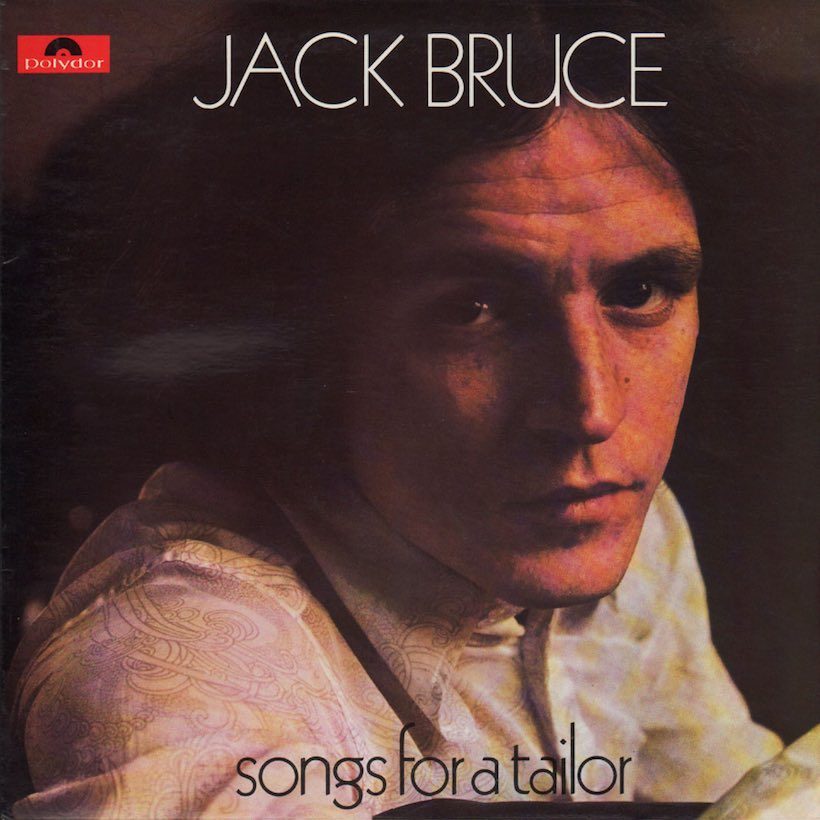
“Never Tell Your Mother She’s Out of Tune,” Jack Bruce, 1969

One of the sadly neglected LPs of 1969 was “Songs For a Tailor,” the solo debut of bassist/vocalist Jack Bruce, following the breakup of Cream eight months earlier. It includes originals like “The Clearout,” which Cream had recorded but didn’t release, and “Theme From an Imaginary Western,” made famous by Mountain at Woodstock. I love the rollicking opening track, “Never Tell Your Mother She’s Out of Tune,” with a title inspired by guitarist Chris Spedding, whose mother was a professional singer. At one of her shows, Spedding pointed out that one of the violin players was out of tune, which angered her — not the fact that the violin needed tuning but that her son had said so publicly. Bruce thought it made a great song title, although the lyrics by Pete Brown go in another direction and make no mention of the incident.
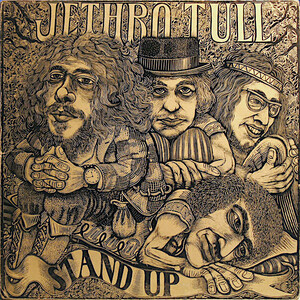
“For a Thousand Mothers,” Jethro Tull, 1969

Tull’s highly praised and popular second album, 1969’s “Stand Up,” offers an eclectic smorgasbord of rock, blues, folk and jazz influences, with Ian Anderson providing the lyrics from fictional scenarios, occasionally mixed with biographical anecdotes or experiences from his personal life. Songs like “Back to the Family” and “For a Thousand Mothers” described Anderson’s relationship with his parents at the time, alternately loving and tempestuous. The latter tune took his mother and father to task for their lack of emotional support of his musical dreams: “Did you hear mother? Saying I’m wrong, but I know I’m right, /Did you hear father? Calling my name into the night, saying I’ll never be what I am now, /Telling me I’ll never find what I’ve already found, /It was they who were wrong, and for them here’s a song…”

“Mama Lion,” Crosby and Nash, 1975

In 1969-70, Graham Nash had had an intense relationship with Joni Mitchell, and they both later wrote songs about it (Joni’s “Willy” and “My Old Man,” Graham’s “Our House” and “Simple Man”). In 1972, Joni wrote “See You Sometime,” which includes the line, “I run in the woods, /I spring from the boulders like a mama lion.” As he was writing songs for “Wind on the Water,” Nash’s 1975 LP with periodic collaborator David Crosby, he came up with “Mama Lion,” which takes a sobering look at the romantic relationship’s aftermath, based on Mitchell’s earlier tune: “Mama lion, mama lion, I’m starting to sink, /Beneath the sunshine and the icicles, and the things that you think, /There’s a hole in my destiny, and I’m out on the brink, /Mama lion, mama lion…”

“Mother’s Little Helper,” The Rolling Stones, 1966

As the recreational use of mind-altering drugs like marijuana and LSD began increasing in the mid-’60s, Mick Jagger and Keith Richards couldn’t help but notice the hypocrisy of parents who criticized the practice while secretly taking amphetamines and tranquilizers to boost their energy or calm them down. They co-wrote “Mother’s Little Helper,” a phrase some moms used as code to describe their own hushed-up vice: “And though she’s not really ill, there’s a little yellow pill, she goes running for the shelter of a mother’s little helper, and it helps her on her way, gets her through her busy day…” The song peaked at #8 in 1966 as The Rolling Stones’ 12th single. Richards and Brian Jones played altered 12-string guitars to mimic the sound of a sitar, one of several Indian instruments then in vogue.

“Tell Mama,” Etta James, 1968

Written and recorded by Clarence Carter as “Tell Daddy” in 1967, this tune was retitled “Tell Mama” for Etta James to sing when Muscle Shoals Studios producer Rick Hall took charge of the recording session. James objected at first, reluctant to be cast as an Earth Mother, “the gal you come to for comfort,” but it turned out to be her biggest hit on the US pop charts, reaching #23 (and #10 on R&B charts). Over a spirited, horn-driven arrangement, James sings about a young man who’s betrayed by his girl, after which his mother reaches out to give him some TLC: “She would embarrass you anywhere, /She’d let everybody know she didn’t care… /Tell Mama all about it, /Tell Mama what you need, /Tell Mama what you want, /And I’ll make everything all right…”

*************************

Here are a few more that make my “honorable mention” list:  

“Mama Gets High,” Blood Sweat & Tears, 1971;  “Mother,” Pink Floyd, 1979; “Crazy Mama,” J.J. Cale, 1972; “That Was Your Mother,” Paul Simon, 1986; “Sweet Mama,” The Allman Brothers, 1975; “Mother,” John Lennon, 1970; “Motorcycle Mama,” Neil Young and Nicolette Larson, 1978;  “Mother Goose,” Jethro Tull, 1971;  “New Mama,” Stephen Stills, 1975; “Mother Nature’s Son,” The Beatles, 1968;  “Mama,” Genesis, 1983;  “Look What They’ve Done to My Song, Ma,” The New Seekers, 1970; “Mother,” Chicago, 1971;  “Mothers Talk,” Tears For Fears, 1985;  “Tough Mama,” Bob Dylan, 1974; “Mamma Mia,” ABBA, 1975.

***************************

I come from a land down under

What do Helen Reddy and AC/DC have in common?

Virtually nothing — except for the fact that they’re both major musical artists from Australia.

In pop and rock music history, the overwhelming majority of artists found on the US charts through the years have been American-born. Beginning in the ’60s with the so-called “British Invasion” led by The Beatles, the United Kingdom established a major beachhead here they’ve never relinquished, holding on to the #2 slot ever since.

Canada — with dozens of artists like Joni Mitchell, Neil Young, Gordon Lightfoot, The Guess Who, Bryan Adams, Leonard Cohen, The Band, and Rush — ranks third, in large part because of their close proximity to the US and the shared English language.

Australia comes in at a fairly distant fourth, with bands and artists who generally fall somewhere in the pop and rock genres, but their combined contributions through the years have been substantial in terms of sales and impact.

As English-speaking acts, Australian musicians have had a leg up on those from non-English speaking countries, but, except for the biggest groups, their ability to reach the American market has often been hampered by the substantial costs of travel and sufficient promotion.

Indie pop singer Amy Shark, a relatively new major star in Australia with three #1 albums since 2018, said she understands both the struggles and triumphs musicians face when attempting to establish themselves in the US from the other side of the world.

“I think it’s always a little dangling carrot for us,” she says discussing the dream of ‘cracking’ America. “It’s a romantic thing. We’re like, ‘I can’t believe I get to play in these same venues as these artists that I’ve worshipped.’ It’s wild. The main obstacle is the cost of touring. The crew, the accommodations, the flights. It’s a joke. Have we got anyone doing lights? Production? You’re going to be in the red for ages.”

The question becomes, why bother breaking in America? “Definitely, over the years,” said Shark, “I’ve wrestled with ‘What do I actually want to do it for? Is it for my own ego or is it going to benefit anything?’ I guess it is just the love of it – seeing the world and playing music.”

Here are what I consider the prime examples of Australian artists who achieved commercial success on US charts in the ’60s, ’70s and/or ’80s:

The band with Bon Scott (right)

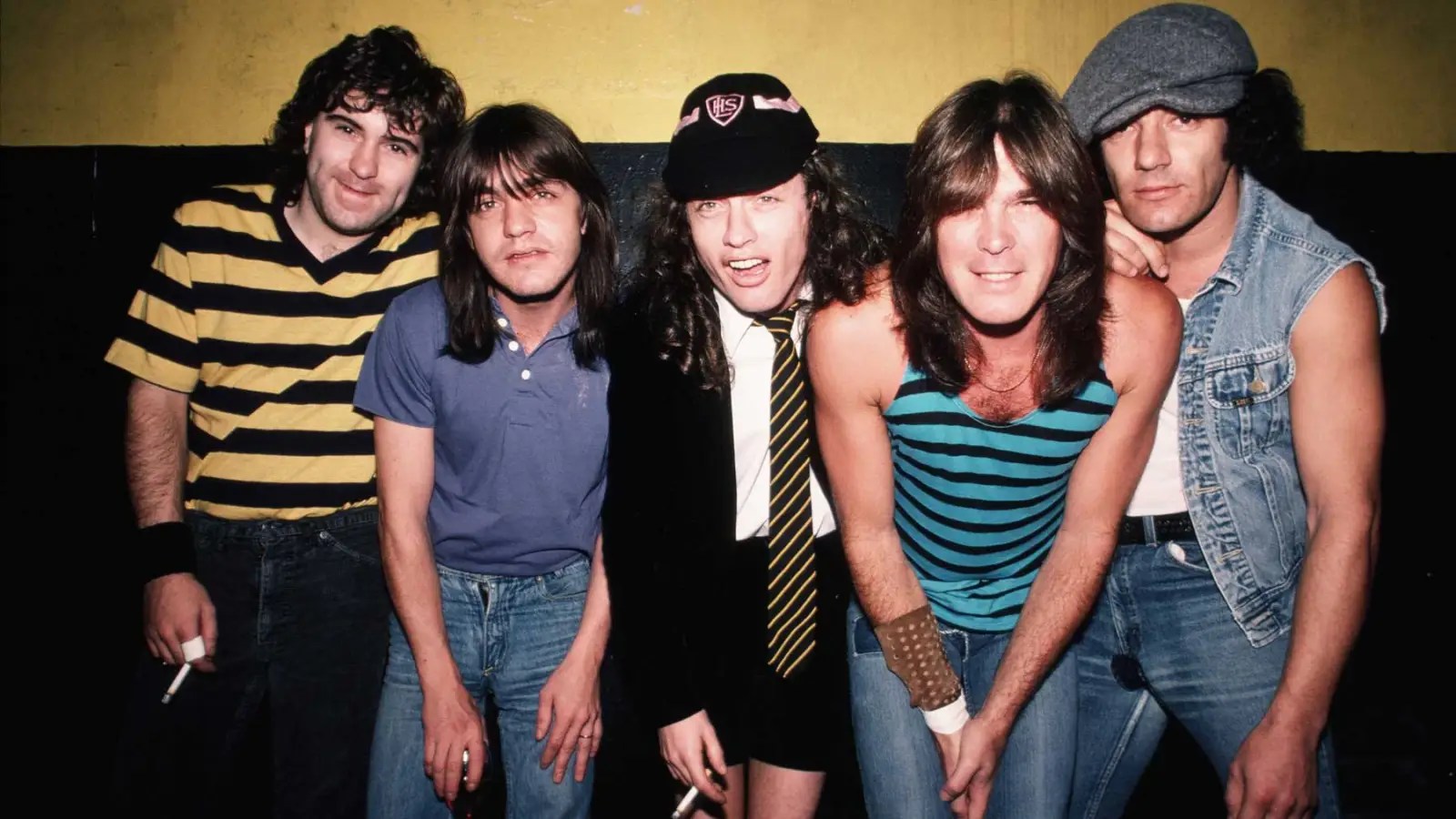
AC/DC

Formed in Sydney in 1973 by brothers Angus and Malcolm Young, AC/DC was named for the two kinds of electricity (Alternating Current and Direct Current), which band members felt symbolized their raw energy and power-driven performances. Their musical style was inspired by Australian pub rock, which has been described by Aussie music writer Glenn Baker as “rib-crushing, blood-curdling, brain damaging, no bullshit, thunder rock — not like that American sound, smooth and creamy, nicey, nicey.”

Their first two LPs were released only in Australia, and the next four, though distributed internationally, managed to reach only the lower rungs of the US album charts, while they gradually increased their exposure by touring as a supporting act for Black Sabbath, Aerosmith, Ted Nugent, Kiss and Blue Oyster Cult. That changed in 1979 with the release of “Highway to Hell,” which peaked at #17 in the US and propelled them to the top ranks of hard rock acts. The alcohol poisoning death of lead singer Bon Scott in 1980 only served to strengthen their resolve as they replaced him with Brit singer Brian Johnson and dedicated their next LP, “Back in Black,” to Scott. That album has gone to sell 50 million copies worldwide, one of biggest sellers of all time.

The band with Brian Johnson (right)

AC/DC further cemented their formidable reputation among hard rock/heavy metal devotees with 1981’s “For Those About to Rock” and the re-release of 1976’s “Dirty Deeds Done Dirt Cheap,” both Top Five albums in America. They have gone on to great success with another nine LPs between 1983 and 2020, most notably the multi-platinum LPs “The Razor’s Edge” (1990), “Ballbreaker” (1995) and “Black Ice” (2008). Always considered more on an album band than a singles band, AC/DC still appeared three times on US Top 40 pop charts (“You Shook Me All Night Long,” “Back in Black” and “Moneytalks”).

I can’t say I’m a fan of the group, largely because I find the banshee vocalizing of Scott and Johnson pretty much unlistenable, but based on album sales alone, I’m apparently in the minority. I guess I’m just not in AC/DC’s target audience. But I sure got a kick out of the way they poked fun at their critics with self-deprecating comments like this one from Malcolm Young in 1988: “I’m sick to death of people saying we’ve made 11 albums that sound exactly the same. In fact, we’ve made 12 albums that sound exactly the same.”

*********************

Barry, Robin and Maurice in 1960

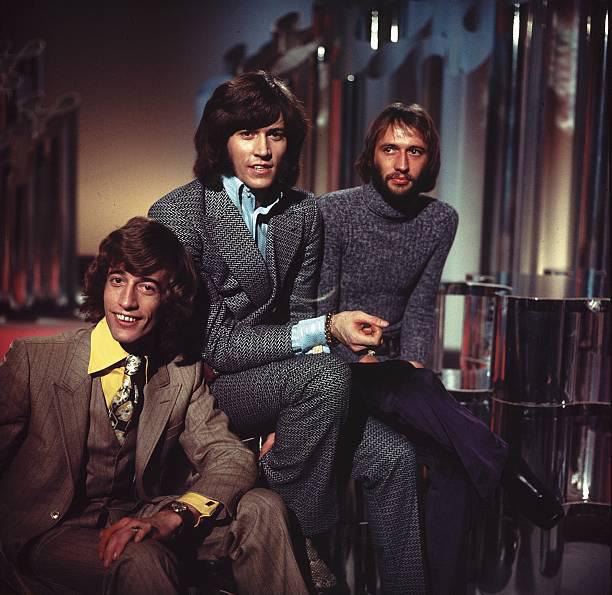
The Bee Gees

Although they were born in Britain, the Brothers Gibb (Barry, Robin and Maurice) were raised near Brisbane and first achieved fame as teenage recording artists in Australia and New Zealand. Barry Gibb wrote the singles and nearly all the songs on the trio’s early albums, reaching the Top 20 on Australian pop charts in 1965 and 1966 with “Wine and Women” and “Spicks and Specks,” but these never saw the light of day in the US or the UK.

Eager for success internationally, they returned to England in 1967, signing with impresario Robert Stigwood, who had the audacity to promote them heavily as a pop vocal band on par with The Beatles. Incredibly, many critics tended to agree, and The Bee Gees ended up charting four Top 20 LPs in the US in 1967-1969, based on the strength of a handful of popular singles — “To Love Somebody,” “Holiday,” “Massachusetts,” “I Gotta Get a Message to You” and “I Started a Joke,” among others.

The brothers in 1970

I think their finest moment came in 1970 when their single “Lonely Days” peaked at #3 on US charts. To me, its melody and harmonies truly resembled The Beatles, especially Barry Gibb’s Lennonesque singing on the chorus. I was far less enamored by their first US #1, “How Can You Mend a Broken Heart,” which featured Robin Gibb’s warbly, affected vocals.

By the mid-’70s, The Bee Gees hopped onto the disco music train and became one of the biggest groups in the world. “Jive Talkin’,” “Nights on Broadway” and “You Should Be Dancing,” all Top Ten singles here, put Barry Gibb’s falsetto front and center, setting the stage for the worldwide success of their songs from the soundtrack to “Saturday Night Fever,” one of the top sellers in music history, and their “Spirits Having Flown” LP in 1979 (with the three #1 singles “Too Much Heaven,” “Tragedy” and “Loving You Inside Out”).

They lived to regret becoming the poster boys for the disco genre once it died an ignoble death in the early ’80s. Barry Gibb had more success as a songwriter and occasional solo artist than The Bee Gees did as a group in the 1980s and 1990s, although their 1989 single “One” gave them one last US Top Ten chart appearance. Maurice and Robin died in 2003 and 2012, respectively, while Barry is now regarded as a bonafide elder statesman of pop/rock.

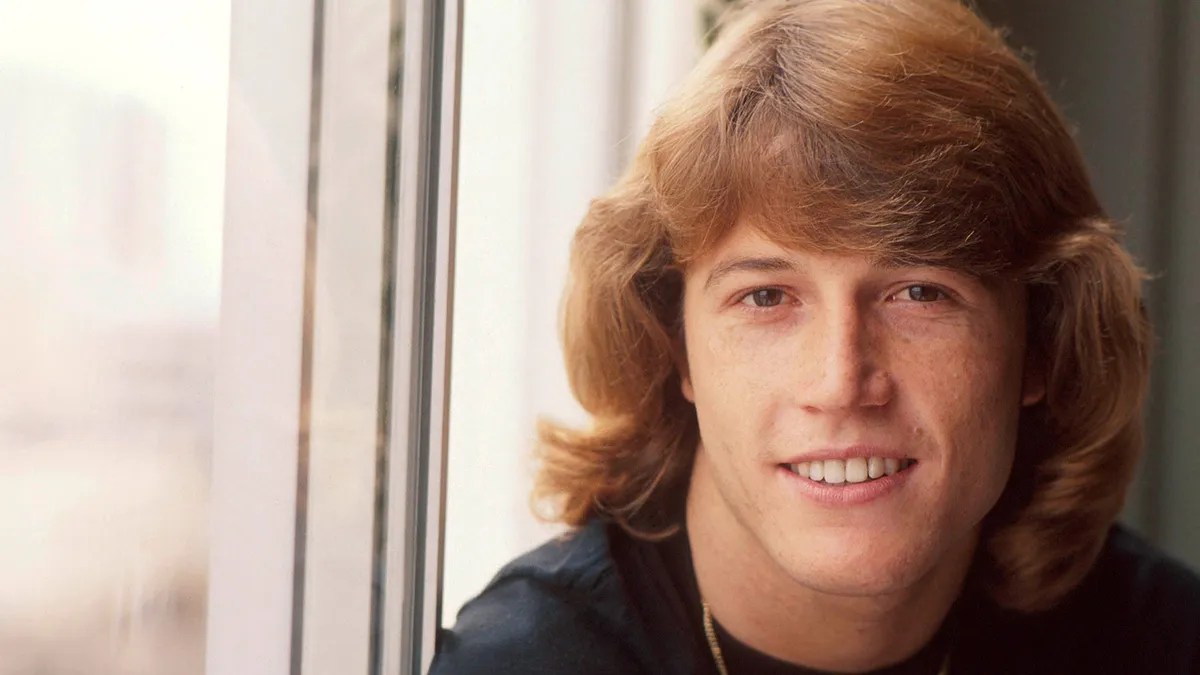
Meanwhile, their much younger brother, Andy Gibb, had a first-class ticket on that same disco train his brothers were driving, enjoying a simultaneous solo career with eight hit singles during that same 1977-1979 period (most notably “I Just Want to Be Your Everything,” “(Love is) Thicker Than Water” and “Shadow Dancing”). Unfortunately, being marketed as a teen idol got the better of him, and he sadly fell victim to drug addiction and clinical depression, dying in 1988 at age 30.

************************

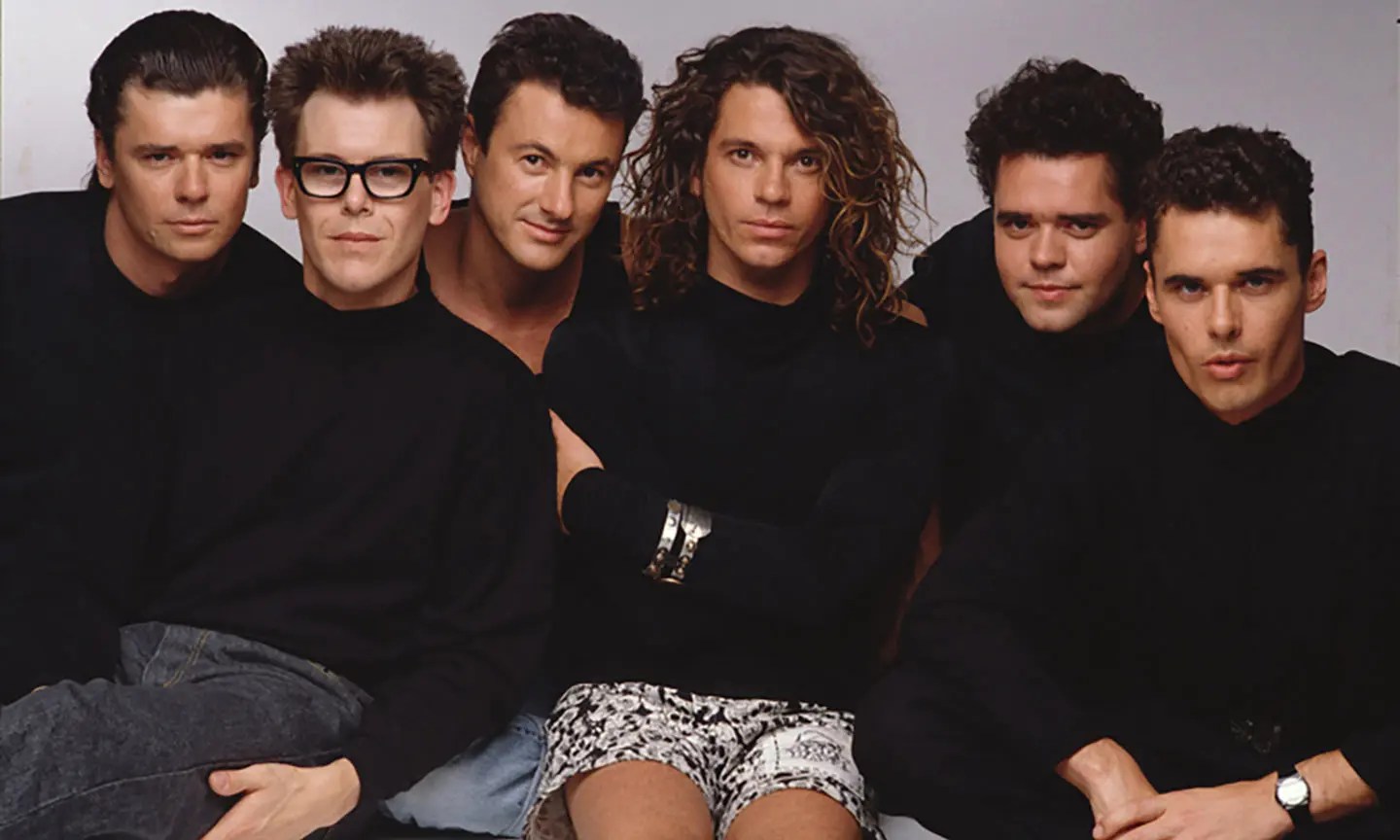
INXS

Emerging from Sydney in 1980 with a new wave/ska/pop style, INXS found success on Australian charts with the single “The Loved One,” which attracted the attention of A&R people at Warner Music. In 1982, INXS broke into the Top 30 in the US with “The One Thing,” from their third LP, “Shabooh Shoobah,” which performed respectably at #52 on US album charts. INXS toured the US and Europe relentlessly in 1984, and their LP of that year, “The Swing,” became one of the biggest selling domestic albums in Australia up to that point.

Beginning in 1985, INXS, led by charismatic lead singer Michael Hutchence, became major stars in the US with a string of top-selling albums and singles. “What You Need” from their “Listen Like Thieves” album peaked at #5 on US singles charts, which became the opening salvo of an impressive run of upbeat, confident rock songs in the late ’80s: “Need You Tonight,” “New Sensation,” “Devil Inside” (my favorite), “Never Tear Us Apart,” “Suicide Blonde” and “Disappear” all made the Top Ten, and they gained significant exposure on MTV then as well.

In a 1988 interview, Hutchence spoke about the differences between Australian fame and US fame. “There’s one thing that working in Australia a long time doesn’t prepare you for, and that is what they call in America ‘becoming a star,'” he said. “We don’t really have a star system in Australia. It doesn’t exist. There’s no use in becoming one, or acting like one, or pretending you’re one, because it doesn’t get you anywhere. In fact, it’s really the worst thing you can do there. When we’re on tour in the States, though, I get pretty terrified, to be honest. You really have to muster a lot of ego to go out there and bigger than a huge crowd of 20,000 people, which I find rather draining. Sometimes I just want to curl up on stage and just lie there for a while.”

In the ’90s, INXS’s popularity dropped off somewhat in the US, but British and Australian audiences continued to give them major support. The release of “Elegantly Wasted” in 1997 proved to be their last big success, largely due to Hutchence’s apparent suicide later that year in a Sydney hotel room. The rest of the band attempted to proceed with a new singer but never came close to matching their late ’80s success, particularly in the US.

************************

Men at Work

Lead singer-songwriter Colin Hay had emigrated from Scotland to Melbourne at age 14, and by his mid-20s had formed an acoustic duo with Australian guitarist/singer Ron Strykert. They soon saw the wisdom in adding a drummer and keyboardist and, later, multi-instrumentalist Greg Ham and forming a band they called Men at Work, performing hundreds of shows in Australia and New Zealand in 1980 until being signed by CBS Records. With this major label support, they completed their debut LP, “Business As Usual,” and reached #1 in Australia with both the debut single, “Who Can It Be Now?”, and its follow-up, “Down Under.” Critics were kind to the band, saying the album “generally stays at a high level, tight and jerky. There is also a delicacy about this music, which isn’t something often said about Australian rock groups. The flute and reeds of Greg Ham do much to further that.”

Still, it took some sustained cajoling for more than a year to convince the US parent company to release the album in North America. Men at Work toured Canada and the US as a support act for Fleetwood Mac in the summer of 1982, which gave them the exposure they needed for “Who Can It Be Now?” to climb the charts, reaching #1 in the fall. Even bigger was the catchy “Down Under,” featuring Ham’s flute, which held on to the #1 slot for five weeks in the US in early 1983. The lyrics, which tell the tale of an Australian man travelling the globe meeting people who are interested in his home country, captured the imagination of US listeners who had known next to nothing about Australia. Said co-writer Hay, “The chorus is really about the selling of Australia. It’s really about the plundering of the country by greedy people. It’s ultimately about celebrating the country, but not in a nationalistic, flag-waving sense. It’s more about the culture.”

The band’s second album, “Cargo” — recorded in ’82 but held back because the debut was doing so well in the US — reached #3 in May ’83 and spawned three more big singles, “Be Good Johnny,” “Overkill” and “It’s a Mistake.” Internal tension between band members and their manager caused a rift which negatively affected their momentum and resulted in their third and final album, “Two Hearts,” stalling at #50. It featured too many drum machines and synthesizers and not enough sax and flute, with the result being no charting singles. Men, it seems, were no longer At Work.

*********************

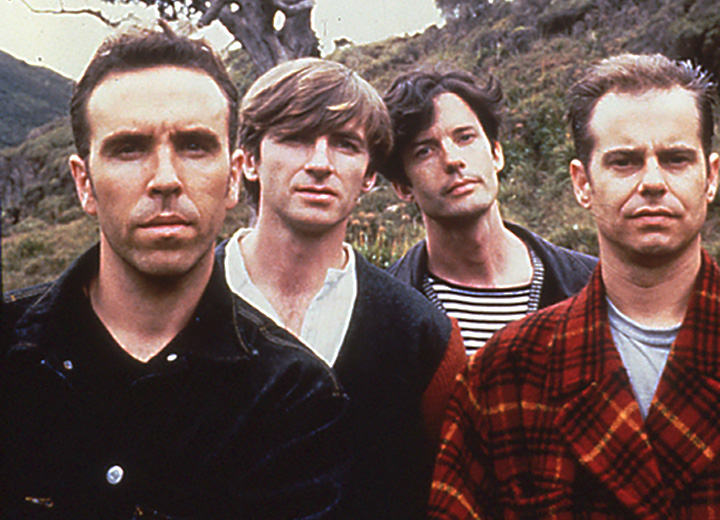
Crowded House

Singer/guitarist/songwriter Neil Finn, who had headed the New Zealand band Split Enz in the ’70s, formed a new band called The Mullanes in 1985 in Melbourne. After getting signed by Capitol Records and moving to Los Angeles to record their debut LP, they changed their name to Crowded House, after the tiny place they were renting together there. Capitol initially failed to promote them adequately, but their second single, “Don’t Dream It’s Over,” was an instant smash in the US, reaching #2, followed by “Something So Strong,” another US Top Ten hit.

Finn’s engaging vocals and keen sense of pop song structure served Crowded House well with a handful of catchy tunes like “Weather With You,” “Into Temptation,” “Chocolate Cake,” “Fall At Your Feet,” “It’s Only Natural,” “Pineapple Head” and “Private Universe.” By the third LP, “Woodface,” Finn’s brother Tim (who had been in Split Enz) joined the lineup briefly. The band toured internationally until dissolving in 1996 following the release of “Recurring Dream,” a hugely popular “Best Of” collection that reached #1 in Australia and New Zealand.

Finn went on to release some solo albums and collaborations with his brother over the next 20 years, and Crowded House occasionally reunited for short tours to promote new albums like “Time On Earth” (2007) and “Intriguer” (2010).

************************

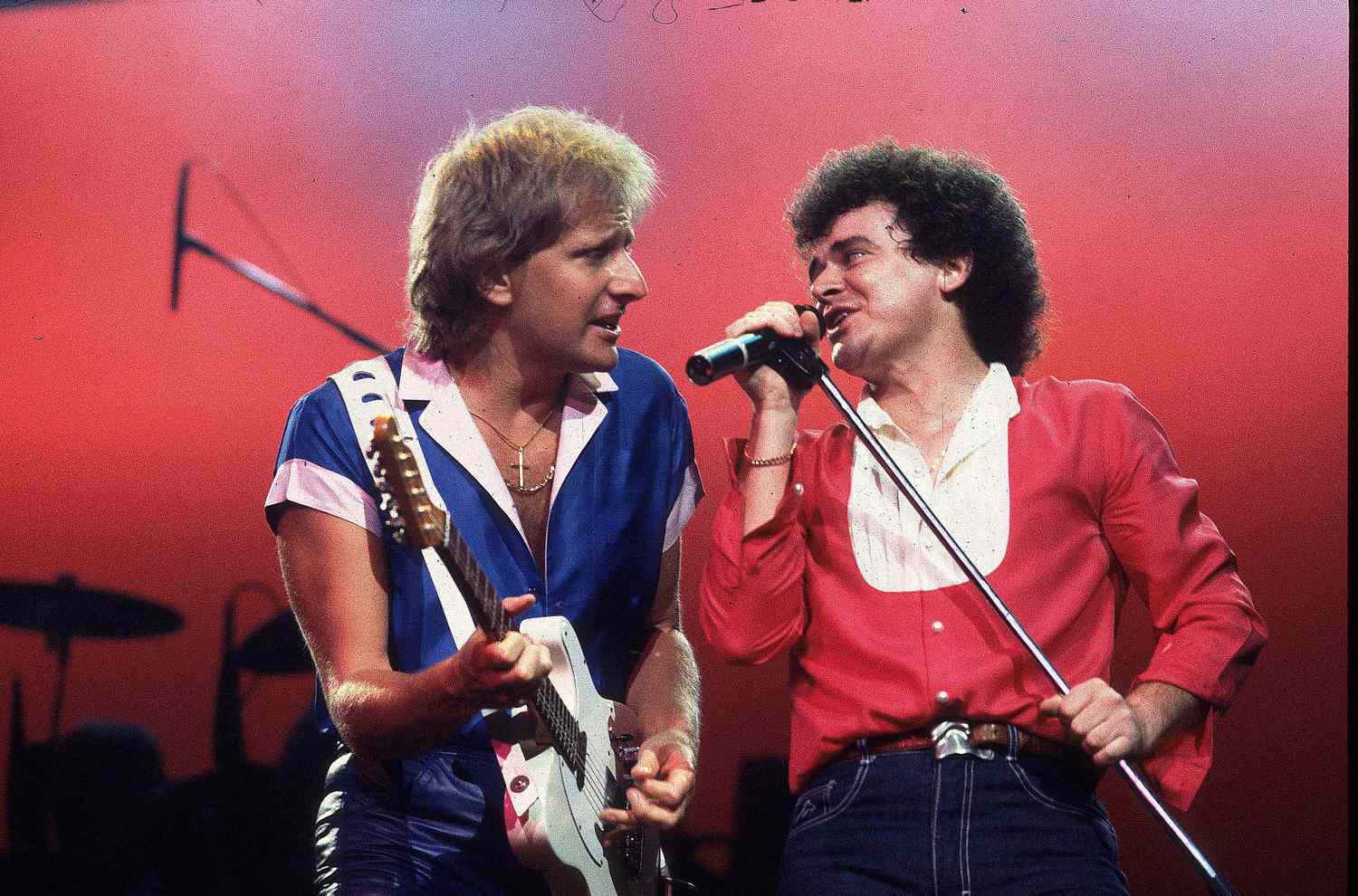
Air Supply

The soft rock duo of Englishman Graham Russell and Australian Russell Hitchcock, who formed in Melbourne in 1975, hit the big time on US charts as Air Supply in the early ’80s. The duo had met while performing in the chorus of the Australian production of “Jesus Christ Superstar” and went on to form Air Supply as a five-man band.

They struggled on the Australian music scene for several years until two big breaks occurred. When they opened for Rod Stewart on his Australian dates in 1978, he invited them to continue on the North American legs of his tour. That exposure caught the attention of Clive Davis at Arista Records just as the bulk of the band chose to drop out, but Davis proceeded with just Russell and Hitchcock and session musicians.

Four consecutive LPs reached the Top 30, spurred on by a string of eight Top Ten singles between 1980 and 1983: “Lost in Love,” “All Out of Love,” “Every Woman in the World,” “The One That You Love,” “Here I Am,” “Sweet Dreams,” “Even the Nights Are Better” and “Making Love Out of Nothing at All.” By the late 1990s, Air Supply’s US audience had dwindled, but they remained popular in several Asian countries for years to come.

*************************

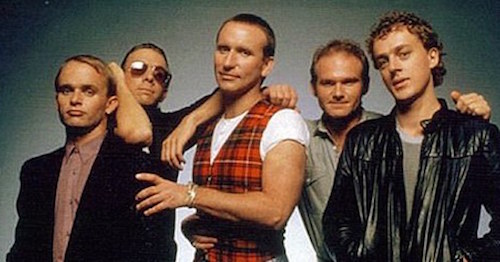
Midnight Oil

Formed in the early ’70s, Midnight Oil began recording in 1978, developed a fiercely loyal cult audience and evolved into one of Australia’s most beloved bands. In addition to their studio albums, they have been celebrated for their energetic live shows, sparked by lead singer Peter Garrett‘s frenetic dancing and commanding vocal delivery.

Their fourth LP, 1982’s “10, 9, 8, 7, 6, 5, 4, 3, 2, 1,” was their first to crack the Top Ten in Australia and their first to appear on US album charts, albeit in the lower registers. “Red Sails in the Sunset,” their first #1 LP in Australia, began a three-album run of chart-topping albums at home. The band truly broke through in North America with their “Diesels and Dust” LP in 1987 and “Blue Sky Mining” in 1990, propelled by the hit singles “Beds Are Burning” (#17) and “Blue Sky Mine” (#1 on US Mainstream Rock charts) and “Forgotten Years.” US critics were at first lukewarm about the group, but eventually cottoned to them to the point where they wrote things like, “If Midnight Oil were from New Jersey, they’d be bigger than U2. Finally someone is playing stuff that’s musically idiosyncratic, fresh and strong, and authentic.”

One more LP, 1993’s “Earth and Sun and Moon,” fared well in the US before they pretty much dropped off American charts. They have continued making an impact domestically and in Europe in the years since, and have been admired enough by other bands (Pearl Jam, U2, The Killers, Imagine Dragons) that they have recorded cover versions of some of their songs.

***********************

Little River Band

The six members of Little River Band had all been in other groups when they formed in Melbourne in 1975, making them a sort of Australian supergroup. They chose to set up shop in the US in order to crack that market. They give credit to their savvy manager Glenn Wheatley, who had been involved in the US and UK music industry in the ’60s and knew how to navigate the potential pitfalls. They didn’t click immediately with US audiences, but they persevered and ending up being the first Australian band to enjoy continued commercial success in the US.

With guitarist/vocalist Graham Gobles handling the chief songwriter role, Little River Band scored six albums of likable pop rock that made the Top Ten in Australia between 1976 and 1985, three of which reached the Top 20 in the US: “Sleeper Catcher” (1978), “First Under the Wire” (1979) and “Time Exposure” (1981). The group charted an impressive 12 times with singles in the Top 30 on US pop charts, most notably “Help Is On Its Way,” “Happy Anniversary,” “Reminiscing,” “Lady,” “Lonesome Loser,” “Cool Changer” and “The Night Owls.”

Having sold upwards of 30 million records, Little River Band is considered one of Australia’s most significant musical exports.

*********************

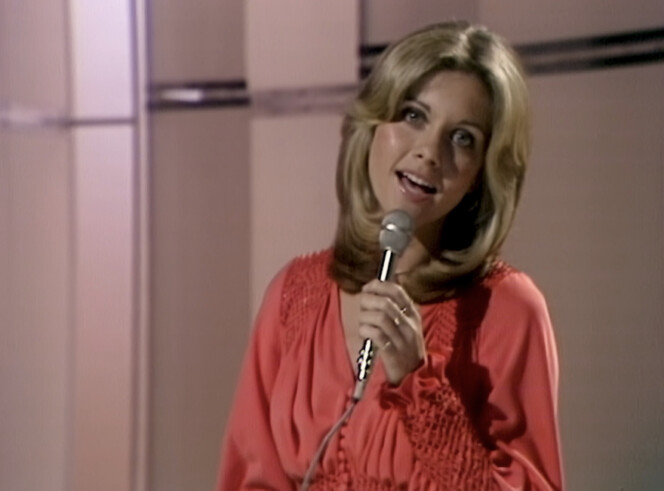
Olivia Newton-John

Born in Cambridge, England, Newton-John was just six when her family moved to Melbourne. She was 14 when she formed her first group, Sol Four, with three girls from school. Program directors at local Australian TV stations began featuring her in solo performances under the name “Lovely Livvy.” At 18, she came in first in a talent contest and won a trip to Britain, where she recorded her first single, “’Til You Say You’ll Be Mine” (although it failed to chart).

Her first chart appearance came in 1971 with a cover of Bob Dylan’s “If Not For You,” which reached #7 in the UK, #25 on the US pop chart and her first #1 on the US “adult contemporary” chart. This kicked off a run of five featherweight, quasi-country singles that established her presence on Top 40 radio through the mid-’70s: “I Will Be There,” “If You Love Me (Let Me Know),” “I Honestly Love You,” “Have You Never Been Mellow” and “Please Mr. Please.”

Newton-John’s career took on a different arc in 1978 when she was cast in “Grease.” She not only turned in a winning acting performance but also gave the mega-platinum soundtrack album its biggest hits: “Summer Nights,” “Hopelessly Devoted to You” and especially “You’re the One That I Want,” her duet with Travolta that served as the film’s finale after she’d morphed into the tough chick in skintight black pants and red stiletto heels. She had become Australia’s most successful artist on US charts.

By 1981, she was doing workout videotapes, based on the runaway success of the album “Physical,” the title track of which claimed the #1 spot on US pop charts for an astounding ten weeks. She died in 2022 at age 73.

************************

Helen Reddy

Another child star from Melbourne, Helen Reddy was pushed into singing and dancing on the vaudeville circuit there, eventually rebelling at age 16 against her parents’ plans for her stardom. Still, she returned to singing in her early 20s and won several Australian TV talent contests, earning her a one-off record deal with Capitol. In New York, she recorded “I Don’t Know How to Love Him,” which had been sung by Yvonne Elliman on the “Jesus Christ Superstar” project, and both versions competed for airplay in the spring of 1971, with Reddy’s version reaching #13 on US charts. That paved the way for a long-term contract that launched a successful career as a recording artist and entertainer in the US and elsewhere.

In 1972, the iconic “I Am Woman” became her first of Reddy’s three #1 hits (along with “Delta Dawn” and “Angie Baby”), plus another ten in the Top 40 here, culled from six Top 20 albums between 1972 and 1976. At the first-ever American Music Awards in 1974, Reddy won Best Pop/Rock Female Artist, and she was also a frequent guest on TV variety shows and an occasional host of the “Midnight Special” music showcase. She served as a mentor and cheerleader for Olivia Newton-John when she was still a relative unknown. Reddy continued performing well into the 1990s before switching gears to become a motivational speaker in the 2000s.

***********************

Rick Springfield

At age 22, the Sydney-born Rick Springfield left the Australian band Zoot to begin a solo career, getting a hit on his first try with “Speak to the Sky,” which not only reached #6 in Australia but also #14 on US charts. When his singing career stalled, he pursued acting opportunities throughout the 1970s, getting episodic work on programs like “The Six Million Dollar Man,” “The Rockford Files, “Wonder Woman” and “The Incredible Hulk.”

In 1981, Springfield’s dual career exploded in a big way. Almost simultaneously, he scored a #1 single with “Jessie’s Girl” and secured a lead role on the daytime soap “General Hospital.” He went on to chart four albums in the Top 20 in the 1980s, with more Top Ten singles like “I’ve Done Everything For You,””Don’t Talk to Strangers,” “Affair of the Heart” and “Love Somebody.” In 1984, he reached #27 with a self-parody tune called “Bruce,” with comical lyrics about being mistaken for Bruce Springsteen.

When his recording career waned, he focused on acting, appearing on shows like “True Detectives,” “Californication,” “American Horror Story” and even returned to his role as Noah Drake on “General Hospital.”

************************

The Seekers

This wholesome, folk-influenced vocal group from Melbourne featuring lead singer Judith Durham scored nine chart hits in their native land, and had the distinction of being the first Australian group to reach the charts in the US. Three of The Seekers’ hits made the US Top 40 — “I’ll Never Find Another You” (which reached #4 in 1965); “A World of Our Own” (a #19 hit in 1965); and “Georgy Girl,” a popular #2 single from the soundtrack of the 1967 Lynn Redgrave film of the same name.

************************

The Easybeats

Comprised of five transplanted Brits who formed in Sydney in 1965, The Easybeats had ten solid hit singles in Australia in the 1965-1969 period. In the US, though, they qualify as a “One-Hit Wonder,” thanks to the iconic hard rock nugget “Friday On My Mind,” a working-class anthem that peaked at #16 here in 1966. In 2001, it was voted Best Australian Song of all time by a panel of 100 Australian music industry personalities. (Other stars like David Bowie and Peter Frampton recorded covers of the tune in 1973 and 1981, respectively.)

**************************
The following bands were relegated to my “Honorable Mention” list, mostly because their fame came after the ’60s-’70s-’80s period that this blog typically covers. I’ve included a second Spotify playlist for a sampling of their music.

The Church; Nick Cave & Bad Seeds; Kylie Minogue; The Divinyls; Natalie Imbruglia; The Vines; Keith Urban; Jet; Tame Impala; Gotye; Vance Joy; For King & Country.

**************************
I also offer the names of a handful of bands from that period that have been very popular in Australia but made little or no inroads in the US market. Feel free to explore them on your own:

John Michael O’Keefe; The Angels; Hoodoo Gurus; Tommy Emmanuel; Powderfinger; The Avalanches; Grizzard and the Lizard Wizards.

***************************