There’s gonna be a heartache tonight, I know

Music trivia question: Who was in the original lineup of The Eagles?

Answer: Glenn Frey, Don Henley, Randy Meisner, Bernie Leadon…and John David Souther?

Truth be told, singer-songwriter-guitarist JD Souther was a member of the group for only about 48 hours. Manager David Geffen lobbied for Souther to be an official member, but the rest of the band, and actually Souther himself, weren’t too keen on the idea.

“Geffen wanted me in the band,” said Souther decades later. “We actually rehearsed a set and played it for him one afternoon at The Troubadour. I remember looking down the stage thinking, ‘Man, this is an awful lot of singers and acoustic guitar players all in the same band.’ I felt, ‘I’m not necessary here.’ And I don’t really like being told what to do in any sense anyway.”

The other four had been a working unit for a spell, playing behind Linda Ronstadt at a few shows, and they were hesitant to turn their four-piece into a five-piece by adding Souther. Frey and Souther had been friends and collaborators in a duo in 1969-1970, but that hadn’t ended well. Souther would remain a co-songwriting partner with Frey and Henley over the years, including three #1 hits, but they all agreed he wouldn’t be a full-fledged Eagle.

“Truthfully, the band was exceptional just as it was,” said Souther. “I was clearly the fifth wheel. I wasn’t a band creature. My report cards from school always said, ‘Does not work well with others.’ I was much happier to stay home and write songs and be with Linda, who I was dating at the time.

“There was definitely a period of time later on when people would ask me, ‘Doesn’t it piss you off that the Eagles had these big hits with your songs?’ I would always respond, ‘Would you like to see the royalty checks?'”

***************************

John David “JD” Souther died last week at age 78. There has been no official cause of death issued yet.

He had been preparing to go on tour this week with his friend, singer-songwriter Karla Bonoff, when he fell ill. Said Bonoff, “We had learned each other’s songs and were going to be on stage together for an amazing evening. I guess it was not meant to be…but I am incredibly grateful for the time we spent recently reconnecting, laughing and reminiscing. He was one of the best songwriters on the planet and influenced so much of my writing. Fly free, my friend.”

Bonoff and Souther in 1977

Souther has been one of those important yet shadowy figures in the California music industry, who added a great deal but never really cared much about being in the limelight. In addition to his fruitful relationship with The Eagles, Souther wrote or co-wrote hit singles for Ronstadt and James Taylor, and also reached the charts as a solo artist with the #7 hit “You’re Only Lonely” in 1979. He has added vocals and guitar parts to many dozens of tracks by artists as diverse as Warren Zevon, Crosby, Stills & Nash, Dixie Chicks, Burt Bacharach, Roy Orbison, George Strait, Brian Wilson and Trisha Yearwood.

Born in Detroit and raised in Amarillo, Texas, Souther started playing jazz drums, influenced by his parents’ love of Big Band music, but soon switched to guitar and had some regional success playing with a country band called The Cinders in the mid-’60s. When he relocated to Los Angeles in 1968 at age 22, he met Frey, who had more of a rock/R&B background, and they fed off each other’s influences, jamming and trying to write songs.

They shared a small apartment and eventually formed a duo called “Longbranch/Pennywhistle,” cutting one album on a small label. It went nowhere, but within the 10 tracks that comprise the self-titled LP (out of print for decades but remixed and re-released in 2018) you’ll find the country-rock building blocks upon which successive generations of singers and songwriters have drawn inspiration. Most notable were Frey’s ballad “Rebecca” and Souther’s intriguing songs “Mister, Mister” and “Kite Woman.”
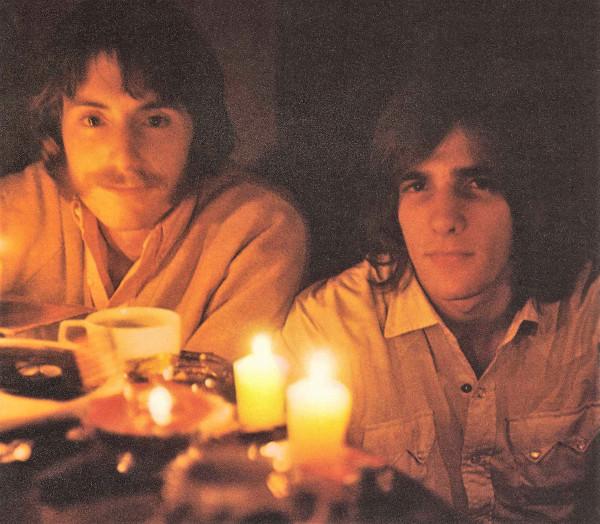
Souther and Frey as pictured on the “Longbranch/Pennywhistle” LP in 1969

In a 2013 interview, Souther downplayed the opinion that Longbranch/Pennywhistle was a groundbreaking country-rock sound. “I keep being referred to as an architect of something,” he said, chuckling. “I assure you, at the time, we didn’t think we were designing anything. We were just trying to make a living by writing songs. The album has a certain charm to it, although it still sounds to me like an 8-track record from guys who didn’t write that well working with first-time producers.”

While Frey became the de facto leader of The Eagles and developed a songwriting partnership with Henley, Souther chose instead to pursue a modest solo recording career, more content to write songs that he would record himself or pass along to others. His 1972 self-titled debut showed his country-inflected songwriting prowess (“How Long,” “The Fast One,” “Some People Call It Music”), and in my view, some of these tunes sound more convincing than some of the lesser tracks that filled out The Eagles’ debut LP that same year.

He remained on good terms with Frey and Henley, co-writing “Doolin’ Dalton,” the opening track on The Eagles’ “Desperado” cowboy concept album in 1973. He regularly hung out with the group as part of their posse; indeed, if you look at the photo on the back cover of “Desperado,” you’ll see Souther posing among the other Eagles as one of the captured “Doolin’-Dalton” gang.

A year later, Souther also helped Frey and Henley complete three tracks for their third LP, “On the Border” — “You Never Cry Like a Lover,” “James Dean” and the tune that became their first #1 hit, “The Best Of My Love.”

Ronstadt and Souther on stage in 1976

Meanwhile, Souther’s relationship with Ronstadt changed from boyfriend-girlfriend to producer-artist as he manned the boards for her third album, “Don’t Cry Now,” which included two of his songs, the languid “I Can Almost See It” and the more uptempo “The Fast One.” The former paramours went on to enjoy a close friendship and professional relationship that lasted for decades, as Ronstadt sang many of his tunes on her top-selling albums throughout the ’70s: “Faithless Love,” “Prisoner in Disguise,” “Silver Blue,” “Simple Man, Simple Dream” and “White Rhythm & Blues.” While none of these were hit singles, most were regulars in her concert set list and popular with her audiences.

For his part, Geffen remained a fan of Souther, to the point that he championed him to be one third of a new trio, The Souther-Hillman-Furay Band, teaming him up with ex-Byrd Chris Hillman and ex-Poco leader Richie Furay for two albums in the 1974-75 period. Hopes were high they would become the next Crosby, Stills and Nash, but it wasn’t to be.

Said Hillman last week, “Today I lost my friend, John David. We were close, and I count him as a great blessing in my life. He possessed a great sense of humor, and was one of the most intelligent people that ever crossed my path. His voice, and the songs he wrote, will forever be in my heart.”

Souther returned to his solo career and released the widely praised LP “Black Rose,” which featured a who’s who of LA musicians in support of some of his best work (“Faithless Love,” “Baby Come Home” and the title tune).

Legendary producer Peter Asher, who worked with Ronstadt and several other artists including Souther on the “Black Rose” album, reflected on Souther’s career in the wake of his passing. “JD was a sublimely imaginative composer and lyricist. He was musically sophisticated and poetically inspired. I see his work as a modern extension of the Great American Songbook, and I was delighted when I was invited to induct him into the Songwriters’ Hall of Fame, a well-deserved honor. In my view, ‘Faithless Love’ alone qualifies him for the distinction. It deserves an award all to itself.”

Souther (third from left) with The Eagles at a 1980 concert

Souther’s greatest commercial success came in the 1976-1981 period, when two of his Eagles co-writes — “New Kid in Town” and “Heartache Tonight” — both reached #1 on US charts. Personally, I don’t care much for either of those simplistic tracks, but in between those two monster hits came his own Top 10 single, the gorgeous, poignant “You’re Only Lonely.” Then, in 1981, he co-wrote and co-sang the heartbreaking “Her Town Too,” a #11 hit for James Taylor.
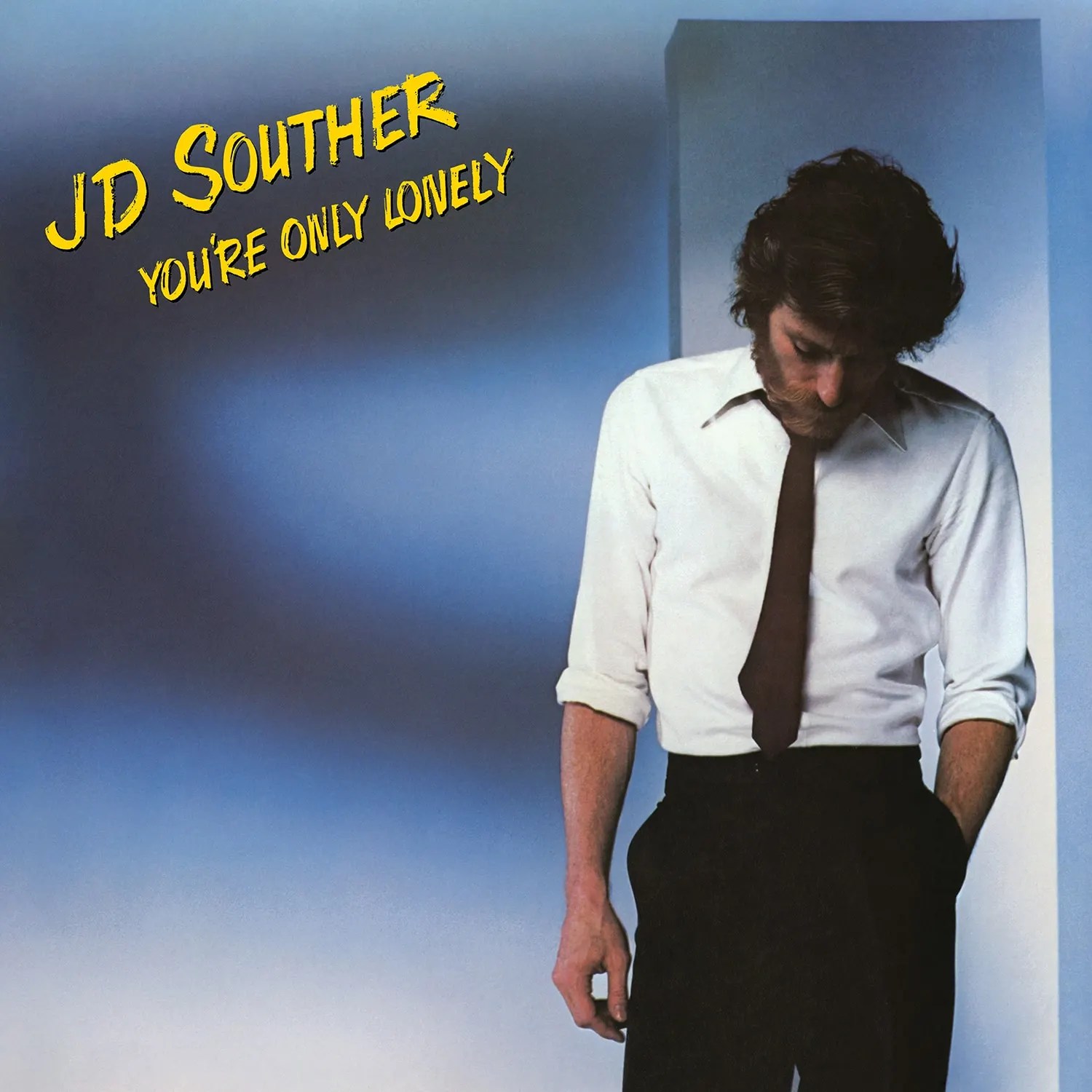
After Souther’s 1984 album “Home by Dawn” stiffed badly on the charts (the LP was “that unfortunate curiosity that’s later called a ‘critical success,’” he said in an interview in 1990, “meaning nobody bought it”), he took a break from recording, discouraged in part by the music industry’s growing reliance on MTV. “I wasn’t a huge fan of music videos because I thought they encouraged an excess of production as opposed to a real focus on the heart of the music,” he said in 2012.

Still, he continued songwriting, helping Henley write “The Heart of the Matter,” one of his big solo singles from his “The End of the Innocence” LP in 1989.

In the ’90s, he stuck his toe in the waters of acting, appearing in the 1990 film “Postcards From the Edge” and as a recurring character in the third season of the award-winning TV drama “thirtysomething.” Other acting roles included a stint as a grizzled country music fixture in the 2012 TV drama “Nashville.”

Souther released three more albums since 2000, and although they were largely ignored, all of them include tracks worthy of your attention. The Spotify playlist below includes several fine tunes from 2008’s “If the World Was You” and 2015’s “Tenderness,” which both lean toward jazzier arrangements, and 2011’s “Natural History,” on which he records his own renditions of his Eagles hits and other earlier successes.

The timeless nature of Souther’s songs is best exemplified by his 1972 song “How Long,” which appeared on his debut LP. When The Eagles reunited and assembled their ambitious double LP “Long Road Out of Eden” in 2007, “How Long” was not only included but featured as one of the two singles they released from it. It arguably came closest to recapturing the group’s classic blend of country and rock, reached #23 on the country chart and won a Grammy for Best Country Performance by a Duo or Group.
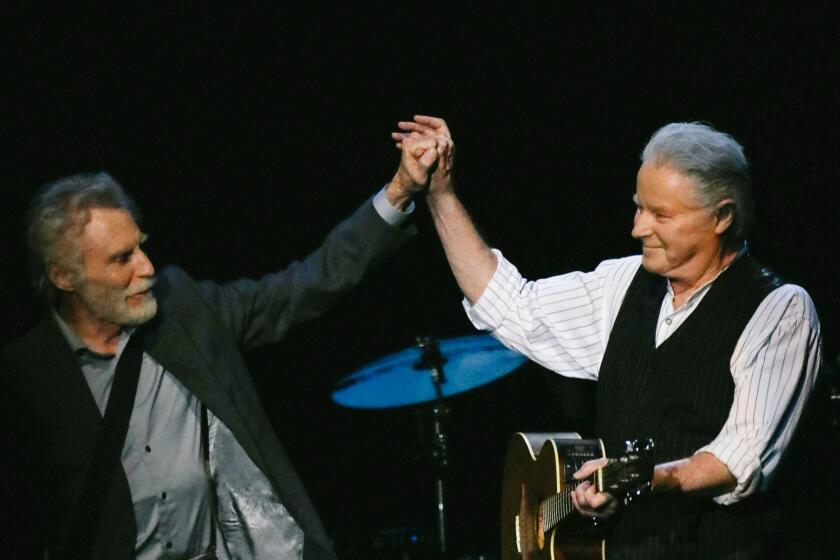
Don Henley and J. D. Souther
Souther acknowledging Henley’s appreciation in 2024

This past January, when The Eagles performed in Los Angeles, Souther came on stage for several numbers including “How Long.” Henley introduced him as “an important part of the tight-knit community of songwriters and singers we turned to when we would get stuck on a song or we’d try to start some new material.”

R.I.P. to you, J.D. Your legacy is intact.

*************************

This playlist includes what I consider JD Souther’s best material, presented in chronological order of the release of the albums they came from (his own as well as those by other artists).

Are you ready, boots? Start walking

The medical profession has been telling us for decades, even centuries, that daily walking is an excellent way to maintain our good health, particularly as we grow older and lead more sedentary lifestyles. It helps pretty much all of our internal systems — muscles, bones, lungs, cardiovascular — and does wonders for our soul and emotional well being too.

Some people jog, or go cycling, or even rollerblading. But more and more people these days are taking morning walks, or afternoon walks, or evening walks, or perhaps all three. Sometimes it’s just a quick stroll around the block to let the dog do his business, and other times it’s a five-mile power walk with a like-minded human companion. Some folks even participate in fundraising walkathons.

Popular songwriters have found walking to be a fertile subject. Below, I’ve selected 20 songs from the classic rock era that mention walking in the title, with another 17 “honorable mentions” as well, bringing the Spotify playlist to more than two hours, which should be a fine soundtrack for a nice long walk!

**************************

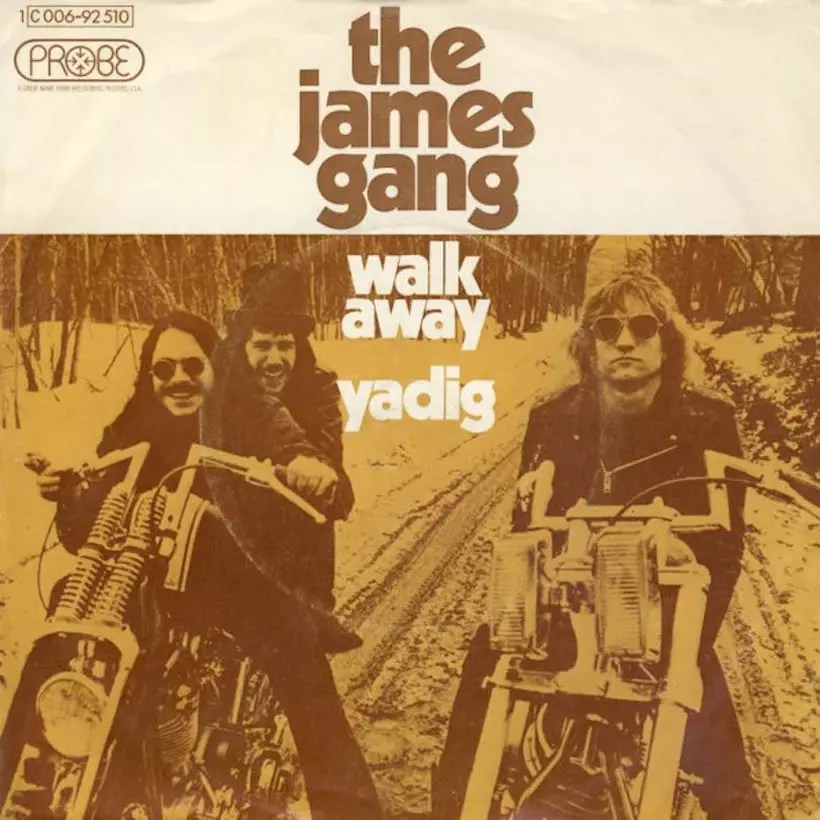
“Walk Away,” The James Gang, 1971

Joe Walsh wrote this rock/funk tune for “Thirds,” his final studio album with The James Gang before going solo. The lyrics describe a relationship that’s on its last legs, in which the man doesn’t want it to end but the woman no longer appears interested: “Seems to me you don’t want to talk about it, /Seems to me you just turn your pretty head and walk away…” Although it stalled at #51 when released as a single, “Walk Away” has endured as a hard rock classic, and has been a mainstay in The Eagles’ concert setlist after Walsh joined that band.

“Walking on Broken Glass,” Annie Lennox, 1992

Like many of the songs she sang and co-wrote as part of The Eurythmics, this hit single from Lennox’s 1992 debut LP “Diva” takes a depressing topic like romantic abandonment and attaches it onto an irresistibly danceable beat. Critics called it “a gloriously intoxicating pop song that focuses on the emotional upheaval of a shattered relationship” that makes the narrator feel as if she’s walking on broken glass. It peaked at #14 in the US, #8 in her native UK and #1 in Canada.

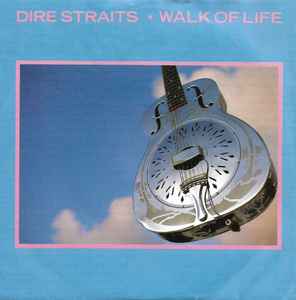
“Walk of Life,” Dire Straits, 1985

Mark Knopfler had originally planned for this whimsical rocker to be merely a B-side for one of the intended singles from the Dire Straits LP “Brothers in Arms,” but the band’s manager persuaded Knopfler to include it on the album, and it ended up a popular single in its own right. It peaked at #7 in the US and at #2 in the UK, the group’s highest charting single there. The lyrics refer to a busker in the London subway, playing old rock and roll songs like “Be-Bop-a-Lula,” “What I’d Say” and “I Gotta Woman” in order to make a few bucks “and do the walk of life.”

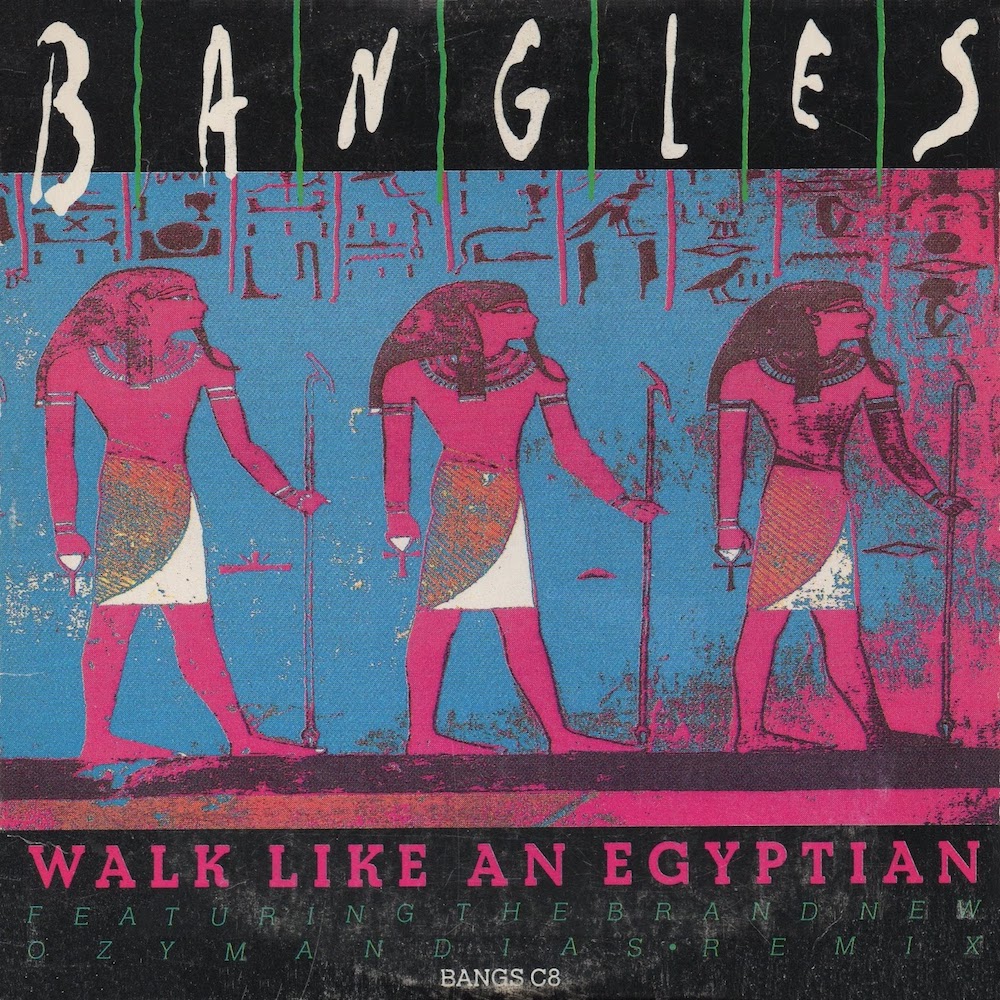
“Walk Like an Egyptian,” The Bangles, 1986

In 1985, songwriter Liam Sternberg was on a ferry crossing the English Channel in choppy waters, and watched as passengers stepped carefully and moved their arms awkwardly while struggling to maintain their balance. He compared their movements to the depiction of human figures in ancient Egyptian tomb paintings and was inspired to write an uptempo tune with lyrics that mentioned more modern scenes in which people walked in similar fashion. David Kahne, who was producing The Bangles’ second LP “Different Light,” urged the group to record it, and it ended up an international #1 hit in 1986-1987.

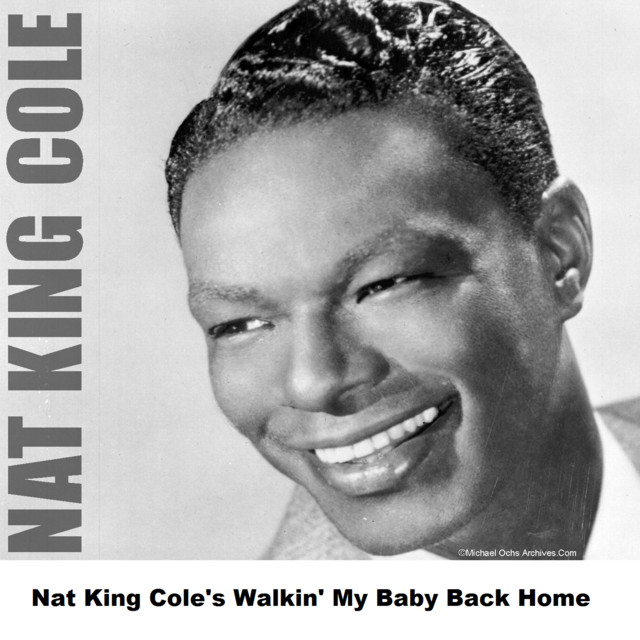
“Walkin’ My Baby Back Home,” Nat King Cole, 1952

More than 100 artists have covered this charming ditty since the songwriting team of Fred Ahlert and Roy Turk wrote it way back in 1930, when four different singers put it on the “Hit Parade” the same year. Nat King Cole reached #8 on the US pop charts with his definitive rendition in 1952, and it became the title song of a 1953 film of the same name. Since then, everyone from Ella Fitzgerald and Bing Crosby to Judy Garland and Dean Martin wrapped their voices around it, as have rock-era artists like James Taylor, George Benson, Willie Nelson and Van Morrison.

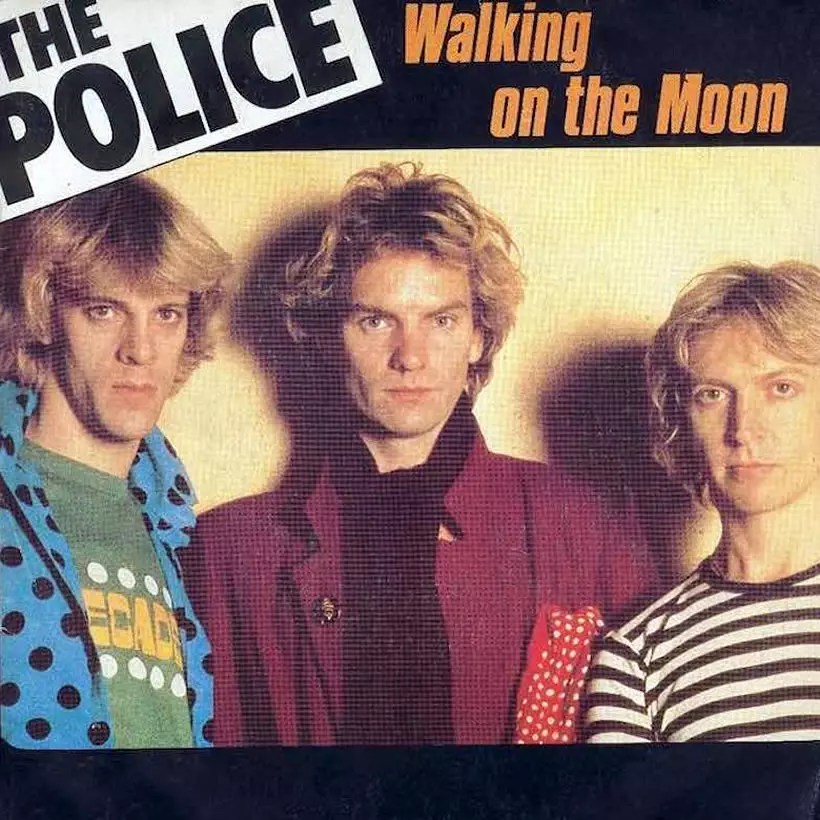
“Walking on the Moon,” The Police, 1979

Sting recalled this song came into being when he was drunk one night in a Munich hotel room. “I was feeling nauseous, but I had a riff in my head, and got up to walk around the room, singing the nonsense words ‘Walking ’round the room,'” he said. “In the morning, I changed it to ‘Walking on the moon,’ which was how I remember feeling years earlier, walking home from my girlfriend’s house.” The reggae-based tune became The Police’s second #1 single in their native England, but it failed to chart in the US, although the album it came from, 1979’s “Regatta de Blanc,” reached #25 on US album charts.

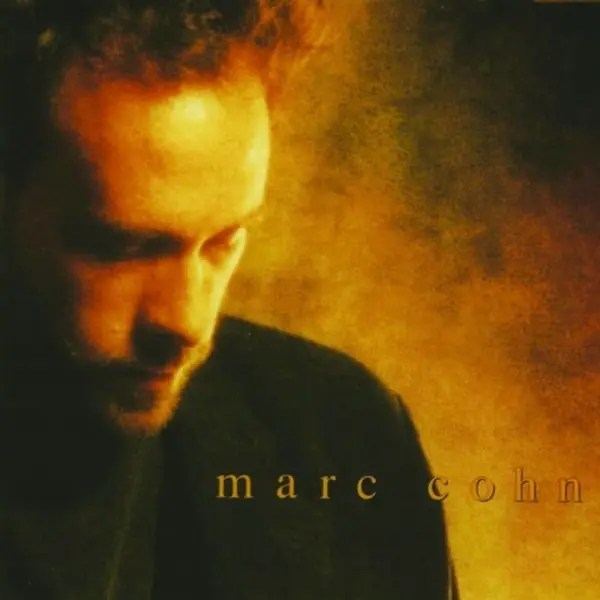
“Walking in Memphis,” Marc Cohn, 1991

Cohn was a struggling Ohio songwriter in 1985 when he went to Memphis in search of inspiration. He visited the church where Al Green preached, and Elvis Presley’s Graceland mansion, and walked the streets and visited the blues and gospel nightspots of the downtown area. The song “Walking in Memphis” came pouring out upon his return home, and attracted enough attention to gain a record deal, and the song turned into not only his debut single, reaching #13 on US charts and #3 in Canada, but also garnered a Song of the Year Grammy nomination that earned Cohn the Best New Artist Grammy in 1991.

“Walk Away Renée,” The Left Banke, 1966

Keyboardist Michael Brown has said he was inspired to write this piece of baroque pop about a girl he had fallen for named Renée Fladen. He said it was an unrealized relationship because he was too timid to approach her, so he mythologized her instead. Brown’s band, The Left Banke, had a big #5 hit with “Walk Away Renée” in the summer of 1966, and a #15 follow-up single (also about the same girl) called “Pretty Ballerina” in early 1967 rescued the group from being “one-hit wonders.”

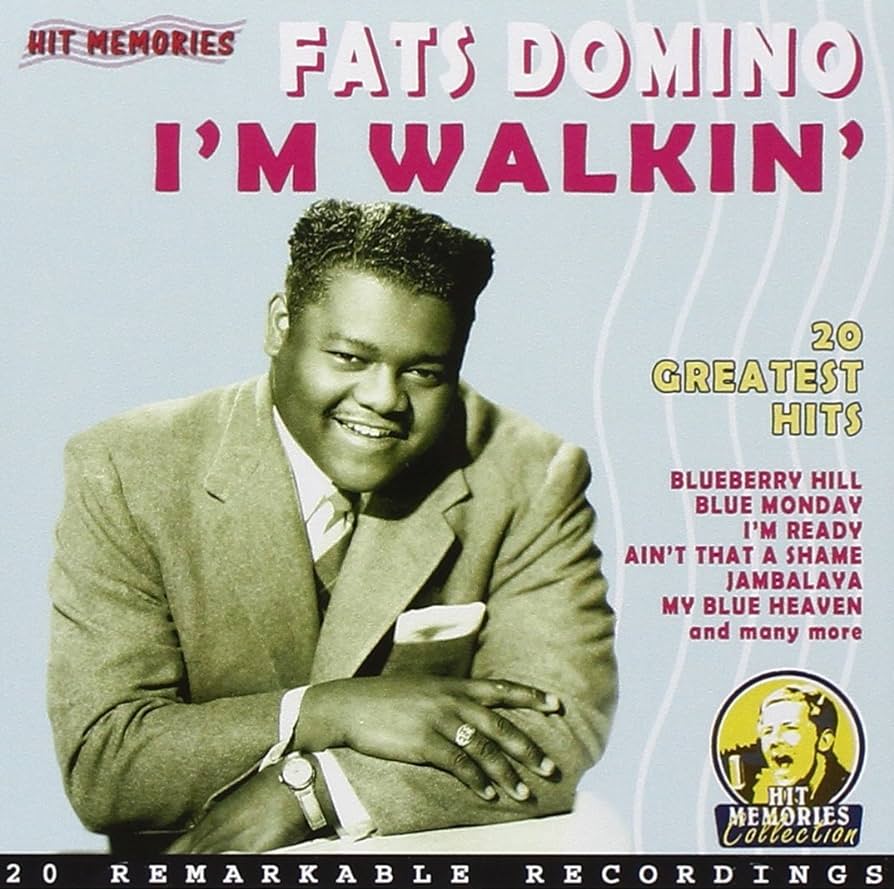
“I’m Walkin’,” Fats Domino, 1957

Domino, one of the original rock and roll pioneers out of New Orleans, had 20 hits on the R&B charts between 1949 and 1955 before he finally broke through on the pop charts with the iconic “Ain’t That a Shame.” He followed that with three more consecutive Top Ten hits — “Blueberry Hill,” “Blue Monday” and “I’m Walkin'” — in 1956 and early 1957. The latter, co-written by Domino and jazz great Dave Bartholomew, was covered by Ricky Nelson later the same year, reaching #17.

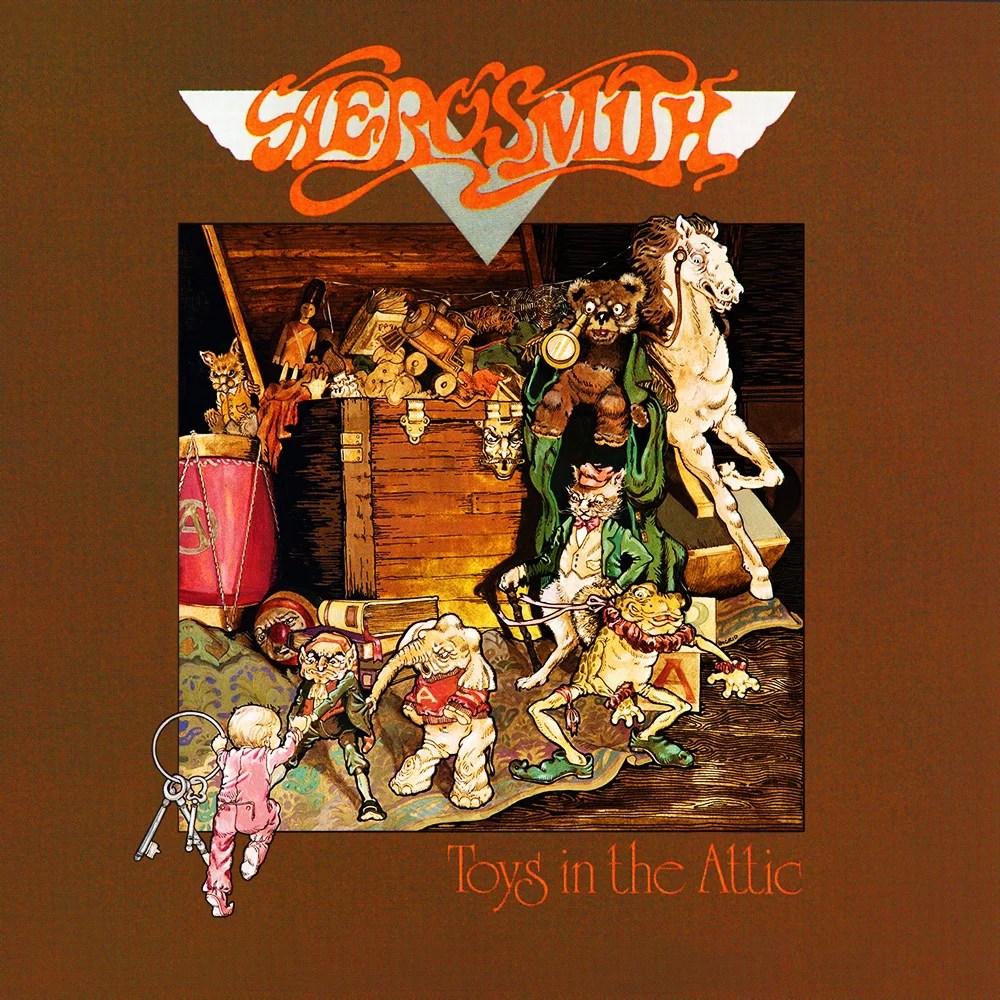
“Walk This Way,” Aerosmith, 1975

Guitarist Joe Perry and vocalist Steven Tyler, struggling for lyrics as they recorded this track for their “Toys in the Attic” LP, took a break and went to see the Mel Brooks comedy “Young Frankenstein,” in which Marty Feldman’s Igor character told Gene Wilder’s Dr. Frankenstein character to follow him as he limped off, saying “Walk this way.” They decided it would make a great title and lyric for the chorus, and the song ended up a Top Ten hit in 1977. Then in 1986, “Walk This Way” returned to the Top Ten in a collaboration with the rap group Run-D.M.C.

“Walk the Dinosaur,” Was (Not Was), 1989

In 1981, Don Fagenson and David Weiss formed a group they called Was (Not Was) based on Fagenson’s toddler son’s propensity to talk in contradictions. They struggled through the 1980s until their 1988 LP “What Up, Dog?” spawned the quirky #7 tune “Walk the Dinosaur,” which became a big music-video hit in 1989, utilizing scenes from the cartoon “Daffy Duck and the Dinosaur.” Randy Jacobs, one of the song’s cowriters, said that although the lyrics were about nuclear Armageddon, “it became a singalong dance anthem because of the Flintstones-like video that probably got played too much.”

“Walking the Dog,” Rufus Thomas, 1963

Thomas was a singer/songwriter/DJ/comedian in the 1940s and 1950s who made his first chart appearance on the US pop charts at age 46 when his bluesy tune “Walking the Dog” peaked at #10 in December 1963. The Rolling Stones recorded a cover version for their debut LP three months later. Soon enough, another dozen artists took their turns at it, including Johnny Rivers, Mitch Ryder and the Detroit Wheels, the Everly Brothers, Aerosmith, Spirit and Roger Daltrey.

“Walk a Mile in My Shoes,” Joe South, 1968

South was a ubiquitous session guitarist in the 1960s, appearing on albums by Bob Dylan, Simon and Garfunkel and Aretha Franklin. He was also a successful songwriter, writing hits like “Down in the Boondocks” for Billy Joe Royal, “Hush” for Deep Purple and “Rose Garden” for Lynn Anderson. When he penned more socially provocative songs, he became a recording artist in his own right, enjoying chart success with “Games People Play” as well as “Walk A Mile in My Shoes,” a plea for compassion and tolerance between those of different backgrounds.

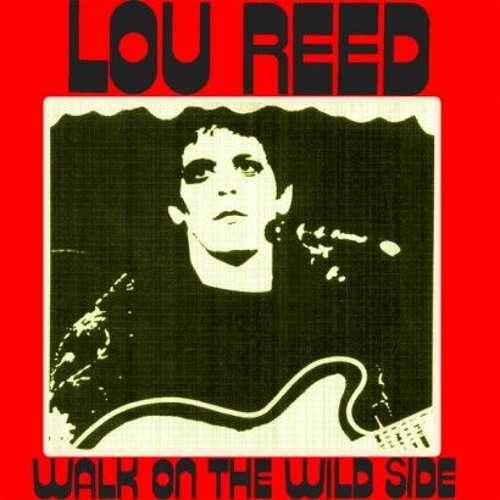
“Walk on the Wild Side,” Lou Reed, 1973

Inspired by the 1956 Nelson Algren novel of the same name, Reed wrote “Walk on the Wild Side” for his second solo LP “Transformer,” and it became a surprise hit in the spring of 1973, reaching #16. Its lyrics pushed against boundaries for its time, touching on formerly taboo topics like male prostitution, transgender people and oral sex. “I always thought it would be kinda fun to introduce people to characters they maybe hadn’t met before, or hadn’t wanted to meet,” said Reed.

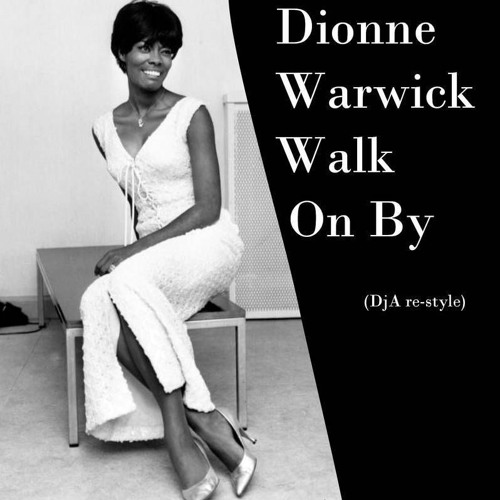
“Walk on By,” Dionne Warwick, 1964

The legendary songwriting team of Burt Bacharach and Hal David came up with this tearjerker classic for song stylist Dionne Warwick, one of many the duo wrote for her in the 1960s. It peaked at #6 on US pop charts. The lyrics urge the narrator’s former lover to just keep walking by if they’re about to encounter each other: “Make believe that you don’t see the tears, just let me grieve in private, /’Cause each time I see you, I break down and cry, so walk on by…” A few dozen artists have recorded the song since then, including Isaac Hayes, Gloria Gaynor, The Stranglers, Average White Band, Melissa Manchester and Cyndi Lauper.

“Walking Man,” James Taylor, 1974

Bruce Springsteen may have been “born to run,” but it seems as if Taylor was more the “born to walk” type. His catalog has a few delightfully uptempo tunes, but most of his songs, especially from his first four or five albums, are mellow, tuneful reflections on a more chill lifestyle. The title track from his 1974 LP “Walking Man” is a case in point, celebrating the man who strolls through life in contemplation: “The walking man walks, doesn’t know nothing at all, /Any other man stops and talks, but not the walking man, /Born to walk, walk on, walking man…”

“I Walk the Line,” Johnny Cash, 1957

Cash had approached Sam Phillips at Sun Records in the hopes of recording gospel songs, only to be told Phillips was more interested in “rockabilly” artists at that point, including Elvis Presley and Carl Perkins. Cash adapted the songs he was writing, speeding up the tempo of his ballads, and in 1957 he scored his first #1 hit on the country charts, “I Walk the Line,” which was also a #17 crossover hit on the pop charts. The song’s lyrics discuss resisting temptation, being accountable, and remaining faithful to his wife, though they would later divorce and he married June Carter in 1968, to whom he remained married until both died with five months of each other in 2003.

“Walking on Sunshine,” Katrina and The Waves, 1985

British guitarist/songwriter Kimberley New came up with this effervescent tune in the early ’80s as he was joining the band Katrina and the Waves. “I’d love to say ‘Walking on Sunshine’ relates to a significant event in my life, like walking out of my front door and seeing a comet or something,” he said, but it’s just a piece of simple fun, an optimistic song,” The group recorded it themselves in 1983, but after getting a record deal in 1985, they re-recorded it with a horn section for their Capitol Records debut, and it became a Top Ten hit in the US, the UK and Australia.

“Walk Between Raindrops,” Donald Fagen, 1982

Following Steely Dan’s decision to take a break after their seventh LP “Gaucho” in 1980, Fagen recorded the polished jazzy solo effort, “The Night Fly,” in 1982. Fagen had been inspired by jazz music of the ’40s and ’50s when he was growing up, and the songs he wrote for the album reflect that, none more so than the album’s closing track, “Walk Between Raindrops.” The lyrics describe a memorable romantic encounter in Miami during which a couple take an evening walk and dodge a rainstorm as they return to her apartment.

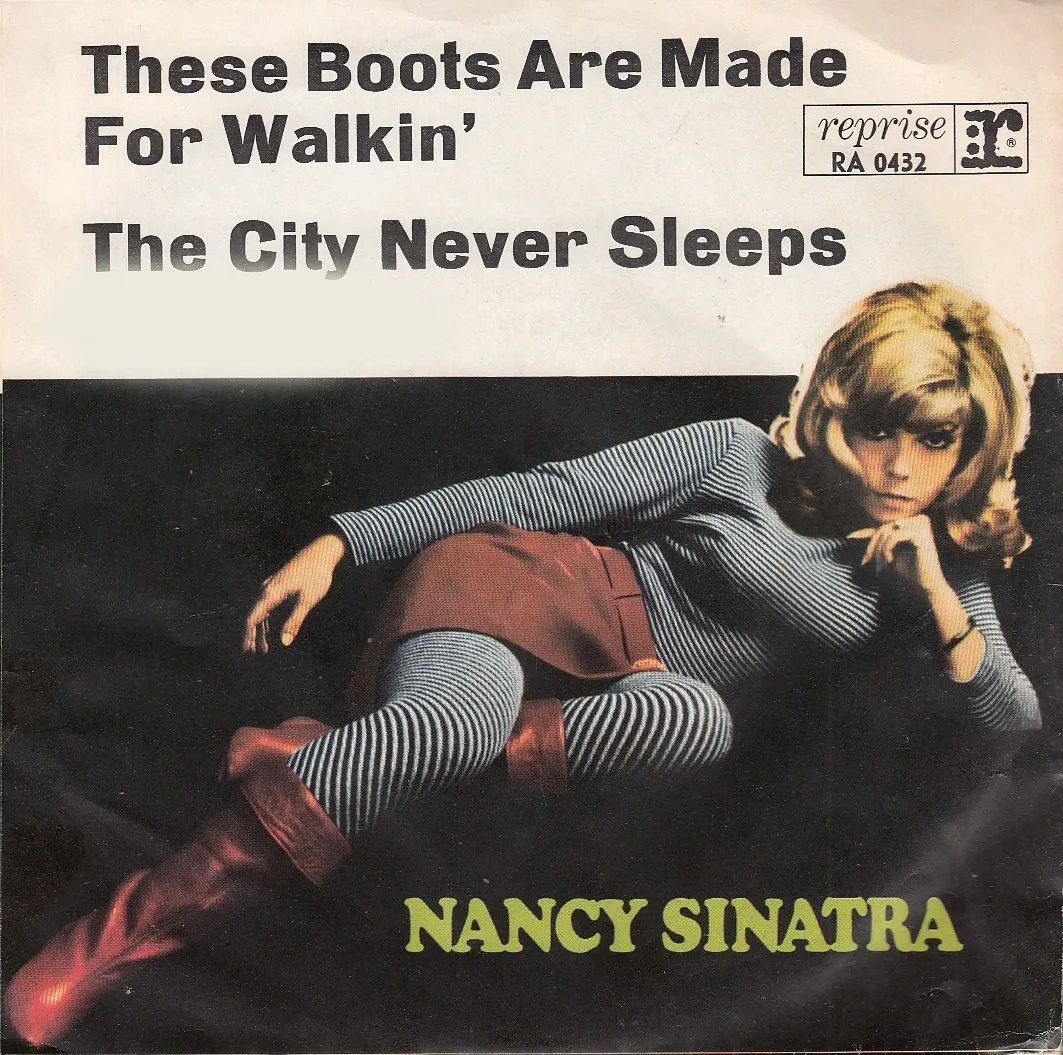
“These Boots Are Made For Walkin’,” Nancy Sinatra, 1966

Appearing in a 1963 comedy western, Frank Sinatra uttered the line, “They tell me them boots ain’t built for walkin’.”  Country singer-songwriter Lee Hazlewood composed this song around a modified version of the phrase, and intended to sing the song himself, but Sinatra, a friend of his, persuaded him to give it to his daughter Nancy to record.  “Coming from a guy, the words sound harsh and abusive, but it’s perfect for a young girl to sing,” he reasoned.  The song, interpreted as a girl serving notice to her boyfriend that she refused to be pushed around, struck a nerve, reaching #1 on US pop charts in the spring of 1966.

*************************

Honorable mentions:

The Walk,” Mayer Hawthorne, 2011; “Walking on the Sun,” Smashmouth, 1996; “Walk Like a Man,” The Four Seasons, 1963; “Walk on the Ocean,” Toad the Wet Sprocket, 1991; “Walking on a Thin Line,” Huey Lewis and The News, 1983; “Walk on the Water,” Creedence Clearwater Revival, 1968; “Walking Through Fire,” Mary Chapin Carpenter, 1992; “Walk in My Shadow,” Free, 1970; “Walk Right In,” Dr. Hook, 1977; “When You Walk in the Room,” Jackie DeShannon, 1963; “Walking in the Wind,” Traffic, 1974; “Walkin All Night,” Little Feat, 1973; “Walking Slow,” Jackson Browne, 1974; “Walkin’ and Talkin’,” The Marshall Tucker Band, 1975; “Walk Into Light,” Ian Anderson, 1983; “Walking in the Rain,” The Ronettes, 1963; “Walking On Air,” Stephen Bishop, 1989.

*****************************