Giving thanks, full of gratitude
A trusted friend once told me she starts each day by making a mental note of the things she’s grateful for, and it invariably sets the tone for a positive outlook. I’ve adopted this morning routine, and I highly recommend it.

On Thanksgiving Day, many families go around the dinner table giving everyone the opportunity to say what they’re thankful for, and when it’s my turn, boy, am I ready! Hack’s Back Pages comes to you a day early this holiday week because I’d like to point out how uncanny it is that music has played such an important role in the many blessings I have received.
There’s a Spotify playlist at the end that includes each of the songs I refer to in my list of gratitudes.
**********************
I’m thankful that my parents were such great role models who showed me the importance of close family ties. They instilled in me a deep appreciation for great music — big band music, swing, Broadway musical tunes, classical pieces, traditional torch songs, seasonal carols. They strongly encouraged participation in church choirs and handbell groups, piano/guitar lessons, and my musical collaborations with friends (even though they weren’t always wild about some of the artists I chose to listen to!). As it turned out, I ended up instilling the same love for music of all kinds in my two daughters, one of whom became a professional singer-songwriter. To underscore this gratitude, I would cue up “The Things We’ve Handed Down,” a beautiful tune by Marc Cohn from his 1993 LP, “The Rainy Season.”
I’m thankful to have met and married the most wonderful, compassionate, talented, attractive woman in the world, who, for nearly 40 years now, has been my confidante, my best friend, my partner in parenting and, not coincidentally, my companion at countless rock concerts, and my number-one fan when I pull out the guitar! I’m one lucky guy to have had her love and gentle guidance, and benefitted from her enthusiasm and sense of humor. There’s no better song to cue up here than “My Girl,” The Temptations’ marvelous slow-dance tune from 1965.
I’m thankful I was blessed with the chance to be a doting father to two amazing, smart, resourceful, beautiful daughters. Nothing warms my heart more than having watched them grow from toddlers into strong young ladies who fill me with love and pride every single day. They can both sing way better than I can, and I like to think I’m a big reason why music is a huge part of their lives. They both follow artists that don’t do much for me, naturally, but they are also big fans of vintage musicians I introduced them to, so I’ll cue up Paul Simon’s appropriately titled “Father and Daughter” from his 2006 album, “Surprise.”
I’m thankful that, while I wouldn’t describe myself as a religious guy, I have come to increasingly appreciate the strength and hope I am getting from my recent spiritual explorations. Opening the door to the possibility of a higher power has brought me a genuine inner serenity I lacked, and has reminded me of the rewards of putting the needs of others before my own. When I was less receptive to spiritual messages, they nevertheless found their way in through the rich strains of chorales and church organs heard in places of worship. I still get chills sometimes when I hear a favorite hymn performed, bringing a deeper meaning now. The rock music fan in me would cue up Eric Clapton’s “Presence of the Lord,” from the album he made as part of Blind Faith in 1969.
I’m thankful that, despite a stent, “A-Fib,” a hip replacement, neuropathy concerns and ever-increasing aches and pains that seem to come on a daily basis, I’m doing all right for a 66-year-old. As the saying goes, “If we have our health, we have a great deal.” For me, music has cathartic qualities that contribute mightily to my well being. Hearing a favorite piece of music has always had the ability to soothe the body, the mind, and the soul. Here’s where I cue up “I Got You (I Feel Good),” James Brown’s 1965 classic.
I’m thankful for this incredibly beautiful country, and world, in which we live. Although the human race has despoiled far too much of it with our selfish and negligent ways, there are countless places we can go where the scenic beauty can literally take your breath away. I’m hoping — begging, really — that we all work harder to be much more respectful of the environment so future generations have many more centuries left to enjoy it. I suggest we cue up “Share the Land,” the 1970 Top 20 single by The Guess Who.
I’m thankful how lucky I am to have had such warm, funny, supportive friends in my life. I have a friend I’ve known since we were four years old, and I have new friends I met less than two years ago, and they are all very dear to me. They bring me joy in so many ways, helping me celebrate and grieve as the situations warrant. Through the years, one of the things I’ve most enjoyed doing with friends is singing around backyard bonfires and patio fire pits, or volleying music/lyric trivia questions back and forth, and dancing the night away to the oldies. Time to cue up “Friends” by Elton John (1971).
I’m thankful to now be living in a safe, comfortable home within a short bicycle ride of the stunning Pacific Ocean. While I will always cherish my 40 years in Cleveland, Ohio, and 17 years in Atlanta, Georgia, I am thrilled to be realizing one of my dreams — to live near the ocean, watch the sunsets, listen to the waves, contemplate the beauty. Every day. Let’s cue up “Home By the Sea,” a 1983 track by Genesis.
I’m thankful for the wisdom I learned not long ago from this important philosophical life lesson: “Yesterday is history, tomorrow is a mystery, but today is a gift, and that’s why they call it the present.” Essentially, it’s “don’t cry over spilled milk, don’t worry about things you can’t control, be in the now.” With that in mind, I think the late great George Harrison would appreciate it if I cued up “Just for Today” from his 1988 album, “Cloud Nine.”
I’m thankful for the way I am revitalized, soothed, inspired, comforted, astounded and exhilarated by music of (almost) all kinds, in all settings, all day and night, whether listening or participating. I love to cue up the 1976 track by Average White Band whose chorus joyously exclaims, “Music, sweet music, you’re the Queen Of My Soul…”

I’m thankful that I seem to have what some refer to as an encyclopedic mind for music trivia, which has helped me recall everything from the lyrics of “Louie Louie” to the name of the original bass player in The Doobie Brothers. I also love digging into music reference books and rock biographies to learn more back stories. It allows me to assemble some compelling, theme-based playlists, such as the dozen tracks below about thanks and gratitude to mark the Thanksgiving holiday. May the day land gracefully for you.
 and others for many decades. Why isn’t exactly clear. It took until 1966 when Lyndon Johnson finally issued a proclamation designating the third Sunday in June as Father’s Day, “honoring fathers and celebrating fatherhood, paternal bonds, and the influence of fathers in society.” Well, better late than never, I guess…
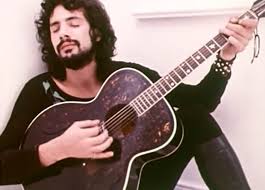 In “Father and Son,” the lovely yet powerful call-and-response piece from 1970’s “Tea for the Tillerman,” Stevens creates a somewhat tense dialog between a man and his son, who hold different opinions about life and love. The father admonishes the boy — “you’re still young, that’s your fault, there’s so much you have to know” — and the son retorts, “How can I try to explain, when I do he turns away again, it’s always been the same old story…” In the end, they agree the boy must leave home and find his own way: “Away, away, away, I know I have to make this decision alone…”
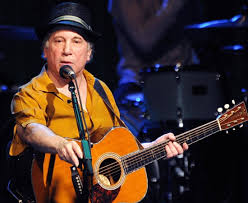 One of the most perceptive songwriters of his time, Simon has written lyrics exploring everything from loneliness to jubilation, from troubled water to little towns, from Graceland to Kodachrome. In the best song from his mostly ignored 2006 album “Surprise,” he serves up the kind of reassurance and affection only a parent can offer to a child: “I’m gonna watch you shine, gonna watch you grow, gonna paint a sign so you’ll always know, as long as one and one is two, there could never be a father who loved his daughter more than I love you…”
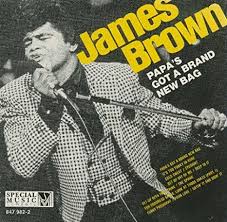 America had already shown its appreciation in the early ’60s for the Rhythm & Blues genre coming from the Motown groups (The Miracles, The Supremes), but with this infectious track, James Brown’s first Top Ten hit, the Godfather of Soul offered up a whole different, more passionate breed of soul music. Brown wrote the song –perhaps the first funk tune on US charts — about an older man who isn’t shy about strutting his stuff on the dance floor amongst much younger folks: “Come here sister, Papa’s in the swing, he ain’t too hip now, but I can dig that new breed, baby, he ain’t no drag, Papa’s got a brand new bag…”
 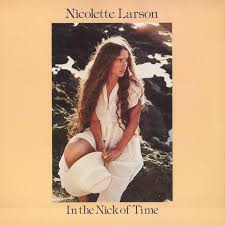 Larson’s fine vocal harmonies were first introduced by Neil Young on his “Comes a Time” LP, and her rendition of Young’s song “Lotta Love” was her breakout single, hitting #5 in the spring of ’79. On her excellent follow-up LP, “In the Nick of Time,” Larson chose to include the 1940s-era Bobby Troup song “Daddy,” made famous by The Andrews Sisters and various orchestras of the time. Troup, who also wrote “Get Your Kicks on Route 66,” wrote this one about a girl who loves to be pampered: “Hey Daddy, I want a diamond ring, and bracelets, and everything, hey Daddy, you ought to get the best for me…”
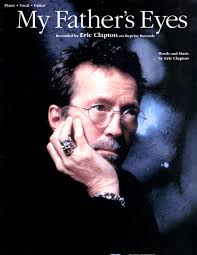 Patricia Clapp was only 16 when she gave birth to her son Eric. His father, a 25-year-old soldier from Montreal, shipped out before Eric was born, and the two never met. This song’s lyrics, written by Clapton in 1992 but not released until his 1998 “Pilgrim” LP, speak of his longing for a chance to gaze into his father’s eyes, and also refer to the brief life of Clapton’s own son Conor, who died at age 4. In his 2007 autobiography, he wrote, “I tried to describe the parallel between looking in the eyes of my son, and the eyes of the father I never met, through the chain of our blood.” A sample: “Where do I find the words to say, how do I teach him, what do we play, bit by bit, I’ve realized, that’s when I need them, that’s when I need my father’s eyes…”
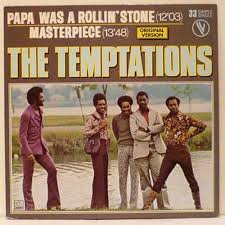 This tragic song by Norman Whitfield and Barrett Strong tells the tale of a young man talking about the deadbeat father he never knew, who neglected those who loved him most: “I never got the chance to see him, never heard nothin’ but bad things about him, ‘Mama, I’m depending on you to tell me the truth, Mama just hung her head and said, ‘Papa was a rollin’ stone, wherever he laid his hat was his home, and when he died, all he left us was alone’…” Originally written for The Undisputed Truth as its follow-up to “Smiling Faces Sometimes,” it was instead recorded by The Temptations in a magnificent 12-minute version full of instrumental passages. It was pared down to 6:45 for the single, which turned out to be the group’s final #1 hit.
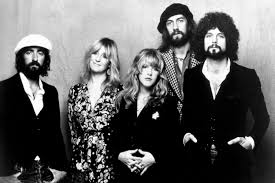 When Fleetwood Mac was recording the multiplatinum “Rumours” album, Lindsey Buckingham and Stevie Nicks were at each other’s throats, and John and Christine McVie were in the process of divorcing. Mick Fleetwood was having his own problems with his wife back home, but he appeared to Christine to be the “steady rock” holding the band together. With this song, Christine McVie was letting Fleetwood know, in her own way, that he was the father figure of the group at the time they needed one the most: “Why are you right when I’m so wrong, I’m so weak but you’re so strong… Oh Daddy, if I could make you see, if there’s been a fool around, it’s got to be me…”
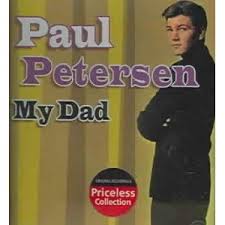 The Donna Reed Show, an early ’60s sitcom starring the Oscar-winning actress as the pleasant, level-headed mom, featured two different episodes in which her fictional children, Mary and Jeff, sang songs at a school dance. Their real-life counterparts, Shelly Fabares and Paul Petersen, took those songs to Top Five success on the US singles chart. Fabares’ rendition of “Johnny Angel” went all the way to #1 in early ’62. Petersen,
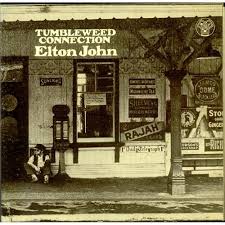 Elton John’s lyricist partner, Bernie Taupin, was fascinated by the old American West and its stories of the frontier, as evidenced by the almost country-western feel to the music and words of most of the tracks on their third album, “Tumbleweed Connection.” Taupin reaches back to the Civil War in “My Father’s Gun,” a slow-building, dramatic tale in which the son buries his soldier father and then vows to keep fighting in his father’s place: “I’ll not rest until I know the cause is fought and won, from this day on, until I die, I’ll wear my father’s gun…”
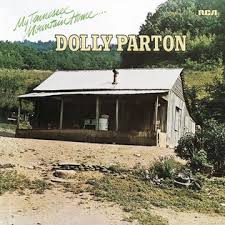 For her 11th studio album, “My Tennessee Mountain Home,” Parton recorded a batch of songs she wrote about growing up in rural Tennessee before heading to Nashville for fame and fortune. The title track was a Top 20 hit on the country charts, but equally poignant was this song that paid tribute to her father and how hard he had to work to support her family during tough times: “As long as I remember, I remember Daddy workin’, workin’ on the job or either on the farm, trying to provide for the family that he loves, and Daddy’s working boots have taken many steps for us…”
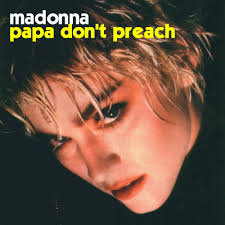 “Papa Don’t Preach,” Madonna, 1986
 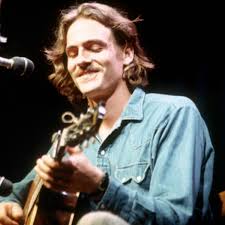 The homesickness for hearth and family that strikes touring musicians is the subject of this autobiographical song from Taylor’s seventh LP, “In the Pocket,” one of his best. The lyrics speak of him calling home from yet another night on the road, lamenting the fact that he has many more concerts ahead of him before he can return home where he wants to be: “Oh, I miss you, baby, I sure am on the road, I don’t need to say much more, just the same old well-known stranger that I was before, it seems like yesterday now, Daddy’s all gone, he’s only halfway home, he’s holding on to the telephone singing, please, don’t let the show go on…”
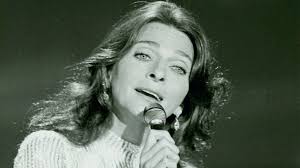 One of Collins’s first attempts at composing was this gorgeous piano ballad, written in October 1967 for her blind father, who died only three weeks after she recorded it. They both had suffered from depression and alcoholism, and had forged an uneasy bond over their afflictions. She wrote how he had dreamed of greater things for himself and his family, most of which never came to pass: “My father always promised us that we would live in France, we’d go boating on the Seine and I would learn to dance, I sail my memories of home like boats across the Seine, and watch the Paris sun set in my father’s eyes again…”
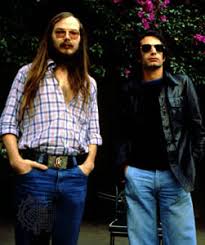 Here’s a funky little blues-based track from Steely Dan’s underrated “Katy Lied” LP. Creative duo Donald Fagen and Walter Becker chose to use a different guitarist on each of the album’s 10 tracks; this one features the smooth stylings of jazz great Larry Carlton. The lyrics paint a picture of a typically dark Fagen-Becker character, this time an unreliable father figure who’s either drunk or absent most of the time: “Driving like a fool out to Hackensack, drinking his dinner from a paper sack… He can’t get tight every night, pass out on the barroom floor…”
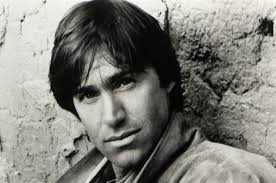 The sensitive singer-songwriter from Illinois was well past his commercial peak when he released the criminally overlooked LP “The Wild Places” in 1990. The album contains some of the best music and most perceptive lyrics of his career, including this bittersweet paean to his Scandinavian and Scottish ancestors and the sacrifices they made for the generations that followed: “And the sons become the fathers, and their daughters will be wives, as the torch is passed from hand to hand and we struggle through our lives, the generations wander but the lineage survives, and all of us, from dust to dust, we all become forefathers by and by…”
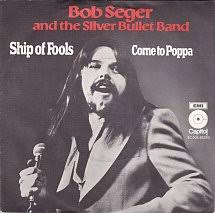 Seger had been a musical force in Detroit and the Midwest ever since his early band, The Bob Seger System, had a taste of success in 1968 with their #17 hit “Ramblin’ Gamblin’ Man.” It wouldn’t be until 1976 when Seger truly broke through nationally with the Silver Bullet Band on their excellent “Night Moves,” LP, the first of six consecutive Top Ten albums. The title song was a huge hit, peaking at #4, and two other tracks, “Mainstreet” and “Rock and Roll Never Forgets,” charted as well. Other notable songs include “The Fire Down Below,” “Ship of Fools” and the old Willie Mitchell tune, “Come to Poppa,” with lyrics that suggest whom you can turn to when things aren’t going your way: “If life gets hard to understand, and the whole thing is getting out of hand, come to Poppa…”

 Hack's Back Pages