I can turn back the hands of time
It’s fairly amazing that I continue to find, or rediscover, great old songs tucked away on vinyl from the ’60s, ’70s and ’80s. You’d think the well would eventually run dry. But hey, there were more than 500 albums released every year during those decades (I think the number is even higher these days), so it’s easy to overlook the gems hidden on albums you thought you knew.

Since 2015, I’ve published 36 posts that each offer a dozen “lost classics” worthy of your attention. For this post, I am featuring a fresh dozen of these unearthed beauties, mostly from the ’80s this time. Some you may recognize; others will be all new to you. In either case, they’re here because I think they’re proof of the preponderance of great music that was written, recorded and released in rock music’s formative years.
Naturally, you’ll find an accompanying Spotify playlist at the end. Crank it up! Revel in it. Bathe in it. Get up and dance to it!
****************************

“Alabama Getaway,” Grateful Dead, 1980
When The Dead signed with Clive Davis and Arista Records in 1978, they attempted a more commercial sound (“Shakedown Street”) that didn’t sit as well with longtime fans. The 1980 LP “Go to Heaven” was largely rejected at the time because it looked like a disco album (the band dressed in Bee Gees white suits on the cover), but the music was unfairly maligned. Time has somewhat mellowed the general disdain that critics and Deadheads felt upon its release, and I urge you to give this album a fresh look. Case in point: The band had appeared on Saturday Night Live in 1980 playing the spirited opening track, a Chuck Berry-ish romp called “Alabama Getaway,” a Jerry Garcia tune featuring “Captain Trips” on guitar and lead vocals, with new Dead member Brent Mydland contributing a surprising miniMoog solo and backing vocals. The song went on to become a concert favorite over the next 15 years until Garcia’s death in 1995.

“Lion’s Den,” Bruce Springsteen, 1982/1998
In 1982, Springsteen was writing songs at a furious pace as he geared up for his next rock album. He and the E Street Band recorded several dozen tunes, but he found that he preferred his homemade demos of about 10 of these because the sparse arrangements matched the dark, reflective lyrics, so he chose to release them as the startling LP “Nebraska,” a complete departure from all previous Springsteen albums. Critics gushed over it, but I was never crazy about it. Of the remaining E Street recordings, many were resurrected two years later to become the multiplatinum “Born in the USA” album. One of the best tracks from this period, to my ears, was the exhilarating “Lion’s Den,” which remained in the vaults until included on his 4-disc “Tracks” collection of outtakes in 1998. One listen will make you question Springsteen’s reasoning sometimes. How could a song this good languish on the shelf when it could’ve been polished up, maybe extended another minute or so, and been a solid rock radio favorite?

“Let’s See Action,” The Who, 1972/1981
This rocker was written in 1971 as part of Pete Townshend’s aborted “Lifehouse” project for The Who in 1971, and was released in the UK as a single in October of that year, reaching #16 there. Townshend recorded his own longer version, officially titled “Nothing is Everything (Let’s See Action),” on his first solo LP, “Who Came First,” which was released in both countries in October 1972. The Who’s version of the song, which packs more punch and features Roger Daltrey’s vocals and Nicky Hopkins on piano, didn’t show up in the US until 1981 when it was included on the compilation LP “Hooligans.” The lyrics borrow from the teachings of Townshend’s guru Meher Baba regarding positive impulses and cosmic soul searching: “Let’s see action, let’s see people, /Let’s be free, let’s see who cares, /Nothing is everything, everything is nothing…”

“What About Love,” ‘Til Tuesday, 1986
Emerging from Boston in the mid-’80s, ‘Til Tuesday was a favorite on MTV among fans of New Wave, particularly their amazing Top Ten hit “Voices Carry.” Lead singer Aimee Mann’s commanding, haunting lead vocals rightly became the band’s focal point, and her songwriting has made her a critic’s darling ever since. Although the group’s second LP, the beautifully produced “Welcome Home” in 1986, was chock full of excellent songs, it underperformed on the charts and led to the group’s dissolution two years later when their third LP stiffed badly. Tracks like “Will She Just Fall Down,” “Sleeping and Waking,” “Lovers’ Day” and “Coming Up Close” gave the album impressive consistency, but curiously, the sonically rich single “What About Love” managed to reach only #26. For my money, this is one of the best albums of the 1980s.

“All the Children Sing,” Todd Rundgren, 1978
Rundgren was feeling wistful and reflective in 1977 due to the breakup of his relationship with Bebe Buell, caused partly by the birth of Buell’s daughter, Liv, who turned out to be the result of a tryst between Buell and Aerosmith vocalist Steven Tyler. Rundgren chose to isolate in his upstate New York home nearby the Utopia Sound Studios he built there, creating a batch of songs that became “Hermit of Mink Hollow,” one of his most commercially successful LPs. The tracks were intended to be played on piano with minimal arrangements, and one of them, the autobiographical “Can We Still Be Friends?”, emerged as one of his biggest hits. The album opener, “All the Children Sing,” offered a sing-song melody and words that celebrated how children’s voices can bring such joy to the world.

“Home and Dry,” Gerry Rafferty, 1978
This Scottish singer/songwriter composed many wonderfully infectious tunes and made nearly a dozen winning albums, but he shunned the limelight, touring very sporadically, and a developing problem with alcoholism certainly didn’t help, curtailing his life at age 63 in 2011. First with the 1973 Top Ten single “Stuck in the Middle With You” as part of Stealers Wheel and then on his own with the phenomenal “City to City” LP in 1978, Rafferty turned a lot of heads in the US and elsewhere. “Baker Street,” of course, was his biggest hit, followed by the pleasing “Right Down the Line,” but largely forgotten was the third single from “City to City,” a majestic track called “Home and Dry,” which reached #26 in the US late in 1978. I suggest you check out more of Raffery’s repertoire on LPs like “Night Owl” (1979), “Sleepwalking” (1984) and “North and South” (1988).

“First We Take Manhattan,” Jennifer Warnes, 1986
A starring role in the LA production of the musical “Hair” in 1968 helped Warnes kick off her career, and by 1977, she reached the Top 10 on US pop charts with “Right Time of the Night,” sounding uncannily like Linda Ronstadt. Two years later, Warnes was the singer of the Oscar-winning song “It Goes Like It Goes” from the film “Norma Rae,” which jump-started a successful run of movie soundtrack hit singles, including two #1s: From “An Officer and a Gentleman” in 1982 came “Up Where We Belong” with Joe Cocker, and from “Dirty Dancing in 1991 came “(I’ve Had) the Time of My Life” with Bill Medley. Between those two award-winners, she earned high praise for her LP “Famous Blue Raincoat,” on which she covered some of songwriter Leonard Cohen’s finest tunes, including a new one he hadn’t yet recorded himself, “First We Take Manhattan.” It’s a powerful track, with Stevie Ray Vaughn making a guest appearance on guitar.

“Caribbean Wind,” Bob Dylan, 1981/1985
This is one of those Dylan songs he said he never fully finished, rewriting the lyrics and recording it more than once, but he never felt satisfied, so it was shelved. He first recorded it in 1980 and twice more in 1981 during sessions for his “Shot of Love” LP, with different lyrics in each case. It first appeared on the “Biograph” box set in 1985 and later on his “Side Tracks” compilation in 2013, and it’s such a fine song, you’ve got to wonder why he felty it unworthy of release at the time of recording. Backed by the likes of keyboardist Benmont Tench and guitarists Fred Tackett and Steve Ripley, Dylan offers a fine vocal performance and probably the best version of the lyrics, even though he has always said he isn’t really sure what the song is about. “Sometimes you write something to be very inspired, but you don’t quite finish it for one reason or another,” he said. “Then you’ll go back and try and pick it up, and the inspiration is just gone. Very frustrating.”

“Angel (What in the World’s Come Over Us),” Atlanta Rhythm Section, 1974
For ten years (1972-1982), the Atlanta Rhythm Section cranked out album after album of pleasing Southern rock, carried by the warm vocals of Ronnie Hammond and instantly accessible melodies and ensemble playing. They eventually had some big hits in 1977-78 (“Imaginary Lover,” “So Into You,” “Champagne Jam,” “I’m Not Gonna Let It Bother Me Tonight”) but their early records were unjustly ignored. Their 1974 release “Third Annual Pipe Dream,” yielded their first Top 40 hit “Doraville,” a tribute to the Atlanta suburb where they recorded. Although it stalled as the follow-up single, “Angel (What in the World’s Come Over Us)” is even better, with the band jamming away on the main riff and giving hints of the strong musicianship ARS would bring to bear on subsequent albums.
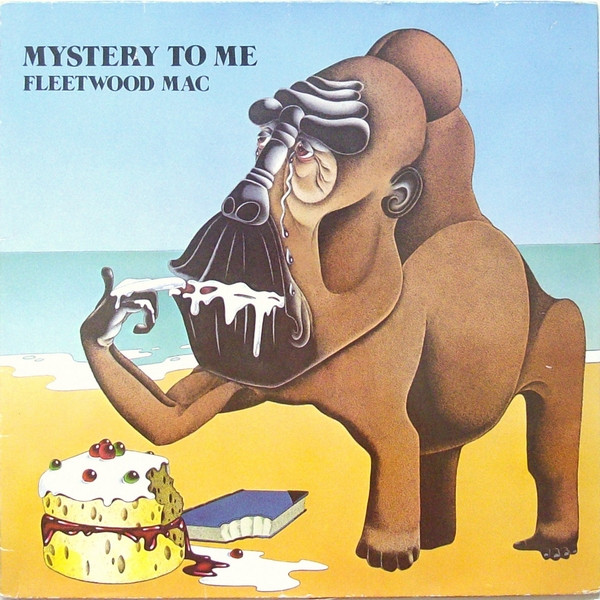
“Keep On Going,” Fleetwood Mac, 1973
Between the formative blues music of the Peter Green period (1967-1970) and the sunny pop of the Buckingham/Nicks era (1975 onward), Fleetwood Mac managed to survive the 1971-1975 years thanks to great songs by Danny Kirwan (“Bare Trees”) and Bob Welch (“Hypnotized”). On their 1973 LP “Mystery to Me,” Kirwan had already split, but Christine McVie stepped up as a formidable singer and songwriter as well. Generally, each song’s writer also sang lead vocals, but in one case, Welch turned over his song “Keep On Going” to the dulcet tones of McVie, which served the recording better. A dominant, aggressive string arrangement gave the track additional oomph that helped it earn FM rock radio airplay then and ever since. I’ve always enjoyed most of the music from this middle period of the group.

“Moonlight in Samosa,” Robert Plant, 1982
When Led Zeppelin disbanded in 1980 following the death of drummer John Bonham, most observers figured Jimmy Page would be the one to watch, but it turned out to be Plant who pursued the more ambitious recording and touring schedule. His debut solo album, 1982’s “Pictures at Eleven,” was the result of Plant’s new collaboration with British session guitarist Robbie Blunt, who deserves credit just for trying to fill Page’s shoes. Indeed, on the lovely, downbeat track “Moonlight in Samosa,” it is Blunt’s understated electric and acoustic guitar work that stands out as counterpoint to the quieter side of Plant’s vocal stylings. Through 11 studio albums of quality material and performances, Plant has put up as solid a track record as we could hope to expect from one of rock’s most amazing vocalists.

“See the Lights,” Simple Minds, 1991
Among US music listeners, Simple Minds has one of the most overlooked catalogs in rock. Sure, we obsessed over “(Don’t You) Forget About Me” (from “The Breakfast Club”) and their 1985 LP “Once Upon a Time” (with “Sanctify Yourself” and “All the Things She Said”) but there was so much more from singer/songwriter Jim Kerr and the band. Their audiences in the UK and Europe were always more appreciative, giving them numerous Top Ten album chart successes throughout the 1990s and into the 2000s. From their solid 1991 LP “Real Life,” check out the impressive “See the Lights,” the last of their songs to sneak into the US Top 40 and a bonafide hit on alternative and mainstream rock charts. It has such a pleasing groove and arrangement, and hearing it again reminds me to play their music more often.
******************************