Songs to see you through the end of summer

As summer winds down, I’m feeling a little wistful, a little relaxed, and my deep dive into “lost classics” of the ’60s, ’70s and ’80s is consequently leaning toward the mellower choices this time around.

The rockers among my readers may fail to recognize some of these selections, or even the artists who recorded them. But that’s the fun of lost classics — even though they were recorded 50+ years ago, sometimes they’re brand-new songs to you because they came in under your radar at the time.

I hope you find these tunes to your liking.

************************

“Tell Me What You Want,” The Doobie Brothers, 1974

I think it’s safe to say that every album The Doobies released has at least one “lost classic” — a deep track that got little airplay but is still well worth our time and attention.  The band’s fourth LP, “What Were Once Vices Are Now Habits,” will forever be known for its first #1 hit, “Black Water,” and the minor single “Eyes of Silver,” but there are about a half-dozen other strong tunes to explore.  I’ve always enjoyed Pat Simmons’ engaging, mostly acoustic “Tell Me What You Want,” featuring the sweet pedal-steel work of Jeff “Skunk” Baxter in the outro.  Baxter was then still a full-time member of Steely Dan, but as that group evolved into a duo with multiple guest musicians, he would soon make the jump to join The Doobies’ lineup.

“You’re Only Lonely,” J.D. Souther, 1979

If the lush harmonies you hear throughout this soothing track sound like those of The Eagles, that’s because the voices belong to Glenn Frey, Don Henley and Don Felder, plus Jackson Browne and Phil Everly for good measure.  These gents were happy to help their friend John David Souther on his 1979 solo LP because he was an honorary Eagle, having co-written such hits as “Best of My Love,” “New Kid in Town” and “Heartache Tonight.”  (He also co-wrote and co-sang “Her Town Too” with James Taylor in 1981.)  “You’re Only Lonely” — a tribute of sorts to Roy Orbison’s 1960 classic, “Only the Lonely” — reached an impressive #7 on the US pop chart at a time when disco and New Wave were dominant.

“Still Believe,” Michael Tomlinson, 1987

Tomlinson came up out of the Austin, Texas, music scene in the mid-’80s, offering a pleasing acoustic style that caught the attention of certain radio program directors, particularly “relaxing radio” like The Wave. That’s where my friend Mark first heard Tomlinson’s song “All is Clear,” prompting him to buy his 1989 LP, “Face Up in the Rain,” and also his earlier album, “Still Believe.” I borrowed these records and enjoyed several standout tracks, most notably the positivism behind the lyrics of “Still Believe.” Tomlinson grew frustrated with record labels and corporate takeovers of radio stations and chose to withdraw from the business, but he later established his own private label and continues to write and record new music.

“It Doesn’t Have To Be That Way,” Jim Croce, 1973

Croce’s story is such a sad one, ending prematurely in a plane crash just as his years of hard work were beginning to pay off.  After two hits in 1972 (“You Don’t Mess Around With Jim” and “Operator”) and a #1 hit in the summer of 1973 (“Bad, Bad Leroy Brown”), he was poised to join the top ranks of singer songwriters with his album and title song (“I Got a Name”) until fate intervened.  Several posthumous singles were released — “Time in a Bottle” (another #1), the #9 hit “I’ll Have to Say I Love You in a Song” and, one of my favorites in his catalog, the poignant “It Doesn’t Have To Be That Way,” with Christmas-flavored lyrics and even the use of handbells.

“The Euphrates,” Seals and Crofts, 1972

I remember being so knocked out by this duo’s first hit, “Summer Breeze,” that I pretty much ran to the record store to pick up the album of the same title.  I found a delightful collection of melodic songs brimming over with spiritual lyrics espousing a life of selflessness and optimism.  The voices of Jim Seals and Dash Crofts, the instruments (guitars and mandolin, mostly) and professional production give these tracks a majestic sweep.  Buried on side two is a real sleeper called “The Euphrates,” which references the historic river running from Turkey through Syria and Iraq into the area formerly known as Mesopotamia:  “The deep, deep river.  The wide, wide river.  The long, long river.  Spiritual river.  The river of life…”

“Dreidel,” Don McLean, 1972

“American Pie” is so imbedded in the arc of popular culture that, sadly, it has overshadowed everything else McLean ever recorded.  He is a gifted songwriter who has composed some thoughtful pieces over the years that are worthy of our attention.  “Vincent,” his tribute to Van Gogh, was a fairly sizable hit on its own, but other McLean material has been overlooked.  I love the changes in tempo and instrumentation that mark the arrangement of “Dreidel,” a modest #21 hit in early 1973 based on the four-sided spinning top Jewish children play with while observing Hanukkah.  For him, a dreidel symbolizes life itself:  “Round and around the world you go, spinning through the lives of the people you know, we all slow down…”

“Time to Space,” Loggins and Messina, 1974

This duo happened more or less by accident when Jim Messina, a staff producer at Columbia and alumnus of the country rock band Poco, was tasked with shepherding newcomer Kenny Loggins through the production of his debut album.  It became instead “Kenny Loggins With Jim Messina Sittin’ In,” the first of six studio albums (plus two live LPs) by the duo in the 1970s.  For my money, 1974’s “Mother Lode” is their best stuff, with nary a weak moment on the album.  The track that has never ceased to captivate me is “Time to Space,” which begins and ends as a beautiful ballad, interrupted halfway through with an exhilarating uptempo section featuring flute/sax man Jon Clarke.  Wow!

“Written in Sand,” Santana, 1985

Emerging from San Francisco at the end of the ’60s, Santana went through many personnel changes over the years, but always with guitar virtuoso Carlos Santana at the helm. The group’s LPs routinely made it to the Top 20 on the US album charts, including two #1s in the early ’70s. The use of congas and vigorous percussion remained a mainstay element of Santana’s oeuvre, but by the 1980s, synthesizers and drum machines began creeping into the mix, which alienated some longtime fans. The 1985 LP “Beyond Appearances” was their first to fail to crack the Top 50, but it had a minor hit, “Say It Again,” featuring vocalist Alex Ligertwood, who also sang on the LP’s best track, the luxurious “Written in Sand.”

“Ship of Fools,” Robert Plant, 1988

In the wake of Led Zeppelin’s demise, many observers assumed we’d hear much more from Jimmy Page, but it was Robert Plant who emerged with the most active solo career, scoring four consecutive Top 20 LPs in the 1980s. His fourth, “Now and Zen,” was probably his most consistently satisfying, with the killer opening song, “Heaven Knows,” “Helen of Troy” and the intriguing “Tall Cool One,” in which Plant made liberal use of samples from a half-dozen Led Zep tracks. I’m also partial to “Ship of Fools,” a wonderfully moody piece that shows off Plant’s vocal shading in the same way we heard on “I’m in the Mood” from his 1983 LP, “The Principle of Moments.”
“The Right Moment,” Gerry Rafferty, 1982

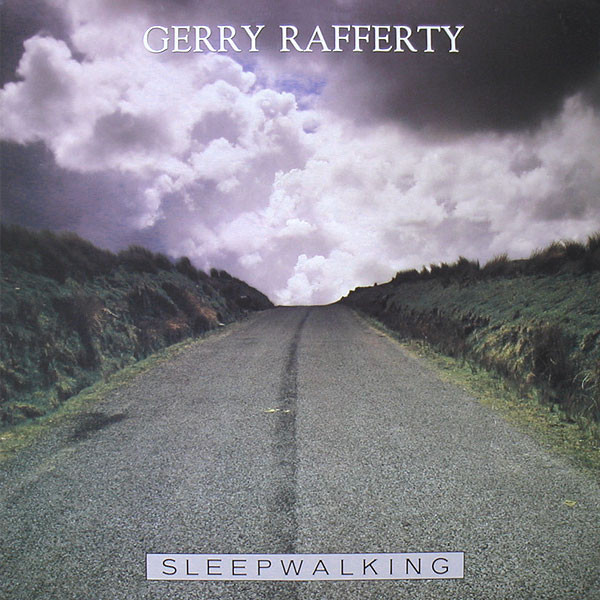
Following his rocky beginning as half of Stealer’s Wheel, with whom he recorded the 1973 hit “Stuck in the Middle With You,” Rafferty finally resolved legal differences and made a huge splash with his first solo LP, “City to City,” which included the #1 hit “Baker Street” and “Right Down the Line.” Two more albums in the same vein followed, but by 1982, people had stopped paying attention, due in part to Rafferty’s aversion to touring. His “Sleepwalking” album that year failed to chart in the US, but I found three strong songs on it: “Standing at the Gate,” “Cat and Mouse” and the gentle yet forceful “The Right Moment,” carried by Rafferty’s rich vocals and the marvelous keyboard work of Dire Straits’ Alan Clark.

“Bitter Creek,” The Eagles, 1973

With strong personalities like Don Henley and Glenn Frey around, it was inevitable that the other two founding members of The Eagles would eventually feel marginalized enough to become disillusioned and leave the nest.  Bernie Leadon, whose country/bluegrass roots had brought him to the group by way of The Flying Burrito Brothers, was probably the group’s most talented player, and a fine vocalist and songwriter as well.  He co-wrote three tracks on “Eagles” and then penned two of the best songs on “Desperado” by himself.  In particular, Leadon’s “Bitter Creek” remains the most neglected song in The Eagles’ repertoire, with lyrics that warn of desert dangers while tying into the outlaw cowboy theme of the “Desperado” LP.

“Who Knows Where the Time Goes,” Judy Collins, 1968

A stalwart of the thriving folk music scene in Greenwich Village in the early ’60s, Collins at first limited her repertoire to traditional material and the works of Woody Guthrie, Pete Seeger and Bob Dylan. By 1966, she began branching out, attempting covers of nascent songwriters like Joni Mitchell, Gordon Lightfoot, Leonard Cohen and Randy Newman, eventually scoring a Top Ten hit with Mitchell’s “Both Sides Now.” In 1968, she enlisted the help of fine musicians like Stephen Stills, James Burton and pedal steel guitarist Buddy Emmons to beef up the arrangements for her countryish hit, “Someday Soon,” and the moving song written by Fairport Convention’s Sandy Denny, “Who Knows Where the Time Goes.”

*******************************

Criminally overlooked albums of the Seventies

Regular readers of this blog know I love to shine a light on “lost classics” — excellent songs from little-known or less-than-great albums, or neglected deep tracks from commercially and critically successful LPs.

It has always been a labor of love for me to scour the vaults looking for the tunes from the ’60s, ’70s and ’80s we heard a few times and forgot all about, or tracks we never heard in the first place. What a joy it is for a music lover like me to discover “new” music from the old days!

The Seventies in particular was an extraordinarily fertile period for great music. In my search for lost classic songs, it has been my pleasure to come across some “lost classic albums” — LPs that barely made the Billboard Top 200 album charts when they were released, but are, in my opinion, consistently strong musical collections that should have been widely praised and purchased. I have gathered 12 lost classic albums of the 1970s that almost certainly flew under your radar at the time but are very worthy of your attention today.

The Spotify playlist at the end offers five tracks from each of these dozen records, but I encourage you to dive deeper into these albums if you like what you hear.

******************************

“Off the Shelf,” Batdorf and Rodney, 1971

The singer-songwriter era of the early ’70s brought us some beautiful music and introspective lyrics from the likes of Joni Mitchell, James Taylor, Jackson Browne, Cat Stevens and others, but the most criminally overlooked artists of that period, in my opinion, were John Batdorf and Mark Rodney.  Their virtuoso acoustic guitars, great vocals, Batdorf’s superb songs and pristine production values were all in abundance on their amazing debut album, “Off the Shelf,” as well as the follow-up, “Batdorf and Rodney,” and, to a lesser degree, their final effort, “Life is You” (1975).  Tunes like “Oh My Surprise,” “You Are the One,” “Where Were You and I,” “Let Me Go,” “One Day” and especially the effervescent “Can You See Him” all deserve a place among the highest-regarded songs of the genre.  Batdorf continues to release quality new music (four albums since 2006) as a solo artist, but I keep returning to “Off the Shelf.” A phenomenal record.

“Lazarus,” Lazarus, 1971

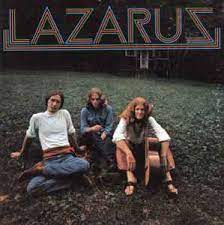
Peter Yarrow of Peter, Paul and Mary discovered this trio of musicians (Billie Hughes, Carl Keesee and Gary Dye) from Texas, got them a recording contract and hired them as his warm-up act in 1971.  Their self-titled debut album has some of the most stunning harmonies and melodies I’ve ever heard — “Blessed,” “Warmth Of Your Eyes,” “Listening House,” “Eastward,” “Rivers” and “Whatever Happened.”  They later toured behind label mate Todd Rundgren to promote their second album, “A Fool’s Paradise,” but sadly, they never caught on with the buying public.  In the ’80s, singer-songwriter Hughes developed a strong following in Japan and Europe, where he found success writing for film and TV.  His song “Welcome to the Edge” was nominated for an Emmy for its role as theme song for the soap opera “Santa Barbara” in 1991.  He died in 1998 at age 50.

“The House on the Hill,” Audience, 1971

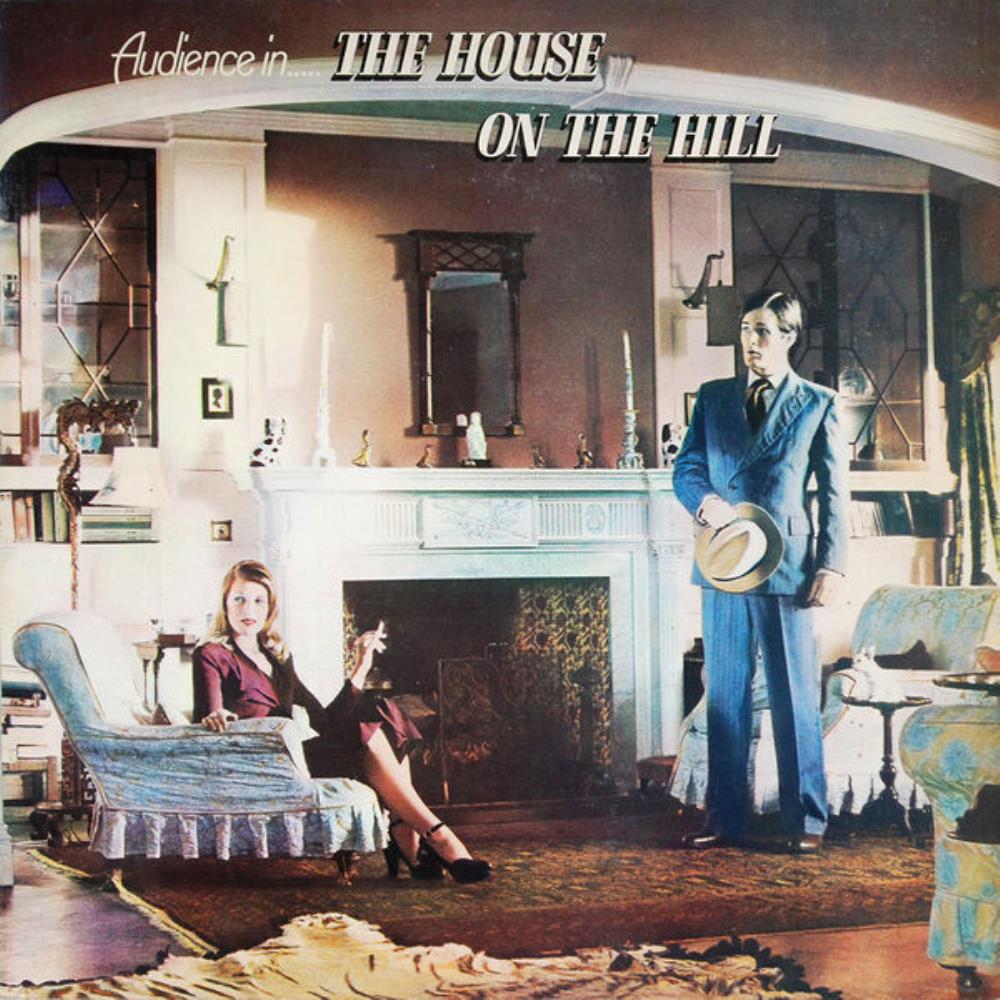
Howard Werth and Keith Gemmell were the chief musical talents behind Audience, a British art rock band that was well received by critics but never achieved chart success in the U.K. nor the U.S.  They played in support of Led Zeppelin in 1971, and were paired with Elton John’s first producer Gus Dudgeon in making what I consider to be their finest of four albums, “The House on the Hill.”  Werth’s voice is admittedly an acquired taste, but his electric classical guitar stylings and Gemmell’s impressive playing on electronically altered sax and flute resulted in several outstanding original recordings, including “Indian Summer,” “Raviole,” “Jackdaw,” “Nancy,” “You’re Not Smiling” and the 7-minute title track.  This is a superlative album well worth seeking out.

“Songs For a Tailor,” Jack Bruce, 1969

For three years (1966-1968), Jack Bruce was one of the hottest musicians in the world, playing bass and handling lead vocals for Cream, the British power trio that also featured a young Eric Clapton and drummer Ginger Baker.  Cream broke up in 1968, and Clapton went on to more success in Blind Faith, Derek and the Dominos and a lengthy solo career.  Baker moved to South Africa and was only marginally involved in music afterwards.  Bruce continued playing in various jazz bands and jazz-rock trios throughout the ’70s and ’80s that involved the likes of Leslie West and Robin Trower, and their output was average at best.  However, Bruce’s first solo album, 1969’s “Songs For a Tailor,” is a bonafide gem, with stellar playing and excellent songs like “The Clearout,” “Theme From an Imaginary Western,” “Ticket to Waterfalls,” “Weird of Hemirston” and “Never Tell Your Mother She’s Out of Tune.”

“Howlin’ Wind,” Graham Parker, 1976

Growing up in London in the Sixties, Parker was influenced by Beatles pop, pub rock and Motown soul, and all those influences showed up when Parker and his band, The Rumour, released their high-energy debut LP, “Howlin’ Wind,” in 1976. Although he’s mentioned in the same breath as fellow Brit New Wave pioneers Elvis Costello and Joe Jackson, Parker didn’t reach the chart heights of either of them. In fact, he never found much fame in the U.S., but if you give “Howlin’ Wind” a listen, you’ll hear shades of the R&B stylings of Van Morrison and the melodic, heartfelt rock of Bruce Springsteen in his songs, especially “Soul Shoes,” “White Honey” and “Between You and Me.” This LP and its strong follow-up the same year, “Heat Treatment,” are perfect party albums that you probably missed when they came out, but it’s never too late to become a convert. Check him out.

“Emitt Rhodes,” Emitt Rhodes, 1970

This multi-talented multi-instrumentalist is a classic example of a musician who got royally screwed by the industry.  Emitt Rhodes had been a member of two fledgling Sixties bands, The Palace Guard and Merry-Go-Round, and after they disbanded, Rhodes continued writing and recording songs to fulfill their contract with A&M Records, but they chose not to release his songs.  Instead, he invested in recording equipment and set up a home studio in his parents’ garage, playing all the instruments and singing and producing his own album.  He got a contract with ABC/Dunhill, and the album reached #29 on the charts in 1971, and was a big hit with critics as well.  “Fresh as a Daisy,” “Somebody Made for Me,” “Long Time No See,” “Lullabye” and “With My Face on the Floor” all have irresistible Beatlesque hooks and vocals that recall Paul McCartney.  A&M then released his earlier work, which confused buyers, and ABC demanded he release a new album every six months, a grueling pace that he found impossible to meet.  Discouraged, he soon quit the business but built a career as a producer/engineer.  The “Emitt Rhodes” LP is a hidden treasure.

“Ahead Rings Out,” Blodwyn Pig, 1969

Original Jethro Tull guitarist Mick Abrahams was a blues purist and didn’t enjoy life on the road, so he and Tull frontman Ian Anderson had a falling out over Anderson’s non-blues songs and a punishing tour schedule.  Abrahams left and formed Blodwyn Pig, who released two albums before folding.  Their first, “Aheads Rings Out,” released in the waning days of 1969, offers the explosive “See My Way” and several excellent blues tracks like “It’s Only Love,” “Dear Jill” and “Summer Day.”  Although the album got little attention in the U.S., it reached #9 in England, rivaling Tull’s concurrent “Stand Up” LP that year.

“No Other,” Gene Clark, 1974

With high-profile musicians like Roger McGuinn and David Crosby around, it’s not surprising that Gene Clark was sometimes the overlooked jewel of The Byrds’ lineup. Clark served as frontman and one of the lead singers, writing or co-writing some of their finest tracks (“I’ll Feel a Whole Lot Better,” “She Don’t Care About Time,” “Eight Miles High”), but his stage fright and fear of flying led to his premature departure. He signed with Geffen Records in 1973 as a solo artist, but his remarkable tour-de-force LP “No Other” got the cold shoulder from David Geffen, who refused to promote it, and it consequently tanked on the charts, which devastated Clark. The album has undergone a dramatic reappraisal in recent years; AllMusic’s Thom Jurek calls it “a sprawling, ambitious work that seamlessly melds country, folk, jazz-inflected-gospel, urban blues, and breezy L.A. rock in a song cycle that reflects the mid-’70s better than anything from the time.” I confess the album went under my radar at the time, but I’ve since become a huge fan. So much great music to absorb here!

“Blows Against the Empire,” Paul Kantner, 1970

Singer/guitarist Kantner has been the mainstay in every phase of the great San Francisco band — Jefferson Airplane, Jefferson Starship, and Starship.  He fancied himself something of a countercultural revolutionary, and was obsessed with science fiction, so he combined those two interests and came up with a song cycle about hijacking a starship and starting a new world on some distant planet, since Earth appeared doomed to him.  Kantner’s solo concept album “Blows Against the Empire” was a bit silly lyrically, perhaps, but the music was excellent, thanks to the participation of several key musicians:   Grace Slick, Jerry Garcia, David Crosby, Graham Nash, Jack Casady, David Freiberg and Harvey Brooks.  Songs like “Let’s Go Together,” “A Child is Coming,” “Have You Seen the Stars Tonite” and “Starship” are as good as anything on earlier Airplane albums and later Starship LPs.

“Kongos,” John Kongos, 1972

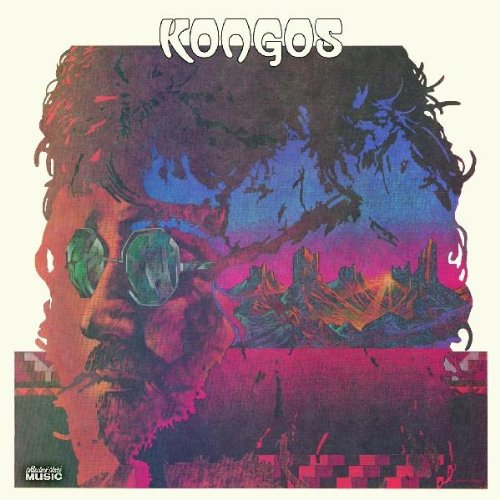
Born in South Africa, John Kongos had some modest success there in the Sixties with a number of groups before moving to England in 1969.  He enjoyed two Top Five hits there in 1971 — “He’s Gonna Step on You Again” and “Tokoloshe Man” — but they never reached the Top 40 in the US, and the album they came from, “Kongos,” reached #30 in the UK but failed to crack the Top 200 album list here.  Too bad — the songs are engaging and beautifully produced, recalling early Elton John at times, particularly “I Would Have Had a Good Time,” “Gold,” “Tomorrow I’ll Go” and “He’s Gonna Step on You Again.”  This one might be tough to find but well worth the effort.

“Sunburst Finish,” Be-Bop Deluxe, 1976

One of Britain’s better progressive rock/art rock bands that never made much impact here in the U.S. was Be-Bop Deluxe.  Despite their name, they didn’t traffic in bebop music, preferring blues-based British rock not unlike David Bowie.  Three of their seven albums reached the Top 20 in the U.K., but none did better than #60 in the U.S.  Singer/songwriter Bill Nelson had a knack for great song riffs and quirky science-fiction lyrics, and it all came together nicely on their 1976 LP, “Sunburst Finish,” which includes great tracks like “Ships in the Night,” “Fair Exchange,” “Crying to the Sky,” “Sleep That Burns” and “Life in the Air Age.” If you’re a fan of Ziggy-era Bowie, you’ll enjoy this LP for sure.

“What If,” Dixie Dregs, 1978

Although their albums failed to chart, The Dixie Dregs have had an appreciative following from their founding in the early ’70s up to the present day. Led by guitar virtuoso Steve Morse, the group focuses almost exclusively on instrumental tracks that are so eclectic as to almost defy categorization. One critic tried, calling them “a cross between The Allman Brothers and Mahavishnu Orchestra,” which correctly pinpoints their leanings toward Southern rock and jazz fusion. And yet, there are elements of country and bluegrass here as well. You’ve got to hear it to believe it. The Allmans’ keyboardist Chuck Leavell brought the group to the attention of Capricorn Records, who released “Free Fall,” “What If” and “Night of the Living Dregs” in the late ’70s. “What If” is their most artistically proficient, and it’s an album I played often when the rest of the world had fallen for disco fever.

***************************