That kind of music just soothes the soul

When I started this blog in early 2015, one of my goals was to periodically shine a bright light on fantastic classic rock songs that are rarely, if ever, heard anymore. When I looked through my own vinyl and CD collections and at the greater rock music archives in general, it was almost overwhelming to realize the sheer volume of records that needed to be dusted off and glorified.
A dozen at a time in a few installments each year, I have shared nearly 450 “lost classics” in the hopes of reminding you, or enlightening you, how much great music was recorded and released in the ’50s, ’60s, ’70s and ’80s. Rock ‘n’ roll, country rock, folk rock, blues, soul, psychedelia, new wave, funk, garage rock, disco, bubblegum, progressive rock, heavy metal… Each of these genres has been represented here as I sift through many hundreds of albums and artists in search of the nuggets to be found and reinvigorated.

In this, the 38th group of lost classics here at Hack’s Back Pages, I return to the basic aggressive rock that was so prevalent in the late ’60s and early ’70s: relentless beat, crunchy guitar riffs, wailing vocals and plenty of swagger. Naturally, the tracks are compiled on a Spotify playlist at the bottom.

Crank it up, people!

**************************

“Slip Kid,” The Who, 1975

Pete Townshend wrote several dozen songs in 1970-71 that were intended to be part of The Who’s aborted “Lifehouse” project. Nine of them became the tracks found on the magnificent “Who’s Next” LP that year, while others were shelved, showing up on later Who albums and compilations. One of the best ones is “Slip Kid,” a fiery rocker that surfaced in 1975 as the leadoff track on their “The Who By Numbers” LP, which, like “Who’s Next,” was immaculately produced by Glyn Johns. “Slip Kid” was released as a single but it inexplicably failed to chart. Said Townshend of the lyrics: “It’s a warning to young kids getting into music that it could hurt them. It was almost parental in its assumed wisdom.” Decades later, he added, “You could put it into the voice of some young Islamic student who decides to go fight in Syria and ends up in ISIS being forced to chop people’s heads off, and it would fit.”
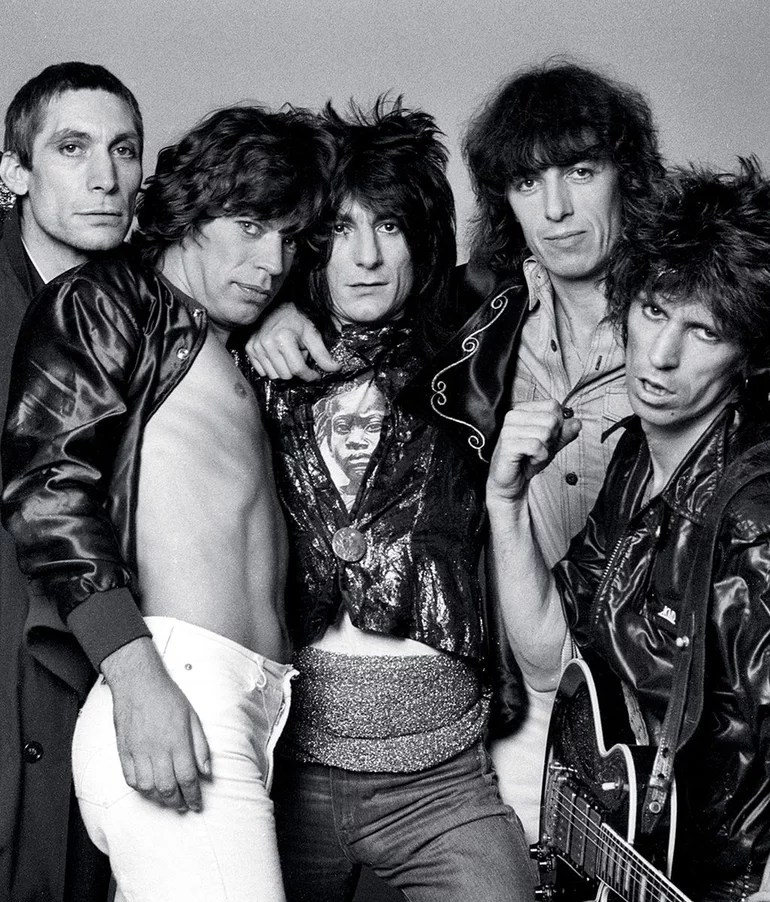
“Respectable,” The Rolling Stones, 1978

While the massive #1 hit “Miss You” was a dance track, almost disco in form, many of the songs on their “Some Girls” album were, in Mick Jagger’s view, “somewhat influenced by the more aggressive punk thing that was going on.” Originally written by Jagger to be a slower song, “Respectable” turned into something else once Keith Richards saw the advantages of speeding up the tempo. “It became a ‘punk-meets-Chuck-Berry’ number,” he said, “and it was a gas to play in concert.” The biting lyrics, which talk of a woman rising into high society and the narrator’s attempts to remind her of her humble roots, were actually about the band’s evolving from brats to rock elders. “‘Respectable’ really started off as a song in my head about how respectable we as a band were supposed to have become,” Jagger noted with a grin, “but the record ended up sounding anything but respectable.”
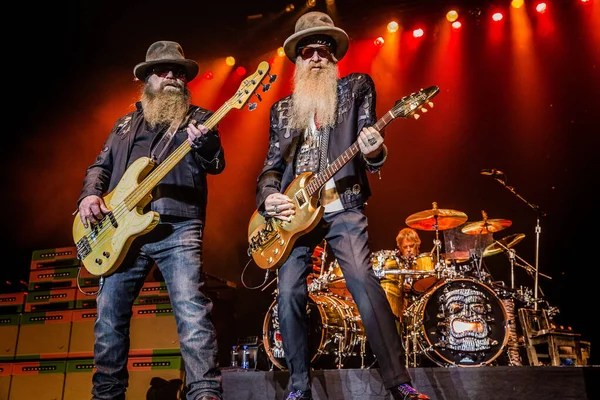
“Bar-B-Q,” ZZ Top, 1972

Before they had their first minor hit “La Grange” in 1973 from their breakthrough “Tres Hombres” album, ZZ Top were still finding their way as songwriters. Guitarist/vocalist Billy Gibbons said of that period, “We started documenting events as they happened to us on the road. All of these elements went into the songwriting notebook. As we went along, we were keeping track of skeleton ideas as they popped up. The craft was certainly developing.” One of their great early Texas boogie songs, “Bar-B-Q,” is lyrically slight, vaguely equating barbecue food with sex (“Oh, now, baby, tell me why don’t you make me some of your fine famous Bar-B-Q?”), but the music chugs along relentlessly, giving a strong indication of what the band would be offering on their catalog in the coming years.
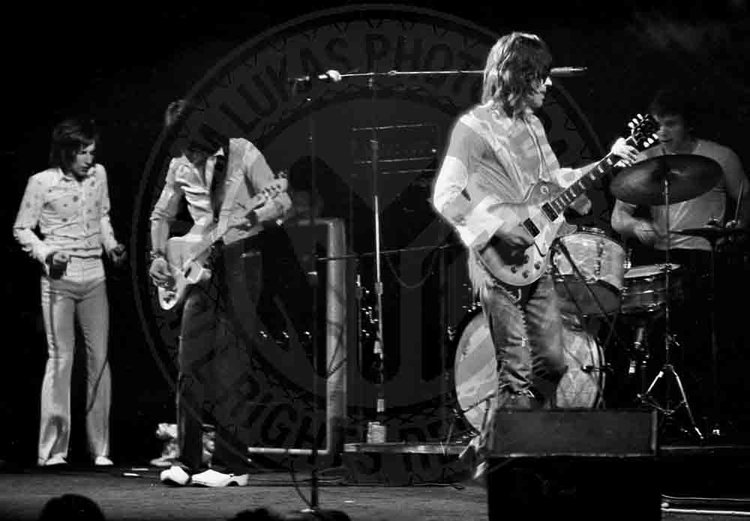
“Plynth (Water Down the Drain),” Jeff Beck and Rod Stewart, 1969

Beck and his former Yardbirds mate Jimmy Page were both developing new groups in 1968, and Beck emerged first with a landmark solo LP, “Truth,” that featured future superstars Rod Stewart on vocals, Ronnie Wood on bass and Nicky Hopkins on piano. While Page went off to form Led Zeppelin, Beck doubled down on what was now being called The Jeff Beck Group, releasing “Beck-Ola” (a wordplay on the Rock-Ola jukebox) in the summer of ’69, which included this busy rocker. The band toured the US and was slated to appear at Woodstock, but that plan fell through due to internal tensions, and Stewart and Wood splintered off to form Faces. Still, Beck’s distinctive guitar work, and the blues-based rock found on these first two albums (which both reached #15 on the US album chart) helped pioneer a genre that became hugely popular in the US over the coming decade and beyond.
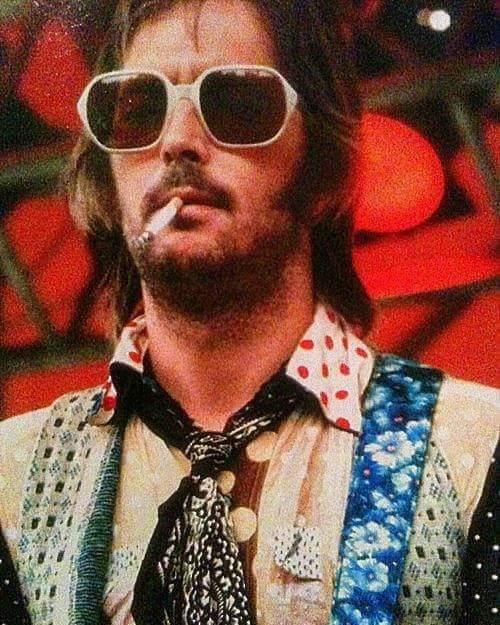
“Mainline Florida,” Eric Clapton, 1974

George Terry, a respected session guitarist who also worked with Joe Cocker, Stephen Stills and The Bee Gees, joined forces with Clapton in 1974 as he was recording his comeback LP “461 Ocean Boulevard.” It was Terry who exposed Clapton to the music of Bob Marley, specifically “I Shot the Sheriff,” which became the LP’s huge hit for Clapton that year. Terry wrote the album’s closer, a churning rocker called “Mainline Florida,” which departs somewhat from the understated acoustic arrangements on most of the tracks. Clapton uses a talk box on the electric guitar solo (a relatively new device heard on hits by Joe Walsh and Peter Frampton around that time). Despite what you might think, “Mainline Florida” has nothing to do with drugs. Clapton had emerged from a three-year heroin addiction, and the song merely refers to “Hotel Row” in a community on the ocean just north of Miami.

“I’ve Had Enough,” Paul McCartney and Wings, 1978

McCartney’s erstwhile band Wings, after several consecutive successes in the studio and on tour, had splintered in late 1977 during sessions for the group’s “London Town” LP. A few basic musical tracks had been recorded in the Virgin Islands prior to the departure of guitarist Jimmy McCulloch and drummer Joe English, which left just stalwart Denny Laine with Paul and wife Linda to carry on. One of those tracks was a raucous guitar-based rocker to which McCartney later added minimal lyrics, titling it “I’ve Had Enough,” sung in a snarling vocal that underscored the pent-up frustrations he was feeling at that point. As the follow-up single to Wings’ #1 hit “With a Little Luck,” the song reached #25 on the US pop charts and stood in stark contrast, sounding more like The Beatles’ cover of “Long Tally Sally.”

“Swing to the Right,” Todd Rundgren and Utopia, 1982

From 1974 through 1985, Rundgren maintained a blistering pace of new releases that included solo albums as well as separate projects with his progressive rock band Utopia. In 1980, Rundgren hit a creative peak with Utopia’s “Deface the Music,” which paid tribute to the many phases of music The Beatles recorded during their career. He followed that with “Swing to the Right,” Utopia’s hard-edged commentary on “corporate raiders, warmongers, political villains, and despicable music industry types,” as Rundgren put it. His record label didn’t care for the lyrical themes and were reluctant to release or promote the LP, resulting in it stalling at a disappointing #102 on US album charts. I’ve always liked the strident yet catchy title track that shows disdain for the country’s political “swing to the right” in 1981.
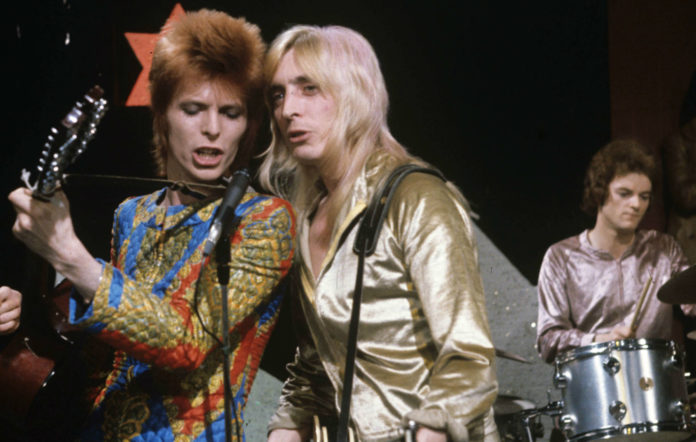
“Hang On to Yourself,” David Bowie, 1972

As a pioneer in the quickly-developing genre known as glam rock, Bowie had toyed with androgynous looks and multiple musical styles on his 1971 critical success “Hunky Dory.” As he and his band, christened The Spiders From Mars, began recording tracks for the next LP, a loose concept about a futuristic, decadent rock star called Ziggy Stardust took shape, and the resulting album stands today as one of the most influential rock albums of all time. “Suffragette City,” “Starman,” “Moonage Daydream” and the title track got most of the airplay, but the one that instantly grabbed me was the proto-punk rocker, “Hang On to Yourself,” which offers bold sexual images: “We can’t dance, we don’t talk much, we just ball and play, but then we move like tigers on Vaseline…”
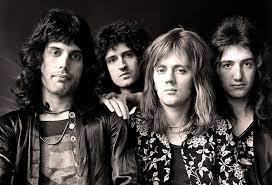
“Keep Yourself Alive,” Queen, 1973

Originally conceived in 1971 as an acoustic guitar-based track when Queen was still playing London clubs without a record contract, “Keep Yourself Alive” was later retooled into an electric guitar workout that became the opening track on the band’s 1973 debut LP. When released as a single, it didn’t chart in the UK nor the US, but it became a regular part of their concert setlist throughout the 1970s. In 2008, Rolling Stone described the track as “guitarist Brian May’s statement of purpose: a phalanx of overdubbed guitars crying out in unison, with rhythm and texture from over-the-top effects…an entire album’s worth of riffs crammed into a single song.” Vocalist Freddie Mercury said it was one of his favorite songs to sing of Queen’s entire catalog.
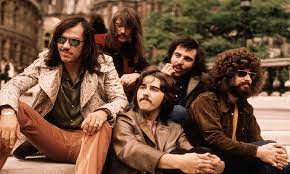
“Straight Shootin’ Woman,” Steppenwolf, 1974

Between 1968 and 1970, this hard-driving psychedelic rock band with both Canadian and American roots released five Top 20 albums, scoring three iconic singles (“Born To Be Wild,” “Magic Carpet Ride” and “Rock Me”), carried by prominent organ and guitar riffs and John Kay’s forceful vocals.  Steppenwolf broke up in 1971 but reformed in 1974 for a moderately successful second phase, most notably 1974’s “Slow Flux” album and its hard-driving single “Straight Shootin’ Woman,” which peaked at #29 on US charts.  The song, written by drummer Jerry Edmonton, introduced a horn section to the band’s sound, which, unlike other horn-laden groups like Chicago, was more earthy and gritty than tightly commercial.  The lyrics endorse the idea of being — and finding — a loyal, faithful partner in life and love.
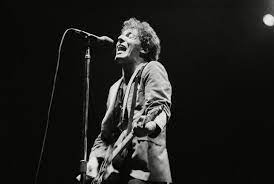
“Raise Your Hand,” Bruce Springsteen and The E Street Band, 1978/1986

As a student of R&B-infused Sixties rock, Springsteen made much of his early reputation performing blistering versions of famous and lesser-known songs of that era like Mitch Ryder’s “Devil With the Blue Dress” and Gary U.S. Bonds’ “Quarter to Three.”  Another one was “Raise Your Hand,” a modest 1967 R&B hit for Eddie Floyd of “Knock on Wood” fame, which Springsteen and his E Street Band turned into a sweaty barnburner during their 1978 “Darkness on the Edge of Town” tour.  He included a scorching 1978 performance from L.A.’s The Roxy on his mind-blowing, 40-track box set “Live/1975-85” that served to introduce the song to a new generation of rock and soul music fans upon that package’s release in 1986.   

“Room to Move,” John Mayall, 1969

Mayall, an influential harmonica player and a capable vocalist, has been known as The Godfather of British blues for his trailblazing music as bandleader of John Mayall’s Bluesbreakers in the 1960s. He is probably best known for attracting some of England’s finest blues guitarists (Eric Clapton, Peter Green, Mick Taylor in succession) to join his lineup for brief stints, but he also was a prolific blues songwriter as well. He notched five solo albums that reached the mid-40s on the US album charts between 1968 and 1971, perhaps none better than his scintillating live album, “The Turning Point,” in 1969. “Room to Move,” a mouth harp tour-de-force that got loads of FM radio airplay, is one of the great moments in blues records to come out of England.

*****************************

Turn back the pages

Bringing great old songs — some known to you, some newly revealed here — into the limelight is a periodic service I like to provide at Hack’s Back Pages.

Let’s say you were/are a big fan of David Bowie.  Let’s look at his classic “Ziggy Stardust” album from 1972. You can hear “Suffragette City,” “Starman” and “Moonage Daydream” several times a week if you’re listening to mainstream classic rock stations.  But hey, what about “”Hang On To Yourself” or “Rock and Roll Suicide”? These are really great songs, but they’re in danger of disappearing into the ether.

Some LPs have even more “deep tracks” you never hear anymore.  God help you if you ever hope to hear anything besides “We Just Disagree” from Dave Mason’s consistently great 1977 album “Let It Flow,” even though there are five or six other fine songs worthy of your attention.

So here, once again, I offer a dozen “lost classics” from decades ago.  There is a Spotify playlist at the end so you can become reacquainted or familiar with these songs that have otherwise been missing in action.

**********************

“Sandman,” America (1972)

Three young men, all sons of military dads stationed in England, formed a trio and named themselves America, to make sure everyone knew they were Yanks.  They exploded on the scene in early 1972 with the lame but popular “A Horse With No Name,” a song that sounded eerily like Neil Young (who was concurrently at the top of the charts with “Heart of Gold”).  The debut album was way better than the single, with wonderful acoustic guitar-driven songs like “Three Roses,” “Never Found the Time” and “Rainy Day.”  The best of the bunch, in my opinion, was “Sandman,” a driving, acoustic/electric mix with an infectious chorus.  The lyrics, I later learned, are about soldiers trying to stay awake and stay warm while on duty on a cold night:  “Ain’t the fire inside?  Let’s all go stand around it… Did you hear of my enlistment?… I understand you’ve been running from the man that goes by the name of the Sandman…”

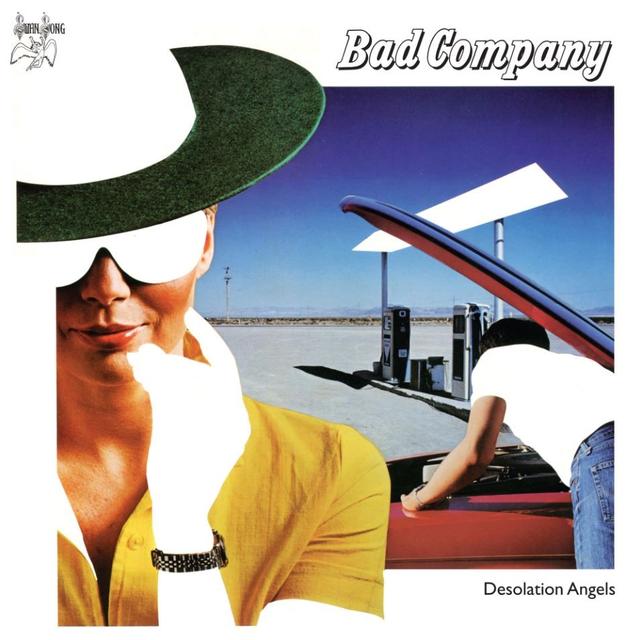
“Gone, Gone, Gone,” Bad Company (1979)

Led by the vocals of ex-Free singer Paul Rodgers and the guitar of ex-Mott the Hoople axeman Mick Ralphs, Bad Company became a staple of FM mainstream rock throughout the ’70s.  Songs like “Can’t Get Enough,” “Bad Company,” “Feel Like Makin’ Love,” “Shooting Star,” “Live For the Music,” “Good Lovin’ Gone Bad” and “Running With the Pack” are still getting airplay on classic rock stations across the country.  Before things petered out in the face of stiff competition from New Wave ’80s music, the quartet released a solid LP in 1979 called “Desolation Angels,” a #3 album featuring their final Top 20 hit “Rock and Roll Fantasy.”  Far better, though, was the contagious album track called “Gone, Gone, Gone,” mentioned by many as one of Bad Company’s finer moments.

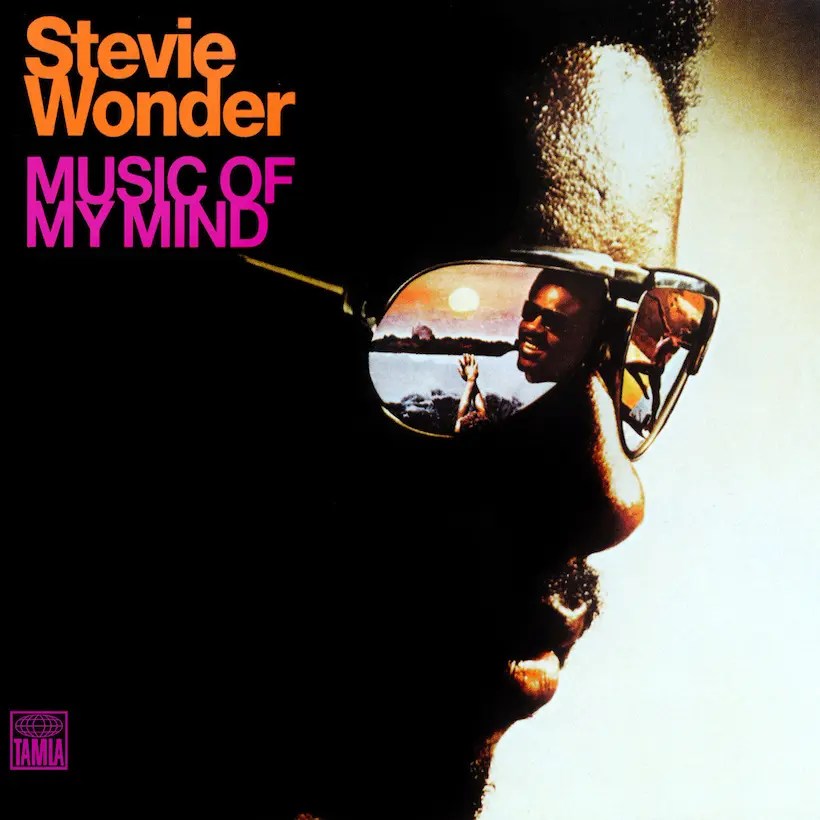
“Superwoman,” Stevie Wonder, 1971

A child prodigy who had his first #1 hit at age 12 (“Fingertips” in 1963), Stevie Wonder spent the first decade of his career operating under the thumb of Motown mogul Barry Gordy.  When he turned 21, Wonder renegotiated his contract and assumed total control of his recorded work, writing his own material and playing virtually all the instruments.  His first attempts under this new arrangement were somewhat of a mixed bag; it wasn’t until “Talking Book” in 1972 (and the subsequent Grammy-winning “Innervisions,” “Fulfillingness’ First Finale” and “Songs in the Key of Life”) that he became the maestro who dominated the ’70s music business.  On the 1971 LP “Music of My Mind,” though, there’s an excellent two-part gem called “Superwoman” that tells the story of the singer’s relationship with a woman who wants to be a movie star despite his desire for her to come back to him.  It’s a soulful romp and a heartbreaking romantic piece all rolled into one 8-minute track that ranks among his best work.

“I Don’t Want to Go Home,” Southside Johnny and The Asbury Jukes (1976)

Right alongside Bruce Springsteen in the early ’70s Asbury Park, New Jersey music scene was “Southside” Johnny Lyon, a fantastic vocal interpreter of soul/blues/rock standards and originals, often penned by The Boss and/or E Street member Steve Van Zandt.  Southside Johnny and the Asbury Jukes put together a valiant effort on record and in concert for 15 years (1976-1991), but inexplicably, they never broke through with the commercial success they deserved.  In particular, their first three LPs were jam-packed with irresistible bar-band dance music that always got partygoers up and moving.  The group’s signature song, if they had one, was the first album’s title track, “I Don’t Want to Go Home,” which features their trademark horn section and Lyon’s strong vocals.  If you aren’t hip to this group, by all means, check out their excellent catalog.

“Cannonball,” Supertramp (1985)

Featuring two talented singer-songwriters and a musically sophisticated approach, Supertramp produced five competent albums over ten years, faring better in their native England than in the US, until their big commercial breakthrough with 1979’s “Breakfast in America,” which peaked at #1 and included the two Top Ten hits, “Goodbye Stranger” and “The Logical Song.”  By 1984, guitarist/songwriter Roger Hodgson felt the need to move on, so Supertramp carried on with keyboardist Rick Davies handling all the songwriting and singing duties.  Their 1985 LP “Brother Where You Bound” was modestly successful, but long forgotten since then has been the mesmerizing 7-minute single “Cannonball,” which chugs along relentlessly like a runaway train.

“Zanzibar,” Billy Joel (1978)

Producer Phil Ramone recalls that, during the sessions for the 1978 LP “52nd Street,” Joel wanted to call his new song “Zanzibar” without knowing what he wanted to say.  He eventually decided it would not be about the African country but instead a fictional New York sports bar, and consequently, the lyrics included multiple sports references (Muhammad Ali, Pete Rose, The Yankees).  Musically, it shifts from a shuffle rhythm to a more dreamlike keyboard section before breaking out into jazz trumpet solos handled by the late great Freddie Hubbard.  “52nd Street” was the second of five #1 albums for Joel, carried by hits like “Big Shot,” “My Life” and “Honesty,” but “Zanzibar” has always been the track that grabbed me.

“No Opportunity Necessary, No Experience Needed,” Yes (1970)

Before “Roundabout,” before Yes became a commercial success, this British prog rock group struggled, releasing two early albums (“Yes” and “Time and a Word”) that barely made the charts in England and were completely ignored here.  But after “The Yes Album” and “Fragile” established Yes as a formidable force among the burgeoning audience of progressive rock fans in the US, their initial work was discovered, particularly the “Time and a Word” LP.  One song that made people sit up and take notice was Yes’s radical reworking of a Richie Havens song (!) called “No Opportunity Necessary, No Experience Needed,” dominated by keyboards, Jon Anderson’s ever-present vocals and a startling middle break with strings that sounds like a segment from a western movie soundtrack.  LOVE this one.

“The Fuse,” Jackson Browne (1976)

Browne was just a 17-year-old Southern California boy when he started writing amazing confessional songs (“These Days,” “Rock Me on the Water”) even before Joni Mitchell and James Taylor made it a thing in 1970-71.  His first two albums were critically acclaimed but only mildly successful, but by 1976 and the release of the #5 LP “The Pretender,” Browne had earned the commercial success to go with the accolades.  Sadly, the album’s somber tone was the result of his first wife’s suicide, and the songs reflected that “what is life all about” soul searching.  “The Fuse,” which opens the record, starts slowly and then breaks into a lively celebration, urging us to make the best of our brief time here:  “Through every dead and living thing, time runs like a fuse, and the fuse is burning, and the earth is turning…”

“Blue Collar,” Bachman-Turner Overdrive (1973)

Randy Bachman had left The Guess Who in 1970 during their commercial peak, eager to dial it back and avoid the limelight for a while.  He hooked up with Winnipeg singer/songwriter Fred Turner, a bassist with jazz leanings who shared leadership duties in a band called Brave Belt, who were happy playing small venues all over Canada.  Fame eventually caught up with them after they changed their name to Bachman-Turner Overdrive and rode the charts with a half-dozen huge international pop rock hits (“Takin’ Care of Business,” “Ain’t Seen Nothin’ Yet,” “Roll Down the Highway”).  Buried on BTO’s first album, sounding nothing like the BTO hits, was a gorgeous jazzy jam by Turner called “Blue Collar” that mustn’t be ignored.

“Walking on a Chinese Wall,” Philip Bailey (1984)

Earth, Wind and Fire was the most dominant R&B/soul band on the charts in the 1970s, but once they fell out of favor in the ’80s, lead singer Philip Bailey went off on his own for a while.  On his first project, he collaborated with Genesis drummer/singer/producer Phil Collins, who had been using EW&F horn sections on his own solo records and even some Genesis tracks, so the pairing seemed natural.  It reached fruition on the international #1 hit “Easy Lover” in 1984, an effervescent Bailey/Collins duet.  But I’m partial to the marvelous “Walking on a Chinese Wall,” the de facto title track of Bailey’s “Chinese Wall” LP.  The song was written by Billie Hughes, former leader of a little known acoustic trio called Lazarus, who was fascinated by the ancient I-Ching teachings and the Far East’s contribution to the “new” Seven Wonders of the World.  “Walking on a Chinese wall, waiting for the coins to fall, butterfly, spread your painted wings, from an answer from the Ching…”

“Smoking Gun,” Robert Cray (1986)

Here’s some great trivia for you:  When Robert Cray was 25 and just starting out, he was tapped to be the (uncredited) bass player in Otis Day and The Knights in the 1978 comedy classic “Animal House”!  Four years later, Cray got his first record deal, and four years after that, he did what most blues artists are usually unable to do — he broke through with a mainstream hit album, “Strong Persuader,” which reached #13 on the pop charts, thanks to the blues/pop single, “Smoking Gun,” which peaked at #22 and went all the way to #2 on the mainstream rock charts.  Cray, who often toured with Buddy Guy, Eric Clapton and other guitar greats, went on to chart a dozen albums in the Top Five on the blues charts in the 1990s and 2000s.  One retrospective review in 2008, said “it was [Cray’s] innovative expansion of the genre itself that makes this album a genuine 1980s classic.”

“Broken Arrow,” Buffalo Springfield (1967)

With Stephen Stills, Richie Furay and Neil Young all contributing songs, vocals and guitars to the Buffalo Springfield mix, this was a band destined for superstardom, if only egos hadn’t gotten in the way.  Even though they lasted less than three years and three albums, the band wielded considerable influence on many country rock groups and artists who followed in their wake, and the band members themselves continued for decades in other configurations.  Young in particular has gone on to an extraordinarily eclectic career of folk, rock and just about every other genre.  An early indication of his experimental eccentricity was the compelling Springfield track “Broken Arrow,” a six-minute pastiche of various time signatures, styles, vocals, sound effects and vague lyrics that still puzzles listeners to this day.  It seems to be about fame, teenage pregnancy, acid trips and the Kennedy assassination, but don’t hold me to it:  “They stood at the stage door and begged for a scream…”  “His mother had told him a trip was a fall, and don’t mention babies at all…” “The black-covered caisson protected her king…  They married for peace and were gone…”

********************************