It really doesn’t matter if I’m wrong, I’m right
As a parent of two adult daughters and now a grandparent of a young boy, I’m well aware that one of the most important lessons we teach our children and grandchildren is the difference between right and wrong. Developing an honest, ethical approach to personal and professional relationships often determines the difference between a life of contentment and success and one of unhappiness and failure.

Sometimes we’re tempted to do the ethically or morally wrong thing because it might feel good or bring short-term gains, but more often than not, it ultimately leaves long-term bad feelings or unpleasant consequences.
Popular songwriters have been addressing this paradox for many decades. “If loving you is wrong, I don’t want to be right” is the primary sentiment of a 1972 hit about an immoral relationship. In “Fixing a Hole,” The Beatles wrote, “And it really doesn’t matter if I’m wrong, I’m right,” which seems like a contradiction to me. And there are hundreds of songs about being right (as in acceptable or appropriate) or being wrong (as in unacceptable or inappropriate).
Below, I’ve selected 20 songs with “right” or “wrong” (or both) in the title, mostly from the ’60s, ’70s or ’80s, with a few from more recent decades, and another 17 “honorable mentions” that together comprise a robust playlist lasting more than two hours. Perhaps it can serve as a backdrop for when you’re considering courses of action and deciding which road to take.
***************************

“Right Place, Wrong Time,” Dr. John, 1973
Mac Rebennack, better known as Dr. John the Night Tripper, was a longtime singer and songwriter who combined New Orleans blues, jazz, funk and R&B on more than 30 albums released between 1968 and his death in 2019. His commercial peak came in 1973 with the album “In the Right Place” and its #9 hit single, “Right Place, Wrong Time,” which features the New Orleans funk band The Meters and pianist Allen Toussaint. The track has been featured on numerous film and TV show soundtracks over the years: “I been in the right place, but it must have been the wrong time, /I’d have said the right thing, but I must have used the wrong line, I been in the right trip, but I must have used the wrong car…”

“Absolutely Right,” Five Man Electrical Band, 1971
From Ottawa, Ontario in the 1960s came a group called The Staccatos, who changed their name in 1970 to Five Man Electrical Band and had a huge hit in Canada and the US (#3) with “Signs.” In Canada, the follow-up single, “Absolutely Right,” was equally successful, but managed only #26 in the US. Me, I found it one of the most powerful 2-1/2-minute rock tunes ever, with lyrics that focus on a man who comes remorsefully to his girl’s door, asking forgiveness for past misdeeds: “I know it was you who said it would be me that’d come crawling back to you upon my knees, /And you were absolutely right, you’ve been right all along, /You’re absolutely right and I’m wrong…”

“Something’s Always Wrong,” Toad the Wet Sprocket, 1994
This Santa Barbara-based alternative rock band enjoyed four charting singles on US pop charts in the 1992-1994 period: “Walk on the Ocean,” “All I Want,” “Falling Down” and “Something’s Always Wrong.” The latter, co-written by band members Glen Phillips and Todd Nichols, reached #9 on Billboard’s “Modern Rock Tracks” chart, though managed only #41 on the regular pop listing. Said Phillips, “Todd had the music and the line ‘Something has gone wrong,’ and I tweaked it. As a person who struggles a lot with depression and negativity, I’m always swimming upstream against that feeling that something’s wrong.”

“It’s All Wrong, But It’s All Right,” Percy Sledge, 1968
Eddie Hinton was a songwriter and lead guitarist who was part of the famed Muscle Shoals Studio session band in the late 1960s. During that period he wrote “It’s All Wrong, But It’s All Right,” which was recorded by Percy “When a Man Loves a Woman” Sledge in 1968 for his “Take Time to Know Her” album. It wasn’t released as a single but it became a big part of Sledge’s set list in concert over the years, with lyrics that show extraordinary patience and understanding: “Give your affection to another man, and I’ll do my best to understand, I crave your love like a blind man craves the light, it’s all wrong, but it’s all right…”

“Wrong Side of the Street,” Bruce Springsteen, 1978/2010
Between 1975 and 1978, Springsteen was prevented from releasing new music because of legal entanglements with his former manager, but he wrote and recorded nearly 50 songs, and eventually chose 10 for his next LP, 1978’s “Darkness on the Edge of Town.” The rest were shelved, or released by other artists (“Because the Night,” “Fire,” “Talk to Me”), but incessant begging by his fan base led him to eventually release these 22 tracks in 2010 as “The Promise,” which reached #16 on US album charts. One highlight of this collection is “Wrong Side of the Street,” on which he urges a woman to abandon her wild ways and settle down with him instead: “You and your poetry and your cool cool world, you’re working hard on that face of a martyr girl, you’re on the wrong side of the street, /You got the look and you own your world, but here you better check your diamonds and your pearls, you’re on the wrong side of the street…”

“You May Be Right,” Billy Joel, 1980
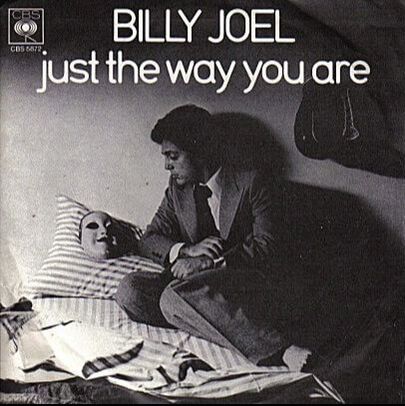
After six albums in the ’70s showcasing his talents as a pop tunesmith, Joel leaned more into a harder rocking style for his 1980 LP “Glass Houses,” which turned out to be his second consecutive #1 LP and spawned three Top 20 singles — “It’s Still Rock and Roll to Me” (#1), “Don’t Ask Me Why (#19) and “You May Be Right” (#7). The latter adopted a rock guitar approach reminiscent of Chuck Berry, and featured lyrics in which the narrator confesses to reckless behavior that his girlfriend warns him about: “You may be right, I may be crazy, /Oh, but it just may be a lunatic you’re looking for, /Turn out the lights, don’t try to save me, /You may be wrong for all I know, but you may be right…”

“Don’t Get Me Wrong,” The Pretenders, 1984
This uptempo rocker from The Pretenders’ fourth LP “Get Close” became the band’s third hit in the US in 1986, following “Brass in Pocket” and “Back on the Chain Gang.” Singer/guitarist/songwriter Chrissie Hyde said she wrote it about the fickle nature of romantic relationships, explaining, “When it comes to love from the female point of view, it’s best to expect the unexpected.” It became a #10 chart hit: “Don’t get me wrong if I fall in the ‘mode of passion,’ /It might be unbelievable, but let’s not say so long, /It might just be fantastic, /Don’t get me wrong…”

“If Loving You is Wrong (I Don’t Want to Be Right),” Luther Ingram, 1972
In perhaps the best example of “ethical right vs. wrong,” R&B singer Luther Ingram had a #3 hit single in 1972 with this track about an adulterous affair. Stax Records songwriters Homer Banks and Raymond Jackson wrote it in 1968, told from the point of view of either the mistress or the cheating spouse, depending on the gender of the performer. Regardless, both parties involved express their desire to maintain the affair, while at the same time acknowledging that the relationship is morally wrong: “Am I wrong to hunger for the gentleness of your touch, knowing I got someone else at home who needs me just as much? /Are you wrong to give your love to a married man? And am I wrong for trying to hold on to the best thing I ever had?…”

“The Right Thing,” Simply Red, 1987
Amazing singer/frontman Mick Hucknall was the main focus of the British soul group Simply Red, who exploded internationally in 1986 with their debut LP “Picture Book” and its #1 hit single, the ballad “Holding Back the Years.” In the UK, they continued on for decades of Top Ten albums and nearly 20 successful singles, but in the US, they managed only a couple more chart appearances on the Top 40, most notably their cover of the Harold Melvin and The Blue Notes’ hit “If You Don’t Know Me By Now.” In between those two #1 hits, they reached #27 with “The Right Thing,” a fine soul tune with overtly sexual lyrics: “In the middle of the night, when the time is right, sexily right, I’m gonna do the right thing, /Gonna move you slow, much harder though, sexily so, I’m gonna do the right thing…”

“Wrong,” Lindsey Buckingham, 1992
For his third solo LP, 1992’s “Out of the Cradle,” his first since leaving Fleetwood Mac the first time in 1988, Buckingham wrote “Wrong” partly as a response to drummer Mick Fleetwood’s tell-all autobiography. “His book was just kind of a real trashy thing,” Buckingham responded. “He doesn’t seem to have a mechanism for self-editing or perhaps discerning where the line is.” The song has also been interpreted as a critical look at the crass nature of the music business and the rock-star culture: “Everybody’s heard it, how everything went wrong, /Advance was spent some time ago, agent’s on the phone, /Young Mister Rockcock, where do you belong? /The man ain’t got no answer, the man just got it wrong…”

“Wrong or Right,” The Babys, 1977
This London-based pop band charted two Top 20 hits in the US in the late ’70s — “Isn’t It Time” in 1977 and “Every Time I Think of You” in 1978, both featuring the golden pipes of singer John Waite, who went on to solo success with the #1 “Missing You” in 1984. The Babys’ second LP, “Broken Heart,” kicks off with Waite’s tune “Wrong or Right,” in which the narrator bemoans how his girl has left him for another man: “Does it feel wrong or right when he loves you, babe?… /You’ve broken all the rules, and hey, babe, that isn’t cool, /In my days and your nights, how I want you babe, /It’s so wrong, it could be right…”

“Wrong to Love You,” Chris Isaak, 1989
Hailing from Stockton, California, Isaak was 33 when he broke through with the smokin’-hot sensual “Wicked Game,” which reached #3 in 1989. His soft voice and guitar style and matinee-idol good looks emulated rockabilly musicians like Duane Eddy and Ricky Nelson, and he similarly maintained a parallel career as an actor playing supporting roles in 1990s movies. His 1989 LP “Heart Shaped World” included the twangy “Wrong to Love You”: “There will be no song of love, there will be no sweet refrain, /There will be no soft goodbye or slow walk in the rain, /There will be no whispered words, no vows that can’t come true, /There’s only me, waiting here for you, /And it must be wrong to love you like I do…”

“Couldn’t Get It Right,” Climax Blues Band, 1976
This British blues rock band formed in 1967 and found greater success in the US than in their native UK, although they struggled along here until about 1974 when their albums started charting in the mid-40s. Their 1976 LP “Gold Plated” included what became their signature tune, “Couldn’t Get It Right,” which peaked at #3 on US pop charts. All five band members collaborated to write it, with lyrics that equated the struggles for fame with the struggles for romance: “Time was drifting, this rock had got to roll, so I hit the road and made my getaway, /Restless feeling really got a hold, I started searching for a better way, /And I kept on looking for a sign in the middle of the night, but I couldn’t see the light, no, I couldn’t see the light, /I kept on looking for a way to take me through the night, couldn’t get it right, I couldn’t get it right…”

“Am I Wrong,” Keb’ Mo’, 1996
Born Kevin Moore in Louisiana, this talented blues/gospel singer/guitarist took the stage name “Keb’ Mo'” as a street-talk version of his given name. He has released more than a dozen mostly acoustic blues albums since his 1994 debut, winning a couple of Grammys in blues categories even with only modest success on US charts. On that 1994 self-titled debut you’ll find this country blues track in the Robert Johnson tradition, asking if it’s futile for him to love a woman who’s devoted to another man who mistreats her: “Am I wrong, fallin’ in love with you?, /Tell me, am I wrong, fallin’ in love with you while your other man was out there, /Cheatin’ and lyin’, steppin’ all over you…”

“The Right Thing to Do,” Carly Simon, 1972
Three months into her relationship with James Taylor in 1972, Simon came up with this song that focused on both the idealistic and realistic aspects of their budding romance, which culminated in marriage a few months later. “The Right Thing to Do” became the leadoff track and a #17 chart hit on Simon’s most successful LP, “No Secrets,” following up her #1 smash “You’re So Vain.” She said Taylor helped her with some of the changes and encouraged her to rewrite the song’s third verse. The second verse is the most personal: “I know you’ve had some bad luck with ladies before, they drove you or you drove them crazy, /But more important is I know you’re the one, and I’m sure lovin’ you’s the right thing to do…”

“So Right, So Wrong,” Linda Ronstadt, 1989
Paul Carrack, the acclaimed British singer who spent time with Ace, Squeeze and Mike + The Mechanics, collaborated with British rocker Nick Lowe to write “So Right, So Wrong,” which was covered by Ronstadt on her eclectic 1989 release “Cry Like a Rainstorm, Howl Like the Wind” (which featured the award-winning duet with Aaron Neville, “Don’t Know Much”). Carrack also recorded the song himself, which focused on a couple who had called it quits but wanted to try again: “Say you will change your mind, don’t be cruel, I’ll be kind, /You’re so right, you’re so wrong, /So tough, so right, so wrong…”

“Wrong,” Everything But the Girl, 1996
Singer-songwriter Tracy Thorn and guitarist-keyboardist songwriter Ben Watt formed the British “sophisti-pop” duo Everything But The Girl in 1982 and went on to score eight Top 20 albums and four Top Ten singles on the UK charts over the next two decades. Their success in the US was more limited, with two Top 40 LPs and a couple of big singles in 1995-1996, notably “Missing,” which peaked at #2 on pop charts. “Wrong,” which reached #1 on the US Dance Club chart, explores the balance we seek in personal relationships: “Now you can pull a little bit, there’s a little give and take, /And love will stretch a little bit, but finally it’s gonna break, /Wherever you go, I will follow you, ‘Cause I was wrong…”

“Bloody Well Right,” Supertramp, 1974
This British progressive rock band was an interesting study in contrasts, with two songwriters (Rick Davies and Roger Hodgson) who preferred different musical styles, resulting in a curious blend of blues/jazz (Davies) and pop (Hodgson). One of the standout tracks is Davies’ “Bloody Well Right,” featuring the songwriter’s grittier vocal delivery, and lyrics in which the narrator agrees with his friend’s opinion and his freedom to speak it: “So you think your schooling is phony, I guess it’s hard not to agree, /You say it all depends on money and who is in your family tree, /Right, (Right!), you’re bloody well right, you have a bloody right to say…”

“All the Wrong Reasons,” Tom Petty & Heartbreakers, 1991
Petty, following his successful work with producer Jeff Lynne on his debut solo LP “Full Moon Fever,” reconvened The Heartbreakers in 1991, with Lynne still manning the boards on the next album, “Into the Great Wide Open,” highlighted by the big hit “Learning to Fly.” Lynne co-wrote eight of the album’s 12 tracks with Petty, including the appealing “All the Wrong Reasons,” which criticizes greedy people who want it all: “Well, she grew up hard and she grew up fast in the age of television, /And she made a vow to have it all, it became her new religion, /Oh, down in her soul, it was an act of treason, /Oh, down they go for all the wrong reasons…”

“Right and Wrong,” Joe Jackson, 1986
Following his commercial success with “Steppin’ Out,” “Breaking Us in Two” and “You Can’t Get What You Want (‘Til You Know What You Want)” in the early ’80s, Jackson decided to make an unusual live album called “Big World.” He and his band recorded 18 new songs before a live audience in a New York City auditorium before a live audience who had been given firm instructions to remain silent throughout. One of the more fascinating tracks was “Right and Wrong,” which discussed world politics as both “right and left” as well as “right and wrong”: “When they come with that opinion poll, they better not use words like ideology, or try to tell me ’bout the issues, /Whose side are you on? ‘Cause we’re talkin’ ’bout right and wrong…”
********************************
Honorable mentions:
“You Done Me Wrong,” Fats Domino, 1954; “Everything in its Right Place,” Radiohead, 2000; “Love on the Wrong Side of Town,” Southside Johnny 1977; “Wrong Turn,” Jack Johnson, 2006; “Looking For the Right One,” Art Garfunkel, 1975; “Wrong Side of Town,” Firefall, 1978; “You Can’t Be Wrong (All the Time),” The Impressions, 1976; “It’s Not Right But It’s Okay,” Whitney Houston, 1998; “Not Wrong Long,” Nazz, 1969; “Done Somebody Wrong,” Allman Brothers Band, 1971; “All the Right Moves,” One Direction, 2009; “Flying on the Ground is Wrong,” Buffalo Springfield, 1966; “Wrong Side of the Moon,” Squeeze, 1980; “The Wrong Nostalgia,” Papadosio, 2015; “You Know You’re Right,” Nirvana, 1994/2002; “Wrong Side of the Road,” Tom Waits, 1978; “What’s Wrong With This Picture?” Van Morrison, 2003.
*********************************







 Hack's Back Pages