Your words sound so familiar
Regular readers know that although this blog covers classic rock music of the ’50s, ’60s, ’70s and ’80s, I don’t spend that much time exploring the Eighties. So when I’ve assembled lyrics quizzes, I don’t usually include songs from that decade. That changes today.
Below you will find 20 lines of lyrics from classic rock songs that came out between 1980 and 1989. I challenge you to look them over and see how many you can identify. Then you can scroll down and see how well you did while you read about the artists and their songs. As always, there’s a Spotify playlist at the end to enjoy afterwards.
Lyrics fans, sharpen your pencils, put on your parachute pants, and groove to ’80s music!
*************************
1 “I found a picture of you, oh oh oh, what hijacked my world that night to a place in the past we’ve been cast out of?…”
2 “I see you, you see me, watch you blowin’ the lines when you’re making a scene…”
3 “I see you’ve got your fist out, say your piece and get out, yes, I get the gist of it, but it’s all right…”
4 “Well, they passed a law in ’64 to give those who ain’t got a little more, but it only goes so far…”
5 “A look from you and I would fall from grace, and that would wipe the smile right from my face…”
6 “And she said, ‘Honey, take me dancing,’ but they ended up by sleeping in a doorway by the bodegas and the lights on Upper Broadway…”
7 “I have stood here before inside the pouring rain with the world turning circles running ’round my brain, I guess I’m always hoping that you’ll end this reign…”
8 “You’ve taken lots of chances before, but I ain’t gonna give anymore, don’t ask me, that’s how it goes, ’cause part of me knows what you’re thinking…”
9 “We are young but getting old before our time, we’ll leave the T.V. and the radio behind, don’t you wonder what we’ll find…”
10 “People always told me, ‘Be careful of what you do, and don’t go around breaking young girls’ hearts…'”
11 “That’s when a sport was a sport, and groovin’ was groovin’, and dancin’ meant everything, we were young and we were improvin’…”
12 “Inside, we both know what’s been going on, we know the game and we’re gonna play it, and if you ask me how I’m feeling, don’t tell me you’re too blind to see…”
13 “Now over at the temple, oh they really pack ’em in, the in crowd say it’s cool to dig this chanting thing, but as the wind changed direction, and the temple band took five…”
14 “Spare a little candle, save some light for me, figures up ahead moving in the trees, white skin in linen, perfume on my wrist…”
15 “There’s a loving in your eyes all the way, I listened to your lies, would you say I’m a man without conviction, I’m a man who doesn’t know, how to sell a contradiction, you come and go…”
16 “Will you recognize me? Call my name or walk on by, rain keeps falling, rain keeps falling down, down, down, down…”
17 “A few stolen moments is all that we shared, you’ve got your family, and they need you there, though I try to resist being last on your list, but no other man’s gonna do…”
18 “Here come the man with the look in his eye, fed on nothing but full of pride, look at them go, look at them kick, makes you wonder how the other half live…”
19 “All the eyes that watched us once will smile and take us in, and we’ll drink and dance with one hand free, and have the world so easily, and oh, we’ll be a sight to see…”
20 “Well, I was there and I saw what you did, I saw it with my own two eyes, so you can wipe off that grin, I know where you’ve been, it’s all been a pack of lies…”
*****************************
*
*
*
*
*
*
*
*
*
*
ANSWERS:

1 “Back on the Chain Gang,” The Pretenders, 1982
The Pretenders were three years into their promising career arc in the summer of 1982 when things went south quickly. They fired their bass player and then lost guitarist James Honeyman-Scott to a drug overdose the same week. “I was traumatized by the loss of my two best friends,” said singer/songwriter Chrissie Hynde, ”but I had to get on with replacing them if we were going to survive as a band.” They selected Billy Bremner and Robbie McIntosh to fill the void, and Hynde wrote “Back on the Chain Gang” about the pressure to complete their next album. It was released as a single that fall, reaching #5 on US pop charts, and was an important track on their popular “Learning to Crawl” LP, finally released in 1984.
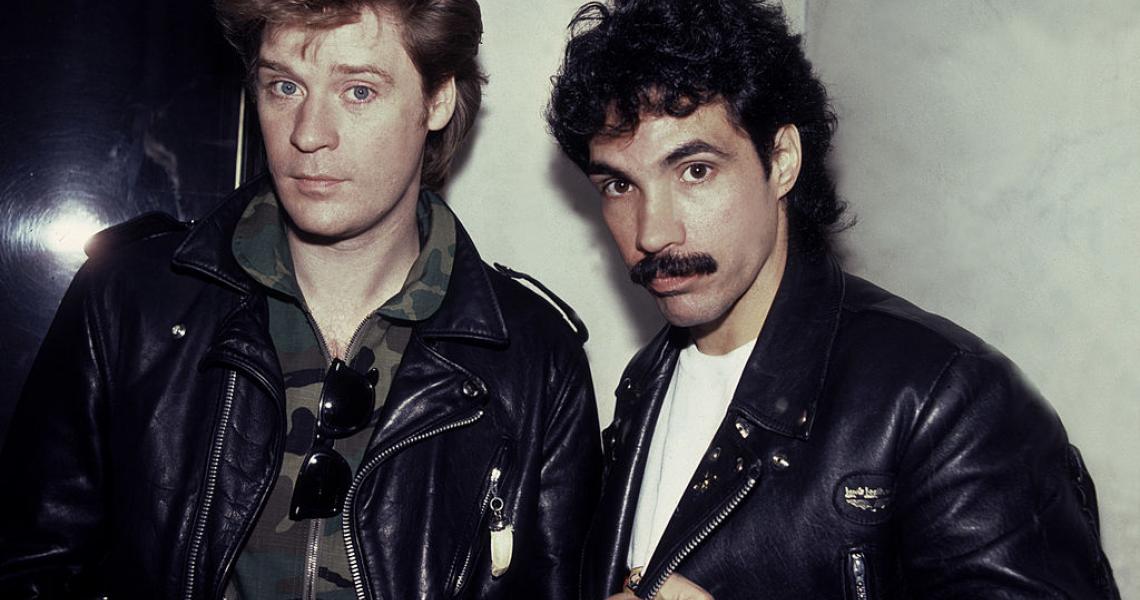
2 “Private Eyes,” Hall and Oates, 1981
Daryl Hall’s paramour Sara Allen had been the subject of their early hit “Sara Smile,” and she and her sister Janna were songwriters as well. “‘Private Eyes’ is a real Janna Allen song, which she co-wrote with Warren Pash,” said Hall. “Then I changed it a little bit and wrote the lyrics with Sara. Some say it resembles ‘Kiss On My List” somewhat, and I guess it does.” It became the duo’s third of six #1 songs in their career, holding the top spot for two weeks in November 1981.
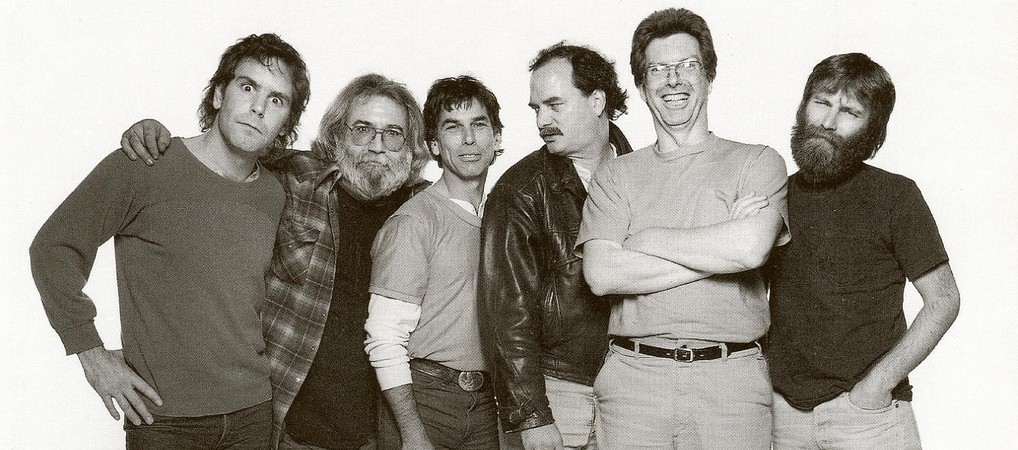
3 “Touch of Grey,” Grateful Dead, 1987
For 20 years, The Dead had been first and foremost a live band, then an album band, but never much of a singles band. “Truckin’” had been their highest chart appearance at #64 in 1970. By the mid-‘80s, Jerry Garcia and Robert Hunter had come up with “Touch of Grey,” a grim look at life’s shortcomings that nevertheless maintains the resolve, “We will get by, we will survive.” They made it the centerpiece of their 1987 LP “In the Dark,” and lo and behold, it peaked at #9 on the charts. Its inventive music video, in heavy rotation on MTV, featured a live performance of the band, first shown to be life-size skeleton marionettes dressed as the band, and then as themselves. The song and its video helped introduce the Grateful Dead to a new generation of fans.
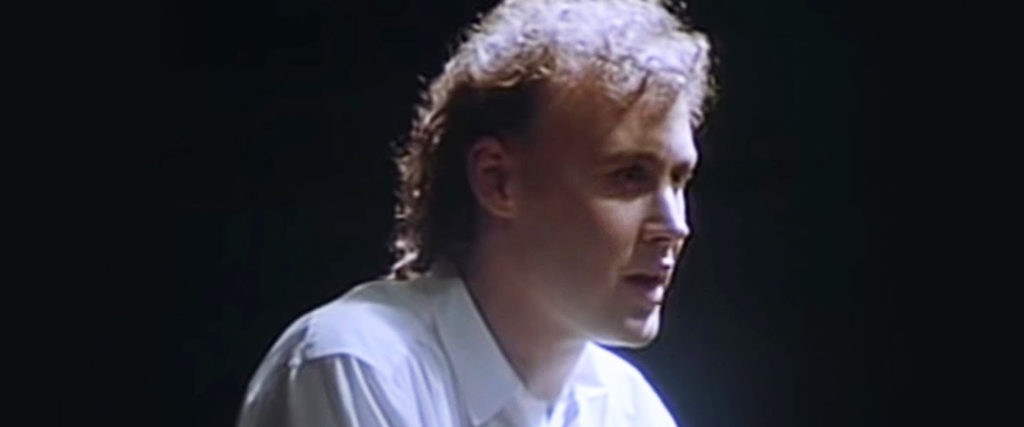
4 “The Way It Is,” Bruce Hornsby and The Range, 1986
The civil rights movement of the ‘60s had had a big impact on Hornsby when he was young, and by the time he formed a band and won a record contract in the mid-‘80s, he had written about it for what turned out to be a stunning debut album. Said Hornsby’s brother John, “‘The Way It Is’ is mainly about compassion, about understanding racial and social types, and beliefs and practices that are different from your own. It’s about a status quo that’s so complacent in its narrow-mindedness and bigotry that it seems it’ll never change. That’s why the line ‘Ah, but don’t you believe them’ is so important.” The album’s title track reached #1 in the fall of 1986.

5 “Heat of the Moment,” Asia, 1982
In late 1981, three members of major prog-rock groups that had disbanded — guitarist Steve Howe of Yes, drummer Carl Palmer of ELP and bassist/vocalist John Wetton of King Crimson and U.K. — joined forces to become the supergroup Asia, bringing in Geoff Downes to round out the foursome. Critics didn’t care for the group’s debut LP, but the public ate it up, sending it to #1 on the strength of the single “Heat of the Moment,” which peaked at #4 in the summer of ’82. Said Wetton, “The lyrics are an abject apology for my dreadful behavior towards a particular woman, the woman I would eventually marry but divorce 10 years later.”
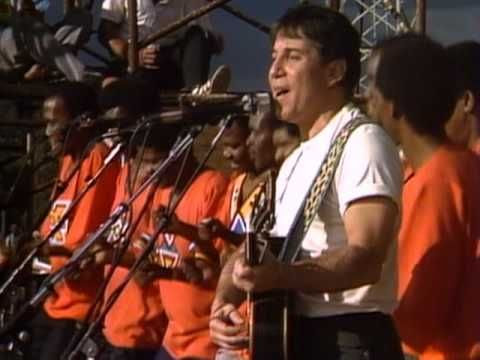
6 “Diamonds on the Soles of Her Shoes,” Paul Simon, 1986
This compelling tune about the unlikely pairing of a rich girl and a poor boy concludes “Graceland,” Simon’s 1986 masterpiece of African rhythms that won the Album of the Year Grammy. The lyrics have been interpreted in different ways; some say the woman is unlikable because she uses precious gems so cavalierly, but others say she is downplaying her wealth by hiding her diamonds while they secretly bring her happiness and “a pep in her step.” Simon doesn’t say definitively. He recorded the song with South African vocal group Ladysmith Black Mambazo and performed it with them in November 1986 in one of the most amazing musical moments in “Saturday Night Live”‘s history.
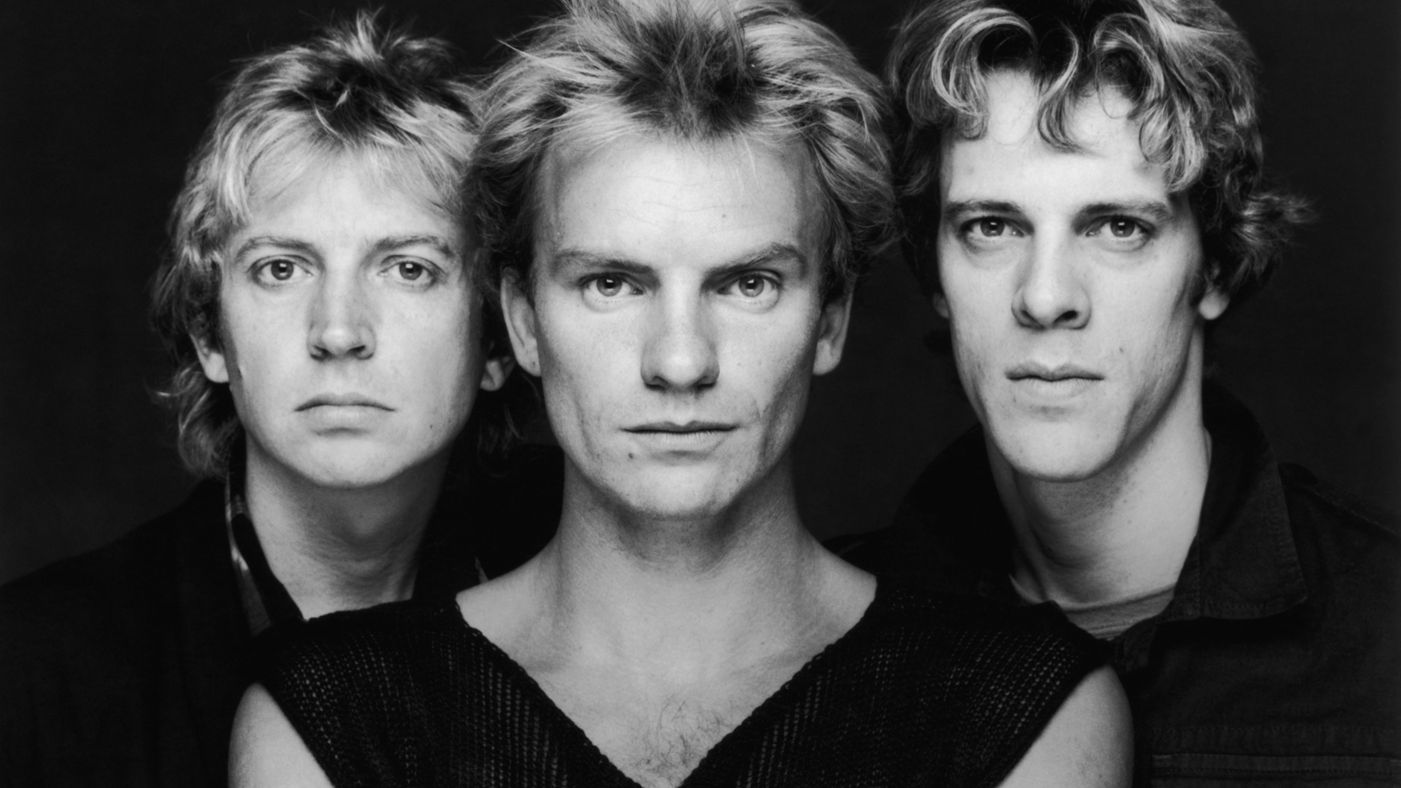
7 “King of Pain,” The Police, 1983
Sting was in the midst of a separation and divorce from his first wife when The Police were working on their fifth LP, “Synchronicity.,” and a few of the songs were inspired by that painful period for him. While the #1 smash “Every Breath You Take” focused on obsession, it was the follow-up single, “King of Pain,” that captured Sting’s angst best. “I conjured up symbols of pain and related them to my soul. A black spot on the sun struck me as being a very painful image, and I felt that that was my soul up there on the sun. It’s about projecting your emotional state into the world of symbolism, which is what poetry’s all about, really.” The song, described by one critic as “a devilishly infectious new wave single,” peaked at #3 in August 1983.

8 “Eye in the Sky,” Alan Parsons Project, 1982
Parsons was an accomplished producer and engineer, having been involved in The Beatles’ “Abbey Road” and Pink Floyd’s sonic masterpiece, “Dark Side of the Moon.” In 1976, he teamed up with singer-songwriter Eric Woolfson to create a smooth brand of progressive rock as The Alan Parsons Project. Utilizing a broad range of studio musicians and more than a half-dozen different lead singers, APP turned a lot of heads with their captivating music on songs like “I Wouldn’t Want to Be Like You,” “Damned If I Do” and “Games People Play.” By 1982, the ensemble went for a mellower approach and grabbed a #3 spot on US pop charts with “Eye in the Sky,” interpreted by many as a condemnation of government surveillance.

9 “Steppin’ Out,” Joe Jackson, 1982
In early 1982, Jackson spent several months in New York City and was inspired to write an entire song cycle about it for the LP “Night and Day.” Most notable was the single “Steppin’ Out,” about the anticipation and excitement of a drive out around the town at night. One critic wrote, “It’s a mélange of simple piano hooks, rudimentary electronic treatment and classic vocal pop, with a rhythm track that’s quaint in its simplicity and driving enough to invoke images of the big city at night.” It became Jackson’s biggest hit in the United States, peaking at #6 in December 1982.
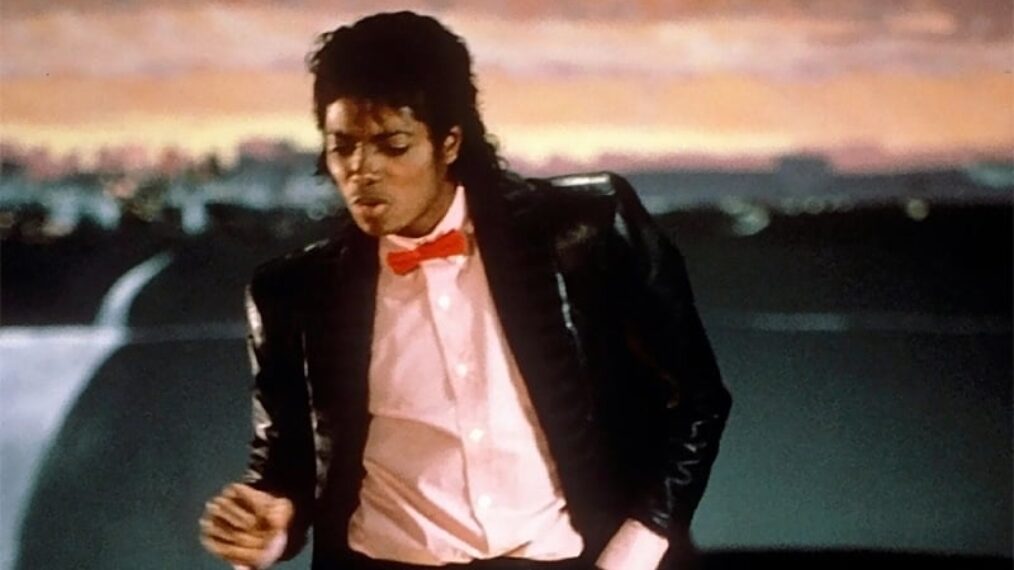
10 “Billie Jean,” Michael Jackson, 1982
This was the track that took Jackson from a big star to the biggest star on the planet. Released in 1982 on the 40-million-selling “Thriller” LP, “Billie Jean” owned the top spot on the singles chart for seven weeks in 1983. Telling the tale of a celebrity falsely accused of fathering a child, the track (and its performance on the “Motown 25: Yesterday, Today, Forever” TV special that year) introduced a number of Jackson’s signatures, including the moonwalk, black sequined jacket and high-water pants. Said one review, “It’s frighteningly stark, with a pulsing, cat-on-the-prowl bass figure, whip-crack downbeat and eerie multi-tracked vocals.”

11 “Cherry Bomb,” John Mellencamp, 1987
When Mellencamp was in junior high school, he spent time hanging out at a place in Indiana called the Last Exit Teen Club, and by the time he had become an established star in 1987, he chose to write about that experience. “Cherry Bomb” is the fictional name he gave to the hangout, and to the song, which appeared on “The Lonesome Jubilee” and reached #8 on the charts that year. The music video for the song features a couple dancing intimately with one another near a jukebox while Mellencamp dances by himself, interspersed with vintage video clips. He used accordion to create a warm atmosphere appropriate for his nostalgic look back on a more innocent time when he was “laughing, laughing with my friends.”
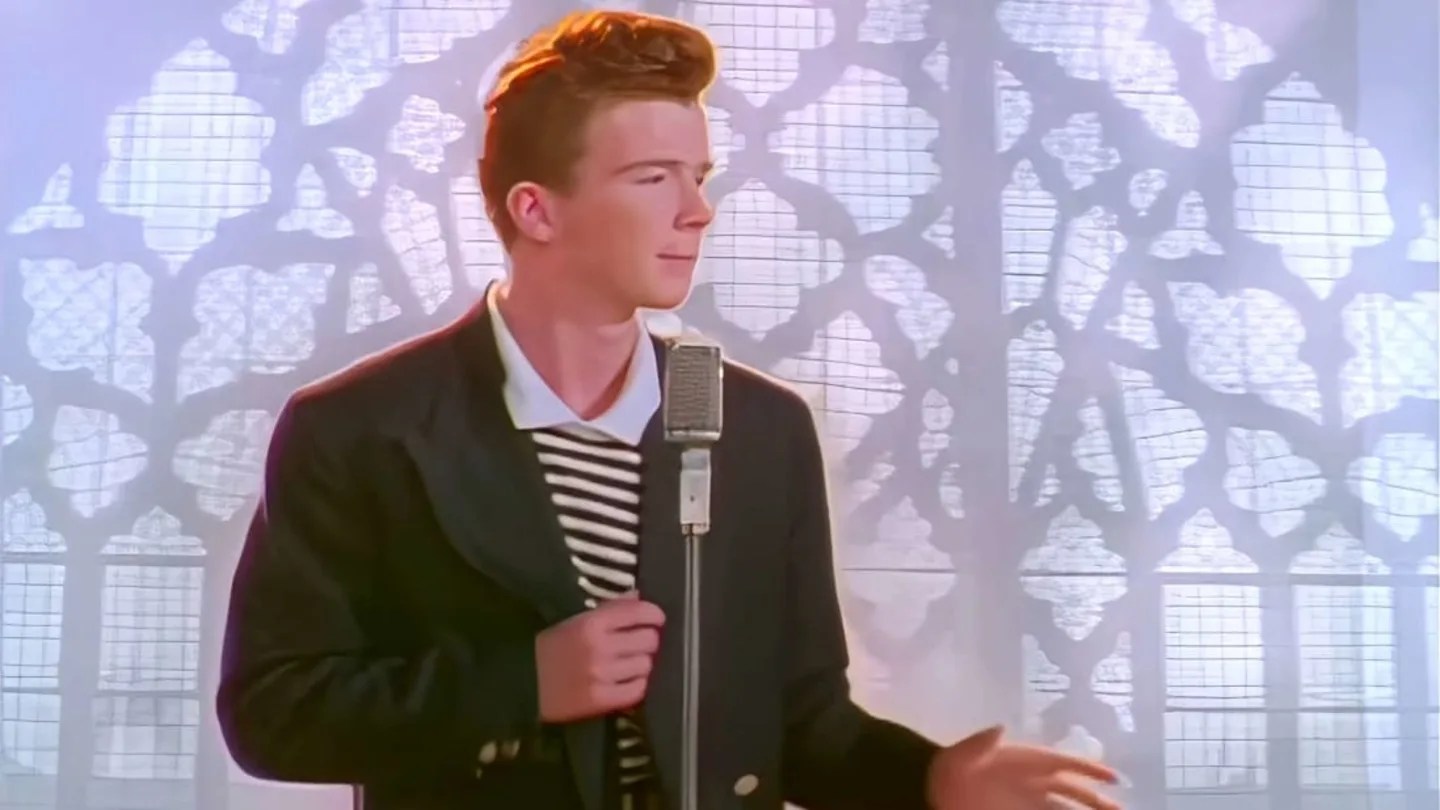
12 “Never Gonna Give You Up,” Rick Astley, 1987
Astley’s quirky, robust croon and his nerdy romantic pitch made for one of the most irresistible four minutes in ‘80s pop rock. The British songwriting/producing team of Mike Stock, Matt Aitken, and Pete Waterman wrote more than six dozen top hits for various acts in England, and “Never Gonna Give You Up”” is one of their biggest. It topped the charts in 25 countries in 1987, including the US and the UK. Years later, it curiously became the subject of an internet meme known as “Rickrolling,” involving harmless, misleading links that redirected users to the song’s music video.

13 “Rock the Casbah,” The Clash, 1982
The music for this catchy stomper was written by the band’s drummer, Topper Headon. Finding himself in the studio without his three bandmates, Headon progressively taped the drum, piano and bass parts, recording the bulk of the song’s musical instrumentation himself. When Joe Strummer heard the song, he loved it, but he recoiled at the “soppy lyrics about missing his girlfriend.” Instead, Strummer came up with a bold scenario of a Middle East king who bans Western music, but the populace rebels by holding concerts in the temples and squares. Released in 1982 as the second single from The Clash’s fifth album, “Combat Rock,” it reached #8 on US pop charts.
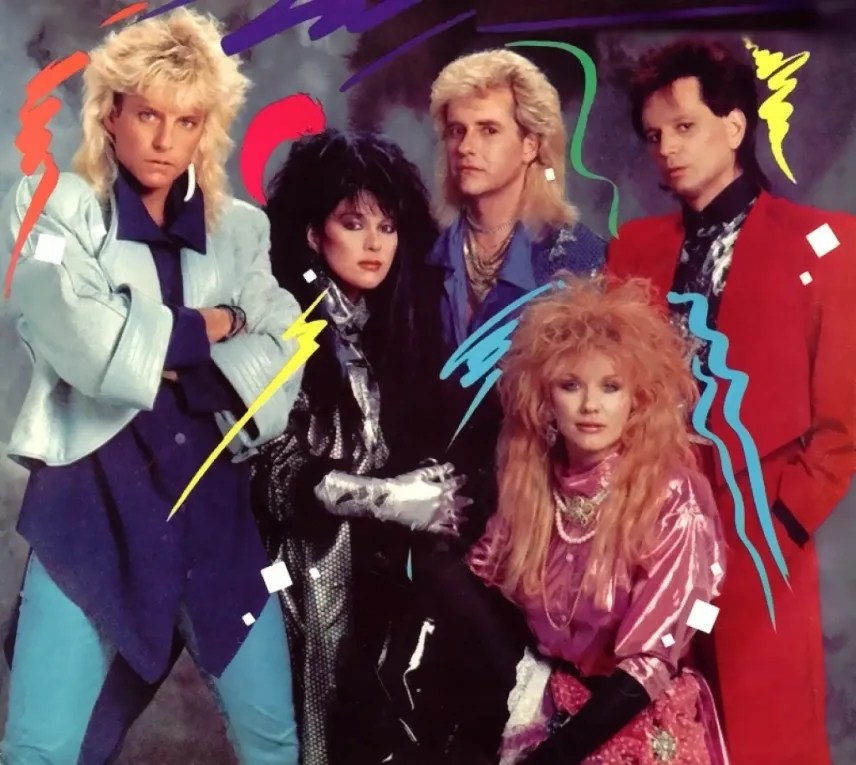
14 “These Dreams,” Heart, 1985
The lyrics of this beautiful tune, co-written by Martin Page and Elton John’s lyricist Bernie Taupin, describe the fantasy world a woman enters every time she sleeps when faced with a difficult situation in life. Page and Taupin wrote it in 1985 and offered it to Steve Nicks, but she rejected it, saying, “I sing only my own songs.” Undiscouraged, they approached Heart, led by the Wilson sisters, Ann and Nancy, who loved it and agreed to record it, with Nancy handling lead vocals for a change. The power ballad reached #1 as the third single from their victorious comeback LP, “Heart.”
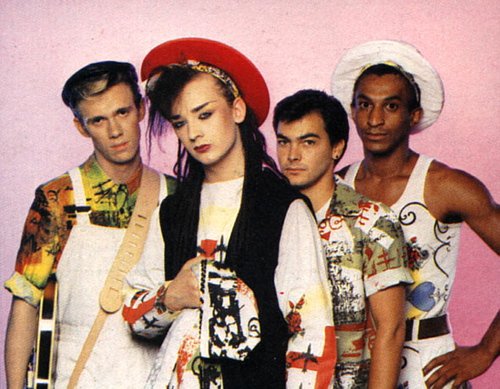
15 “Karma Chameleon,” Culture Club, 1983
The inspiration for this popular track is pretty straight-forward, according to Culture Club frontman Boy George: “The song is about the terrible fear of alienation that people have, the fear of standing up for one thing. It’s about trying to suck up to everybody. Basically, if you aren’t true, if you don’t act like you feel, then you get Karma-justice, which is nature’s way of paying you back.” The record stayed at number one for six weeks and became the UK’s biggest-selling single of 1983. It also spent three weeks at number one in the US in early 1984, becoming the group’s biggest hit and only US number-one single among their nine top-20 hits.
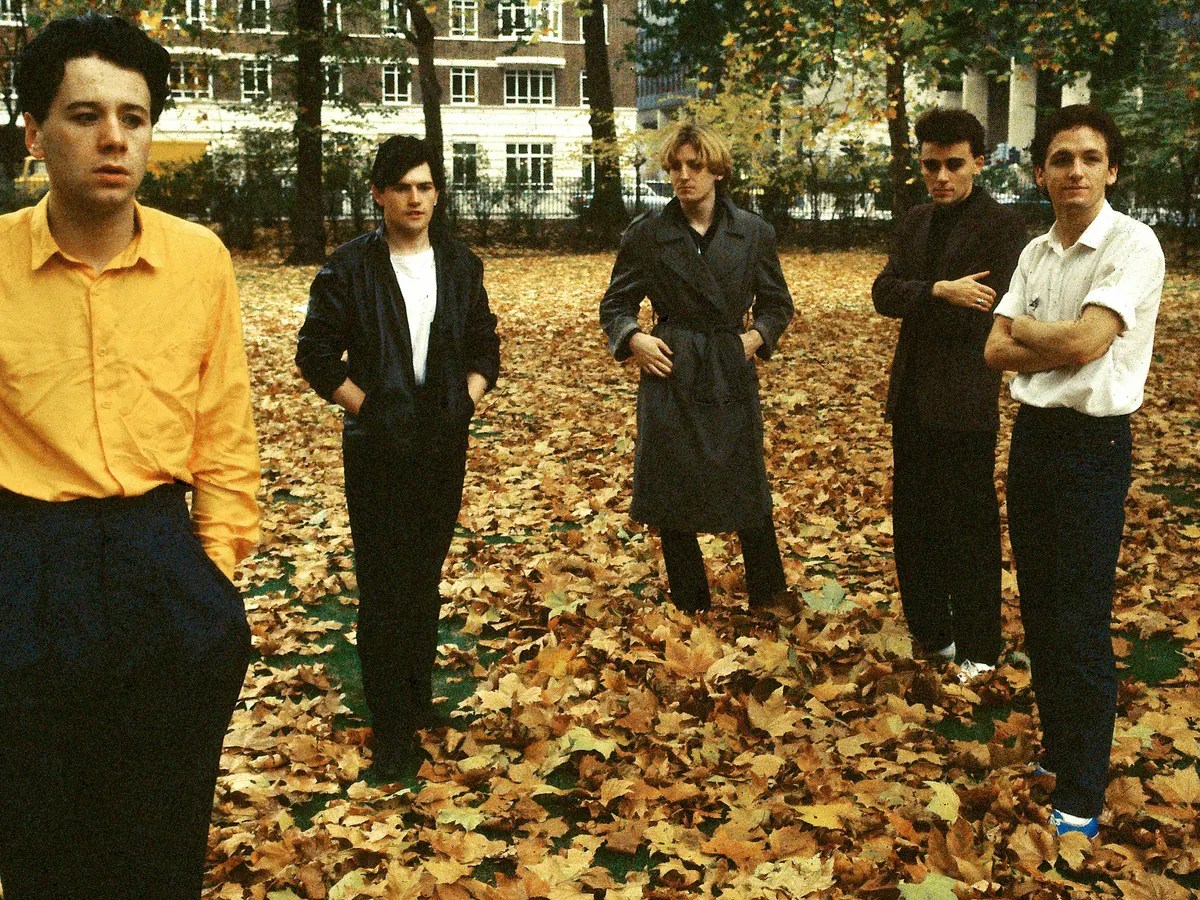
16 Don’t You (Forget About Me),” Simple Minds, 1985
Guitarist Steve Schiff and drummer Keith Forsey were scoring the 1985 film “The Breakfast Club” when they wrote “Don’t You (Forget About Me)” as its theme song. They were inspired by a scene in which an introvert and a school bully bond while no one else is watching. Forsey said, “It was like, ‘hey man, don’t forget, when we’re back in the classroom, you’re not just a bad guy and we’ve got other things in common now.” They wanted Simple Minds to perform it, but they declined, as did Bryan Ferry, Billy Idol, Corey Hart and Cy Curnin of The Fixx. When they tried Simple Minds again, the band agreed after lead singer Jim Kerr’s wife Chrissie Hynde encouraged them to do it. It became a #1 hit that grew Simple Minds’ fan base in the US for years to come.

17 “Saving All My Love for You,” Whitney Houston, 1984
In the mid-‘70s, lyricist Gerry Goffin (Carole King’s ex-husband and songwriting partner) teamed up with Michael Masser to write this formidable love song for Marilyn McCoo and Billy Davis Jr., formerly of The 5th Dimension. In 1983, Masser first heard Houston singing another of his songs, “Greatest Love of All,” in New York’s Sweetwater Club, and was invited to produce a few tracks on her debut LP in 1984. He suggested “Saving All My Love For You” would be perfect for her, turning it into “a woman’s song.” She brought the house down at a performance at the Roxy in LA a few weeks later, persuading the record label to make it her next single, and it went to #1.

18 “Devil Inside,” INXS, 1987
From 1980 to 1985, Australia’s INXS built a strong following in their native country as each of their first five albums became increasingly successful on the charts there. Their 1985 LP “Listen Like Thieves” reached #11 in the US, setting the stage for the jackpot they hit in 1987 with their sixth, “Kick,” which spawned four Top Ten singles in the US. “Devil Inside,” written by guitarist Andrew Farriss and singer Michael Hutchence, was perhaps their biggest rocker, reached #2 in early 1988. Said Hutchence, “The song examines the fight between good and evil that’s inside everyone. It’s about the chaos of the devil, and how every time you think something’s going right, he comes in and changes everything.”
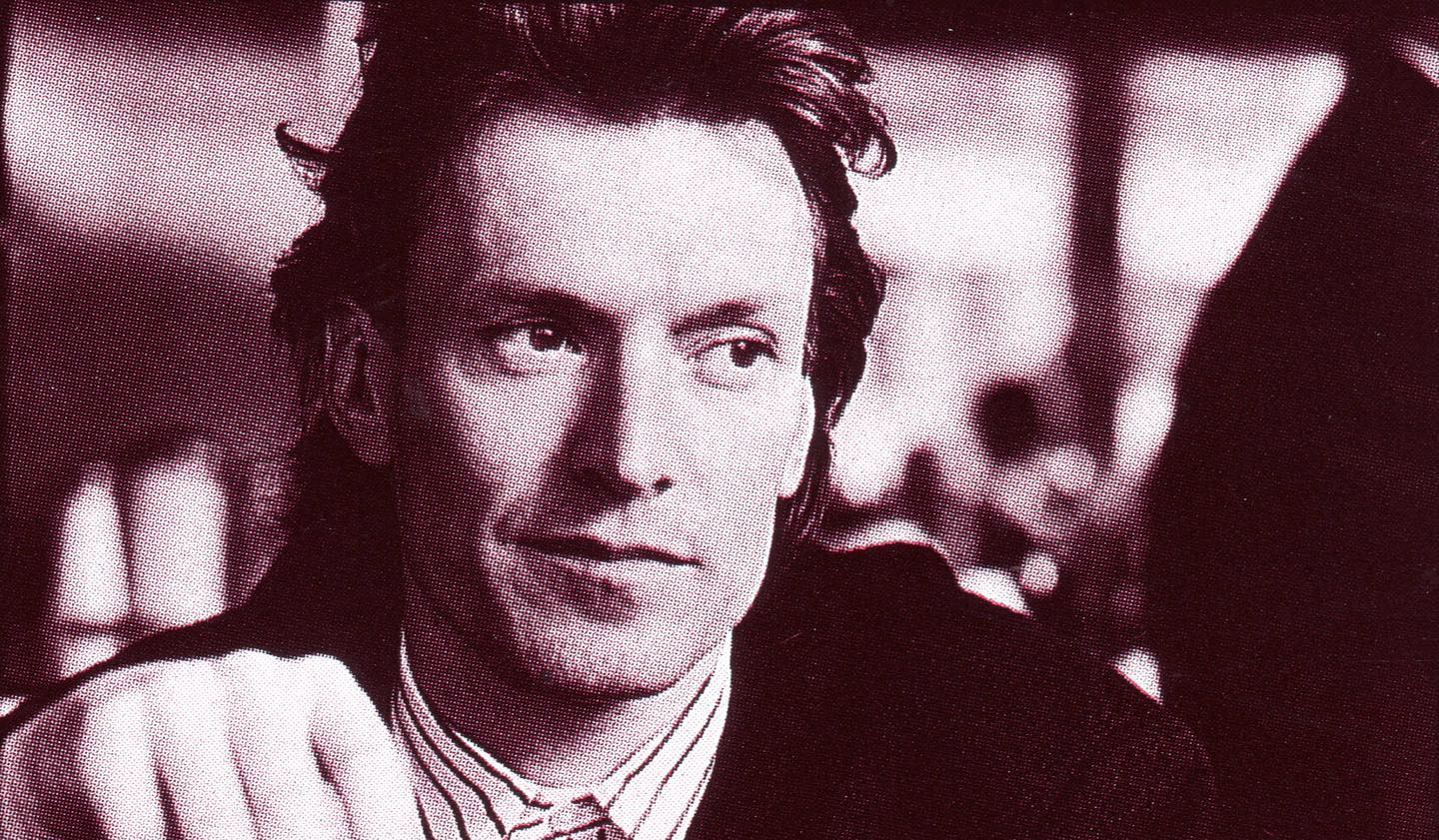
19 “Back in the High Life Again,” Steve Winwood, 1986
Will Jennings, Winwood’s writing partner, had carried around the phrase “back in the high life” as a song title idea written down in a notebook, and when he was at Winwood’s house in late 1984, he wrote the rest of the lyric in a half hour, without any music. More than a year afterward, Winwood finally wrote the music for it, and it became the title track to his hugely successful LP in 1986. “We’ve got absolutely no rules when we work together,” said Winwood about their approach. “There are no formulas; things just happen naturally.” While “Higher Love” was the energetic #1 single, “Back in the High Life Again” was a respectable #13 as a follow-up in early 1987, with James Taylor on vocal harmonies and Winwood contributing mandolin to the arrangement.
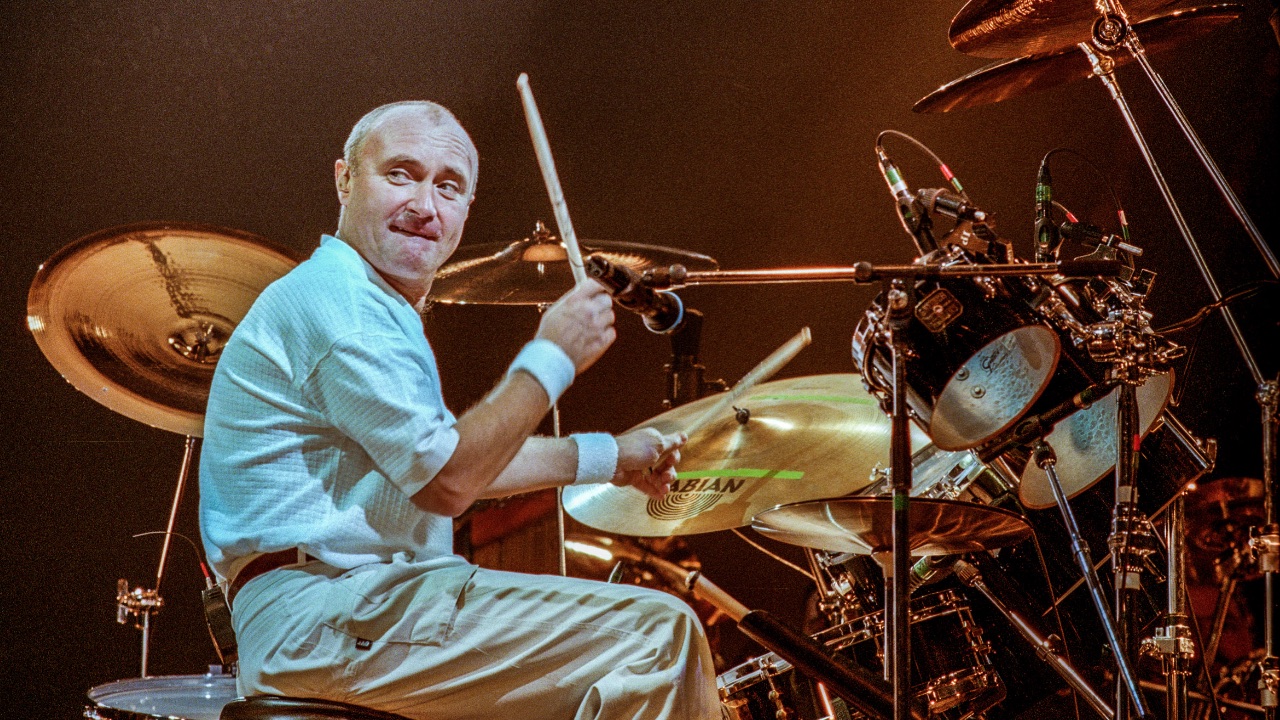
20 “In the Air Tonight,” Phil Collins, 1981
A spooky two-minute introduction lulls the listener into complacency until the point where the most dramatic, revolutionary drum sound comes crashing in to change “In the Air Tonight” into something else entirely. As the first single on Collins’s solo debut, 1981’s “Face Value,” this track firmly established the drummer/singer as a commercial juggernaut outside his role in Genesis. Once again, the heartbreak of a failed marriage proved to be grist for the songwriting mill, as Collins explained: “What is it that I can feel coming in the air tonight? Not sure, but it’s not good. I was going through a divorce, and the only thing I can say about it is that it’s obviously in anger. It’s the bitter taste left by cheating and lying.” It went Top Five in a dozen countries but strangely stalled at #19 in the US.
**************************










 Hack's Back Pages