You’re my sweet comic valentine
A lot of rock music lyrics tend to be about rebellion, sex, protest, fantasy, breakups, drugs and drinking, and sometimes just sheer nonsense. But they’re also about friendship, peace, encouragement, hope and, yes, even true love.
This week, my in-laws celebrated 65 years of marriage. Later this year, my wife and I will commemorate our 40th wedding anniversary. And this week, the lovebirds of the world will cuddle for another Valentines Day.

All of these occasions, it seems to me, deserve a soundtrack of songs about romantic love… But what a job! There must be 10,000 love songs in the canon of popular music over the past century or so, and probably a thousand just from the classic rock era. I’ve sifted through the lists and have settled on 20 selections with lyrics that sing the praises of romance and affection. No doubt I’ve neglected one of your favorites, but I’m confident the songs found on the Spotify playlist at the end will do the trick.
Hey, you crazy kids — get a room!
******************************
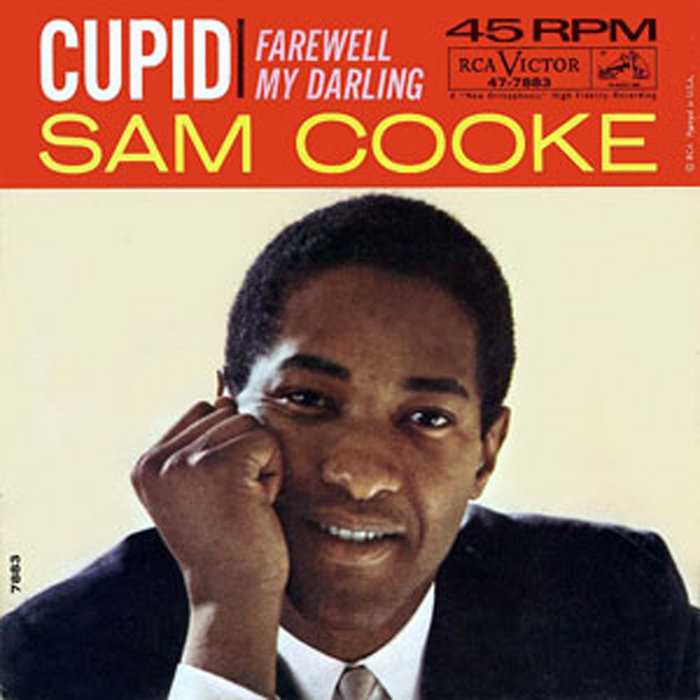
“Cupid,” Sam Cooke, 1961
The gifted crooner was also a fine songwriter, and his producers asked him to write a tune for a female singer they’d seen on a TV variety show, but once they heard Cooke sing it, they decided he should release it himself, and it reached #17 here and #7 in the UK in 1961. Critics called it “the perfect pop song,” combining Latin, R&B, jazz and mainstream pop elements. Sample lyrics: “Cupid, draw back your bow, and let your arrow go straight to my lover’s heart for me, cupid, please hear my cry, and let your arrow fly straight to my lover’s heart for me…”

“I’m Stone in Love With You,” The Stylistics, 1972
Thom Bell was one of the most successful of the songwriters/producers responsible for the “Philadelphia Sound” artists in the Seventies (O’Jays, Spinners, Delfonics, Stylistics). He specialized in love songs, and this beauty, sung in falsetto by lead vocalist Russell Thompkins, reached #10, one of five Bell-Stylistics collaborations to go Top Ten during their 1971-1974 heyday: “I’m just a man, an average man, doing everything the best I can, but if I could, I’d give the world to you, I would hold a meeting for the press to let them know, I did it all ’cause I’m stone in love with you…”
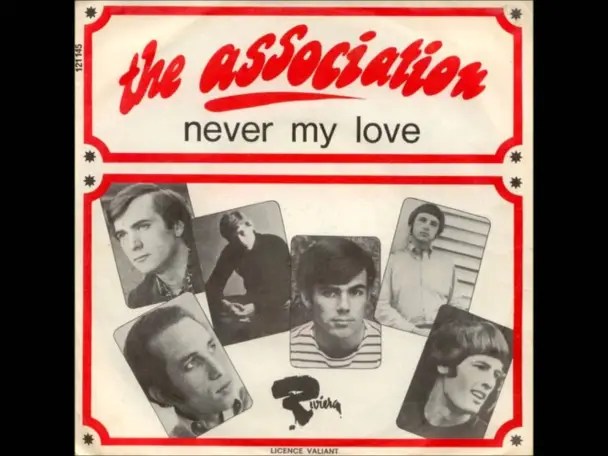
“Never My Love,” The Association, 1967
This timeless love song by composer brothers Donald and Richard Addrisi made three appearances in the Top 10 by three different artists between 1967 and 1974. The Association’s version, an enormous #1 hit, came first, followed by The 5th Dimension’s #12 live rendition in 1971, and lastly, a #7 disco-ish version in 1974 by the European band Blue Swede. Due in large part to these three separate successful recordings, “Never My Love” was named in 1999 by BMI as the second most played song on radio and TV in the 20th Century, behind The Righteous Brothers’ “You’ve Lost That Lovin’ Feeling” but ahead of The Beatles’ “Yesterday.” Sample lyrics: “You ask me if there’ll come a time when I grow tired of you, never my love, never my love, you wonder if this heart of mine will lose its desire for you, never my love, never my love…”
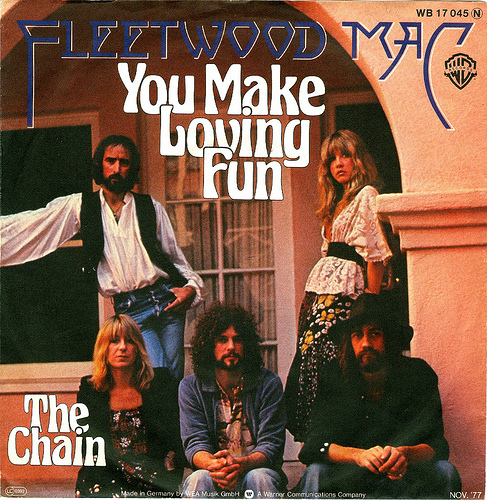
“You Make Loving Fun,” Fleetwood Mac, 1977
“Rumours,” one of the ten best-selling albums of the rock era, was full of tunes with lyrics about breakups, since two of Fleetwood Mac’s three songwriters (Lindsey Buckingham and Stevie Nicks) were in the midst of a stormy split during recording sessions. But Christine McVie, who had just divorced her husband John McVie, was having an affair with paramour Curry Grant and wrote about it in this effervescent love song, which reached #9 as the album’s fourth single: “Sweet wonderful you, you make me happy with the things you do, oh, can it be so, this feeling follows me wherever I go, you, you make loving fun, it’s all I want to do…”
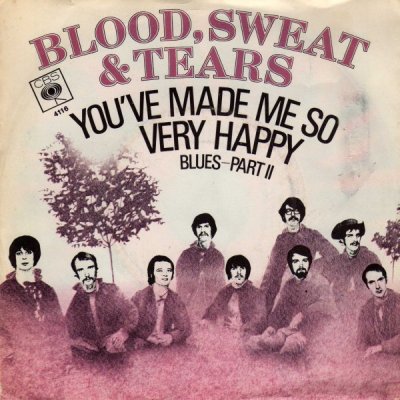
“You’ve Made Me So Very Happy,” Blood, Sweat & Tears, 1969
Motown singer Brenda Holloway wrote this love song with her sister Patrice, along with Motown songwriter-producer Frank Wilson and label mogul Berry Gordy. Holloway managed to reach only #39 with her recording, but in 1969, the jazz-rock band Blood Sweat & Tears had an enormous #2 hit with it. Sample lyrics: “‘Cause you came and you took control, you touched my very soul, you always showed me that loving you is where it’s at, you’ve made me so very happy, I’m so glad you came into my life…”
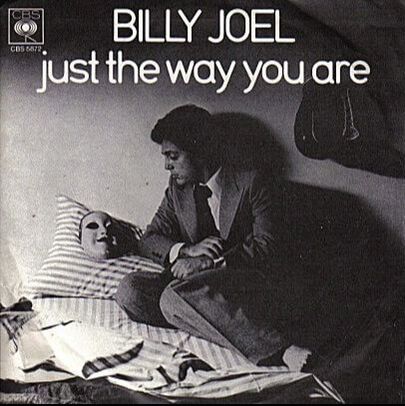
“Just the Way You Are,” Billy Joel, 1977
When Joel heard the last line of the 1963 Four Seasons hit “Rag Doll, which went, “I love you just the way you are,” he decided it would make a great song title. He wrote it in 1976 as a love song to his first wife, Elizabeth Weber, but once they divorced, Joel didn’t sing it in concert for five years. In fact, he wasn’t sure it was a good fit with the other songs he’d written for his 1977 LP “The Stranger,” but it emerged as his first Top Ten hit, reaching #3 and becoming something of a cocktail lounge standard: “I said I love you, and that’s forever, and this I promise from the heart, /I couldn’t love you any better, I love you just the way you are…”

“The Best Is Yet to Come,” Frank Sinatra & Count Basie Orchestra, 1964
Ol’ Blue Eyes was known for many great romantic songs in the American songbook, and one of the better ones was this beauty, written in 1959 by Cy Coleman and lyricist Carolyn Leigh. The songwriters first gave it to the young Tony Bennett, who recorded a decent rendition, but Sinatra’s 1964 recording backed by the Count Basie Orchestra remains the definitive version. The lyrics tout newfound love while positively looking forward to even greater things: “Out of the tree of life, I just picked me a plum, you came along and everything’s starting to hum, still, it’s a real good bet, the best is yet to come…”

“Happy Together,” The Turtles, 1967
Two guys named Garry Bonner and Alan Gordon, formerly in an obscure band called The Magicians, wrote “Happy Together” in 1966 and pitched it to more than a dozen artists before it was finally accepted and recorded by The Turtles, an LA-based band that had nine Top 20 hits between 1965 and 1969. Their recording was #1 for three weeks in 1967. Sample lyrics: “The only one for me is you, and you for me, so happy together, I can’t see me loving nobody but you for all my life, when you’re with me, baby, the skies will be blue for all my life…”
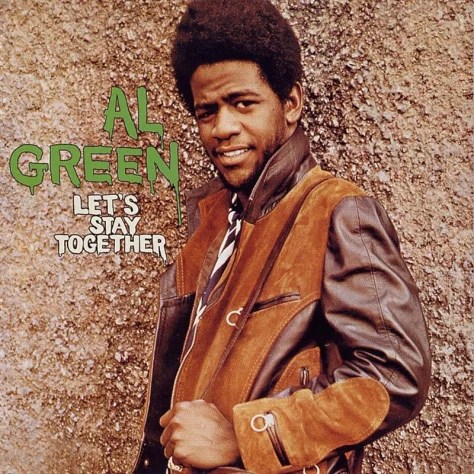
“Let’s Stay Together,” Al Green, 1972
Written and sung by Green, “Let’s Stay Together” emerged as one of the great R&B love songs of all time, holding on to the #1 spot for three weeks in late 1971/early 1972. It also served as a comeback single for Tina Turner in 1983, reaching #26, jump-starting her solo career. The lyrics weigh the choices of breaking up and making up, deciding the latter is preferrable: “I, I’m so in love with you, whatever you want to do is all right with me, ’cause you make me feel so brand new, and I want to spend my life with you…”
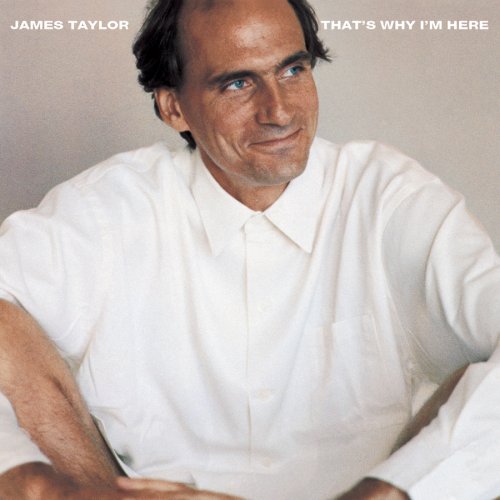
“Only One,” James Taylor, 1985
Taylor has written plenty about love, though mostly wistful tunes about heartbreak. Every so often, he finds himself in a good enough mood to write a happy love song like “Your Smiling Face,” or cover a familiar one like “How Sweet It Is (To Be Loved By You).” Also worthy of your attention is a little-known track from his 1985 LP “That’s Why I’m Here” called “Only One,” which features harmonies by Joni Mitchell: “You are my only one, you are my only one, don’t be leaving me now, believe in me now, well, I’m telling you now, now you’re my only one…”
“I Will,” The Beatles, 1968
The celebrated White Album showed that The Beatles embraced, and could convincingly perform, a wide variety of musical genres: blues, country-western, folk, dance-hall, avant-garde, you name it. Their repertoire also had plenty of love songs, and although both Lennon and Harrison each wrote a few, it was usually McCartney who handled this assignment: “P.S. I Love You,” “And I Love Her,” “Here, There and Everywhere”… and from The White Album, there’s the short-and-sweet “I Will”: “Love you forever and forever, love you with all my heart, love you whenever we’re together, love you when we’re apart…”
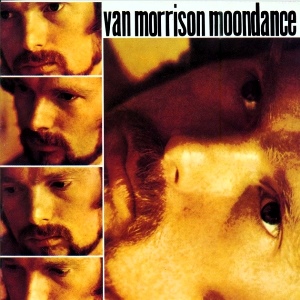
“Crazy Love,” Van Morrison, 1970
Morrison is still touring and has released nearly 50 studio albums in his long career. In his early years, he was infatuated with poetic imagery (his “Astral Weeks” LP) and jazzy ballads like “Moondance” and “Tupelo Honey.” On the “Moondance” LP, he offered a couple of timeless love songs, the best of which is “Crazy Love”: “And when I’m returning from so far away, she gives me some sweet lovin’ to brighten up my day, yes it makes me righteous, yes it makes me feel whole, yes it makes me mellow down into my soul, she give me love, love, love, love, crazy love…”

“How Deep Is Your Love,” The Bee Gees, 1977
The Brothers Gibb were writing and recording songs for their next album when producer Robert Stigwood asked them to contribute songs for the soundtrack of a movie he was producing about the disco dance culture. They offered three dance tracks — “More Than a Woman,” “Night Fever” and “Stayin’ Alive” — and this shimmering ballad, and they ended up as the anchor songs on the most successful movie soundtrack of all time, “Saturday Night Fever.” All three Bee Gees have said this was their favorite from the LP: “I believe in you, you know the door to my very soul, you’re the light in my deepest, darkest hour, you’re my savior when I fall, and you may not think I care for you, when you know down inside that I really do, and it’s me you need to show, how deep is your love…”
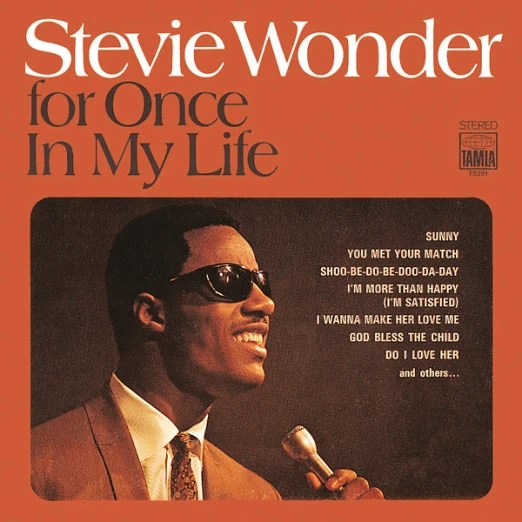
“For Once in My Life,” Stevie Wonder, 1968
Although this upbeat track became one of Stevie Wonder’s best loved among his early works, reaching #2 in 1968, it was actually recorded first by The Temptations as well as The Four Tops, but their versions went nowhere. Wonder’s extraordinary harmonica solo, captured in his televised performance of the song on “The Ed Sullivan Show” that year, took “For Once in My Life” to another level: “For once in my life, I have someone who needs me, someone I’ve needed so long, for once unafraid, I can go where life leads me, somehow I know I’ll be strong…”
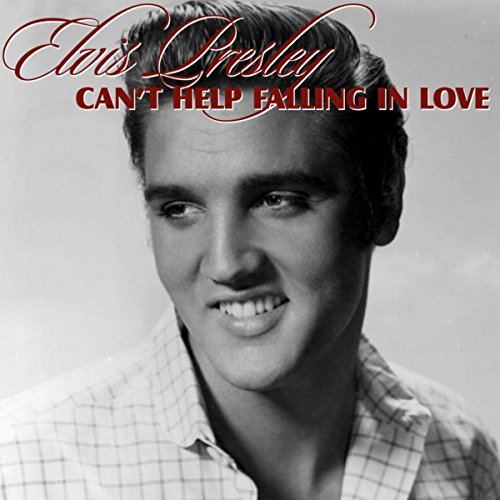
“Can’t Help Falling in Love,” Elvis Presley, 1961
Hugo Peretti and Luigi Creatore, seasoned New York songwriters on their own, were commissioned to team up to create a song for Elvis in 1961. Little did they know “Can’t Help Falling in Love” would be not only the best-selling song of 1962, but recorded by dozens of other artists in the ensuing years. It reached the top of the charts a second time three decades later in a reggae arrangement by British band UB40. Sample lyric: “Like a river flows surely to the sea, darling, so it goes, some things were meant to be, take my hand, take my whole life too, for I can’t help falling in love with you…”
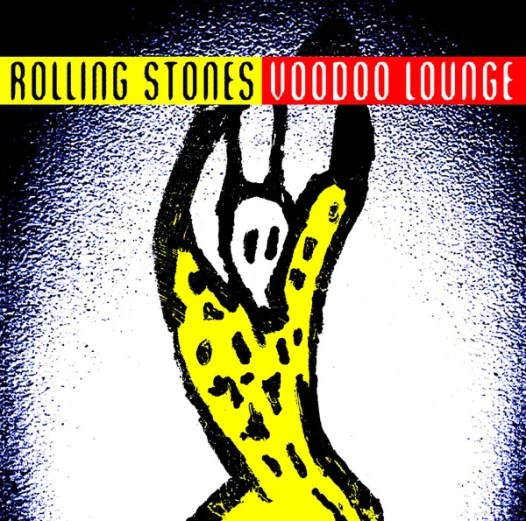
“Sweethearts Together,” The Rolling Stones, 1994
There are precious few songs in the voluminous catalog written by Mick Jagger and Keith Richards that would qualify as romantic, but there are exceptions (“As Tears Go By,” “Wild Horses,” “Angie”). Much later in their career arc, The Glimmer Twins surprised us by offering their prettiest ballad yet, “Sweethearts Together,” a tender ode to eternal love. This one is a delightful break from their usual badass rock stance: “Sweethearts together, we’ve only just begun, sweethearts together, so glad I found someone, sweethearts forever, two hearts together as one…”

“At Last,” Etta James, 1961
Mack Gordon and Harry Warren wrote this classic in 1941 for the Glenn Miller film “Orchestral Wives,” which flopped at the box office. It languished for nearly 20 years before blues singer Etta James cut her smoldering rendition and made it the signature song of her impressive career. I still hear “At Last” frequently at wedding receptions when the happy couple takes their first dance as husband and wife: “I found a thrill to press my cheek to, a thrill that I had never known, you smiled, and then the spell was cast, and here we are in Heaven, for you are mine at last…”
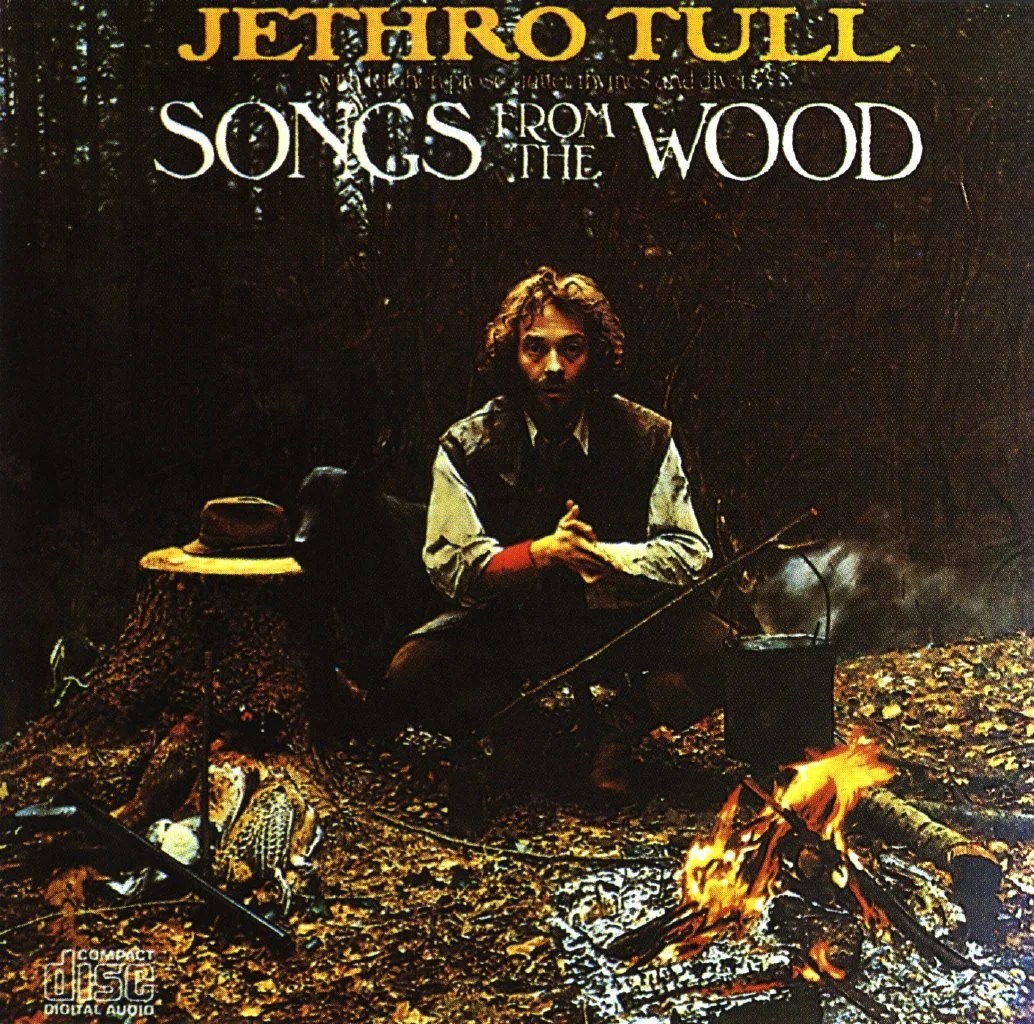
“Fire at Midnight,” Jethro Tull, 1977
Regular readers of this blog know I will try to sneak in a Tull track whenever I can, and although the band isn’t exactly famous for love songs, Ian Anderson has written a few endearing tunes that qualify. On his back-to-nature LP “Songs From the Wood” in 1977, he concludes with this short piece that affectionately paints a picture of how much he enjoys coming home after a hard day and cuddling up with the woman he loves: “Kindled by the dying embers of another working day, /Go upstairs, take off your makeup, fold your clothes neatly away, /Me, I’ll sit and write this love song as I all too seldom do, /Build a little fire this midnight, it’s good to be back home with you…”
“Follow Me,” Mary Travers, 1970
At the rehearsal dinner before our wedding, this was the song I chose to sing to my wife-to-be. John Denver wrote it and recorded it in 1970 as an album track, and it caught the attention of Mary Travers as she was compiling songs for her solo debut following the breakup of Peter, Paul & Mary. It wasn’t a hit single, but I heard it on her “Mary” album in 1971 and learned to play it on guitar. I found it to be very touching, deftly capturing the idea of sharing your feelings and experiences with a lifetime partner: “Follow me where I go, what I do and who I know, make it part of you to be a part of me, /Follow me up and down, all the way and all around, take my hand and I will follow too…”

“Grow Old With Me,” Mary Chapin Carpenter, 1995
John Lennon was known mostly as an iconoclastic rocker, from his lusty rendition of “Twist and Shout” to the strident “Revolution” and much of his solo catalog, but wow, he could sure write some beautiful ballads as well — “In My Life,” “Julia,” “Imagine,” “Beautiful Boy,” to name just a few. In the months before he was killed in 1980, he wrote several dozen songs, many of which, sadly, were recorded only in demo form. The best of these is “Grow Old With Me,” which Lennon intended to be, in his words, “a new standard to be played at 50th anniversaries.” Mary Chapin Carpenter offered a sublime cover version on the 1995 LP “Working Class Hero: A Tribute to John Lennon”: “Grow old along with me, two branches of one tree, face the setting sun, when the day is done, God bless our love, God bless our love, spending our lives together, man and wife together, world without end, world without end…”
********************************