She’s a woman who understands

I’ve been thinking a lot this week about women.

Not my wife and daughters in particular, although I already think of them all the time. Not even female friends, necessarily. I’ve been thinking about women in terms of their position in society, their impact on life, the influence of their personalities.

I have been tardily immersing myself in the dystopian drama “The Handmaid’s Tale,” which is brilliantly written and acted but oh so very bleak and pretty frightening. The subtle and not-so-subtle parallels between the subjugation of women in that story and the impact of the right-wing Supreme Court’s outrageous gutting of Roe v. Wade are more than a little disturbing.

I rarely address political issues in this rock music blog (except for occasional overviews of protest songs as a sub-genre), but this week, I am moved to explore songs that celebrate women — strong women, smart women, kind women, independent women. I have selected a dozen songs with “woman” in the title that go beyond the superficial or pejorative generalizations all too common in pop songs of the classic rock era.

In addition to these 12 songs, the Spotify playlist at the end includes several “honorable mentions” that have lyrics less relevant to my intended message but still worthy of inclusion because the music warrants it.

This Independence Day weekend, I shall be deep in thought about how our country is in trouble when it summarily removes established rights from half its people. This cannot be the way forward…

***************************

“Woman in Chains,” Tears for Fears, 1989

For “Woman in Chains,” the leadoff track on the excellent “The Seeds of Love” LP, Tears For Fears singer/songwriter Roland Orzabal was inspired by two different lines of thought when he wrote it. “The song is about how men have traditionally played down the feminine side of their characters, and how both men and women suffer for it. I think men in a patriarchal society have been sold down the river. We’re told that we’re in control, but there are also a hell of a lot of things that we miss out on, which women are allowed to be.” He also revealed he was writing about his mother’s unhappy life as a nightclub stripper, and the abuse she took from her husband (Orzabal’s father): “Well, I feel deep in your heart there are wounds time can’t heal, /And I feel somebody somewhere is trying to breathe, /Well, you know what I mean, /It’s a world gone crazy keeps woman in chains…”

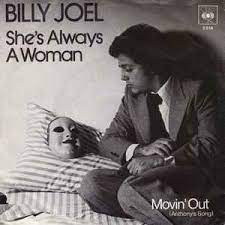
“She’s Always a Woman,” Billy Joel, 1977

I find this song to be one of Billy Joel’s most delightful, beautiful melodies, but the lyrics have always perplexed me. If she “steals like a thief” and “can ruin you faith with her casual lies,” why is she also the recipient of his love and affection? It’s actually autobiographical. In the ’70s, Joel was married to Elizabeth Weber, who managed his financial affairs and handled his contract negotiations with a toughness bordering on ruthlessness. Male business adversaries naturally labeled her as “unfeminine,” but Joel saw she was fighting for his interests, and he loved her for it: “Oh, she takes care of herself, she can wait if she wants, /She’s ahead of her time, /Oh, and she never gives out, and she never gives in, /She just changes her mind…” The marriage didn’t last, though, and he sees his part in the failure: “She’ll bring out the best and the worst you can be, /Blame it all on yourself ’cause she’s always a woman to me…”

“Kind Woman,” Buffalo Springfield, 1968

Buffalo Springfield didn’t last long because the two major talents in the lineup, Stephen Stills and Neil Young, were too competitive for their own good, both as songwriters and as performing guitarists and singers. Overshadowed in the mix was third singer-songwriter Richie Furay, a much gentler soul who later founded Poco and ultimately gave up the business for life in the clergy. One of his finest efforts in the Springfield was “Kind Woman,” a plaintive country-based tune in which the narrator sweetly asks the nice woman he has just met if she’ll keep him company: “Remember once before, you’re hearing the old folks say, ‘Love’s an ageless old rhyme,’ /But nowadays, you know the saying depends so much on the kind of woman that you find, /Kind woman, won’t you love me tonight? /The look in your eyes, kind woman, /Don’t leave me lonely tonight…”

“Just Like a Woman,” Bob Dylan, 1966

On the face of it, this classic tune from Dylan’s “Blonde on Blonde” double album appears to traffic in stereotypes, describing actions that are supposedly “just like a woman” would do. There is some of that in there, to be sure, but I interpret the lyrics to be more universal. We all ache, we all have pain, both men and women, especially the emotional variety from unsuccessful relationships, and we all break “just like a little girl” (or boy). He’s throwing in the towel: “Your long-time curse hurts, but what’s worse is this pain in here, /I can’t stay in here, ain’t it clear that I just can’t fit, /Yes, I believe it’s time for us to quit…” Some observers think the song is about former lover Joan Baez, who was once a bigger star than he was: “When we meet again, introduced as friends, /Please don’t let on that you knew me when I was hungry, and it was your world…”

“American Woman,” The Guess Who, 1970

This #1 single by the Canadian band that has had the most success on US pop charts was widely misinterpreted at the time of its release in the spring of 1970. With American involvement in the Vietnam War at its fullest, many listeners saw the song as an anti-American slap by a foreign group, but that’s simply not the case, according to singer Burton Cummings. “The lyrics were written on the spot during an onstage jam after we’d returned from a U.S. tour,” he said in 2013. “What was on my mind was that girls in the States seemed to get older quicker than our girls, and that made them seem dangerous. When I sang, ‘American woman, stay away from me,’ I really meant, ‘Canadian woman, I prefer you.’ We weren’t used to strong, outspoken women.”

“Man Smart, Woman Smarter,” Harry Belafonte, 1956

This provocative song’s authorship is somewhat unclear, but the prevailing opinion is that it was written by Norman Span, a popular calypso musician who first recorded it back in 1936. Belafonte made it popular as an album track on his #1 LP “Calypso” in 1956, and artists including Chubby Checker, Roseanne Cash, The Grateful Dead, Robert Palmer and The Carpenters all recorded it over the years. It was featured on an episode of “I Love Lucy” in which Lucy put a band together to outfox Ricky and show him he wasn’t the only one with talent. The lyrics advance a theory regarding superior intellect: “Ah, ever since the world began, woman was always teaching man, /And if you listen to my bid attentively, I goin’ tell you how she smarter than he, /And not me, but the people, they say that the men are leading the women astray, /But I say, that the women of today, smarter than the man in every way…”

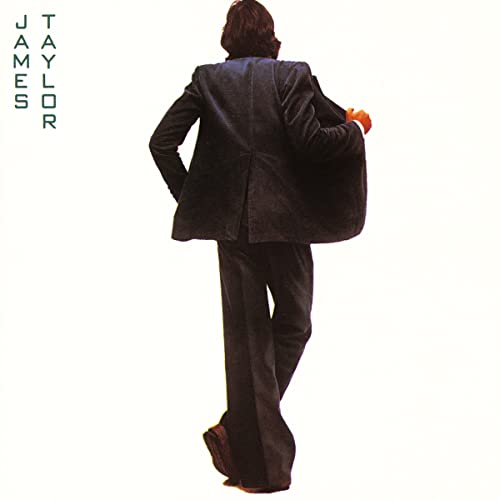
“Woman’s Gotta Have It,” James Taylor, 1976

Taylor wrote so many great songs but also loved recording cover versions of R&B-flavored numbers like Marvin Gaye’s “How Sweet It Is To Be Loved By You” and The Drifters’ “Up on the Roof.” On his underrated 1976 LP “In the Pocket,” Taylor did a spectacular job with Bobby Womack’s 1972 song “Woman’s Gotta Have It,” a funky soul tune written by Womack and his stepdaughter Linda Womack. The lyrics, which center on a woman they knew who was thinking of going elsewhere for intimacy because her husband had grown neglectful, serve as a warning to pay attention: “Do the things that keep a smile on her face, say the words that make her feel better every day… /Woman’s got to have it, I believe that I should know, she’s got to know that she’s needed around, /When you kiss her, you got to make her feel it everyday, boy, /She’s got to know that she’s not walking on shaky ground, /Think it over…”

“(You Make Me Feel Like a) Natural Woman,” Aretha Franklin, 1967

One day in 1967, Atlantic Records producer/mogul Jerry Wexler stopped Carole King on the street and said he needed her to write a song for his new artist Franklin, to be entitled “Natural Woman.” King and her then-husband Gerry Goffin collaborated that very evening, and you would think the lyrics would’ve been written by a woman, but in fact, King wrote the music while Goffin came up with the words. It became one of Franklin’s signature songs, a song of gratitude to a man who offers so much devotion and kindness, from a woman whose “soul was in the lost and found”: “Before the day I met you, life was so unkind, but your love was the key to my peace of mind, /’Cause you make me feel, you make me feel, /You make me feel like a natural woman…” King ended up recording the song herself four years later on her multi-platinum “Tapestry” LP.

“Woman,” John Lennon, 1980

The former Beatle, abandoned by his mother (and father) at a young age, developed an unhealthy defense that included berating and even physically abusing women who he felt had done him wrong. Therapy and Eastern philosophy helped quiet Lennon’s demons, such that, by 1980, he was able to acknowledge the huge importance of women in not only his life but in the universe. “Women make up half the sky, half the world, half of everything,” he noted. He wrote a mea culpa song like “Woman” to try to make amends for past behavior: “Woman, I can hardly express my mixed emotion at my thoughtlessness, /After all, I’m forever in your debt, /And woman, I will try to express my inner feelings and thankfulness for showing me the meaning of success… /Woman, I know you understand the little child inside the man, please remember my life is in your hands…”

“Woman,” Peter and Gordon, 1966

I couldn’t resist putting this song in the mix, which credits Bernard Webb as the songwriter, but that was a pseudonym for Paul McCartney, who wanted to see if a song he wrote could be successful if no one knew he wrote it. Peter Asher, as the brother of McCartney’s then-girlfriend Jane Asher, had benefited greatly from Lennon-McCartney songs the duo had given to Peter & Gordon — “A World Without Love,” “I Don’t Want To See You Again” — but “Woman” also did well for them (even though it wasn’t long before we learned who really wrote it). A line like “be my woman” may seem rather possessive these days, but it was well-intentioned for its day, and he’s hoping for mutual love, need and want: “Woman, do you love me? /Woman, if you need me, then believe me, I need you to be my woman…”

“No, Woman, No Cry,” Bob Marley and The Wailers, 1974

Following the success of “Burnin’,” The Wailers’ 1973 LP with future reggae classics such as “Get Up Stand Up” and “I Shot the Sheriff,” Peter Tosh and Bunny Wailer left to pursue solo careers, and Bob Marley assumed the mantle of frontman of the group. “Natty Dread,” the first album by Bob Marley and The Wailers, included “No Woman, No Cry,” which became a huge favorite in concert and was a featured track on the group’s 1975 “Live!” album. Although some misinterpreted the title to mean “If there’s no woman, there’s no reason to cry,” Marley said he meant it in Jamaican lingo as, “No, woman, nuh cry (don’t cry).” He was offering comfort in times of sadness: “Good friends we have, oh, good friends we have lost along the way, yeah, /In this great future, you can’t forget your past, so dry your tears, I say, /No, woman, no cry…”

“I Am Woman,” Helen Reddy, 1972

In 1972, Australian singer Helen Reddy had grown so tired of the demeaning treatment she and other female artists had to endure in the music business that she was motivated to write some defiant lyrics about it.  She handed them off to songwriter Ray Burton, and the result was the multi-million-selling “I Am Woman,” a somewhat cheesy but game-changing song that Helen Reddy played on every TV variety show she could. For better or worse, it gave many women the confidence to defy the odds, to chase their dreams, to press harder for more favorable contracts, to resist men’s unwanted advances, and to go where only men had gone before: “You can bend but never break me ’cause it only serves to make me more determined to achieve my final goal… /Oh yes, I am wise but it’s wisdom born of pain, /Yes, I’ve paid the price, but look how much I gained, /If I have to, I can do anything, /I am strong, I am invincible, I am woman…”

****************************

Honorable mentions:

More Than a Woman,” The Bee Gees, 1977; “Have You Ever Loved a Woman,” Derek and the Dominos, 1970; “Gold Dust Woman,” Fleetwood Mac, 1977; “When a Man Loves a Woman,” Percy Sledge, 1966; “Dark Eyed Cajun Woman,” The Doobie Brothers, 1973; “Witchy Woman,” The Eagles, 1972; “Black Magic Woman,” Santana, 1970; “Long Cool Woman,” The Hollies, 1972; “Oh, Pretty Woman,” Roy Orbison; “L.A. Woman,” The Doors, 1971; “Evil Woman,” Electric Light Orchestra, 1975; “Kentucky Woman,” Neil Diamond, 1967; “Parachute Woman,” The Rolling Stones, 1968; “She’s a Woman,” The Beatles, 1964.

*******************************

You had me at “hello”

Every writer — novelist, speechwriter, essayist, lyricist — knows that you’ve got to have a great opening line. You need a thought, an image or a line of dialog that really grabs readers/listeners and pulls them in.

You might startle them, make them chuckle, shock them or just caress them in such a way that they have no choice but to stick around and see what happens next.

In the song lyrics of classic rock, there are many thousands of great examples of this. From The Beatles’ “I read the news today, oh boy” to Simon and Garfunkel’s “Hello darkness, my old friend”, the archives runneth over with captivating opening lines that demand our attention.

Many songs take the easy way out and start things off by using the title as the opening line (“Hey Jude, don’t make it bad”, “Here’s to you, Mrs. Robinson”), and that has certainly been a successful tactic as well. I’m drawn, however, to the song lyrics that begin with some mystery, some indelible image, some phrase that I simply must follow to learn more.

I’ve selected two dozen of my favorite opening lines from rock songs of the ’60s, ’70s and ’80s for you to ruminate on and identify. For the most part, these should generally be rather easy to pick out because they’re mostly from big hits. As usual, you can scroll down in the text to find the answers, and a little bit of info about what inspired the songwriters. And there’s a Spotify list at the end so you can enjoy hearing the lyrics performed by the artists.

Good luck!

************************

1 “I was a little too tall, coulda used a few pounds…”

2 “In the corner of my eye, I saw you in Rudy’s, you were very high…”

3 “Well, no one told me about her, the way she lied…”

4 “Way down here, you need a reason to move, feel a fool running your stateside games…”

5 “It was raining hard in Frisco, I needed one more fare to make my night…”

6 “It was the Third of June, another sleepy, dusty Delta day…”

7 “Ain’t it foggy outside? All the planes have been grounded…”

8 “I know you deceived me, now here’s a surprise…”

9 “Stayed in bed all morning just to pass the time…”

10 “‘There must be some kind of way out of here,’ said the joker to the thief…”

11 “I saw her today at the reception, a glass of wine in her hand…”

12 “It’s the same kind of story that seems to come down from long ago…”

13 “Let us be lovers, we’ll marry our fortunes together…”

14 “The screen door slams, Mary’s dress waves…”

15 “Really don’t mind if you sit this one out…”

16 “On a morning from a Bogart movie, in a country where they turn back time…”

17 “Picture yourself in a boat on a river with tangerine trees and marmalade skies…”

18 “Up all night, I could not sleep, the whiskey that I drank was cheap…”

19 “On a dark desert highway, cool wind in my hair…”

20 “Hey, where did we go, days when the rains came…”

21 “You walked in to the party like you were walking onto a yacht…”

22 “If there’s a smile on my face, it’s only there trying to fool the public…”

23 “When are you gonna come down? When are you going to land?…”

24 “Gonna write a little letter, gonna mail to it my local deejay…”

*

*

*

*

*

*

*

*

*

*

1 “Night Moves,” Bob Seger, 1976

After seeing “American Graffiti” upon its release, Seger was inspired to write his own story about adolescent love and coming-of-age challenges. He said he lacked self-confidence and felt physically awkward — “a little too tall, could’ve used a few pounds,” as he wrote in the opening line of “Night Moves” — but his ability to sing and play music gave him an in with the “cool” kids, he recalled.

2 “Black Cow,” Steely Dan, 1977

I could’ve picked almost any song from the Steely Dan catalog to include here. The Fagen-Becker songwriting team had an uncanny ability to draw you in with mischievously cryptic lyrics. In this song, they revealed years later, the narrator is talking about a girl he used to be involved with, who’s sitting stoned at Rudy’s soda fountain drinking a coke float (known as a Black Cow in some parts of the country).

3 “She’s Not There,” The Zombies, 1964

When Rod Argent was encouraged to write an original song for the group’s upcoming session, he was inspired by a John Lee Hooker song called “No One Told Me,” deciding that would be a great opening line to describe a cheating, dishonest woman who, when the shit hit the fan, up and disappeared. Breakup songs were popular, but one that vilified the woman for. being a chronic liar was something new in 1964.

4 “Mexico,” James Taylor, 1975

Based on this upbeat tune’s opening line and the lyrics that follow, you would think Taylor had spent some time south of the border, soaking in the laid-back vibe, getting away from the hustle of life in the record business. But by the song’s final moments, he’s singing, “I’ve never really been, but I’d sure like to go.” Turns out he was singing about a fantasy he had of traveling to an exotic land.

5 “Taxi,” Harry Chapin, 1972

Chapin developed an enviable reputation as a songwriting storyteller, introducing characters and their evolving relationships with uncommon flair. Here, in his signature tune, Chapin sets the stage by identifying the locale, the weather and the protagonist’s occupation all in one busy opening line. He goes on to introduce his former flame, who’s rich but evidently very unhappy (at least, compared to Harry).

6 “Ode to Billie Joe,” Bobbie Gentry, 1967

Here’s another fine example of an opening line that beautifully captures an image — in this case, life in the South one hot summer afternoon. It reads almost like a William Faulkner novel, and it sure makes me say, “Go on…” There’s a great deal more to the story, but it left certain crucial facts unstated, which created curiosity in listeners and kept them coming back to examine the lyrics many times over.

7 “Sandman,” America, 1972

From the first time I heard it, I thought the first words of this electric folk tune were intriguing. Is someone stuck at an airport, or a mountain resort, perhaps? What’s the situation? Who’s the vague, possibly nefarious guy who calls himself “Sandman,” and why is someone running from him? The beauty of the track is that we don’t learn a whole lot more about their identities or their fate. It’s up to us to imagine.

8 “I Can See For Miles,” The Who, 1967

Pete Townshend has a secret for the deceptive girl he’s pursuing, and that is, he knows she’s lying to him. He has the figurative ability to see “for miles” right through her manipulations. He warns her that she’ll have to “stand trial” someday and choke on her untruths, and he’ll be there to see it all unfold. Townshend made the words all the more effective by putting them to one of The Who’s most powerful rock arrangements.

9 “It’s Too Late,” Carole King, 1971

Breakup songs can be brutal and full of bitterness or, conversely, they can be tender and tinged with sadness. Carole King’s sometime collaborator Toni Stern came up with this treatment that approaches its subject gingerly, knowing that the end of the relationship has arrived but wanting to end it on soft ground without so much heartbreak. Who hasn’t wanted to stay in bed longer rather than face a tough decision?

10 “All Along the Watchtower,” Bob Dylan, 1967

Even though Jimi Hendrix’s ferocious cover version is the one most people know, Dylan’s stark original does an amazing job of capturing the same apocalyptic intensity in a different way. The opening line is a grabber, but it has been said that Dylan’s brief tale actually begins with the final verse, and ends with the beginning, where the princes stood in the watchtower keeping an eye out for the impending doom.

11 “You Can’t Always Get What You Want,” The Rolling Stones, 1969

I can’t count the number of times I’ve used this opening line as I have approached a female friend holding a glass of vino at a wedding reception. The woman Mick Jagger sings about here turns out to be out of reach because she has another agenda. He wrote this amazing song as a philosophical treatise on how to balance our desires for the unattainable with our basic needs for the more basic elements of life.

12 “Hypnotized,” Fleetwood Mac, 1973

The insistent, hypnotic music created by this earlier lineup of Fleetwood Mac is matched by furtive lyrics that remind us, “There’s no explaining what your imagination can make you see and feel.” It begins by telling us its story is like so many others “that seem to come down from long ago,” and it coaxes the listener in with a mixture of everyday images and visions of “a strange, strange pond,” among other mysteries.

13 “America,” Simon and Garfunkel, 1968

One of the most concise, literary songs ever, about a romantic couple eager to hit the road and explore the world and search for their souls simultaneously. Simon chooses to open the track with dialog as the man asks the woman to share his dream of traveling to find their future together. It struck a chord with many, because America was experiencing violent, angry times when this album and song were released.

14 “Thunder Road,” Bruce Springsteen, 1975

On a brilliant album chock-full of marvelous imagery, the first line of the first song might be the best. The hero is waiting in his car as the radio plays when his girl Mary emerges from her house to come join him for another adventure. Who can’t relate to the sound of a screen door slamming to announce someone’s arrival or departure? It’s a universal thing, and Springsteen knew it.

15 “Thick as a Brick,” Jethro Tull, 1972

What a bold thing to do: Compose an epic, 45-minute piece of progressive rock music with multiple sections, movements, moods and instrumental passages, with lyrics about generational relationships, and then undercut the whole thing by starting it with the line, “Really don’t mind if you sit this one out.” Tull’s Ian Anderson knew that it needed to have self-deprecating humor so as not to be taken too seriously.

16 “Year of the Cat,” Al Stewart, 1976

England’s version of the songwriting storyteller was Stewart, who had studied historical fiction and different world cultures and became quite good at creating both short and long tales about romantic encounters and entanglements. For “Year of the Cat,” he began by recalling the setting of the classic film “Casablanca” in a nameless North African country “where they turn back time.” I’m hooked, how about you?

17 “Lucy in the Sky With Diamonds,” Beatles, 1967

Recreational drug users swear that this John Lennon fantasy simply must be experienced under the influence of psychedelics to be fully appreciated. Maybe, but at the very least, he sucks us in with colorful, idyllic images that invite us all to join him in his boat on the river. Other dazzling phrases (“rocking-horse people,” “cellophane flowers”) follow, taking us further into his apparent dream sequence.

18 “South City Midnight Lady,” The Doobie Brothers, 1973

Spending a restless night trying to recover from another episode of trying to drown your sorrows in booze is an experience to which many people can relate, and Patrick Simmons captures it nicely in this pretty masterpiece from The Doobies’ “The Captain and Me” album. The protagonist ultimately returns to the woman he loves, full of remorse for his shortcomings and gratitude for her love.

19 “Hotel California,” The Eagles, 1976

This is one of the most thoroughly examined songs in classic rock, with multiple interpretations of what Don Henley and Glenn Frey were talking about here. They certainly set the table from the outset, as someone approaches on one of California’s dark desert highways. Is Hotel California a real place, or a metaphor for the allure of the Los Angeles entertainment industry? You decide.

20 “Brown-Eyed Girl,” Van Morrison, 1967

The fun and frolic of this song is evident from the get-go as Morrison describes what he and his young brown-eyed girl would do and where they’d go — down in the hollow, down in the old mine, along the waterfall, behind the stadium. He has said the lyric originally focused on a “brown-skinned girl” he met in Jamaica, but his conservative record label insisted he change it to something less controversial.

21 “You’re So Vain,” Carly Simon, 1972

You can just picture the guy, oozing with ego and cockiness, that Simon is describing in that opening line. The song goes on to become a damning indictment of a man so full of himself that he has no concern for others, particularly the many women he loves and leaves with careless abandon. Simon has said she was writing about three different men who shared this trait, one of whom was actor Warren Beatty.

22 “Tears of a Clown,” Smokey Robinson and The Miracles, 1970

The idea of a happy-face clown actually being a sad person behind the makeup was not new, but in this marvelous slice of Motown, Robinson used it to describe a man who puts on a brave face to the world even though he’s brokenhearted inside about a romantic breakup. The music was written by Stevie Wonder, who struggled with the lyrics until Robinson helped him find the right words to complete it.

23 “Goodbye Yellow Brick Road,” Elton John, 1973

Lyricist Bernie Taupin used one of his favorite films, “The Wizard of Oz,” as a metaphor for the trappings of success in the rock music business. He said in 2014, “I said I wanted to leave Oz and get back to the farm. I was never turning my back on fame or saying I didn’t want it. I was hoping that maybe there was a happy medium way to exist successfully in a tranquil setting. My naiveté was believing I could do it so early on.”

24 “Roll Over Beethoven,” Chuck Berry, 1956

As rock ‘n’ roll was gaining momentum, Berry was amused by the idea of writing a song in which rock (and R&B) would replace classical music. At home, Berry’s sister was often at the piano playing classical pieces, leaving Berry frustrated enough to wish that Beethoven, Mozart and the rest would “roll over” out of the way and make room for his new musical art form. And don’t forget to “tell Tchaikovsky the news.”

******************************

Honorable mentions:

Kodachrome,” Paul Simon, 1973 (“When I think back on all the crap I learned in high school…”); “Sympathy For the Devil,” The Rolling Stones, 1968 (“Please allow me to introduce myself…”); “Space Oddity,” David Bowie, 1969 (“Ground control to Major Tom…”); “A Day in the Life,” The Beatles, 1967 (“I read the news today, oh boy…”).

*******************************