Rackin’ your brain to recall the tune
When I introduced my first Hack’s Back Pages lyrics quiz several weeks ago, I kept it relatively easy, limiting my choices to well-known songs that topped the charts during the ’60s, ’70s or ’80s.
For the second installment of this fun feature, I am digging a little deeper to challenge my readers a bit more. The lyrics included below are from 20 songs that are relatively well known, but not necessarily as popular as the million-selling hits of the previous quiz.

Test your knowledge by mulling over the lyrics, writing down your answers, and then scrolling down to see how well you did.
Have fun!
***************
1 “I’ve been thinking ’bout our fortune, and I’ve decided that we’re really not to blame, for the love that’s deep inside us now is still the same…”
2 “Sometimes it’s like someone took a knife, baby, edgy and dull, and cut a six-inch valley through the middle of my skull…”
3 “She lit a burner on the stove and offered me a pipe, ‘I thought you’d never say hello,’ she said, ‘You look like the silent type’…”
4 “I get the news I need from the weather report, oh, I can gather all the news I need from the weather report…”
5 “Go away then, damn ya, go on and do as you please, you ain’t gonna see me getting down on my knees…”
6 “Well, I hear the whistle but I can’t go, I’m gonna take her down to Mexico, she said, ‘Whoa no, Guadalajara won’t do’…”
7 “Grab your lunch pail, check for mail in your slot, you won’t get your check if you don’t punch the clock…”
8 “I said, ‘Wait a minute, Chester, you know I’m a peaceful man,’ he said, ‘That’s okay, boy, won’t you feed him when you can?’…”
9 “It’s gonna take a lot to drag me away from you, there’s nothing that a hundred men or more could ever do…”
10 “I’m gonna be a happy idiot and struggle for the legal tender…”
11 “I can remember the Fourth of July, running through the back woods bare…”
12 “Sitting by the fire, the radio just played a little classical music for you kids, the march of the wooden soldiers…”
13 “I got my back against the record machine, I ain’t the worst that you’ve seen, oh can’t you see what I mean?…”
14 “Got to have a Jones for this, Jones for that, this runnin’ with the Joneses, boy, just ain’t where it’s at…”
15 “Come down off your throne and leave your body alone, somebody must change…”
16 “I’m not the only soul who’s accused of hit and run, tire tracks all across your back, I can see you had your fun…”
17 “Well, there’s a rose in a fisted glove, and the eagle flies with the dove…”
18 “There’s too many men, too many people making too many problems, and not much love to go ’round…”
19 “I’ve acted out my love in stages with ten thousand people watching…”
20 “Jump up, look around, find yourself some fun, no sense in sitting there hating everyone…”
*
*
*
*
*
*
*
*
*
*
1 “The Story in Your Eyes,” The Moody Blues (1971)
 These guys have had at least three lives: their early “Go Now” period; their stunning 1967-1972 era, and a rebirth in 1981 for another run in the Eighties. There are so many fine songs in their repertoire, most of them written by singer-guitarist Justin Hayward. My personal favorite is “The Story in Your Eyes,” an infectious track from their “Every Good Boy Deserves Favour” album.
2 “I’m on Fire,” Bruce Springsteen (1984)
 On the multiplatinum “Born in the U.S.A.” album, Springsteen assembled a dozen songs he’d chosen from nearly four dozen he wrote and recorded with the E Street Band. This track was unique in its use of spare percussion with synthesizer, and lyrics that describe the narrator’s sexual tension and longing. The song reached #6 in 1985, one of an unprecedented seven Top Ten singles from the same LP.
3 “Tangled Up in Blue,” Bob Dylan (1975)
 Many critics regard Dylan’s “Blood on the Tracks” as one of his top three or four in a catalog of well over 50 albums in his career. Part of the reason is this incredible song, which offers some of his best lyrics as he tells the story of a man’s recollections about his old flame, and his travels to try to find and reconnect with her. Dylan himself has cited this song as one of his best compositions.
4 “The Only Living Boy in New York,” Simon and Garfunkel (1970)
 Art Garfunkel had been picked for a role in the film “Catch-22,” which kept him on the Mexico movie set for nearly six months. Meanwhile, Paul Simon was in New York writing songs and trying to complete the duo’s next album. He felt lonely and a bit resentful, and this song came out of that feeling. It’s one of my favorite S&G songs, with a crystal-clean production and outstanding vocals.
5 “Don’t Let Me Be Lonely Tonight,” James Taylor (1972)
 For his “One Man Dog” album, released in December 1972, Taylor put together 18 songs, some barely a minute long, with seven of them assembled in an “Abbey Road”-like medley. He recorded some of the LP in his new home studio on Martha’s Vineyard, with new bride Carly Simon contributing background vocals. “Don’t Let Me Be Lonely Tonight” was the single, which peaked at #14 in early 1973.
6 “My Old School,” Steely Dan (1973)
 Donald Fagen and Walter Becker met at Bard College in upstate New York, where the formed their lasting musical partnership, but they didn’t much care for the time they spent there. In this song, they wrote about their unpleasant experiences and made their feelings quite clear with the chorus lyric, “And I’m never going back to my old school!” It’s one of Steely Dan’s best tunes, from their “Countdown to Ecstasy” LP.
7 “Bus Rider,” The Guess Who (1970)
 I always loved this minor hit from the Guess Who repertoire. Written by Kurt Winter, the guitarist who replaced Randy Bachman in the band’s lineup, it gallops along on the strength of Burton Cummings rollicking piano and strong vocals. Winter had been a daily bus commuter when he worked a day job and thought the experience would be a good topic for a song. He was right.
8 “The Weight,” The Band (1968)
 Although it was released as a single which never reached higher than #63 on the charts, “The Weight” significantly influenced American popular music. It was ranked an impressive #41 on Rolling Stone’s Best 500 Songs of All Time. It’s essentially a Southern folk song, with elements of country and gospel, and Robbie Robertson said he wrote it during his first visit to Memphis, where singer Levon Helm had grown up.
9 “Africa,” Toto (1982)
 Chief songwriter David Paich wrote this lyrical tribute to The Dark Continent without ever having visited it. “I saw a National Geographic special on TV and it affected me profoundly,” said Paich. The resulting track, fleshed out with some searing guitar work by guitarist Steve Lukather, turned out to be Toto’s only #1 hit, although it was “Rosanna” that won Grammys.
10 “The Pretender,” Jackson Browne (1976)
 When asked who “the pretender” was, Browne said, “It’s anybody that’s lost sight of some of their dreams and is going through the motions, trying to make a stab at a certain way of life that he sees other people succeeding at.” As the title track of his fourth album, the song anchors a strong batch of tunes he wrote in the wake of his wife’s suicide, which share a mid-Seventies resignation to the fact that the Sixties idealism was long gone.
11 “Born on the Bayou,” Creedence Clearwater Revival (1969)
 I’ve always considered this song the definitive CCR track. The wonderfully swampy groove, John Fogerty’s vocal growl and biting guitar solo, plus lyrics that take the listener deep into Louisiana, bring all the band’s key elements together in one great recording. The group’s “Bayou Country” and “Green River” LPs should both be minted in gold. Every song shines.
12 “Sweet Jane,” The Velvet Underground (1970)
 This great tune by Lou Reed had plenty of airplay on FM rock stations, both in its multiple recordings by Reed’s band The Velvet Underground and by Reed as a solo artist. The 10-minute version on Reed’s 1978 live album “Take No Prisoners” is my favorite, but probably the best known version is by Mott the Hoople from their 1972 album, “All the Young Dudes.”
13 “Jump,” Van Halen (1984)
 Instead of the guitar-driven sound that dominates the band’s catalog, the melody of “Jump” is carried by a synthesizer, which was much in vogue in the mid-’80s. David Lee Roth has said the lyrics were inspired by a news story about a man threatening to jump from a tall building and how “there was probably at least one person in the crowd that mumbled, ‘Oh, go ahead and jump.'” It was a big #1 hit from their “1984” album.
14 “Lowdown,” Boz Scaggs (1976)
 Scaggs had been in the original Sixties lineup of the Steve Miller Band before going solo in 1969. He fashioned an unusual mixture of country, blues and R&B in his music, which attracted a cult audience but didn’t click with the mainstream until 1976 when he released the superb “Silk Degrees” album. His supporting cast included the top-notch session men who would later form Toto. “Lowdown” reached #6 on the charts that year.
15 “Can’t Find My Way Home,” Blind Faith (1969)
 Steve Winwood, on hiatus from his band Traffic, teamed up briefly with Eric Clapton and Ginger Baker for one album and a brief tour before disbanding. Winwoods’s influence is strong on all six tunes on the record, but none more so than the acoustic gem “Can’t Find My Way Home.” It would have fit perfectly on the subsequent “John Barleycorn” album, and in fact, many people have always presumed it’s a Traffic song.
16 “Crosstown Traffic,” Jimi Hendrix Experience (1968)
 By the time of his third album, the sprawling double LP “Electric Ladyland,” Hendrix was experimenting more with different musicians brought in to work on individual tracks. This song, though, features just the original trio as they power their way through a classic Hendrix blues/rock arrangement. The lyrics compare a challenging relationship to the chaos of a Manhattan traffic jam.
17 “Love the One You’re With,” Stephen Stills (1970)
 If you think this tune is from the Crosby, Stills and Nash catalog, you’re not far wrong. Technically, it’s from Stephen Stills’s debut solo album, not a CSN album, but it pretty much qualifies as a group production because Crosby and Nash were both at the recording session singing background vocals. Stills borrowed the title from a line he heard Billy Preston say one night while on tour.
18 “Land of Confusion,” Genesis (1986)
 Between Genesis albums and solo records, Phil Collins’s voice seemed to be on the radio every 30 minutes for a while in the mid-’80s. The Genesis LP “Invisible Touch” sold a zillion copies on the strength of tracks like “Tonight, Tonight, Tonight,” the title song and this strong tune. Although written more than 30 years ago, “Land of Confusion” seems like an apt description of the United States in the age of coronavirus.
19 “A Song For You,” Leon Russell (1970)
 Russell not only spent many years as a member of the group of L.A. studio musicians known as The Wrecking Crew, he also wrote some iconic songs along the way. The two that stand out for me are “This Masquerade” and “A Song for You,” both of which were eventually recorded by The Carpenters, George Benson and others. Russell’s distinctive voice makes his own recording of “A Song for You” particularly memorable.
20 “Teacher,” Jethro Tull (1970)
 One of the anchors of the US version of Tull’s third album, “Benefit,” this song didn’t appear on the British version but was instead released as a single there. It stiffed on the charts, but in the US it became very popular on FM rock stations, thanks to the catchy rock arrangement carried by Anderson’s distinctive flute and the first appearance of John Evan’s swirling organ passages.
*****************
https://open.spotify.com/playlist/3Hq9ezOKtzzwWiqZrl3BEB?si=qNdIyhsOSZ2Hyc4WDQc4cA

 CSN’s “After the Storm” LP was pretty much a dud critically and commercially, but there are still a few decent tracks buried in there. One of them is Stephen Stills’ “Panama,” an ode to the Central American country where he spent time in his early years: “Have you seen Panama, where I first fell in love, it will forever be an emerald necklace set between the seas, so clearly I recall the magic of Panama, and surely never will it let me go, Yo Soy Panameno…”
 From U2’s earliest records, Bono and The Edge of been writing songs about the injustices and suffering in countries all over the world. From the “No Line on the Horizon” LP, Bono wrote this song about his observations from his seat at a cafe in a village struggling to recover from the presence of war: “Child drinking dirty water from the riverbank, soldier brings oranges he got out from a tank, waiting on the waiter, he’s taking a while to come, watching the sun go down in Lebanon…”
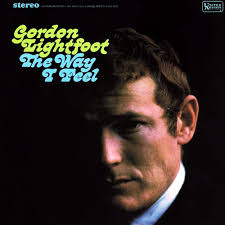 The CBC TV network commissioned Lightfoot to compose this marvelous song as part of Canada’s Centennial celebration in 1967. The tune tells the story of the Trans-Canada Railway’s construction, balancing the optimism of the 1860s railroad age with the cost in blood and sweat of the “navvies” who labored to get the project completed: “We are the navvies who work upon the railway, swingin’ our hammers in the bright blazin’ sun, layin’ down track and buildin’ the bridges, bendin’ our backs ’til the railroad is done…”
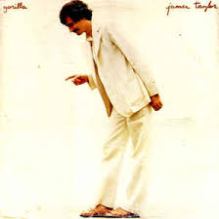 Taylor brought a new air of positivity to his sixth LP, “Gorilla,” vividly shown in the irresistible leadoff song, “Mexico.” The lyrics to this buoyant, Latin-influenced tune seem to describe his enjoyable experiences south of the border, but we eventually learn he has been fantasizing about the country and has yet to go there: “Woh, Mexico, it sounds so sweet with the sun sinking low, moon’s so bright, like to light up the night, make everything all right…”
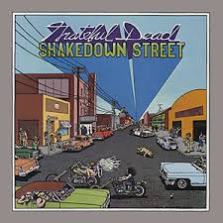 Guitarist Bob Weir and drummer Mickey Hart collaborated with Dead lyricist Robert Hunter to write a tribute to France for their “Shakedown Street” LP. Hunter had traveled to the Riviera the previous year and found it every bit as delightful as he anticipated it would be: “Way down in the south of France, all the ladies love to dance, clap their hands and walk on air, yeah, the feeling’s really there, won’t you take a little taste, raise it to your charming face?…”
 Mitchell’s “Dog Eat Dog” LP is full of angry diatribes, a far cry from the emotional heartbreak that made her famous throughout the Seventies. She was moved to write “Ethiopia,” she said, because of the too-brief concern shown by first-world countries during the terrible famine that has plagued the African nation: “Betrayed by politics, abandoned by the rains, on and on the human need, on and on the human greed profanes, Ethiopia, Ethiopia…”
 This tune, written by Hoyt Axton, may have been a big hit in the US for Three Dog Night, but as the title states, he doesn’t know much about Spain, since he’s never been there. But he knows enough to know that the indigenous music is lively and the native women are friendly: “Well, I’ve never been to Spain, but I kinda like the music, say, the ladies are insane there, and they sure know how to use it, they don’t abuse it, never gonna lose it, I can’t refuse it…”
 Since the breakup of Dire Straits, songwriter-guitarist Mark Knopfler has quietly yet reliably put out intelligent albums marked by his trademark slow-burn guitar stylings, English folk structures and well-crafted storytelling. On “Postcards From Paraguay” from his “Shangri-La” album, he describes the life of a criminal on the run: “I robbed a bank full of dinero, a great big mountain of dough, so it was goodbye companero and cheerio, I couldn’t stay and face the music, so many reasons why I won’t be sending postcards from Paraguay…”
 Cliff, was among the first reggae artists to have success with U.S. audiences. Like Bob Marley after him, Cliff combined a deep spiritual love of life with a fierce message condemning injustice and war. At the height of U.S. involvement in the Vietnam War, he released this song on his debut album: “His mother got a telegram, it was addressed from Vietnam, now mistress Brown, she lives in the USA, and this is what she wrote and said: ‘Don’t be alarmed,’ she told me the telegram said, “But mistress Brown, your son is dead…'”
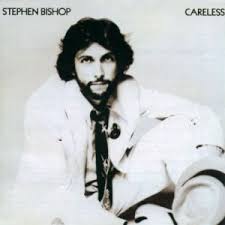 “Careless,” Bishop’s remarkable debut album, is full of gorgeous melodies and polished production. The #11 hit “On and On” got most of the attention, but I’m also partial to “Little Italy,” Bishop’s appreciation for the Italian neighborhoods that bring spirited cultural life to many major US cities: “Ah mama, am I holding on to the wings of a prayer, waiting for Rosie, tell me, do you think she cares, ah, dancing in the streets, in little Italy, ah, they’re all dancing in the streets in Little Italy…”
 Born in Scotland, Anderson also spent his formative years in England, and has lived in both countries off and on his whole life. His love of native folk music is visible through much of the lighter acoustic numbers in the Jethro Tull catalog, and this song, from his debut solo LP “Walk Into Light,” celebrates England’s natural beauty and traditions: “Somewhere in a town in England, could be Newcastle, Leeds or Birmingham… and were you made in England’s green and pleasant land?…”
 This is a powerful piece about a land most of us will never know or understand. Taylor’s lyrics do a superb job in giving a mini-history lesson and a look at what U.S. soldiers found during their tours there: “They fought against the Russians, they fought against the Brits, they fought old Alexander, talking ’bout him ever since, and after 9/11, here comes your Uncle Sam, another painful lesson in the far Afghanistan… I expected to be hated and insulted to my face, but nothing could prepare me for the beauty of the place…”
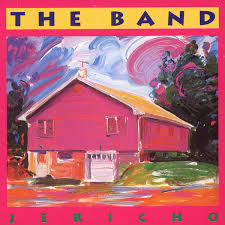 The Band had dissolved in 1977, but they reunited without Robbie Robertson to record the LP “Jericho.” On “Move to Japan,” drummer/singer Levon Helm was inspired to write about a friend who gave up on the U.S. job market in favor of Japan’s: “From the unemployment line I see lots to be done, and they’re taking all hands in the land of the risin’ sun, I love my mom and my apple pie, but sayonara Uncle Sam, hello Samurai, hey, we’re gonna move to Japan, the home of the working man…”
  Natural disasters and a military crackdown by the ruling government had brought about hundreds of thousands of deaths in East Pakistan, soon to be known as Bangla Desh. Harrison’s friend Ravi Shankar, a Bengali native, solicited help from the sympathetic former Beatle, and the result was the “Concert for Bangla Desh” charity event and album, and the “Bangla Desh” single: “Bangla Desh, Bangla Desh, where so many people are dying fast, and it sure looks like a mess, I’ve never seen such distress, now won’t you lend your hand, try to understand, relieve the people of Bangla Desh…”
 This amazing song from Simon’s “There Goes Rhymin’ Simon” LP turned out to be prescient about what we’ve been facing here in 2020, and I thought it would be the perfect song to welcome us back home after our trip around the world: “Well, we come on a ship they call the Mayflower, we come on a ship that sailed the moon, we come in the age’s most uncertain hour and sing an American tune, oh but it’s all right, it’s all right, we can’t be forever blessed, still tomorrow’s gonna be another working day, and I’m trying to get some rest, that’s all, I’m just trying to get some rest…”
 Hack's Back Pages