Ooh, I know that one!
In addition to publishing this rock music blog every Friday, I also have some fun on Facebook every morning when I post what I call the “daily lyrical puzzler.” I select a couple of lines of lyrics from a pop/rock song from the ’60s, ’70s or ’80s, and readers are encouraged to try to identify the song title and/or the artist. To keep others from seeing the answer prematurely, I ask readers to find a way to show me they know the answer without revealing the answer — quote more lyrics from the same song, make some reference to the artist, name the album it came from, that kind of thing.
 Since we’re all cooped up at home (or should be) and in need of a little entertainment, I thought I’d try a bigger version of the puzzler game by introducing the first installment of Hack’s Back Pages Monthly Lyrics Quiz to test your memory banks!
First, get a paper and pencil. Second, I have selected 20 different song lyrics for you to mull over. If you can identify any of them, write your answers down. Then and only then, scroll down to read the correct answers and see how you did.
I decided to keep this relatively easy by selecting songs that reached #1 on the Billboard Top 40 charts sometime in the ’60s, ’70s or ’80s. Future quizzes will include lyrics from songs that didn’t dominate the charts but were still very popular in their time.
You can play this game with your quarantine mates, or over the phone with a friend. At the end is the usual Spotify playlist of all 25 songs from the quiz. Don’t peek!
And here we go!
***********************
1 “Want some whiskey in your water? Sugar in your tea? What’s all these crazy questions they’re askin’ me?”
2 “She’ll only come out at night, the lean and hungry type, nothing is new, I’ve seen her here before…”
3 “So why on earth should I moan ’cause when I get you alone, you know I feel okay…”
4 “There is a blue one who can’t accept the green one for living with a fat one trying to be a skinny one…”
5 “The full moon is calling, the fever is high, and the wicked wind whispers and moans…”
6 “The man in the silk suit hurries by as he catches the poor old lady’s eye, just for fun he says, ‘get a job’…”
7 “As he rises to her apology, anybody else would surely know, he’s watching her go…”
8 “If I should call you up, invest a dime, and you say you belong to me, and ease my mind…”
9 “Here is that rainbow I’ve been praying for, it’s gonna be a bright, bright sunshiny day…”
10 “Feelin’ better now that we’re through, feelin’ better, ’cause I’m over you, I learned my lesson, it left a scar, now I see how you really are…”
11 “Hide it in a hiding place where no one ever goes, put it in your pantry with your cupcakes…”
12 “Hitchin’ on a twilight train, ain’t nothing here that I care to take along, maybe a song to sing when I want…”
13 “Every time I see your face, it reminds me of the places we used to go…”
14 “Love was out to get me, that’s the way it seemed, disappointment haunted all my dreams…”
15 “It was the third of September, that day I’ll always remember, ’cause that was the day that my daddy died…”
16 “Move yourself, you always live your life, never thinking of the future…”
17 “Ooh, your kisses, sweeter than honey, and guess what, so is my money…”
18 “Well, I can’t forget this evening or your face as you were leaving but I guess that’s just the way the story goes…”
19 “Your lights are on, but you’re not home, and your mind is not your own, your heart sweats, your body shakes, another kiss is what it takes…”
20 “There’ll be good times again for me and you, but we just can’t stay together, don’t you feel it too?…”
*****************
Have you made your guesses? If so, please SCROLL DOWN:
*
*
*
*
*
*
*
*
*
*
*
*
ANSWERS:
1 “Mama Told Me Not to Come,” Three Dog Night, 1970
 Early in his career, Randy Newman wrote this song about a teen attending his first drinking party and deciding he didn’t like it much. His version of the song appears on his “12 Songs” LP, and it’s quite different from the rendition that most people know. Three Dog Night were known for discovering cool songs by other songwriters and releasing their own arrangement that they turned into big hits.
2 “Maneater,” Daryl Hall & John Oates, 1982
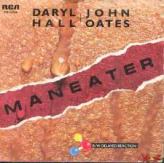 The duo combined to write this catchy danceable song that most people assume is about a woman. “It was originally written about New York City in the ’80s and its greed, avarice and spoiled riches, and then we changed it a bit to make it sound more like a woman because it would be more relatable,” said John Oates. It went on to become Hall & Oates’ biggest hit, staying at the top spot for four weeks in late ’82/early ’83.
3 “A Hard Day’s Night,” The Beatles, 1964
 After a very long day of recording that stretched well past midnight, Ringo Starr blurted out how tired he was: “Whew, it’s been a hard day…’s night!” Filmmaker Richard Lester decided it was a perfect title for his film about a day in the life of The Beatles in the midst of Beatlemania. John Lennon wrote it and Paul McCartney put on some finishing touches to the bridge. George Harrison added the jarringly wonderful opening chord.
4 “Everyday People,” Sly and The Family Stone, 1968
 The first major act to offer a racially diverse lineup was the perfect group to record Sly Stone’s cheerful song that urges equality and racial harmony. The lyrics mock the futility of people hating each other, urging instead “I am no better, and neither are you, we are the same whatever we do.” The song also includes the original line “different strokes for different folks,” which became a popular catchphrase that’s still in use 50 years later.
5 “One of These Nights,” The Eagles, 1975
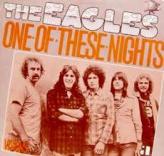 Glenn Frey, who started writing the music to this track while listening to Spinners and Al Green albums, was looking for a groove that merged rock and disco, with some biting guitar work. Meanwhile, Don Henley put the lyrics together while he was procrastinating about accomplishing a couple of personal goals. “It’s really about putting things off,” said Henley. Frey called it his favorite of the entire Eagles catalog.
6 “The Way It Is,” Bruce Hornsby and The Range, 1986
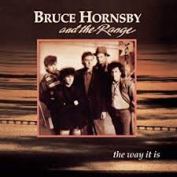 Hornsby’s first LP was one of the more successful debut albums of the ’80s, spawning three Top 20 singles, including “Every Little Kiss,” “Mandolin Rain” and the #1 hit “The Way It Is.” The title track makes several references to the civil rights movement and the segregation and inhumanity that reigned in the U.S. before and during that period. It was a stark reminder in the mid-’80s that we still hadn’t solved these issues.
7 “What a Fool Believes,” The Doobie Brothers, 1978
 Michael McDonald joined the Doobies in 1976 and helped the band evolve from straight rock to a more soulful, R&B groove. This tune, co-written by McDonald and Kenny Loggins, was recorded by both artists at the same time, and both performed it in concerts, sometimes together, but it was The Doobies’ version from their “Minute By Minute” LP that went to the top of the charts and won a Record of the Year Grammy.
8 “Happy Together,” The Turtles, 1967
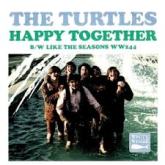 Critic Denise Sullivan succinctly summed up this irresistible song as “a most sublime slice of pop music heaven.” She noted its rock ‘n roll martial beat but said it “veered dangerously close to bubblegum.” The Turtles two primary vocalists, Howard Kaylan and Mark Volman, later joined Frank Zappa’s Mothers of Invention, and then morphed into their own ’70s group, Flo and Eddie.
9 “I Can See Clearly Now,” Johnny Nash, 1972
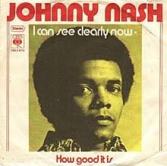 It wouldn’t be until the mid-’70s and Bob Marley’s arrival that reggae found a real following among American music fans. But in 1972, Houston-born Johnny Nash became the first non-Jamaican to record in Kingston, Jamaica and the first to have a reggae song reach the top of the US charts. The song, like most reggae tunes, have lyrics which speak proudly of happiness, peace and brotherhood.
10 “You’re No Good,” Linda Ronstadt, 1974
 Country star Clint Ballard Jr. wrote this tune back in 1963, and several artists charted with their versions in other countries but stalled on the charts here. Ronstadt, who had struggled along through her first four albums, signed with Peter Asher in 1974, and the resulting LP, “Heart Like a Wheel,” turned out to be her breakthrough. Both the album and this song, perhaps one of the best break-up songs ever, both reached #1.
11 “Mrs. Robinson,” Simon and Garfunkel, 1968
 Film director Mike Nichols asked Paul Simon to write songs for his upcoming film “The Graduate,” but Nichols didn’t like what Simon submitted, except for “Mrs. Robinson,” which Simon hadn’t finished by the time of the movie’s release, so you hear only the chorus (twice) in the film. Four months later, Simon and Garfunkel released the completed song on their #1 LP “Bookends,” and the duo became household names.
12 “Cracklin’ Rosie,” Neil Diamond, 1970
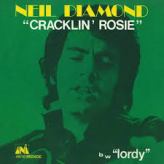 Here’s another song that seems to be about a woman, and some fans thought it was about a bottle of wine, but in fact, it’s about a Rosewood guitar Diamond bought from the proceeds of his early hits. It wasn’t the first song someone wrote about a favorite musical instrument, and it certainly hasn’t been the last either. The song appeared on Diamond’s first album of substance, titled “Tap Root Manuscript.”
13 “Photograph,” Ringo Starr, 1973
 Ringo got significant help from George Harrison on writing and arranging this tune. They recorded it during sessions for Harrison’s “Living in the Material World” LP in late 1972. The track features Harrison on guitar, the great Nicky Hopkins on piano and Beatle pal Klaus Voorman on bass. The poignant lyrics refer to a photograph that remind us that either someone has died, or a relationship has come to an end.
14 “I’m a Believer,” The Monkees, 1966
 The young, still-struggling Neil Diamond wrote (and recorded) this tune in early 1966. The Monkees’ musical director Don Kirshner heard it and decided his new made-for-TV faux rock group should record it for their second album, “More of the Monkees.” It ended up being the biggest selling single of 1967, and 34 years later, the ’90s band Smash Mouth had a minor hit with their own version of “I’m a Believer” from the “Shrek” film.
15 “Papa Was a Rolling Stone,” The Temptations, 1972
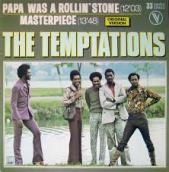 David Ruffin had left the famous Motown group in 1968, and now singer Eddie Kendrick was about to do the same, but not before the group scored one last blockbuster hit. The track is a seven-minute slice of what they called “cinematic soul,” about a deadbeat dad who left his wife and children, told from the viewpoint of one of the kids years later. The album version, with multiple instrumental solos, went on for nearly 12 minutes.
16 “Owner of a Lonely Heart,” Yes, 1983
 One of the best of the ’70s British progressive rock bands, Yes had run out of gas around 1980, but bassist Chris Squire and Alan White ended up teaming up with talented South African musician Trevor Rabin, using his songs and demos as the basis for a new group called Cinema. But once they convinced singer Jon Anderson to return, they decided to call it another Yes album despite its more commercial sound. The lead song reached #1.
17 “Respect,” Aretha Franklin, 1967
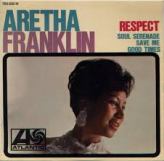 The late great Queen of Soul had been recording for Columbia for five years, wasting her volcanic talents on boring middle-of-the-road material. Once she jumped to R&B-leaning Atlantic in 1967, they immediately put her to work on energetic soul songs. Her first single on Atlantic, arguably her peak career moment, was a fierce call for basic human respect and became the unofficial anthem of the women’s movement.
18 “Without You,” Harry Nilsson, 1971
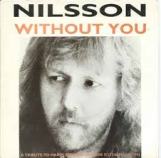 Pete Ham of Badfinger wrote this power ballad, which Badfinger also recorded, but when Harry Nilsson recorded his heartfelt version, it rocketed to #1 in early 1972 as the first single from the popular “Nilsson Schmilsson” album. It was very unusual for the great songwriter to cover another writer’s material, but in this instance, it proved to be a great choice for him.
19 “Addicted to Love,” Robert Palmer, 1986
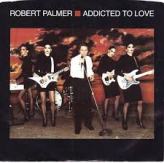 The distinctive music video of this song certainly helped push it to the top of the pop charts in 1986. It features Palmer at the microphone with four heavily stylized female models, appearing almost like mannequins but lined up as background singers with guitars. Palmer had planned on recording this track with Chaka Khan in a duet, but her label wouldn’t release her to do it, although she still got credit for the vocal arrangement.
20 “It’s Too Late,” Carole King, 1971
 Instead of bitterness, King’s song (with lyrics by collaborator Toni Stern) assumes a more practical, less emotional attitude of blamelessness about the end of a romantic relationship. It’s interesting to note that Stern wrote the lyrics just after her affair with James Taylor came to an end, for he plays guitar and sings on King’s “Tapestry” album. The song held the #1 spot for four weeks and won a Record of the Year Grammy.
 Many of singer-songwriter Al Stewart’s songs told stories with fictional characters from olden days, while other tunes focused on present-day concerns. Taking trips down memory lane can be enjoyable, he says, but he prefers to stay in the present and not get caught up reminiscing about things from the past you can’t change: “Well I’m not the kind to live in the past, the years run too short and the days too fast, the things you lean on are the things that don’t last, well it’s just now and then my line gets cast into these time passages…”
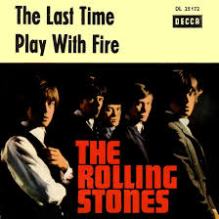 Even in their earliest days of songwriting, Mick Jagger and Keith Richards showed the ability to address weighty subjects that had universal relevance. On “The Last Time,” which cracked the Top Ten in the U.S., the lyrics reminded us how we can let opportunities slip away from us if we take too long too act on them: “Well, I told you once and I told you twice, that someone will have to pay the price, but here’s a chance to change your mind ’cause I’ll be gone a long, long time, well, this could be the last time, this could be the last time, maybe the last time, I don’t know, oh no…”
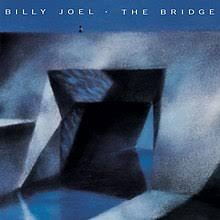 On his Top 10 album “The Bridge,” Joel scored three Top 20 singles, including “This is the Time,” a poignant reflection on how we love to cling to great times in our past despite the fact that time and circumstances inevitably change: “This is the time to remember, ’cause it will not last forever, these are the days to hold on to, ’cause we won’t, although we’ll want to, this is the time, but time is gonna change, you’ve given me the best of you, and now I need the rest of you…”
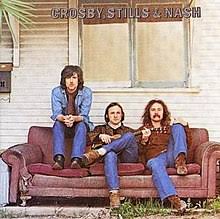 As David Crosby and Stephen Stills were first teaming up in 1968 and then recruiting Graham Nash to join them, the world outside seemed to be coming apart at the seams. The assassinations of Martin Luther King and Robert Kennedy inspired Crosby to write this disturbing treatise on how dark times can seem endless, even though better times arrive eventually: “Don’t you know the darkest hour is always just before the dawn, and it appears to be a long, appears to be a long, appears to be a long time, such a long, long, long, long time before the dawn…”
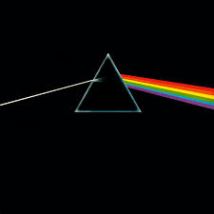 “Dark Side of the Moon,” one of the most successful rock albums in history, focuses lyrically on insanity, greed, death and the passage of time. In the song “Time,” songwriter Roger Waters examines how its passage can control one’s life, and offers a stark warning to those who remain focused on mundane aspects: “Ticking away the moments that make up a dull day, fritter and waste the hours in an off-hand way, kicking around on a piece of ground in your home town, waiting for someone or something to show you the way…”
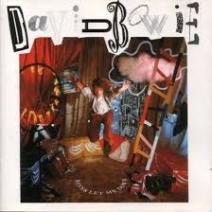 Bowie was always one of rock’s more serious-minded lyricists, from “Space Oddity” on his first album through “Heroes” and “Ashes to Ashes” in his Berlin trilogy. As he points out in the rather dystopian “Time Will Crawl” from his mid-’80s LP “Never Let Me Down,” time has a way of moving painfully slowly when things aren’t going well: “Time will crawl ’til our mouths run dry, time will crawl ’til our feet grow small, time will crawl ’til our tails fall off, time will crawl ’til the 21st century lose…”
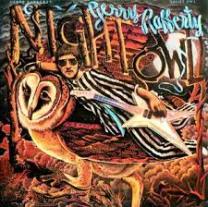 Perseverance is the theme of Rafferty’s irresistible 1979 hit single “Get It Right Next Time,” in which the narrator encourages us to maintain a positive outlook and keep trying after previous attempts have failed: “Life is a liar, yeah, life is a cheat, it’ll lead you on and pull the ground from underneath your feet, no use complainin’, don’t you worry, don’t you whine, ’cause if you get it wrong, you’ll get it right next time, next time…”
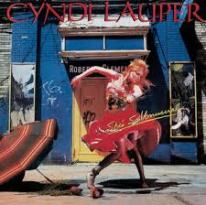 It’s always very comforting to know that you can count on another person to always be there for you when you need them. In “Time After Time,” Lauper’s pretty melody goes nicely with lyrics that underscore the importance of undying reliability: “You said, ‘Go slow,’ I fall behind, the second hand unwinds, if you’re lost, you can look and you will find me time after time, if you fall, I will catch you, I’ll be waiting time after time…”
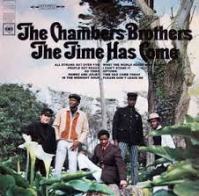 One of my favorite songs from the heady days of 1968 psychedelia was this strident track by The Chambers Brothers. The arrangement uses dramatic tempo changes as the vocalists repeatedly shout “Time!” Its lyrics speak about the need to avoid procrastination and act now before it’s too late: “Now the time has come, there’s no place to run, now the time has come, there are things to realize, time has come today…”
  Cleveland’s Michael Stanley not only wrote great rock songs that should have received far more airplay nationally than they did, he penned some solid lyrics that are certainly worthy of your attention. “Take the Time” is immediately relevant today, instructing us to remember the important things as we cope with life’s struggles: “Now is the hour, tomorrow might be too late, you gotta grab the moment, you just can’t hesitate… Take the time to love someone, take the time to make amends, take the time to make a stand, tase the time for your friends…”
 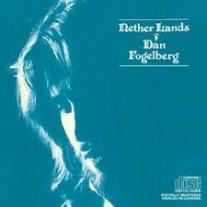 When heartbreak takes longer to heal than expected, any chance of a new relationship needs to be put on hold until we’re ready for it. Dan Fogelberg did a marvelous job of covering this topic in “Give Me Some Time,” a beautiful tune from his 1977 LP “Nether Lands”: “Give me some time now, I’ve just got to find how I’m going to forget her, and talk myself into believing that she and I are through, then maybe I’ll fall for you…”
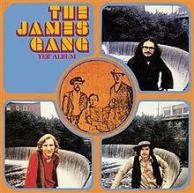 Joe Walsh’s earliest songwriting attempts came when he was honing his chops with his old group, The James Gang. Among the issues he tackled on the group’s debut LP “Yer Album” was the need to make productive use of one’s time: “I don’t have the time to play your silly games, walk to work each morning, live within a frame, now you’re trying to tell me I should be like you, watch your time, work nine to five, what good does it do?…”
 David LaFlamme served as chief songwriter, vocalist, violinist and flautist in this underrated San Francisco-based group. His ten-minute song “Time Is,” which concludes the band’s debut LP, offers a cornucopia of lyrical ideas about time: “Time is too slow for those who wait, time is too swift for those who fear, time is too long for those who grieve, and time is too short for those who laugh, but for those who love, really love, time, sweet time, precious time, is eternity…”
 Philosophers have been trying for centuries to figure out the meaning of life and how the passage of time plays a role in that quest. The rest of us sometimes just want to figure out whether this is the right time to begin a romantic relationship. John Waites’ band The Babys took a look at this in their hit single “Isn’t It Time” in the fall of 1977: “I just can’t find the answers to the questions that keep going through my mind, hey, babe! Isn’t it time?…”
 Before his premature death in a 1973 plane crash, songwriter Croce came up with a tune that’s, well, timeless in its profound simplicity. We think we have plenty of time in our lives to do what we want, but not if we struggle too long in determining what it is we want to accomplish: “If I could save time in a bottle, the first thing that I’d like to do is to save every day ’til eternity passes away, just to spend them with you, but there never seems to be enough time to do the things you want to do, once you find them…”
 Honorable mention:
 Hack's Back Pages