The lights go down, they’re back in town

Do you remember your first rock concerts?

I do, but that’s largely because I’ve always been an obsessive list maker.  I have lists of every album I ever bought, every CD I ever bought, every cassette mixed tape I ever made.

Beginning at age 13, I began a list of every music concert I’ve ever attended — who performed, who warmed up, where it was, when it was, and who went with me — and have continued maintaining that list over the 57 years since then.

concert

From 1968 to 2025, I’ve been to 415 concerts, many of which I reviewed as a rock music critic for newspapers in Cleveland, Ohio in the ’70s and ’80s. I was going to sometimes eight or ten shows a month at that point.

In my early years, though, I went to only about a dozen shows total before heading off to college. The bands I chose to see in concert covered a surprisingly wide range, from British progressive rock groups to mellow American singer-songwriter types. As I think back on those shows, I must say some of them made little to no impact, while others were so superb that they inspired me to spend my hard-earned cash on several hundred more concerts in the ensuing decades.

Here, then, are my memories — some vague, some vivid — of the first dozen music concerts I attended.  Perhaps these memories will get you thinking about your first concert experiences.  I encourage you to share with me your recollections of those first shows. I’d love to hear about them!

*********************

October 27, 1968:  Simon and Garfunkel, at Public Hall, Cleveland
sg-background

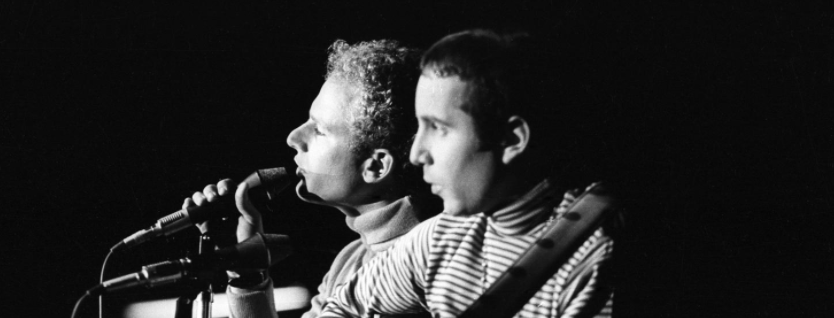
For my first live music concert, my friend and I went without our parents’ knowledge.  My friend Paul and I were only 13, and we went with his older brother and his friend, via his friend’s parents’ car, into downtown Cleveland on a Sunday night to cavernous Public Hall to enjoy the dulcet harmonies of Simon and Garfunkel.  It was a poor venue for their quiet music, but the crowd was reasonably respectful, so the sound was relatively okay.  We had a crummy vantage point, more than halfway back on a flat auditorium floor, craning our necks to see the two men singing along to Simon’s lone accompanying guitar.  They were touring in support of their hugely popular “Bookends” album, which included “America,” “Fakin’ It,” “Hazy Shade of Winter” and the #1 hit “Mrs. Robinson,” and I was thrilled to be in the same room with these two world-class harmonizers.  I just wish we’d had better seats so I could remember the show more clearly…

October 24, 1969:  Led Zeppelin, with Grand Funk Railroad, at Public Hall, Cleveland

What a difference a year makes!  I was in ninth grade, now buying a lot of rock music albums to complement my mellower stuff, and I was eager to check out Led Zeppelin, the new British hard rock/blues band I’d turned on to only six months before.  My friends Steve and Andy were hell-bent on going, and I eagerly agreed.  I have no idea how I got my parents to agree to let me go, but sure enough, the three of us headed downtown several hours early that Friday afternoon to the same huge venue I’d been to the previous year.  If you can believe it, tickets were only $4.00 each (!), and they were general admission (!!!), which meant we might get really good seats if we got lucky.  When they opened the doors, there was a crush of people fighting to get in, and once we survived that, we ran to claim seats in the 20th row.  Damn, I was so excited!  Eventually, the announcer said, “Will you please welcome, from Flint, Michigan, GRAND FUNK RAILROAD!!”  I thought, uh oh, did we come to the wrong place?  But no, this was a warm-up band, so I thought, “Wow, a bonus!”  This trio blew the hinges off the place for 45 minutes, songs like “Time Machine” and “Are You Ready,” and the crowd responded thunderously.  Me?  I was in such total awe, I was almost satisfied to leave at that point.  But of course we stayed, and soon, out came the soon-to-be-legendary Jimmy Page, Robert Plant, John Paul Jones and John Bonham, still young and hungry, and ready to slay us with songs from their brand new LP, “Led Zeppelin II,” featuring the new single, “Whole Lotta Love.”  We watched with our mouths agape as they played “Dazed and Confused,” “Bring It On Home,” “Heartbreaker,” “Good Times Bad Times” and others from their first two albums.  We inched closer to the front as the evening drew to a close, and by the encore, we were leaning against the stage, watching Plant howling into the microphone right above us as Page wailed away on his Gibson Les Paul only a few feet away.  A life-changing experience…

November 22, 1970:  Chicago, at John Carroll University, the suburbs of Cleveland

hqdefault-3

The huge 1970 hit singles “Make Me Smile” in May and “25 or 6 to 4” in August had transformed Chicago from a cult favorite to a mainstream favorite, but at this stage, they were still finishing off a set of gigs scheduled in college gyms.  John Carroll was a small college campus only 10 minutes from home in the Eastern Cleveland suburbs, so it was conveniently located. Two friends and I waited with the crowd outside and, again with general admission tickets, made our way into the gym and sat midway back on the left-side bleachers.  The band, with its original lineup, was in top form, with guitarist/vocalist Terry Kath, bassist/vocalist Peter Cetera and keyboardist/vocalist Robert Lamm leading the charge.  They performed just about everything from their widely praised first two LPs (1969’s “Chicago Transit Authority” and 1970’s “Chicago”) and a couple from the soon-to-be-released “Chicago III.”  I remember the band exceeding my expectations, especially on “Beginnings,” “Does Anybody Know Really Know What Time It Is,” “25 or 6 to 4” and the album tracks “Poem for the People” and “In the Country.”  Great show!!

August 29, 1971:  Roberta Flack, with Cannonball Adderley & Les McCann, Blossom Music Center, outside Cleveland

74309972

Blossom Music Center had opened in 1968 as “the summer home of the Cleveland Orchestra” in an idyllic plot of land between Cleveland and Akron.  The featured acts in those early years leaned toward jazz and folk artists, in keeping with the wishes of the conservative board of trustees.  (The profitable rock bands showed up in the mid-’70s and have dominated the proceedings pretty much ever since.)  My friend Paul, who had moved to Canada but was back in town for a visit, had become an aficionado of jazz, and he suggested we check out Blossom to see the Cannonball Adderley Quintet and Les McCann, who were warming up for Roberta Flack.  I knew next to nothing about any of these artists, but it sounded like fun, so I agreed.  Neither of us can remember much of anything about the music we heard that night — I later learned to like Flack’s songs, and now have enormous admiration for Adderley as well as McCann and his other jazz cohorts.  But all we seem to recall of that evening is the horrendous traffic jam getting in and out of the place (and it’s been a perennial problem at Blossom ever since)…

October 3, 1971:  Gordon Lightfoot, at Music Hall, Cleveland
gl

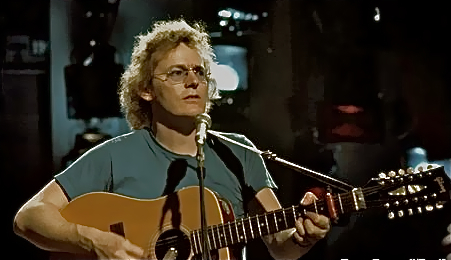
The downtown Cleveland facility that housed the 10,000-seat Public Hall also included a smaller, 3,000-seat theater called Music Hall, which featured artists and stage shows that attracted smaller audiences.  I got my first taste of that venue with my high school girlfriend Betsy when we went to see the great Gordon Lightfoot, Canada’s premier singer-songwriter.  We were crazy about him, and at the time, he was riding the success of his marvelous Top Ten hit “If You Could Read My Mind” and the impressive repertoire he’d built up since his debut in the mid-’60s.  We both recalled hearing just about every song we’d hoped to hear — “Minstrel of the Dawn,” “Summer Side of Life,” “Talking In Your Sleep,” “Me and Bobby Magee,” “Did She Remember My Name” and his tour de force story-song “Canadian Railroad Trilogy.”  He had a three-piece band accompanying him, and they put on a thoroughly entertaining show…

March 26, 1972:  Yes, at Lakeland Community College, outside Cleveland

h_00083173

I had become a big fan of Yes, the British progressive rock group, due to their amazing 1971 release, “The Yes Album,” which included the hit “I’ve Seen All Good People.”  Then they released the enormously popular “Fragile” LP in late 1971, and “Roundabout” become a big hit single in early 1972.  My girlfriend Betsy and I jumped at the chance to see them in March of that year, even though the concert was to be held at the brand-new Lakeland Community College gymnasium about 20 miles east of Cleveland.  We had to endure 15-degree weather as we waited outside for nearly two hours (again, general admission tickets), but that afforded us the opportunity to grab seats very close to the stage.  It was an excellent show, with most of our favorites in the set list (“Yours is No Disgrace,” “The Clap,” “I’ve Seen All Good People,” “Roundabout,” “Long Distance Runaround,” “Heart of the Sunrise,” “America”), but the sound was so insanely loud that we suffered ringing ears for several days afterwards.  This is the show that taught me to try to be more careful of how close I should sit to the loudspeakers…

April 28, 1972:  Paul Simon, Joni Mitchell, and James Taylor, at Cleveland Arena

In the spring of 1972, liberal candidate George McGovern was vying for the Democratic nomination in hopes of unseating President Richard Nixon, and Hollywood celebs like Warren Beatty were actively supporting McGovern.  He put together several fundraising events, one of which was scheduled in Cleveland, and to me, it seemed too good to be true:  Paul Simon, Joni Mitchell and James Taylor all on the same bill!  My friends and I stood in line for hours to successfully snag tickets, but it was clear from the very beginning that this would be a disappointing evening.  It was held at the decaying, acoustically miserable Cleveland Arena, a hockey/boxing venue that, although it had been the site of Alan Freed’s “Moondog Coronation Ball” in 1952 (widely considered the world’s first rock concert), was well past its prime and was torn down only five years later.  Simon, who had just released his solo debut LP three months earlier, played his hits (“Mother and Child Reunion” and “Me and Julio Down By the Schoolyard”) and a few Simon & Garfunkel classics, but left prematurely due to the rude, indifferent crowd.  Mitchell fared even worse — her music was best suited to small halls and respectful audiences, and the Cleveland Arena crowd was apparently not there for the music.  Only Taylor had much success getting through to the hob-nobbers — he was riding the success of his huge “Sweet Baby James” and “Mud Slide Slim” albums and the Top Five “Fire and Rain” and “You’ve Got a Friend” hit singles…

August 17, 1972:  Bread, with Harry Chapin, at Blossom Music Center, outside Cleveland

hqdefault-4

Bread, the popular soft-rock group from LA, were at the peak of their success in the summer of ’72, thanks to multiple Top Ten hits like “Make It With You,” “It Don’t Matter to Me,” “If,” “Mother Freedom,” “Baby I’m-a Want You,” “Everything I Own,” “Diary” and “The Guitar Man.”  I persuaded my former flame Jody to join me on a triple date with two other friends and their girlfriends for this second concert experience at Blossom.  Harry Chapin, brand new and enjoying success with the hit “Taxi,” warmed up admirably, and Bread put on a solid, thoroughly enjoyable show, according to our collective memory.  Our most vivid recollection was of my friend’s station wagon overheating as we tried to leave, which resulted in us not arriving home until nearly 3 am, to our parents’ consternation (no cell phones back then!)…

October 21, 1972:  Jethro Tull, with Gentle Giant, at Public Hall, Cleveland

guild1

This was my ninth concert, but technically only my second rock show.  Jethro Tull was hugely popular with the stoners and most critics, and their most recent LP at the time, “Thick as a Brick,” had, against all odds, somehow reached #1 on the charts in May 1972, despite it consisting of one 45-minute-long piece of music.  The group, led by the indefatigable flautist/singer Ian Anderson, performed it that night in its entirety before also treating the crowd to several tracks from 1971’s classic “Aqualung” album (“Cross-Eyed Mary,” “Wind Up,” “Locomotive Breath”).  Two friends joined me for this amazing concert, and other friends were there that night as well.  Our seats, sadly, were only average, halfway back on the left side of the Public Hall auditorium.  I have little memory of Gentle Giant’s opening set, but we all look back fondly on seeing Tull for the first time. They’re a visually memorable group, especially Anderson, and they went on to become one of the biggest concert draws in the world for a spell in the ’70s.  I have since seen the band in concert more than two dozen times, and Anderson still releases new music as Jethro Tull today in 2025…

April 17, 1973:  James Taylor, at Kent State University, Kent, Ohio
hqdefault-5

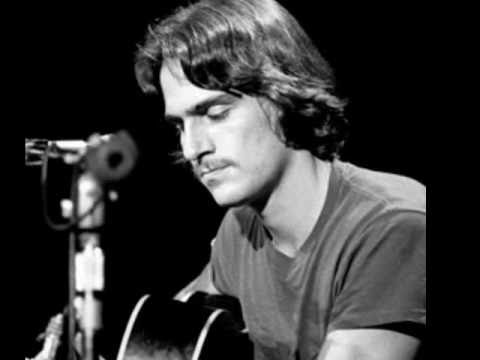
Kent State, famous for the polarizing National Guard shootings in May 1970, is an hour’s drive south of Cleveland, but my friend Ben and I loved James Taylor enough to make the drive down there one rainy night our senior year of high school.  Taylor was late in arriving, and put on a rather muted show, which was mildly disappointing, because his most recent record, 1972’s “One Man Dog,” had plenty of additional instrumentation, including horns.  But that night, it was pretty much just Taylor sitting quietly on a stool with almost no accompaniment.  We certainly enjoyed it anyway, even if only because Taylor’s songs back then were so good (“Country Road,” “Long Ago and Far Away,” “Don’t Let Me Be Lonely Tonight,” “You Can Close Your Eyes”)…

April 1973:  George Carlin, with Kenny Rankin, Allen Theatre, Cleveland
MV5BMTY3NTU3NDM5MF5BMl5BanBnXkFtZTcwNjIxMDU4Mg@@._V1_UY317_CR132,0,214,317_AL_

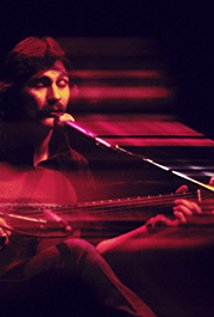
This almost doesn’t qualify as a music concert, because my three friends and I were there at the storied Allen Theatre to laugh at the outrageous comedy of George Carlin, who didn’t disappoint (his “Seven Words You Can’t Say on Television” was all the rage at the time).  But warming up that night was label mate Kenny Rankin, an astonishingly talented singer-songwriter unknown to me at that point, but I quickly became a devotee. His song “Peaceful,” as covered by Helen Reddy, was then climbing the charts, and he wrote dozens of other wonderful songs as well. He also was adept at covering songs by The Beatles and others on albums like “Like a Seed,” “Silver Morning,” “Inside” and “The Kenny Rankin Album” throughout the ’70s…

July 10, 1973:  Stephen Stills/Manassas, at Blossom Music Center, outside Cleveland

Menassis-1973-6

About ten of my friends and I made the spontaneous decision on this night to head out to Blossom and buy tickets at the box office (I think they were only $4 each) and party on the huge lawn that faced the outdoor amphitheater.  We all knew and admired Stephen Stills for his work with Crosby, Nash and Young, but I don’t think too many of us knew much of the material he did with his erstwhile country-influenced band Manassas at the time.  (I have since gone back tardily and am a big fan of the original double LP “Manassas” from 1972, which includes The Byrds’ Chris Hillman, CSNY’s Dallas Taylor and Al Perkins from The Flying Burrito Brothers, among others).  I remember it was a wonderful, good-vibe kind of evening, with plenty of funny cigarettes being smoked…

Share your memories!  Music matters!

****************************

The Spotify playlist includes two or three songs by each of the acts I saw at these 12 shows. I selected songs from the artists’ early catalogs that had already been released at the time of the concerts and definitely were (or might have been) part of their set lists in 1968-1973.

When we stand together as one

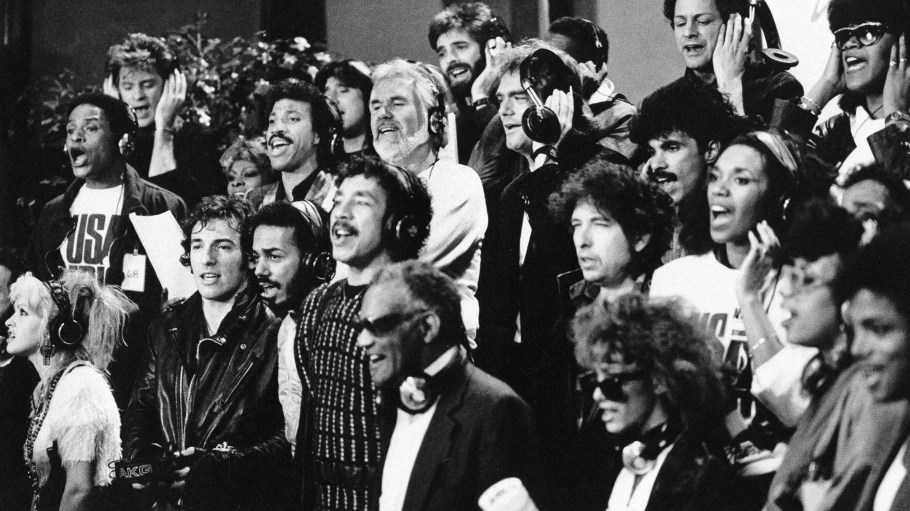
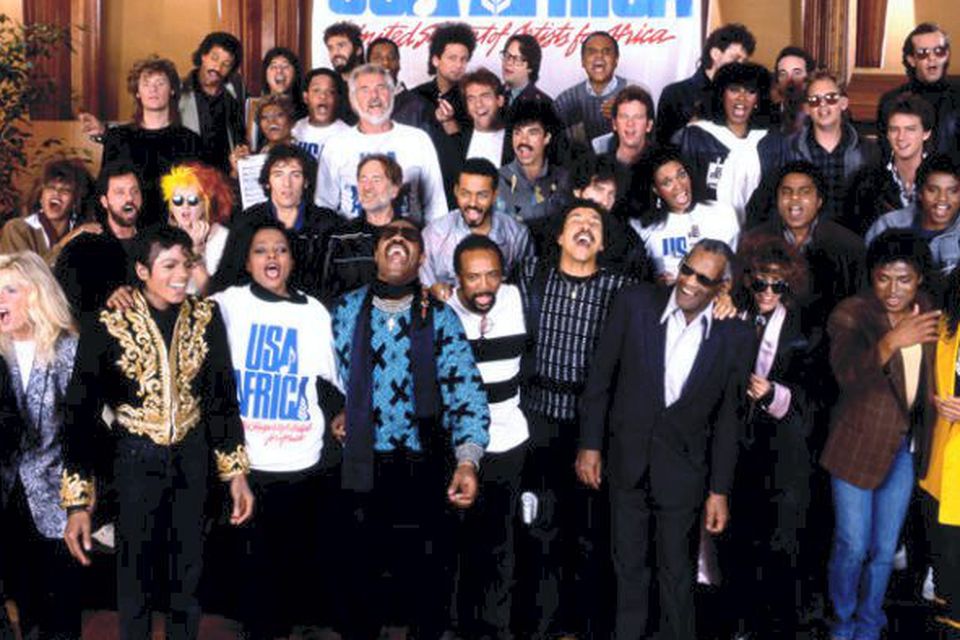
Forty years ago this week, one of the most extraordinary collaborations in popular music history occurred in Los Angeles when 45 performing artists — 30 of whom were the biggest stars of that era — convened in a Hollywood studio to record a song for charity that still ranks as one of the music industry’s biggest commercial successes.

We Are The World,” written by Michael Jackson and Lionel Richie, became the fastest-selling U.S. single of all time and ultimately raised upwards of $40 million in humanitarian aid to fight the famine that had claimed a million lives in Eastern Africa. Considering the logistical challenges and the outsized egos of many of the people involved, perhaps the most remarkable thing about it was that they were able to pull it off at all.

*********************

In November 1984, Irish singer-songwriter Bob Geldof saw a BBC report about a terrible famine wreaking havoc on the impoverished population of Ethiopia. Motivated to do something about it, he contacted Scottish songwriter/producer “Midge” Ure about pulling together musical artists from across the United Kingdom to record a song he was writing to raise money to combat the dire situation.

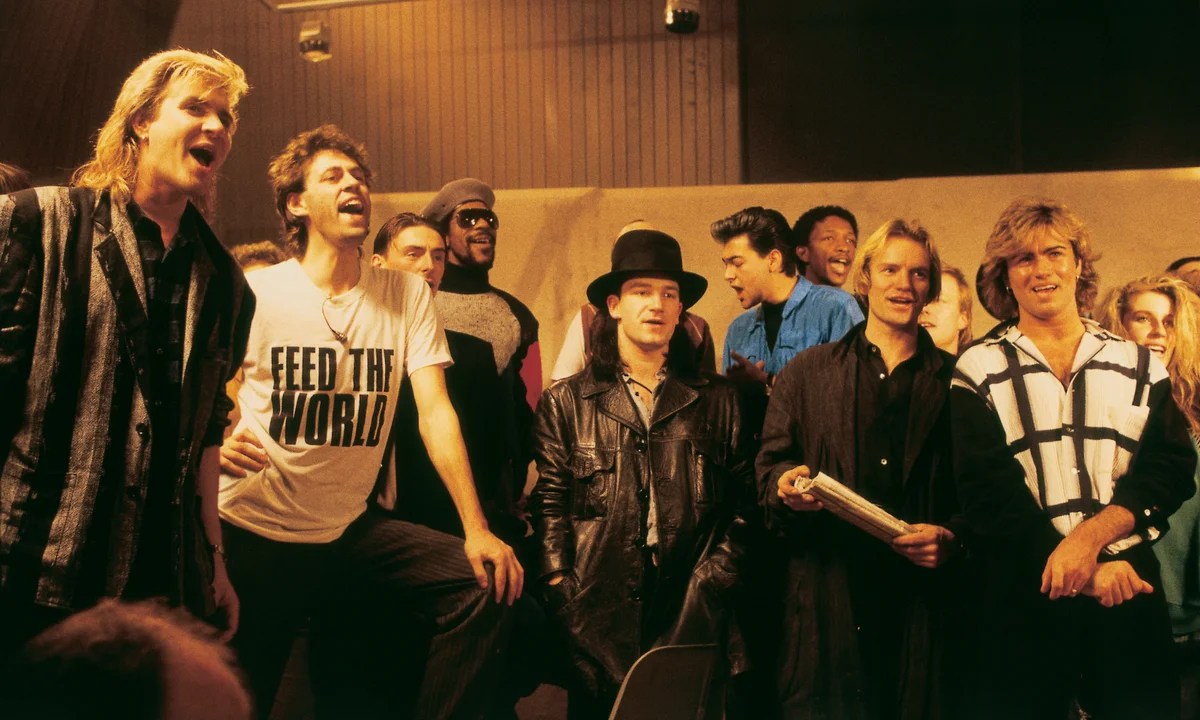
Bob Geldof (second from left), Bono, Sting, George Michael and others

They were able to enlist Sting, Bono, Boy George, Phil Collins, George Michael, and members of Duran Duran, Spandau Ballet and Geldof’s Boomtown Rats to show up at a London studio where, in one day, they became Band-Aid and recorded “Do They Know It’s Christmas?”, which was released a couple weeks later and became one of the biggest singles in UK history, raising nearly $10 million dollars, wildly exceeding Geldof’s expectations.

In the U.S., Harry Belafonte, the iconic singer/actor/social activist, watched this closely and was inspired. He approached Ken Kragen, LA’s most connected music manager. “Thousands of people are dying in Africa, right now,” Belafonte said. ”We can, we must, do something about that. Maybe we need to stage a charity concert to provide both moral and financial support.”

Kragen was skeptical. “I doubt that a concert would make as much impact or raise as much money as a charity single,” he said. “We could take Geldof’s concept and do it here, with the greatest stars in America.” Kragen approached Richie, his client at the time, who embraced the idea and suggested they get the great Quincy Jones to produce it.

“Quincy is a master orchestrator — of music and of people — and he had the respect of every musician on the planet,” said Richie. “Quincy immediately thought of Stevie Wonder and figured the two of us could write the song.” Wonder was busy with his own project, but Jones found Michael Jackson very receptive to getting involved, so Richie and Jackson huddled to decide what kind of song it should be.

“A rocker? A ballad?” mused Richie. “We knew it needed to be relatively easy to sing, and memorable, and anthemic. We ended up with a mid-tempo pop melody that would give an array of stars the chance to show off their vocal chops. Ultimately, we wanted it to be big and almost stately.” Over the course of a week, the twosome fashioned the melody, toyed with the instrumentation (piano, drums, strings), tweaked the words for verses and chorus. The chorus and title, “We are the world,” was “an appeal to human compassion,” said Jackson, “designed to be sung together as children of the planet coming together as one.”

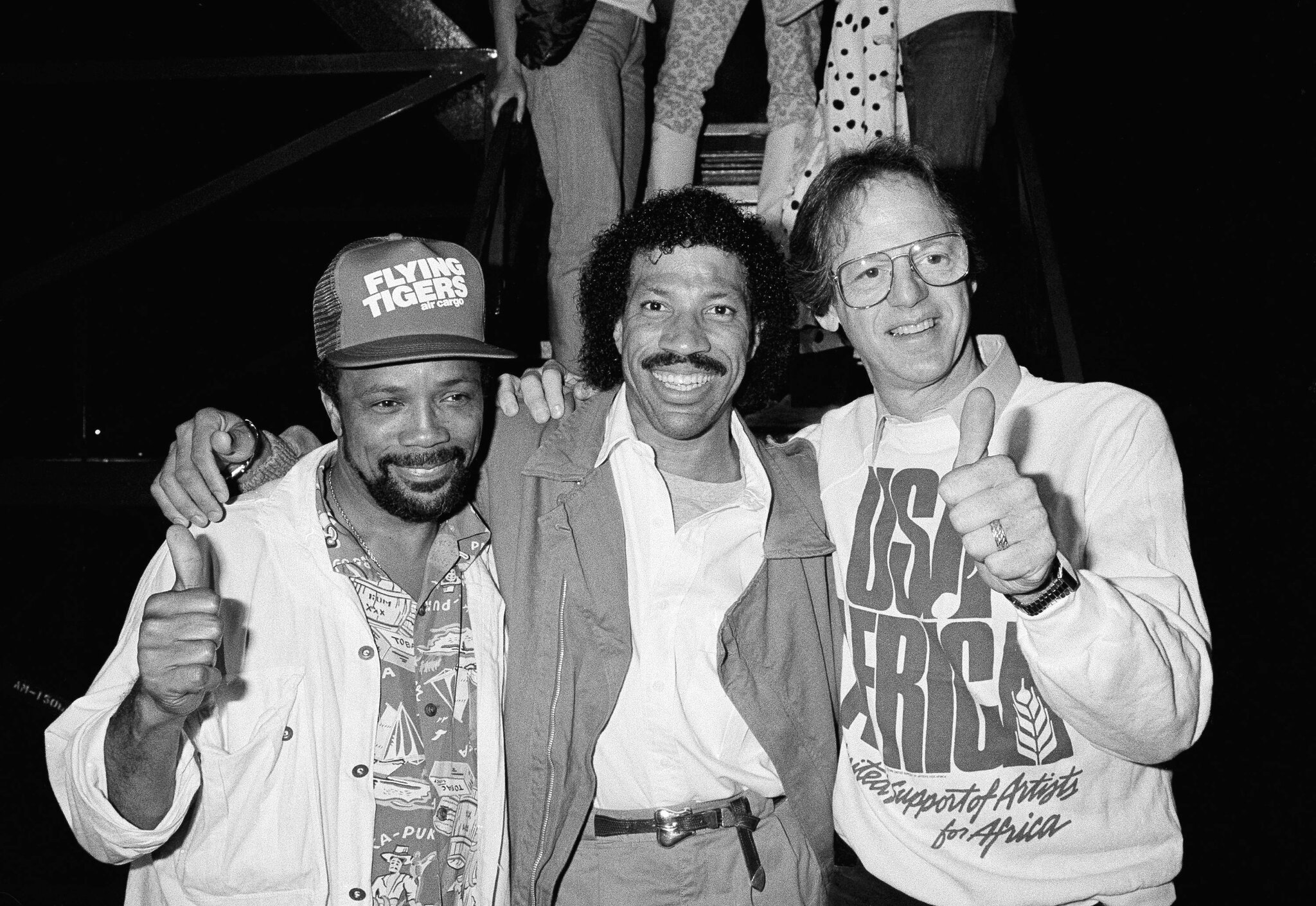
Project organizers Quincy Jones, Lionel Richie and Ken Kragen

Meanwhile, Jones and Kragen were brainstorming about who they wanted as their singers beyond Jackson, Richie and Wonder. Because this was about black populations in Africa who were starving and dying, they had originally focused on the need to get black artists involved, but they soon saw the wisdom in broadening their scope to include white artists as well. “Artists’ schedules are typically planned months in advance, so we wondered how in hell we could get them to participate,” said Kragen. “That’s when we landed on the perfect solution: The American Music Awards.”

The AMAs were already slated for Monday, January 28, in Los Angeles, and coincidentally, Richie had been invited to serve as the host. “Those awards cover multiple genres — rock, R&B, pop, country — so that event would be bringing many major stars to LA as nominees and as presenters,” said Jones. “It’s already on their schedules to be in town. We knew we needed to schedule the session for that night, after the live awards show. It was our only choice.”

They knew they had to work fast, so they got on the phones and reached out to some of the biggest names at that time, and got a “thumbs up” from Diana Ross, Hall and Oates, Cyndi Lauper, Ray Charles, Paul Simon, Kenny Rogers, Steve Perry, Tina Turner, Willie Nelson, Kenny Loggins, Billy Joel, James Ingram, Dionne Warwick, Kim Carnes, Al Jarreau and Huey Lewis. Some artists were on tour and unavailable, or were hesitant to be a part of it: Madonna, Prince, Van Halen, David Byrne, among others.

The organizers also wanted Bruce Springsteen, who would be completing a huge tour the previous day. “I usually take time off after a tour, but I knew this was important, so I told ’em, ‘I’m in,'” he said. With Springsteen signed up, they set their sights on Bob Dylan. “He’s the consummate ‘concerned musician,'” said Richie, “so he was a natural fit, but he’s kind of a control freak and likes to call his own shots. But we got him to agree to be there.”

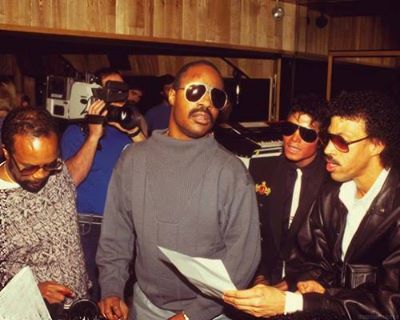
Jones, Jackson, Richie and Wonder convened in a secret session on January 22 at Kenny Rogers’ Lion Share Studio to record the basic backing tracks with guide vocal. Jones used pianist Greg Phillinganes, bassist Louis Johnson and drummer J.R. Robinson, who had worked together on Jackson’s “Don’t Stop ‘Til You Get Enough” session, among others. Richie and Jackson added their vocals in six takes, and they made copies of the tape to ship overnight to the invited performers so they could learn the song beforehand.

Kragen and Jones had secured A&M Recording Studios in Hollywood for the all-important January 28 post-AMA Show session. They made it crystal clear to everyone involved that there could be no leaks about where this was going to take place. “A&M was the perfect location, with phenomenal sound,” Kragen said, “but if that showed up in the press, it could destroy the project. We couldn’t have a mob of media and onlookers there when the stars arrive. This had to be hush-hush.”

Jones brought in veteran vocal arranger Tom Bahler to help determine which artist would sing which line of the song. “That was a real challenge,” Bahler recalled. “Nobody had ever had 45 people in the same room before, and there were going to be so many strong creators there. Stevie Wonder, Diana Ross, Cyndi Lauper, all these strong-willed creative people…it had the potential to be chaos. So we had to have a leader, and that was Quincy. He had the ability to command everyone’s respect and keep people focused on the mission.”

Said Bahler, “Quincy told me, ‘Lionel was the first one to write this, so he should be the first voice we hear. And then because Michael came in and they finished it together, Michael should sing the first chorus.’ Then Quincy chuckled and said to me, ‘Then I think you should bring Diana in for the second half of the first chorus, because some people think she and Michael are the same person!’ Other than that, the rest was left up to me.”

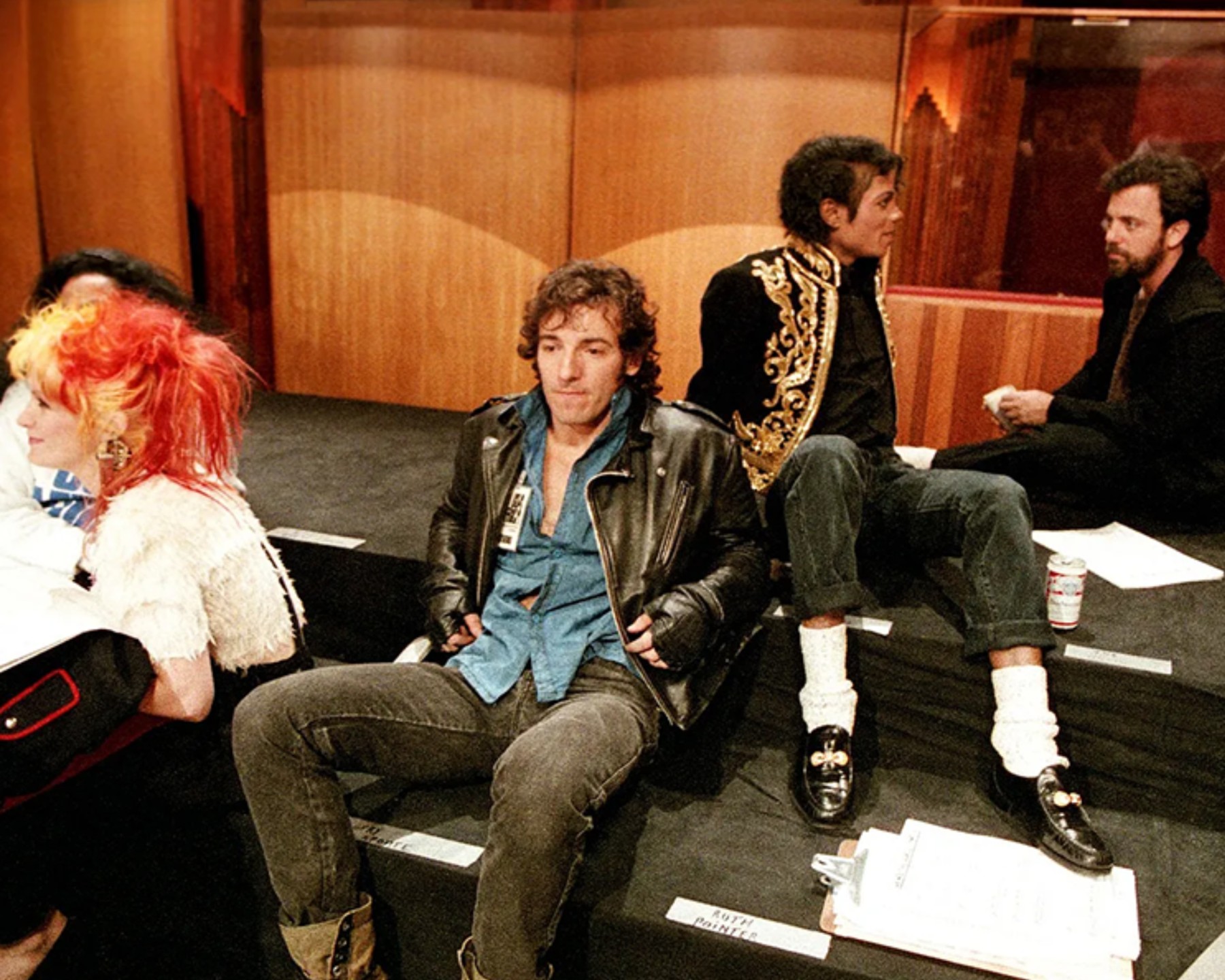
Cyndi Lauper, Bruce Springsteen, Michael Jackson and Billy Joel take a breather during the session

Bahler studied the vocal styles and ranges of the artists who would be on the record, trying to match each line to the right singer. “Some of them would have only half a line to sing, but still, it had to be right for their sound, they style, their range. I put Tina on a low-register line because she has such warmth down there. Steve Perry, his high range, he’s just electrifying up there. Kenny Loggins could sing with an edge, so it would sound great coming after Springsteen. Huey Lewis, I love Huey, but not everybody was going to get a solo line. All these sorts of things had to be taken into account.”

To my ears, the thing about “We Are the World” that still sends chills up my spine is the juxtaposition of such varied, quality voices, one line after another. Mahler did a simply spectacular job selecting the right singers in various groupings on the verses and choruses. First came Richie, Wonder and Paul Simon, followed in verse two by Kenny Rogers, James Ingram, Tina Turner and Billy Joel. Brilliant! After the Jackson/Ross pairing on the first chorus, the third verse brought the unusual transition of Dionne Warwick to Willie Nelson to Al Jarreau, followed by the thrilling second chorus — Springsteen’s growl and the soaring pop of Kenny Loggins, Steve Perry and Daryl Hall. Incredible! Then Jackson returned for a line before handing off to Huey Lewis, Cyndi Lauper and Kim Carnes, which segues into the third chorus, where 30 to 40 voices sing in unison for the first time. So powerful!

Richie huddles with Daryl Hall, Wonder, Jones and Paul Simon early in the session

The grand choir of voices for the chorus in the song’s second half would include not only those who would sing solo lines, but others who were there like Bette Midler, Waylon Jennings, Lindsey Buckingham, Smokey Robinson, Jeffrey Osborne, Sheila E, John Oates, Dan Aykroyd, The Pointer Sisters, the rest of The Jackson Five, the members of Huey Lewis’s band The News, and Belafonte and Geldof.

Recalled Springsteen, “The song itself was very broad, which it has to be if you’re carrying all those different voices and ranges.”

Richie said he expected Jones would want each soloist to go into the booth one by one to sing their line, but Jones told him, “Oh hell no, we’ll be here for three weeks. We’ll put everyone in a circle in the room with all the mics, and everyone’s going to sing looking at each other.” Richie’s jaw dropped at that, but Jones said, “Taking this kind of chance is like running through hell with gasoline drawers on, I know, but I’m not afraid. Still, it’s deep water. We’ll have to clamp down on outside noises, laughing, jewelry rattling, even creaks on the floor from feet tapping.”

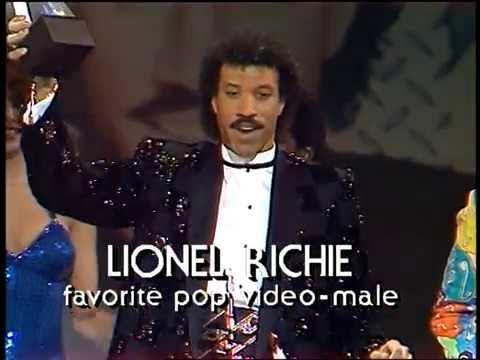
It’s astonishing, really, when you think about what Richie was being asked to do on January 28th. He had to host the AMAs, and this was back when network TV was the only thing happening, so it was a very big deal. He was required to be charming at the pre-show press conference. He performed two songs during the show. He even had to make graceful acceptance speeches when he ended up winning several major awards. He had to maintain his cool on live TV for three-plus hours…and then he had to dash off to this high-stakes, high-pressure secret recording session and help Jones keep some semblance of order and positivity among all these assembled prima donnas.

Jones had a brilliant idea before anyone arrived at the session. He made a sign and hung it on the studio entrance that admonished everyone: “Check your egos at the door.” Somehow, for the most part, it seemed to work, partly because many of the participants were uncertain and a little nervous about what was going to happen, or in awe of the legendary talent that was assembled.

Here are some quotes from those who were there:

Smokey Robinson: ”Everyone you could think of who was in show biz at that time was at the recording.”

Huey Lewis: “A car took me there. I had no clue who was going to be there. When I realized it was the cream of the crop of pop music at that time, well, it was overwhelming.”

Bruce Springsteen: “It was intoxicating just to be around that group of people.”

Billy Joel: “Whoa, that’s Ray Charles. That’s really him. That’s like the Statue of Liberty walking in.”

Kenny Loggins: “When I saw Diana Ross, I thought, ‘Okay, we’ve hit a different echelon here.’ At one point, we’re on the risers, all these legends, and Paul Simon, who’s on one of the lower steps, looks up and says, ‘If a bomb lands on this place, John Denver’s back on top!'”

Said Richie, “By about 10 p.m., everyone’s assembled. We could all feel the incredible energy in the room, but also a low hum of competition. Let’s not pretend the egos weren’t still there. I found it interesting that the biggest stars seemed almost timid in that environment.”

Jones summoned Geldof to the front of the room to remind everyone of the meaning behind the mission. “I don’t want to bring anybody down,” he said, “but maybe it’s the best way to make what you’re feeling why you’re really here tonight come through in this song. Let’s hope it works.”

Richie recalled, “The tension was huge because we didn’t have a lot of time. Technically, we need to be really together, and we had to move fast. We had one night only to get this right.”

With 60-plus people in the room and several 5,000-watt lights so the proceedings could be captured on film, it got pretty warm, and people had to be quiet and be team players. “Shooting video and recording the song at the same time,” noted Richie. “Could anything go wrong? Absolutely! We were flying by the seat of our pants. I was working the room, keeping people in good spirits, running on pure adrenaline.”

Jones was adamant about silencing any troublemakers who wanted to make changes. “With 45 artists, you’ll have 45 different versions of the song. My job was, under no circumstances will we allow this to veer off what it is. When Stevie piped in with, ‘I think we need some Swahili somewhere in the song,’ I had to dissuade him. Geldof told him, ‘There’s no point in talking to the people who are starving. You’re talking to the people who’ve got money to give.” That’s when Ray Charles stood up and said, “Okay, ring the bell, Quincy!”, which was his way of saying, “Let’s get going here.”

They recorded the full-choir chorus sections first, which took about two hours. At one point, Jones publicly thanked Belafonte for being the impetus behind the project, and everyone began singing the words to his signature song from 1956: “Day-o, day-o, daylight come and me wanna go home.” This broke the tension, and the next take was successful, which allowed 15-20 people to leave, thinning out the room a bit.

Then came the solo lines, which generally went more smoothly. Richie said, “Quincy was right about that intimidating circle of life, everyone facing each other. When it’s your turn, you’re going to give 200% because the whole class is looking at you and you wanted so badly to get it right!”

By then, it was approaching 5:00 a.m. Saving the best for last, Dylan, Wonder, Springsteen and Ray Charles were tapped to do the solos during the repeated choruses as the song heads slowly toward the fadeout. (Truth be told, Charles and Wonder came in a couple days later to punch in better performances, but Springsteen and Dylan did theirs that night.)

Said Bahler, “God must have tapped me on the shoulder to take the record to another level by suggesting that I ask Bruce Springsteen to supply solo answers to the choir melody on the title choruses. Because of the textures and intensity of his truly unique vocal equipment, especially in this register, he was the perfect person for it.” Later, Jones chose to cut out the choir for nearly a minute and make that part a call-and-response between Wonder and Springsteen, and it worked beautifully.

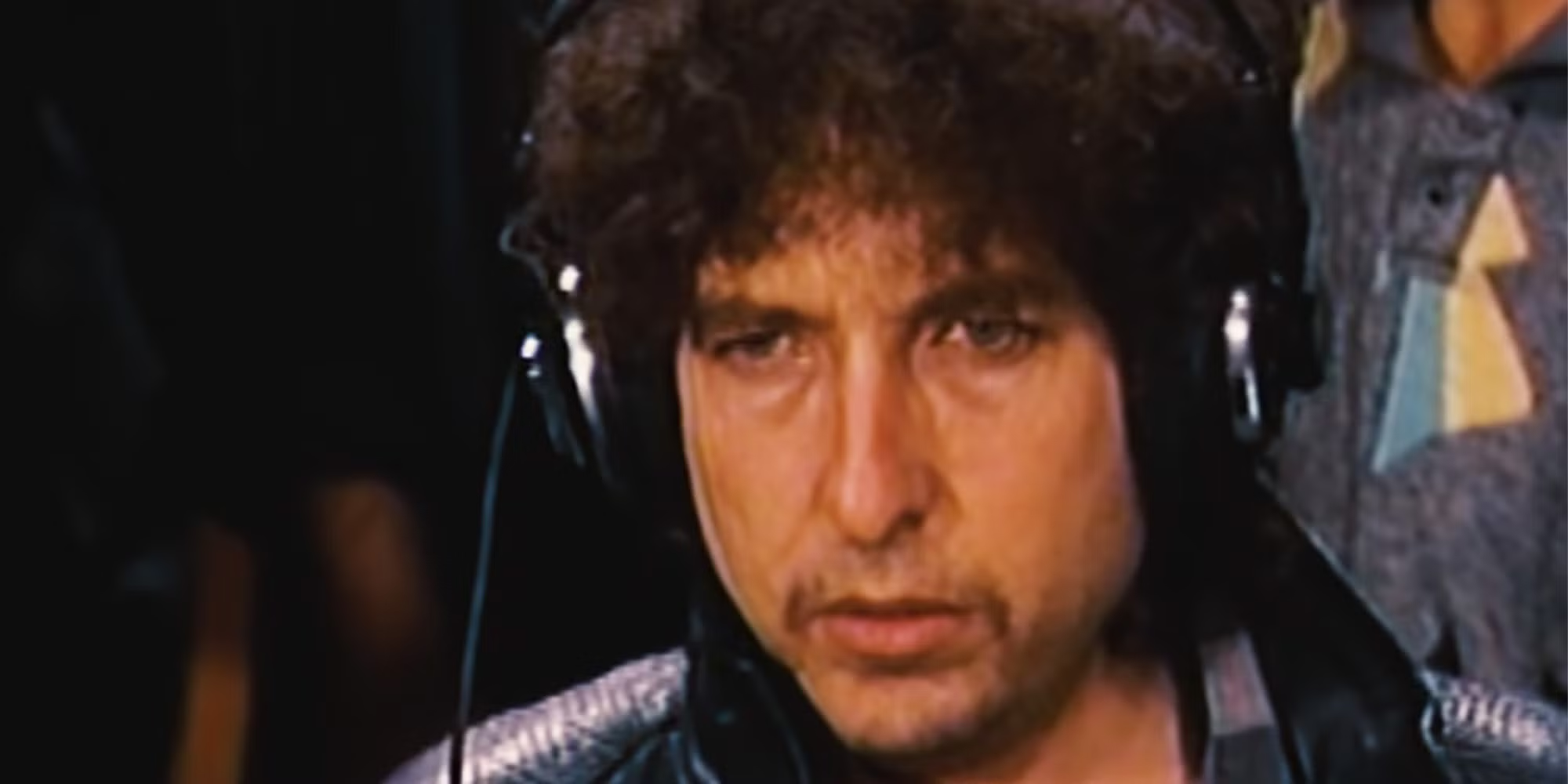
Perhaps not surprisingly, Dylan turned out to be the most uncomfortable with his assignment, struggling to come up with what they were looking for from him on the line “There’s a choice we’re making, we’re saving our own lives, it’s true we make a better day, just you and me.” It was Stevie Wonder who helped ease Dylan’s anxiety, mimicking Dylan’s unique vocal approach, which caused him to chuckle, “I must be in a dream, man.” When he finally nailed it, he sighed, “That wasn’t any good,” but Jones and the others loved it.

After everyone had left, said Bahler, “Diana Ross was still there, and I heard her crying. Quincy said, ‘Diana, are you okay?’ She said, “I just don’t want this to be over.”

The finished product received mixed reviews. “‘We Are The World’ sounds an awful lot like a Pepsi jingle,” grumbled one critic. Another said, “The superstars calling themselves USA for Africa were proclaiming their own salvation for singing about an issue they will never experience on behalf of a people most of them will never encounter.” But Stephen Holden of The New York Times wrote, “It’s a simple, eloquent ballad, a fully-realized pop statement that would sound outstanding even if it weren’t recorded by stars.” He praised the “artfully interwoven vocals that emphasized the individuality of each singer.”

Distributing food in Ethiopia turned out to be a logistical and political nightmare, and some of the money raised was inevitably squandered. And there’s no denying that, in some circles, the project was perceived to have a certain amount of distasteful self-congratulations about it. But Jones had this to say: “Music is a strange animal. You can’t touch it, can’t smell it, can’t eat it. It’s just there. ‘Beethoven’s 5th’ keeps coming back for 350 years. Music has a very powerful spiritual energy, and in this case, it definitely rescued a lot of lives.”

An important footnote: Much of the information and quotable material found in this post were gleaned from a fascinating, must-see documentary, “The Greatest Night in Pop,” directed by Bao Nguyen, which debuted last year on Netflix and is still available there. One review called it “a briskly paced celebration of a one-of-a-kind musical moment, which uncovers new stories while reminding viewers of the humanitarian vision that made it all happen.” I strongly urge you to check it out.