Believe me, the sun always shines on TV

“Just sit right back and you’ll hear a tale, the tale of a fateful trip…”

Of all the TV theme songs that have come and gone over the decades, probably none has been so ingrained into the minds of my generation as the theme to “Gilligan’s Island.”  The show lasted only three seasons (1964-1967), but the combined music and lyrics created an insidious “ear worm” that burrowed its way permanently into the subconscious of anyone who grew up in the ’60s, and even some in the ’70s and ’80s as well.

And there were others.  The ’60s and ’70s were full of TV programs with theme songs with lyrics that basically explained the shows’ premise in a catchy, sing-songy way:  “Petticoat Junction” (1963-1970), “The Patty Duke Show” (1963-1966), “Green Acres” (1965-1971), “Flipper” (1964-1967), “The Brady Bunch” (1969-1974), “Mister Ed” (1961-1966), “The Addams Family” (1964-1966), “F Troop” (1965-1967), “The Mary Tyler Moore Show” (1970-1977) and “The Jeffersons” (1975-1985).

Yet none of these songs ever proved popular enough to be played on pop radio, but then again, they weren’t really meant for that.  Other theme songs, on the other hand, turned out to be far more suitable as Top 40 hits and were consequently released as singles, many achieving pop chart success.

Most involved lyrics, but a select few instrumental pieces also made the charts.  All told, there have been 27 TV show theme songs that have reached the Top 30 pop charts over the years between 1953 and 1992, mostly in the ’60s and ’70s. Some of them will likely be unknown to you; others you will probably be able to sing every word. I have chronicled them all here, and I urge you to jump to the end and kick on the Spotify playlist so you can listen as I attempt to bring back some fun memories for you.

Next week, I’ll be sharing more great TV show theme music, both vintage and more recent, that didn’t make the charts but were mighty memorable songs.

*****************************

“Soul Train”

The musical variety series, featuring primarily R&B, soul and hip-hop artists during its 35-year run, began airing only locally in Chicago in 1970 before being syndicated nationally in 1973. Its first official theme song, “TSOP (The Sound of Philadelphia),” was written by Kenny Gamble and Leon Huff and recorded in 1974 by the Philly soul outfit known as MFSB, with vocal contributions by The Three Degrees. It became the first TV theme song to reach #1 on the US pop charts, and it won the Best R&B Instrumental Grammy in 1975.

“S.W.A.T.”

Composer Barry DeVorzon (who also wrote “Nadia’s Theme” for “The Young and the Restless” and “Bless the Beasts and the Children” for The Carpenters) composed “Theme From S.W.A.T.,” a disco song used in the short lived “S.W.A.T.” series in 1976.  DeVorzon’s orchestra recorded the short version used during each episode’s opening, but the full length version, recorded by R&B/funk band Rhythm Heritage, had an factious dance arrangement that catapulted the track to #1 on the Billboard Top 40 chart in late 1976.  The song is remembered far more than the series that inspired it.

“Welcome Back, Kotter”

When producer Alan Sachs was putting together a Gabe Kaplan sitcom in 1975 to be titled “Kotter,” he wanted a theme song that sounded like one of his favorite ’60s pop groups, The Lovin’ Spoonful.  As luck would have it, Sachs’s agent also represented former Lovin’ Spoonful singer-songwriter John Sebastian, and he brought the two together.  Initially, Sebastian struggled trying to write lyrics that included the Kotter name, so instead he focused on the idea of the series’ premise of a teacher returning to the high school where he’d grown up.  Sachs was so pleased with Sebastian’s song “Welcome Back” that he changed the show’s title to “Welcome Back, Kotter.”  A scaled down version was used for the opening credits, but Sebastian’s full-length recording included two verses, a chorus, and a harmonica interlude, and that version reached #1 on the charts in May 1976 and eventually sold a million copies.

“Miami Vice”

Jazz-rock keyboard virtuoso Jan Hammer came up with a catchy synthesized instrumental piece that swayed the producers of Miami Vice to make it their theme song beginning in autumn 1984. The show, which used a lot of rock music in its soundtrack, was conceived by NBC honcho Brendon Tartikoff in two words he wrote on a napkin one evening:  “MTV Cops.”  The original “Miami Vice” soundtrack LP, which included Glenn Frey’s #2 hit “You Belong to the City” as well as “Smuggler’s Blues,” was the #1 album in the country for six weeks in November/December of 1985.  Hammer’s “Theme From Miami Vice” also topped the singles charts that year.

“The Heights”

When Fox was still a new network in the late ’80s/early ’90s, many new shows were introduced, but most disappeared after one or two seasons. “The Heights,” a 1992 musical drama about a fictional band of the same name, was canceled after only 13 episodes. Remarkably, though, the show’s theme song, “How Do You Talk to An Angel” (sung by cast member Jamie Walters), made it to #1 on US pop charts.

“The Greatest American Hero”

Mike Post is one of the most successful writers of television theme songs, winning multiple Emmys and Grammys for his work over four decades.  It’s Mike Post’s music you heard on each episode of “Law and Order,” “Law and Order: SVU,” “NYPD Blue,” “L.A. Law,” “Quantum Leap,” “The A-Team,” “Murder One” and “CHiPs,” among many others. One of Post’s few theme songs which had lyrics was “Theme From Greatest American Hero (Believe It Or Not),” co-written by Stephen Geyer, which became a #2 hit single in 1981 for one-hit wonder Joey Scarbury (although he later had success as a country music songwriter).

“Dragnet”

This venerable detective drama began life as a radio show in 1949, then a TV series in 1951-1959, and revived in 1967-1970. The instrumental theme music, with its instantly identifiable four-note intro, was written by Walter Schumann for the radio program, and was used in both runs of the TV series as well. In 1953, a recording of “Theme From Dragnet” by Ray Anthony and his Orchestra reached #3 on US pop charts and sold a half a million copies.

“Secret Agent”

P.F. Sloan, a successful pop songwriter who wrote more than 20 hits for various ’60s artists like The Turtles (“You Baby”) and Barry McGuire (“Eve of Destruction”), came up with the iconic guitar lick that was selected for use on the American broadcast of the British spy show “Danger Man,” retitled “Secret Agent” by CBS.  Initially, the producers wanted just a 20-second snippet for use in the show’s opening, but eventually Sloan and partner Steve Barri wrote the full length song entitled “Secret Agent Man.”  Famed producer Lou Adler brought in Johnny Rivers, who’d already had four Top Ten hits by then, to record the song (with extra verses) live at the Whiskey A Go Go club on the Sunset Strip.  That recording went to #3 on the Top 40 charts in 1966.

“Hawaii Five-0”

It’s no surprise the the producers of a detective show called “Hawaii Five-0” would want to use surf music as the basis for its theme song.  Morton Stevens, a successful film and television score composer, wrote “Theme From Hawaii Five-0” in 1968 for the show’s first season, played by the CBS Orchestra.  It became so popular that it was soon re-recorded by the California pop group The Ventures and released as a single, which reached #4 on the Top 40 charts in early 1969.  Because the show lasted another 11 years (and was later revived in a new prime-time version), the theme music has become a dominant soundtrack in pop culture.

“Happy Days”

When the “Happy Days” sitcom debuted in early 1974 as TV’s answer to the film “American Graffiti,” the show used Bill Haley and The Comets’ 1955 classic “Rock Around the Clock” as its opening theme song.  Over the closing credits was an early version of “Happy Days,” written by Norman Gimbel and Charles Fox, and sung by Jim Haas.  By Season 3, the song was re-recorded with different lyrics by the team of Pratt & McClain, and used in both the opening and closing credits for the remaining seven seasons of the show’s run.  When it was released as a single in 1976, it reached #5 on the Top 40 charts.

“Makin’ It”

Don’t recognize this TV show?  You’re not alone.  If you blinked in 1979, you missed it, because it aired for only eight episodes.  Created to capitalize on the popularity of the “Saturday Night Fever” film and the disco craze, the show was a victim of poor timing, debuting as the public’s love affair with disco was dissipating.  The show starred actor David Naughton, who later starred in the 1981 film “An American Werewolf in London,” and it was also Naughton who sang the show’s disco-based theme song, written by Dino Fekaris and Freddie Perren.  Naughton’s recording of “Makin’ It” reached #5 on the Top 40 charts in May 1979, two months after the show’s cancellation.

“Peter Gunn Theme”

When the great Henry Mancini wrote this original “night in the city” music, he said he was trying to evoke a mysterious “danger lurking” feeling, which has been imitated hundreds of times since, most notably by John Barry when he wrote the “James Bond Theme” three years later that has been used in every Bond film since.  In 1959, Ray Anthony and His Orchestra recorded “Peter Gunn Theme,” a full-length version of the 45-second theme music used in the show (which ran from 1958-1961), and it ended up at #8 on the Top 40 charts that year.  Mancini’s original soundtrack album “The Music from Peter Gunn” won an Album of the Year Grammy in 1959 at the 1st Grammy Awards.

“Cops”

Fox debuted “Cops,” the long-running law enforcement reality show, in 1989, and it’s still on the broadcast schedule today. The veteran Jamaican reggae band Inner Circle, led by singer-songwriter Ian Lewis, recorded the song “Bad Boys” for their ninth LP “One Way” in 1987, and the producers of “Cops” tapped it as the show’s theme song. It was released twice as a single in the US, and its re-release in 1993 made it all the way to #8 that year.

“Dr. Kildare”

The fictional character Dr. James Kildare was created in the 1930s for a literary magazine, then made into a series of theatrical films in the 1940s and a radio program in the 1950s before becoming a Top Ten-rated TV show in the early 1960s.  The instrumental theme music used for the series was written by Jerry Goldsmith, the celebrated film/TV composer of dozens of soundtracks.  Although it was never heard as part of any “Dr. Kildare” episode, it had lyrics and the parenthetical title “Theme From Dr. Kildare (Three Stars Will Shine Tonight).”  Actor Richard Chamberlain, who had a decent singing voice as well, took a shot at recording the full version in 1962 and releasing it as a single, and lo and behold, it peaked at #10 on the Top 40 charts that year.

“The Rockford Files”

James Garner’s successful run as private eye Jim Rockford ran for six seasons in 1974-1980. Mike Post (see “The Greatest American Hero” above) had his first breakthrough in the TV theme song business in 1974 with his “Theme From The Rockford Files,” a synthesizer-driven instrumental piece that ended up reaching #10 on the Top 40 charts in 1975.  

“Hill Street Blues”

Mike Post scored another victory in the early ’80s, writing the theme music for the critically praised police drama “Hill Street Blues,” which ran from 1981-1987 and won multiple Emmys for best drama series. Post and jazz guitarist Larry Carlton co-wrote “Theme From Hill Street Blues” for the 1981 pilot, and the instrumental piece reached #10 on the Top 40 charts the same year.

“Zorro”

A mask-wearing, horse-riding hero named Zorro was a character created in a 1919 novella who helped oppressed people in 1840s California. The TV series starring Guy Williams, despite being very popular at the time, lasted just two seasons (1957-1959) due to a dispute between ABC and The Disney Company over ownership rights. The “Zorro” theme song, written by Norman Foster and George Bruns and first recorded by The Mellomen, became a hit in 1958 when re-recorded by The Chordettes, reaching #17 on the US pop charts.

“Batman”

The theme song to the campy TV version of the Caped Crusader story was basically an infectious guitar riff that was part spy movie score and part surf music, with “Batman!” shouted ten times by a female chorus.  Neal Hefti wrote the three-chord blues structure and gave it to The Marketts, an L.A.-based surf music combo of the mid-’60s, and their rendition of the “Batman!” song ended up reaching #17 on the Top 40 charts upon its single release in the fall of 1966.

“Friends”

From 1994 to 2004, there was “Friends,” and then there were all the other shows.  Wildly popular, the show about six friends based in Manhattan still pulls in a gazillion bucks a year in syndication residuals.  Danny Wilde and Phil Solem, savvy music veterans who had been writing and touring as a duo called The Rembrandts, were signed to write and record a theme song for the new sitcom.  In 1995, a Nashville DJ looped the one-minute theme into a longer version and put it on the radio, where it proved so popular that The Rembrandts had to go back into the studio and re-record it as a proper single, entitled “I’ll Be There For You.” It reached #1 in Canada and #3 in England, and peaked at #17 on the US Top 40 that year.

“Angie”

Donna Pescow, the actress who played the tragic character Annette in the 1977 film “Saturday Night Fever,” was picked to star in “Angie,” a sitcom about a Philadelphia-based waitress and her pediatrician boyfriend/husband. It did well in the ratings at first but fell off in the second season and was cancelled after just 36 episodes. Norman Gimbel and Charles Fox, who had written the “Happy Days” theme, wrote “Different Worlds,” a disco-styled theme song for “Angie” which became a #18 hit in 1979 as recorded by singer Maureen McGovern.

“Bonanza”

Jay Livingston and Ray Evans were a successful songwriting duo in the 1940s and 1950s, writing timeless songs like “Mona Lisa,” “Que Sera Sera” and “Tammy,” as well as the Christmas classic “Silver Bells.” In the 1960s, they began writing for TV, and their first effort was the iconic theme music for the hugely popular “Bonanza” series, which ran from 1959 to 1973. Al Caiola and His Orchestra released a single of their rendition of the “Bonanza Theme” in 1961, and it reached #19 on the pop charts that year.

“Then Came Bronson”

Folk musician/composer Jim Hendricks had been married to Cass Elliot and involved in early ’60s groups that later became The Mamas and Paps and The Lovin’ Spoonful. In 1967, he wrote “Summer Rain,” the poignant Top Ten hit for Johnny Rivers. In 1969, he wrote “Long Lonesome Highway,” which was adopted as the vocal theme song for “Then Came Bronson,” a TV series starring Michael Parks as a disillusioned wanderer riding his motorcycle around the American West. It lasted only one season, but “Long Lonesome Highway,” sung by Parks, was a #20 hit on US pop charts in 1970.

“Baretta”

Robert Blake played the title role in “Baretta,” about an unorthodox plainclothes detective who used a wide array of disguises to infiltrate criminal gangs. The show did well over its four seasons (1975-1978) but Blake grew tired of the role and quit, which ended its run. Composer Dave Grusin, a multiple winner and nominee of Oscars and Grammys for film scores like “Heaven Can Wait” and “On Golden Pond,” wrote “Baretta’s Theme,” also known as “Keep Your Eye on the Sparrow,” which was recorded by multiple artists. Although singer Merry Clayton’s version stalled at #45 in 1975, the jazz/disco arrangement by Rhythm Heritage peaked at #20 in 1976 and #15 in Canada. The lyrics included one of Baretta’s favorite lines: “Don’t do the crime if you can’t do the time.”

“The Dukes of Hazzard”

For a time, the fairly mindless action/comedy series “The Dukes of Hazzard” scored huge ratings during its 1979-1985 run, particularly in rural Southern markets. Veteran country music star Waylon Jennings, who served as the show’s narrator as well as an unseen balladeer, wrote “Theme From The Dukes of Hazzard (Good Ol’ Boys)” and included it on his 27th LP “Music Man” in 1980. When “Good Ol’ Boys” was released as a single, it soared to #1 on the country charts and reached #21 on the pop charts, his biggest mainstream hit.

“Moonlighting”

The punchy dialog and sexual chemistry between David Addison (Bruce Willis) and Maddie Hayes (Cybill Shepherd) made “Moonlighting” one of the most popular shows of the 1980s, although it lasted only four seasons (1985-1989).  The Los Angeles locale required a jazzy, jet-setting theme song, and who better suited than singer Al Jarreau to co-write and perform it?  His recording of “Moonlighting Theme” reached #23 on the Top 40 charts in 1987.

“Laverne & Shirley”

“Happy Days” had proved to be so popular that it successfully spun off another sitcom starring two supporting characters, Laverne DeFazio and Shirley Feeney, who became stars in their own right on “Laverne & Shirley,” which ran from 1976-1983.  Norman Gimbel and Charles Fox, who had written the “Happy Days” song, also authored “Making Our Dreams Come True,” the theme song for “Laverne and Shirley.” A young lady named Cyndi Grecco was tapped to record the single, and her rendition made it to #25 in the show’s initial year of 1976.

“Magnum P.I.”

The crime drama series starring Tom Selleck enjoyed a consistently successful run during its 1980-1988 time period. Ubiquitous composer Mike Post managed yet another entry in the Top 30 of the US pop charts when his instrumental, “Theme From Magnum P.I.,” reached #25 in 1982 as a fleshed-out version featuring Larry Carlton’s guitar phrasings.

********************

Bubbling under the Top 40:

“Theme from ‘Mission Impossible’,” by Lalo Schifrin, 1968; peaked at #41.

“Those Were the Days (Theme from ‘All in the Family’),” sung by Carroll O’Connor and Jean Stapleton, 1972; peaked at #42.

“The Ballad of Jed Clampett (Theme from ‘The Beverly Hillbillies’),” written by Paul Henning, performed by Lester Flats and Earl Scruggs, 1963; peaked at #44 (and #1 on Country charts).

“Theme from ‘Charlie’s Angels,'” by Henry Mancini, 1977; peaked at #45.

*********************

The lights go down, they’re back in town

Do you remember your first rock concerts?

I do, but that’s largely because I’ve always been an obsessive list maker.  I have lists of every album I ever bought, every CD I ever bought, every cassette mixed tape I ever made.

Beginning at age 13, I began a list of every music concert I’ve ever attended — who performed, who warmed up, where it was, when it was, and who went with me — and have continued maintaining that list over the 57 years since then.

concert

From 1968 to 2025, I’ve been to 415 concerts, many of which I reviewed as a rock music critic for newspapers in Cleveland, Ohio in the ’70s and ’80s. I was going to sometimes eight or ten shows a month at that point.

In my early years, though, I went to only about a dozen shows total before heading off to college. The bands I chose to see in concert covered a surprisingly wide range, from British progressive rock groups to mellow American singer-songwriter types. As I think back on those shows, I must say some of them made little to no impact, while others were so superb that they inspired me to spend my hard-earned cash on several hundred more concerts in the ensuing decades.

Here, then, are my memories — some vague, some vivid — of the first dozen music concerts I attended.  Perhaps these memories will get you thinking about your first concert experiences.  I encourage you to share with me your recollections of those first shows. I’d love to hear about them!

*********************

October 27, 1968:  Simon and Garfunkel, at Public Hall, Cleveland

sg-background

For my first live music concert, my friend and I went without our parents’ knowledge.  My friend Paul and I were only 13, and we went with his older brother and his friend, via his friend’s parents’ car, into downtown Cleveland on a Sunday night to cavernous Public Hall to enjoy the dulcet harmonies of Simon and Garfunkel.  It was a poor venue for their quiet music, but the crowd was reasonably respectful, so the sound was relatively okay.  We had a crummy vantage point, more than halfway back on a flat auditorium floor, craning our necks to see the two men singing along to Simon’s lone accompanying guitar.  They were touring in support of their hugely popular “Bookends” album, which included “America,” “Fakin’ It,” “Hazy Shade of Winter” and the #1 hit “Mrs. Robinson,” and I was thrilled to be in the same room with these two world-class harmonizers.  I just wish we’d had better seats so I could remember the show more clearly…

October 24, 1969:  Led Zeppelin, with Grand Funk Railroad, at Public Hall, Cleveland

What a difference a year makes!  I was in ninth grade, now buying a lot of rock music albums to complement my mellower stuff, and I was eager to check out Led Zeppelin, the new British hard rock/blues band I’d turned on to only six months before.  My friends Steve and Andy were hell-bent on going, and I eagerly agreed.  I have no idea how I got my parents to agree to let me go, but sure enough, the three of us headed downtown several hours early that Friday afternoon to the same huge venue I’d been to the previous year.  If you can believe it, tickets were only $4.00 each (!), and they were general admission (!!!), which meant we might get really good seats if we got lucky.  When they opened the doors, there was a crush of people fighting to get in, and once we survived that, we ran to claim seats in the 20th row.  Damn, I was so excited!  Eventually, the announcer said, “Will you please welcome, from Flint, Michigan, GRAND FUNK RAILROAD!!”  I thought, uh oh, did we come to the wrong place?  But no, this was a warm-up band, so I thought, “Wow, a bonus!”  This trio blew the hinges off the place for 45 minutes, songs like “Time Machine” and “Are You Ready,” and the crowd responded thunderously.  Me?  I was in such total awe, I was almost satisfied to leave at that point.  But of course we stayed, and soon, out came the soon-to-be-legendary Jimmy Page, Robert Plant, John Paul Jones and John Bonham, still young and hungry, and ready to slay us with songs from their brand new LP, “Led Zeppelin II,” featuring the new single, “Whole Lotta Love.”  We watched with our mouths agape as they played “Dazed and Confused,” “Bring It On Home,” “Heartbreaker,” “Good Times Bad Times” and others from their first two albums.  We inched closer to the front as the evening drew to a close, and by the encore, we were leaning against the stage, watching Plant howling into the microphone right above us as Page wailed away on his Gibson Les Paul only a few feet away.  A life-changing experience…

November 22, 1970:  Chicago, at John Carroll University, the suburbs of Cleveland

hqdefault-3

The huge 1970 hit singles “Make Me Smile” in May and “25 or 6 to 4” in August had transformed Chicago from a cult favorite to a mainstream favorite, but at this stage, they were still finishing off a set of gigs scheduled in college gyms.  John Carroll was a small college campus only 10 minutes from home in the Eastern Cleveland suburbs, so it was conveniently located. Two friends and I waited with the crowd outside and, again with general admission tickets, made our way into the gym and sat midway back on the left-side bleachers.  The band, with its original lineup, was in top form, with guitarist/vocalist Terry Kath, bassist/vocalist Peter Cetera and keyboardist/vocalist Robert Lamm leading the charge.  They performed just about everything from their widely praised first two LPs (1969’s “Chicago Transit Authority” and 1970’s “Chicago”) and a couple from the soon-to-be-released “Chicago III.”  I remember the band exceeding my expectations, especially on “Beginnings,” “Does Anybody Know Really Know What Time It Is,” “25 or 6 to 4” and the album tracks “Poem for the People” and “In the Country.”  Great show!!

August 29, 1971:  Roberta Flack, with Cannonball Adderley & Les McCann, Blossom Music Center, outside Cleveland

74309972

Blossom Music Center had opened in 1968 as “the summer home of the Cleveland Orchestra” in an idyllic plot of land between Cleveland and Akron.  The featured acts in those early years leaned toward jazz and folk artists, in keeping with the wishes of the conservative board of trustees.  (The profitable rock bands showed up in the mid-’70s and have dominated the proceedings pretty much ever since.)  My friend Paul, who had moved to Canada but was back in town for a visit, had become an aficionado of jazz, and he suggested we check out Blossom to see the Cannonball Adderley Quintet and Les McCann, who were warming up for Roberta Flack.  I knew next to nothing about any of these artists, but it sounded like fun, so I agreed.  Neither of us can remember much of anything about the music we heard that night — I later learned to like Flack’s songs, and now have enormous admiration for Adderley as well as McCann and his other jazz cohorts.  But all we seem to recall of that evening is the horrendous traffic jam getting in and out of the place (and it’s been a perennial problem at Blossom ever since)…

October 3, 1971:  Gordon Lightfoot, at Music Hall, Cleveland

gl

The downtown Cleveland facility that housed the 10,000-seat Public Hall also included a smaller, 3,000-seat theater called Music Hall, which featured artists and stage shows that attracted smaller audiences.  I got my first taste of that venue with my high school girlfriend Betsy when we went to see the great Gordon Lightfoot, Canada’s premier singer-songwriter.  We were crazy about him, and at the time, he was riding the success of his marvelous Top Ten hit “If You Could Read My Mind” and the impressive repertoire he’d built up since his debut in the mid-’60s.  We both recalled hearing just about every song we’d hoped to hear — “Minstrel of the Dawn,” “Summer Side of Life,” “Talking In Your Sleep,” “Me and Bobby Magee,” “Did She Remember My Name” and his tour de force story-song “Canadian Railroad Trilogy.”  He had a three-piece band accompanying him, and they put on a thoroughly entertaining show…

March 26, 1972:  Yes, at Lakeland Community College, outside Cleveland

h_00083173

I had become a big fan of Yes, the British progressive rock group, due to their amazing 1971 release, “The Yes Album,” which included the hit “I’ve Seen All Good People.”  Then they released the enormously popular “Fragile” LP in late 1971, and “Roundabout” become a big hit single in early 1972.  My girlfriend Betsy and I jumped at the chance to see them in March of that year, even though the concert was to be held at the brand-new Lakeland Community College gymnasium about 20 miles east of Cleveland.  We had to endure 15-degree weather as we waited outside for nearly two hours (again, general admission tickets), but that afforded us the opportunity to grab seats very close to the stage.  It was an excellent show, with most of our favorites in the set list (“Yours is No Disgrace,” “The Clap,” “I’ve Seen All Good People,” “Roundabout,” “Long Distance Runaround,” “Heart of the Sunrise,” “America”), but the sound was so insanely loud that we suffered ringing ears for several days afterwards.  This is the show that taught me to try to be more careful of how close I should sit to the loudspeakers…

April 28, 1972:  Paul Simon, Joni Mitchell, and James Taylor, at Cleveland Arena

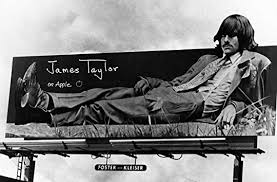
In the spring of 1972, liberal candidate George McGovern was vying for the Democratic nomination in hopes of unseating President Richard Nixon, and Hollywood celebs like Warren Beatty were actively supporting McGovern.  He put together several fundraising events, one of which was scheduled in Cleveland, and to me, it seemed too good to be true:  Paul Simon, Joni Mitchell and James Taylor all on the same bill!  My friends and I stood in line for hours to successfully snag tickets, but it was clear from the very beginning that this would be a disappointing evening.  It was held at the decaying, acoustically miserable Cleveland Arena, a hockey/boxing venue that, although it had been the site of Alan Freed’s “Moondog Coronation Ball” in 1952 (widely considered the world’s first rock concert), was well past its prime and was torn down only five years later.  Simon, who had just released his solo debut LP three months earlier, played his hits (“Mother and Child Reunion” and “Me and Julio Down By the Schoolyard”) and a few Simon & Garfunkel classics, but left prematurely due to the rude, indifferent crowd.  Mitchell fared even worse — her music was best suited to small halls and respectful audiences, and the Cleveland Arena crowd was apparently not there for the music.  Only Taylor had much success getting through to the hob-nobbers — he was riding the success of his huge “Sweet Baby James” and “Mud Slide Slim” albums and the Top Five “Fire and Rain” and “You’ve Got a Friend” hit singles…

August 17, 1972:  Bread, with Harry Chapin, at Blossom Music Center, outside Cleveland

hqdefault-4

Bread, the popular soft-rock group from LA, were at the peak of their success in the summer of ’72, thanks to multiple Top Ten hits like “Make It With You,” “It Don’t Matter to Me,” “If,” “Mother Freedom,” “Baby I’m-a Want You,” “Everything I Own,” “Diary” and “The Guitar Man.”  I persuaded my former flame Jody to join me on a triple date with two other friends and their girlfriends for this second concert experience at Blossom.  Harry Chapin, brand new and enjoying success with the hit “Taxi,” warmed up admirably, and Bread put on a solid, thoroughly enjoyable show, according to our collective memory.  Our most vivid recollection was of my friend’s station wagon overheating as we tried to leave, which resulted in us not arriving home until nearly 3 am, to our parents’ consternation (no cell phones back then!)…

October 21, 1972:  Jethro Tull, with Gentle Giant, at Public Hall, Cleveland

guild1

This was my ninth concert, but technically only my second rock show.  Jethro Tull was hugely popular with the stoners and most critics, and their most recent LP at the time, “Thick as a Brick,” had, against all odds, somehow reached #1 on the charts in May 1972, despite it consisting of one 45-minute-long piece of music.  The group, led by the indefatigable flautist/singer Ian Anderson, performed it that night in its entirety before also treating the crowd to several tracks from 1971’s classic “Aqualung” album (“Cross-Eyed Mary,” “Wind Up,” “Locomotive Breath”).  Two friends joined me for this amazing concert, and other friends were there that night as well.  Our seats, sadly, were only average, halfway back on the left side of the Public Hall auditorium.  I have little memory of Gentle Giant’s opening set, but we all look back fondly on seeing Tull for the first time. They’re a visually memorable group, especially Anderson, and they went on to become one of the biggest concert draws in the world for a spell in the ’70s.  I have since seen the band in concert more than two dozen times, and Anderson still releases new music as Jethro Tull today in 2025…

April 17, 1973:  James Taylor, at Kent State University, Kent, Ohio

hqdefault-5

Kent State, famous for the polarizing National Guard shootings in May 1970, is an hour’s drive south of Cleveland, but my friend Ben and I loved James Taylor enough to make the drive down there one rainy night our senior year of high school.  Taylor was late in arriving, and put on a rather muted show, which was mildly disappointing, because his most recent record, 1972’s “One Man Dog,” had plenty of additional instrumentation, including horns.  But that night, it was pretty much just Taylor sitting quietly on a stool with almost no accompaniment.  We certainly enjoyed it anyway, even if only because Taylor’s songs back then were so good (“Country Road,” “Long Ago and Far Away,” “Don’t Let Me Be Lonely Tonight,” “You Can Close Your Eyes”)…

April 1973:  George Carlin, with Kenny Rankin, Allen Theatre, Cleveland

MV5BMTY3NTU3NDM5MF5BMl5BanBnXkFtZTcwNjIxMDU4Mg@@._V1_UY317_CR132,0,214,317_AL_

This almost doesn’t qualify as a music concert, because my three friends and I were there at the storied Allen Theatre to laugh at the outrageous comedy of George Carlin, who didn’t disappoint (his “Seven Words You Can’t Say on Television” was all the rage at the time).  But warming up that night was label mate Kenny Rankin, an astonishingly talented singer-songwriter unknown to me at that point, but I quickly became a devotee. His song “Peaceful,” as covered by Helen Reddy, was then climbing the charts, and he wrote dozens of other wonderful songs as well. He also was adept at covering songs by The Beatles and others on albums like “Like a Seed,” “Silver Morning,” “Inside” and “The Kenny Rankin Album” throughout the ’70s…

July 10, 1973:  Stephen Stills/Manassas, at Blossom Music Center, outside Cleveland

Menassis-1973-6

About ten of my friends and I made the spontaneous decision on this night to head out to Blossom and buy tickets at the box office (I think they were only $4 each) and party on the huge lawn that faced the outdoor amphitheater.  We all knew and admired Stephen Stills for his work with Crosby, Nash and Young, but I don’t think too many of us knew much of the material he did with his erstwhile country-influenced band Manassas at the time.  (I have since gone back tardily and am a big fan of the original double LP “Manassas” from 1972, which includes The Byrds’ Chris Hillman, CSNY’s Dallas Taylor and Al Perkins from The Flying Burrito Brothers, among others).  I remember it was a wonderful, good-vibe kind of evening, with plenty of funny cigarettes being smoked…

Share your memories!  Music matters!

****************************

The Spotify playlist includes two or three songs by each of the acts I saw at these 12 shows. I selected songs from the artists’ early catalogs that had already been released at the time of the concerts and definitely were (or might have been) part of their set lists in 1968-1973.