I pick up my guitar and play
Coming up with the “Top 20” in any given category is sometimes an exercise in the obvious. If the subject is guitar players, we always see the same names — Jimi Hendrix, Eric Clapton, B.B. King, Duane Allman, Jimmy Page, Stevie Ray Vaughan, Jeff Beck, Buddy Guy, Carlos Santana, Stephen Stills, Pete Townshend, Eddie Van Halen, Chuck Berry.
And that’s the problem: We exalt our icons, but underneath the radar are many dozens of incredibly talented guitarists who deserve to be noticed. This is their time.
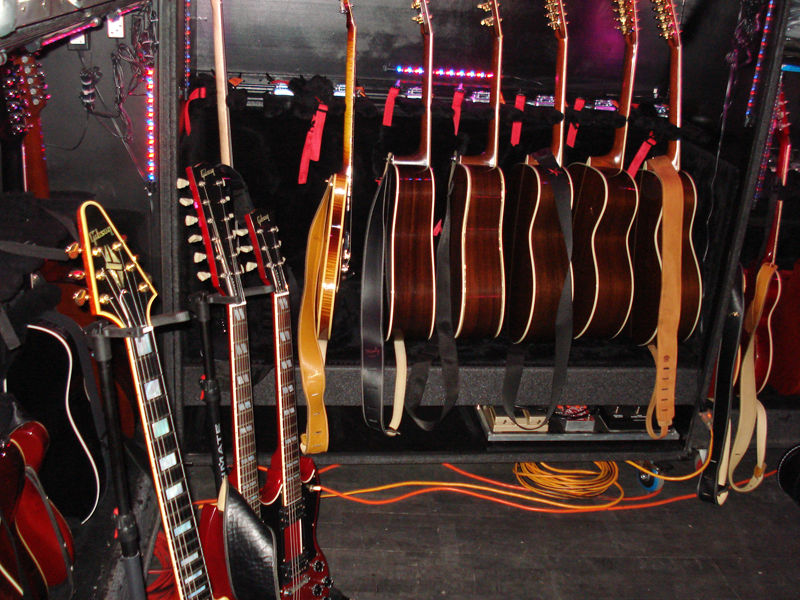 This will be a list of the Top 20 unfairly unrecognized guitarists. Many of these names we’ll be exploring will be unfamiliar to most readers, I venture to say. In some cases, they’re anonymous session musicians who prefer to simply record their delicious solos and licks and go home. Or they may have long solo careers full of amazing albums that were largely ignored by radio and the public alike. And there are others who have served as guitarists in hugely popular bands but their names don’t register with most listeners (except other musicians).
You may not know their names, but you might recognize their work when you hear it. They operated mostly in the shadows, but their riffs and techniques made a big impact. Here are four examples: Offering that perfect guitar fill in Steely Dan’s “Kid Charlemagne”; laying down some tasty guitar licks to fill out “Billie Jean”; contributing letter-perfect flamenco guitar to Al Stewart’s “On the Border”; taking “Smiling Faces Sometimes” to new heights with its flat-fuzz guitar solo.
My friend Gary recently gave me a book called “Unstrung Heroes” by Pete Braidis, in which the author offers his choices for “50 guitar greats you should know.” Granted, this kind of list is wholly subjective, reflecting the author’s tastes and time frame. Braidis is an unabashed fan of ’70s -’80s hard rock, so there is a preponderance of fast-and-hard rock guitarists I hadn’t heard of or didn’t know much about, like Pat Travers, The Scorpions’ Uli Jon Roth, Whitesnake’s Bernie Marsden, Thin Lizzy’s Eric Bell, Triumph’s Rik Emmett and Saga’s Ian Crichton.
I tend to favor a wider range of musical styles, and consequently, my list reflects that diversity. But by opening it up to so many different genres — blues, country rock, jazz fusion, hard rock, folk rock, R&B and more — it made my task of whittling down my list of “unsung guitar heroes” to just 20 names that much more difficult.
I sought the input of 15-20 acquaintances who are knowledgeable about music and have strong opinions about which ones deserve more notoriety. They fired back emails citing more than 70 different guitarists! I spent several satisfying hours on Spotify listening to selections by the ones unfamiliar to me (from Braidis’s book as well as my friends’ nominees), and was pleased to add a few of them to the list I’d already begun compiling.
With my selections, I hope to provoke a conversation that increases awareness of the many unheralded guitar players out there. One friend put it this way: “This list could go on for days, and the debate could last years.”
 We could start by debating what is meant by “underrated” or “unheralded.” I submit that there are at least a dozen guitarists who play for internationally popular bands whose individual names are not as well known and are therefore not mentioned often enough in lists of top
 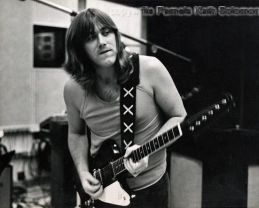 guitarists: Steve Howe (from Yes); Martin Barre (Jethro Tull); Mike Campbell (Tom Petty & the Heartbreakers); Mark Knopfler (Dire Straits); Tom Scholz (Boston); Mick Taylor (The Rolling Stones, 1969-1974); Terry Kath (Chicago, 1969-1978); Brian May (Queen); Steve Hackett (Genesis 1970-1977); Don Felder (The Eagles, 1974-1999); Jorma Kaukonen (Jefferson Airplane); Andy Summers (The Police)..
 And there are also talented musicians like John Mayer, Glen Campbell, Prince or Vince Gill who are mostly famous for their singing or songwriting, but their considerable guitar skills may not be sufficiently recognized (but should be).
I hope to coax some of you into exploring the guitar performances of any of the names mentioned here that are unfamiliar to you. I’ll wager you’ll be pleasantly surprised, maybe even bowled over. There’s a Spotify playlist at the bottom to give you a taste of each name on the list.
So here we go:
 Larry Carlton
Played with the jazz fusion band The Crusaders in the ’70s and beyond; contributed succinct guitar solos on more than 100 rock LPs, including major albums by Steely Dan, Joni Mitchell, Christopher Cross and Michael Jackson; and recorded more than a dozen solo records brimming with astonishing guitar solos. Check out: “Room 335” and “Point It Up” from his first solo LP (1977) or Steely Dan’s “Kid Charlemagne.”
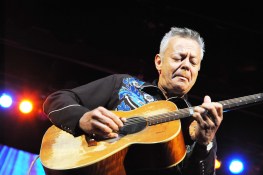 Tommy Emmanuel
This Australian guitarist has been wowing audiences for nearly 30 years, giving eye-popping performances showcasing his command of the Chet Atkins musical style (“Travis picking”), in which he plays bass lines, chords, melodies and harmonies simultaneously. He and Atkins collaborated on Atkins’ last album, “The Day Guitar Pickers Took Over the World.” In 2008 and 2010, Emmanuel was named Best Acoustic Guitarist in a Guitar Player readers poll.
 Peter White
If you listen to the remarkable guitar passages White provided behind Al Stewart’s most popular LPs (and also in concert), you can clearly see how important a supporting role can be to quality performances. But White continued onward with a solo career in the ’90s and beyond, winning accolades as “best smooth jazz guitarist” in several different polls. Check out his work on “On the Border” from Stewart’s “Year of the Cat” LP.
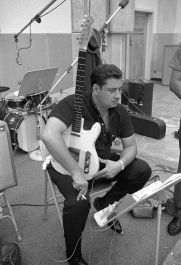 Tommy Tedesco
Thanks to a recent film documentary on The Wrecking Crew, the anonymous musicians who made up this unofficial group of L.A. session players in the 1960s and ’70s aren’t as anonymous anymore. Still, Tedesco deserves to be more widely known, since his guitar work appears on hundreds of recordings by all manner of pop artists, and on film soundtracks for Jaws, The Godfather, The Deer Hunter and more.
 Davey Johnstone
So many of Elton John’s rockers would be found lacking if not for the biting guitar licks and power chords provided by Johnstone, who accompanied Elton on more than 80% of his albums. His finesse on acoustic guitar and mandolin is also in evidence on tracks like “Mona Lisas and Mad Hatters.” He also recorded with Meat Loaf and Alice Cooper for a spell but never strayed far from John — he recently performed his 2,000th show as part of The Elton John Band.
 Craig Chaquico
The soaring lead guitar parts on the mid-’70s Jefferson Starship albums (“Red Octopus,” “Spitfire,” “Earth”) and the LPs by later incarnation Starship all come from Chaquico. He is also a Grammy winner for the work he has performed on numerous solo albums, featuring contemporary jazz, blues and New Age instrumental pieces. His abilities are on clear display on the 1978 JS hit “Runaway” and his own “Turquoise Moon” from 1999’s “Four Corners.”
 Lowell George
His friend Bonnie Raitt is universally recognized as the queen of slide guitar, but she leaned the ropes from the late George, who was one of the pioneers of the slide technique as he was founding the great ’70s band Little Feat. Even though a self-indulgent lifestyle led to his premature death in 1980, George’s recordings, especially on the first four Feat albums, live on as ample proof that he deserves to be a legend.
 Nils Lofgren
Initially hailed as a prodigy of sorts when he emerged in a supporting role in Neil Young’s Crazy Horse band at age 19, then as a solo artist in the mid-’70s, Lofgren crafted a compelling style all his own. It attracted the attention of Bruce Springsteen, who brought him into the E Street Band during the “Born in the USA” tour, and he’s been a dependable mainstay there ever since.
 Rory Gallagher
Although he could summon only a cult audience in the US, Gallagher was far more successful and well-known in his native Ireland and in England, where he managed five Top 40 albums in the mid-’70s. He offered blistering hard rock and blues guitar, and not only inspired legions of more recent axemen, but has also been mentioned by the likes of Jimmy Page and Keith Richards as among their favorites.
 Dennis Coffey
An important member of the loose gang of session musicians known as The Funk Brothers, Coffey played inventive, memorable guitar licks on many of the classic tracks in Motown Records history, including The Temptations’ “Cloud Nine” and “Ball of Confusion,” the Supremes’ “Someday We’ll Be Together,” Edwin Starr’s “War” and The Undisputed Truth’s “Smiling Faces Sometimes,” and also his own instrumental Top Ten hit, “Scorpio.”
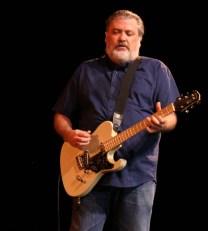 David Hidalgo
Los Lobos may be one of most versatile bands ever — “Chicano rock,” R&B, blues, zydecko, country, soul, traditional, they could do it all, and the lion’s share of the credit goes to singer/songwriter/guitarist Hildalgo. He is skilled at handling any genre, with perhaps blues and Americana being his strong suits. Check out “Blue Moonlight” and their version of Cream’s “Politician.”
 Steve Lukather
Best known as the feisty guitarist for Toto, Lukather has also made an indelible mark as a California session guitarist, playing on more than 1,500 albums over a 35-year career. His solo albums in more recent years have leaned heavily toward jazz fusion, inspired by early greats John McLaughlin and Al DiMeola. He and Larry Carlton also grabbed a 2001 Best Instrumental Grammy for their satisfying collaborative LP, “No Substitutions: Live in Osaka.”
 Steve Cropper
The celebrated guitarist from Stax Records’ house band, Booker T. and the MG’s, played on dozens of classic recordings by Otis Redding, Sam & Dave and others, and often produced and arranged records as well. He also figured prominently as lead guitarist in The Blues Brothers (“play it, Steve!”). Cropper is often mentioned in Guitar Player magazine as one of the best of all time.
 Albert Lee
Known as “the guitar player’s guitar player,” Lee’s background is in the country music arena, backing such luminaries as Emmylou Harris, The Everly Brothers and Willie Nelson. “Mr. Telecaster” also supported Eric Clapton in the 1980s (check out the interplay on “The Shape You’re In” from his 1983 LP) and has 15 solo albums to his credit between 1979-2014. Lee has a sweet style that at times can uncannily approximate the sound of a pedal steel guitar.
 James Burton
He was the guitarist behind Rick Nelson for the first ten years of his career, and then played in Elvis’s band from 1969-1977. In between and concurrently, Burton recorded lead guitar parts with Johnny Cash, Glen Campbell, Jerry Lee Lewis, Merle Haggard, Judy Collins, Elvis Costello and dozens more. Search YouTube for a 6/19/77 clip of him playing “Johnny B. Goode” behind his back as Elvis looks on.
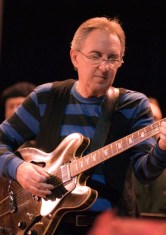 Hugh McCracken
One of the most in-demand session guitarists in New York throughout the ’70s and ’80s, providing just the right rhythm guitar and occasional lead solos on albums by artists like James Taylor, Paul McCartney, Donald Fagen, Paul Simon, Roberta Flack, Eric Carmen, Carly Simon, Aretha Franklin, Billy Joel and Hall and Oates. Widely admired by record producers and session musicians everywhere.
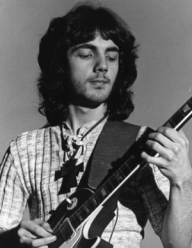 Phil Keaggy
Glass Harp was a promising rock band out of Northeast Ohio in the early ’70s, thanks to Keaggy’s phenomenal guitar playing. Just as they were building momentum, Keaggy gave up the rock and roll lifestyle for Christian music, and switched from electric to acoustic without sacrificing quality, garnering many awards for instrumental music. Glass Harp reunited for a show in 2008; check out the recording of “Children’s Fantasy.”
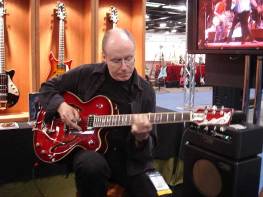 Dean Parks
One of the two or three “go to” guitarists among L.A. session musicians, Parks has recorded with nearly 50 different artists, including Bob Seger, Neil Diamond, Steely Dan, Michael Jackson, Stevie Wonder, Elton John and Madonna, and has toured with Bread and Crosby & Nash. You might take a closer listen to Jackson’s megahit “Billie Jean” to hear Parks’ creative guitar work.
 Johnny Marr
While The Smiths were hugely popular in their native Britain, they never really caught in here in the US, so most American listeners have never heard of their lead guitarist Johnny Marr, recently named “Britain’s last great guitar stylist” in a recent BBC poll. Marr went on from that creative peak to add his righteous riffs to the music of Electronic, The The, and Modest Mouse as well.
 A newer one to watch for: Anthony Thogmartin
This guy plays for a highly polished band called Papadosio, whose music “falls somewhere between rock, jazz and electronic mayhem” in a genre they call space rock. While much of the band’s repertoire is keyboard driven, Thogmartin’s incredible guitar work plays a crucial role, adding melodic, cascading fills that show jaw-dropping dexterity and technique.
Honorable mention:
George Harrison; Pat Metheny; Ottmar Liebert; Leo Kottke; Michael Landau; Michael Hedges; Robin Trower; Eric Johnson; Bob Mould; Peter Buck; Adrian Belew; Johnny A.; Tom Morello; Roy Buchanan; Nile Rodgers; Johnny Winter; Toy Caldwell; Warren Haynes; Richard Thompson; Bill Nelson; Paul Kosoff; J.J. Cale; Randy California; David Spinozza; Derek Trucks
 The speaker is Jack White, the eccentric, multitalented guitarist/singer/producer behind The White Stripes and a burgeoning solo career. He has succinctly put into words the fundamental importance of drummers to the success of any band’s overall sound. Or, put another way, “If you have an OK singer or an average guitarist, you might still have a great band, but if you have a mediocre drummer, your band will never be anything more than mediocre.”
 Why are drummers so underappreciated? Part of it, says my drummer friend Ted Molter, is because drummers “are sitting down, and sequestered from the rest of the band, hidden behind a wall of brass, chrome and wood. If they were replaced, most fans wouldn’t even notice, because they couldn’t distinguish any of them from Adam.”
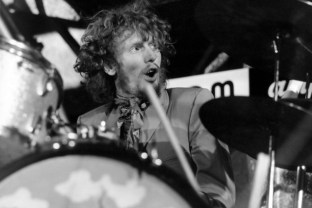 “One of the most important things in pop music, any music, is the beat. But in the eyes of the law, it’s melody, harmony, and lyrics that matter. I added the 5/4 time introduction to Cream’s hit ‘White Room,’ and I suggested to Jack Bruce that the tempo for ‘Sunshine Of Your Love’ was way too fast and should be much slower. These were both important contributions to those tracks, but I got no credit whatsoever.”
 Dave Grohl, drummer for Nirvana, recalls, “At our tiny house, we had no room for a drum kit, nor money to buy one. But I knew the configuration of a drum kit from watching drummers play, so I’d put a pillow between my legs as the snare drum, I’d use my bed as the tom, and a chair as my hi-hat, and I’d just play along to records in my room all day long. I was so into it.”
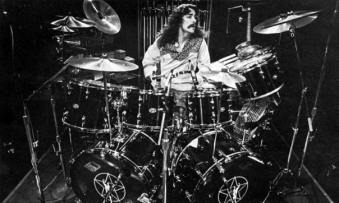 Neil Peart, drummer for the Canadian progressive rock band Rush, had this to say: “I give everything I can, sweating and pounding and thinking as hard as I can, and all of that hurts. Apart from the mental exertion and anguish, my muscles, joints and tendons are jolted and jangled by that ceaseless pounding on tightly tuned heads and metal pedals. I hit those cymbals and drums as hard as I can throughout the entire show, because I like the sound that can be produced by such an impact. So yeah, that hurts. My mother has always complained that I don’t smile enough on stage. Perhaps you’ll now know why that’s true.”
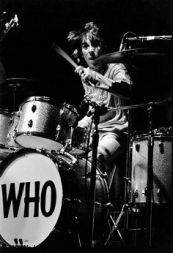 “I’ve caught my knuckles on the edges of my cymbals now and then. You get a nice little spray of blood from that.” And remember Ringo’s scream at the end of “Helter Skelter”? “I GOT BLISTERS ON MY FINGERS!!”

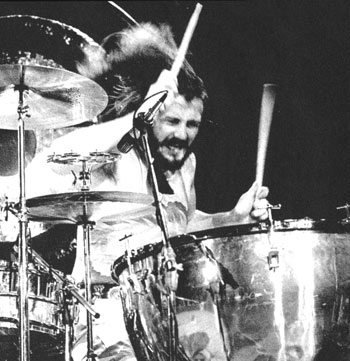 And then there’s the late great John Bonham, who is mentioned most often by other drummers as the best rock drummer of all time. It is testament to his astonishing skills, both in sheer power as well as touch, that when he died in 1980, the remaining members of Led Zeppelin knew they couldn’t possibly replace him, and instead chose to disband.
 after Bonham, the name mentioned as the most influential drummer was Ringo. “Super underrated, so inventive, and the perfect drummer for The Beatles’ repertoire, which was all over the map,” said Desmarais. “Listen to ‘Ticket to Ride,’ or ‘Rain,’ or ‘Come Together.’ Just phenomenal.”

 Hack's Back Pages