Here’s a song for a friend soon gone

I should begin this week’s post with this caveat to my readers: If you’re not from Cleveland, or at least from the Midwest, you’re probably going to be scratching your head and wondering, “Who is Michael Stanley?”

Holly Gleason, a Cleveland-based writer, put it succinctly in a piece she wrote in the wake of Stanley’s passing last week: “Like a secret handshake, you can still measure the rock and Midwestern bonafides of people, especially those who grew up in Ohio and surrounding states in the ‘70s and ‘80s, by whether they knew The Michael Stanley Band. In Cleveland, especially, Stanley was an artist who felt every bit as important as Detroit’s Bob Seger, Indiana’s John Mellencamp and even Jersey’s Bruce Springsteen, who also captured working class lives, loves and disappointments with an authenticity as gritty as it was charged.”

The difference between Stanley and those nationally known rock stars was that, despite relentless efforts over many years, he never could get the broader recognition his music so richly deserved. In the big cities and small towns of the Great Lakes area, The Michael Stanley Band — or MSB, as his fans called them — were enormously popular from the mid-’70s through the mid-’80s and beyond, setting attendance records at major venues that still stand decades later.

Stanley was seven years older than I am, so he was 26 and I was 19 when I was first introduced to his music when my friend Mark loaned me his copy of Stanley’s 1974 LP “Friends and Legends.” I had begun hearing his exceptional tune “Let’s Get the Show on the Road” on WMMS-FM, Cleveland’s hugely influential rock radio station, and I wanted to hear more. The following summer, Stanley joined forces with guitarist/singer Jonah Koslen, bassist Dan Pecchio and drummer Tommy Dobeck to form the Michael Stanley Band. I picked up their first album, “You Break It, You Bought It,” and became rather obsessed with it, especially the rockers “I’m Gonna Love You” and “Step the Way” and the ballads “Waste a Little Time on Me” and “Sweet Refrain,” all of which benefitted from the capable hands of producer Bill Szymczyk.

In the summer of ’76, I was eager to see the farewell tour of Loggins and Messina at Blossom Music Center, the wonderful amphitheater nestled into the Cuyahoga Valley between Cleveland and Akron. The bonus for me was my first exposure to MSB in concert, who served as the warm-up act that evening. Loggins and Messina, who knew next to nothing about Stanley and company, must’ve been thoroughly puzzled and impressed by the over-the-top response to MSB’s show by the loud and loyal Northeast Ohio fans in attendance.

I kept waiting for these guys to make a splash on the national charts, both singles and albums, but it didn’t happen, not for 1976’s “Ladies’ Choice” or the 1977 double live album “Stagepass,” recorded at Cleveland’s storied rock venue, The Agora. When Koslen left the band to form his own group Breathless, and then MSB were dropped by Epic Records, I figured, oh well, just another band that didn’t make it. What a shame.

But no. They added guitarist Gary Markasky on lead guitar and keyboardists Bob Pelander and Kevin Raleigh, and signed with Arista Records, run by the mercurial Clive Davis. Stanley’s new songs, plus a few by Raleigh and Pelander, had a punchier “straight-ahead rock” feeling, as Stanley himself would describe them, punched in nicely by producer Robert John “Mutt” Lange. To my ears, “Misery Loves Company” or “Who’s to Blame” from 1978’s “Cabin Fever” should’ve been big hits, or “Last Night” or “Hold Your Fire” from 1979’s “Greatest Hints,” (and let’s not overlook the stunning ballads “Why Should Love Be This Way” and “Beautiful Lies”). Inexplicably, Davis was only lukewarm on these tracks and chose not to promote the LPs sufficiently, ultimately giving up on the group.

Then came EMI America, who signed MSB in 1980 during sessions for “Heartland,” their first brush with Billboard charts fame. “He Can’t Love You,” which included the unmistakable sax playing of The E Street Band’s Clarence Clemons, reached #33 but stalled there, and the album never rose past #86. Other lineup changes came (Michael Gismondi on bass, Danny Powers on lead guitar, Rick Bell on sax), and EMI chose to stick with the band for three more stellar LPs — “North Coast,” “MSB” and “You Can’t Fight Fashion” — but despite constant touring behind huge acts, they never achieved consistent headliner status outside Ohio, Michigan, Pennsylvania and a few other cities like St. Louis.

I was a rock music critic in Cleveland during this period, and I wrote appreciative profiles and glowing concert reviews of MSB. One review even sparked a letter from Stanley himself, thanking me for being supportive! I interviewed him over lunch one time and found him to be incredibly gracious and approachable. Indeed, when I asked our staff photographer to take one photo of Stanley with me for my bulletin board at home, Stanley didn’t hesitate to put his arm around my shoulder. Such a genuinely nice guy.

Once EMI dropped the band, MSB threw in the towel…but that didn’t stop Stanley from writing and performing his music. He played shows regularly throughout Northeast Ohio with former MSB members, with another gang of musician friends he called The Resonators, and as Michael Stanley and Friends. More important, he continued writing really great songs and recording them on independent labels at the rate of nearly one studio album every year from 1995 through 2017, plus a couple of live collections.

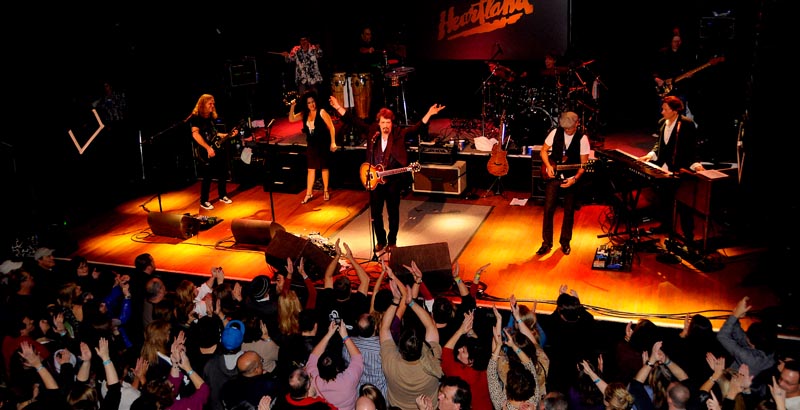
I saw MSB and or Stanley solo seven times in the ’70s and ’80s, often at Blossom as part of sold-out crowds. The electric atmosphere at those gigs reminded me of the rabid crowds at Springsteen shows. More recently, I saw him perform in December 2019 at MGM Northfield Park, and the place was packed with fervent fans who had clearly grown up with MSB’s music, and could (and did) sing along on damn near every song in the set list. It was those people I thought about this past week when the reality of Stanley’s death from lung cancer truly hit me.

As Gleason put it, “Michael Stanley saw us. He knew what we were thinking and feeling, and the reality of how it felt being the great unseen and never-heralded. He took it all in, twisted that truth into three, four, five visceral minutes, and sent our lives into the world with an actual dignity and understanding… He saw us — young, hungry, dreaming of something more, not even sure what it was. He felt our urgency, and he put it in songs.”
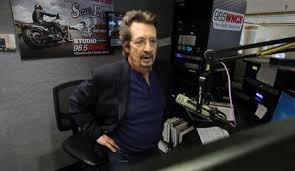
I moved away from Cleveland in 1995, first to Atlanta and then Los Angeles, so I wasn’t around much to see him take on a new career as a TV personality, hosting evening talk/entertainment programs for several years. But I was hip to his fine work behind the microphone as the afternoon drive-time DJ on classic rock radio station WNCX in Cleveland, a position he held from 1990 until just a few weeks ago when his failing health would no longer allow it. Whenever I came to town for visits, I always tuned my car radio to his show, which offered excellent classic rock selections interspersed with his soothing, familiar voice. It was like sliding into a pair of comfortable old shoes.

Over the years, I have relished the opportunity to turn on my friends in Atlanta and L.A. and elsewhere to the Michael Stanley Band. Invariably, after I offered up musical perfection on tracks like “Spanish Nights,” “In Between the Lines” and the irresistible “Lover,” they asked me, “Why weren’t these guys bigger stars?” I could only shrug my shoulders and shake my head in resignation.

David Spero, a former WWMS DJ and Stanley’s first manager, and a lifelong friend of Stanley, always felt his songs were his strong suit, and I’m inclined to agree. They’re smartly constructed, with intelligent, thought-provoking lyrics that capture the work ethic and passion for life that his fans have lived by. Said Spero, “I think he’s probably one of our country’s most underappreciated writers in that kind of Bob Seger/Bruce Springsteen style of storytelling.”

Stanley, born and raised in the suburbs of Cleveland and a stalwart resident ever since, said in a 2019 interview, “I had three pretty good, separate careers in music, TV and radio. Did we accomplish everything we wanted to? No. But we accomplished things we never thought of. I’ve been making a living doing something I love. This is what I dreamed about as a teenager, and I ended up doing it.”
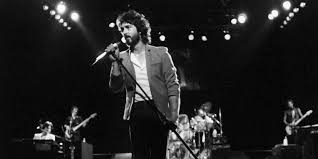
That’s what I mean about the unabashed sincerity of the man. In a recent social media post, Jackie, a woman I worked with in public relations, recalled a time she spent the better part of a day in the ’90s driving Stanley around in a golf cart at a promotional event. “I can still remember how kind and cool, how slyly funny and completely down to earth he was that day. It’s nice when people are as you hope they’ll be.”

Michael Belkin, whose father served as manager for Stanley for 40 years, said, “In my entire career, I have never seen another artist as patient and polite as Michael was with fans. Backstage, at pre- and post-show meet & greets, dinners and benefits, I saw him interact with thousands of supporters over the years, and he was consistently pleasant and gracious. Always. Every time.”

The great guitarist Joe Walsh, who played on Stanley’s early solo LPs, had this to say last week: “Michael was the king of Cleveland, and of course, the Michael Stanley Band became a Midwest powerhouse. Michael has always been a master at the craft of songwriting. His songs have a way of getting in your head and became songs you end up singing to yourself over and over from then on. His music will always be part of me.” (In fact, Walsh recorded Stanley’s tune “Rosewood Bitters” on his 1985 album “The Confessor.”)

In 2012, Stanley was asked about his legacy. His reply? ““If you look back at any writer’s body of work, you usually find a common theme or two that they’ve been trying to hone. I realized that mine is: You just never know. This whole idea of never knowing what tomorrow is going to bring and being open to it.”

Indeed, on Stanley’s 2014 album “The Job,” there’s a marvelous tune aptly titled “You Just Never Know”: “You just got to take it, just got to be there, /Just got to hold on ’cause you just never know, /Just got to take the fight into the heart of another night, /And just got to hold on ’cause you just never, just never know…”
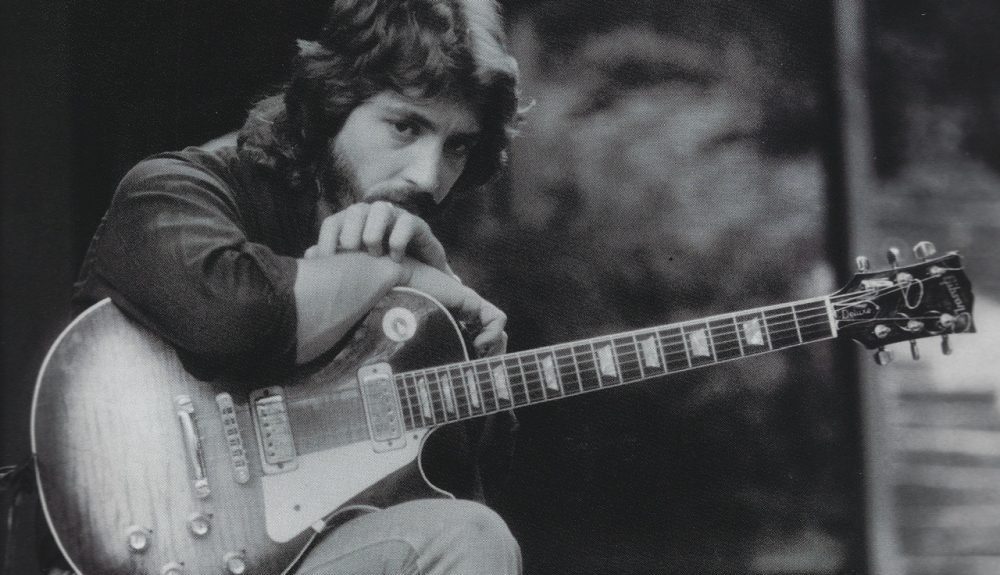
***************************

If you’re intrigued by this band you’ve never heard of, or want to immerse yourself in their catalog and commiserate our collective loss with like-minded fans, have I got a playlist for you! It’s roughly chronological, from early solo albums through the nine MSB albums to Stanley’s latter-day LPs, with a few strong covers he recorded along the way. I think you’ll agree that this was a band who coulda-woulda-shoulda been much bigger across the country.
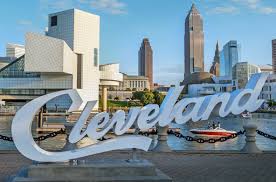
Cleveland rocks! Cleveland rocks!

In 1983, up-and-coming bar-band rocker Huey Lewis had just finished an exhilarating show before an enthusiastic crowd in a small venue in Cleveland.  He and his band, The News, were in their van heading off for the next stop on their tour, and Lewis took a last look at the bridges, industrial Flats and downtown buildings that mark the skyline of the oft-maligned Midwest city on Lake Erie.  “You know,” he said thoughtfully, to no one in particular, “there’s plenty of great music on the West Coast, and the East Coast, and in the South…but the heart of rock and roll is in Cleveland!

Lewis and guitarist Johnny Colla wrote “The Heart of Rock and Roll” with that theme in mind — heartland, blue-collar, fist-pumpin’, rock and roll-lovin’ fans in Cleveland are the best, most passionate rock fans you’ll find.  Ultimately, their manager persuaded them to make the lyrics more universal by mentioning numerous cities across the country so people anywhere could relate to it.  But Lewis’s initial thought was right on the money:  Cleveland and rock and roll are a pair made in heaven.

What’s up with that?  How did Cleveland earn its reputation as the Rock and Roll Capital?  How is it that the Rock and Roll Hall of Fame and Museum is located not in Memphis, or Philadelphia, or New York, or Los Angeles, but Cleveland, Ohio?

I’m a Cleveland native, spent my first 40 years there, attended hundreds of rock concerts there, even spent time as a concert reviewer for local newspapers, so I’m not without bias about my home town. Still, even though a number of cities have played a role in the birth, nurturing and continued support of rock and roll music since its inception in the mid-1950s, Cleveland has, without a doubt, been loudly and proudly involved in rock virtually every step of the way.

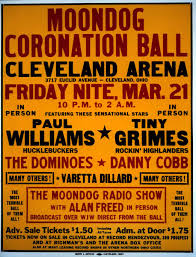
Want proof?  How about this:  The Moondog Coronation Ball, held at the old Cleveland Arena in 1952, is widely regarded as the very first rock and roll concert ever staged, sponsored by…

Alan Freed, the iconic disc jockey who purportedly coined (or, at the very least, first aired and popularized) the term “rock and roll,” began his radio career on WJW-AM in 1951 in Cleveland, playing rhythm-and-blues music (then known pejoratively as “race music”) to white and black audiences alike.  It was Freed who sponsored the Moondog Ball before moving on to a bigger spotlight (and infamy from a payola scandal) in New York.

Radio brought the music to the audience, and Cleveland listeners benefited from being regarded as a test market among record companies, who were eager to try new releases in influential smaller markets before going national with them.  In the Fifties and Sixties in Cleveland, Bill Randle was THE man.  From his perch at WERE, he had more clout than just about anyone in the country.  By the mid-’60s, it was “WIXY 1260, Super Radio” that ruled the airwaves, playing Top 40 and more to an eager audience.

At the same time (1964-1971), Cleveland’s WEWS-TV broadcast and syndicated a rock and roll showcase called “Upbeat” that far outlasted national rock-based programs like “Shindig” and “Hullabaloo,” airing performances every week by virtually every artist (British, R&B, American, whatever) of the time period who came through town.

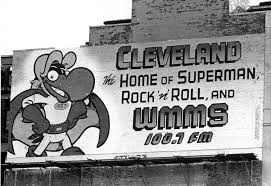
By the mid-’70s, everyone was listening to FM radio with its better signal, and in Cleveland, listeners were blessed with the formidably hip gang of DJs and program directors of WMMS-FM 100.7, which was regarded as the best rock radio station in the country for many years running.  Major artists like David Bowie, Roxy Music and Bruce Springsteen all credit the ‘MMS personalities — Billy Bass, David Spero, Kid Leo, Denny Sanders, Betty Korvan, Len Goldberg and others — for helping to break them nationally.

Cleveland’s rock and roll fans were not only passionate radio listeners but also bought records in huge numbers.  In downtown Cleveland, Record Rendezvous owner Leo Mintz was among the first to recognize the growing number of white teen customers who were buying R&B records in the ’50s, and consequently steered his business in that direction.  More stores opened in the suburbs, and hip shops like Record Revolution in the counterculture Coventry area of Cleveland Heights, Melody Lane in Lakewood,  and Music Grotto near the Cleveland State University campus flourished.  The chains (Peaches, Record Theatre, Disc Records) added fuel to the fire, and by the 1970s and ’80s, Cleveland was the number one market in the US for rock music record sales.

When rock bands began hitting the road in earnest in the late 1960s and early 1970s, no tour was considered complete without a stop in Cleveland, where promoters, venues staffers, hotel managers, radio personnel, spirited groupies and hard-core fans rolled out the red carpet, eager to show them that they loved their rock and roll, and they meant business.

As rock and roll grew exponentially around that time, so did the business interests, reach, influence and success of Jules and Mike Belkin, two Cleveland brothers who built Belkin Productions from a small concern in 1966 into the undisputed king of rock concert promotion in Cleveland and all over Ohio and the Midwest in the ’70s and ’80s and beyond.  They combined efforts with most venues in the area to bring thousands of concert opportunities to Clevelanders for many decades.

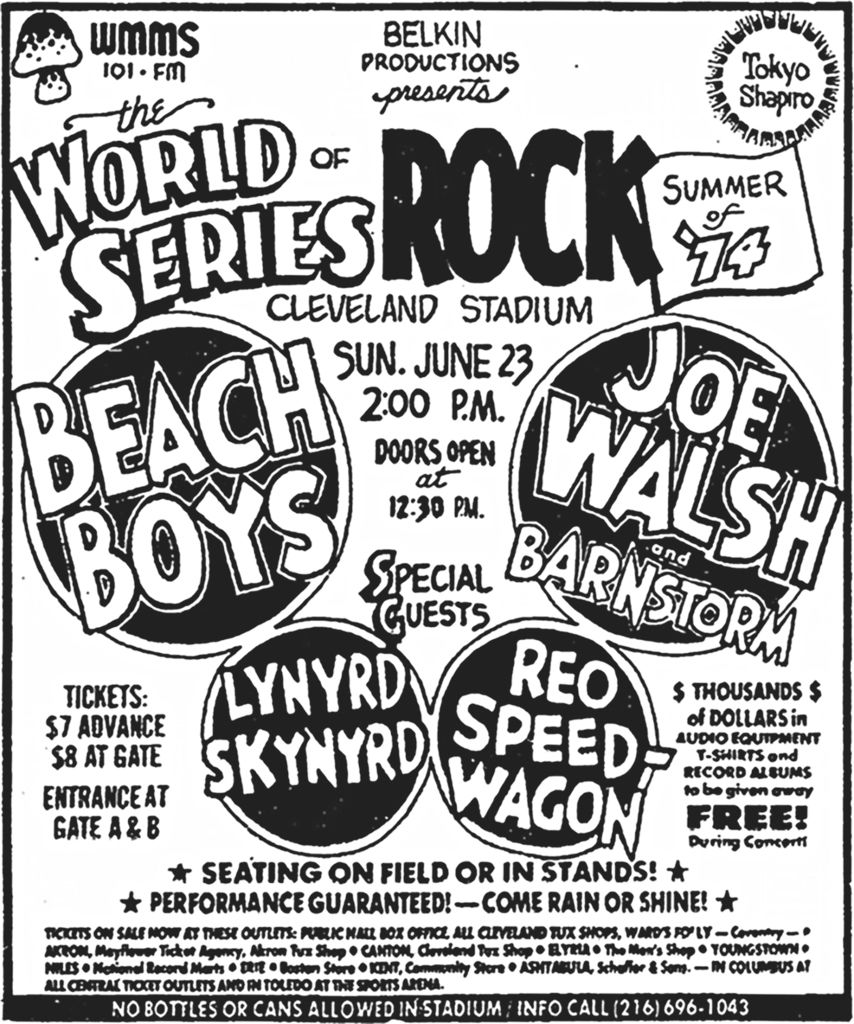
Cleveland offered a rich, broad array of venues for bands at every stage of popularity.  The top acts played Public Hall or Music Hall downtown, or later, the Richfield Coliseum south of town.  Blossom Music Center, one of the nation’s first outdoor amphitheaters, opened in 1968 and still hosts many dozens of shows annually more than 50 years later.  In the 1970s, the old Cleveland Municipal Stadium was the home of The World Series of Rock, a series of multi-act concerts that drew upwards of 75,000 fans.  In the early days, clubs like the Chesterland Hullabaloo catered to an under-age crowd with notable acts of the era.  Leo’s Casino brought in the top R&B acts of the day.  The grand old Allen and Palace theatres in Playhouse Square have hosted many concerts.  There was the theater-in-the-round Front Row Theatre.  There was Peabody’s in the Flats, the Euclid Tavern in University Circle, the Phantasy Nite Club in Lakewood, the Empire downtown… And so many more that came and went, in the suburbs and outlying areas over the years…

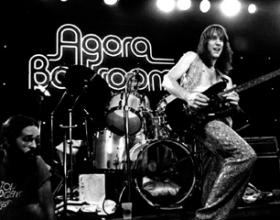
Easily the most influential, most prized, most famous concert venue in Cleveland was The Agora Ballroom (and its basement-level second stage, The Mistake), where pioneering impresario Hank LoConti brought in countless major and minor bands (from Dire Straits to ZZ Top, from Yes to Springsteen, from Todd Rundgren to Alice Cooper) to play to packed audiences night after night in the sweaty, vibrant, authentically rock venue.  It ranked with the West Coast’s Avalon Ballroom, Fillmore and The Roxy, and New York’s The Bottom Line and Max’s Kansas City as the club every band longed to play.

Curiously, Cleveland hasn’t exactly been a fertile breeding ground for musical acts that made it big on a national scale.  While the region was full of excellent local/regional bands that had rabid followings in the clubs and venues there — Glass Harp, Beau Coup, Fayrewether, Death of Samantha, Damnation of Adam Blessing, Love Affair, American Noise, Tiny Alice, Wild Horses, Deadly Earnest, Nitebridge — only a handful of musicians went on to widespread notoriety.

Mentioned most often is guitar hero Joe Walsh, who attended Kent State and honed his chops in clubs and bars around Cleveland and Northeast Ohio.  He joined The James Gang in 1968 and was largely responsible for them winning a record contract, releasing hit albums and singles, and gaining the attention of luminaries like Pete Townshend.  Walsh, of course, then went on to international success as a solo artist, member of The Eagles, and session guitarist on dozens of other artists’ recordings over a 50-year career.

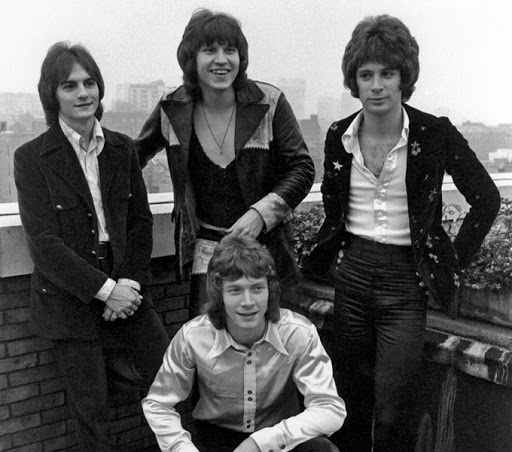
Also notable were The Raspberries, now often regarded as the first “power pop” group, playing engaging Beatles-like rock and pop in the 1970-1974 period, led by the voice and songs of Eric Carmen, who was born and raised in the Cleveland suburbs.  Carmen’s solo career in the late ’70s and ’80s included a half-dozen Top Five singles and a huge following here and abroad.

Originally from nearby Canton, Ohio, The O’Jays struggled along for more than decade as a modestly successful R&B vocal quintet on a minor record label until 1972. That year, two members threw in the towel, but the remaining trio signed with Kenny Gamble and Leon Huff’s Philadelphia International label and became superstars with Top Ten hits like “Backstabbers,” “Love Train,” “For the Love of Money,” “I Love Music” and “Used Ta Be My Girl.” They often appeared on “Soul Train” and continued to record into the 1990s and still occasionally perform today. They were inducted in the Rock Hall in 2005.

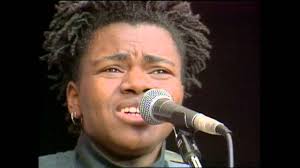
The multi-talented Tracy Chapman came out of one of Cleveland’s tough inner-city neighborhoods and, thanks to the “A Better Chance” program, lifted herself out of poverty and to the opportunities presented at Tufts University in Boston.  She was discovered playing coffeehouses there, and her 1988 debut album and hit song “Fast Car” helped her win the Best New Artist Grammy that year.  She has enjoyed broad critical acclaim for her eight albums of original material, including the Grammy-winning song “Give Me One Reason” in 1995.

Playing piano on Chapman’s second album was Marc Cohn, another product of Cleveland’s eastern suburbs, who went on to fame himself by also winning the Best New Artist Grammy, in 1991, due to his hugely popular piano hit “Walking in Memphis,” a Song of the Year Grammy nominee.  He has released a half-dozen strong albums (in particular, I recommend his debut and “The Rainy Season”) in the singer-songwriter genre over the past two decades.

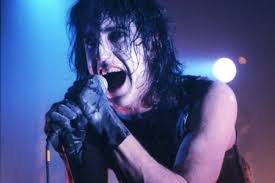
Nine Inch Nails, led by eccentric visionary Trent Reznor, got their start in Cleveland in 1988 and went on to chart a half-dozen Top Five albums in the ’90s and beyond.  Nine Inch Nails was inducted into the Rock Hall in 2020, and Reznor still tours and records today with a revolving lineup of supporting players.

Although she was far more successful later as a television personality and theme-song singer, Rachel Sweet (an Akron native) had her moment in the rock music scene. She was only 16 when her debut LP “Fool Around” was released in 1978, and by age 20 after three more low-charting albums, she moved on to the small screen. Her only Top 40 hits were covers of “Everlasting Love” with Rex Smith in 1981 and “I Go to Pieces” in 1979, which managed only #32 and #36 respectively.

A Cleveland punk band known as Frankenstein found local audiences to be indifferent to punk rock and left in 1976 for New York City, where they became The Dead Boys, led by Stiv Bators, and ranked right up there with The Ramones, Blondie, Television and The Dictators in the New York punk rock scene of the late ’70s.

Emanating from Cleveland’s east side near Shaker Heights was The Dazz Band, the talented funk group that enjoyed success on R&B and Top 40 charts in the early ’80s, especially Grammy-winning #5 hit “Let It Whip” in 1982.

Pere Ubu was a Cleveland-based “avant-garage” band that “celebrated ’50s and ’60s garage rock and surf music as seen through a fun-house mirror,” as one critic put it.  They formed in 1975 and made more than a dozen albums over the next 40 years which, while not commercial hits, were critical favorites.

michael-stanley-page-image-2

Cleveland’s favorite homegrown band by far was the Michael Stanley Band, a polished Midwest rock band with a compelling sound and great songs who inexplicably didn’t break through nationally, except for two underperforming singles (“He Can’t Love You” at #33 in 1980 and “My Town” at #33 in 1983).  Between 1973 and 1983, Stanley and his band made nine solid albums that were every bit as good as, and better than, other national acts of that genre.  MSB still holds records for sell-out show attendance records at several Cleveland venues.

In the mid-’80s, when national movers and shakers in the music business announced plans for a Rock and Roll Hall of Fame and Museum, there were conflicting views as to where such an attraction should be located.  Some said Memphis; others lobbied for San Francisco; still others thought Philadelphia; and, of course, New York and Los Angeles because of their size and wealth.  The board members were inclined to go with New York, but Cleveland civic leaders and radio execs put on a full-court press to sell the city as the appropriate place for the museum.  This included a visit to Cleveland by board members to see potential sites and hear how passionate Clevelanders were about playing host to the facility.

The deciding factor turned out to be a USA Today poll, where readers were encouraged to phone in their votes for the most deserving city.  The response was overwhelming — the largest response ever to a newspaper phone-in poll — and it was also incredibly one-sided:  Cleveland garnered 110,000 votes, and in second place was Memphis with a paltry 7,200.  That level of enthusiasm by the people of Cleveland — the rock music lovers who already recognized their town as the rock and roll capital — tipped the scales.

It took another nine years, but the Hall of Fame building — a visually dramatic structure (designed by I.M. Pei) on Cleveland’s lakefront — opened in 1995, with a spectacular all-star rock concert at the now-razed Cleveland Stadium next door, featuring dozens of the biggest names in the business.  It was, and continues to be, a huge victory for Cleveland and its connection to rock and roll.

Probably the definitive and certainly most exhaustive book about Cleveland’s rock credentials and history is Deanna Adams’s 600-page Rock ‘n’ Roll and the Cleveland Connection, (Kent State University Press, 2002).  Sprinkled with vintage photos and brimming over with quotes from most of the key figures in Cleveland’s rock music scene, the book is a fascinating read for any Cleveland rock fan and, indeed, for any fan of rock music history anywhere.

I must say, I find it puzzling that there seem to be so few rock songs that reference Cleveland.  I went digging and came up with only a handful:  “Cleveland Rocks,” Ian Hunter, 1979; “Look Out Cleveland,” The Band, 1969; “Cleveland,” Jewel, 2001.  There are two about the city’s infamous burning river:  Randy Newman’s “Burn On” (1970) and R.E.M.’s “Cuyahoga” (1986).  Others are really about nearby cities, like Springsteen’s “Youngstown” (1995), or The Pretenders’ “My City Was Gone” (1985), about Cuyahoga Falls, Ohio; or, of course, Crosby Stills Nash & Young’s “Ohio” (1970), about the shootings in Kent, Ohio.

There’s the occasional lyrical reference too.  You may have noted, for instance, that in Gordon Lightfoot’s #1 ode, “The Wreck of the Edmund Fitzgerald,” the freighter’s destination on that fateful journey was…Cleveland.

Sadly, the music of some of the early local Cleveland bands was not preserved and is unavailable on Spotify, but I’ve assembled a playlist of songs by Cleveland-based acts, from Alex “Skinny Little Boy” Bevan to the Euclid Beach Band, and I think you’ll dig the tracks by the early James Gang, the Raspberries and the fabulous Michael Stanley Band.  If you listen closely at the end of the Huey Lewis hit, God bless him, he wrapped up the tribute to rock and roll by concluding that its heart was indeed “still beating…in Cleveland…”

************************