Lyrics Quiz: Songs of 1970
It’s a funny thing about song lyrics. Some of them have a way of burrowing their way  deep into your memory and staying there forever.
But not everybody can recognize them just from seeing them on the printed page. Some people need to hear the lyrics sung, and even then, sometimes it’s hard to identify the song. “Oh, I know this, but I can’t put my finger on it…”
In today’s post, I’m asking you readers to see if these lyrics from 1970 ring a bell 50 years later in 2020. Can you identify the song and/or the artist? Jot down your answers, and then scroll down to see how your memory has served you. Feel free to let me know how you did via the comment option, or by email (bhhack55@gmail.com). Have fun!
***************
1 “They took all the trees and put ’em in a tree museum…”
2 “Waiting for the break of day, searching for something to say…”
3 “Now if there’s a smile on my face, it’s only there trying to fool the public…”
4 “Hey, have you ever tried really reaching out for the other side, I may be climbing on rainbows, but baby, here goes…”
5 “Trouble ahead, trouble behind, and you know that notion just crossed my mind…”
6 “A fantabulous night to make romance ‘neath the cover of October skies…”
7 “Just got home from Illinois, lock the front door, oh boy, got to sit down, take a rest on the porch…”
8 “I heard screamin’ and bullwhips cracking, how long? how long?…”
9 “We come from the land of the ice and snow, from the midnight sun where the hot springs flow…”
10 “Make a joke and I will sigh, and you will laugh and I will cry, happiness I cannot feel, and love to me is so unreal…”
11 “Take to the highway, won’t you lend me your name?…”
12 “Yeah, keep your eyes on the road, your hand upon the wheel…”
13 “Girls will be boys, and boys will be girls, it’s a mixed up, muddled up, shook up world…”
14 “She said, ‘Love? Lord above! Now you’re tryin’ to trick me in love!’…”
15 “Questions of a thousand dreams, what you do and what you see, lover, can you talk to me?…”
16 “And I’ve got one more silver dollar, but I’m not gonna let ’em catch me, no…”
17 “Baby, I’m a man, maybe I’m a lonely man who’s in the middle of something…”
18 “I raise my head in a touchy situation, I make my bed in the heart of the nation…”
19 “Why do we never get an answer when we’re knocking at the door…”
20 “Anyway, the thing is, what I really mean, yours are the sweetest eyes I’ve ever seen…”
*
*
*
*
*
*
*
*
*
*
1 “Big Yellow Taxi,” Joni Mitchell
 Joni’s first hit as a recording artist came on her third LP, “Ladies of the Canyon.” She wrote it while on tour in Hawaii, when she looked out her hotel window and saw the awesome natural beauty, then looked down to see an enormous parking lot. The lyrics point out how we have spoiled the environment, and our relationships, leaving us to bemoan, “Don’t it always seem to go that you don’t know what you’ve got ’til it’s gone?”
2 “25 or 6 to 4,” Chicago
 I remember a lot of people were puzzled by the title of this hit single from Chicago’s second album. Some thought it was just nonsense syllables that sounded good, but songwriter Robert Lamm said he was up all night trying to write these lyrics, and at one point, he looked at the digital clock and had trouble making out the numerals. “Was it 3:35 am or was it 3:54 am?” he recalled. “So I thought I’d use that.” It reached #1 in August of 1970.
3 “Tears of a Clown,” Smokey Robinson & The Miracles
 The melody of this song was written by Stevie Wonder back in 1966. He brought it to Robinson and asked him for help with the lyrics. “I thought the distinctive calliope motif sounded like a circus,” he said, so he decided to write about a clown who was sad about the breakup of a romantic relationship. “Now there’s some sad things known to man, but ain’t too much sadder than the tears of a clown.” It went to #1 in October of 1970.
4 “Make It With You,” Bread
 David Gates, who wrote and sang most of the dozen hit singles that Bread released in the 1970-1977 period, said he wrote this tune about a woman he’d met at a Hollywood party. It turned out to be the group’s breakthrough hit, peaking at #1 in August 1970. Gates recalls his mother telling him she thought it was a fine song, “but she wished I hadn’t called it ‘Naked With You.’ We all got a laugh out of that!”
5 “Casey Jones,” The Grateful Dead
 The Dead’s 1970 song, hugely popular in concert, pays tribute to Clarence “Casey” Jones, a locomotive engineer whose expert maneuvering averted a disastrous train wreck in Jackson, Mississippi in 1900. Although he saved the lives of dozens of passengers, Jones died in the incident, blamed on the high rate of speed he’d been traveling. Jerry Garcia and lyricist Robert Hunter collaborated on the song, which appears on the band’s “Workingman’s Dead” album.
6 “Moondance,” Van Morrison
 The combination of piano, guitar, sax, flute and walking bass, set to a soft jazz swing beat, makes “Moondance” one of Morrison’s most celebrated songs. He wrote it while living in Cambridge, Mass., and recorded it in New York City. “I wrote the melody first, playing it on sax, then wrote lyrics about autumn, which is my favorite season,” he said. “I think it’s pretty sophisticated. Frank Sinatra wouldn’t be out of place singing that one.”
7 “Lookin’ Out My Back Door,” Creedence Clearwater Revival
 All the colorful, dream-like imagery (“tambourines and elephants,” “giants doing cartwheels”) in the lyrics led some folks to presume John Fogerty was writing about an acid trip. In fact, he wrote it as a fun singalong song for his three-year-old son, and was partly inspired by the Dr. Seuss book And To Think That I Saw It On Mulberry Street. It was the fifth of five Top Ten singles from Creedence’s fifth LP “Cosmo’s Factory.”
8 “Southern Man,” Neil Young
 The vivid, anti-racist lyrics in this Young classic from his “After the Gold Rush” LP touched a raw nerve among rock music fans across the American South. Most people think Lynyrd Skynyrd’s 1974 hit “Sweet Home Alabama” was written in angry retaliation, with these words: “I hope Neil Young will remember, Southern man don’t need him around anyhow.” Actually, the artists liked and respected each other. “I’m proud to have my name in one of their songs,” Young said.
9 “Immigrant Song,” Led Zeppelin
 This slab of hard rock, one of Zeppelin’s biggest commercial hits, is a loving tribute to Iceland, where the band performed for the first time in 1970. Robert Plant’s lyrics make reference to Norse mythology, war-making and Valhalla. “We were invited to play a concert in Reykjavik and the day before we arrived all the civil servants went on strike. The university prepared a concert hall for us, and the response from the kids was phenomenal. ‘Immigrant Song’ was about that trip.”
10 “Paranoid,” Black Sabbath
 According to bassist “Geezer” Butler, the song “Paranoid” was written at the last moment during the recording sessions for the band’s second album. “It was written as an afterthought. We basically needed a three-minute filler for the album, and Tony (Iommi) came up with the riff. I quickly wrote some lyrics, and Ozzy (Osbourne) was reading them over my shoulder as he was singing. The whole thing took half an hour from start to finish.”
11 “Country Road,” James Taylor
 This warm, folksy follow-up to his breakthrough hit “Fire and Rain” is one of several songs from his “Sweet Baby James” LP that offer insight into Taylor’s past. He had a troubled adolescence marked by severe depression, and “Country Road” was one of several tunes he wrote that, according to guitarist Danny Kortchmar, “captures the restless, anticipatory, vaguely hopeful feeling that plays a large part in his character.” For me, it has always been one of my favorites to sing and play on guitar.
12 “Roadhouse Blues,” The Doors
 The Doors weren’t known for blues tunes in their classic rock repertoire, but this is a powerful exception. Robby Krieger’s guitar work on this track is particularly ferocious (egged on by Jim Morrison’s “Do it, Robby, do it!”), and ex-Lovin’ Spoonful frontman John Sebastian chipped in a spirited harmonica part. Alice Cooper, a drinking buddy of Morrison, claims he was the inspiration for the line “Well, I woke up this morning and I got myself a beer…”
13 “Lola,” The Kinks
 The band’s drummer and manager had frequented a few drag queen shows and underground clubs where transexuals often met, and one night they brought Ray Davies with them. He thought the scene was perfect fodder for a pop song if he kept the lyrics relatively vague: “she walked like a woman but talked like a man,” “I’m glad I’m a man, and so is Lola.” It turned into a huge hit and one of The Kinks’ signature songs.
14 “All Right Now,” Free
 Many of rock’s biggest hits were written quickly, and “All Right Now” is a prime example. Free’s drummer Simon Kirke said, “We had just finished a bad gig, and the audience hadn’t responded at all. It was obvious that we needed a rocker to close our shows. All of a sudden the inspiration struck, and (bassist) Andy Fraser and (singer) Paul Rodgers started bopping around singing ‘All Right Now’. They wrote it right there in the dressing room. It couldn’t have taken more than ten minutes.”
15 “Carry On,” Crosby, Stills, Nash and Young
 The sessions for the “Deja Vu” album had been tense and difficult, and CSN&Y struggled to come up with a catchy, spirited song as the opening track. Stephen Stills wrote “Carry On” about the need to buckle down and work together and, in a larger sense, to finish what you start. The song developed from a riff he had been toying with for a while, and then he segued it into “Questions,” a song he’d recorded with Buffalo Springfield. The result was one of the band’s best group efforts.
16 “Midnight Rider,” The Allman Brothers Band
 Gregg Allman used traditional blues/folk themes of desperation and determination as he fashioned the lyrics to this classic cut. One of the band’s roadies, who had listened to Allman play the unfinished song relentlessly, came up with the line “I’ve gone by the point of caring, some old bed I’ll soon be sharing…” Allman has referred to “Midnight Rider” as “the song I’m most proud of in my career.” The Allman Brothers’ 1970 version failed to chart as a single, but Allman’s 1973 solo version reached #20.
17 “Maybe I’m Amazed,” Paul McCartney
 McCartney took the breakup of The Beatles particularly hard, hiding himself away in his Scotland farm with expectant wife Linda and family. He survived bouts of depression and nights of heavy drinking, thanks to Linda’s love and support. Paul began work on a solo album which was anchored by “Maybe I’m Amazed,” his loving tribute to Linda. He’d actually written it in 1969 as a candidate for The Beatles’ next single, but after the band dissolved, he made it the centerpiece for his “McCartney” LP.
18 “Mr. Skin,” Spirit
 There are multiple interpretations of this classic tune by California band Spirit. Some say it’s a reference to the band’s drummer Ed Cassidy, who was bald and “played the skins.” Others insist that “Mr. Skin” is a euphemism for a penis (“I can bring you pain, I can bring you sudden pleasure”). Either way, it’s an infectious track that’s fun to dance to or sing along with, from Spirit’s best LP, “Twelve Dreams of Dr. Sardonicus.”
19 “Question,” The Moody Blues
 Singer-songwriter Justin Hayward said he wrote “Question” about the conversations he was having with American college students who approached him after concerts. “I heard their anti-war sentiments and their fears of being drafted, and I was expressing anger and frustration that after all that peace and love, we hadn’t been able to make a difference. The slower section became more of a quiet reflection about this, and a bit of a love song too.” It reached #21 on the US charts and a regular in their concert set list.
20 “Your Song,” Elton John
 Lyricist Bernie Taupin has said the words he wrote for “Your Song” are “one of the most naïve and childish lyrics in the entire repertoire of music, but I think the reason it still stands up is because it was real at the time. That was exactly what I was feeling. I was 17 years old and it was coming from someone whose outlook on love or experience with love was totally new and naïve.” It became Elton’s breakthrough hit single and one of his most beloved songs.

*****************
 and others for many decades. Why isn’t exactly clear. It took until 1966 when Lyndon Johnson finally issued a proclamation designating the third Sunday in June as Father’s Day, “honoring fathers and celebrating fatherhood, paternal bonds, and the influence of fathers in society.” Well, better late than never, I guess…
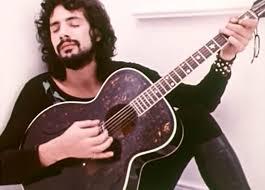 In “Father and Son,” the lovely yet powerful call-and-response piece from 1970’s “Tea for the Tillerman,” Stevens creates a somewhat tense dialog between a man and his son, who hold different opinions about life and love. The father admonishes the boy — “you’re still young, that’s your fault, there’s so much you have to know” — and the son retorts, “How can I try to explain, when I do he turns away again, it’s always been the same old story…” In the end, they agree the boy must leave home and find his own way: “Away, away, away, I know I have to make this decision alone…”
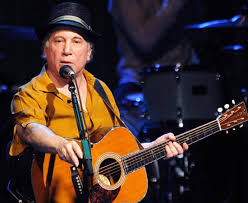 One of the most perceptive songwriters of his time, Simon has written lyrics exploring everything from loneliness to jubilation, from troubled water to little towns, from Graceland to Kodachrome. In the best song from his mostly ignored 2006 album “Surprise,” he serves up the kind of reassurance and affection only a parent can offer to a child: “I’m gonna watch you shine, gonna watch you grow, gonna paint a sign so you’ll always know, as long as one and one is two, there could never be a father who loved his daughter more than I love you…”
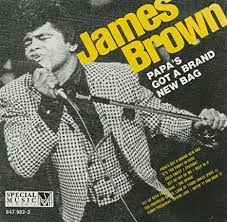 America had already shown its appreciation in the early ’60s for the Rhythm & Blues genre coming from the Motown groups (The Miracles, The Supremes), but with this infectious track, James Brown’s first Top Ten hit, the Godfather of Soul offered up a whole different, more passionate breed of soul music. Brown wrote the song –perhaps the first funk tune on US charts — about an older man who isn’t shy about strutting his stuff on the dance floor amongst much younger folks: “Come here sister, Papa’s in the swing, he ain’t too hip now, but I can dig that new breed, baby, he ain’t no drag, Papa’s got a brand new bag…”
 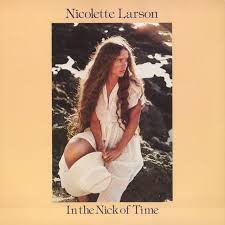 Larson’s fine vocal harmonies were first introduced by Neil Young on his “Comes a Time” LP, and her rendition of Young’s song “Lotta Love” was her breakout single, hitting #5 in the spring of ’79. On her excellent follow-up LP, “In the Nick of Time,” Larson chose to include the 1940s-era Bobby Troup song “Daddy,” made famous by The Andrews Sisters and various orchestras of the time. Troup, who also wrote “Get Your Kicks on Route 66,” wrote this one about a girl who loves to be pampered: “Hey Daddy, I want a diamond ring, and bracelets, and everything, hey Daddy, you ought to get the best for me…”
 Patricia Clapp was only 16 when she gave birth to her son Eric. His father, a 25-year-old soldier from Montreal, shipped out before Eric was born, and the two never met. This song’s lyrics, written by Clapton in 1992 but not released until his 1998 “Pilgrim” LP, speak of his longing for a chance to gaze into his father’s eyes, and also refer to the brief life of Clapton’s own son Conor, who died at age 4. In his 2007 autobiography, he wrote, “I tried to describe the parallel between looking in the eyes of my son, and the eyes of the father I never met, through the chain of our blood.” A sample: “Where do I find the words to say, how do I teach him, what do we play, bit by bit, I’ve realized, that’s when I need them, that’s when I need my father’s eyes…”
 This tragic song by Norman Whitfield and Barrett Strong tells the tale of a young man talking about the deadbeat father he never knew, who neglected those who loved him most: “I never got the chance to see him, never heard nothin’ but bad things about him, ‘Mama, I’m depending on you to tell me the truth, Mama just hung her head and said, ‘Papa was a rollin’ stone, wherever he laid his hat was his home, and when he died, all he left us was alone’…” Originally written for The Undisputed Truth as its follow-up to “Smiling Faces Sometimes,” it was instead recorded by The Temptations in a magnificent 12-minute version full of instrumental passages. It was pared down to 6:45 for the single, which turned out to be the group’s final #1 hit.
 When Fleetwood Mac was recording the multiplatinum “Rumours” album, Lindsey Buckingham and Stevie Nicks were at each other’s throats, and John and Christine McVie were in the process of divorcing. Mick Fleetwood was having his own problems with his wife back home, but he appeared to Christine to be the “steady rock” holding the band together. With this song, Christine McVie was letting Fleetwood know, in her own way, that he was the father figure of the group at the time they needed one the most: “Why are you right when I’m so wrong, I’m so weak but you’re so strong… Oh Daddy, if I could make you see, if there’s been a fool around, it’s got to be me…”
 The Donna Reed Show, an early ’60s sitcom starring the Oscar-winning actress as the pleasant, level-headed mom, featured two different episodes in which her fictional children, Mary and Jeff, sang songs at a school dance. Their real-life counterparts, Shelly Fabares and Paul Petersen, took those songs to Top Five success on the US singles chart. Fabares’ rendition of “Johnny Angel” went all the way to #1 in early ’62. Petersen,
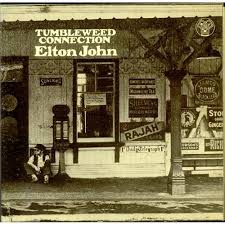 Elton John’s lyricist partner, Bernie Taupin, was fascinated by the old American West and its stories of the frontier, as evidenced by the almost country-western feel to the music and words of most of the tracks on their third album, “Tumbleweed Connection.” Taupin reaches back to the Civil War in “My Father’s Gun,” a slow-building, dramatic tale in which the son buries his soldier father and then vows to keep fighting in his father’s place: “I’ll not rest until I know the cause is fought and won, from this day on, until I die, I’ll wear my father’s gun…”
 For her 11th studio album, “My Tennessee Mountain Home,” Parton recorded a batch of songs she wrote about growing up in rural Tennessee before heading to Nashville for fame and fortune. The title track was a Top 20 hit on the country charts, but equally poignant was this song that paid tribute to her father and how hard he had to work to support her family during tough times: “As long as I remember, I remember Daddy workin’, workin’ on the job or either on the farm, trying to provide for the family that he loves, and Daddy’s working boots have taken many steps for us…”
 “Papa Don’t Preach,” Madonna, 1986
 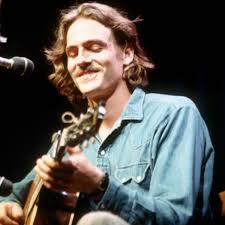 The homesickness for hearth and family that strikes touring musicians is the subject of this autobiographical song from Taylor’s seventh LP, “In the Pocket,” one of his best. The lyrics speak of him calling home from yet another night on the road, lamenting the fact that he has many more concerts ahead of him before he can return home where he wants to be: “Oh, I miss you, baby, I sure am on the road, I don’t need to say much more, just the same old well-known stranger that I was before, it seems like yesterday now, Daddy’s all gone, he’s only halfway home, he’s holding on to the telephone singing, please, don’t let the show go on…”
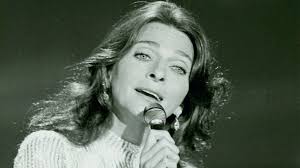 One of Collins’s first attempts at composing was this gorgeous piano ballad, written in October 1967 for her blind father, who died only three weeks after she recorded it. They both had suffered from depression and alcoholism, and had forged an uneasy bond over their afflictions. She wrote how he had dreamed of greater things for himself and his family, most of which never came to pass: “My father always promised us that we would live in France, we’d go boating on the Seine and I would learn to dance, I sail my memories of home like boats across the Seine, and watch the Paris sun set in my father’s eyes again…”
 Here’s a funky little blues-based track from Steely Dan’s underrated “Katy Lied” LP. Creative duo Donald Fagen and Walter Becker chose to use a different guitarist on each of the album’s 10 tracks; this one features the smooth stylings of jazz great Larry Carlton. The lyrics paint a picture of a typically dark Fagen-Becker character, this time an unreliable father figure who’s either drunk or absent most of the time: “Driving like a fool out to Hackensack, drinking his dinner from a paper sack… He can’t get tight every night, pass out on the barroom floor…”
 The sensitive singer-songwriter from Illinois was well past his commercial peak when he released the criminally overlooked LP “The Wild Places” in 1990. The album contains some of the best music and most perceptive lyrics of his career, including this bittersweet paean to his Scandinavian and Scottish ancestors and the sacrifices they made for the generations that followed: “And the sons become the fathers, and their daughters will be wives, as the torch is passed from hand to hand and we struggle through our lives, the generations wander but the lineage survives, and all of us, from dust to dust, we all become forefathers by and by…”
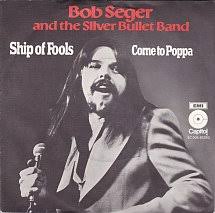 Seger had been a musical force in Detroit and the Midwest ever since his early band, The Bob Seger System, had a taste of success in 1968 with their #17 hit “Ramblin’ Gamblin’ Man.” It wouldn’t be until 1976 when Seger truly broke through nationally with the Silver Bullet Band on their excellent “Night Moves,” LP, the first of six consecutive Top Ten albums. The title song was a huge hit, peaking at #4, and two other tracks, “Mainstreet” and “Rock and Roll Never Forgets,” charted as well. Other notable songs include “The Fire Down Below,” “Ship of Fools” and the old Willie Mitchell tune, “Come to Poppa,” with lyrics that suggest whom you can turn to when things aren’t going your way: “If life gets hard to understand, and the whole thing is getting out of hand, come to Poppa…”