I’m only waiting ’til the morning comes
Over my five-plus decades of collecting music, I have taken great pleasure in compiling mixed tapes, mixed CDs and Spotify playlists that address different subject matters and moods.
One of my favorite themes, first assembled in 1980 or so, was an assortment of songs about morning. I recently revisited the topic by diving into the archives, and I came up a list of available songs from the ’50s, ’60s, ’70s and ’80s that focus on morning time. There are well over 100, and probably many more, from which to choose, and I’ve narrowed that down to 20 I want to share with you here, plus another 25 that earned an “honorable mention.” The playlist begins with mellow selections (as you’re just waking up) and then adds more vibrant tracks later on (after your second cup of coffee).
Wherever you find yourself in the morning, one or more of these tunes should suit your day. Enjoy!
*****************
“Morning Morgantown,” Joni Mitchell, 1970
 There are several small cities in the U.S. named Morgantown, most notably in West Viriginia, and I have no idea if Mitchell was referring to any of them in particular or just a town she imagined when she wrote this delightful piece that opens her 1970 LP “Ladies of the Canyon.” The point is, she finds a way to create a warm portrait of a village where everyone greets the day with love and kindness: “When morning comes to Morgantown, the merchants roll their awnings down, the milk trucks make their morning rounds in Morning Morgantown…”
“To the Morning,” Dan Fogelberg, 1972
 At the beginning of Fogelberg’s career, he moved from his native Illinois to Nashville to record his first album with producer Norbert Putnam, who added nice touches of cellos and strings to some of the tracks. Although mostly ignored at first, the “Home Free” album eventually sold a million copies after his career took off in the late ’70s. This gorgeous song was the album’s memorable opening track: “Watching the sun, watching it come, watching it come up over the rooftops, cloudy and warm, maybe a storm, you can never quite tell from the morning, and it’s going to be a day, there is really no way to say ‘no’ to the morning…”
“Early Morning Rain,” Peter, Paul & Mary, 1965
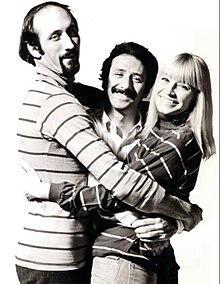 Canadian legend Gordon Lightfoot made his mark in the U.S. as a songwriter before emerging later as a successful singer as well. One of his first songs to make the charts here was “Early Morning Rain,” in a gorgeous rendition by Peter, Paul & Mary. Lightfoot deftly conveys the loneliness of being broke and homesick: “In the early morning rain with a dollar in my hand, with an aching in my heart and my pockets full of sand, now I’m a long way from home, and I miss my loved ones so, in the early morning rain with no place to go…”
“Morning Has Broken,” Yusef/Cat Stevens, 1971
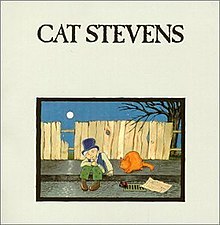 In 1931, English poet Eleanor Farjeon was asked to compose lyrics to the traditional Scottish tune “Bunessan” to create a hymn that gives thanks to the new day. By 1971, Cat Stevens decided to record the gentle piece as “Morning Has Broken,” with piano accompaniment by Rick Wakeman. It became a #6 hit in early 1972, and it’s still included in church services worldwide: “Morning has broken like the first morning, blackbird has spoken like the first bird, praise for the singing, praise for the morning, praise for them springing fresh from the world…”
“Good Morning, Heartache,” Billie Holiday, 1946
 Songwriter Irene Higginbotham and lyricist Ervin Drake teamed up to write this jazz standard in 1946, and the late great Billie Holliday recorded it that same year. More than 50 other artists have covered the song, from Sam Cooke and Etta James to Natalie Cole and Tony Bennett, and Diana Ross’s version in the 1972 biopic “Lady Sings the Blues” is the best known, but I’ll take Holiday’s original any day. What a fine lyric about waking up with the blues: “Good morning, heartache, here we go again, good morning, heartache, you’re the one that knew me when, might as well get used to you hanging around, good morning, heartache, sit down…”
“Til the Morning Comes,” Neil Young, 1970
 “I’m gonna give you ’til the morning comes, ’til the morning comes, I’m only waiting ’til the morning comes, ’til the morning comes…” More a tune fragment than a bonafide song, this track lasts only 1:17 and finishes side one of Young’s wonderful 1970 LP “After the Gold Rush.” The album was recorded in Young’s Topanga Canyon house with help from musicians from his periodic backing band Crazy Horse, plus Stephen Stills on vocals and an 18-year-old Nils Lofgren handling piano duties.
“Sunday Morning Coming Down,” Johnny Cash, 1970
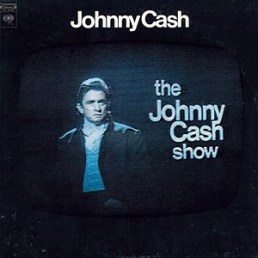 In 1969 Kris Kristofferson wrote this classic hangover song for country artist Ray Stevens, but it’s Johnny Cash who recorded the definitive version in 1970 for his live album from “The Johnny Cash Show.” It’s a lonely piece that explores how we all search for some sort of self-fulfillment but sometimes end up alone trying to cope with the effects of the night before: “Well, I woke up Sunday morning with no way to hold my head that didn’t hurt, and the beer I had for breakfast wasn’t bad, so I had one for dessert, then I fumbled in my closet and found my cleanest dirty shirt, and stumbled down the stairs to face the day…”
“Lazy Mornin’,” Gordon Lightfoot, 1972
 Lightfoot reigns as perhaps Canada’s best-ever songwriter, with well over 250 songs to his credit. His lyrics paint vivid pictures of life and love, work and play, tough times and carefree moments. From his 1972 LP “Old Dan’s Records” is a favorite of mine called “Lazy Mornin’,” which captures the gentle feeling that often strikes us upon awakening: “Another lazy mornin’, no need to get down on anyone, my son, coffee’s in the kitchen, woman on the run, no need to get bothered, I’ll think about Monday when Monday comes…”
“A Beautiful Morning,” The Rascals, 1968
 Continuing the theme of sunny optimism that marked their previous #1 hit “Groovin,” songwriters Felix Cavaliere and Eddie Brigati of The Young Rascals came up with the joyous “A Beautiful Morning,” which became a big hit in April 1968, perhaps the happiest hippie anthem in a tumultuous year that needed all the good vibes it could get: “It’s a beautiful morning, I think I’ll go outside for a while, and just smile, just take in some clean fresh air, boy, no sense in staying inside if the weather’s fine…”
“Angel of the Morning,” The Pretenders, 1995
 “If morning’s echo says we’ve sinned, it was what I wanted now, and if we’re victims of the night, I won’t be blinded by the light, just call me angel of the morning, angel, just touch my cheek before you leave me, baby…” This dramatic song, written by Chip Taylor about a woman who felt betrayed but defiant after a one-night stand, was originally a #7 hit back in 1968 for Merilee Rush. Then Judy “Juice” Newton had the biggest hit of her career with her remake of “Angel,” which peaked at #4 in 1981. I happen to think the version recorded by The Pretenders for use in a 1995 episode of “Friends” was better than either of those, thanks to a stellar delivery by Chrissie Hynde.
“Touch Me in the Morning,” Diana Ross, 1973
 “If I’ve got to be strong, don’t you know I need to have tonight when you’re gone?, until you go, I need to lie here, and think about the last time that you’ll touch me in the morning…” This bonafide classic was the first success for songwriter Michael Masser, who collaborated with seasoned lyricist Ron Miller to score a #1 hit. Ross, who had young children at the time, preferred recording in all-night sessions, and this track proved especially challenging for the Motown diva before she finally nailed the take she wanted at 5 a.m. as the sun rose.
“Chelsea Morning,” Joni Mitchell, 1969
 This delightful acoustic ditty, which appears on Mitchell’s second LP “Clouds” in 1969, became one of the most beloved songs in her catalog (it was the reason Bill & Hillary Clinton named their daughter Chelsea, they say). Mitchell wrote it while she was living in an apartment in the Chelsea neighborhood of New York City: “Woke up, it was a Chelsea morning, and the first thing that I knew, there was milk and toast and honey, and a bowl of oranges too, and the sun poured in like butterscotch and stuck to all my senses…”
“Good Morning Little Schoolgirl,” Muddy Waters, 1964
 Written by Sonny Boy Williamson back in 1937, this blues standard has been recorded by dozens of artists in the years since, from The Yardbirds to Van Morrison, from Johnny Winter to Widespread Panic, from Paul Butterfield to Huey Lewis. I really like the version the late blues titan Muddy Waters recorded in 1964 on his only all-acoustic album, “Muddy Waters, Folk Singer.” I love the tune, but frankly, the lyrics sound more than a little unsavory today: “Good morning little schoolgirl, can I go home with you, I’ll tell your mother and your father that I’m a little schoolboy too…”
“Meet Me in the Morning,” Bob Dylan, 1975
 This simple blues tune in five verses is one of 10 superb tracks that made up Dylan’s 1975 masterpiece album “Blood on the Tracks.” They say that misery and heartbreak are excellent muses for songwriters, and this album is proof of that. At the time, Dylan was bemoaning the breakup of his marriage to Sara Lownes, and the lyrics to “Meet Me in the Morning” reflect that loss: “They say the darkest hour is right before the dawn, but you wouldn’t know it by me, every day’s been darkness since you’ve been gone…”
“When the Morning Comes,” Daryl Hall and John Oates, 1973
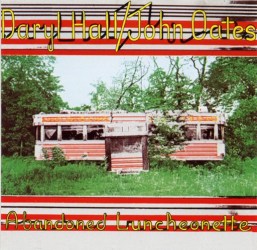 The Philadelphia duo became superstars in the early 1980s, but first Hall and Oates were struggling artists producing soft rock and blue-eyed soul in 1971-72. Their second LP, 1973’s “Abandoned Luncheonette,” included the gem “She’s Gone” (a hit upon re-release in 1976), and also a few other beauties like “Las Vegas Turnaround” and “When the Morning Comes: “Now I’m out in the cold, and I’m getting old, standing here waiting on you, but it’ll be all right when the morning comes…”
“Morning Dew,” Duane & Gregg Allman, 1968
 A Canadian folk musician named Bonnie Dobson wrote this thought-provoking song in 1961 about a man and woman who survive a nuclear apocalypse: “Walk me out in the morning dew, no, there is no more morning dew, because what they’ve been sayin’ all these years has come true, it had to happen, you know, now there is no more morning dew…” The Grateful Dead included it on their first record in 1967, and probably the best known version is on Jeff Beck’s 1968 debut LP “Truth,” with vocals by a young Rod Stewart. But I’m partial to the version laid down by Duane and Gregg Allman for a shelved album that never saw release until 1972 after The Allman Brothers Band had become stars.
“Blue Morning, Blue Day,” Foreigner, 1978
 Lou Gramm and Mick Jones collaborated many tunes in the Foreigner repertoire. One of their darker songs is this one about a musician who is troubled by a broken relationship and finds himself depressed and unable to reconcile: “Out in the street, it’s six a.m., another sleepless night, three cups of coffee, but I can’t clear my head from what went down last night…” The song reached #15 on the charts in March 1979 as the third single from Foreigner’s second LP, “Double Vision.”
“Good Morning Good Morning,” The Beatles, 1967
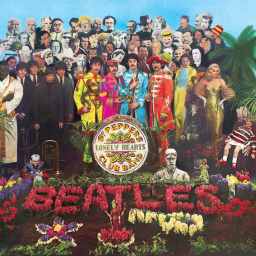 John Lennon claims he wrote this song one morning while eating corn flakes for breakfast and watching TV. “It was just another typical morning in 1967, and I was writing about how some days are just a drudgery — ‘going to work, don’t wanna go, feeling low down’ — and then by evening, you’re feeling better — ‘go to a show, you hope she goes.’ I wrote it very quickly. It’s a throwaway song, but I kind of like it.” It’s one of the 12 songs that comprise The Beatles’ most celebrated work, the landmark 1967 LP “Sgt. Pepper’s Lonely Hearts Club Band.”
“Monday Morning,” Fleetwood Mac, 1975
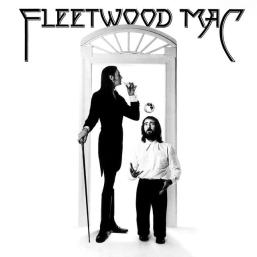 This great Lindsey Buckingham pop song kicked off the 1975 “Fleetwood Mac” album that rebooted the band’s career just as they were about to break up. Buckingham’s pop sensibility and distinctive guitar playing and vocals, combined with harmonies from Stevie Nicks and Christine McVie, gave this track the spark that turned heads from the moment you dropped the needle on that classic LP. The lyrics use days of the week to show the fleeting nature of relationships: “Monday morning you sure look fine, Friday I’ve got traveling on my mind, first you love me, then you fade away, I can’t go on believing this way…”
“One Fine Morning,” Lighthouse, 1970
 While Blood, Sweat & Tears and Chicago were paving the way in the late ’60s and early ’70s with their use of jazz horn instruments in a rock band, a group called Lighthouse had considerable success in Canada with the same genre. Their only US hit was “One Fine Morning,” which offered a sizzling arrangement with guitar, horns and a rollicking jazz piano solo, and songwriter Skip Prokop’s sunny lyrics about a couple hoping to make their dreams come true: “One fine morning, girl, I’ll wake up, wipe the sleep from my eyes, go outside and feel the sunshine, then I know I’ll realize that as long as you love me, girl, we’ll fly…”
****************
Honorable mention:
“Good Morning Starshine,” Oliver, 1969; “Hour That the Morning Comes,” James Taylor, 1981; “Sometime in the Morning,” The Monkees, 1967; “Good Morning Judge,” 10CC, 1977; “Sunday Morning,” Spanky and Our Gang, 1968; “If I Don’t Be There By Morning,” Eric Clapton, 1980; “Happier Than the Morning Sun,” Stevie Wonder, 1971; “As I Went Out One Morning,” Bob Dylan, 1967; “Tears in the Morning,” Beach Boys, 1970; “Good Morning, Dear,” Roy Orbison, 1969; “Early in the Morning,” Ray Charles, 1961; “New Morning,” Bob Dylan, 1970; Good Morning Girl,” Journey, 1980; “Morning Glow,” Michael Jackson, 1973; “Cold Morning Light,” Todd Rundgren, 1972; “Woke Up This Morning,” B.B. King, 1957; “Morning Glory,” Mary Travers, 1972; “Your Love is Like the Morning Sun,” Al Green, 1973; “July Morning,” Uriah Heep, 1971; “I Woke Up in Love This Morning,” The Partridge Family, 1970..
 like and sound like: Four zany young guys with dreams of making it big, making their way through one silly weekly adventure after the next, always finding a way to work in at least one “performance” of one of their songs that were being heard concurrently on Top 40 radio.
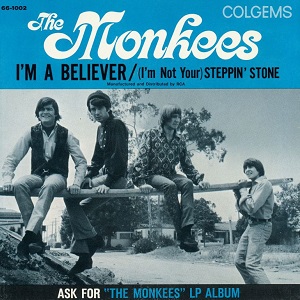 went to #1 and stayed there for many weeks on end. “I’m a Believer” was the #1 song in the nation for nearly three months. Here’s a fact that still astonishes me today: Year-end sales figures for 1967 show that more units of Monkees records were sold than The Beatles and The Rolling Stones combined!
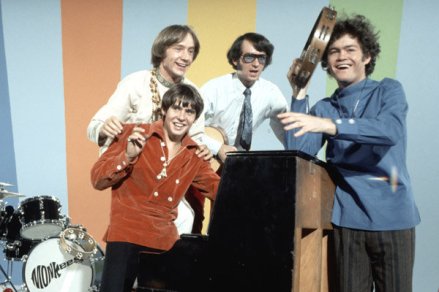 Producer Bob Rafelson had come up with the concept of a TV show about a rock and roll group as early as 1960, but it wasn’t until The Beatles’ spectacular arrival and, more specifically, the success of their film “A Hard Day’s Night” in 1964 that Rafelson got the green light from Screen Gems, the TV arm of Columbia Pictures, to develop his idea. At first he thought of using an existing pop band to star in the program, but after being turned down by The Lovin’ Spoonful and The Dave Clark Five, he decided to manufacture his own group.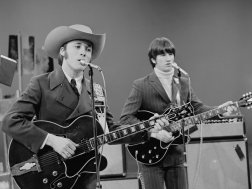
 tapped to dub lead vocal parts onto the finished tracks. The show’s musical supervisor was the notorious Don Kirshner, who had selected Tommy Boyce and Bobby Hart from his stable of Brill Building pop songwriters to write, record and produce most of the songs for the group’s first album, “The Monkees,” which was essentially intended as a companion soundtrack to the TV show’s first season.
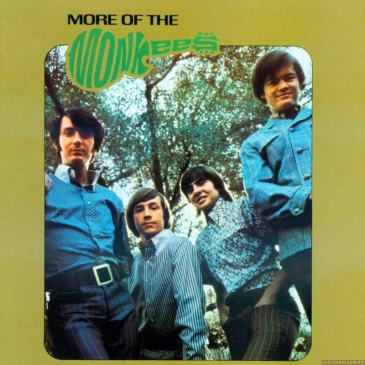 felt was nothing short of fraud. Kirshner was ousted and The Monkees won creative control of all recordings from then on.
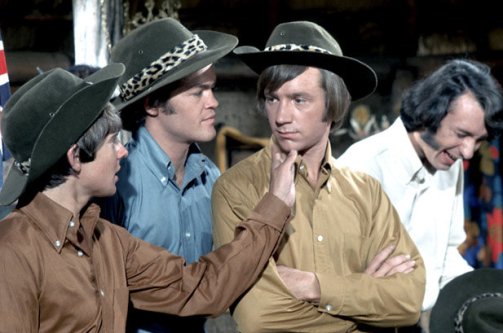 must, in retrospect, be seen as an entertaining, imaginative and highly memorable exercise in pop culture.”
 need to maintain some continuity to what their young fan base expected, which was straightforward pop with accessible hooks.
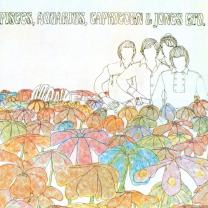 turmoil and rudderless direction (although both nevertheless reached #1 on the album charts). By the time of the fifth LP, “The Birds, The Bees and The Monkees,” the TV show had been cancelled, and the experimental film and soundtrack they released in November 1968, “Head,” proved disastrous commercially. Tork left the band, and efforts to continue as a threesome failed. The end had come.
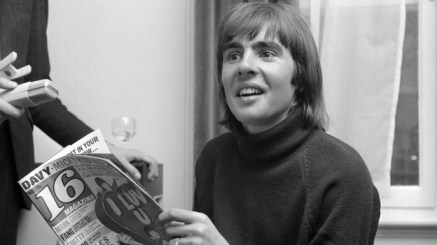 usually featured only three of the four principals (either Nesmith or Tork holding out), but that didn’t seem to matter to those who bought tickets to see them.
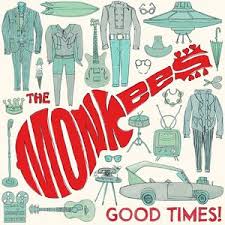 which Jones sang lead vocals.
 Hack's Back Pages