Those were the days, my friend
Time once again for another dive deep into the archives of the rock music of the 1960s, 1970s and 1980s, scanning through thousands of albums in search of those wonderful nuggets we’ve forgotten about or have never been exposed to before.
This is the Lucky 13th installment of my periodic efforts to uncover and breathe new life into these neglected pearls, these lost classics of a wonderful era when music seemed to mean more…to me, at least. Maybe to you as well.
The Spotify playlist at the end is available so you can hear these tracks as you read a little about each one. Please send me your suggestions for other favorites I should shine a light on in my next visit to Santa’s gift bag of lost classics.
***************
“Fresh Air,” Quicksilver Messenger Service, 1970
 Much of the music of the 1960s San Francisco scene strikes me as dated, pretentious and raggedly produced; still, it has a certain innocence and naive enthusiasm that can’t be denied. Sadly, only the music of the Jefferson Airplane and the Grateful Dead gets any kind of exposure any more. Gone are the days when early FM progressive radio was fond of treating us to the likes of Moby Grape, It’s a Beautiful Day, Country Joe and The Fish and Cold Blood now and then. My favorite practitioner of that proud hippie genre was Quicksilver Messenger Service, whose trippy jam music featured the talents of Dino Valenti, John Cipollina, Nicky Hopkins and David Freiberg. Albums like “Happy Trails,” “Shady Grove” and “Just for Love” offered quaint yet bold forays into a sort of folk/psychedelia mix. Their finest moment, I think, was “Fresh Air,” with its gentle tempo and flute. Takes me back to a simpler time.
“Living on a Thin Line,” The Kinks, 1984
 Ray Davies was the composing wunderkind who came up with more than 300 songs that kept The Kinks churning out new albums almost every year for 30 years (1964-1994). Davies handled all the lead vocals and acoustic guitar, and prowled the front of the stage in tour after tour, serving as both the visual centerpiece and spokesperson for the group through robust and lean times alike. An ongoing dynamic in the group’s chemistry was the difficult rivalry and tempestuous relationship between Ray and his younger brother Dave, the group’s brilliant lead guitarist. It’s a miracle the group was able to stay together mostly intact through three decades, as Dave struggled to get his songs onto the band’s records. On 1984’s great “Word of Mouth” LP, the best cut is Dave’s “Livin’ on a Thin Line,” which was later used an episode of The Sopranos to illustrate the fine line Tony Soprano walked between his mob family and his real family.
“Letting Go,” Paul McCartney, 1975
 McCartney has written so many sing-songy ditties of little consequence that we sometimes forget he was capable of “letting go” with some serious rockers on occasion. His “Venus and Mars” album was regarded by many as a worthy successor to his 1973 magnum opus “Band on the Run,” and his last before he went south for the remainder of Wings’ career. Despite the success he achieved with dreck like “My Love” and “Silly Love Songs,” I have always favored the deeper tracks when McCartney showed he could crank it up several notches and produce something worthy of the exemplary Beatle he once was. The bass line, the guitar work, the vocals, even the horn charts all combine majestically on “Letting Go.”
“If That’s What It Takes,” George Harrison, 1987
 As another former Beatle, Harrison had a different problem than McCartney did. He simply wasn’t as prolific a songwriter, and he ultimately didn’t really want to do what had to be done to be a perennial player in the music business. After the explosion of great material on his solo debut “All Things Must Pass,” it became pretty clear the well was going to run dry quickly, and that’s just what happened as the ’70s dragged on. It wasn’t until 1987 when Harrison had generated enough quality material to come up with a consistently fine record, the engaging “Cloud Nine,” which was helped by the efforts of Jeff Lynne, Eric Clapton and others. Most listeners only heard the so-so remake of the ’50s hit “Got My Mind Set on You,” but there are another four or five excellent tracks worthy of your attention: “Fish on the Sand,” “Wreck of the Hesperus,” The Beatles tribute “When We Was Fab,” and especially the shimmering “If That’s What It Takes.”
“Fakin’ It,” Simon and Garfunkel, 1967
 Most of the early Simon and Garfunkel catalog (singles as well as album tracks) was dominated by sadness, isolation and delicate guitar melodies. By 1967, Simon and producer Roy Halee began branching out, experimenting with more challenging arrangements and story-songs that took on a higher sophistication. Eventually, this would give us masterpieces like “America” and “The Boxer,” but first came the 1967 minor hit single “Fakin’ It.” The lyrics continued Simon’s introspective approach, as the narrator bemoans the fact that he’s not being honest but is, in fact, faking it as he proceeds through life. The S&G harmonies are tighter and more impressive than ever, as the arrangement hits us with horns, hand claps and even a short spoken section as a customer enters a tailor shop and says cheerfully, “Good morning, Mr. Leitch, have you had a busy day?”
“Tightrope,” Electric Light Orchestra, 1975
 Jeff Lynne and his Electric Light Orchestra had attempted to wed rock songs with “light orchestra” instruments in the manner of The Beatles’ “Abbey Road” since about 1971, but their albums hadn’t found much success in their native UK nor in the US. A few singles started gaining airplay and decent chart positions (“Can’t Get It Out of My Head,” “Strange Magic”) but it wasn’t until 1976 and the release of “A New World Record” that ELO had their major breakthrough, reaching the Top Five in both countries. The radio played mostly “Telephone Line,” “Livin’ Thing” and the remake of The Move’s “Do Ya,” but I have always been partial to the LP’s leadoff track, “Tightrope,” with its classical/progressive intro, rollicking beat and vivacious use of strings, all of which recalls the best Moody Blues music.
“Trapped,” Bruce Springsteen and The E Street Band, 1985
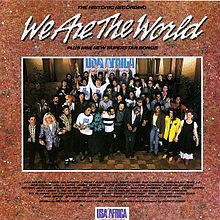 By the mid-1980s, Springsteen had developed from a hungry Jersey street rat to an arena-filling superstar, selling millions of copies of albums and singles alike. Behind that image, though, he still loved just sitting around listening to obscure songs from the ’50s and ’60s, looking for diamonds in the rough that he might polish up and tackle in one of his live shows. One of those was a song he found on the B-side of a single by Jamaica reggae musician Jimmy Cliff. It was called “Trapped,” and its lyrics spoke of the powerlessness of a person living in a land where the privileged few thrive at the expense of the many. Springsteen and The E Street Band converted it from an uptempo, perky reggae song into a rock powerhouse during his “Born in the USA” tour. A live recording of “Trapped” was donated to the “We Are the World” charity album, and although it received more airplay at the time than any other track besides the title song, you don’t hear it enough anymore…
“Tops,” The Rolling Stones, 1981
 The heart of The Rolling Stones through the years has been the sometimes fragile partnership of Mick Jagger and Keith Richards, who wrote the bulk of the group’s repertoire. In 1980, the duo were in the midst of significant friction for the first time, so producer Chris Kimsey dug into the vaults and found nearly a dozen tracks in various stages of completion that could be cobbled together to make a new album, which turned out to be their last US #1 LP, “Tattoo You,” released in August 1981. The rocking “Start Me Up” and acoustic “Waiting on a Friend” were both huge hits, but there were also several other gems. “Tops” was actually begun nearly ten years earlier during the 1972-1973 “Goats Heads Soup” sessions, when Mick Taylor was still playing guitar in the group. Jagger’s vocals, recorded in 1981, bring this track and its slow, loping tempo to a zenith.
“For a Dancer,” Jackson Browne, 1974
 Although his biggest commercial success came with 1977’s “Running on Empty” LP and a few hit singles that followed, Jackson Browne’s best songs, in my opinion, came early on in his career. He was still a teenager when he was getting noticed for wise-beyond-his-years compositions like “These Days,” “Rock Me On the Water” and “For Everyman.” Indeed, I’ve found his lyrics to be his greatest strength, better than his song crafting in most cases. So many fine pieces in his repertoire, up to and including his underrated 2014 LP, “Standing in the Breach,” but for me, you just can’t beat the extraordinary songs from 1974’s “Late for the Sky.” His paean to Joni Mitchell, “Fountain of Sorrow,” is widely praised, but less heralded is “For a Dancer,” a poignant tribute to a dancer friend who perished in a house fire. It concludes, “In the end, there’s one dance you do alone,” referring to life itself being a sort of dance.
“Heaven Knows,” Robert Plant, 1988
 While Led Zeppelin’s musical maestro Jimmy Page chose to mostly withdraw from the music scene in the aftermath of the supergroup’s disbanding in 1980, vocalist Robert Plant went the other route. He assembled a new band, released five albums in seven years, and toured almost continually. In fact, he’s still at it in the new millennium, collaborating with old and new musical partners, with mostly favorable results. In 1988, his album “Now and Zen” went triple platinum, and radio program directors were inexorably drawn to “Tall Cool One” because of its use of multiple samples from Zeppelin tracks. My overwhelming favorite, though, is the album’s opener, “Heaven Knows,” a marvelously dreamy rocker with Plant singing in his most melodious range. If the guitar parts sound like Zeppelin, that’s because Page showed up to contribute on the track.
“Be Cool,” Joni Mitchell, 1982
 By the time the 1980s arrived, Mitchell had been through several sea changes in her career: Canadian prairie folksinger, Lady of Laurel Canyon during the era of Woodstock, LA-slick commercial artist on “Court and Spark” and “Miles of Aisles.” Her late-’70s move into jazz territory was met first with keen interest and then with outright disdain by many in her audience. Her return to more pop-rock material with 1982’s “Wild Things Run Fast” was a welcome development to her long-time fans, but the music scene had changed so much that her work was largely ignored by radio, which was a shame. The LP is full of great, accessible music and lyrics, with equal touches of rock, pop, folk and jazz. Joni said she had been inspired by the latest work of The Police, Steely Dan and The Talking Heads, and the deep track “Be Cool” sounds most like Steely Dan.
“On the Road to Find Out,” Cat Stevens, 1970
 The nearly three decades Cat Stevens spent in self-imposed exile from the pop music scene made many of his fans appreciate his early music all that much more. Listening to his best three LPs, and his recent live performances of those great songs, has given me a stark reminder of what a brilliant talent he was and still is. I don’t begrudge anyone their passions, be they spiritual or whatever, but to deny the world and one’s self the beauty of music like “Tea for the Tillerman,” “Teaser and the Firecat” and “Catch Bull at Four” strikes me as indefensible. “Tillerman” in particular is one of the best albums of the entire 1970s singer-songwriter genre, and not just the better-known tracks like “Wild World” and “Father and Son.” Check out “On the Road to Find Out,” which has such deep lyrics about everyman’s life search, put to a delightful melody. Revel in this stuff!
 He’s been doing this for a dozen years now, and it turns out he’s been nobly carrying on the tradition started by one of his friends who passed away in 2006.
 Formed in 1989 in Miami, The Mavericks made their mark writing and performing an eclectic mix of Tex-Mix, rockabilly, country and Latin, releasing a half-dozen albums between 1991 and 2003, three of which reached the Top Ten on the US Country charts. They also won a Grammy for their single “Here Comes the Rain” in 1996. They reunited in 2013 and continue to make waves on the Country charts, most recently with “Hey! Merry Christmas!” released last month. The Mavericks released the rousing “Christmas Time is Coming ‘Round Again” last year as a single, and it did so well that they chose to put together an album’s worth of material for this year. I’ve selected two tracks from that LP — last year’s hit for the family, and another one with a more naughtily suggestive message.
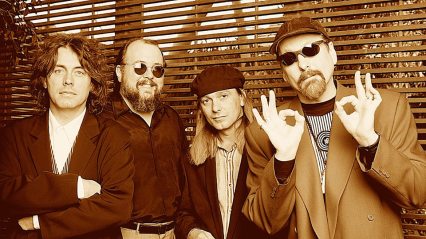 Illinois-based Cheap Trick formed in the mid-1970s, and first became successful in Japan before hitting it big here in 1979 with their “Dream Police” LP. Singles like “I Want You to Want Me” and “The Flame” and covers of Elvis’s “All Shook Up” and “Don’t Be Cruel” were big hits on the singles charts during the 1980s as well. They have continued to tour and release new LPs well into the 2000s, and were inducted into the Rock and Roll Hall of Fame last year. From “Christmas Christmas,” a 2017 holiday collection, I’ve selected “Merry Christmas Darlings,” an original by veteran members Rick Nielsen, Robin Zander and Tom Petersson.
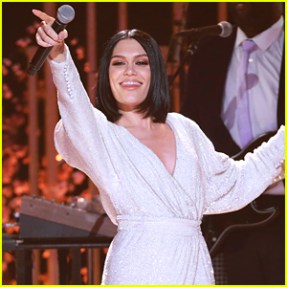 Hailing from Essex outside London, Jessica Cornish got her start as a child actress and then a songwriter before adopting the stage name Jessie J and signing as a recording artist. Her 2011 debut LP, “Who You Are,” spawned five Top Ten singles in the UK, including “Do It Like a Dude” and two #1 hits, “Price Tag” and “Domino.” The latter reached #6 on the US charts and pushed “Who You Are” to #11 on the album charts here. Her superb voice has brought her continued successes through the decade, and this year she dropped “This Christmas Day,” a holiday album featuring a number of guest artists. I was particularly taken by two songs — the title track, a Jessie J original, and her rendition of the 1950 Dudley Brooks-Irving Taylor classic, “The Man With the Bag.”
 Rick Sherry, Joel Patterson and Beau Sample formed Devil in a Woodpile in the mid-’90s, playing country blues and jug music, most of it covers of traditional tunes with a few originals scattered in. They played in and around Chicago for most of their existence, and just last year, they reunited and came up with “13 Day of Xmas,” which included “The Pagans Had It Right,” a whimsical, cynical look at the crass commercialization and drunken revelry so prevalent in the Christmas season these days: “Baby Jesus shoulda lawyered up, put a trademark on his brand, the pagans had it all figured out, debauchery through the land…”
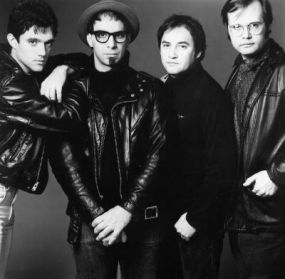 The Ramones, never a commercial success but hugely influential as a New York punk rock band, released 14 albums in 19 years between 1976 and 1995. Their 11th LP, “Brain Drain,” included “Pet Sematary,” featured in the Stephen King film of that name, and also “Merry Christmas (I Don’t Want to Fight Tonight),” Joey Ramone’s ragged attempt at a holiday tune. In 2007, The Smithereens, a Jersey-based rock band with a few modest hits (“Only a Memory,” “A Girl Like You”), did an admirable cover of the Ramones’ Christmas song, and I’ve included it here.
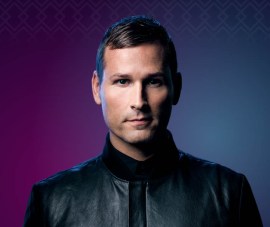 A producer, remixer and DJ named Ryan Raddon took on the stage name of Kaskade in 1995 when he was living in San Francisco, where a genre known as “deep house” was taking hold. By 2001 he became a recording artist in his own right, focusing on house, electronic and dance music. Kaskade’s albums and singles became popular on the dance club airplay listings, and by 2013, he was being nominated for multiple Grammy awards and co-headlining the Coachella festival. Last year, he
  released “Kaskade Christmas,” on which he rearranged traditional Christmas music and invited excellent vocalists to collaborate with him. My favorite track features the superb Skylar Grey singing “O Come Emmanuel.” Grey had a 2013 Top Ten LP, “Don’t Look Down,” has been a featured singer on many other artists’ hits, including Dr. Dre, Eminem, Moby, Fort Minor and Macklemore, and turned in a memorable 2017 performance on Saturday Night Live with Eminem singing a medley of “Walk on Water/Stan/Love the Way You Lie.”
 Debuting as the 17-year-old singer in her brother’s ska band No Doubt in 1986, Stefani has built a formidable career in the 30 years since. No Doubt’s 1995 “Tragic Kingdom” LP, with its international #1 smash hit “Don’t Speak,” put Stefani at the top of the heap, and she made multiple chart appearances with No Doubt, as a solo artist, and in various collaborations over the next two decades. She has also appeared in films, launched fashion lines and been active philanthropically. Last year she released her first holiday LP, “You Make It Feel Like Christmas,” the title track of which emerged as a popular duet written and recorded with her current romantic interest, Blake Shelton. I’ve included it on this setlist, and also added the lovely ballad, “Christmas Eve,” co-written by Stefani.
 Hanson will no doubt forever be best known for the 1997 international #1 single “MMMBop,” and its multiplatinum album “Middle of Nowhere,” which put the trio of teenaged brothers at the top of the pop music business for a spell. They had success with a Christmas album recorded that year (“Snowed In”), but then a corporate merger saw their label swallowed by Island Def Jam, where they were neglected and ultimately cast aside. The trio eventually started releasing independently produced albums that helped them resume their career throughout the 2000s, with chart appearances in the high 20s. Last year’s “Finally It’s Christmas” was among several holiday albums receiving high critical marks, largely for the catchy title track, released to commemorate the trio’s 25th anniversary.
 Although recognized as a musical prodigy at age 7, Gaspard Royant struggled in his efforts to become a professional musician until he was nearly 30. Originally from a small French town on the Swiss border, he ultimately moved to Paris, where he began composing for film, receiving prizes at choral festivals and eventually recording and performing his own material on tour. On the strength of successful Christmas singles on European charts in 2014 and 2015, Royant released the “Wishing You a Merry Christmas” LP last December, which gained him his first US radio airplay. The track I found most distinctive was “Everything’s Gonna Be Cool This Christmas.”
 New York-based singer-songwriter-pianist Michaelson emerged from New York state college theater environments to write and record music in 2005, ultimately charting three Top Five albums in the 2010s, including “Human Again” (2012) and “Lights Out” (2014). When she began work on a Christmas album earlier this year, she wanted to focus on traditional holiday songs as performed by Frank Sinatra, Judy Garland and others from the 1940s-1950s period. She completed a set of 11 cover versions but couldn’t resist including one original, “Happy, Happy Christmas,” which was dedicated to the recent deaths of her parents. Having lost my mother a couple of months ago, I was moved to include this track for the same reason.
 Grace Potter is a Vermont-based multi-instrumentalist who formed Grace Potter and The Nocturnals in 2002 and has periodically released albums with the band and on a solo basis. The group’s strong 2010 LP, “Grace Potter and the Nocturnals,” reached #19 on the US album charts and #3 on mainstream rock lists. The following year, Potter was asked to be the voice of Carol in an animated Disney project, the holiday-themed “Prep & Landing: Naughty vs. Nice,” for which she also wrote and recorded “Naughty Naughty Children (Better Start Acting Nice).” Although it’s highly derivative of Chuck Berry’s classic “Run Rudolph Run,” it has a new millennium feel to it that I found compelling.
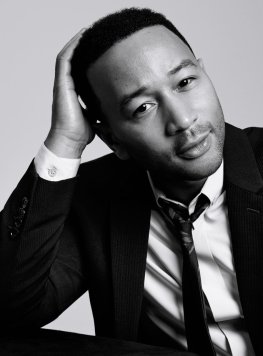 Born John Stephens in 1978, Legend was an instant success with his “Get Lifted” album debut in 2004, and his multiple talents since then have earned him kudos as the first African-American recipient of the EGOT (Emmy, Grammy, Oscar, Tony) designation. In 2014, Legend co-wrote and sang the Oscar-winning “Glory” for the film “Selma,” and had the second-best-selling song of the year (“All of Me”). In 2016, he won an Emmy for performing the title role in the live TV special of “Jesus Christ Superstar,” and then this year, he released his first holiday LP, “A Legendary Christmas,” which includes eight traditional songs and six Legend originals, most notably the Motown-ish Christmas track “Bring Me Love.”
 John Lennon’s and Yoko Ono’s musical call for peace at Christmastime 1971 was released as a single that year but didn’t get much airplay. Once Lennon was assassinated during the Christmas season nine years later, it became a haunting, ironic reminder of the senselessness of violence and war, especially in a time of peace and good will. Since then, this revered song has been covered in a wide variety of arrangements by dozens of artists, ranging from Carly Simon to The Moody Blues, from Jimmy Buffett to Darlene Love, from Celine Dion to Pat Travers, from Josh Groban to REO Speedwagon. I happen to be partial to the gentle treatment that singer-songwriter Emily Hackett gives to it, and I think you’ll agree.
 Hack's Back Pages