Straighten up and fly right
Today’s topic is what some rock music fans might call “a buzzkill.”
As most everyone knows, “sex and drugs and rock ‘n roll” was a sort of unofficial mantra of the rock music scene in the ’60s, ’70s and ’80s. Free love, recreational drugs and energetic rock comprised the hat trick of vices scorned by proper society, but to the generation in the thick of it, they were more of a menage à trois, the necessary components of a good time on Saturday night (or any night).
 The thing is, when it came to drugs and alcohol, plenty of people overdid it, many because they had developed addictions and obsessive compulsions to keep using when others had stopped.
Musicians in particular were susceptible to this excessiveness because of easy availability and ubiquitous use/abuse among all those around them. Sad to say, too many talented artists perished from their own self-destructive tendencies or reckless disregard for their own health and safety. The list is too long and too familiar: Janis Joplin, Jimi Hendrix, Jim Morrison, Keith Moon, Lowell George, John Bonham, Bon Scott, Kurt Cobain…
 Still, there are tales of triumph, too. Eric Clapton, Joe Walsh and Ringo Starr, to name three famous examples, all went through a couple of decades of chronic abuse of coke, booze, pills and/or opioids that probably should’ve killed them, as it did their unfortunate peers. But instead, they saw the light, went to rehab, recovered and have now led sober lives for nearly 30 years now.
In celebration of these guys and all those who are in recovery (including me), let’s take a look at some notable anti-drug rock songs that deal with either the despair of addiction or the joy of recovery.
Let’s start with Joe Walsh, who went straight in the early ’90s as a pre-condition of  his participation in the reunion of The Eagles. Walsh himself tells the story:
“For a long time, my alcoholism and use of drugs was manageable. By that I mean I would hang out with people who would say, ‘Well, you’re not so bad!’ But you know, it’s a disease, and the last two or three years of my addiction were terrifying. It gets bad beyond your wildest imagination, and then you crash and burn, and then it gets worse than that. An awful lot of my buddies died before they hit bottom. Fortunately, I hit bottom before I died.
“Getting sober was the hardest thing I’ve ever had to do, because alcohol had convinced me that I couldn’t do anything without it. You start with not knowing how to do anything sober, and you just build up your toolbox. For a long time, I thought there was a possibility I might not be able to write music sober. And I said, ‘If that’s the case, I’m just going to have to accept that.’
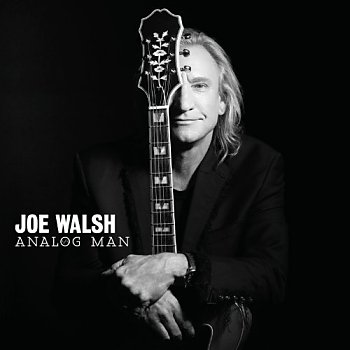 “So I stopped trying to write, but then one day this song ‘One Day at a Time’ (found on his 2012 “Analog Man” LP) kind of wrote itself. I ended up telling my story about what it was like to be an addict, and my road to getting sober. It just came out of me. But the trick was I had to stop trying. And so many addicts and alcoholics have contacted me to say they know exactly what I’m talking about in this song. I’m saying there’s life after addiction, and it’s good.” Sample lyrics: “Well I finally got around to admit that I was the problem, when I used to put the blame on everybody’s shoulders but mine, all the friends I used to run with are gone, Lord, I hadn’t planned on living this long, but I finally learned to live my life one day at a time…”
“Kicks,” Paul Revere & the Raiders, 1966
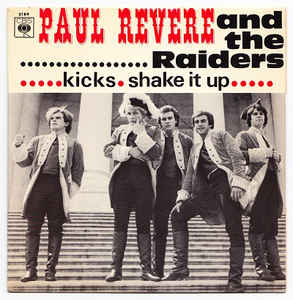 This one is considered the first pop anti-drug song, which came out just as the recreational drug scene was blossoming. It’s a great little tune, expertly produced by Terry Melcher, and written by pop songwriting gods Barry Mann & Cynthia Weill as a plea to their dear friend and lyricist Gerry Goffin (Carole King’s husband), who was headed off the deep end with drug use. The upshot was, because of their involvement with this song, Paul Revere and the Raiders, who were never really a “hip” band, became somewhat blackballed by the counterculture as “a tool of the Establishment” (in ’60s lingo). Sample lyrics: “Well, there’s nothing that you ain’t tried to fill the emptiness inside, but when you come back down, girl, still ain’t feeling right, don’t it seem like kicks just keep getting harder to find, and all your kicks ain’t bringing you peace of mind, before you find out it’s too late, girl, you better get straight…”
“Cocaine,” Eric Clapton, 1977
 Clapton had kicked a nasty heroin habit in the mid-’70s, but he then merely substituted copious amounts of alcohol instead. When he recorded the J.J. Cale song “Cocaine” in 1977, he was drinking heavily every day and using coke as well. He finally sobered up in 1988 and has stayed drug-free ever since, even establishing rehab clinics and sponsoring fundraising events. Clapton maintains that Cale wrote “Cocaine” as a subtle anti-drug song. “He knew if he tried to write a deliberately anti-drug song, it wouldn’t go over with the record buyers. It would irritate them to have someone shoving that message down their throat. So instead he wrote the lyrics in a cleverly ambiguous way. If you don’t listen closely, it just sounds like a song about cocaine, neither pro nor con. But if you reflect on it a bit, really look at the words, you’ll see it’s saying that cocaine is no good.” Sample lyrics: “If your thing is gone and you want to ride on, cocaine, don’t forget this fact, you can’t get it back, cocaine, she don’t lie, she don’t lie, she don’t lie, cocaine…”
“That Smell,” Lynyrd Skynyrd, 1977
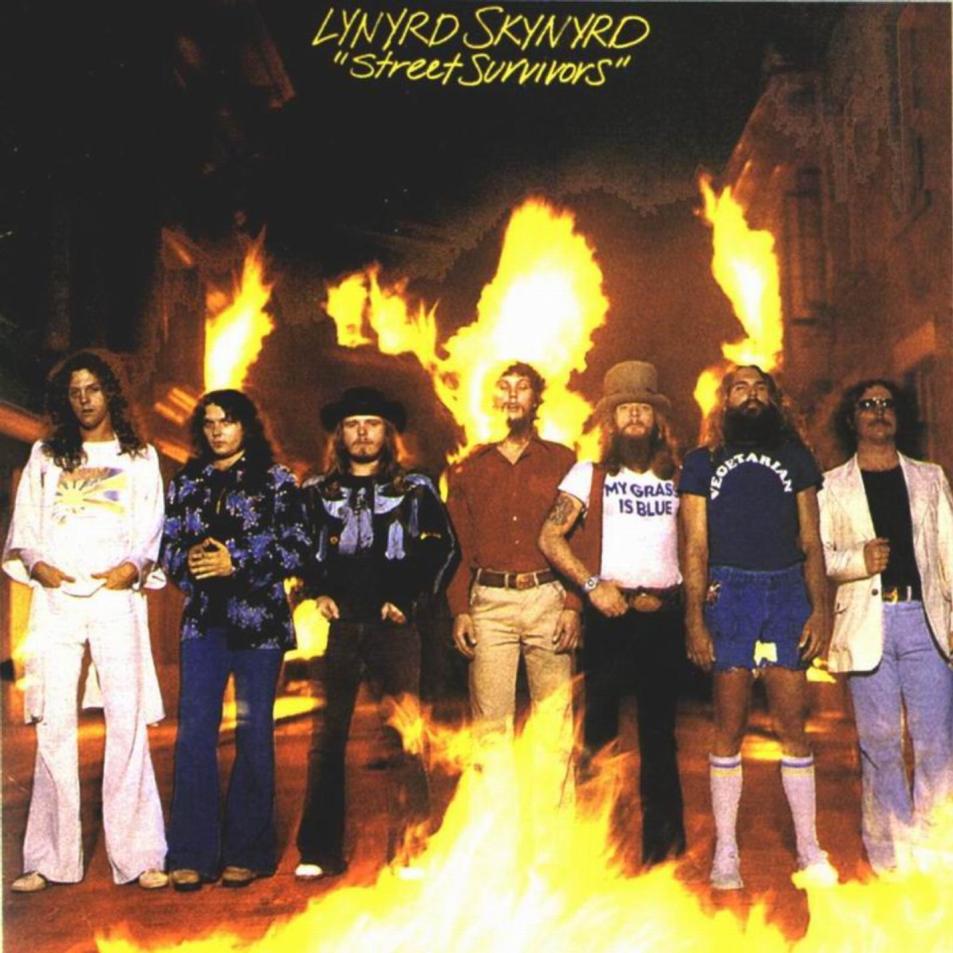 As Lynyrd Skynyrd grew successful, singer Ronnie Van Zant was becoming concerned about the band’s increasingly reckless indulgences, including his own. A near-fatal car crash by guitarist Gary Rossington ultimately led Van Zant to write “a morbid warning song” about the possible consequences of careless overuse of drugs and alcohol. In the wake of a plane crash that claimed Van Zant, guitarist Steve Gaines and others, only three days after the album’s release, “That Smell” became notorious, thanks to the line “The smell of death surrounds you.” While the crash had nothing to do with substance abuse, the lyrics offered dire warnings about it: “Angel of darkness is upon you, stuck a needle in your arm, so take another toke, have a blow for your nose, one more drink, fool, will drown you, ooh that smell, the smell of death surrounds you…”
“Snowblind Friend,” Steppenwolf, 1970
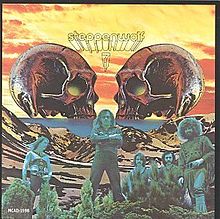 Thanks to songs like “Magic Carpet Ride” and “Don’t Step on the Grass, Sam,” Steppenwolf had an image as a “druggie band,” but like many quickie interpretations, this reading was wrong. As it turns out, the group, popular between 1968-1975, mostly shunned drugs. In fact, “The Pusher,” made famous by its inclusion in the soundtrack of the counterculture classic “Easy Rider,” was an anti-drug song, pointing the finger at the guy who enables the addicts. Country singer-songwriter Hoyt Axton wrote it, along with another song about the tragedy of drug abuse, “Snowblind Friend,” which lead singer John Kay liked and brought to the group. It focuses on the difficulty of trying to help a cocaine addict: “He’ll always be a problem to his poor and puzzled mother… He said he wanted heaven, but praying was too slow, so he bought a one-way ticket on an airline made of snow, did you say you saw your good friend flying low, dying slow…”
“No No Song,” Ringo Starr, 1975
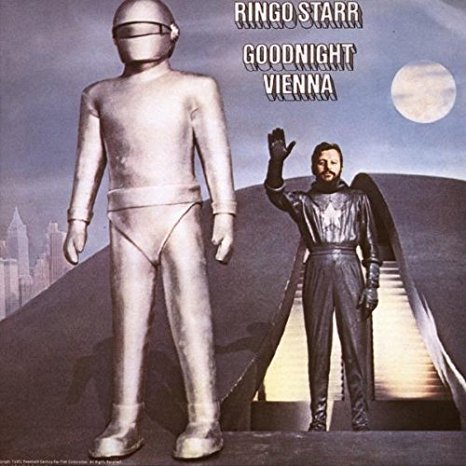 Hoyt Axton shows up again as the songwriter, this time for a #3 hit song that takes a whimsical approach to drugs and alcohol. Ringo sings the tale of the narrator, a recovered alcoholic/addict who is offered Colombian grass, Spanish cocaine and Tennessee moonshine, only to refuse them all because “I’m tired of waking up on the floor.” Axton, who had struggled with addiction early in his career, claimed he was poking fun at himself. Ringo, meanwhile, with a touch of irony, was a heavy drinker and pot smoker at the time the track was recorded, but he got clean in the late ’80s and has been sober ever since. He still sings the song in concert: “No no no no, I don’t smoke/snort/drink it no more, I’m tired of waking up on the floor, no thank you please, it only makes me sneeze, and then it makes it hard to find the door…”
“Running to Stand Still,” U2, 1987
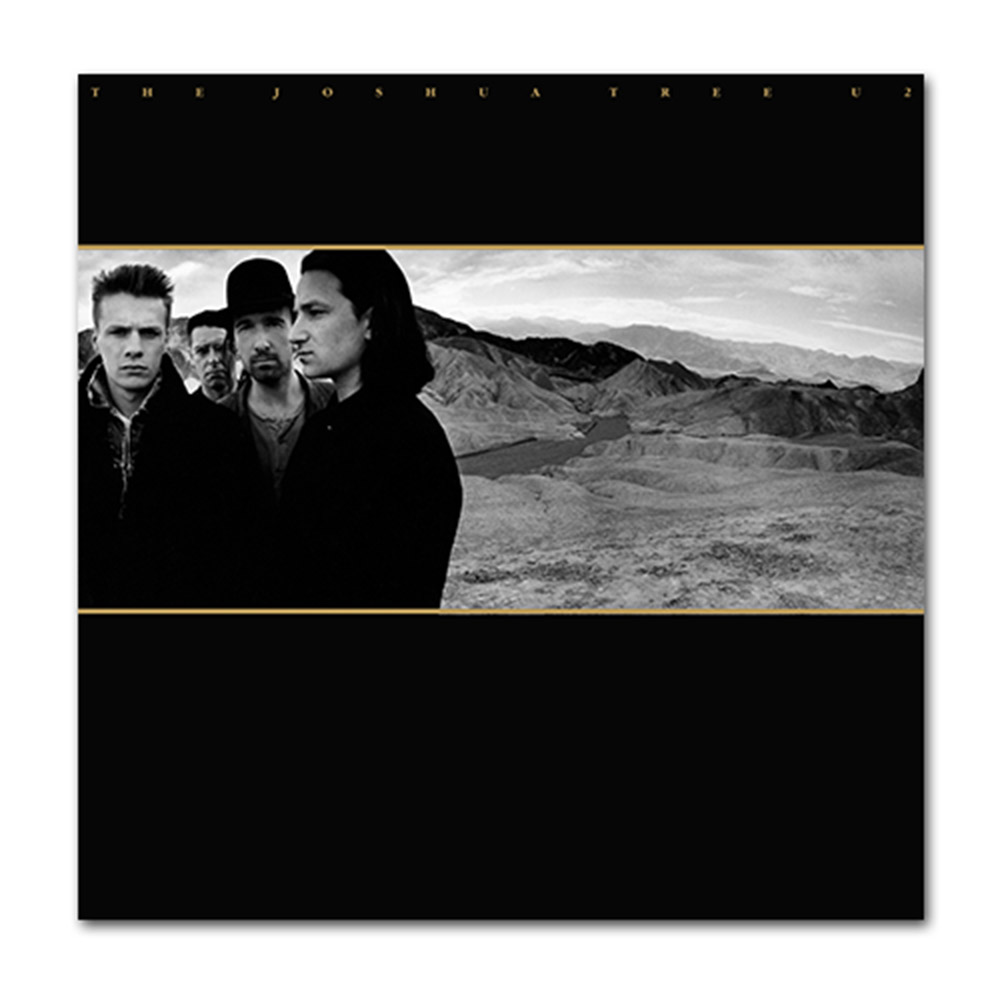 The song’s title phrase originated from Bono asking his brother how his struggling business was going. He replied, “It’s like running to stand still.” Bono was intrigued by the phrase, and thought it expressed what he’d been told about heroin addiction, which was raging through his native Dublin in the 1980s. In his review of U2’s “The Joshua Tree” LP, Andrew Mueller of The Ultimate Music Guide agreed, saying the phrase was “a perfect distillation of the dynamic of feeding on addiction. You’re always running, but you’re going nowhere.” The song describes a woman’s hellish life on heroin: “She runs through the streets with eyes painted red, under a black belly of cloud in the rain, in through a doorway she brings me white gold and pearls stolen from the sea, she is raging, and the storm blows up in her eyes, she will suffer the needle chill, she is running to stand still…”
“Amazing,” Aerosmith, 1993
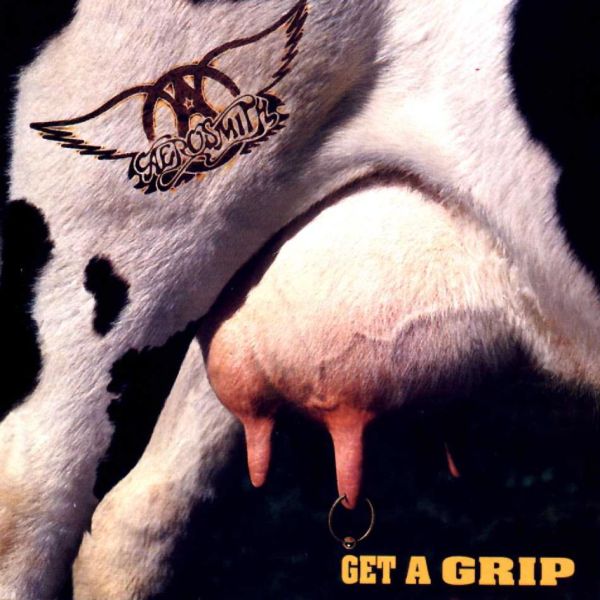 Everyone in Aerosmith has confessed to abusing drugs and/or booze during their initial run of success (1973-1979), and the group’s early ’80s splintering was due to internal tensions exacerbated by drugs. Singer Steven Tyler in particular had several embarrassing public episodes, including passing out on stage, which ultimately led to an intervention and a lengthy stay in rehab. By 1989, the group was clean and back on top of the charts to stay. For the 1993 multiplatinum LP “Get a Grip,” Tyler (with help from songwriter Richie Supa) wrote the power ballad “Amazing” about his sobriety. The lyrics do a commendable job of explaining the desperation of bottoming out and the exhilaration of recovery: “There were times in my life when I was going insane, I was so sick and tired of living a lie, I was wishing that I would die… It’s amazing, with the blink of an eye you finally see the light, it’s amazing, when the moment arrives that you know you’ll be all right, it’s amazing, and I’m saying a prayer for the desperate hearts tonight…”
“The Needle and the Damage Done,” Neil Young, 1972
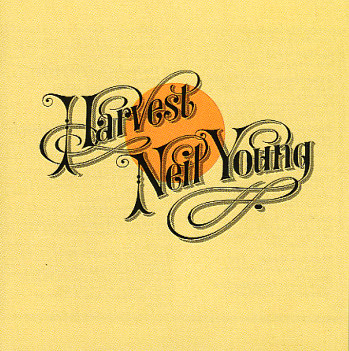 This delicate, haunting Young tune deals succinctly with his grief over the heroin overdose of friend and Crazy Horse bandmate Danny Whitten. Appearing as a deep track on his #1 LP “Harvest” in 1972, this song summarizes Young’s experience with drug tragedies. “I got to see a lot of great musicians who nobody ever got to see because of heroin. And it started happening over and over again. Then it happened to someone I knew. So I just wrote a little song.” Sample lyrics: “I hit the city and I lost my band, I watched the needle take another man, gone, gone, the damage done…”
“Stone Cold Sober,” Del Amitri, 1989
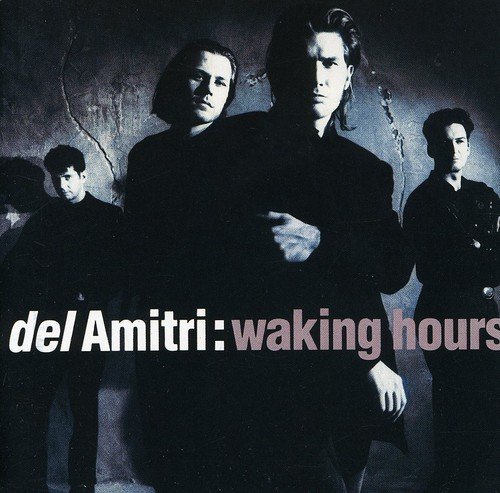 I found it curious that there are about a dozen songs with this title, and only a couple have anything to do with being sober! In fact, Rod Stewart’s 1975 track is all about not wanting to be stone cold sober. The British band Crawler had a great 1977 song with that name, but it has more to do with wanting to flee town on the next train. On its 1989 debut LP, “Waking Hours,” the Scottish band Del Amitri recorded its take on “Stone Cold Sober,” written by guitarist/singer Justin Currie, that explores the endlessly vicious circle of obsession with alcohol: “And these dark days make the nights seem brighter than they are… So we get loaded and totally legless, but stay the same, I may be stone cold sober, but I’m looking for bottles of love…”
Other anti-drug songs from the ’60s, ’70s and ’80s to check out: “Beware of the Man (With the Candy in His Hand),” The Dramatics, 1973; “I’d Rather Go Blind,” Etta James (1967); “Just Dropped In,” Kenny Rogers & The First Edition (1968); “Demon Alcohol,” Ozzy Osbourne (1988); “Needle of Death,” Bert Jansch (1965).
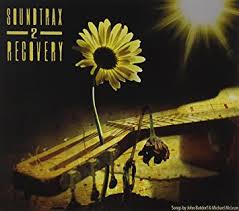 Songs concerning addiction or recovery seem to have become more prevalent in recent years. Coincidentally, both Kelly Clarkson and Pink recorded different tunes called “Sober” in 2007 and 2008, respectively. In 2014, Seventies singer-songwriter John Batdorf released “Soundtrax 2 Recovery,” an extraordinary collection of sensitive tracks inspired by the 12-Step program of Alcoholics Anonymous.
Here are just a few more examples of such songs released in the past 25 years:
“Wise Up,” Aimee Mann, 2004; “It’s Been a While,” Staind (2001); “Young Homie,” Chris Rene (2012); “Fallen,” Sarah McLachlan (2004); “Slow Suicide,” Scott Stapp (2006); “Powder Blue,” Elbow (2001); “Habit,” Pearl Jam (1996); “Devil in a Bottle,” Lynyrd Skynyrd (1994); “The Drugs Don’t Work,” The Verve (1997); “Whiskey Lullaby,” Brad Paisley w/Alison Krauss (2004).
 Jimmy Buffett has released nearly three dozen albums over four-plus decades, each containing at least one whimsical track. A quick look at a partial list of song titles alone should have you chuckling: “The Weather is Here, Wish You Were Beautiful,” “It’s Five O’Clock Somewhere,” “Off to See the Lizard,” “Why Don’t We Get Drunk and Screw,” “It’s Midnight and I’m Not Famous Yet,” “We Are the People Our Parents Warned Us About,” “Trying to Reason with Hurricane Season.” He’s even got a song called “Door Number Three” that tells the tongue-in-cheek story of a contestant on the game show “Let’s Make a Deal.”
 Randy Newman has used humor in his songs ever since his 1968 debut LP, which includes “Mama Told Me Not to Come,” the song (later made into a #1 hit by Three Dog Night) about the awkward boy at a party who wished he’d listened to his mother’s advice. Ten years later, he had his own hit, “Short People,” which used dry humor to skewer those who discriminate against people who are different than they are.
 Although known more for lyrics of poignancy and melancholy, Paul Simon has written some funny lyrics as well. From 1970’s “Cecilia”: “I got up to wash my face, when I come back to bed, someone’s taken my place…” From 1973’s “Kodachrome”: “When I think back on all the crap I learned in high school, it’s a wonder I can think at all…” From 1986’s “You Can Call Me Al”: “Why am I soft in the middle when the rest of my life is so hard?…”
 Joe Walsh employed self-deprecating humor to satirize his rock star lifestyle in the 1978 hit “Life’s Been Good”: “My Maserati does 185, I lost my license, now I don’t drive… I got me an office, gold records on the wall, just leave a message, maybe I’ll call…”
  Even rock gods like The Beatles weren’t above knocking off a track that amounted to comedy. On the flip side of the “Let It Be” single, released as the band was breaking up in 1970, there was a strangely funny piece called “You Know My Name (Look Up the Number),” which saw the Fab Four horsing around in a variety of voices and styles that put an emphatically comic exclamation point on their otherwise sterling career.
 C.W. McCall’s 1976 disgrace “Convoy” a #1 hit. That same year, Rick Dees rode the tails of the disco craze with the excruciatingly idiotic “Disco Duck.”
 Singer songwriter Harry Nilsson had a big hit in 1972 with “Coconut,” a silly tune about how a doctor prescribes a drink of coconut and lime to relieve a bellyache. Rock and roll icon Chuck Berry even found his way to #1 on the charts a few months later with “My Ding-a-Ling,” a throwaway ode to his penis.
 trials and tribulations of summer camp: “All the counselors hate the waiters, and the lake has alligators, you remember Jeffrey Hardy, they’re about to organize a searching party…” Seventies comic sensation Steve Martin made the hit parade in 1978 with his hilarious single, “King Tut,” a spoof of the Egyptian boy-king: “Born in Arizona, moved to Babylonia, King Tut…”
 Michael Jackson’s #1 smash “Beat It,” where he lambastes a kid’s fussy eating habits. He had plenty more along these lines, poking fun at songs by Madonna (“Like a Surgeon”), The Knack (“My Bologna”), Queen (“Another One Rides the Bus”), Joan Jett (“I Love Rocky Road”), Huey Lewis (“I Want a New Duck”), James Brown (“Livin’ With a Hernia”) and Cyndi Lauper (“Girls Just Want to Have Lunch”), to name just a few from his first few albums in the mid-’80s.
 Guitarist Angus Young of the heavy metal band AC/DC poked fun at the band’s critics this way: “I’m sick to death of people saying we’ve made 11 albums that sound exactly the same. In fact, we’ve made 12 albums that sound exactly the same.”
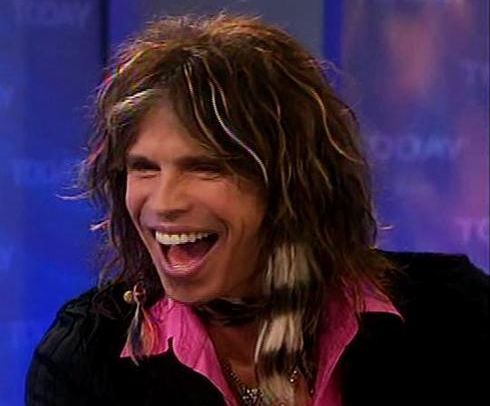 In defending his many years of excessive bad-boy behavior, Aerosmith’s Steven Tyler said, “We believed anything that was worth doing was worth overdoing.”
 Guitar great Jeff Beck, saying he was overwhelmed upon first seeing Jimi Hendrix perform, said, “After I saw Jimi play, I just went home and wondered what the hell I was going to do with my life.”
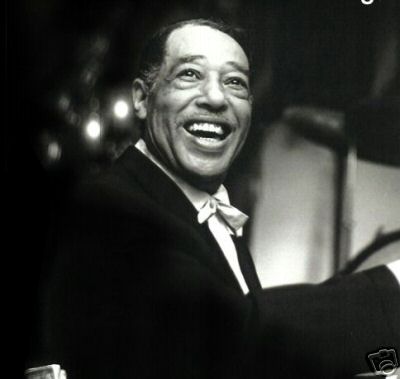 Big-band bandleader Duke Ellington: “I never had much interest in the piano until I realized that every time I played, a girl would appear on the piano bench to my left and another to my right.”
