Lay back and groove on a rainy day
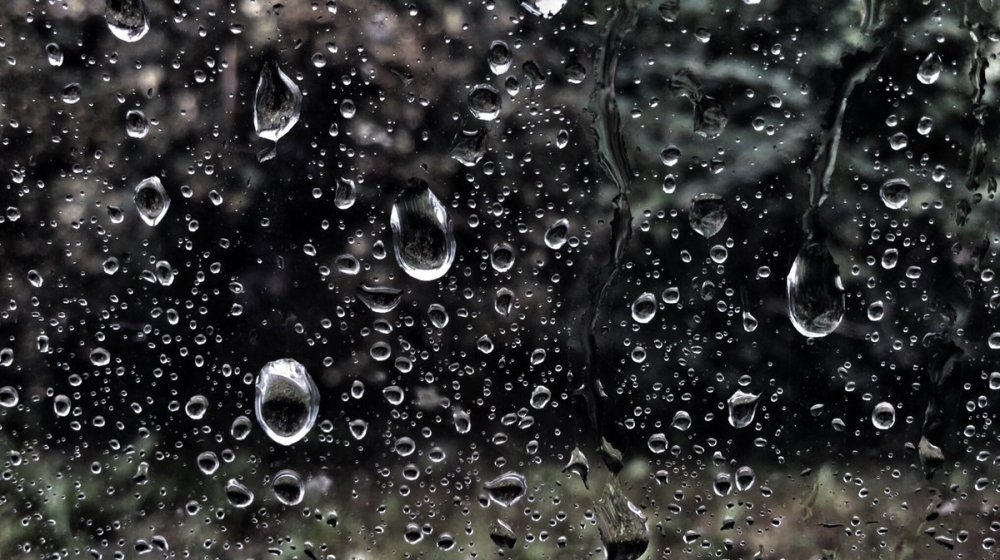 When it rains, people’s moods change. They turn inward, get a little reflective, maybe even cranky or depressed. As Karen Carpenter used to sing, “Rainy days and Mondays always get me down…”
But it doesn’t have to be that way. It’s all in your attitude. You can’t control the weather, so just live with it. Enjoy indoor activities. Or maybe throw on a raincoat and boots and  take an invigorating walk in the rain. As The Weather Girls sang, “I’m gonna go out, I’m gonna let myself get absolutely soaking wet!…”
As is often the case, music can help set any mood. Whether you dread rainy days or welcome them for their rejuvenating, cleansing benefits, songs about rain can be wonderful companions as you embrace the day in whatever mood strikes you.
I’ve selected 20 songs of various genres and vintages, with lyrics that examine how rain affects what we do and how we feel about it.
On the next rainy day that comes along, I hope you click on this setlist (on Spotify below) to keep you company!
************
 “Rain,” The Beatles, 1966
This Lennon track broke new ground in Beatles studio productions as the flip-side of the “Paperback Writer” single during the “Revolver” sessions, spring of 1966. In addition to some amazing drum work by Ringo, the track features some startling backward-tape vocals of the line “If the rain comes, they run and hide their heads,” and lyrics that are matter-of-fact about whether the weather calls for sun or rain: “Rain, I don’t mind, shine, the weather’s fine, can you hear me, that when it rains and shines, it’s just a state of mind, can you hear me?…”
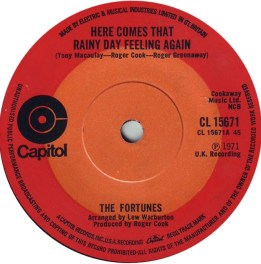 “Here Comes That Rainy Day Feeling Again,” The Fortunes, 1971
This British harmony beat group hit the US Top Ten in 1965 with “You’ve Got Your Troubles,” and they were the band behind the 1969 Coke commercial theme song, “It’s the Real Thing.” In 1971, The Fortunes had a #15 hit with an earworm by Tony Macauley that captured the analogy between rain and heartbreak: “Here comes that rainy day feeling again, and soon my tears they will be falling like rain, it always seems to be a Monday, leftover memories of Sunday, always spent with you until the clouds appeared and took away my sunshine…”
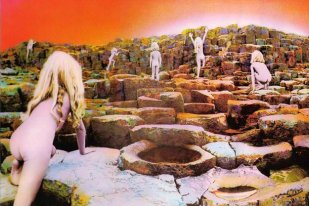 “The Rain Song,” Led Zeppelin, 1973
George Harrison once told Jimmy Page that Led Zeppelin should do more ballads, and Page came up with this seven-minute beauty from the “Houses of the Holy” LP. Robert Plant, who has said this is one of his favorite recorded vocal tracks, wrote lyrics that examine the variety of emotions we experience as the seasons change, using rain as a metaphor for life’s twists and turns that we must endure: “Upon us all, upon us all a little rain must fall…it’s just a little rain…”
 “I’ll Take the Rain,” R.E.M., 2001
Lead singer Michael Stipe implores us to “celebrate the rain” in this melodic track from R.E.M.’s eighth Top Ten LP, 2001’s “Reveal.” It did well as a single in the UK but stiffed here, which is a pity, because it’s a real winner. The lyrics point out how, sometimes, the rain is the better option: “You cling to this, you claim the best, if this is what you’re offering, I’ll take the rain…”
 “Rainy Day Man,” James Taylor, 1969
First released on Taylor’s overlooked debut album, and re-recorded in 1979 on his “Flag” LP, this wonderful song offers emotional support in the form of a shoulder to cry on when times are hard: “It looks like another fall, your good friends don’t seem to help at all, now when you’re feeling kind of cold and small, just look up your rainy day man…”
 “Here Comes the Rain Again,” Eurythmics, 1983
Dave Stewart, the musical maestro behind much of the Eurythmics’ catalog, said he wanted to compose “a song that went in and out of melancholy, using minor and major chords. I think it has a kind of dark beauty.” A synthesizer-based foundation was augmented by layers of orchestral tracks and Annie Lennox’s strong vocals, and the result was a #4 hit in the US. The lyrics have an “in and out of melancholy” nature too: “Here comes the rain again, raining in my head like a tragedy, tearing me apart like a new emotion, I want to breathe in the open wind, I want to kiss like lovers do…”
 “Early Morning Rain,” Gordon Lightfoot, 1966
So much angst in this classic folk song, one of the Canadian composer’s finest. It deftly describes how a drifter might have felt on a rainy morning in the mid-’60s, when he realizes his habit of hopping on freight trains was becoming obsolete in the new era of airplane travel: “This old airport’s got me down, it ain’t no earthly good to me, and I’m stuck here on the ground, cold and drunk as I might be, can’t jump a jet plane like you can a freight train, so I best be on my way, in the early morning rain…”
 “Rainy Day, Dream Away/Still Raining, Still Dreaming,” Jimi Hendrix, 1968
Many of the sessions for his “Electric Ladyland” double LP saw Hendrix jamming with guest musicians outside the Experience trio format. These two companion tracks, which began sides three and four, created the feeling that the rain was continuing to fall all day and night during recording. And hey, as Jimi says in his ’60s lingo, it’s all good: “Rainy day, rain all day, ain’t no use in getting uptight, just let it groove its own way, let it drain your worries away, lay back and groove on a rainy day…”
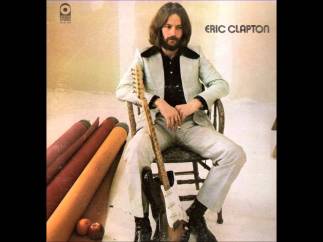 “Let It Rain,” Eric Clapton, 1970
Following his celebrated stints with John Mayall, Cream and Blind Faith, Clapton assembled an all-star team of musicians to help him produce his debut solo LP, notably Leon Russell, Stephen Stills, and Delaney Bramlett. The album’s best song is “Let It Rain,” a joyous, gorgeous track with a fantastic solo at the end. Originally called “And She Rides” with different lyrics, the finished track uses words that lovingly celebrate the healing power of rain: “The rain is falling through the mist of sorrow that surrounded me, the sun could never thaw away the bliss that lays around me, let it rain, let it rain, let your love rain down on me…”
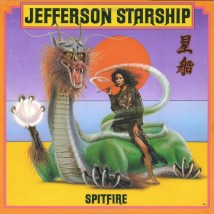 “Song to the Sun/Don’t Let It Rain,” Jefferson Starship, 1976
Almost as an answer to Clapton’s song, the Starship’s Paul Kantner wrote this epic anthem from their 1976 LP “Spitfire,” which pleads for the rain to stay away: “Don’t let it rain on me tonight, don’t let it rain, I need to feel the sun again, please don’t let it rain, rain…”
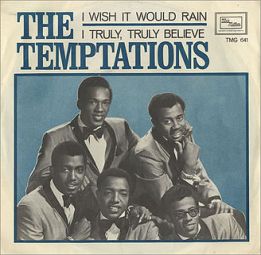 “I Wish It Would Rain,” The Temptations, 1967
The Motown songwriting team of Norman Whitfield and Barrett Strong did a marvelous job of showing how a heartbroken man can have trouble facing a sunny day, surrounded by happy people: “Day after day, I stay locked up in my room… my tear-stained face pressed against the windowpane, my eyes search the sky desperately for rain, ’cause raindrops will hide my teardrops… I just wish it would rain…”
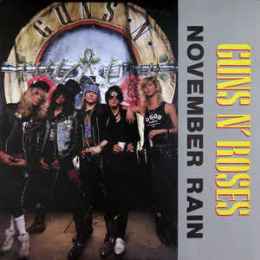 “November Rain,” Guns ‘n Roses, 1991
Lead singer Axl Rose worked on this brilliant power ballad for more than eight years before he finally got the recording he wanted, completed with sweeping orchestral backing and one of guitarist Slash’s best solos. “It’s about not wanting to have to deal with unrequited love,” said Rose, and the lyrics reflect the difficulty of wanting hope but feeling despair: “Nothing lasts forever, and we both know hearts can change, and it’s hard to hold a candle in the cold November rain…”
 “I Think It’s Going to Rain Today,” Randy Newman, 1966
One of Newman’s most covered compositions is this wistful piece first recorded by Judy Collins on her “In My Life” LP. There are more than 50 renditions to check out: Bette Midler, Peter Gabriel, Cass Elliot, UB40, Norah Jones, Joe Cocker, Neil Diamond and Newman himself, to name just a few. A gorgeous melody is embellished by lyrics of powerful empathy: “Right before me, the signs implore me, help the needy and show them the way, human kindness is overflowing, and I think it’s going to rain today…”
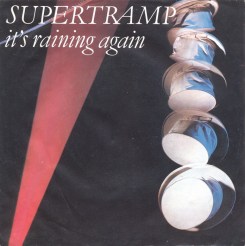 “It’s Raining Again,” Supertramp, 1982
One of the last great moments of this British progressive rock group’s 1971-1988 run was this spirited Roger Hodgson tune that reached #11 in the US. It’s another of many pop songs that equate rain with romantic sorrow: “It’s raining again, oh no, my love’s at an end, oh no, it’s raining again, too bad I’m losing a friend… It’s only time that heals the pain and makes the sun come out again…”
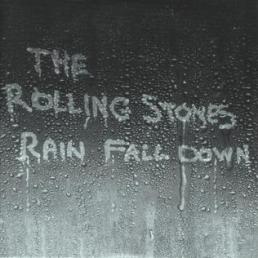 “Rain Fall Down,” The Rolling Stones, 2005
I found it gratifying when Jagger and Richards came up with an instant classic like this one, 50 years after “(I Can’t Get No) Satisfaction.” There’s something a little spooky and relentless about the music, and the lyrics are full of queasy images that ultimately point toward the relentlessness of rain that never seems to stop: “And the rain fell down on the cold grey town, and the phone kept ringing, and we made sweet love… and the phone kept ringing… and the rain… rain… rain… rain…”
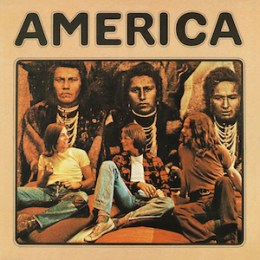 “Rainy Day,” America, 1972
America had plenty of commercial hits in their repertoire (“A Horse With No Name,” “Sister Golden Hair,” “Ventura Highway”) but I was partial to some of the lesser known tracks like this one from the debut LP, with intricate acoustic guitar and words that point out how inclement weather makes some people want to curl up at home under a warm blanket: “Whenever it’s a rainy day, I pack my troubles up in my room, I chase all the clouds away, I get myself back to the womb…”
 “Rhythm of the Rain,” The Cascades, 1962
One of the top ten most played songs on radio and TV in the 20th Century is this tearjerker written by Cascades lead vocalist John Gummoe. It was #1 in six countries in 1962-63, and was later recorded by the likes of Neil Sedaka, Rick Nelson, Johnny Rivers and Dan Fogelberg. In the lyrics, the narrator finds the sound of the rainfall painful as it reminds him of the lover he has lost: “Listen to the rhythm of the falling rain, telling me just what a fool I’ve been, I wish that it would go and let me cry in vain, and let me be alone again…”
 “Who’ll Stop the Rain,” Creedence Clearwater Revival, 1970
John Fogerty watched from a dry tent as hundreds of concertgoers at Woodstock danced, huddled and sang naked in the endless deluge that turned the festival grounds into a sea of mud. As he wrote about that experience weeks later, he realized the lyrics could have a double meaning: Who will stop the rain of bullshit coming from all the politicians in Washington? “Long as I remember, the rain been comin’ down, clouds of mystery pourin’ confusion on the ground, good men through the ages tryin’ to find the sun, and I wonder, still I wonder, who’ll stop the rain?…”
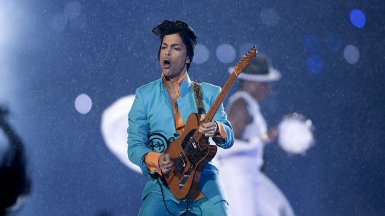 “Purple Rain,” Prince, 1984
Ever since Prince performed this anthem in a downpour at the halftime show of the 2007 Super Bowl, it’s the image I think of whenever I hear it. The late musician had built a sizable following between 1979-1983, but the release of the album and film “Purple Rain” in 1984 sent his career into the stratosphere. The title ballad is drenched in sadness: “I never meant to cause you any sorrow, I never meant to cause you any pain, I only wanted one time to see you laughing in the purple rain, purple rain…”
 “Riders on the Storm,” The Doors, 1971
In what turned out to be Jim Morrison’s final recorded moment, The Doors used the sounds of a thunderstorm to embellish a creepy musical track that may be the best nighttime driving-in-the-rain song of all time. Lyrics that speak of “a killer on the road” and the warning, “If you give this man a ride, sweet family will die” only underscore the sense of dread oozing from this awesome recording.
***************
Honorable mention:
“A Hard Rain’s Gonna Fall,” Bob Dylan, 1963; “Alabama Rain,” Jim Croce, 1973; “Fool in the Rain,” Led Zeppelin, 1979; “Fire and Rain,” James Taylor, 1970; “Save It For a Rainy Day,” Stephen Bishop, 1976; “Heavy Clouds, No Rain,” Sting, 1994; “Buckets of Rain,” Grateful Dead, 1970; “It Never Rains in Southern California,” Albert Hammond, 1972; “Driving Rain,” Paul McCartney, 2001; “Looking at the Rain,” Gordon Lightfoot, 1972; “It’s Raining,” Peter, Paul & Mary, 1964; “Red Rain,” Peter Gabriel, 1986; “Have You Ever Seen the Rain,” Creedence Clearwater Revival, 1972; “Cry Like a Rainstorm, Howl Like the Wind,” Linda Ronstadt, 1989; “Crying in the Rain,” Art Garfunkel & James Taylor, 1993; “It’s Raining Men,” The Weather Girls, 1982.
 Or maybe you never heard it before, even though it’s on a popular album. Some music-loving friend turns you on to a deep track, and blows your mind. “Wow! Where has THAT song been all my life?”
 “Queen of My Soul,” Average White Band, 1976
 “Mirage,” Santana, 1974
 “I Really Don’t Know Anymore,” Christopher Cross, 1980
 “Starship Trooper,” Yes, 1971
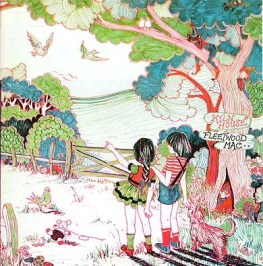 “Tell Me All the Things You Do,” Fleetwood Mac, 1970
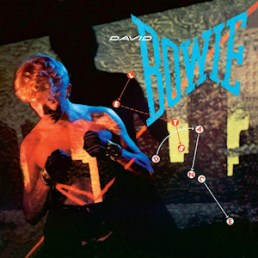 “Criminal World,” David Bowie, 1983

 “Be My Lover,” Alice Cooper, 1971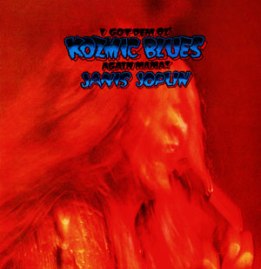
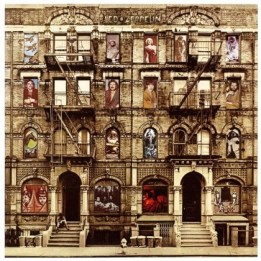 “Night Flight,” Led Zeppelin, 1975
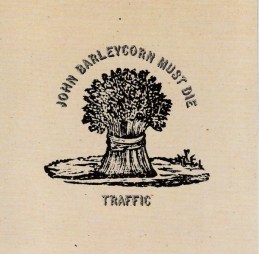 “Freedom Rider,” Traffic, 1970
 Hack's Back Pages