When everything old is new again
Thirty years ago, the vinyl record album was considered dead as a doornail, pushed aside in favor of the compact disc. So I was stunned by this news item I saw a couple of weeks ago: In 2016, sales of vinyl record albums reached $485 million, a 32% increase over five years ago. Furthermore, my 26-year-old daughter and many of her friends all have turntables and burgeoning album collections. Not CDs. Albums. They’re back, in a big way.
 And vinyl isn’t the only “retro” thing on the market these days. In what should be, well, music to the ears of those of you who prefer the music of the ’60s, ’70s and ’80s, here’s good news: There were nearly two dozen new releases in 2016 by some of your favorite veteran bands and solo artists — stars who are primarily known for their work from those long-ago decades.
Granted, some of them are…um…not so great. They may offer music that’s very different from what you remember, or the quality of material and/or performances might be decidedly inferior. But I’m pleased to report that about half of these albums are pretty damn good, even great, and well worth your time and attention.
So it’s not too late to take those gift cards from Amazon or Barnes & Noble and treat yourself or a loved one to great new music by some of the established artists of the old days. Let’s look at, and listen to, the ones I’ve selected for closer examination. And here we go:
 “Blackstar,” David Bowie
Leave it to the magnificent Chameleon of Rock to drop an extraordinary farewell album on an unsuspecting public last January 8th, give us two days to absorb its compelling music, and then gently pass away from the cancer that had been tormenting him for nearly a year. Aptly enough, “Blackstar” is teeming with references to death and mortality, notably the six-minute “Lazarus” (“Look up here, I’m in heaven, I’ve got scars that can’t be seen…”) and the album’s closer, “I Can’t Give Everything Away,” arguably one of the best five songs in his 50-year catalog. Bowie has always pushed the envelope as he experimented over the years with a broad range of genres, and “Blackstar” is no exception. Britain’s New Musical Express magazine called it “busy, bewildering and often beautiful,” and Sean O’Neal of A.V. Club found it to be “a sonically adventurous album that proves Bowie was always one step ahead — where he’ll now remain in perpetuity.”
 “You Want It Darker,” Leonard Cohen
In a similar manner to Bowie, Leonard Cohen spent the final months of his life squirreled away, furiously creating a farewell statement, recording the kind of stark, haunting material his fans have come to love and expect. He too was suffering from cancer, and he knew the collection of songs on “You Want It Darker” would be his last. His vocal delivery, which has always tended to be unrefined and plaintive, is almost uncomfortably gruff, as he offers some of the most heartfelt lyrics of his achingly moving repertoire. Consider the title track: “If you are the dealer, let me out of the game, if you are the healer, I’m broken and lame, if thine is the glory, mine must be the shame, you want it darker, hineni, hineni (Hebrew for “here I am”), I’m ready, my Lord…” If you’re unfamiliar with Cohen, this LP is not a bad place to start.
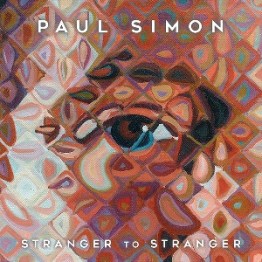 “Stranger to Stranger,” Paul Simon
Probably the least prolific of our generation’s poet/songwriters, Paul Simon reached his 74th birthday before he came out in June with “Stranger to Stranger,” only his 13th solo album (after five Simon & Garfunkel LPs). As has been the case throughout his career, he is intrigued and driven by new rhythms, eclectic instruments and unusual sounds on these songs, particularly “The Werewolf,” “Wristband” and “The Riverbank.” Equally impressive are the lyrics, which alternate between wry observations and provocative accusations, reflecting the strange political times (“Ignorance and arrogance, a national debate, put the fight in Vegas, that’s a billion-dollar gate”). The album debuted at #1, more than 50 years after “The Sound of Silence” was his first #1 single.
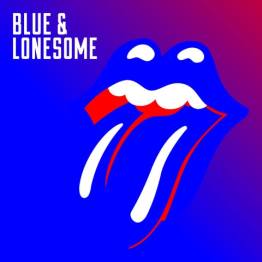 “Blue and Lonesome,” The Rolling Stones
Back in 1962-63, when the Stones were broke and struggling, they honed their chops by playing almost exclusively blues standards. Indeed, one of their first #1 hits in England was the Willie Dixon/Howlin’ Wolf classic “Little Red Rooster.” Now here we are 53 years later, and Mick and Keith and the boys have treated us to an entire album of smoldering blues tracks, recorded with confidence and swagger. Following their recent world tour, the band went into the studio to record their first batch of new songs since 2006’s “A Bigger Bang.” They spent a couple hours warming up by playing some favorite Delta blues tunes, and they were so pleased with how they sounded that they decided to record them and release them. Jagger’s harmonica, Charlie Watts’ deft jazzy drum work, and Richards and Ronnie Wood’s alluring guitar interplay bring new life into chestnuts like “All Of Your Love,” “Ride ‘Em On Down” and the title track. Another #1 album for rock’s elder statesmen — no surprise there.
 “Dig in Deep,” Bonnie Raitt
Forty-five years after her debut, Bonnie Raitt is still creating an irresistible mix of blues, R&B, gospel and rock, and every guitar player out there knows that Bonnie has few peers on slide guitar, which is in ample evidence here. Even though the LP came out back in February, “Dig in Deep” has songs like “The Comin’ ‘Round is Going Through” with lyrics that perfectly describe the man who would somehow become President: “You got a way of running your mouth, you rant and you rave, and you let it all out, the thing about it is, little that you say is true, why bother checkin’, the facts will be damned, it’s how you spin it, it’s part of the plan…” Her 17th album reached #11 on the charts, a successful achievement for a woman who hasn’t typically sold a lot of records along the way but has always been universally respected by her peers and her core audience.
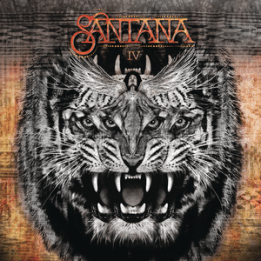 “Santana IV,” Santana
Wow, what a treat! The original Santana band that stole the show at Woodstock in 1969 made only three albums (“Santana,” “Abraxas” and “Santana III”) before disbanding when Carlos wanted to go off to explore different directions, genres and musical partners. Now, 45 years later, most of the original lineup reunited to produce an album called (what else?) “Santana IV,” an incredibly satisfying collection of songs that harken back to those golden days. With keyboardist/vocalist Gregg Rolie and guitarist Neal Schon (who had formed Journey in 1973) back in the fold, the band came up with a strong balance of 16 songs and jams lasting nearly 80 minutes. Said Carlos of the experience: “It was really magical. We never felt we had to force the vibe. We’ve all been through so much since the last time we recorded together, and the good karma was immense.”
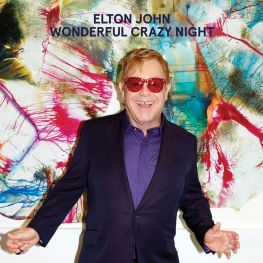 “Wonderful Crazy Night,” Elton John
Elton and songwriting partner Bernie Taupin set out to create a batch of tunes that recalled the feel of early ’70s classic albums like “Honky Chateau” and “Goodbye Yellow Brick Road,” and by and large, they succeeded. “Wonderful Crazy Night,” John’s 32nd album, includes plenty of upbeat pop rock tunes — “England and America” and “Looking Up” are the best of the batch –but the ballads are what make this album noteworthy. It’s remarkable but true: Elton can still create lasting melodies like “Blue Wonderful,” “A Good Heart” and “The Open Chord,” which are right up there in quality with classics such as “Levon” and “Mona Lisas and Mad Hatters.” Thanks to fine precision performances by the venerable Elton John Band (guitarist Davey Johnstone, drummer Nigel Olsson and bassist Dee Murray), these tracks will pop from your speakers.
 “Good Times!,” The Monkees
Seriously?? Didn’t these guys fade away when the Sixties ended? And isn’t Davy Jones dead? Well, no and yes. Guitarist Mike Nesmith and bassist Peter Tork have been only occasionally involved in the many reunion tours and appearances over the past four decades…and Jones did pass away in 2011. But drummer/singer Micky Dolenz has been the cheerfully reliable stalwart that has kept the band and its place in rock history alive, and he worked hard to locate and massage archival material that, thanks to production help from Fountains of Wayne’s Adam Schlesinger, sounds like the delicious results of some time machine experiment. Check out Neil Diamond’s downbeat “Love to Love,” where you’ll hear Jones’ vocals from a 1967 take, embellished by new harmonies from Dolenz and Tork. You should also enjoy “Good Times,” an irresistible pop tune featuring Dolenz doing a virtual duet with the late Harry Nilsson. Plus there’s a Goffin-King song “Wasn’t Born to Follow” and a perfect Monkees-like song (“You Bring the Summer”) that, in a perfect world, should’ve been all over the radio in July and August. It’s not a flawless album, but none of the original Monkees albums were, either.
 “57th and 9th,” Sting
After six increasingly popular years as frontman for The Police (1978-1984), Sting began a hugely successful solo career that included seven Top Five albums and ten Top 20 singles, but 2003’s “Sacred Love” was his last rock album for a while, as he branched out into classical, Christmas, and stage music for more than a decade. The new “57th and 9th” LP is a welcome return, with strong guitar arrangements, infectious melodies and sobering lyrics about weighty topics. Most movingly, he writes in “50,000” about the too-soon passing of fellow rock stars like Bowie and Prince, and how he too is feeling his own mortality: “Another obituary in the paper today, one more for the list of those who have already fallen, another one of our comrades is taken down, like so ,many others of our calling… How well I remember the stadiums we played, and the lights sweeping across the sea of 50,000 souls we’d face… Reflecting now on my own past, inside this prison I’ve made for myself, I’m feeling a little better today, although my bathroom mirror is telling me something else…”
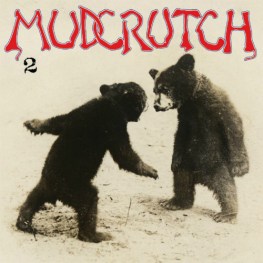 “Mudcrutch 2,” Tom Petty & Mudcrutch
Tom Petty and The Heartbreakers have come storming back with some great LPs recently (2005’s “…” and 2011’s “…”), but even better was “Mudcrutch,” Petty’s 2007 reunion with his old Florida band from the pre-Heartbreakers days. Mudcrutch’s lineup includes Heartbreaker keyboardist Benmont Tench, who anchors “Mudcrutch 2” on tracks like “Welcome to Hell,” and banjo/guitar man Tom Leadon has a blast on the bluegrass number “The Other Side of the Mountain.” But the album’s best moment is “Beautiful Blue,” a seven-minute ethereal piece that shows how Petty can totally stretch out when he’s so inclined. If you like Petty, you’ll love this record.
*************
Honorable mention:
 “This Path Tonight,” Graham Nash; “Hardwired… to Self-Destruct,” Metallica; “Alone,” The Pretenders; “Peace Trail,” Neil Young; “I Still Do,” Eric Clapton; “This House is Not for Sale,” Bon Jovi; “In the Now,” Barry Gibb; “Lighthouse,” David Crosb
 y; “Bang, Zoom, Crazy…Hello,” Cheap Trick; “We’re All Somebody From Somewhere,” Steven Tyler; “Braver Than We Are,” Meat Loaf; “Keep Me Singing,” Van Morrison.
You might also want to explore these 2015 releases by veteran artists: “Before This World,” James Taylor; “Crosseyed Heart,” Keith Richard s; “Tracker,” Mark Knopfler; “Cass County,” Don Henley; “A Fool to Care,” Boz Scaggs; “Hand in Hand,” Richie Furay; “Back to Macon, GA,” Gregg Allman; “Rebel Heart,” Madonna; “Toto XIV,” Toto; “Postcards From Paradise,” Ringo Starr; “No
  Pier Pressure,” Brian Wilson; “Bad Magic,” Motorhead; “Book of Souls,” Iron Maiden; “What the World Needs Now,” Public Image Ltd.; “Paper Gods,” Duran Duran; “Rattle That Lock,” David Gilmour; “Strangers Again,” Judy Collins; “Get Up,” Bryan Adams; “Another Country,” Rod Stewart; “Def Leppard,” Def Leppard.
 And from 2014: “The Endless River,” Pink Floyd; “Nostalgia,” Annie Lennox; “Standing in the Breach,” Jackson Browne.
Just so we all understand each other: I am not stuck exclusively in the decades of my youth! I still listen to, and purchase, great new music by vibrant newer artists like Mumford and Sons, Tame Impala, Jake Bugg, Imagine Dragons, Hozier, The 1975, Mayer Hawthorne, Bruno Mars, Alabama Shakes, Florence + The Machine and Adele. Take heart — it’s not all hip hop, death metal and mindless pop dance stuff out there these days (although you’d never know it from the Top 40 charts…)
 Britain and Canada eagerly accepted it almost right away, and other European countries and Australia soon followed suit. People in other regions of the world — Central and South America, the Far East, Africa — had very strong allegiances to their own vibrant, indigenous music, so they took a little longer to join the party. Communist governments refused to allow their people to be exposed to free-thinking pop music until well into the 1980s, despite several overt attempts to infiltrate (The Beatles’ 1968 album-opener “Back in the USSR,” for instance).
 “Leningrad,” Billy Joel, 1989
 “Free Man in Paris,” Joni Mitchell, 1974
 “Down to London,” Joe Jackson, 1989
 “Only a Dream in Rio,” James Taylor, 1985
 “Stranger in Moscow,” Michael Jackson, 1997
 “Marrakesh Express,” Crosby Stills and Nash, 1969
 “Runnin’ Back to Saskatoon,” The Guess Who, 1972
 “Still in Saigon,” Charlie Daniels Band, 1981
 “Loco in Acapulco,” The Four Tops, 1988
 “Woman From Tokyo,” Deep Purple, 1973
 “Jerusalem,” Emerson, Lake and Palmer, 1973
 “Funky Nassau,” Beginning of the End, 1971
 “Fast Boat to Sydney,” Johnny Cash & June Carter, 1967
 “Berlin,” Lou Reed, 1973
 “Budapest,” Jethro Tull, 1987
 “Amsterdam,” Guster, 2003
 Hack's Back Pages