Reach for the stars, Venus and Mars are all right tonight
Part of the fun in writing this blog each week has been in coming up with topics for playlists. I have upwards of 250 themed playlists I’ve created on Spotify, many of them focusing on a key word or idea (dreams, cars, money, rain, food, sex, whatever).

This week, I went looking for songs about planets, and I was kind of surprised to find only a few — so few, in fact, that I had to stray outside my normal ’60s/’70s/’80s comfort zone to grab a few titles from more recent years to round out the list. Most of these songs, in fact, aren’t really about the actual celestial orbs but instead other meanings of the words. But what the hell. It’s still a fun playlist of eclectic musical selections, and I hope you can dig on that.
**********************
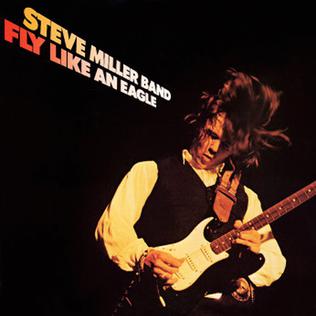
“Mercury Blues,” Steve Miller Band, 1976
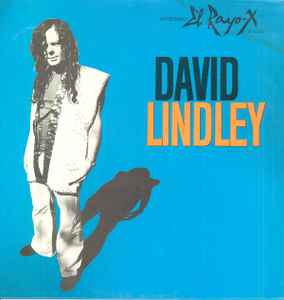
K.C. Douglas, a Mississippi blues singer/guitarist, wrote and recorded “Mercury Boogie” (later re-named “Mercury Blues”) with his trio in 1948. Its lyrics praise not the planet closest to the sun but the Mercury automobile brand, which led Ford Motor Co. to buy the rights to the song and use it in commercials. It’s been covered by several different artists, including Alan Jackson (whose 1992 version reached #2 on country charts), David Lindley on his 1981 LP, and Steve Miller, who featured his rendition on the multiplatinum 1976 album “Fly Like an Eagle.”
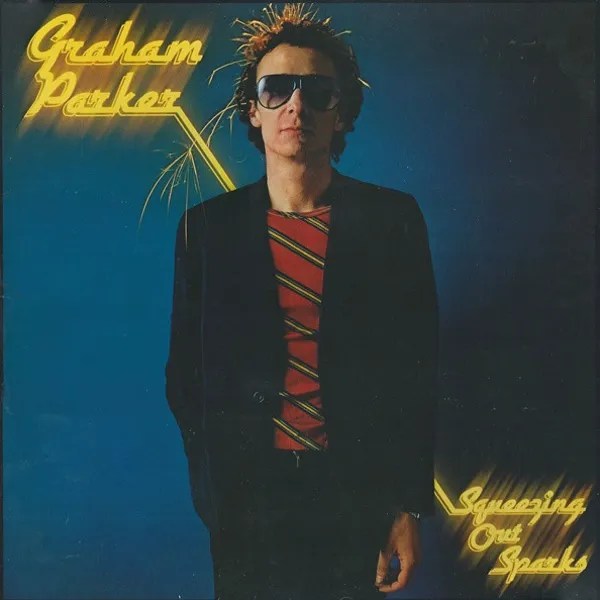
“Mercury Poisoning,” Graham Parker, 1979
Parker was a British pub rocker with a raw, vital delivery of soul/rock/reggae songs in the late ’70s and early ’80s. His early albums on Mercury Records were critics’ favorites, but a lack of promotion by the label resulted in anemic chart performance in the U.S. After switching to Arista in 1979 and releasing his commercial zenith, “Squeezing Out Sparks,” Parker released the single, “Mercury Poisoning,” which chronicled his poor relationship with his former label: “Well I’ve got all the diseases, I’m breaking out in sweat, you bet, because I got Mercury poisoning, /It’s fatal and it don’t get better, /I got Mercury poisoning, the best kept secret in the West…”
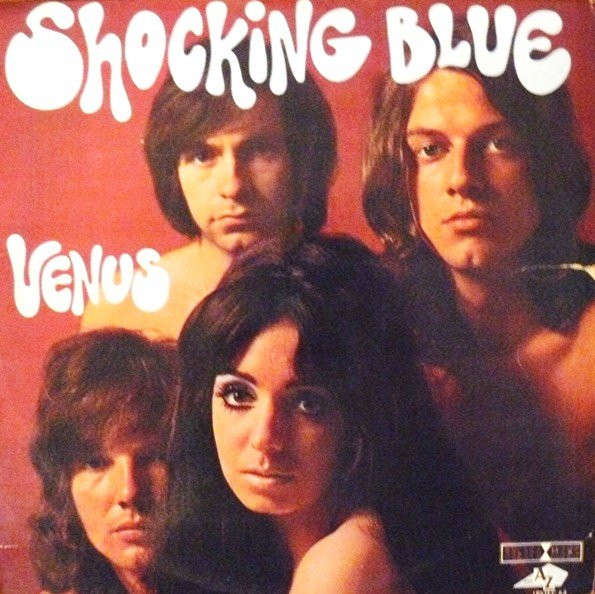
“Venus,” Shocking Blue, 1970
Guitarist Robbie van Leeuwen of the Dutch group Shocking Blue wrote this infectious track in 1969. Once American promoter/label owner Jerry Ross released it in the US six months later, it soared to #1, as it did in eight other countries around the world. Fiery lead vocalist Mariska Veres sang the lyrics of passionate love using Venus, the Goddess of Love, as the symbol. The song is one of only a handful in Billboard history to became a worldwide #1 hit a second time in when British vocal group Bananarama put their dance-music spin on it in 1986.
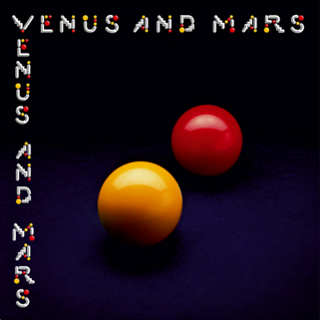
“Venus and Mars,” Paul McCartney & Wings, 1975
McCartney and his band set up camp in New Orleans in early 1975 to write and record the follow-up to their enormously successful “Band On the Run” album. Said Paul at the time: “I had this whole idea about a fellow sitting in a cathedral waiting for this transport from space that was going to take him on a trip. The guy is a bit blotto and starts thinking about ‘A good friend of mine studies the stars, Venus and Mars are all right tonight.‘ Afterwards, somebody told me Venus and Mars had just eclipsed the sun, or something. I’m not exactly sure, but I guess they aligned themselves exactly for the first time in 2,000 years. I had no idea about all this going on.” It became the title track of the album.

“I Feel the Earth Move,” Carole King, 1971
After a decade writing huge hit singles for other artists to record, King divorced her songwriting partner Gerry Goffin and moved to Los Angeles, where she began collaborating with lyricist Toni Stern on a collection of songs that would become “Tapestry,” one of the biggest selling albums of all time. “I Feel the Earth Move,” the album’s opener, was also one half of her double A-side single with “It’s Too Late,” which reached #1 in the summer of 1971. The lyrics equate romantic passion with an earthquake “whenever you’re around.”
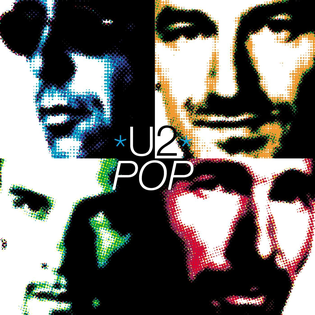
“Last Night on Earth,” U2, 1997
U2’s 1997 LP “Pop” was another in a long line of #1 albums for the Irish band, but it hasn’t aged well, evidenced by the fact that the group rarely performs any of its material in concert anymore. Still, “Discothèque” and “Staring at the Sun” did admirably on the charts at the time of release. One of the last tracks completed for the album was this one written six years earlier for the “Achtung Baby” LP but instead shelved away. Bono hadn’t been satisfied with the lyrics and struggled to write new ones before the band headed out on a lengthy tour. He struck on the concept of someone living passionately “as if it’s the last night on Earth.”
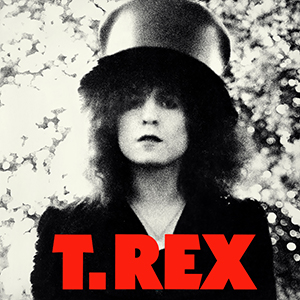
“Ballrooms of Mars,” T. Rex, 1972
Marc Bolan’s career paralleled that of David Bowie, who both evolved from psychedelic folk to electric rock to become pioneers of the glam rock movement by 1972. Bolan and his band, T. Rex, had only limited commercial success in the U.S., with the “Electric Warrior” and “The Slider” LPs and the Top Ten single “Bang a Gong (Get It On),” but he was huge in England. From “The Slider” came a great track called “Ballrooms of Mars,” which capitalized on Bolan’s outré persona: “You gonna look fine, be primed for dancing, /You’re gonna trip and glide, all on the trembling plane, /Your diamond hands will be stacked with roses… and we’ll dance our lives away in the ballrooms of Mars…”

“Moving to Mars,” Coldplay, 2011
This captivating track, recorded for Coldplay’s 2011 LP “Mylo Xyloto” but left off the final track listing, was instead added as a bonus track to the three-song EP “Every Teardrop is a Waterfall.” Chris Martin said it was inspired by a documentary called “Moving to Mars” that told the story of a family from Southeast Asia moved against their will to England. “To them, it seemed as radical a move as being relocated to another planet,” he said, “which intrigued me enough to write a song about it.” He said he was disappointed it didn’t make it on the album: “And I heard it on the radio that one day we’ll be living in the stars, /And I heard it on a TV show that, somewhere up above and in my heart, /They’ll be tearing us apart, maybe moving us to Mars, /We won’t see the earth again…”
“Drops of Jupiter,” Train, 2000
San Francisco-based Train has had considerable success since forming in the mid-1990s, and one of their biggest hits was this title track from their second LP in 2001. Lead singer Pat Monahan said that the song was inspired by his late mother. “The process of creation wasn’t easy because I just couldn’t figure out what to write. But one day, about a year after she died, I woke up from a dream with the words ‘back in the atmosphere’ in a sort of mantra. I think it was just her way of saying what it was like. She was swimming past the planets, and she came to me here with drops of Jupiter in her hair.” It was a multi-platinum single for Train, peaking at #5.
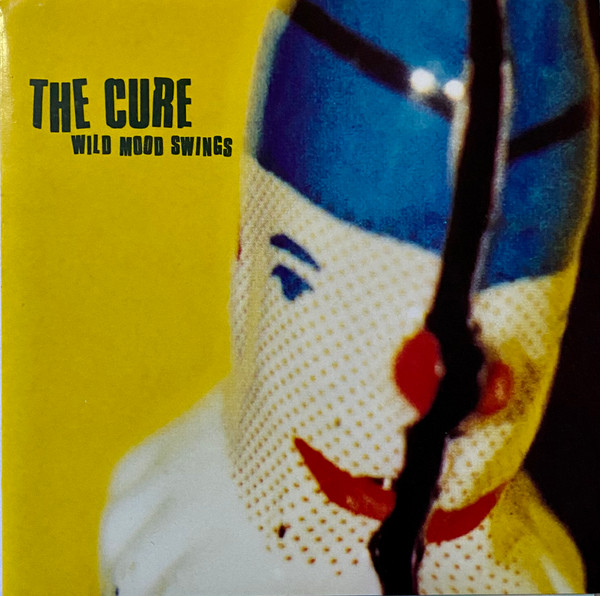
“Jupiter Crash,” The Cure, 1996
This influential British band led by Robert Smith has been a factor since 1980, churning out dark edgy rock that has seen major success on both sides of the Atlantic. From The Cure’s 1996 LP “Wild Mood Swings,” Smith wrote this amazing track that uses the 1994 incident when a comet struck Jupiter as a metaphor for a failed sexual encounter. “Everyone expected that Jupiter would explode or something, but it wasn’t what was anticipated,” he called. “Relationships can be like that, this big buildup followed by a sense of disappointment. There next day, people were saying, ‘That was rubbish.’ It wasn’t. It was incredible, but it just wasn’t what was expected. That was the analogy.” “Meanwhile, millions of miles away in space, the incoming comet brushes Jupiter’s face, then disappears away with barely a trace…”
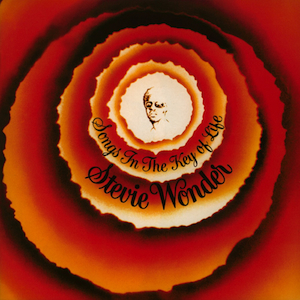
“Saturn,” Stevie Wonder, 1976
Wonder had been an astonishingly prolific and successful musician for many years, including winning two Album of the Year Grammys in the previous three years. Many observers, including Wonder himself, regarded his 1976 double album “Songs in the Key of Life” to be his supreme achievement. He had so many great songs representing a range of genres that he needed a third record, a 4-song EP, to fit them all. One of those was “Saturn,” a reflection on escapism, where Wonder imagined living on a distant planet: “Going back to Saturn where the rings all glow, rainbow, moonbeams and orange snow, /On Saturn, people live to be two hundred and five, /Going back to Saturn where the people smile, /Don’t need cars, ’cause we’ve learned to fly, /On Saturn, just to live, to us, is our natural high…”
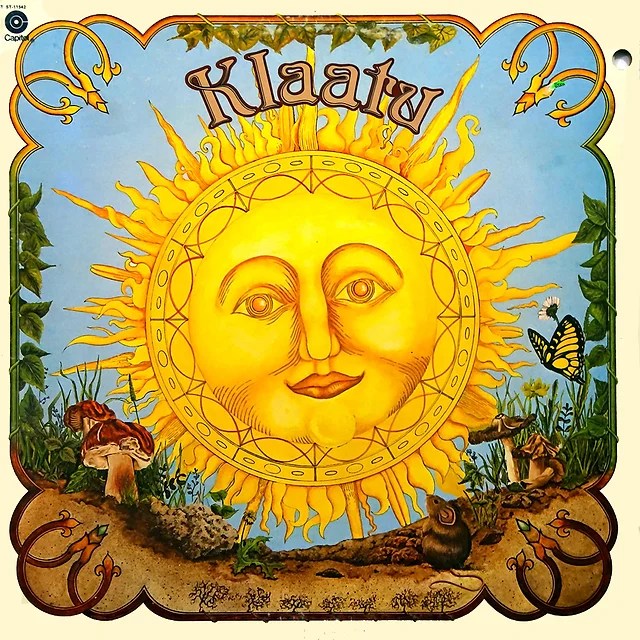
“Anus of Uranus,” Klaatu, 1976
In the summer of 1976, rumors spread that The Beatles had secretly reunited and recorded an album under a fictional name. In fact, Klaatu was a real band from Canada who made progressive rock that sounded, at times, like psychedelic-era Beatles music. (In particular, check out “Sub-Rosa Subway,” which would have fit nicely on “Magical Mystery Tour.”) Capitol Records milked the opportunity by including no band information on the cover and remaining elusive to press inquiries. The group’s quasi-cosmic lyrics and song titles, which focused on interplanetary travel, included the whimsically scatalogical “Anus of Uranus”: “Playing cards on Venus in a cloudy room, pass a glass of ammonia, I got to get off soon, /Sunbathin’ on Mercury or jammin’ on Jupiter, which do you prefer?, /Anus of Uranus, he’s a friend of mine, he’s a first-rate party and a real fine time…”

“Valleys of Neptune,” Jimi Hendrix, 1969/2010
Hendrix began work on this piece under the title “Gypsy Blood” in February 1969, then wrote the lyrics under the title “Valleys of Neptune Arising” three months later. Hendrix made several attempts at recording it with different groups of backup players, from Mitch Mitchell and Billy Cox to Stephen Stills and Buddy Miles and Steve Winwood. Hendrix died in 1970 without having completed the piece to his satisfaction, but finally, in 2010, it became the title track of an album of previously unreleased material. It’s an insightful tune, with lyrics that speak of a new era coming: “I see visions of sleeping peaks erupting, /Releasing all hell that will shake the Earth from end to end, /Singing about the new valleys of the sunrise, rainbow clean, /The world is gonna be singing about getting ready for the new tide, /The valleys of Neptune arising…”

“Pluto,” Jake Wesley Rogers, 2021
Rogers is one of the hottest new artists around, debuting in 2017 at only 21. The talented singer-songwriter composes songs that speak to his experiences growing up gay in Missouri, and yet they offer universal truths. His 2021 single “Pluto” touches on the celestial body’s status as the newest planet that later had that designation removed, and compares it to his own experience of having self-confidence that is jeopardized when others are critical: “When I was a kid, Pluto was still a planet, I’m still kinda sad about it, /Thought I was the shit ’til someone made me doubt it, I’m still kinda mad about it, /Hate on me, you might as well hate the sun for shining just a little too much, /Hate on me, maybe at the end of the day, you and me are both the same, /We just wanna be loved…”
**********************



 Hack's Back Pages