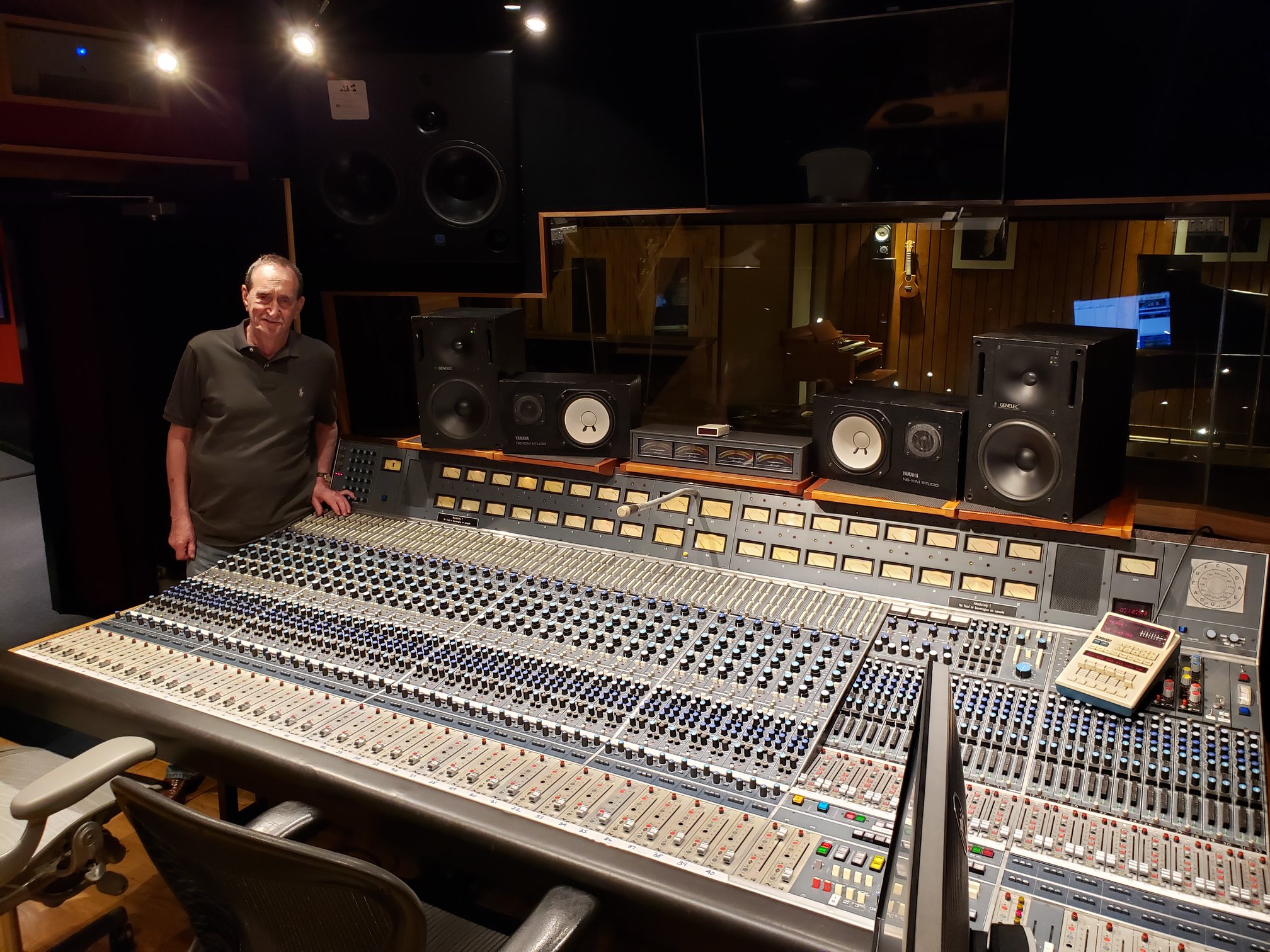
I’ve got my finger on the pulse

In Chicago in 1944, an 11-year-old boy had begun to hang out with a gang of troublemakers in his rough-and-tumble neighborhood. In the community rec center, they picked a lock and broke into the kitchen to sample lemon meringue pies, and the boy noticed a piano sitting on a small stage nearby.

“I went up there, paused, stared, and then ran my fingers across the keys for a moment,” the boy wrote in his memoirs decades later. “That’s when I began to find peace. I was 11. I knew this was it for me. Music was it. Forever.”

That young boy would go on to be nominated 85 times for Grammy Awards, winning 28. He collaborated with the broadest array of musicians you can imagine — Duke Ellington, Snoop Dogg, Lesley Gore, Ray Charles, Sarah Vaughan, Michael Jackson, Frank Sinatra, Aretha Franklin, Donna Summer, Ella Fitzgerald, George Benson, and many dozens more.

That man was Quincy Jones, one of the most accomplished figures in the music business over the last seven decades. He died November 3 at age 91.

The incomparable Stevie Wonder said, “The most important thing Quincy taught me was, ‘Don’t stop until you know you got it like you want it, until it feels right, it feels good to you. Don’t settle for your vocals just being OK. Make sure that you give it all that you’ve got — not for the money of it, but for the art of it.’ You can look back and hear all of that when you hear the records he made.”

From the jazz records he made in the ’50s to the pop songs he produced in the ’60s, from the R&B LPs he cut in the ’70s, to the multiplatinum albums he produced for iconic stars of the ’80s, Jones showed an uncommon ability to understand and appreciate a wide variety of genres. As a producer, arranger, conductor, songwriter and instrumentalist, and later as a businessman and industry mogul, Jones made his indelible mark, influencing and mentoring many artists and protégés over his seven-decade career.

It might not have worked out that way. When he was just 7, Jones lost his mother to mental illness and institutionalization, and his father remarried and moved his family of eight children and step-children to Seattle. Jones was tempted by “the gangster life,” as he put it, but he was driven by an even stronger passion to create music. He learned trumpet and musical arranging, playing in marching bands and jazz combos alike. He earned a scholarship to Berklee School of Music in Boston but dropped out when jazz giant Lionel Hampton tapped him to join his touring band at only 20.

In New York, he worked with the Tommy Dorsey Orchestra at CBS, where he played trumpet behind Elvis Presley’s first TV appearances on “Ed Sullivan.” Jones toured the world as trumpeter and musical arranger for Dizzy Gillespie’s band and also studied music composition and theory with world-renowned music teacher/composer Nadia Boulanger in Paris. “She taught me so much,” Jones said, “and gave me the best advice I ever got: ‘Quincy, your music will never be more nor less than you are as a human being.’ It made me realize the importance of treating people fairly and kindly, and to encourage people to be their best selves.”

Jones in the 1950s

In the late ’50s, he formed The Jones Boys, an 18-piece big band he led, who toured North America and Europe to enthusiastic audiences and rave reviews, but the earnings failed to cover costs, and the band was forced to dissolve. “We had the best jazz band on the planet,” Jones recalled, “and yet we were literally starving. That’s when I discovered that there was music, and there was the music business. If I was going to survive, I would have to learn the difference between the two.”

He began concentrating his efforts in recording studios, helping to produce, arrange and conduct orchestras for some of the biggest stars of the late ’50s and early ’60s — Dinah Washington, Billy Eckstine, Ray Charles, Peggy Lee. He produced all four of Lesley Gore’s million-selling singles (“It’s My Party,” “Judy’s Turn to Cry,” “She’s a Fool” and “You Don’t Own Me”).

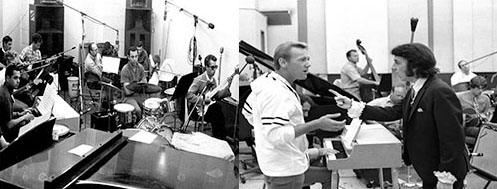
For Frank Sinatra, Jones arranged and conducted on two of his most popular albums — “It Might As Well Be Swing” with Count Basie in 1964 (which included the award-winning “Fly Me to the Moon”), and his live LP “Sinatra at the Sands” in 1966. “He took me to a whole new planet,” said Jones. “Working successfully with Frank opened a lot of doors for me.”

Jones and Sinatra in the studio in 1964

But Jones had already opened a few doors through his own efforts in the front office at Mercury Records, where he rose to be vice-president, the first African-American to do so at a major label. By the mid-’70s, in a partnership with Time Warner, he created Quincy Jones Entertainment, which included the pop-culture magazine Vibe and Qwest Broadcasting. He later sold it the 1990s for $250 million.

He also showed a talent for composing and producing film scores, beginning with 1964’s “The Pawnbroker.” He wrote more than three dozen, including “Walk, Don’t Run,” “In Cold Blood,” “Cactus Flower,” “$ (Dollars)” and “The Getaway.” Most notably, he scored the Oscar-winning “In the Heat of the Night” in 1967, with Ray Charles singing the title song. “I loved scoring films,” he once said. “It’s a multifaceted process, an abstract combination of science and soul.”

For a few years in the early ’70s, he recorded several solo albums that fared well on both pop and R&B charts, especially “Walking in Space” (1969), “You’ve Got It Bad Girl” (1973), “Body Heat” (1974), “Mellow Madness” (1975), “Sounds…and Stuff Like That! (1978) and “The Dude” (1981). He also wrote the theme music to such top TV series as “Sanford and Son” and “Ironside” and the first episode of the groundbreaking “Roots” miniseries. During that same period, he worked on successful album projects with Aretha Franklin, The Brothers Johnson, Rufus with Chaka Khan, Donny Hathaway and Billy Preston.

His most famous collaboration came when he supervised the adaptation of the Broadway score for the 1978 film “The Wiz,” where he met Michael Jackson. They hit it off immediately, and Jackson insisted on Jones as producer of what would become his landmark solo album, 1979’s “Off the Wall.” Jones remembered Jackson having very strong opinions about how the tracks should be recorded, and they sometimes disagreed. “I recall Michael thought we needed to get rid of the strings during the intro to ‘Don’t Stop ‘Til You Get Enough.’ I said, ‘No, Michael, those will be like a siren calling everyone to the dance floor.’ Sure enough, I was right about that one.”

Jackson and Jones with their multiple “Thriller” Grammys in 1984

Their studio chemistry peaked three years later when they recorded 30 tracks and then selected the best nine to comprise the universally appealing “Thriller,” widely regarded as the biggest selling album of all time. It held the #1 slot for nearly 40 weeks in 1983-84, and Jackson credited Jones with pushing him to reach further, higher, deeper. “He’d make you do a thing until it’s perfect,” Jackson said in 1985. “He’d say, ‘It’s beautiful, Michael. We have a take!… Now, can you give us one more?'” It was also Jones who came up with the idea to bring in Eddie Van Halen to record the electrifying guitar solo on “Beat It” and Vincent Price to handle the spooky narration that closes “Thriller.”

Jones went on to produce Jackson’s third multiplatinum album, 1987’s “Bad,” with its five chart-topping singles, and he also shared his studio talents with Donna Summer, producing her 1982 LP and co-writing its hit “Love is in Control (Finger on the Trigger),” and George Benson’s “Give Me the Night” album in 1980.

Jones (second from left) with Lionel Richie, Daryl Hall, Stevie Wonder and Paul Simon in 1985

Some have called his leadership role as producer of the extraordinary “We Are the World” recording session in early 1985 as his crowning achievement. Lionel Richie, who co-wrote the song and helped shepherd the project, said he assumed they would bring in the numerous stars one by one to sing their parts and then put it all together afterwards, but Jones said, “No way, man. We’ll be here for three weeks. We’re going to bring them all together, put ’em in a circle with all the mics, and everyone will sing it looking at each other.” It seemed daunting, but Jones managed to control the concentration of major celebrities by famously posting a sign at the studio entrance: “Check your egos at the door.” Said Richie, “Quincy had everyone’s complete respect and attention, so it worked. He got everyone to cooperate. It was incredible. He was a master orchestrator, not only of music but of personalities.”

Jones still wasn’t done. In 1991, he won the Album of the Year Grammy for his LP “Back on the Block,” which brought together more than a dozen major stars from three generations, including Miles Davis, Sarah Vaughan, Dionne Warwick, Luther Vandross, Ice-T, Barry White, Al Jarreau and Ray Charles. The album topped R&B charts and spawned multiple singles like “I’ll Be Good to You” and “The Secret Garden.”

Wonder and Jones

He followed that up with “Q’s Jook Joint” in 1995, another star-studded affair he produced that topped jazz charts and merged musical styles. Stevie Wonder said, “There was one track where he had Ray Charles, Bono and me doing ‘Let the Good Times Roll.’ The three of us weren’t in the room together, we did our parts separately, but Quincy put it together like we were there at the same time. It’s kind of like making a movie. You have to make it feel like it was right there and then. And he was able to do that, put the pieces together and come up with a great track.”

Jones said at the time, “Music transcends time, and it bridges generations. Bebop and hip-hop, in so many ways, they’re connected. A lot of rappers remind me so much of bebop guys in terms of improvisation, beats and rhymes.”

In a sort of “full circle” symmetry, one of Jones’s early recorded pieces, “Soul Bossa Nova” (1962), was prominently featured in the 1997 box-office smash “Austin Powers: International Man of Mystery.”

He was married three times, most famously to actress Peggy Lipton (1974-1990), and had seven children. His daughter Rashida, an actress who starred on the “Parks and Recreation” TV series, described her father as “a genius, a giant, an icon, a culture shifter.”
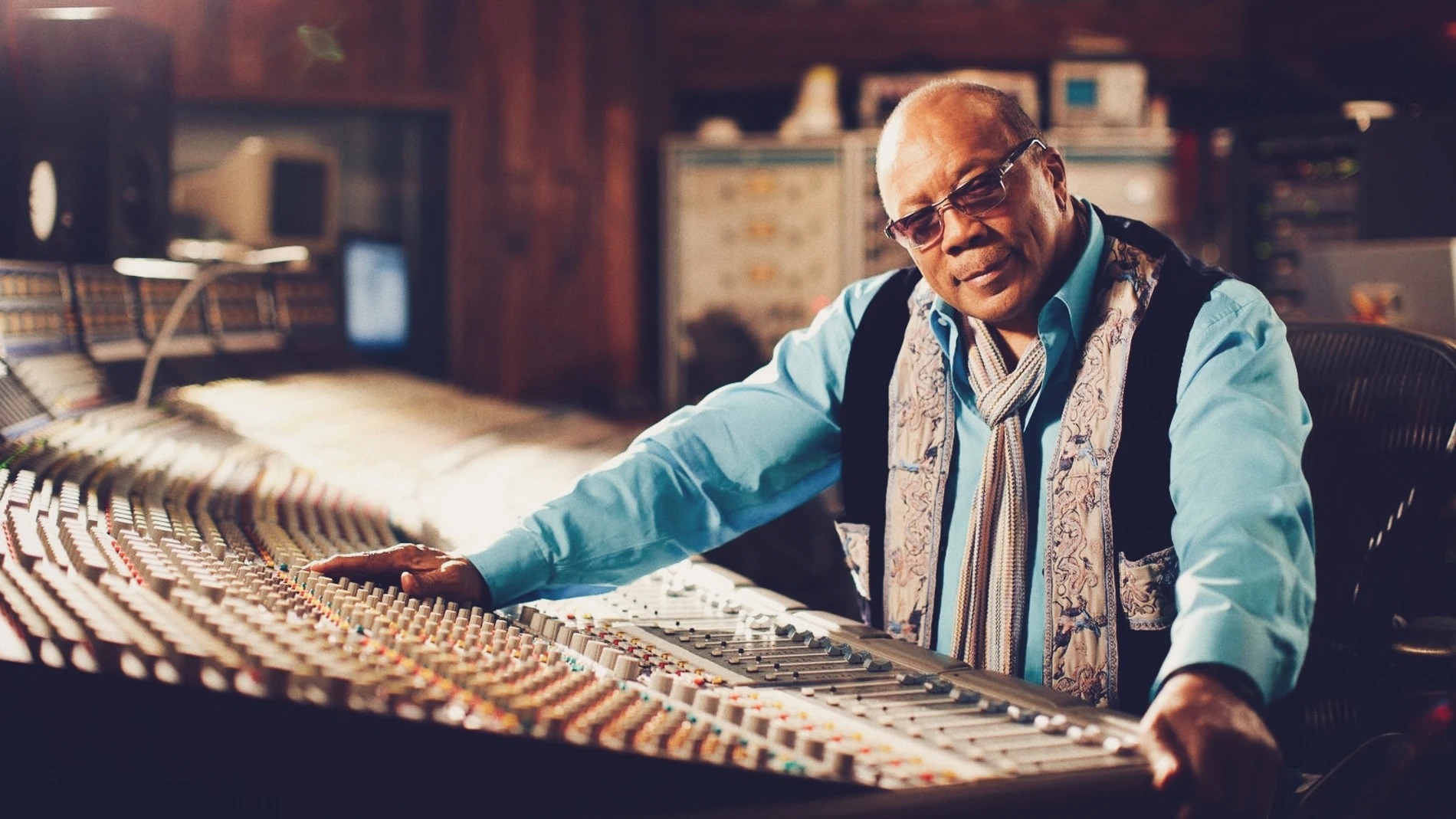
In a 2018 TV interview, Jones was asked how he “worked his magic” in the studio. “I listen to the orchestra like an x-ray machine,” he noted. “I’ve been around it all my life. If it’s too thick, too thin, too slow, too fast, wrong key, whatever, I can just tell. And we do another take and modify it accordingly. I don’t go by surveys or focus groups. I go by my goosebumps. If it gives me goosebumps, it’s right.”

“If an album doesn’t do well, some people will say, ‘it was the producer’s fault,'” Jones said, “but if’s that’s true, then if it does well, it should be his ‘fault,’ too. The tracks don’t just all of a sudden appear. The producer has to have the skill, experience and ability to guide the vision to completion.”

When asked for any words of wisdom, Jones talked about the need to remove negativity from his life. “Holding grudges, allowing anger in, it’s all a big waste of time. Some words from Mark Twain still overwhelm me: ‘Anger is an acid that does more harm to the vessel in which it’s stored than to anything on which it’s poured.‘ Isn’t it amazing it took me until I was 85 to figure that out?”
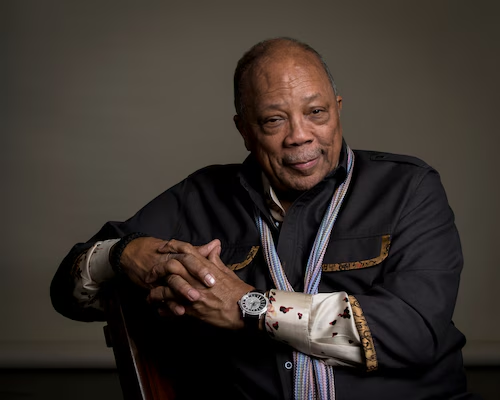
Rest in peace, Quincy Jones. You’ve brought positive vibes to music lovers everywhere, and you’ll be sorely missed.

***********************

The Spotify playlist below provides a cross section of material Quincy Jones has written, produced, arranged and conducted and/or performed on during his half-century in the business.

I’m been in the studio all day and night

I remember one day in 1975 when I went to a friend’s house to hear some new albums played through a state-of-the-art sound system.  “This is going to totally blow you away,” he said, as he lowered the needle on the last track of Queen’s new album, “A Night at the Opera,” an ambitious little number called “Bohemian Rhapsody.”

The sound seemed to explode from the speakers.  The lush harmonies, Freddie Mercury’s powerful lead vocals, the quasi-classical piano, the “Galileo/Magnifico” operatic portion, Brian May’s hard rock guitar solo — all of it sounded like it was right there in the room with me.  “Holy crap,” I said, “the production is spectacular!  How do they get it to sound so damn good?”

While the members of Queen deserve plenty of credit, the man chiefly responsible for the crystal-clear sound quality was producer Roy Thomas Baker, one of the titans of the recording studio in the ’70s, ’80s and beyond.  He was a true innovator whose work includes some of the most successful albums of the era.

So what exactly is a record producer?  What does he do?

That’s a loaded question, because he may wear many different hats, depending on the circumstances of the recording session.

In the industry’s early years, different professionals worked for the major record labels, carrying out the various tasks that made up the recording process.  Beginning in the 1950s with the advent of the independent commercial studios, entrepreneurial producers created and occupied a new layer in the industry, taking on a role in the musical process that was more direct yet also more multi-faceted.

Depending on his clout and level of influence, the producer might handle any number of functions.  He may identify up-and-coming artists, select songs, choose musicians, suggest arrangements, coach artists in the studio, control the recording process, and sometimes supervise the post-recording phases of mixing and mastering.  Some may take on broader roles such as scheduling, budgeting, even contract negotiations.

“A producer creatively guides the process of making a record,” summarizes Phil Ek, producer of current indie bands like The Shins, Modest Mouse and Fleet Foxes.  “Basically, his job is to create, shape and mold a piece of music, whether it’s one track or a whole album.”

Perhaps even more important, though, is this key role:  “A producer should be a psychologist,” noted Marc Tanner, producer of albums for Nelson and The Calling, as well as numerous film soundtrack LPs.  “He’s typically working with bands and artists with big egos who think they know everything, so when the producer has an idea and wants to steer things in a certain direction, he needs to make them think it was their idea.  And that’s a tricky thing.”

The producer also needs to know who’s really in charge.  If a musical giant like Paul McCartney is making a new record, clearly he’s going to have the final say-so.  When an industry mogul with the power of a Clive Davis is involved, nothing’s getting released without his stamp of approval.  In some cases, though, the producer himself is the one who holds the most sway, and he can then operate differently, knowing he won’t be second-guessed.

The best producers, naturally, are those whose reputations precede them.  The track record speaks for itself and makes them the most sought after in the business.  They may be pleasant or gruff, but they’re known for getting the best work from their artists.

Let’s take a look at my subjective list of the top dozen rock music producers of the ’60s, ’70s and ’80s.  In my view, they’re the ones who developed innovative recording techniques, used them to maximum effectiveness, and brought out the very best in the artists they were producing.

***************************

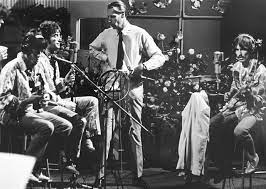
George Martin (center) with the Beatles recording “All You Need is Love”

At the top of the list is George Martin, whose work with The Beatles put him in a category by himself.  He and his talented engineer Geoff Emerick came up with wildly creative ideas and methods to conjure up the sounds John Lennon and Paul McCartney envisioned (in a time before computers and their ability to produce sounds by simply pressing a button).  Martin also knew, as The Beatles learned the recording process and became more adept at executing it, to defer to their wishes and get out of their way when the situation warranted. Martin later worked with McCartney on his solo career, and also with Jeff Beck, Kenny Rogers, Elton John and America, among many others.

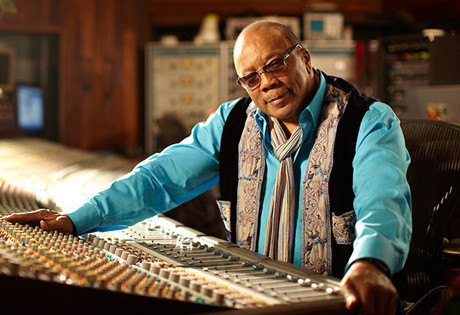
Quincy Jones

In both quantity and quality, Quincy Jones qualifies as a god of record producing.  With 28 Grammys on his mantelpiece and more than 80 nominations, he is the most celebrated producer ever.  He’s been a conductor, arranger and composer for everyone from Lesley Gore to Frank Sinatra in the ’60s, from George Benson to the Brothers Johnson in the ’70s, and Miles Davis’s final LP in 1991.  Most notably, he’s the producer of Michael Jackson’s “Thriller,” the best-selling album of all time, as well as Jackson’s “Off the Wall” and “Bad,” and the single “We Are the World,” on which he had to juggle the egos of two dozen rock stars in the same studio.

Phil Spector (far right) ruling the roost in the studio

The late Phil Spector may be in better known for his second-degree murder conviction and sketchy mental state, but that doesn’t diminish the astonishing advancements he made in the field of record production.  His famous “Wall of Sound” technique — in which he used multiple guitarists, keyboardists, drummers, horns and strings to create an all-enveloping sound on record — was one of the most ingenious innovations in the history of sound production.  Designed to enhance the sound coming from AM radios and jukeboxes of the 1960s, Spector’s Wall of Sound took the material being recorded by girl groups like The Ronettes and the Crystals and duos like The Righteous Brothers and made them sound like dense mini-symphonies. He did the same thing later with George Harrison, John Lennon and The Ramones.

Tom Dowd (center) with Dickey Betts (left) and Duane Allman (right)

Among the influential developments that producer Tom Dowd came up with in the 1960s were multi-track recording and methods for altering sound after the initial recording. He has a long and impressive resumé of production credits with some of the giants, including: every album by The Allman Brothers Band; Eric Clapton (“Layla” and “461 Ocean Boulevard”); Rod Stewart (“A Night on the Town” and “Blondes Have More Fun”); Kenny Loggins (“Keep the Fire”); Dr. John (“Remedies”); Wilson Pickett (“Hey Jude” and “Right On”); Bobby Darin (“Mack the Knife”); Lynyrd Skynyrd (“Gimme Back My Bullets”); and jazz legends John Coltrane and Thelonious Monk.

Glyn Johns (center) with Paul McCartney and Mick Jagger

From the mid-’60s right up through the 2010s, Glyn Johns has been at the helm of some of the biggest bands and best albums in rock.  He produced every Rolling Stones album from 1963 through 1975, encompassing the group’s very best work.  He engineered and mixed the incredible debut LP by Led Zeppelin.  He worked on The Beatles’ “Let It Be” album.  He produced multiple projects for Steve Miller Band and Boz Scaggs.  He was producer for the first two Eagles releases.  He worked with Pete Townshend to produce “Who’s Next,” arguably their finest LP and one of the best sounding records ever made.  He also produced “Who Are You” and “By Numbers,” two by the Ozark Mountain Daredevils and Humble Pie, “Combat Rock” for The Clash, and Clapton’s “Slowhand” and his 2016 release “I Still Do.”

“Mutt” Lange with ex-wife Shania Twain

John Robert “Mutt” Lange, another innovator in multi-track recording, has been a hugely influential rock music producer, responsible for the superlative production on such chart-toppers as AC/DC’s “Highway to Hell” and “Back in Black”; Def Leppard’s “High ‘n Dry,” “Pyromania” and “Hysteria”; Foreigner’s “4”; The Cars’ “Heartbeat City”; and albums for Bryan Adams and Huey Lewis & The News.  In 1997, he produced “Come On Over” for his then-wife Shania Twain, which is one of the best selling country albums of all time.

Albhy Galuten (center) with Barry Gibb (right)

The phenomenal sound production you hear on The Bee Gees’ best known songs is the work of Albhy Galuten, who also produced albums by Barbra Streisand, Diana Ross, Kenny Rogers, Eric Clapton and Olivia Newton-John.  He was at the helm of the mega-platinum soundtrack album of “Saturday Night Fever” and Franki Valli’s theme song to “Grease.”  Galuten is a true sound technician who holds several technological patents in the digital age and has served as a chief tech executive at Sony and Universal.

Peter Asher

Take another listen to James Taylor’s “Mud Slide Slim,” “One Man Dog” and “JT”, and to every Linda Ronstadt album from “Heart Like a Wheel” through “Cry Like a Rainstorm.”  They all sound fabulous due to producer Peter Asher‘s savvy in the studio.  He was one of the few who capably served the dual producer/manager role, and Taylor and Ronstadt were the clear beneficiaries.  He won Grammys for Producer of the Year in 1977 and 1989 for his work on their albums.  Asher also produced key records for Bonnie Raitt, Andrew Gold, 10,000 Maniacs, Cher and J.D. Souther.

Jack Douglas

Vocalist Steven Tyler has credited producer Jack Douglas with being “the unofficial sixth member of Aerosmith.”  He brought out the best in a very rowdy band on their hugely successful ’70s records — “Get Your Wings,” “Toys in the Attic,” “Rocks” and “Draw the Line.”  And it was Douglas at the soundboard controls when John Lennon returned to the studio in 1980 after a five-year sabbatical to record the songs that comprised the “Double Fantasy” and “Milk and Honey” LPs.  He also produced records for Cheap Trick, Montrose, Alice Cooper and Slash.

Roy Thomas Baker (lower left) with Queen

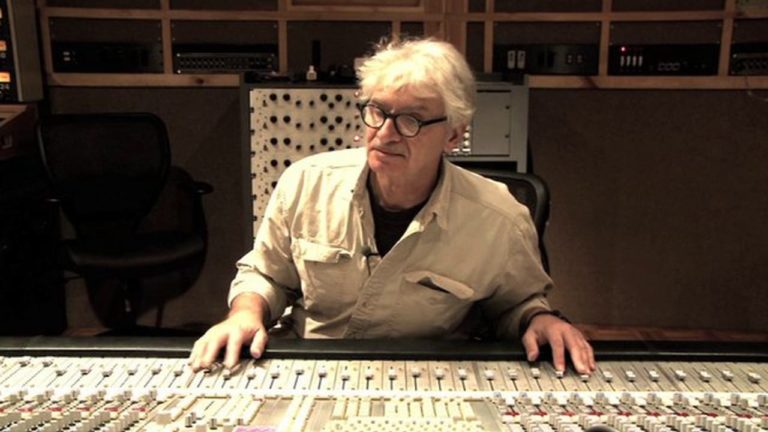
Roy Thomas Baker, mentioned at the top of this essay, was at the helm for such classic albums as Queen’s “II,” “Sheer Heart Attack,” “A Night at the Opera” and “Jazz”;  The Cars’ debut LP, “Candy-O” and “Shake It Up”;  Journey’s “Infinity” and “Evolution”;  Free’s “Fire and Water”; Foreigner’s “Head Games”; Ozzy Osbourne’s “The Ozzman Cometh”; and the soundtrack LPs to “Fast Times at Ridgemont High” and “Wayne’s World.”

Bob Clearmountain

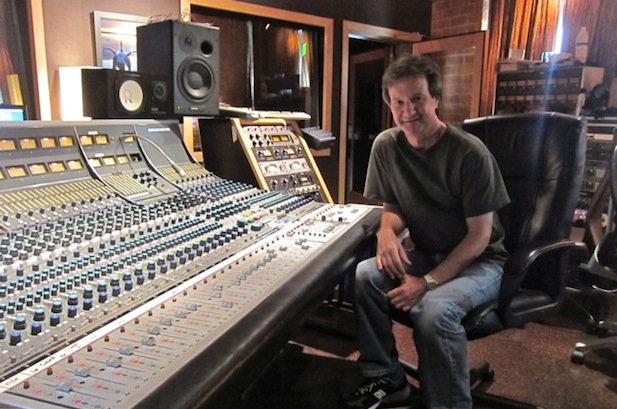
I’ve been fortunate enough to meet and watch the great producer/mixing engineer Bob Clearmountain at work in his home studio just down the road from me in Pacific Palisades. He has worked on many dozens of classic albums by artists including Bruce Springsteen (“Born in the USA”), The Stones (“Tattoo You”), David Bowie (“Let’s Dance”), Bryan Adams (“Cuts Like a Knife”), Roxy Music (“Avalon”), Simple Minds (“Once Upon a Time”) and Crowded House (“Woodface”). Not coincidentally, these LPs are among the best sounding albums in each artists’ careers.

Gary Katz

Gary Katz gets a nod of appreciation for the incredible results he got working with Donald Fagen and Walter Becker and a host of session musicians on the records of Steely Dan. At first they were just a six-man band, but five of their seven albums saw the songwriters in search of evermore-pristine production values, and Katz was instrumental in helping the artists find that near-perfection, especially on “Aja” and “Gaucho.” Katz also produced albums for Diana Ross, 10cc and Joe Cocker.

**************************

Honorable mentions go to a few other talented producers: Daniel Lanois, who steered the ship on multiple LPs by U2 (“The Joshua Tree,” “Aching Baby”), Peter Gabriel (“So”) and Bob Dylan (“Oh Mercy,” “Time Out of Mind”); Bill Szymczyk, the man behind the sound for every album by The Eagles beginning with “On the Border,” the first three LPs by The James Gang, Joe Walsh’s “The Smoker You Drink, the Player You Get,” Bob Seger’s “Against the Wind,” B.B. King’s “Completely Well” and Michael Stanley’s “Friends and Legends”; and Eddie Offord, who specialized in progressive rock records by Yes (“The Yes Album,” “Fragile,” “Close to the Edge,” “Relayer”) and Emerson, Lake and Palmer (“ELP,” “Tarkus,” “Trilogy”).

***************************

In the realm of record production, there are many artists who have taken on the producer role for their own albums.  Baker had this to say about that:  “All artists, I think, would like to produce their own records.  To me, it’s like someone trying to be their own lawyer in court.  Even if you are a lawyer, everyone knows you shouldn’t do it.  Artists should never produce themselves.  They still need someone else around to make sure they get the best out of themselves, because you can’t be two places at once.”

There are always exceptions to the rule.  Self-professed “studio nerds” like Frank Zappa, Led Zeppelin’s Jimmy Page, Jethro Tull’s Ian Anderson and ELO’s Jeff Lynne are listed as producer on nearly all of their albums.  Bob Dylan produced many of his works from 1975 on, and Pink Floyd — as a group — are listed as producer on their LPs.

Most notable, I think, are these two examples:

Brian Wilson was not only composer, singer and bassist for The Beach Boys, but became their sole producer beginning in 1963 when recording studios were still extremely basic.  But Wilson had an extraordinary ability to hear sounds in his head — in many cases, fully formed songs — which he diligently, and successfully, worked to transfer to tape.  All those amazing Beach Boys hits, culminating in “Good Vibrations” and “God Only Knows” from the “Pet Sounds” album, sound as stunning as they do because of Wilson’s producing talent.

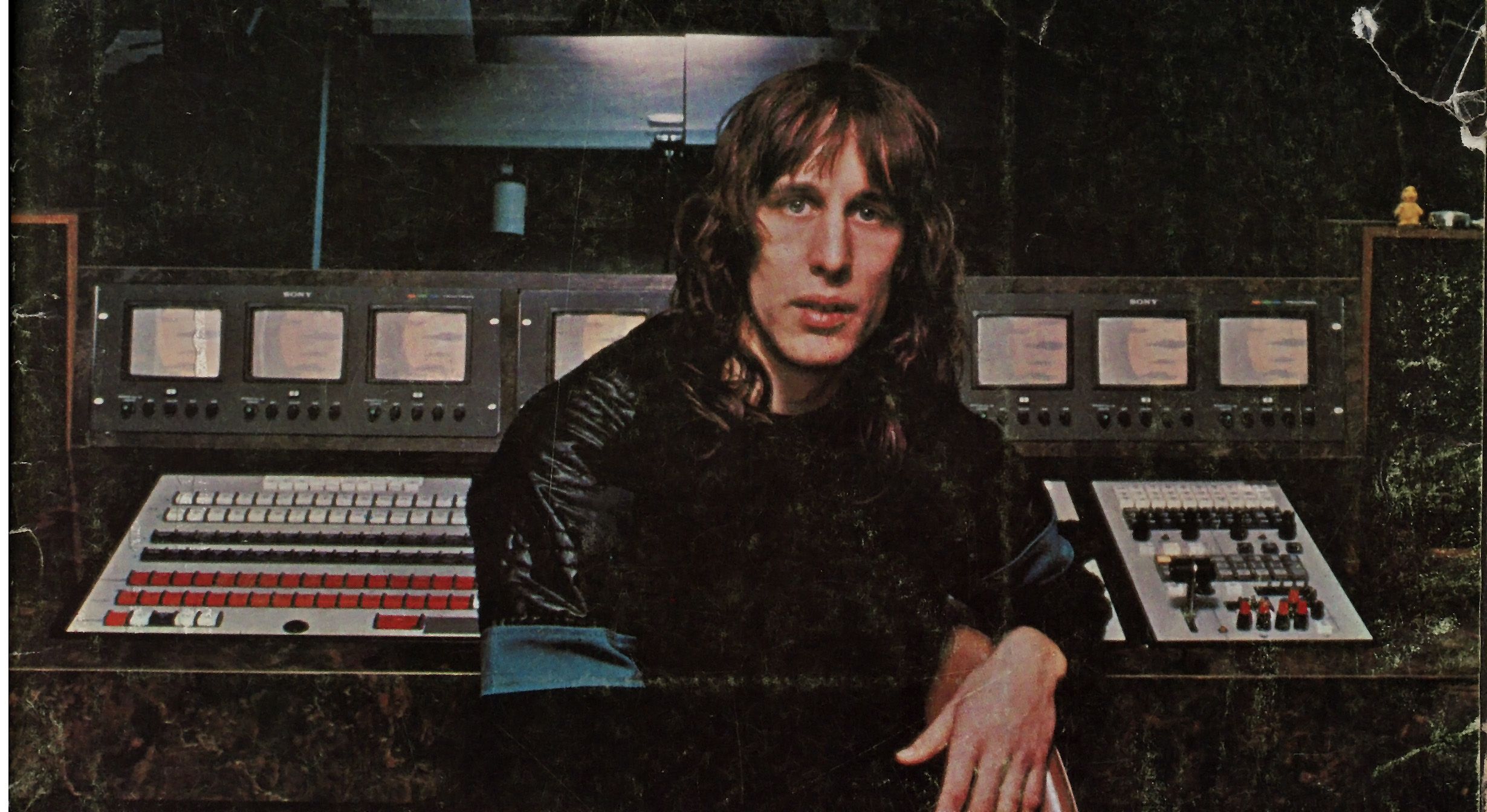
Todd Rundgren, who took on the artist/producer dual role from the very beginning of his career in 1970, was, as his album title suggests, “a wizard, a true star.”  He has successfully experimented with new equipment, new techniques and new approaches to album production ever since, and it has served him well.  A number of other artists took notice early on, and tapped Rundgren to produce their albums:  Grand Funk (“We’re an American Band”), Hall & Oates (“War Babies”), Badfinger (“Straight Up”), The Tubes (“Remote Control”), The Band (“Stage Fright”), the New York Dolls debut, and most successfully, Meat Loaf (“Bat Out of Hell”).

****************************