Classic rock bands I’ve never liked
Funny thing about popular music: There’s no accounting for taste. One person’s trash is another person’s treasure.
Or, as Paul Simon once put it, “One man’s ceiling is another man’s floor.”
In every decade, there have been bands that pack arenas on a regular basis, sell millions  of albums, or have singles that do well on the charts, but the whole time, you’re scratching your head and saying, “What the hell does anyone see in them??”
Everyone has them: Hugely successful groups that you just don’t like.
Now, if you’re a rock music fan like me, you can’t be naming people like Bobby Goldsboro or The Osmonds. That’s not the point here. Of course you don’t like acts like these, but you were never in their demographic target audience anyway. No, in this case, I’m talking about majorly successful rock bands who, for sometimes undefinable reasons, just rub me the wrong way.
People may like or not like musical artists because of the circumstances in which they first heard them. Perhaps you were 13 and found them exciting, if not musically notable. Or maybe you were on a first date (or you were breaking up) and heard them on your car radio. Or it could be that your boyfriend/girlfriend loved the group and you learned to love them too. So there’s always that emotional attachment we have to certain songs, albums or bands that causes a link that might evade other listeners.
Here at Hack’s Back Pages, we have always focused on the music and artists from the 1955-1990 period, so the bands I intend to single out are from that era — mostly from the ’70s and ’80s, in fact.
It will become abundantly clear to you that I cannot abide rock bands that have poor singers. I hold Robert Plant, Roger Daltrey and even Ozzy Osbourne (in Black Sabbath days) as exemplars of hard rock singers who have a command of melody and control without constantly consorting to shrieking and howling in non-musical pain.
I also have a problem with bands who can’t seem to write songs that show at least a modicum of musical sophistication. Yes, I know, rock ‘n’ roll is supposed to be basic, primal, rebellious, energetic, revolutionary. But must it be devoid of actual melody and harmony?
Go ahead, call me a snob, or a dinosaur. I can take it.
I know I’m going to piss off a whole lot of people, who will no doubt vigorously disagree with some of my conclusions here. Too bad. It’s my blog. If you want to come up your own list of ten bands you never liked, you might start your own blog. But hey, I’d still be happy to hear your objections, or your candidates for bands that you think should be on a list like this.
Here we go:
Aerosmith
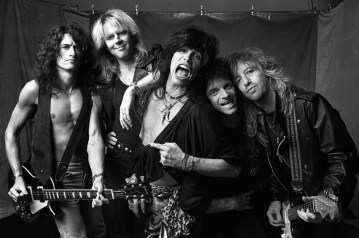 They have had their moments: The 1974 anthem “Dream On” is a great classic, and their 1975 LP “Toys in the Attic” is pretty consistent. But I’ve never cared for Steven Tyler’s screechy voice, and I would venture to say that nearly every album they made was more filler than anything worthwhile. I made the mistake of trying to read Tyler’s appallingly self-indulgent 2012 autobiography, “Does the Noise in My Head Bother You?” which made me dislike him as a person as much as I disrespect him as a singer. The group fell apart in the ’80s and I thought that was the well-deserved end of them, but then they were somehow reborn in the late ’80s with more singles and albums and tours. I had no use for any of it. Joe Perry is a fine electric guitarist, but that’s about the extent of anything nice I can say about these bad boys from Boston.
John Mellencamp
 Before you Mellencamp fans come looking for me with a meat ax, let me just say that I don’t hate him or his music. But I sure don’t love it either. It’s just okay, and he’s way overrated. Maybe it’s because he came along in Bruce Springsteen’s shadow, but I always thought of Mellencamp as a cheap imitation, a poor man’s attempt at Springsteen’s perceptive and effective working class anthems and public persona. (I suppose you could say the same about Bob Seger, a fine rock singer of basic Midwest rock songs. He was very good, but he wasn’t The Boss.) Mellencamp has toured incessantly and continued to release new albums every couple of years, and some of them are even interesting. But I can only shrug my shoulders and say, “Eh…”
Van Halen
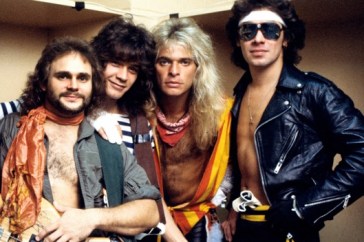 Even if you account for Eddie Van Halen’s remarkable lead guitar solos and riffs throughout the group’s early catalog, one fact remains: For the most part, Van Halen is mind-numbingly average. They sometimes did a nice job on vocal harmonies, and David Lee Roth was actually a strong singer, but most of the group’s material is just so boring, plodding, nondescript. And yet, these guys are held up as some sort of saviors of hard rock music during the disco/New Wave era. Sorry, I’m not buying it. Things got way worse when they recruited Sammy Hagar (also a decidedly average talent at best) to take over for Roth in 1985. Just like that, a band that was capable of the occasional B- classic rock track (“Runnin’ With the Devil,” “Dance the Night Away”) suddenly slipped to C- and worse. Thanks for nothing, Sammy…
Styx
 Oh, spare me. I’d rather plunge knitting needles into my ears than put up with five seconds of Dennis DeYoung’s cringe-inducing vocals. “Lady”? “Babe”? “Come Sail Away”? “Mr. Roboto”??? Just awful stuff, all of it, thanks to that voice. I was so turned off that I never bothered to explore Styx’s catalog until very recently, and I wasn’t even aware that DeYoung and guitarist Tommy Shaw feuded continually, each left the band for solo careers, and attempted reuniting with little success. Things got so bad between DeYoung and the rest of the band that his name has been omitted from Styx’s official website, as if he had never been a member. Ouch. Maybe there’s hope yet for me to learn to appreciate the Styx stuff without DeYoung on it. We’ll see. But I maintain my dislike of the Styx songs that were played ad nauseum in the late ’70s and early ’80s.
Bon Jovi
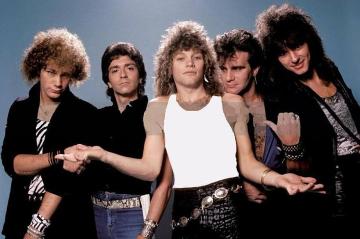 Simplistic, unimaginative, unremarkable, annoying. That’s Bon Jovi in a nutshell to me. I recognize that Jon himself is quite the hunk who brings tons of women to his concerts. And there are a few moments buried on his albums that stand out from the numbing sameness of his oeuvre. But I’m sorry, he’s just not for me. I’ve been listening to a lot of Bon Jovi’s stuff the past week, racking my brain to pinpoint what it is about them that leaves me cold. I suppose it’s because they sound to me like a hundred other groups. Not much originality to speak of. When I hear even their big hits like “Livin’ On a Prayer,” I have to think, “Who is this again?” It could be any other nameless American group of the 1980s, and I’m just not impressed.
AC/DC
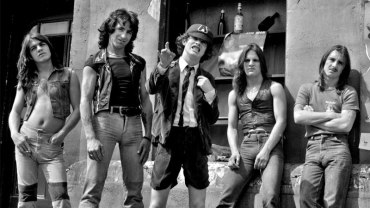 If you want to send me running screaming from your room, just cue up AC/DC’s “Dirty Deeds Done Dirt Cheap,” one of the saddest excuses for a hard rock anthem ever recorded. These guys were Australia’s biggest rock success story, and for the life of me, I have never understood why. “Fingernails on a blackboard” is the most accurate way to describe the voice of original AC/DC vocalist Bon Scott. Simply unlistenable. I find it both telling and pathetic that when Scott died of self-inflicted alcohol poisoning in 1980, the band held auditions and came up with a replacement (Brian Johnson) who somehow matched that excruciating larynx-shredding style (it certainly can’t remotely be called singing). Nevertheless, the group has sold untold millions of copies of albums, and they rank among the most popular rock acts of all time. Not in my house, man.
Beastie Boys
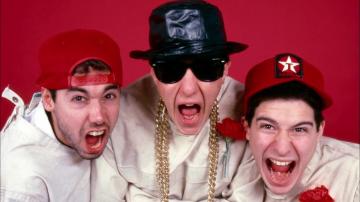 Originally a hardcore punk band out of New York City in 1980, this trio made the switch to hip-hop in 1985, and became the first white group to dabble in (and find success with) what had exclusively been a black phenomenon. I admit to not much caring for hip-hop in general, but I found these guys irritating for trying to pose as something they weren’t. Suburban white kids chose to eat them up, and they proceeded to release eight Top 20 albums (including four Number Ones) over the next 30 years. Incredible. And to add musical insult to eardrum injury, The Beastie Boys were actually inducted into the Rock ‘n’ Roll Hall of Fame a few years ago. Like I said, there is NO accounting for taste.
Guns ‘n Roses
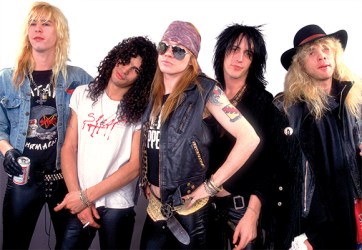 Debuting in 1985, they claimed to be “a mixture of hard rock, punk, blues and metal.” It’s a horrendous mess, mostly. As with almost every band I’ve mentioned here, they had a couple of memorable tracks. By far, their best moment was the 8-minute anthem “November Rain,” which has two parts, showcasing their melodic side followed by a lengthy guitar solo by Slash. I just couldn’t get into the band overall, though, partly because vocalist Axl Rose was such a pretentious ass who was simply begging to be punched in the face. But again, who can explain the preferences of millions of rock music fans who found anything appealing about GNR’s music? I just don’t hear it.
KISS
 Bwahahahahaha! There is absolutely nothing musical to be heard from this band of costumed showmen. And let’s be clear, even Gene Simmons has said KISS was born of the notion that it didn’t much matter what they played. It was all about the pyrotechnics, the light show, the sheer volume and, of course, the face paint and faux-threatening poses they struck onstage. To attend a KISS concert was to be assaulted and overwhelmed by what you saw more than what you heard. Therefore, to listen to a KISS album was an exercise in total futility, for there was nothing there deserving of your time. But sure enough, the group’s fans lobbied for years until these clowns were also inducted in the Rock Hall. As showmen? Well, okay, I guess. As musicians? Not on your life, nor mine.
Ted Nugent
 All right, here’s credit where it’s due: When he was only 19, Nugent was the lead guitarist and songwriter for a ’60s band out of Michigan called The Amboy Dukes, who were responsible for a wonderful psychedelic nugget from 1968 called “Journey to the Center of Your Mind,” which reached #16 on the charts. Okay, that’s the only good thing I have to say about this raging lunatic. He inexplicably became a
  popular solo artist in the mid-’70s, riding the wave of dreck like “Cat Scratch Fever,” where his voice sounds like, well, a feverish catfight. So I’ve never liked any of his harsh, tone-deaf albums, but an even better reason to hate him is for his arch-conservative political views that include (believe it or not) condoning violence against gun control advocates. The guy is an unhinged racist and thoroughly unlikable in every way.
************
I started putting together a playlist of songs by these bands, but then I said to myself, “Why on earth would anyone ever listen to it? I certainly wouldn’t.” So if you happen to enjoy any of the ten bands mentioned above, by all means, head on over to Spotify, or to your album/CD collection, and put ’em on. Just don’t invite me over until you’re finished.
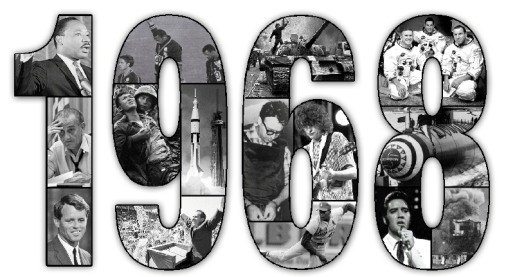 In pop culture, the same upheaval was underway. Pop art, op art, nudity on Broadway, “Rowan & Martin’s Laugh-In” on TV, and films like “Rosemary’s Baby” and “2001: A Space Odyssey” were rocking our world.
 “Wheels of Fire,” Cream
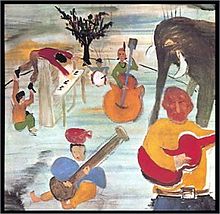 “Music From Big Pink,” The Band
 “In Search of the Lost Chord,” The Moody Blues
 “Aretha Now,” Aretha Franklin
 “Bookends,” Simon & Garfunkel
 “Super Session,” Al Kooper, Mike Bloomfield, Stephen Stills
 “Beggar’s Banquet,” The Rolling Stones
 refused by the US record label and replaced by a formal wedding invitation design. More important was the music, particularly the rocking “Sympathy for the Devil,” “Street Fighting Man” and “Salt of the Earth,” all offset by acoustic gems like “No Expectations,” “Parachute Woman” and “Factory Girl.” Mick Jagger and Keith Richards really stepped up here, with co-founder Brian Jones sliding further into the shadows, and the rhythm section of Charlie Watts and Bill Wyman had developed at that point into one of the very best in rock.
 “Cheap Thrills,” Big Brother & The Holding Company
 “Truth,” Jeff Beck
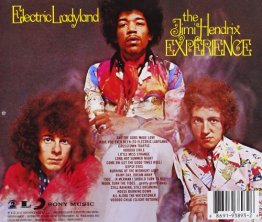 “Electric Ladyland,” Jimi Hendrix Experience
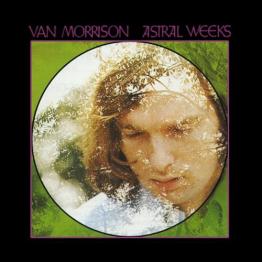 “Astral Weeks,” Van Morrison
 “The Beatles (The White Album),” The Beatles
 cover. This expansive collection had something for everybody. Harrison offered his best track yet, “While My Guitar Gently Weeps,” featuring an uncredited guitar solo by pal Eric Clapton. McCartney kicked ass with rockers like “Back in the U.S.S.R.,” “Birthday,” and “Helter Skelter,” and also offered some fine acoustic stuff like “Blackbird,” “I Will,” “Mother Nature’s Son” and “Martha My Dear.” Even Ringo wrote a song, the country ditty “Don’t Pass Me By.” Lennon, meanwhile, stepped up with nearly a dozen of his best songs — “Happiness is a Warm Gun,” “I’m So Tired,” “Dear Prudence,” “Sexy Sadie” and a slow-burn version of “Revolution.” He insisted the album include his nightmarish sound collage, entitled “Revolution 9,” as well as his saccharine lullaby, “Good Night,” sung by Ringo. Because the recordings were so good, no one was aware the group was continually at odds and headed for a breakup. For now, this was an outstanding Christmas present.
 “James Taylor,” James Taylor; “Living the Blues,” Canned Heat; “Eli and the Thirteenth Confession,” Laura Nyro; “Traffic,” Traffic; “Song to a Seagull,” Joni Mitchell; “One,” Three Dog Night; “Diana Ross and The Supremes Join The Temptations“; “In a Gadda Da
  Vida,” Iron Butterfly; “Tell Mama,” Etta James; “Last Time Around,” Buffalo Springfield; “Creedence Clearwater Revival,” Creedence Clearwater Revival; “This Was,” Jethro Tull; “Sweetheart of the Rodeo,” The Byrds; “Odessey and Oracle,” The Zombies; “Ogdens’ Nut Gone Flake,” The Small Faces.
 Hack's Back Pages